(Sunday 8th November 2026)
Over to Loggerheads Country Park in Denbighshire this morning where the beautiful autumn colour of the leaves and occasional rays of sunshine more than compensated for the low temperature – it was 6°C when we arrived and had only climbed to 8°C by midday, but at least it remained dry.
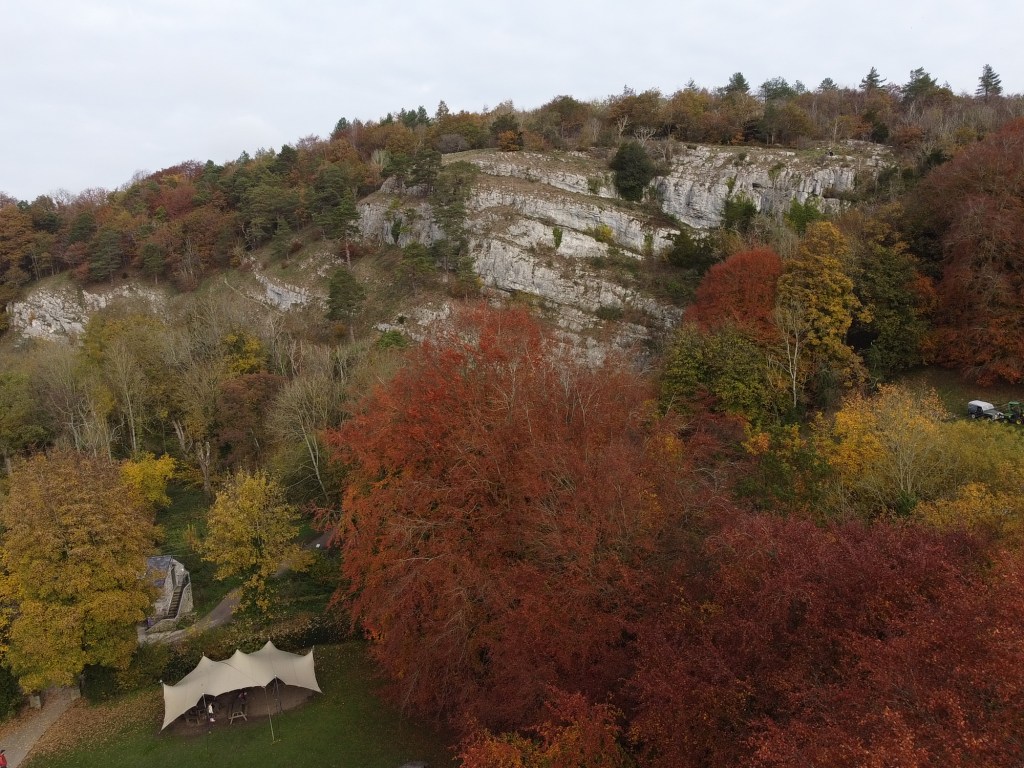
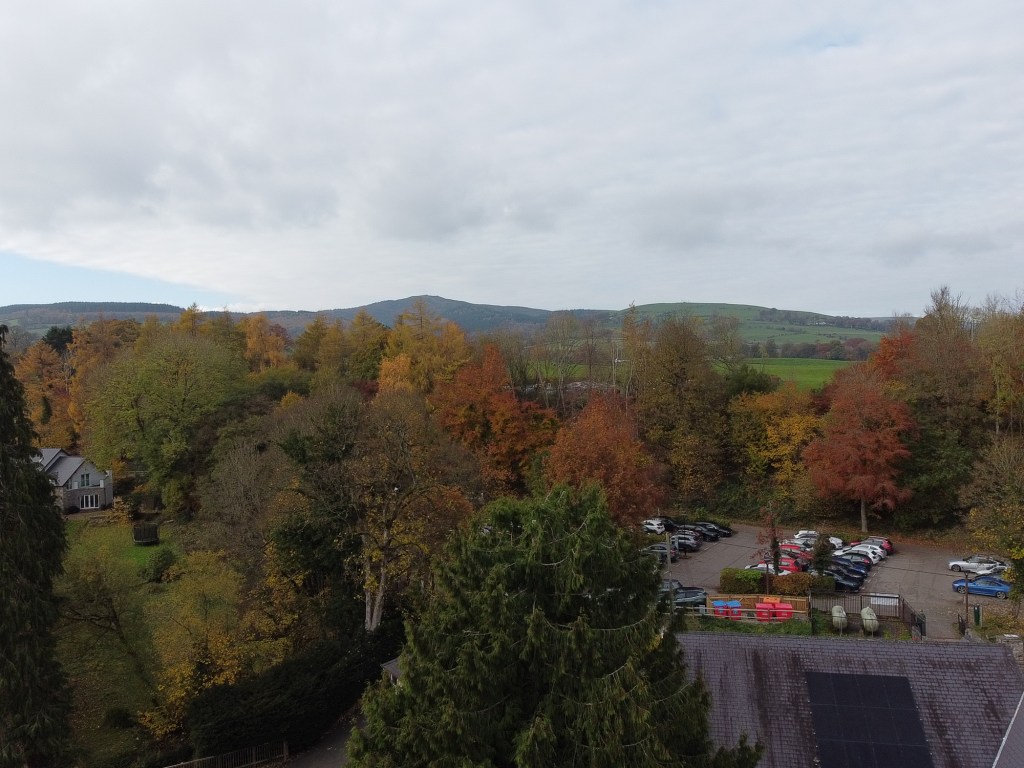
A couple of aerial shots of Loggerheads taken from above the gift shop and café
The River Alyn was deeper and faster-flowing than during our most recent visit in October, due to the amount of rainfall that’s fallen since then.
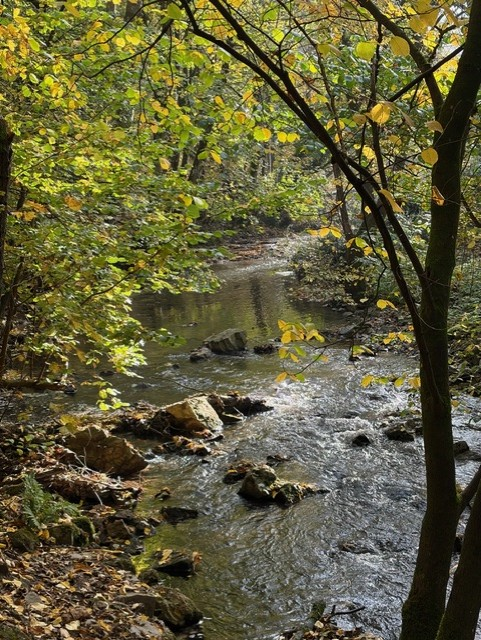
The increase in the volume of water certainly pleased the White-throated dipper (Cinclus cinclus), which repeatedly submerged itself in the river on the hunt for its favourite caddisfly larvae and other freshwater invertebrates, and was clearly impervious to the cold water. The Dipper is quite a chubby little bird with chocolate-brown back and wings, a chestnut underbelly and a contrasting white bib, and gets its name from the ‘dipping’ or bobbing action it makes while it scans the riverbed for food. Today, though, it preferred to ‘walk’ itself into the river until it disappeared, only the large air-bubbles pointing to its sub-aqua location!
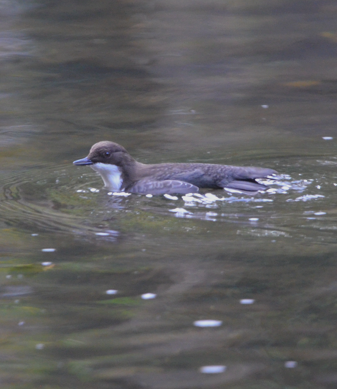
Dipper about to submerge itself in the River Alyn
As we moved further down the Leete path, there was quite a commotion in the woods away from the water’s edge. Small flocks of birds were foraging around the multitude of sycamore seeds and beechmast (also known as beechnuts) that had spilled onto the ground: the birds included Great tits (Parus major) Coal tits (Periparus ater) and Chaffinches (Fringilla coelebs) – in fact, there may have been one or two Marsh tits (Poecile palustris) amongst them: while the Coal tit has a white patch at the back of its otherwise black head, there is no white patch on the Marsh tit’s head. Two or three of the birds might well have been Marsh tits, but they moved far too quickly for us to be certain. Still, something for us to look out for on future trips.
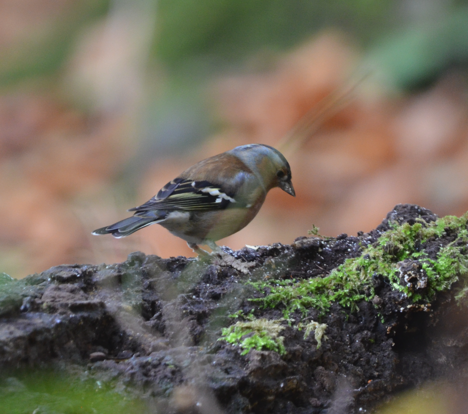
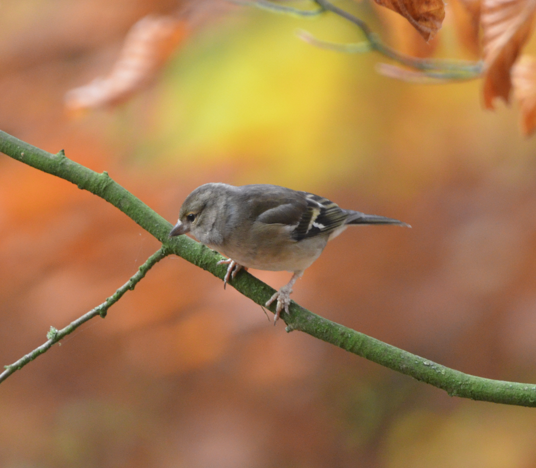
Top: male Chaffinch; bottom: juvenile Chaffinch
It’s noticeable that many birds that feed on insects during the spring and summer begin to switch to seeds for nourishment as winter approaches and insects become scarce. It seems that these birds – fifty or so, altogether, though it’s difficult to quantify exactly when they’re zipping around you – had the same idea at the same time and were all competing for the same thing.
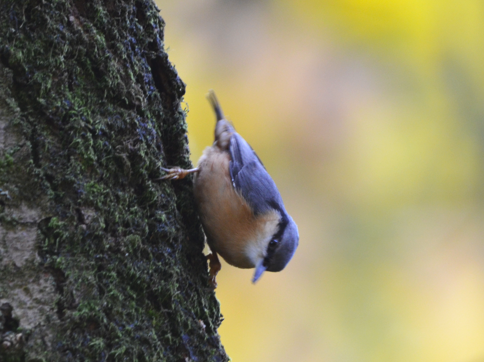
Nuthatch probing tree-bark as it descends
We also saw several Nuthatches (Sitta europaea) and a Robin (Erithacus rubecula), although they were a little distance further along from the tits and finches, so had clearly settled on their own food sources. The Robin hopped through the undergrowth searching for seeds and berries, whereas the Nuthatches acrobatically tackled the trees as they probed the fissures in the bark, still hopeful of dislodging the occasional insect, though they will likely have to switch their dietary requirements soon, assuming they haven’t already done so.
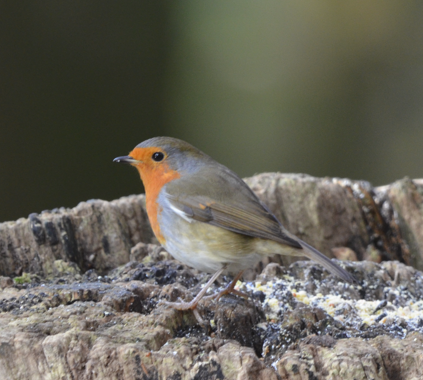
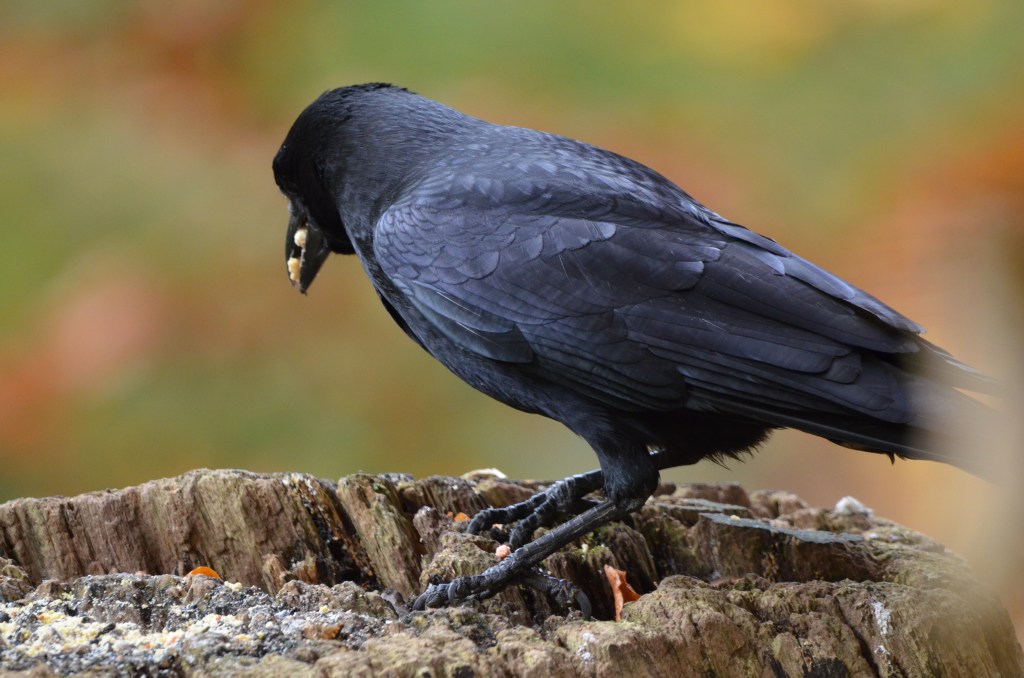
Top: Robin; bottom: Carrion crow
As we turned back, we caught sight of a flash of yellow as a Grey wagtail (Motacilla cinerea) skimmed the water, heading upstream. Although today’s sighting was brief, it’s always good to see the wagtails and know that they’re still resident along this stretch of the river.
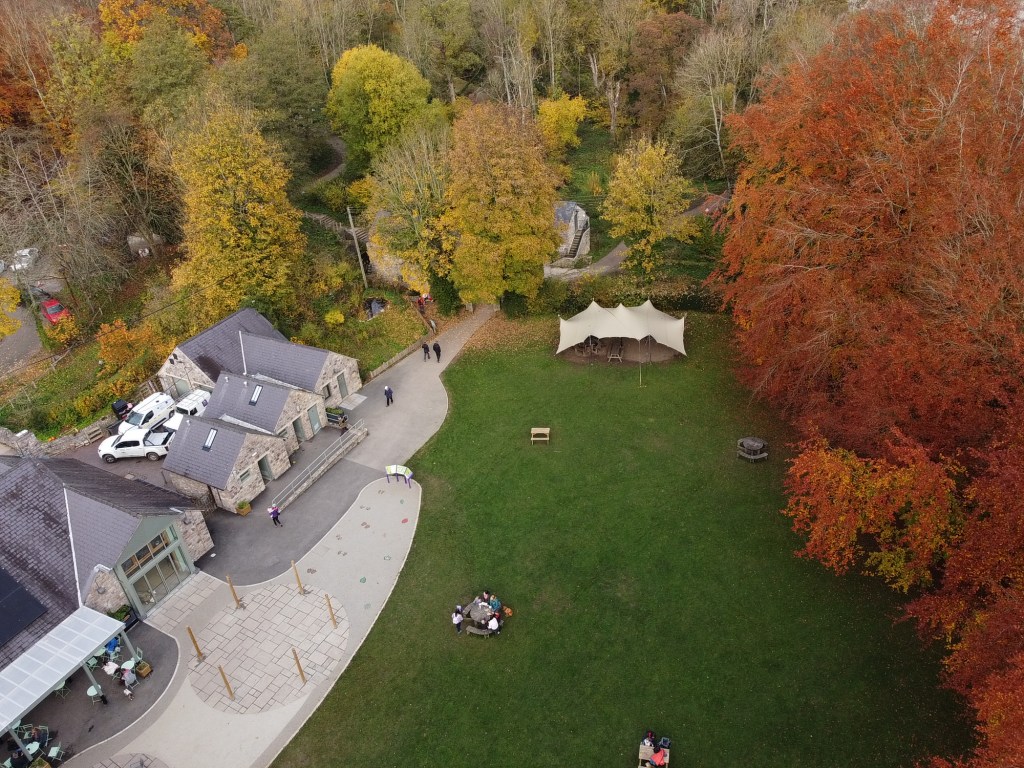
Another aerial shot that captures the magnificent colours of autumn at Loggerheads
The important stuff
And so to The Mill House café (Tŷ’r Felin) for a mouth-watering Millionaire’s Shortcake (Stu) and a luscious Lemon Curd Blondie (Col) to go with our cappuccinos. Very welcome!

Leave a Reply