(Sunday 18th October, 2026)
We were in Big Pool Wood in Gronant, Flintshire this morning. It was sunny but the temperature didn’t climb above 12°C all the time we were there and it was quite chilly in the shade of the hides, the cold aggravated by the stiff northerly breeze. None of this deterred the wildlife, of course!
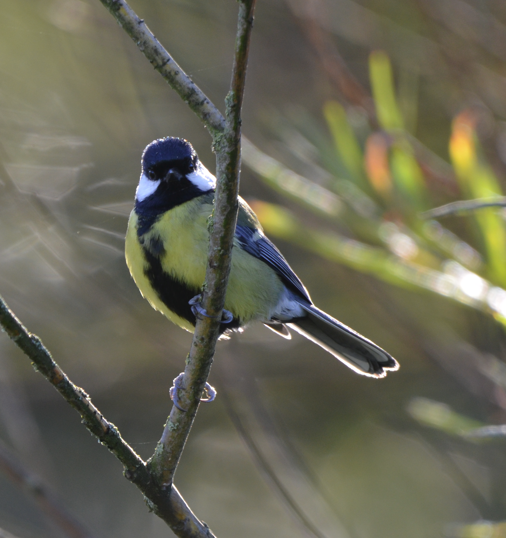
Blue tit
There were lots of Blue tits (Cyanistes caeruleus) and Great tits (Parus major) throughout the wood, both species appearing everywhere. In fact, we became so complacent at seeing them that it took a few long seconds before we realised that a single Coal tit (Periparus Ater) had flown into one of the feeders. The Coal tit is buff-coloured underneath rather than yellow and has a white patch at the back of its otherwise black head, as you can see in the photograph. Generally, Coal tits prefer coniferous woods so it was unusual to see one appear here where the trees mainly consist of broadleaf varieties such as alder, hazel and oak.
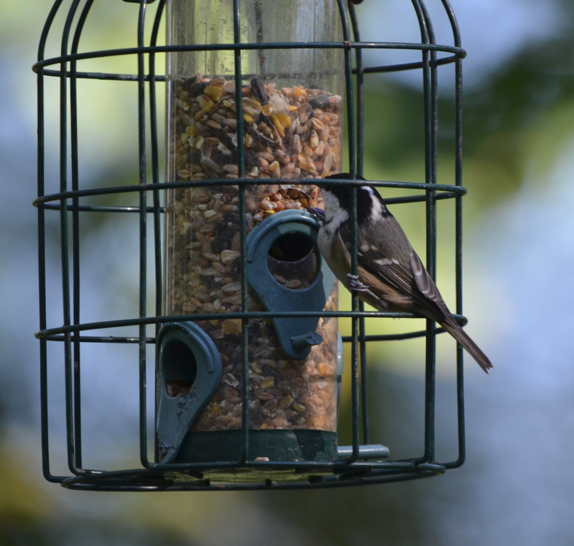
Coal tit
There was a pair of Moorhens (Gallinula chloropus) clucking to each other in and around the reeds and occasionally skimming across the water, although the ‘big pool’ is still quite shallow. Also low down in the reeds were a few Dunnocks (Prunella modularis). At first, though, they blended in so well with their surroundings that they were difficult to see unless they moved.
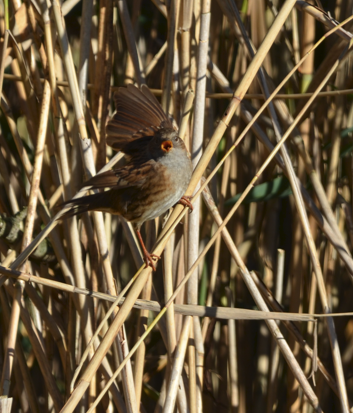
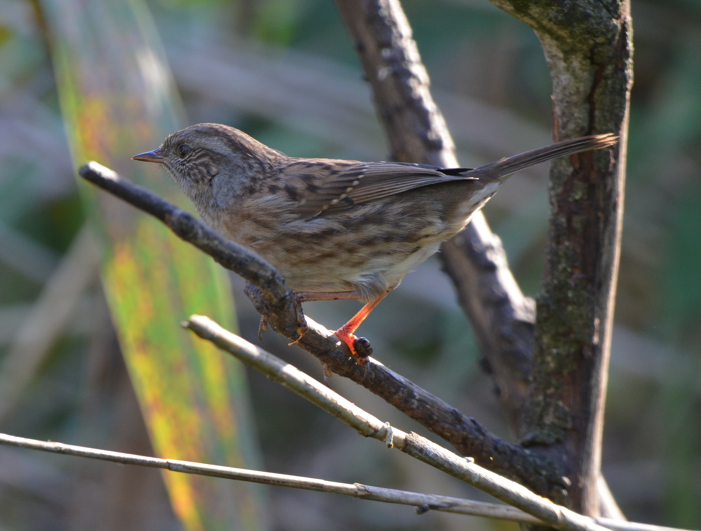
Dunnocks
Likewise the Brown rat (Rattus norvegicus) that cautiously emerged to collect the nuts and seeds spilled by the birds from above (and one agile squirrel, too!) Just as well for the rat that none of them had any table manners, I suppose.
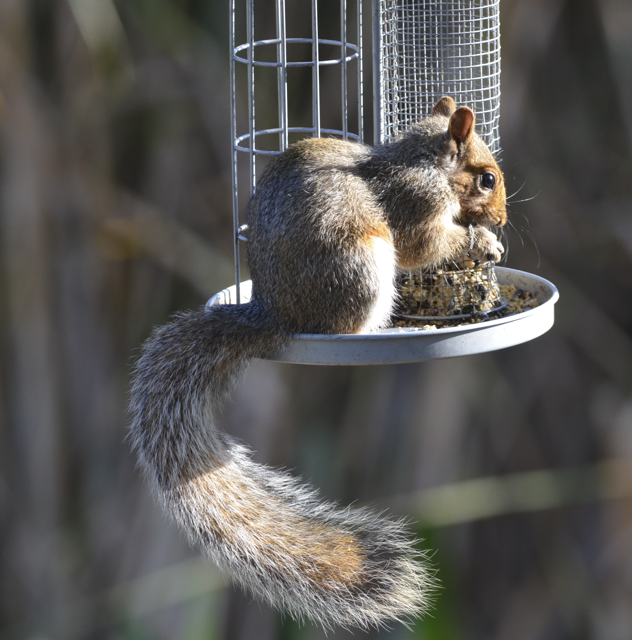
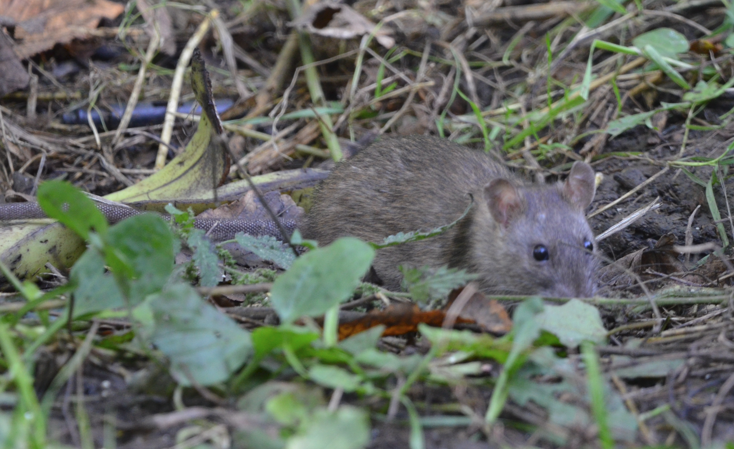
It’s not just the birds who like bird food! Top: a resourceful Grey squirrel; bottom: Brown rat
We saw a couple of Goldfinches (Carduelis carduelis) that appeared separately: one looked like a juvenile, the bold red face markings not quite complete, suggesting the bird was still going through its first-year moult. The other Goldfinch was clearly an adult.
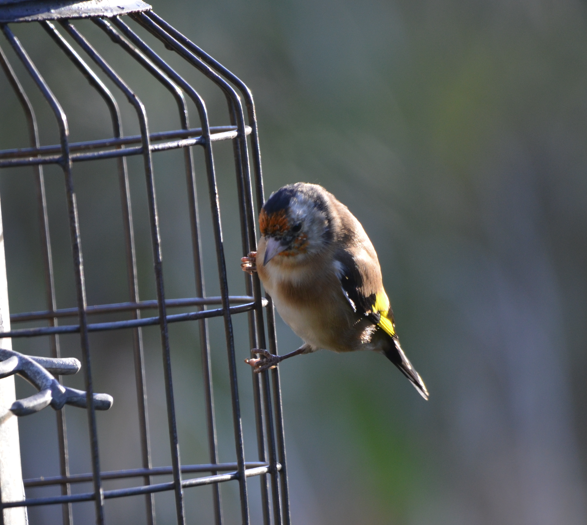
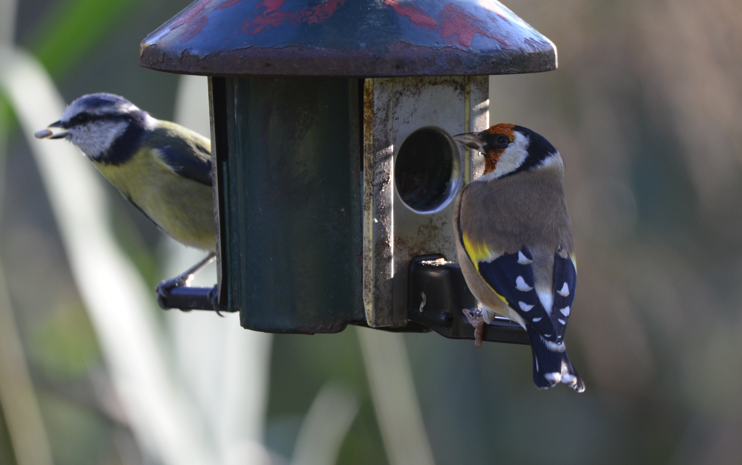
Top: Goldfinch juvenile; bottom: Adult Goldfinch feeding opposite Blue tit
When we saw the Great spotted woodpecker (Dendrocopos major), we were wary of making any noise or sudden movements in case we frightened it away. But this one just carried on contentedly feeding while we sat and watched for what seemed like ages. This woodpecker was an adult female. Adult males have a red patch at the nape of their necks and juveniles of both sexes have a red crown, which disappears with their first moult. Eventually, something spooked this lovely looking bird, as she abruptly fled towards the distant trees.
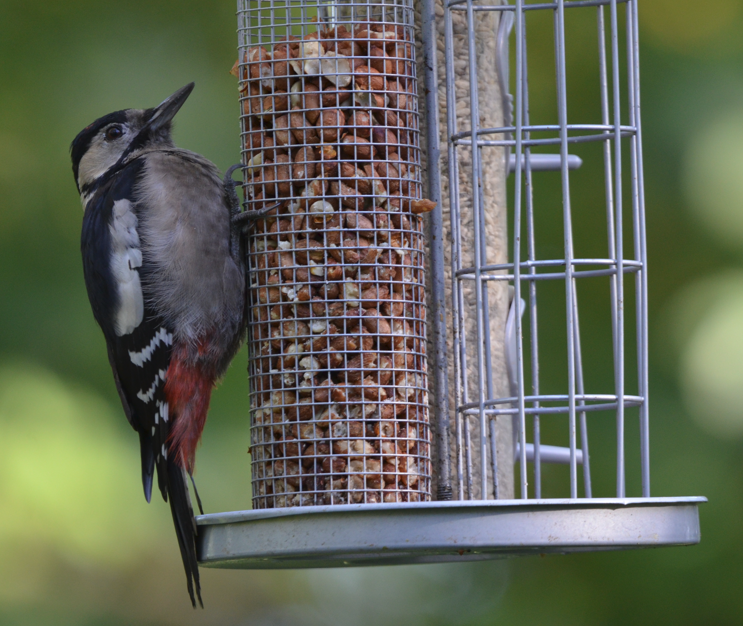
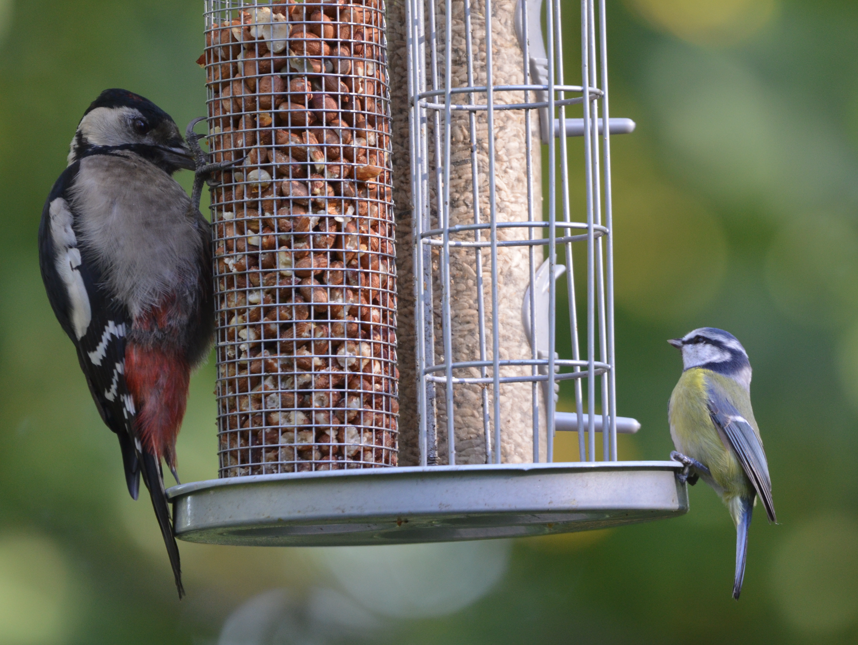
Great spotted woodpecker
Despite the low temperature, we saw two Red admirals (Vanessa atalanta) doggedly flying around today, occasionally landing on a leaf and spreading their wings to recharge in the bright sun. Red admirals are hardier butterflies than most others in the United Kingdom, but 12°C was probably around their lower limit.
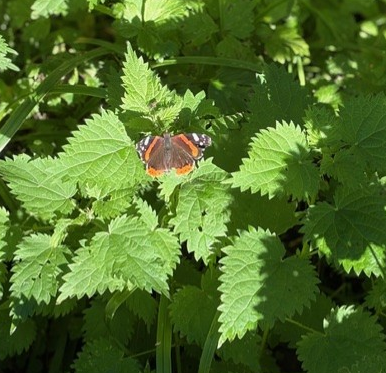
One of the hardy Red admirals
We’ve mentioned before that the nature reserve Big Pool Wood is only a small area of woodland tucked away in its little corner of Flintshire. But it’s sometimes difficult to envisage four hectares of land – or even five football (soccer) pitches. So Stu, who recently acquired his CAA remote pilot licence, flew his UAV above the tree canopy and took some photographs to give an idea of the scale of the nature reserve. The strip of water about a mile to the north, at the top left of the photograph, is roughly where the Dee Estuary meets the Irish Sea.
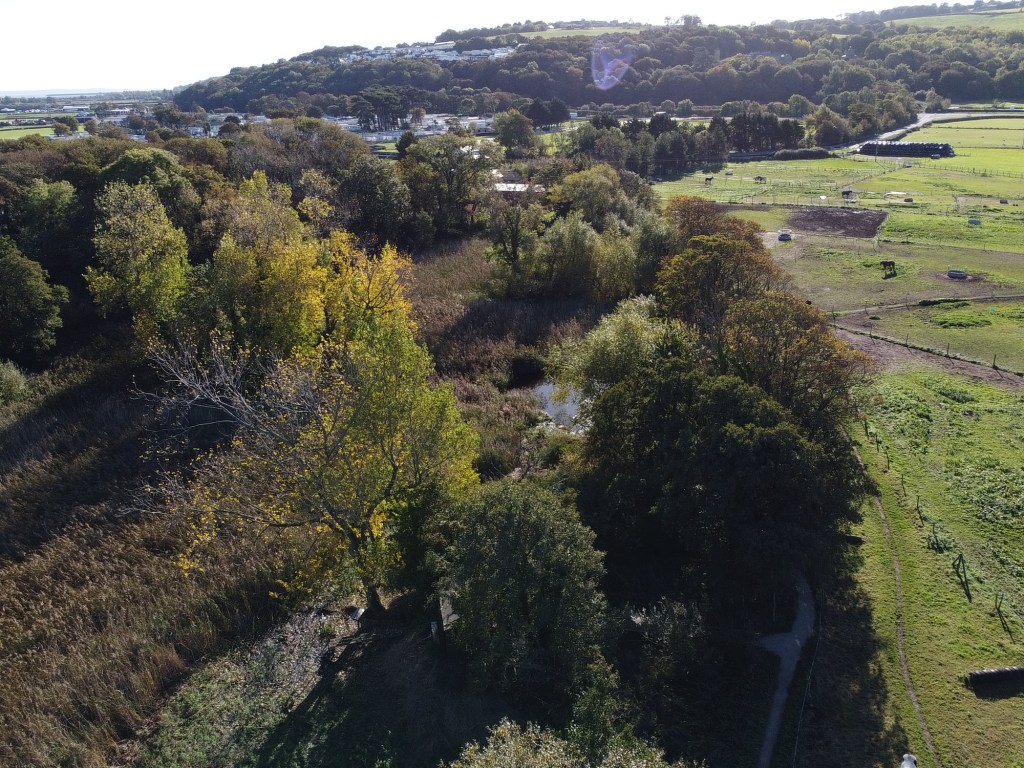
Big Pool Wood from above
The important stuff
After a hard morning’s birding, it was only right that we took ourselves off to the café at Abakhan where we indulged in a slice of Raspberry jam Bakewell each, with our customary cappuccinos. Delicious!
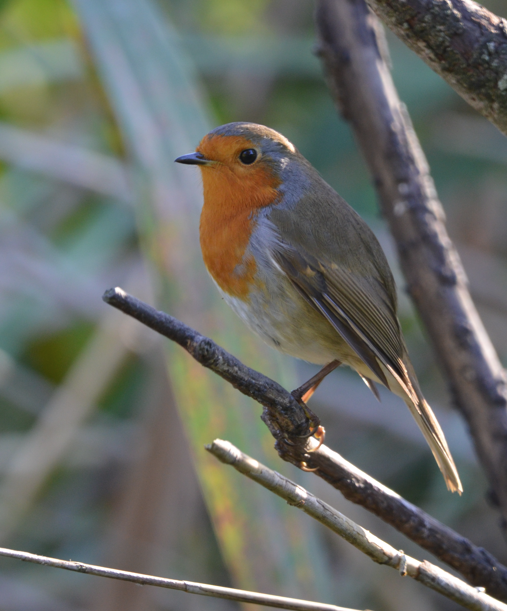
Our old friend the Robin

Leave a Reply