Blog

  • Dippers at Loggerheads

    (Sunday 27th September, 2026)

    Over to Denbighshire this morning to Loggerheads Country Park. There were a few drops of rain as we arrived but, luckily, the shower quickly passed. The temperature was a reasonably mild 17°C, but the sun was determined to stay away, so it was quite gloomy.

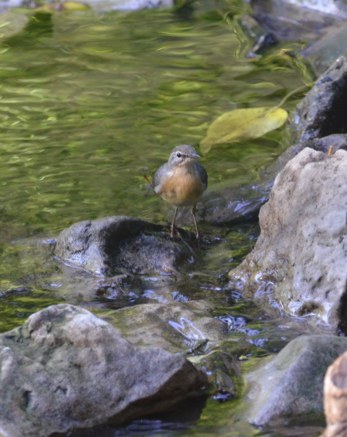
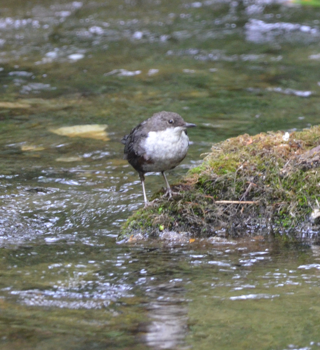
        Before we entered the woods we thought we’d take a quick look from the wooden bridge opposite the visitor shop, just on the off-chance that we might spot something. We were in luck: a White-throated dipper (Cinclus cinclus) was just a few metres downstream from us. Perched on a rock mid-river, the Dipper bobbed up and down in its characteristic fashion as it surveyed the fast-flowing water for food.
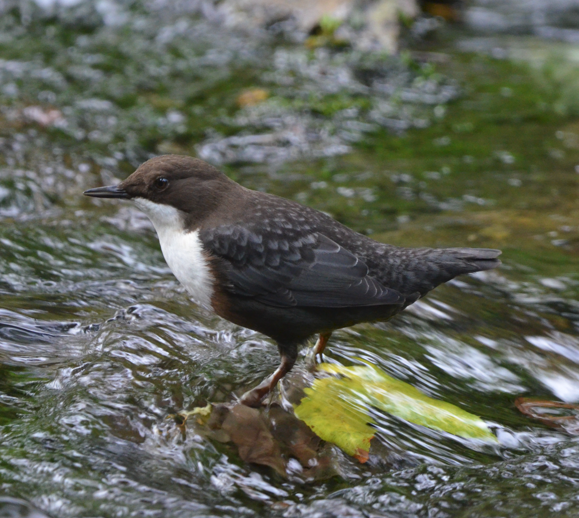
    Dipper by wooden bridge

    White-throated Dipper

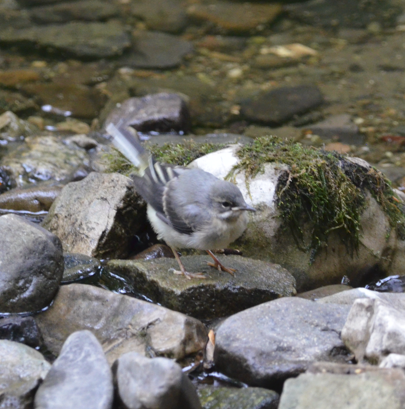
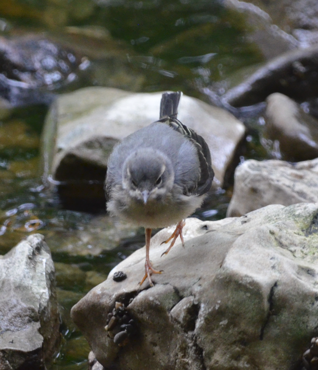
        As we watched, a Grey wagtail (Motacilla cinerea) flew upstream and very close over the Dipper’s head before landing on the stones nearby. I’m sure that this ‘buzzing’ was done playfully – certainly the Dipper was unperturbed and carried on searching for food as if nothing had happened. Both species of bird share the same habitats – fast-flowing water through rocky or stoney terrain – although their differing feeding habits mean that they don’t have to compete with each other for food. The Dipper feeds on caddisfly larvae and other invertebrates like freshwater shrimps, which it retrieves from underwater, whereas the Grey wagtail feeds on insects that it finds on rocks and stones or by plucking flying insects from the air. We often see both bird species along this stretch of the River Alyn.
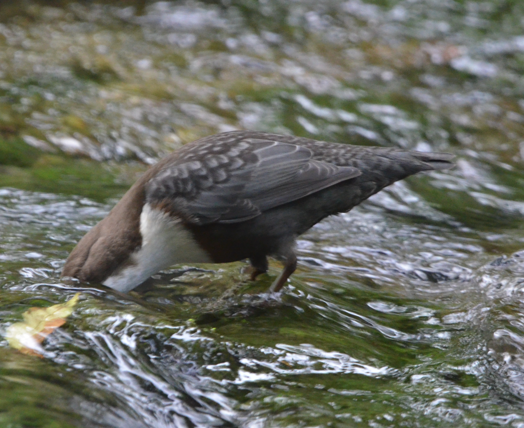
    Dipper dipping by wooden bridge

    Dipper searching underwater for food

        The wagtail quickly departed downstream again so no photographs today. We did register that it was a male – the last time we saw them, there were three altogether, which we think were two adult birds and one juvenile. The juvenile has obviously fledged and will have established its own territory elsewhere along the river and it looks like the female parent has also gone. Outside of the breeding season, the Grey wagtail is quite solitary.

        The Dipper, on the other hand, will stay with its mate. We can’t be sure if the bird we saw today was male or female, as both sexes are very similar, but there’s a very good chance that its partner is still around!  
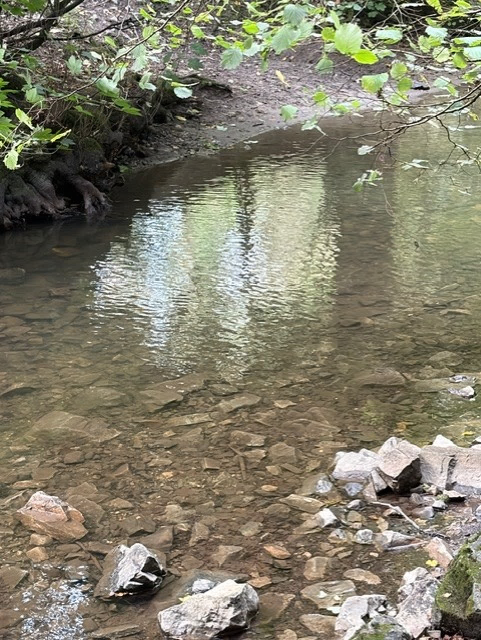
    Clear water Alyn

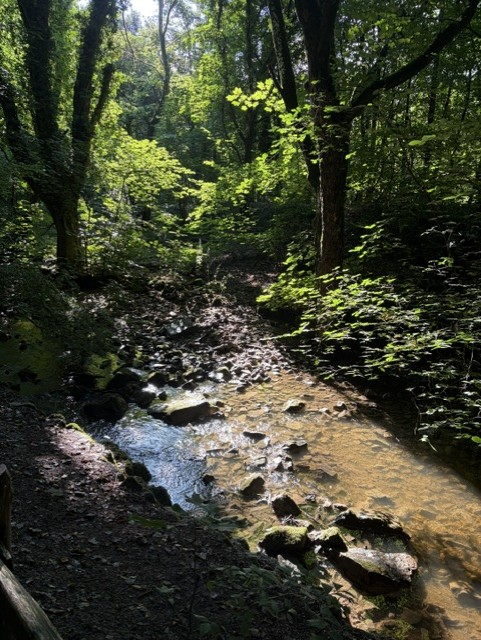
    The clear water of the River Alyn at Loggerheads

        The presence of Dippers and Grey wagtails is always a good indication of the water quality of the rivers or streams which they inhabit. If the water is of poor quality due to agricultural run-off or some other form of pollution, then the food chain on which both species’ depend will be affected, which will in turn affect the birds’ ability to feed and ultimately to breed. So, this stretch of the River Alyn is in reassuringly good condition. However, both White-throated dippers and Grey wagtails are currently on the Amber list of Birds of Conservation Concern, so we need to remain vigilant.

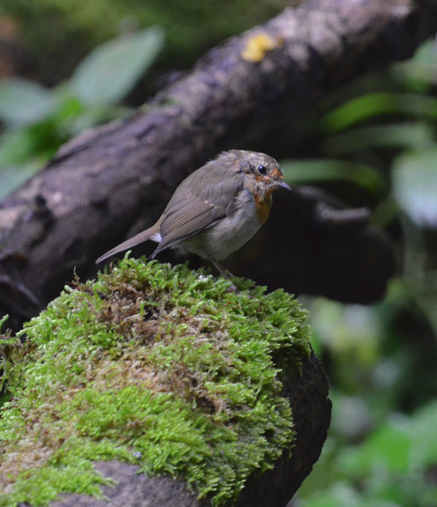
        We carried on into the woods where we saw a pair of Robins (Erithacus rubecula) hopping on and around an old, rotting log. I suppose that we’re so used to seeing Robins in the United Kingdom that we almost take them for granted, but they’re bold, cheerful little birds that sing throughout the year and it’s always a pleasure to encounter them when we’re out and about.  
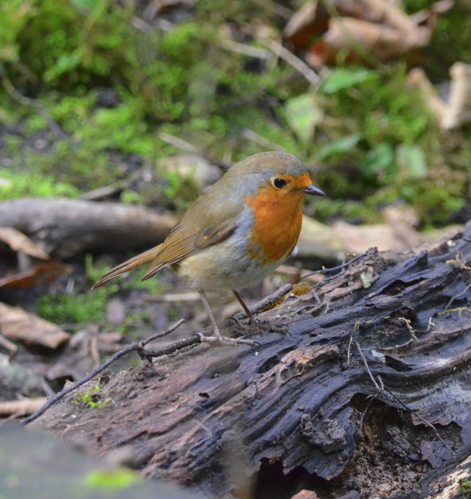
    Robin on rotting log

    Robin

        Despite North Wales still being officially in drought status, there has been some recent rainfall here as confirmed by the little bursts of mushrooms at the base of trees and on decaying logs. The mushrooms in the photographs are Hypholoma fasciculare, commonly known as sulphur tuft. You can see that they are a pale creamy colour on the outer edge, then go from yellow to orange-red in the centre, creating a sort of sunburst effect. They are quite lovely, though highly poisonous, and they certainly stood out in the gloom of the woods. [Incidentally, while we’re reasonably good on birds and wildflowers, I must point out that neither of us has suddenly become an expert mycologist – we cheated by consulting an app!]
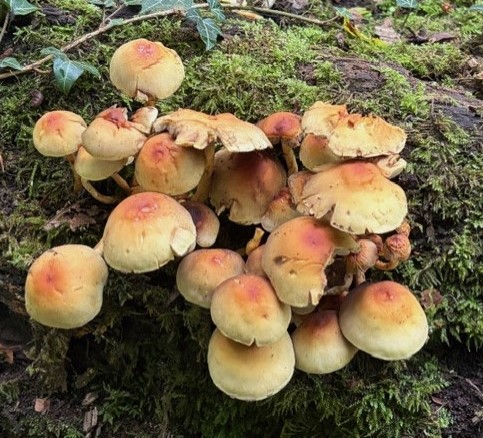
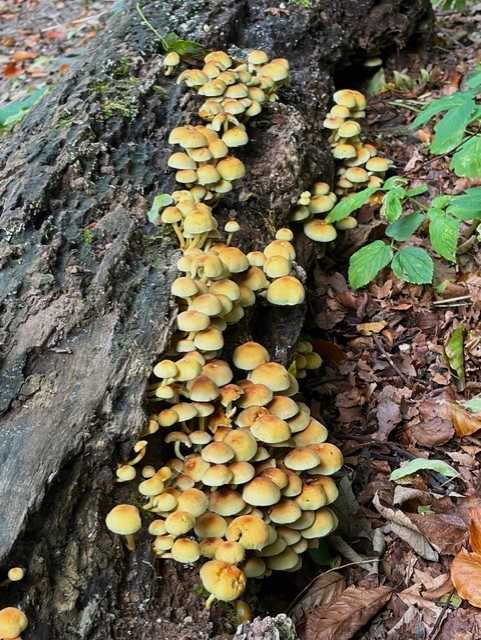
    Sulphur tuft 2
    Sulphur tuft Loggerheads

    Sulphur tuft mushrooms

        As we made our way back, the Dipper turned up again for a second photocall – we really were honoured today!
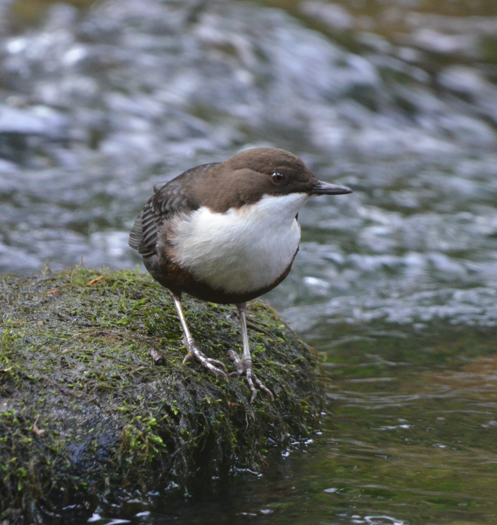
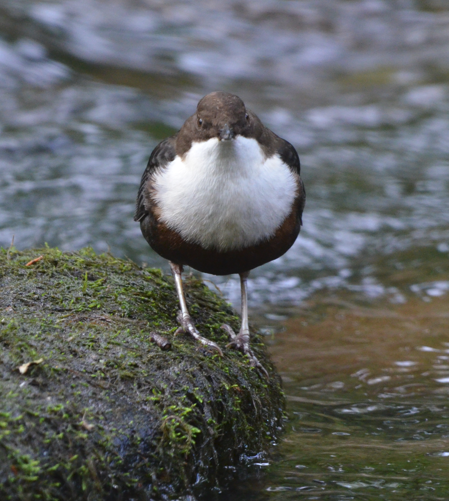
    Dipper returns
    Dipper returns 2

    The important stuff

    To The Mill House café (Tŷ’r Felin) for a cappuccino each, accompanied with a Caramel Biscoff (Stu) and a Vegan Cookie (Col). Scrumptious!  
  • At Mostyn Shore

    (Sunday 20th September, 2026)

    Down to the Dee Estuary at Mostyn in Flintshire this morning. Although it was pleasant in the sun, the 16°C temperature meant it felt quite autumnal, especially when the wind (WNW) sent through odd blasts of cold air.

        We followed the path from the back of Abakhan, scanning the fields and the irrigation ditch on our left but the birds were being sensible and staying out of the wind.

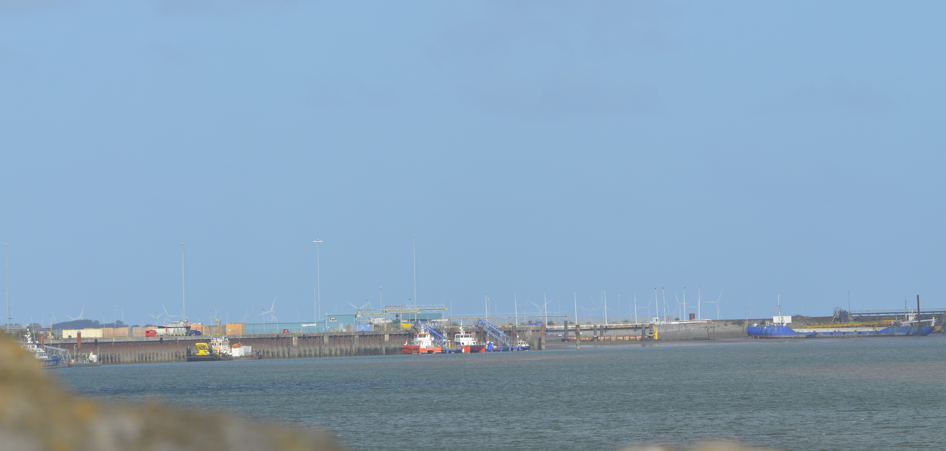
    Mostyn Docks

    Mostyn Docks

        Thankfully, the wind died down once we reached the road that runs alongside the estuary. The sound of Oystercatchers reached us from the middle of the river, where a multitude of them were feeding on a narrow sandspit revealed by the receding tide. At the opposite end of the spit was a large mixed flock of  birds. The estuary here spans about 4 or 5 miles (6-8 km) and, even though we were only looking halfway across it, most of the birds appeared indistinct through binoculars.

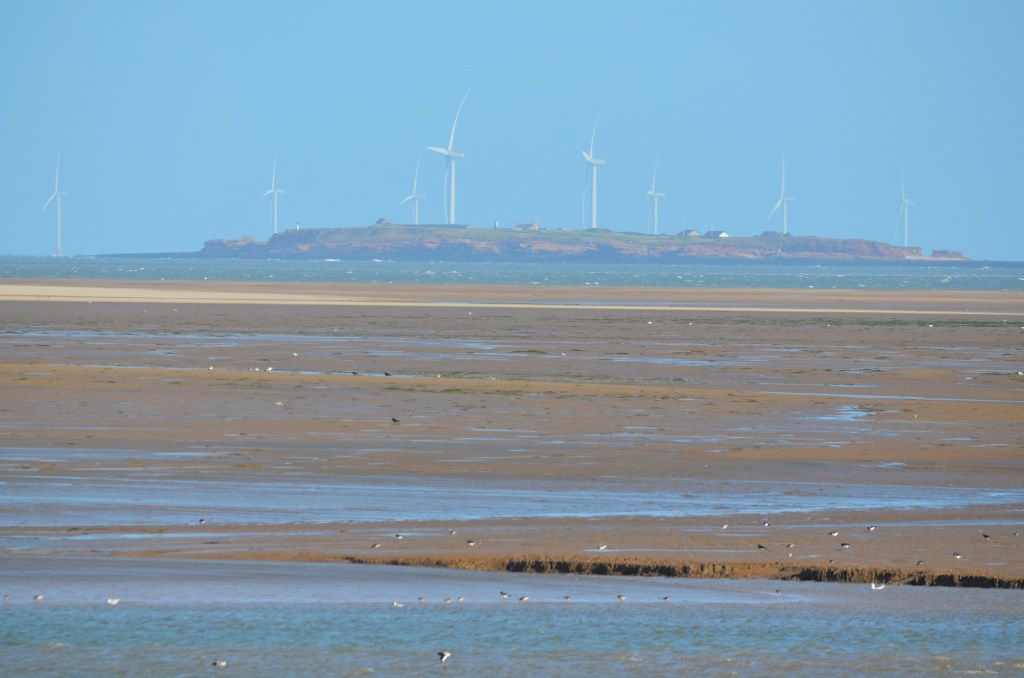
    Hilbre
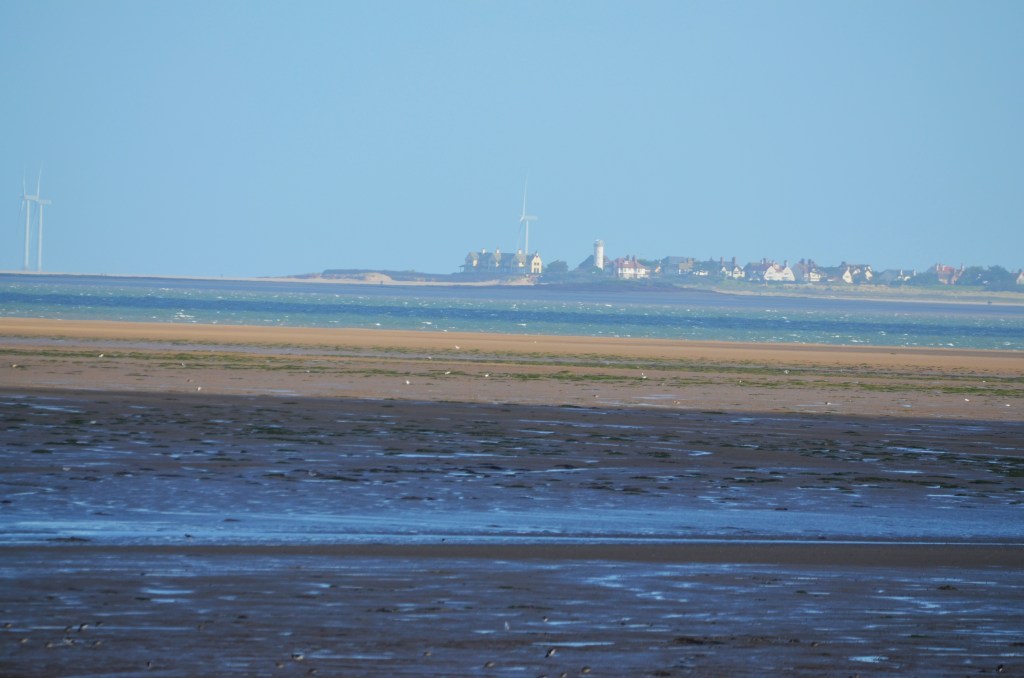
    Hoylake from Mostyn

    Top: Hilbre Island at the mouth of the Dee estuary; bottom: Hoylake viewed from Mostyn – the white ‘lighthouse’ you can see in the middle is actually part of a house

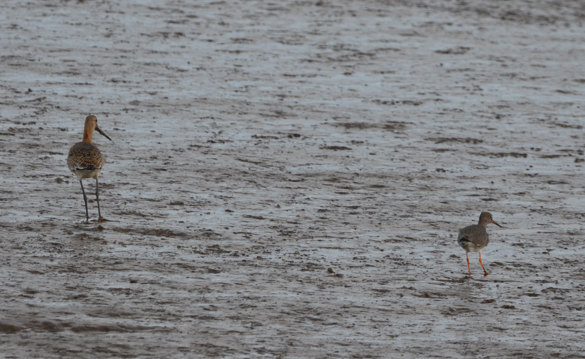
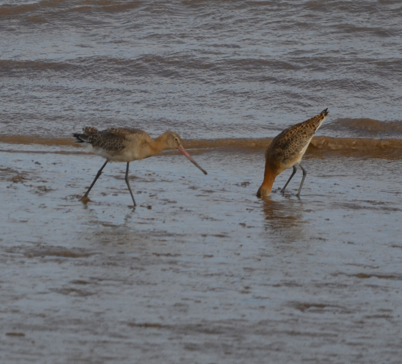
        We waited patiently and eventually several birds flew in and landed on the Mostyn shore near to us and began feeding. A Redshank (Tringa totanus) was feeding along a stretch of shoreline by itself. This part of the beach must have provided rich pickings as it was soon joined by a Black-tailed godwit (Limosa limosa) that began combing the same area. (Black-tailed godwits and Redshanks have different length beaks, which means that they don’t feed at the same depths of water, sand or mud, so they don’t actually compete with each other for food).

    Redshank and Godwit

    Black-tailed godwit (left) and Redshank (right)

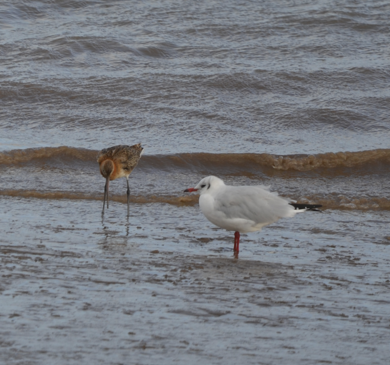
        Likewise, Black-headed gulls (Chroicocephalus ridibundus) will happily feed on the same stretch of sand as Black-tailed godwits. However, Black-headed gulls (like most gulls, I suppose) also have the habit of pinching food if the opportunity presents itself: they will sneak in and try to grab any morsels brought to the surface by the godwits’ probing. You can see in the photograph below that the godwit is alert to the presence of the gull and is making sure it doesn’t get too close!

    BHG and Godwit Mostyn

    Black-tailed godwit and Black-headed gull

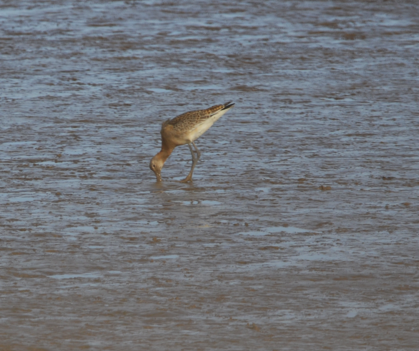
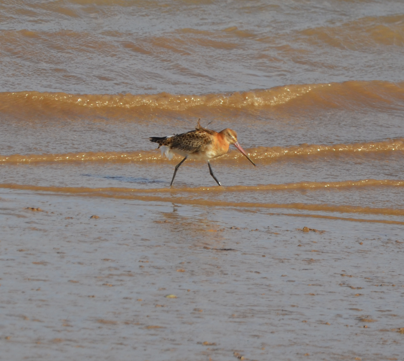
        The godwits were still in their summer plumage, a vibrant brick-red that covers neck and breast, although this will soon be gone. It’s probable that these birds had travelled from Iceland. Many will stay in the United Kingdom for winter while others might just be taking a breather before carrying on to winter elsewhere, in places such as Ireland, France or Portugal. Black-tailed godwit pairs mate for life but often winter in separate countries, only meeting up again at their breeding grounds in Iceland in the spring.

    Godwit pair
    Godwit solo
    Godwit solo red

    The godwits still had their vibrant brick-red summer plumage although – as you can see in the bottom photograph – they are beginning to moult

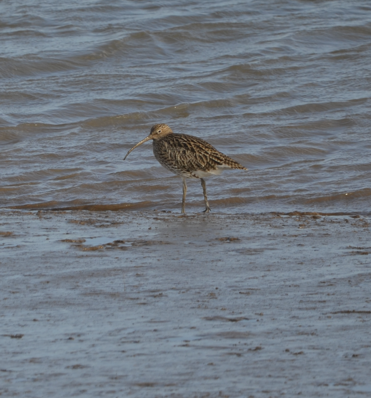
        We saw a lone Curlew (Numenius arquata) foraging at the water’s edge. These birds have declined in number over recent years and they are now on the UK Red List, signifying those birds most urgently requiring conservation action. The Curlew is a magnificent bird with a very distinctive call and, despite the drop in population, there is still the odd sighting on both the Welsh and English sides of the Dee Estuary.

    Curlew at Mostyn

    Curlew

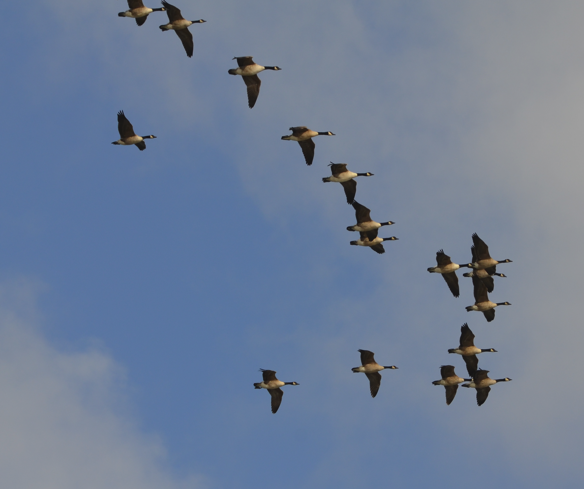
        As we turned to make our way back, a flock of Canadian geese (Branta canadensis) flew over in formation, honking noisily as they made their way towards the Wirral.   

    Geese at Mostyn

    Canadian geese

    The important stuff.

    We called in at the café at Abakhan for our cappuccinos and cakes – Coffee and Walnut (Stu) and Raspberry Bakewell (Col). Most enjoyable!

  • Roodee Mere

    (Sunday 13th September, 2026)

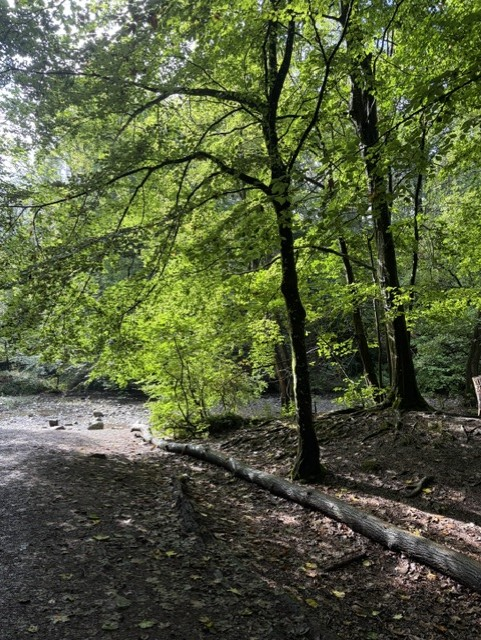
    Over to Royden Park on the Wirral this morning. It was a sunny 20°C with barely any wind as we made our way through the woods to Roodee Mere.

        Despite the recent rain that we’ve all experienced in the last few weeks, it seems that parts of the United Kingdom are still a long way off regaining their pre-heatwave water levels. Surprisingly, Wirral and Cheshire managed to avoid being placed in official drought status unlike many parts of England and North Wales (where, at the time of writing, it is still in place).

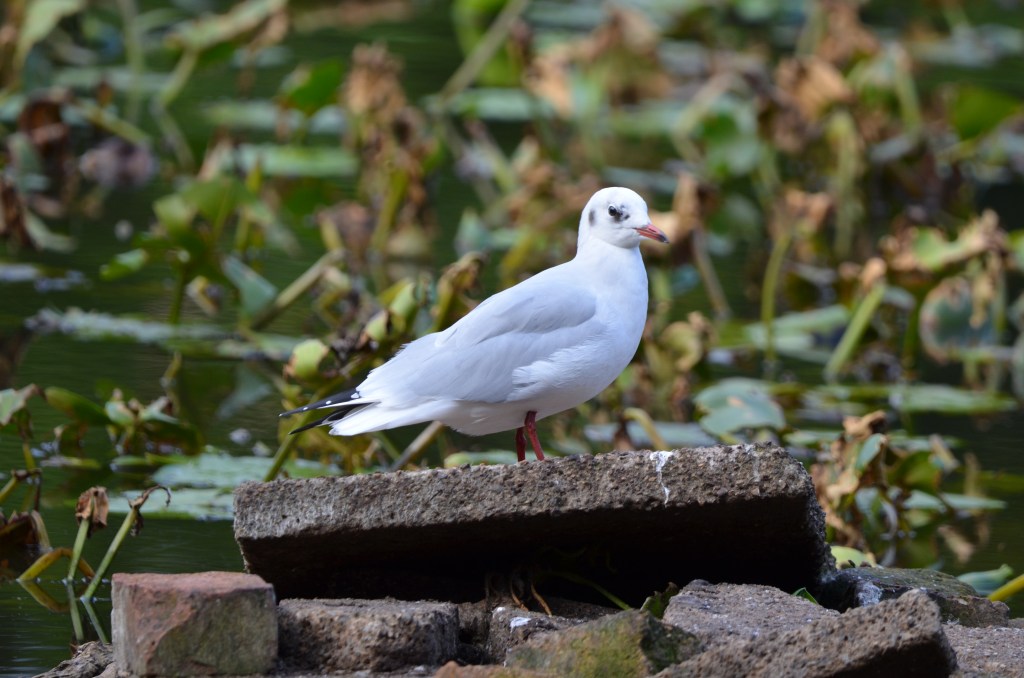
    BHG non breeding

    Black-headed gull perched on rock pile exposed by the low water level at Roodee Mere

        Even so, water levels are clearly very low, as indicated in the photograph. While previously, we’ve seen the Black-headed gull (Chroicocephalus ridibundus) perched on the same rocks in the mere, we’ve never seen the rock pile underneath as it’s usually submerged. (We’re fairly sure, by the way, that this is the same Black-headed gull we’ve seen here on recent occasions, although I suppose we have to be open to the possibility that it might be a different bird). The gull is in its non-breeding plumage, which means that the chocolate-brown hood (not black, despite the bird’s name!) has been replaced with just a smudge at the side of its head, behind the eye. Both male and female Black-headed gulls adopt identical breeding and non-breeding plumages so it’s very difficult to separate the sexes.

    Mallard water Roy
    More Roy

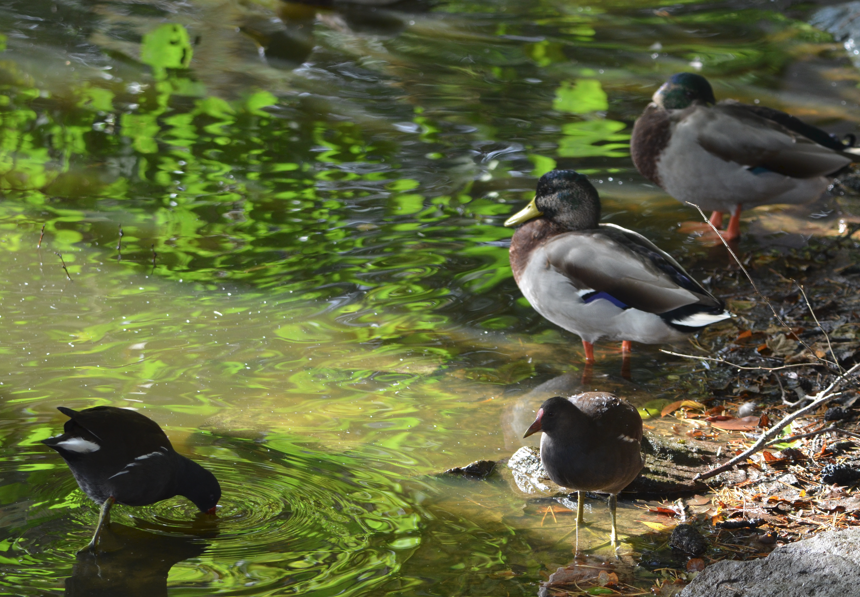
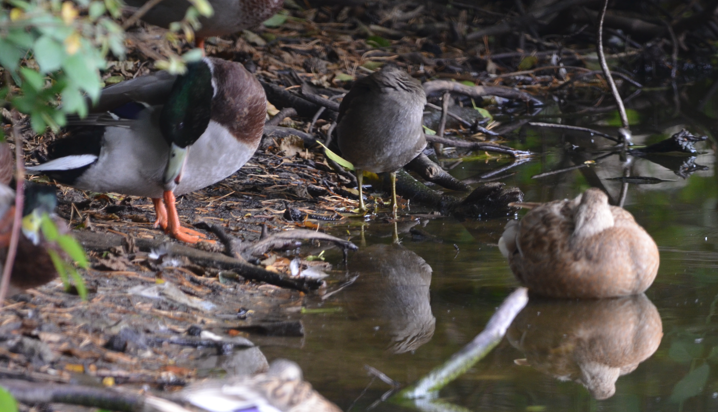
    Moorhens and Mallards enjoying the sun

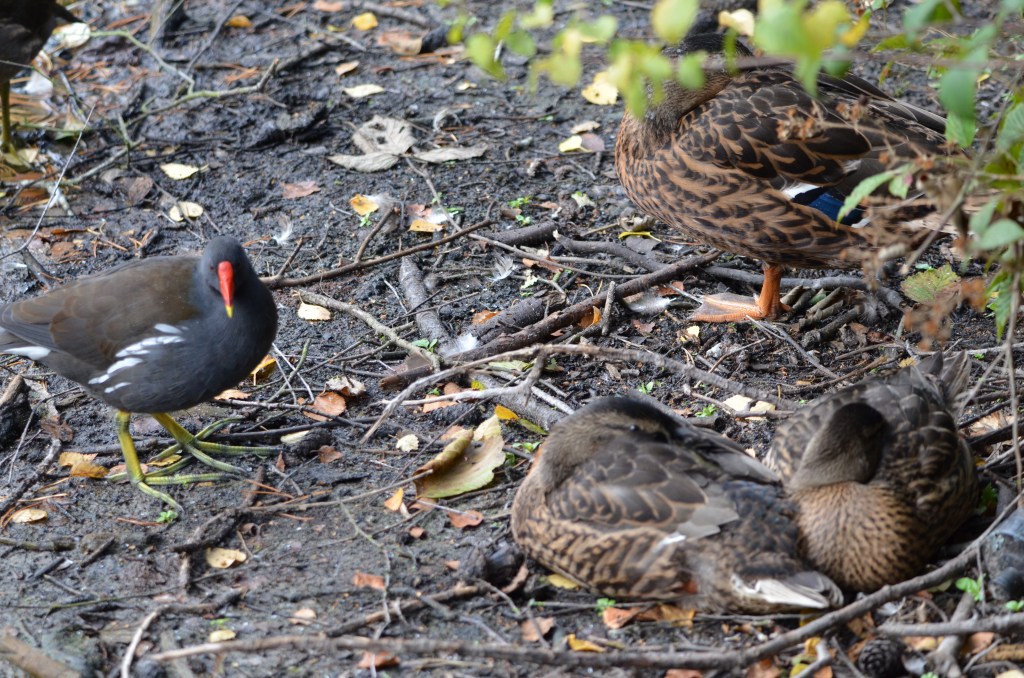
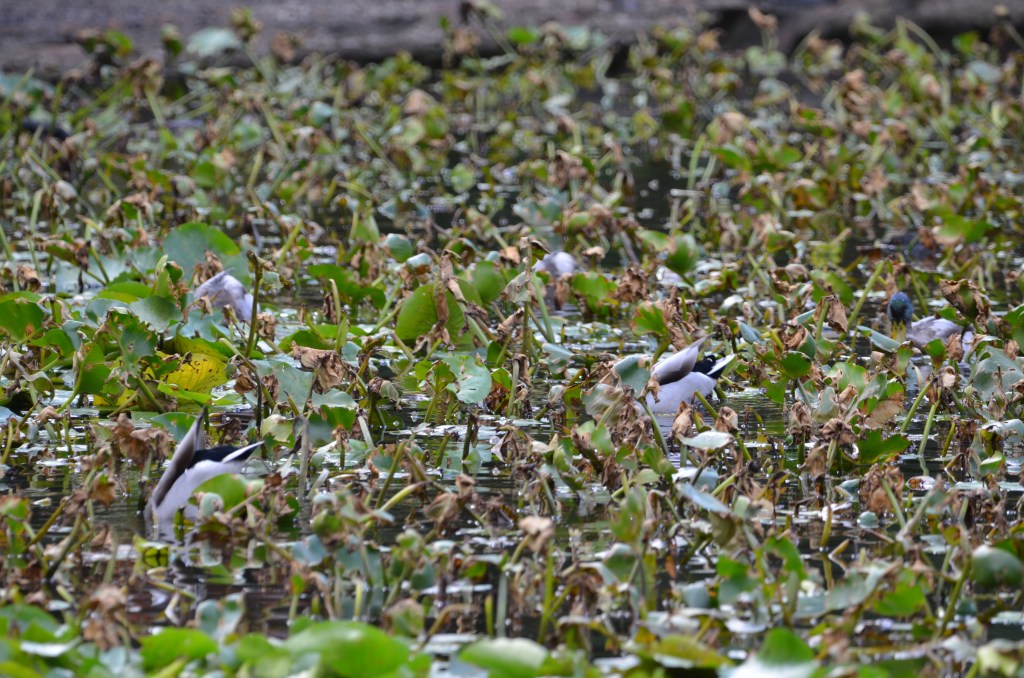
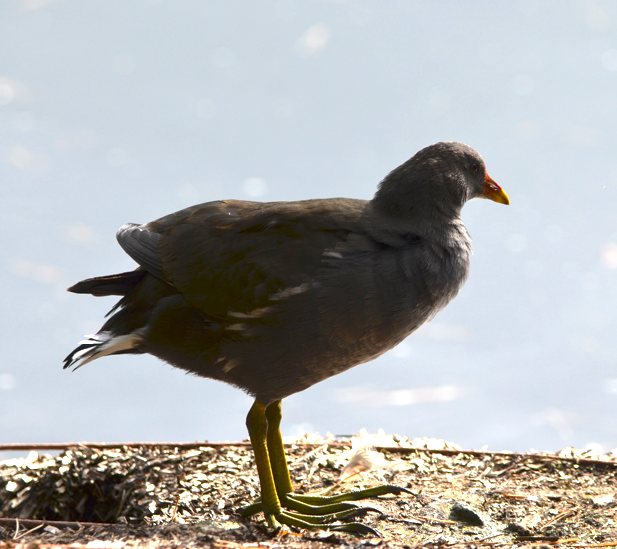
        There were a number of Mallards (Anas Platyrhynchos) and Moorhens (Gallinula Chloropus) on and around the mere. The Mallards had found an area of sunlight on the bank which they could bask in, with their heads tucked in under their feathers, although one or two males were dabbling out on the water amongst the lily pads. The Moorhens were a little more industrious, probing in the undergrowth and at the water’s edge for morsels to feed on.

    Dabbling Mallards
    Young Moorhen

    Top: Mallards showing their best sides as they dabble amongst the lily pads; bottom: juvenile Moorhen

        There was a commotion high up in the sycamore trees behind us as a flock of Long-tailed tits (Aegithalos caudatus) searched for insects and grubs to feed on. Looking through my binoculars, I could see some Blue tits (Cyanistes caeruleus) in the group as well. The two species often combine to feed in mixed flocks once the breeding season is over. The sudden flurry of activity was over very quickly, so no photographs unfortunately.

        Just afterwards, Stu alerted me to a Sparrowhawk (Accipiter Nisus) sitting in a tree quite near to us. As I looked for the branch that he was indicating, my movement was enough to scare away the bird and we watched as it swiftly retreated a little deeper into the woods out of view. Actually, we wondered if it was the presence of this Sparrowhawk that might have caused the mixed flock of Blue tits and Long-tailed tits to abruptly move on earlier as such a large number of birds would inevitably attract the attention of predators.

        We watched the Mallards for a while, enjoying the sun’s rays just like them, before sauntering off to the Courtyard Café for refreshments.

    Lethargic Mallards

    The important stuff

    A slice of Victoria Sponge (Col) and a Caramel Biscoff (Stu) to go with our cappuccinos. Very nice!

  • Water at Big Pool Wood

    (Sunday 6th September, 2026)

    A couple of changes at Big Pool Wood in Gronant, Flintshire, since we were last here only a month ago. First, there were several inches of water at the bottom of the pool – not much, considering all the rainfall we’ve had recently, but an improvement on last time, when the long dry spell had left just patches of mud. Second, sections of reeds had been cut back around the reserve. This work is carried out by the North Wales Wildlife Trust volunteers and is an essential part of maintaining the site.

        It was a nice 22°C when we arrived with a light south-easterly breeze blowing, though this was barely noticeable in the shelter of the woods. There was the odd shower at first, but the sun came out mid-morning and it became quite hot. Being the rock’n’roll rebels that we are, we went round anti-clockwise this time – well, all right, we just fancied a change!

    Immaculate Robin
    Wren big pool

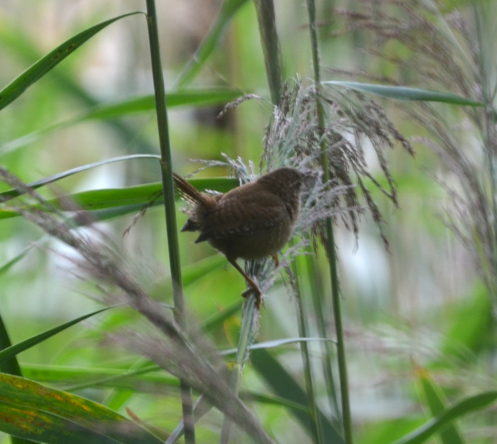
    Top: An immaculate Robin and, bottom: a less than tidy Wren

        From the first hide, we watched a Wren (Troglodytes troglodytes) creeping about a holly tree. It looked a little unkempt, unless it was still moulting. By comparison, the Robin (Erithacus rubecula) was immaculate in its new feathers – clearly dressed to impress!

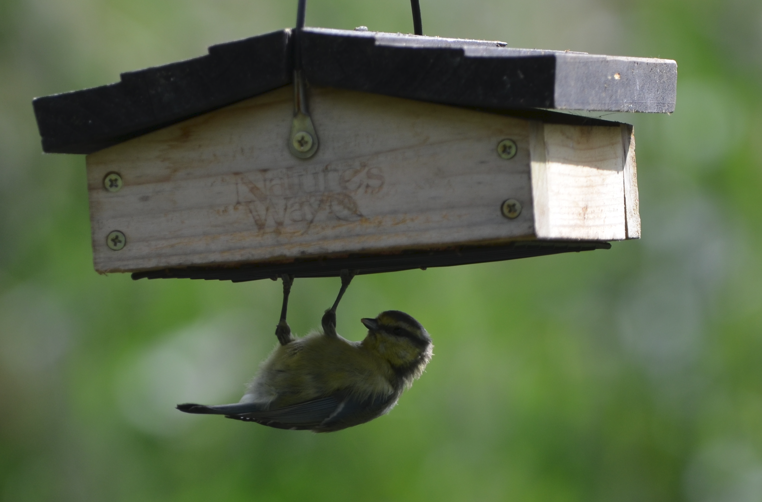
        Blue tits (Cyanistes caeruleus) and Great tits (Parus major) zipped in from the surrounding trees and help themselves from the feeders.

    Tit face-on
    Great tit big pool

    Top: Blue tits (‘who are you looking at?’); bottom: Great tit

    And we saw a family of Dunnocks (Prunella modularis) exploring the undergrowth. Initially, there was just the one adult bird, which was difficult to see: the Dunnock’s dull, streaky brown back feathers and grey chest and head were ideal camouflage against the backdrop of the reeds. But this bird became bolder later, encouraging the other three family members to come out from cover. This was an unusual sight – I don’t think we’ve ever seen more than one Dunnock at a time. A lovely bird.    

    Dunnock in reeds
    Dunnock on grate

    Top: Dunnock blending in with the reeds and; bottom: becoming a little bolder

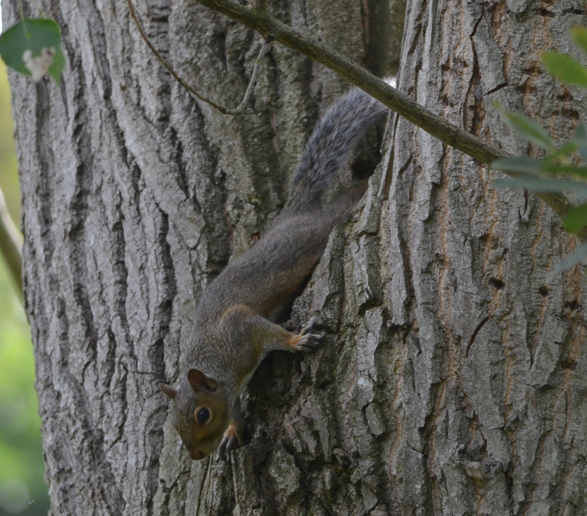
        There were creatures other than birds about, including a Grey squirrel (Sciurus carolinensis) which tentatively approached the area of ground underneath the feeders, seeking spilled nuts and seeds. It retreated into the undergrowth as a Robin flew in, the sudden movement startling it. It soon returned though and even managed to pose for a photograph!

    Squirrel at big pool

    Grey squirrel showing its best side for the camera

        Once the squirrel had finally gone, a Brown rat (Rattus norvegicus) showed its face from a small hollow at the base of a nearby tree. The rat stayed there for quite some time sniffing the air, before eventually moving out along the ground. It shot back to its hidey-hole as the Robin suddenly returned. After the Robin had flown away again, the rat came out and moved across the ground once more, hurrying for a short distance to a sort of jetty – I think it was just a long-submerged plank of wood at the base of the pool. We’d both been thinking that the rat was after food dropped from the feeders but were surprised to see it head straight for the water and start drinking. It must have been very thirsty as it drank for several minutes.

    Rat at big pool

    Brown rat tentatively checking its surroundings before venturing out for a drink of water

        It’s an obvious observation, I suppose, but a water source does attract animals of all kinds. We saw several dragonflies flying around a different section of the pool (we were at a different hide now). One dragonfly in particular seemed to be zipping around chasing off other, smaller, dragonflies. Judging by its huge size and its vivid blue colour, this one was an Emperor dragonfly (Anax imperator). The others seemed to be Common darters (Sympetrum striolatum), which are reddish-orange dragonflies with narrow bodies. These were just as fast as the Emperor and it was incredible how they seemed to race around and then just come to a complete halt, mid-air! Some of the Common darters were linking head-to-tail, presumably a prelude to mating.

    Common darter

    Common darter

        On our way back to the car, we heard lots of honking from over the fields. There was a large, mixed flock of Greylag (Anser anser) and Canada geese (Branta canadensis) gathered across a couple of nearby fields.

    Mixed flock of geese

    A mixed flock of Greylag and Canada Geese

    These fields are very close to the Dee Estuary and provide fertile ground on which to forage, hence the presence of so many birds. Small groups of geese flew off as others landed and there were actually many more birds in the fields than the photograph indicates.

    Alder at big pool
    unknown fungi

    Top: Alder leaves uniformly fragmenting; bottom: unknown fungus

    The important stuff

    We called in at the Abakhan café in Mostyn for refreshments. Col had a White Chocolate and Cranberry slice with his cappuccino, while Stu opted for a slice of Lime and Coconut Cake with his. Very nice!

  • A Walk with Friends

    (Sunday 30th August, 2026)

    Over to Loggerheads Country Park in Denbighshire this morning, where we met up with our friends – Sue, Tanya and Claire. It was a pleasant 19°C with a barely noticeable southerly wind and it stayed sunny for most of the morning.

    More Green Alyn

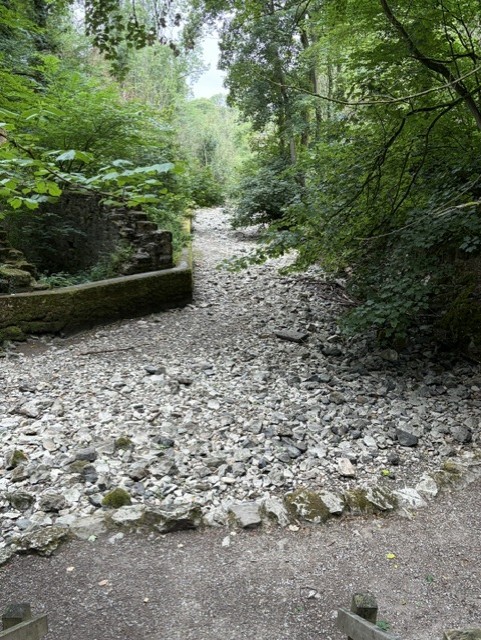
        The last time that Stu and I had been here, in late July, the River Alyn came to an abrupt halt not far beyond the stone bridge that crosses onto the Leete path. As the area has had some rain since then, we were expecting the river to have risen a little, but the water is still quite low, petering out just a little bit further than it did during the drought. The Alyn does flow underground into various swallow holes and caves so this may account for the water levels taking some time to recover.

    Green Alyn
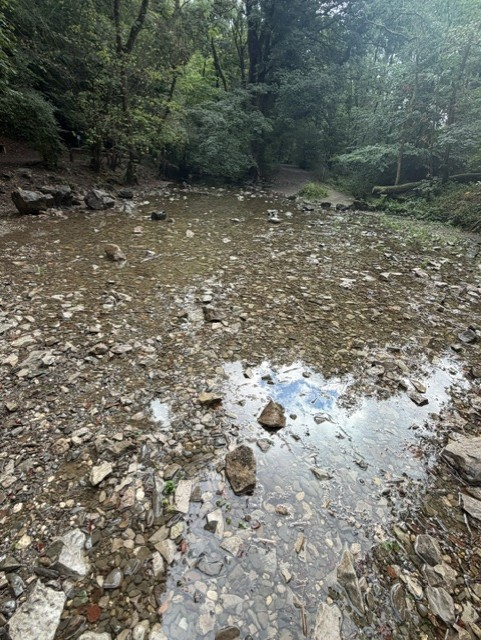
    Puddle Alyn

    While the bed of the River Alyn is still very dry, the trees and undergrowth look more vibrant than they did during the recent drought

        Sue and I were scanning the river for Dippers but had been unsuccessful. Stu pointed out one he’d spotted, which had concealed itself behind some overhanging branches of a sycamore tree on the far bank. We could just make it out behind the bunched leaves, but this particular bird wasn’t in the mood for posing for the camera today!

        Further along the Leete path, we spotted three Grey wagtails which appeared out of nowhere to land on the dry riverbed and began scouring it for insects to feed on. They then all zoomed off upstream. We noticed that an adult bird was aggravating another bird – a juvenile by the looks of it. We suspected that the adult was trying to encourage the younger bird to find its own territory. These might have been the same three birds that we’d seen last month – two adults and their fledgling. And while the adult birds will continue to feed their offspring after they’ve fledged there’s a limit to how long that they’re prepared to do this. While we saw quite a few insects flying around – testament to the little bit of rain that’s recently fallen – food resources are still somewhat limited due to the overall low water level.

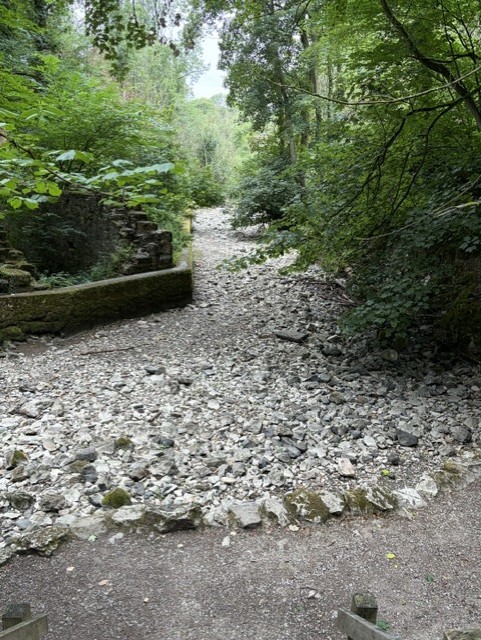
    Dry Alyn

    The riverbed by the wooden bridge is completely dry

        There were other birds in the woods today including Crows and Robins, and a Goldcrest also made a fleeting appearance.

    Robin facing Alyn
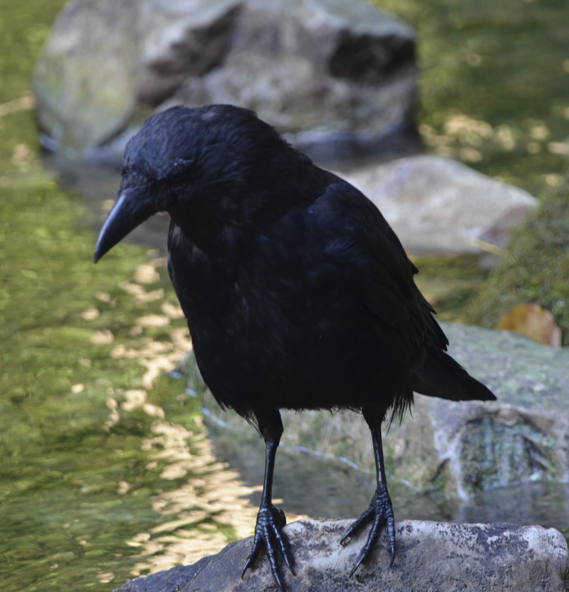
    Crow Alyn

    Top: Robin (Erithacus rubecula) and bottom: Carrion crow (Corvus corone)

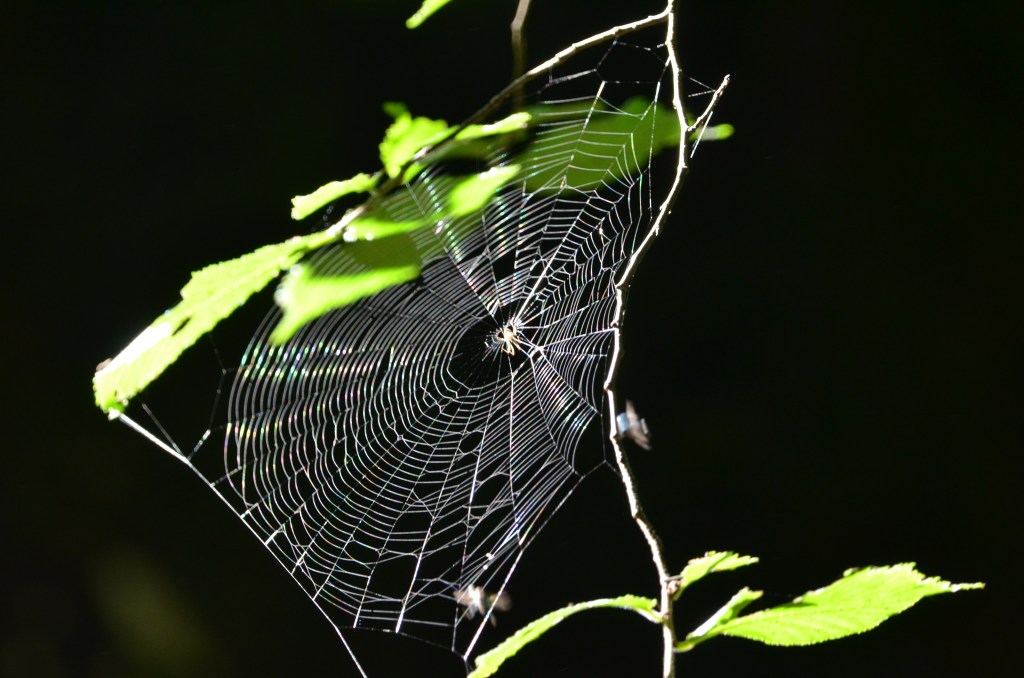
    The light dappling through the tree canopy was something that you’re subconsciously aware of, I suppose, and it was this light that attracted our eyes to the glistening strands of a spider’s web. It was suspended from a hazel tree on the opposite side of the river. In the photograph, you can just make out the spider in the centre!

    Web Alyn

    Spider in its web

        While we were all generally aware of our surroundings, I have to confess that we spent a good deal of our time just talking to one another – hardly surprising since we hadn’t seen each other since earlier in the year. We all lead busy lives, of course, but it’s always good to spend time with your friends and share moments like these whenever you can.

    Robin side Alyn

    The important stuff

    Claire and Tanya had to get off early, so it was just the remaining three of us that went to the café. Stu had a Mars bar rice-krispi cake with his cappuccino, and Col had a Lemon curd blondie with his. Sue stayed away from the cakes and just had a black coffee, donating her bonus biscuit to a very good cause (yes, Col had it!).

  • By Flint Castle

    (Sunday 16th August, 2026)

    This morning, we were at the Dee Estuary over by Flint Castle, arriving just after low tide. In Flintshire this week, the mercury reached the mid-thirties so today’s low temperature of just 16°C made a nice change, especially with the barely perceptible wind from the north-west.

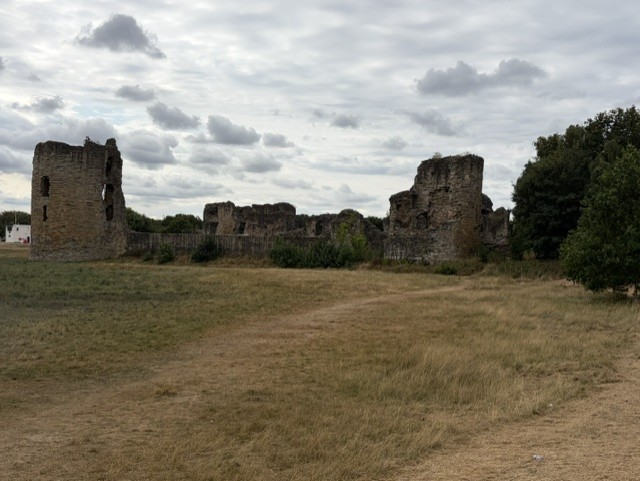
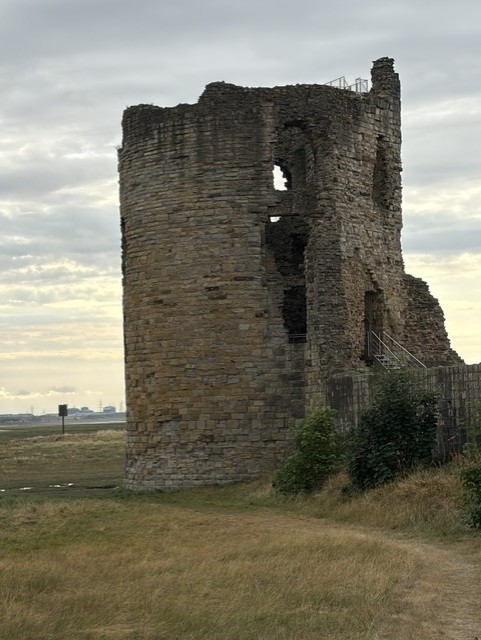
    Flint Castle

    Flint Castle

        My knowledge of Flint Castle is very limited, which is a bit embarrassing considering that I live only a few miles away. However, I do know it’s where King Richard II surrendered to Henry Bolingbroke, who would later become King Henry IV. (Oddly, I first learnt about this when studying William Shakespeare’s Richard II in school, which was er…one or two years ago now!)

    Tower at Flint Castle

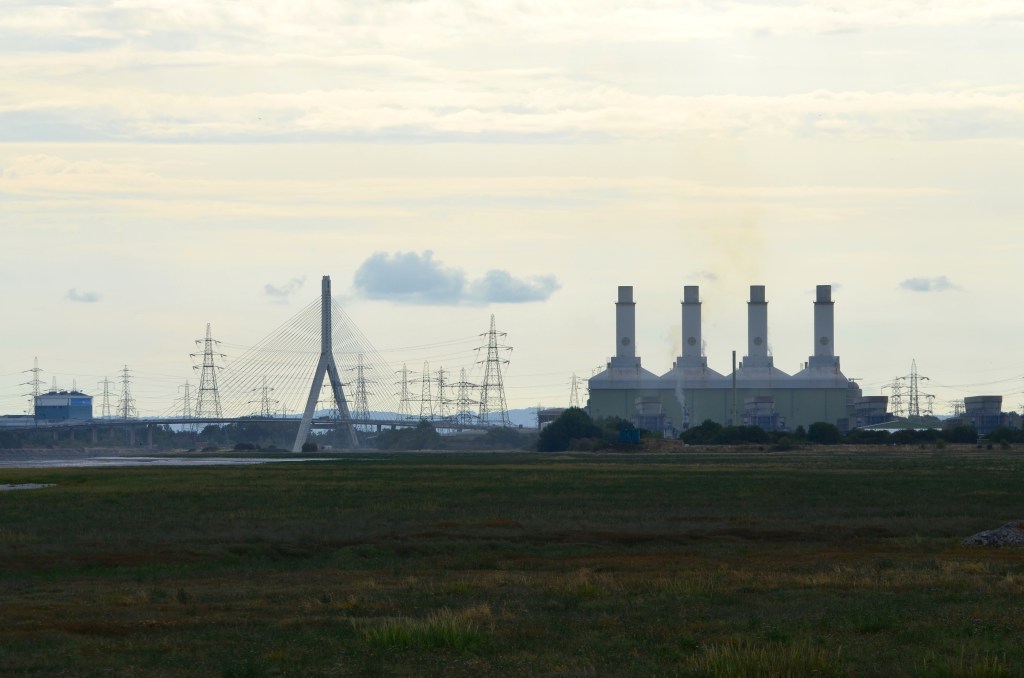
        Visibility was fair but the poor light seemed to project an atmospheric gloominess onto the castle and its surroundings. The castle does offer a wonderfully scenic backdrop to the estuary, though you’ll also find more modern edifices in the vicinity – the Flintshire Bridge which spans the Dee and the four distinctive chimneys of Connah’s Quay Power Station, for example. So, a marked combination of the old and the new!

    Flintshire Bridge & PS

    The Flintshire Bridge and the four chimneys of Connah’s Quay Power Station

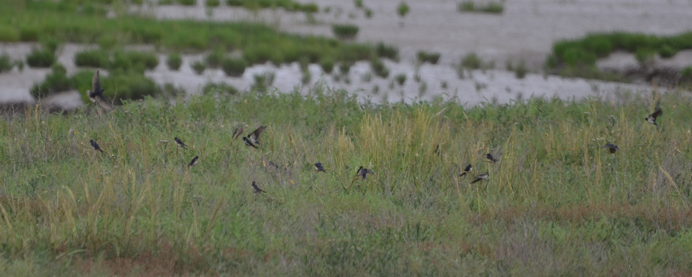
        There was a flock of Swallows (Hirundo rustica) flying low along a water channel on the marsh. (Though it’s difficult to pinpoint these channels accurately from the ground, you can follow their rising and falling contours along the marsh – possibly you’d have a much clearer view up on the ramparts of the castle, though I’m only guessing).The Swallows were evidently feeding on the wing and every now and then they would land on the ground to re-energise before taking to the air once again. They were quite far away from us – and very fast – so there’s not much detail in the photograph, but it was great to watch them.

    Swallows at Flint
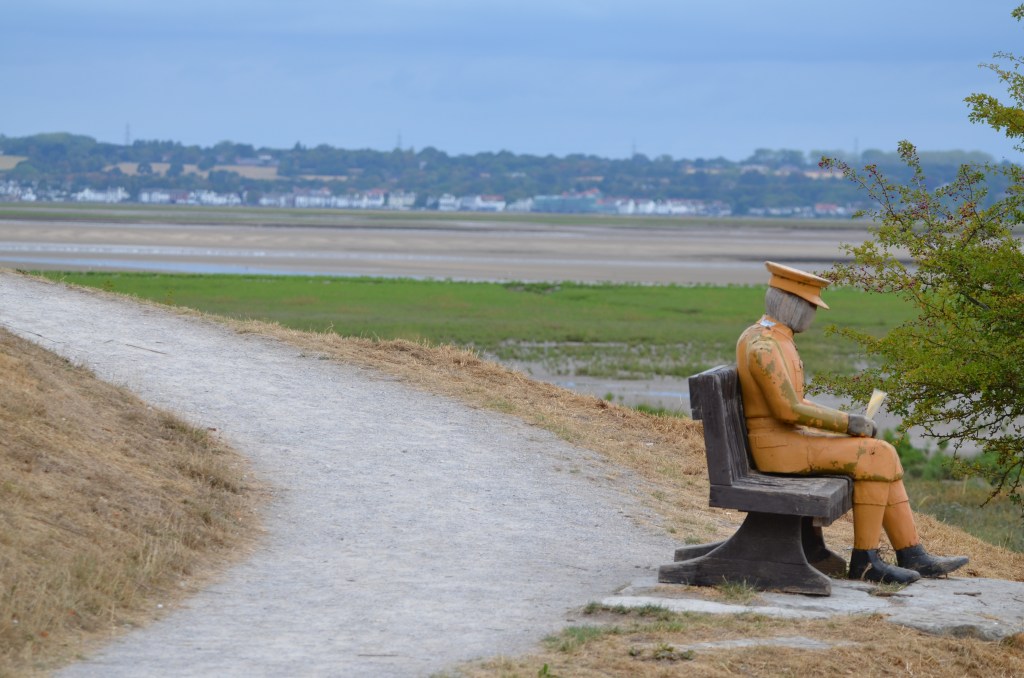
    Statue at Flint

    The low-flying Swallows (top) went unnoticed by this chap (bottom)

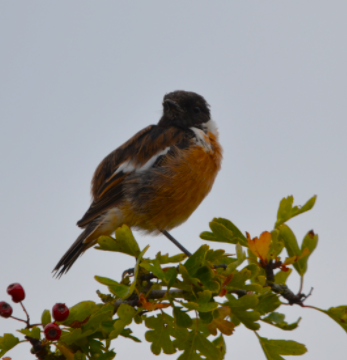
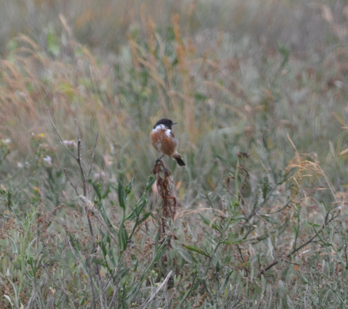
        While we were watching this display, a Stonechat (Saxicola rubicola) alighted on a nearby Hawthorn bush. The orange breast, white collar and black head on the bird identified it as male. He stayed there for a moment or two before exploring the marshland a bit further out.

    Stonechat at Flint
    Stonechat at Flint 2

    Stonechat

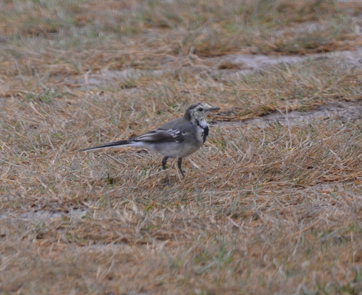
        Further inland from the estuary, we watched a Pied wagtail (Motacilla alba) as it scoured the short grass for spiders and insects, its tail bobbing up and down characteristically. As its name implies, the Pied wagtail’s markings are black, white and grey and it really is quite a lovely bird. This one was later joined by its mate.

    Pied wagtail at Flint

    Pied wagtail

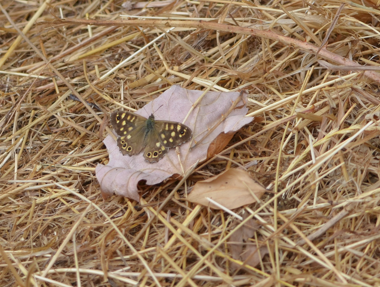
        As we made our way back through the castle grounds, a Speckled wood butterfly (Pararge aegeria) landed on a leaf in front of us and paused to take a breather. It opened its wings to allow us a decent view, although I suppose it was really trying to warm up in the weak sunlight! Speckled woods have lovely cream-coloured spots which contrast with their otherwise dark brown colour. You can see the ‘eyes’ on the wings in the photograph – one on each forewing and three on each hindwing. These butterflies like damp areas and you’ll often see them in woods – they’re particularly noticeable along dappled areas where the sun peeps through, claiming shafts of sunlight as their ‘territory’.

    Speckled wood at Flint

    Speckled wood

    The important stuff

    On the return journey, we called in at the café in Daleside Garden Centre, Hawarden, for a slice of Bakewell (Col) and Coffee and Walnut cake (Stu) with our cappuccinos. Marvellous!
  • Big Pool Wood

    (Sunday 9th August, 2026)

    Over to Big Pool Wood in Gronant, Flintshire this morning. This was our first time here and what a little gem of a place it is! The site is a woodland and reed bed nature reserve that lies adjacent to the Bridlewood Equestrian Centre.
       The reserve is small, comprising just four hectares (roughly 5 football pitches) but this smallness offers an intimacy not often experienced at larger sites and the reserve’s three hides provide close observation at different points of the reed bed. (The hides also have bird identification books inside if you don’t have your own).

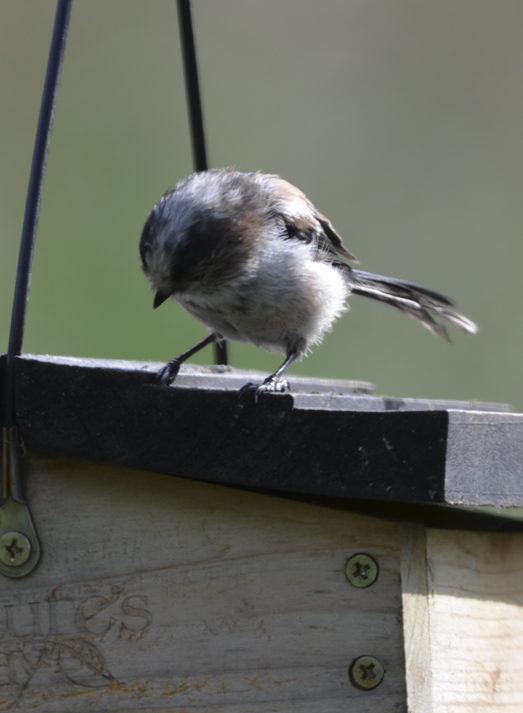
    Long-tailed tit Big

    Long-tailed tit

        The whole reserve, which is overseen by the North Wales Wildlife Trust, has been well thought out. The site is well-maintained and has a circular walk with wooden boardwalks interspersed with hard surface paths making it accessible for wheelchair users. The feeders in front of the hides must have been recently stocked when we got there as several birds were greedily feasting!
    Blue tit 3 Big Pool
    Blue tit Big Pool
    Blue tit 2 Big Pool

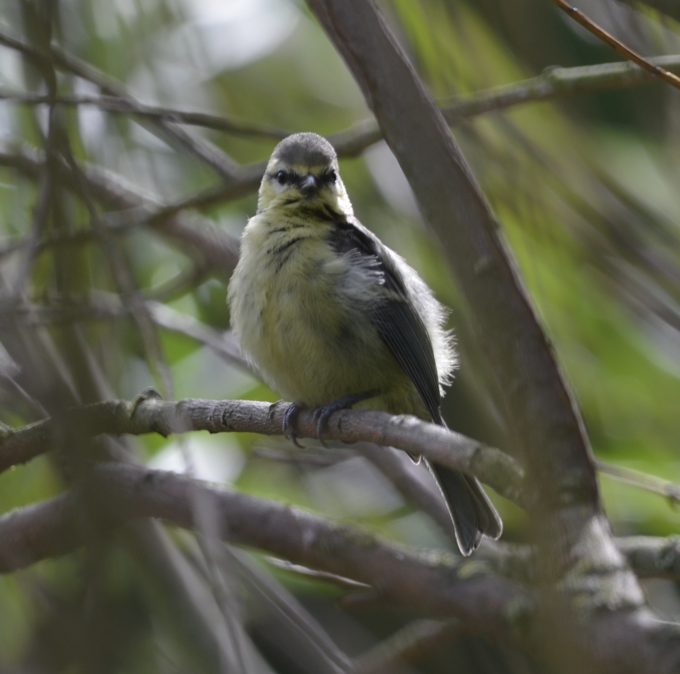
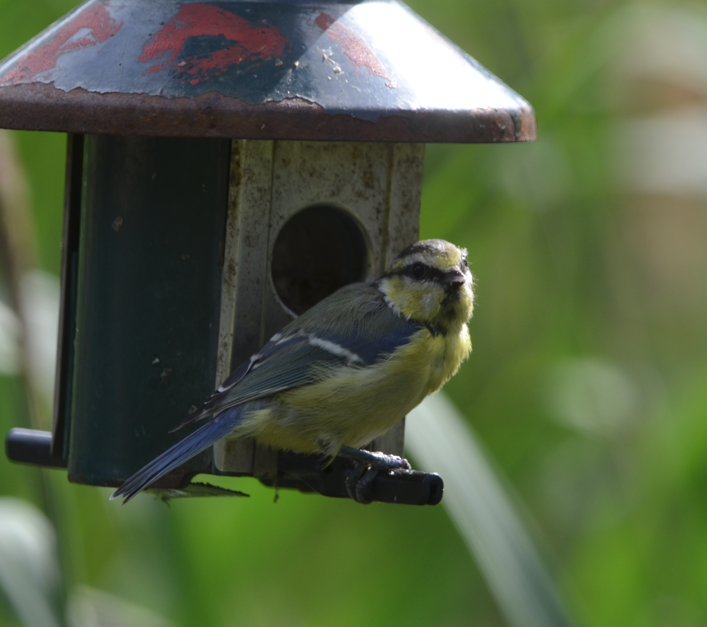
    Above: These Blue-tits are juveniles – note the yellow cheeks rather than the white of the adults and the crowns that are more grey than blue

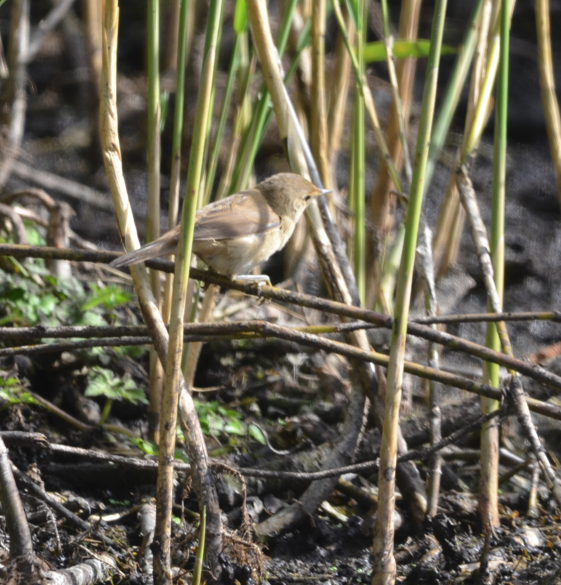
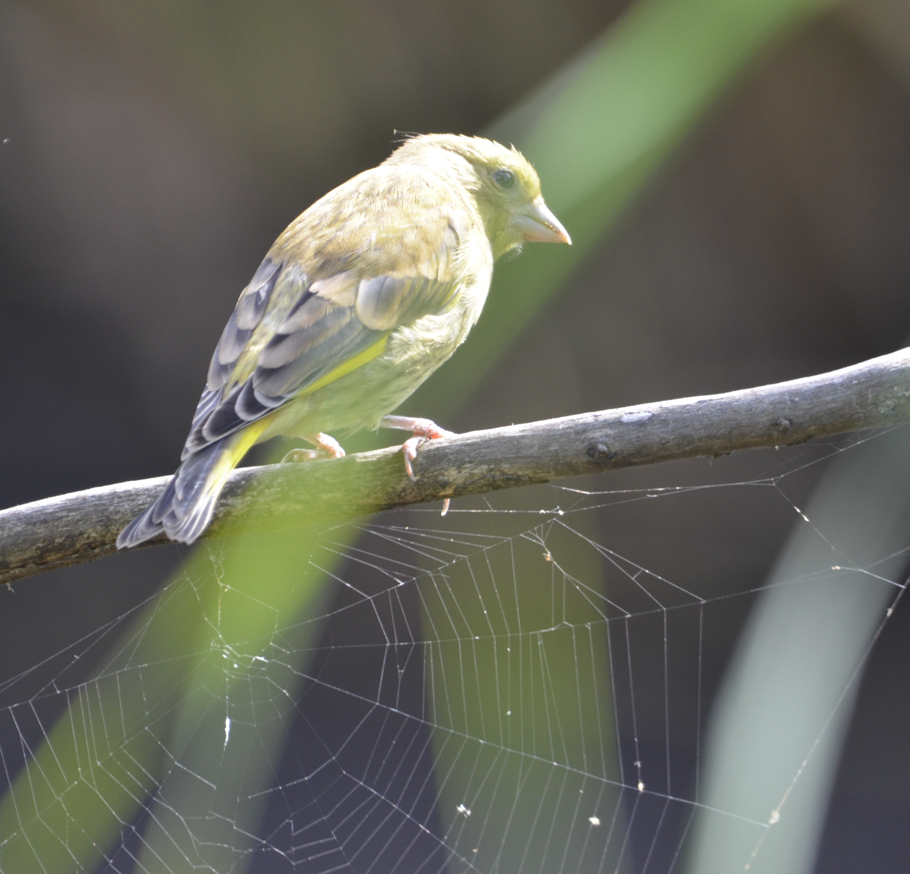
        We saw Blue tits, Long-tailed tits, Great tits, Greenfinches, Chaffinches and several Reed warblers. We also caught a brief glimpse of a Moorhen before it quickly disappeared into the undergrowth. Further around the main pathway, we followed a side path that led into the reed bed. While we paused to look out we saw the tops of the reeds moving, disturbed by whatever bird or animal was stealthily creeping below! It might have been the Moorhen.

    Reed warbler Big Pool

    Reed warbler

        There was activity on the opposite side to the reed bed too: ringing the outside of the main path is a small woodland where we were entertained by show-off squirrels and where much more timid Wrens made fleeting appearances. We also saw a small, mixed flock of Greenfinches and Chaffinches scooting from one tree to another.

    Squirrel Big Pool Wood
    Wren Big Pool Wood

    Top: Show-off squirrels were quite a common sight; bottom: unlike the much shyer Wren

    Actually, we were grateful for the shelter of the woods as, although the temperature was just 22°C, which should have been quite comfortable, the lack of wind and humidity was noticeable out in the open stretches.

        There were a couple more Greenfinches at the feeders, separate from those in the mixed flock. We’ve seen increasing amounts of these birds in several different areas on both the English and Welsh side of the Dee this year. Greenfinches were particularly afflicted by the trichomoniasis disease and hopefully they’ve come through the worst of it. It’s probably too early to say yet, I suppose, but the signs are encouraging.

    Greenfinch Big Pool Wood

    Greenfinch

        The pool itself was virtually dry with just a little layer of mud at the base of the reeds, although there were lots of alder and willow on the fringes. Both species of tree favour saturated land and actually thrive in water, which is a sign of how wet this area can be. However, it seems that nowhere has escaped the recent prolonged dry spell.

        The nature reserve is in a lovely setting and is quiet and tranquil (we saw only five other people all morning). Well worth a visit.   

    The important stuff

    There’s no café at Big Pool Wood but not to worry: one thing we are both confident of is our refreshment-spot expertise, which we’ve amassed over many years’ experience! So we called in at the café at Abakhan on our way back. We accompanied our cappuccinos with White Chocolate and Cranberry (Col) and Caramel Biscoff (Stu) – at least I can claim mine constitutes one of my ‘five-a-day’ fruits!

  • Parkgate Again

    (Thursday 6th August, 2026)

    Today, I was over in Parkgate on the Wirral Peninsula – for the second time this week. On this occasion I was accompanied by my mother, my brother, Michael, and my niece, Sophie. Regular readers will know that our chief cameraman is Stu but he had to go to work today and help keep the British economy ticking over, so all photographs were taken by Sophie today. Thanks very much Sophie!

    Goats at Parkgate

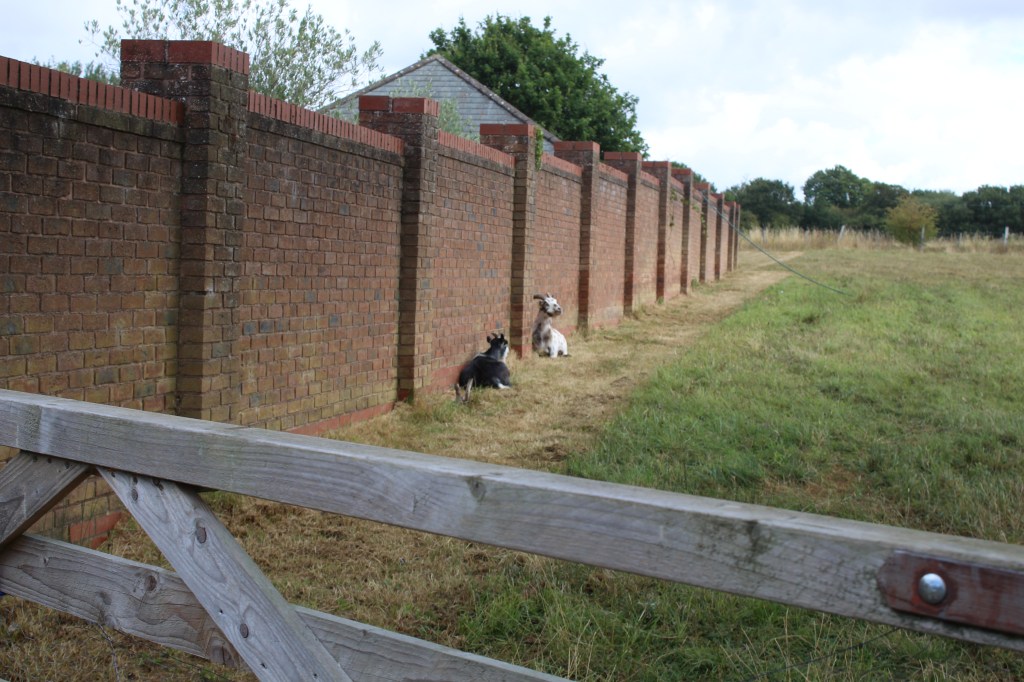
    Goats near the Old Baths carpark

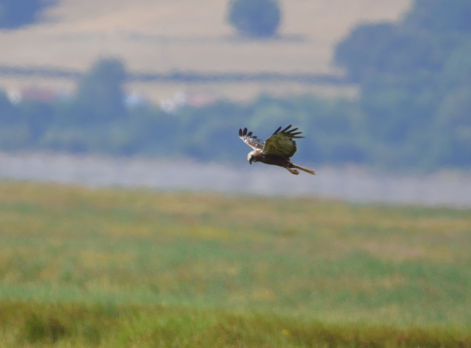
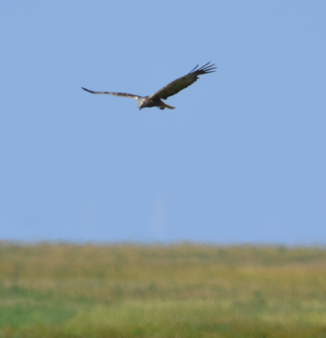
        Parkgate village lies on the English side of the Dee Estuary and is a great place to visit for birdwatching. The expansive salt marsh is 100 square kilometres and all sorts of bird species can be found here: it’s home to waders, wildfowl, herons and egrets, birds of prey, warblers…the list goes on. During today’s visit, for example, we saw several people excitedly watching a group of Spoonbills out on one of the flashes (shallow ponds). There was also a Marsh harrier patrolling low over the marsh and, later, a Kestrel hovered, facing into the wind, eyeing the ground below.  

    The Parade

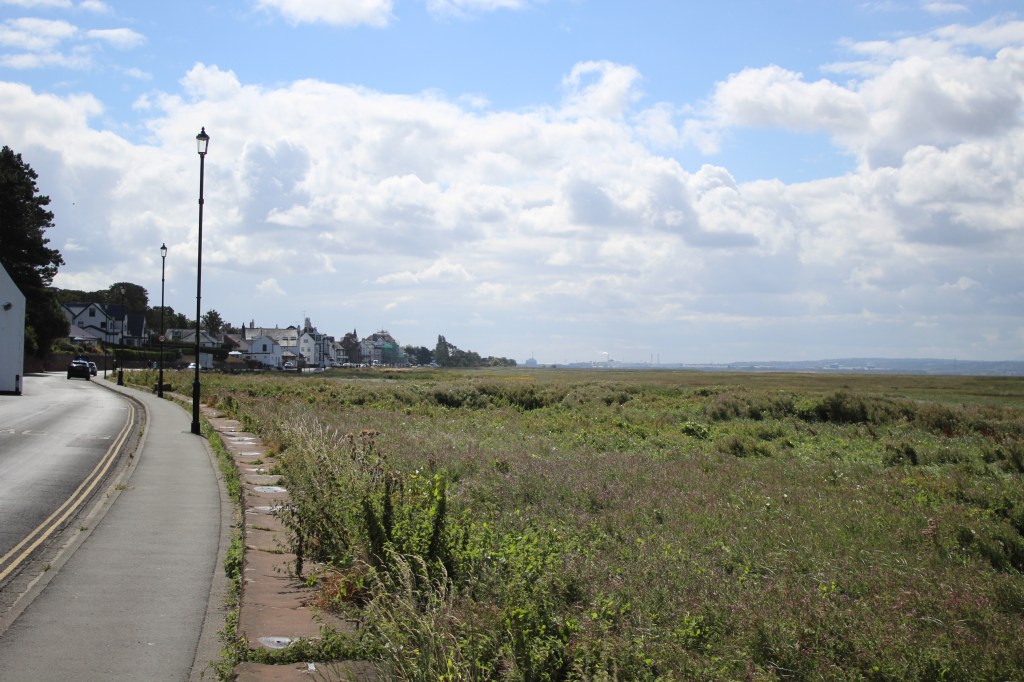
    Looking southwards along The Parade

    Pheasant in undergrowth

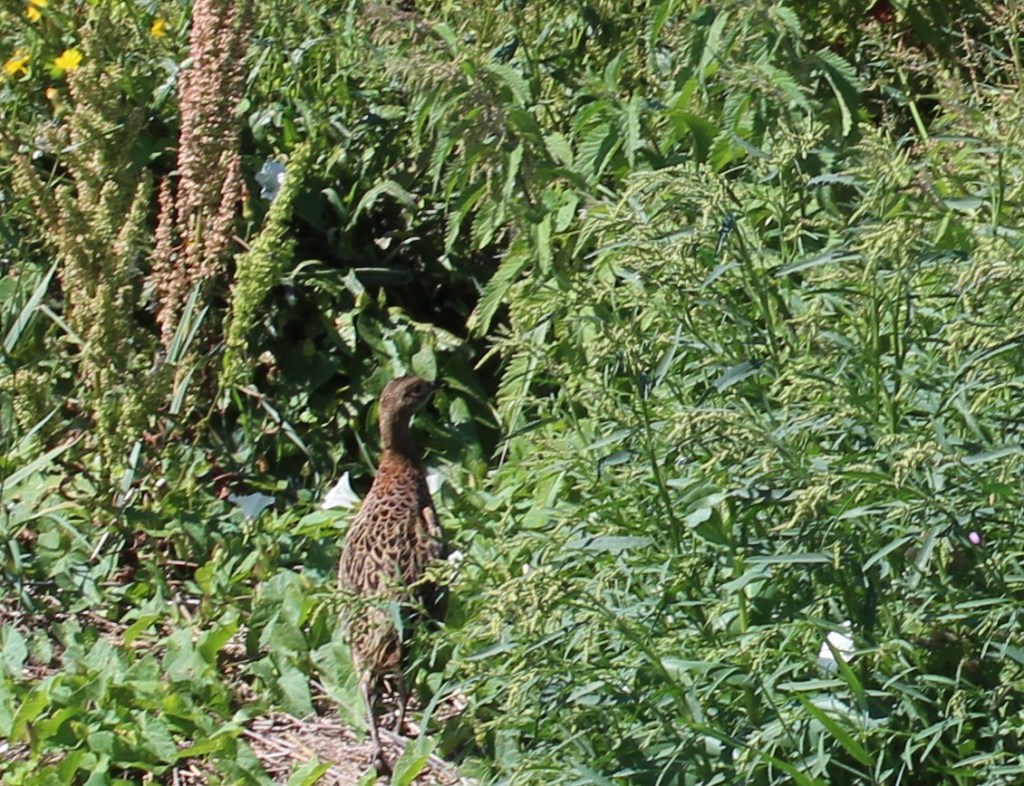
    Female Pheasant

        However, Parkgate is more than a destination for birders and wildlife-lovers and I was reminded of this as I went through Sophie’s photos later. Often, when we visit places, we can be so intent on a particular purpose that we overlook other aspects that might be just as interesting – both to others as well as to ourselves. So it was refreshing to see Parkgate through a different perspective.

    The Parade 3

        For the benefit of those who are unfamiliar with Parkgate and might be considering a visit, here’s a little bit of information about its history.

    School Lane, Parkgate

    Above: School Lane (St. Thomas’ Church is on the left); below: Girl with traffic cone on lead

    Park your dog

        Lady Emma Hamilton (originally Amy Lyon) was born in the nearby village of Ness – and raised in Hawarden in Flintshire – and composer George Frideric Handel sailed back from Ireland via Parkgate which, at the time, in 1742, was a busy port. Towards the end of the eighteenth century the accumulating silt on the River Dee meant that Parkgate could no longer function as a port and was supplanted by the port of Liverpool on the River Mersey.  

    From the Donkey Stand

    View from the Donkey Stand

        Parkgate then switched to being a seaside resort and successfully drew people in to take the fashionable salt waters. Open-air baths were built during the 1920s which became very popular and helped Parkgate maintain its status as a resort right up until the late 1930s. Sadly, not a lot remains of the baths now except the odd section of wall at the Old Baths carpark which lies beyond the Boathouse pub.

    The Parade 2

    Looking northwards along The Parade

        Parkgate is well worth a visit and you don’t have to be a birder to enjoy it either.

  • Low Tide at Parkgate

    (Sunday 2nd August, 2026)

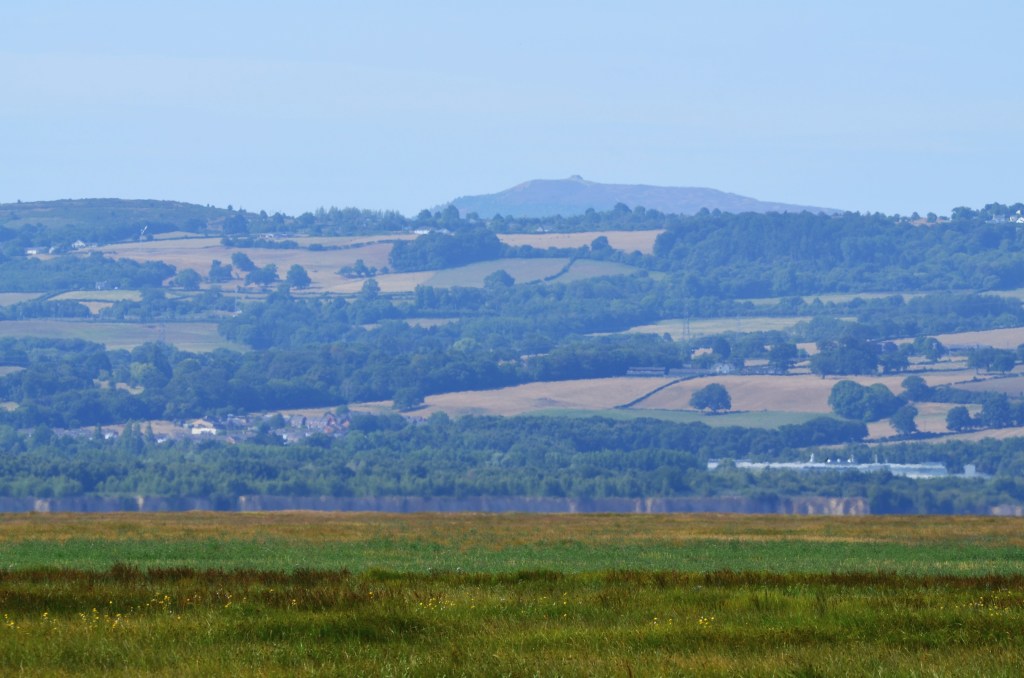
    Over to Parkgate on the Wirral Peninsula this morning where it was a sunny 21°C with just a faint breeze (ESE). Visibility was very good and we had panoramic views of the Dee Estuary: Moel Famau and the other hills on the Clwydian Range stood out sharply to the south of us and, in the opposite direction at the estuary’s mouth, we made out the many wind turbines that stretch across Liverpool Bay.

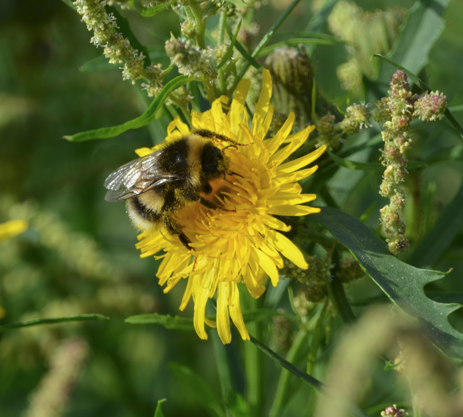
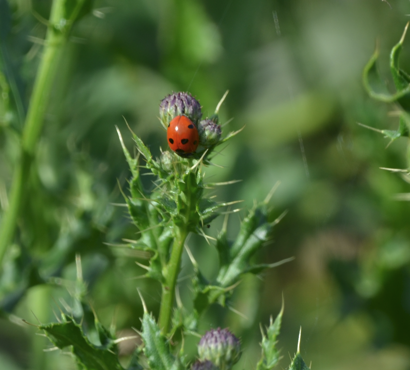
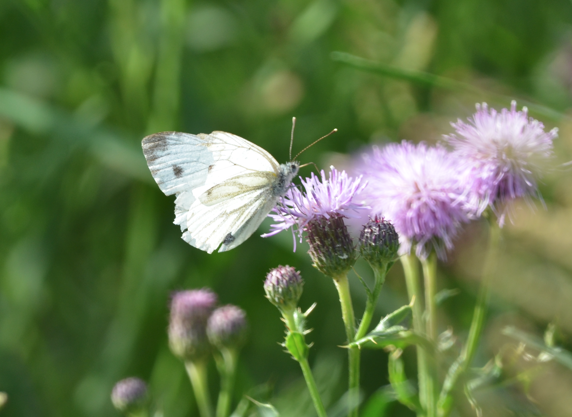
        The trees and bushes near the Old Baths have clearly been stressed by the current drought, their leaves browning and crisping before dropping early. Conversely, Dandelions, bindweed, knapweed and thistles out on the marsh seem to be thriving – all obviously more able to cope. A welcome consequence of this hardiness is the variety of insects that visit them. We spotted ladybirds, White-tailed bumblebees and several white butterflies – mostly Small whites, although we did see one Green-veined butterfly too.

    White-tailed Bumblebee, Parkgate
    Seven spot
    Small white Parkgate

    Top: White-tailed bumblebee; middle: Seven-spot ladybird; bottom: Small white butterfly

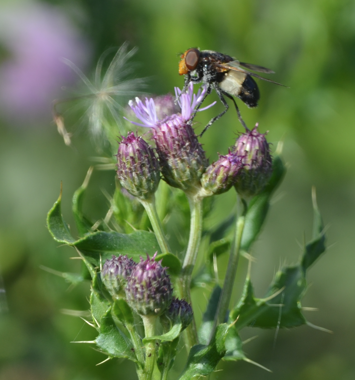
        We were intrigued by several hoverflies which seemed to be especially partial to thistle flowers. These are Pellucid hoverflies (also known as Pellucid flies). They are mostly black except for a distinctive white band around their abdomens and they have very large, reddish-brown eyes, which provide them with a wide field of vision. As with other hoverflies, Pellucid hoverflies have evolved to mimic bees or wasps and this mimicry acts as a visual deterrent to predators such as birds, amphibians or spiders that might ordinarily prey on them but will hesitate if they believe they might get stung!

    Pellucid Hoverfly

    Pellucid Hoverfly

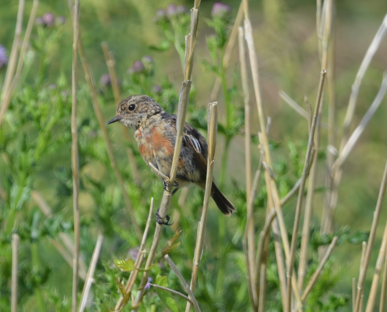
        A pair of small birds scooted low in front of us. They were very quick but Stu managed to take a snap of one of them clinging to a reed, before it swiftly departed again. This looks like it’s a juvenile Stonechat. Even without the more defined red-orange breast of the adult, it’s still a striking-looking bird.

    Juvenile Stonechat

    Juvenile Stonechat

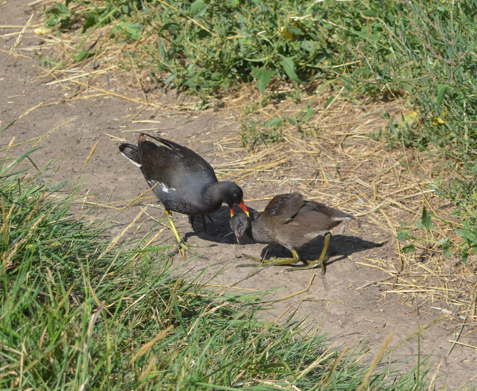
        Down at the Donkey Stand, we looked over the other side of the wall and watched an adult Moorhen as it ferried its chick back through the reeds to shelter.

    Moorhen scolding

    Moorhen encouraging its chick to seek shelter

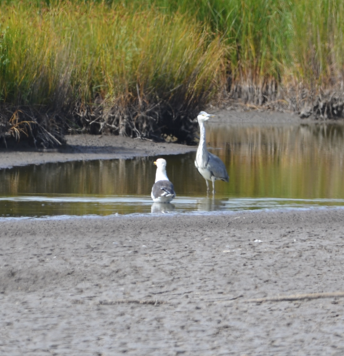
    Further out. the ‘flash’ looked bone-dry apart from one small section of water in the far corner where a Grey heron stood forlornly hoping for the best. We were there just after low tide although I believe the flash (or shallow pond) relies on rainwater as much as water from the river and – like everywhere else – Parkgate hasn’t had much rainfall recently.

    Gull and Heron

    Heron and gull lamenting the absence of water.

    On the nearer side of the flash were several Lapwings and Black-headed gulls, most of which were sprawled on the ground and making the most of the sun. They didn’t stir, even when a Marsh harrier flew low nearby. Talk about lethargic!

    Male Marsh harrier

    Marsh harrier

        To be fair, the harrier seemed to be concentrating on a long stretch of the marsh that it was patrolling and that was mostly obscured form our view. Flying characteristically low, the bird would every now and then twist and drop down, feet first. This is how the Marsh harrier grabs the small mammals, amphibians and fish that make up much of their diet, although Marsh harriers are opportunistic predators that will also take small waterbirds like Moorhens, too. This Marsh harrier was a male and, though the male is smaller than female – well, less bulky – it’s still a large bird and surprisingly agile. Fascinating to watch.

    Male Marsh harrier 2

        There was a scattering of House martins that seemed to be darting between the marsh and the rooves of the buildings along The Parade, where they presumably have nests: an ideal vantage point. As we turned to go, we glimpsed a pair of Common buzzards further out, leisurely rising as the thermals carried them both skywards.

    Panorama

    Moel Famau from Parkgate

    The important stuff

    We called in at Daleside in Hawarden on the return journey where we each had a Vanilla slice with our customary cappuccinos. Very gooey!

  • A Trickle of Water

    (Sunday 26th July)

    Over to Loggerheads Country Park in Denbighshire this morning. A westerly wind blowed the odd gust but, as ever, we were pretty much sheltered down in the woods. The 16°C temperature was much cooler than it had been in the last few days, but there hadn’t been any rainfall for quite some time – in fact, North Wales had officially been declared as being in a drought only days earlier.

        The pond just beyond the old sluice gate was completely dried up and the exposed earth resembled crazy paving. Admittedly, this is just a shallow area of water – a ‘spillover’ if you like – and we quite often see insects such as dragonflies and damselflies roaming over it and, on occasion, a solitary Heron. But not today.

        Halfway across the stone bridge leading into the woods, we paused to look upstream: the River Alyn was still flowing reasonably well, but when we looked downstream, after just twenty or so metres, the river became a mere trickle of water before disappearing altogether. I should point out that the Alyn does naturally disappear underground at Loggerheads into the limestone swallow holes and caves before the river reappears further downstream, a phenomenon that is more noticeable during prolonged spells of dry weather in the summer months. But even taking this into account, this was the lowest we’d ever seen the Alyn at Loggerheads.

        We weren’t expecting to see much in the way of birds or wildlife at all, given the lowness of the river, to be honest. However, we often see White-throated dippers along this stretch of the river and we know they don’t tend to stray far from their habitat, so we crossed our fingers. We were in luck – before long we saw, perched on a rock mid-stream, a Dipper perform the familiar bobbing action that gives the bird its name. We watched for a while as the Dipper submerged itself in the water searching for food before it eventually flew off upstream.

    Dipper dry

    White-throated Dipper

        Moments later, we were surprised to see three Grey wagtails – two adults with a much duller-coloured juvenile. When we were last here at Loggerheads six or seven weeks ago, there was the same family set-up – that is, two adults and one juvenile. Although Grey wagtails will carry on feeding their young and staying close by them after they leave the nest – monitoring their progress, if you like – this is typically for about two weeks. So, the juvenile that we saw back then should already have become independent and have had to find its own territory, which means that the juvenile we saw today is probably from the adults’ second brood.

    Grey wagtail dry river
    Grey wagtail dry river 3

    Grey wagtail

        We carried on along the Leete path beyond the wooden ‘bat’ bridge (the bridge has a carving of a bat suspended above the centre of it). Looking down at where the river usually flows, we could see only the dry rock of the riverbed.

        There was a distinct absence of birdsong too, everywhere eerily quiet. This is probably due to many of the birds not wanting to draw the attention of predators as they go through their summer moult: replacing feathers compromises the birds’ ability to fly well, leaving them vulnerable. (Some birds, such as ducks, shed all their flight feathers at once, leaving them completely flightless for the three or four weeks it takes for them to be replaced).  

    River Alyn stone dry

    The dried up River Alyn by the ‘bat’ bridge

        Besides the Grey wagtails and the Dipper, there were still one or two birds about today. We saw a couple of scruffy-looking Robins skipping through the undergrowth and we watched several Nuthatches darting from tree to tree. None of them made any noise though!

        The morning had remained largely overcast although under the protection of the trees this didn’t really matter. But now it started to rain. Well, it wasn’t really rain, which would have been very welcome, but more a thin spray of the faintest vapour which disappeared almost immediately.

    The important stuff

    Over to Tŷ’r Felin (The Mill House café) which has moved from the small room right next to the mill and now sits in the much larger area in one of the main buildings at the entrance to the park. We sat outside under the tree sipping our Cappuccinos and savouring the delights of a slice of Bara Brith, with full butter of course (Col), and a slice of Cherry Cake (Stu). Marvellous!