Author: Colin J

  • Parkgate Again

    (Thursday 6th August, 2026)

    Today, I was over in Parkgate on the Wirral Peninsula – for the second time this week. On this occasion I was accompanied by my mother, my brother, Michael, and my niece, Sophie. Regular readers will know that our chief cameraman is Stu but he had to go to work today and help keep the British economy ticking over, so all photographs were taken by Sophie today. Thanks very much Sophie!

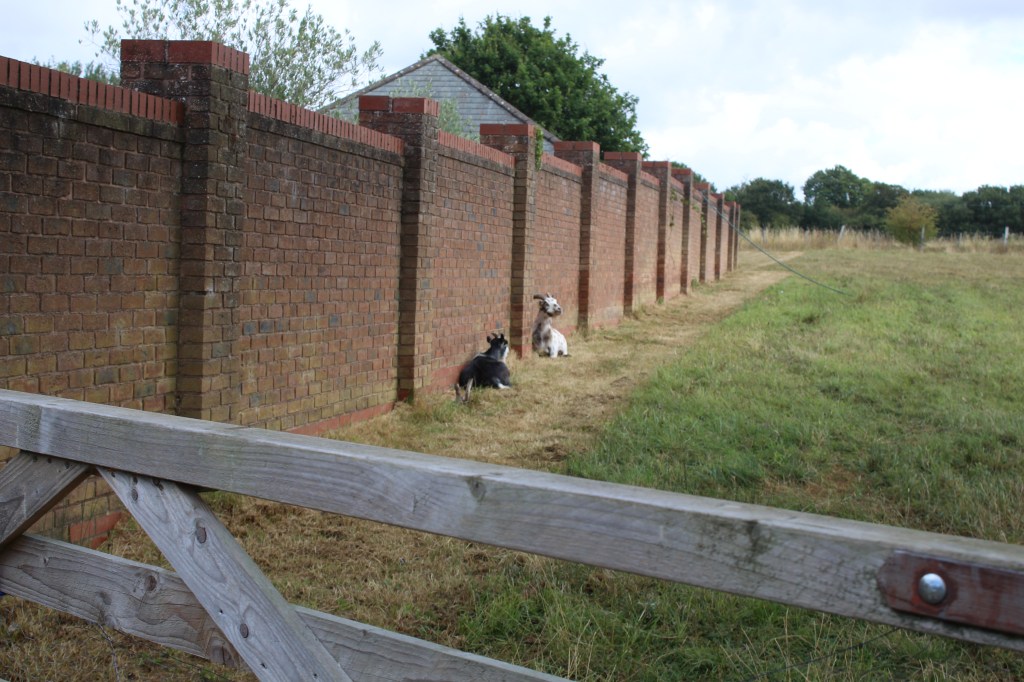
    Goats at Parkgate

    Goats near the Old Baths carpark

        Parkgate village lies on the English side of the Dee Estuary and is a great place to visit for birdwatching. The expansive salt marsh is 100 square kilometres and all sorts of bird species can be found here: it’s home to waders, wildfowl, herons and egrets, birds of prey, warblers…the list goes on. During today’s visit, for example, we saw several people excitedly watching a group of Spoonbills out on one of the flashes (shallow ponds). There was also a Marsh harrier patrolling low over the marsh and, later, a Kestrel hovered, facing into the wind, eyeing the ground below.  

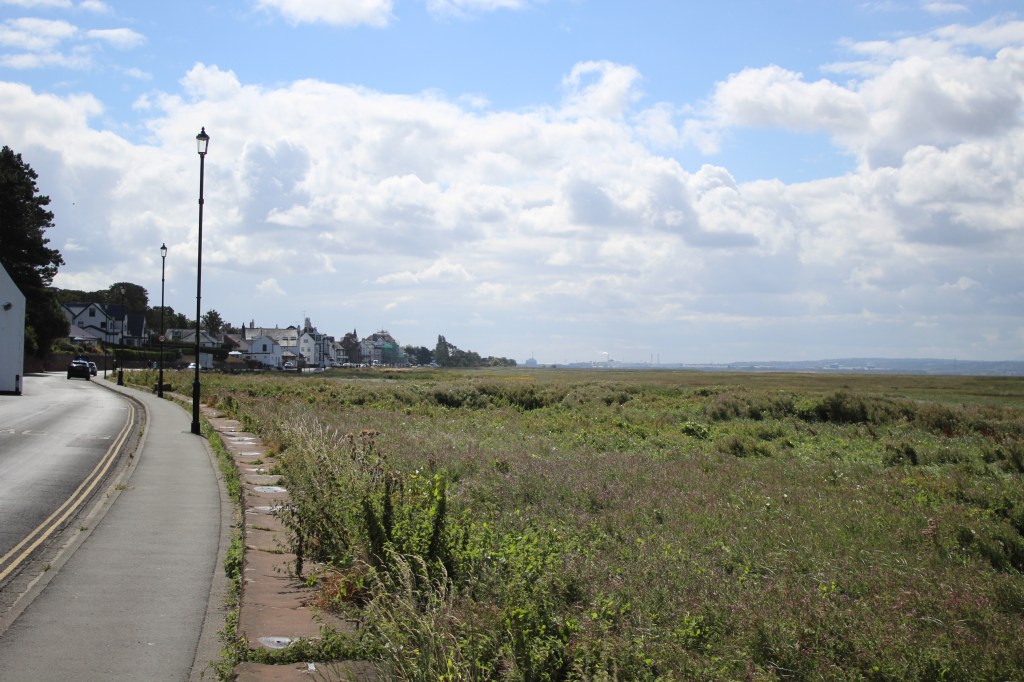
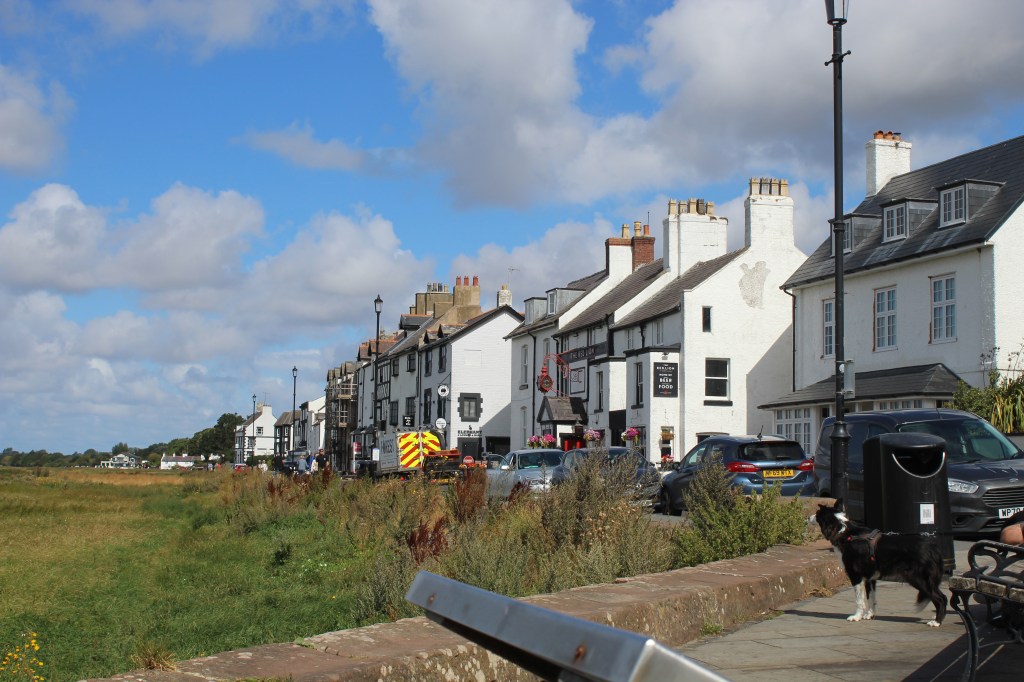
    The Parade

    Looking southwards along The Parade

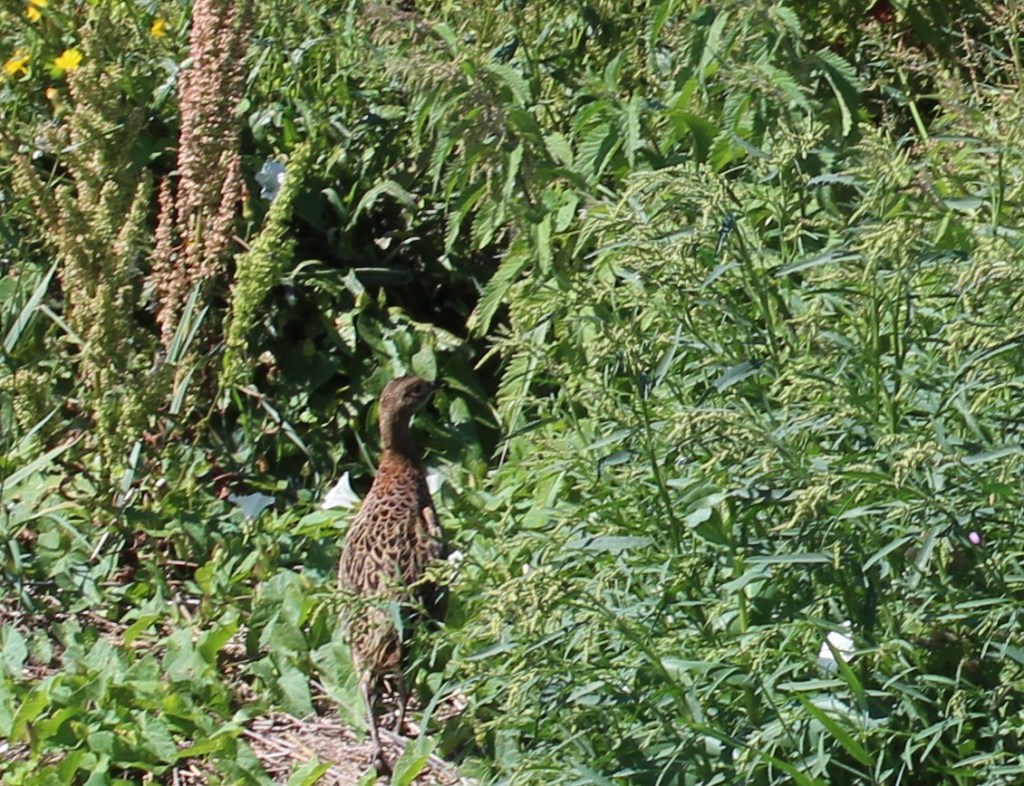
    Pheasant in undergrowth

    Female Pheasant

        However, Parkgate is more than a destination for birders and wildlife-lovers and I was reminded of this as I went through Sophie’s photos later. Often, when we visit places, we can be so intent on a particular purpose that we overlook other aspects that might be just as interesting – both to others as well as to ourselves. So it was refreshing to see Parkgate through a different perspective.

    The Parade 3

        For the benefit of those who are unfamiliar with Parkgate and might be considering a visit, here’s a little bit of information about its history.

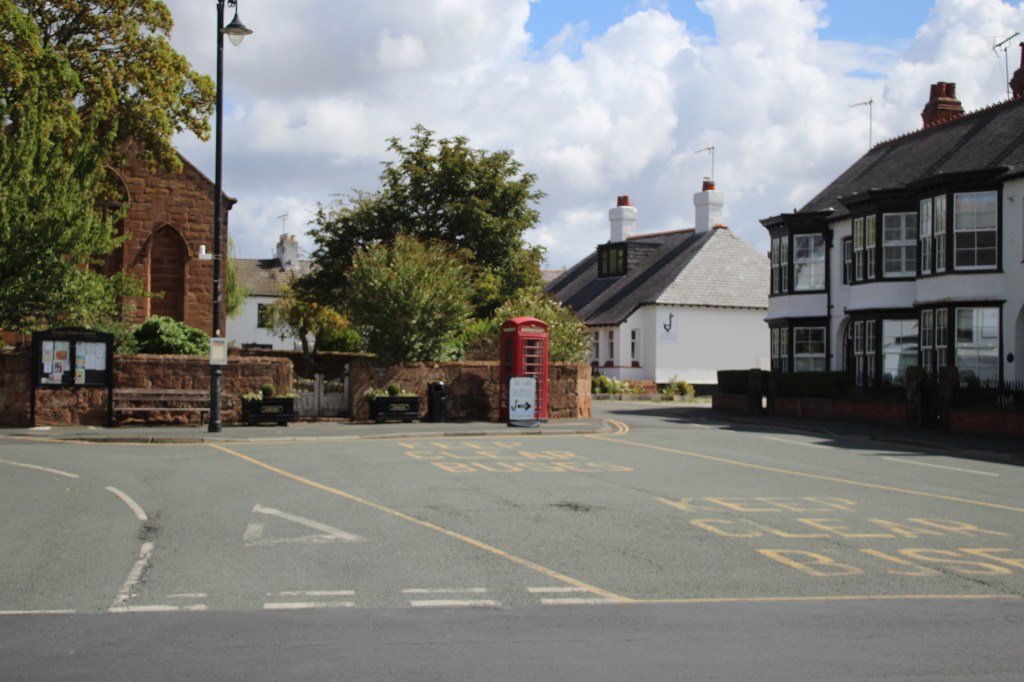
    School Lane, Parkgate

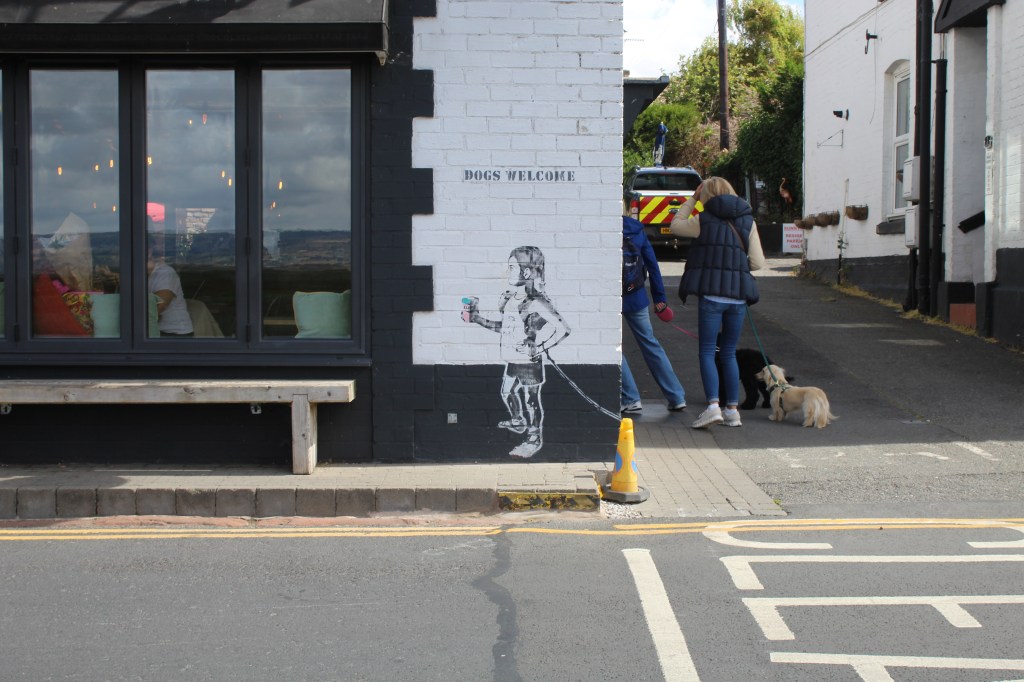
    Above: School Lane (St. Thomas’ Church is on the left); below: Girl with traffic cone on lead

    Park your dog

        Lady Emma Hamilton (originally Amy Lyon) was born in the nearby village of Ness – and raised in Hawarden in Flintshire – and composer George Frideric Handel sailed back from Ireland via Parkgate which, at the time, in 1742, was a busy port. Towards the end of the eighteenth century the accumulating silt on the River Dee meant that Parkgate could no longer function as a port and was supplanted by the port of Liverpool on the River Mersey.  

    From the Donkey Stand

    View from the Donkey Stand

        Parkgate then switched to being a seaside resort and successfully drew people in to take the fashionable salt waters. Open-air baths were built during the 1920s which became very popular and helped Parkgate maintain its status as a resort right up until the late 1930s. Sadly, not a lot remains of the baths now except the odd section of wall at the Old Baths carpark which lies beyond the Boathouse pub.

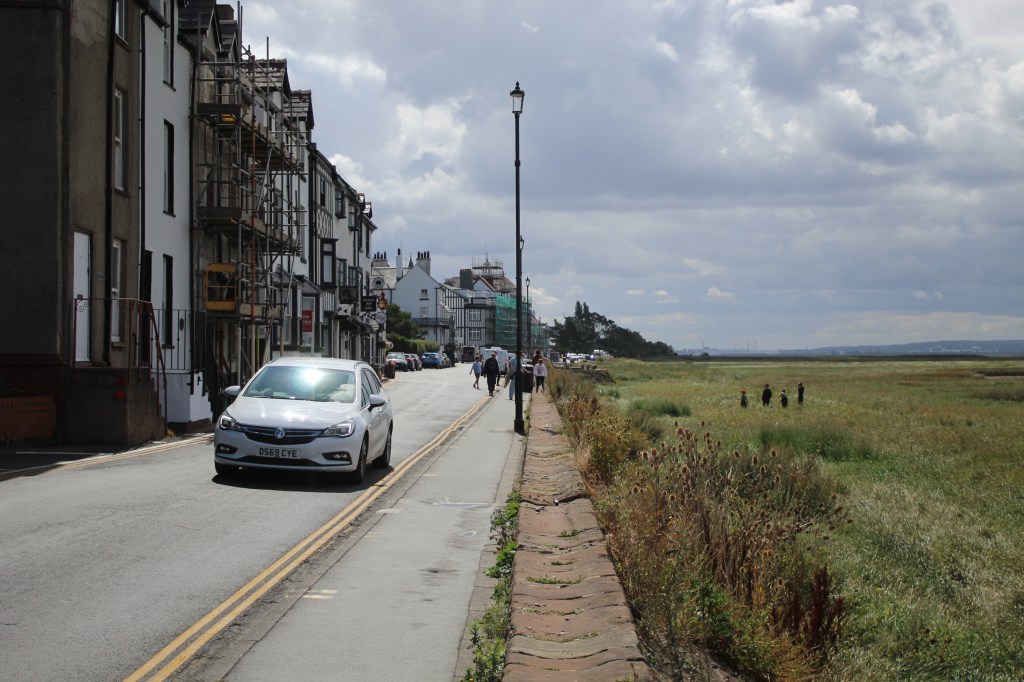
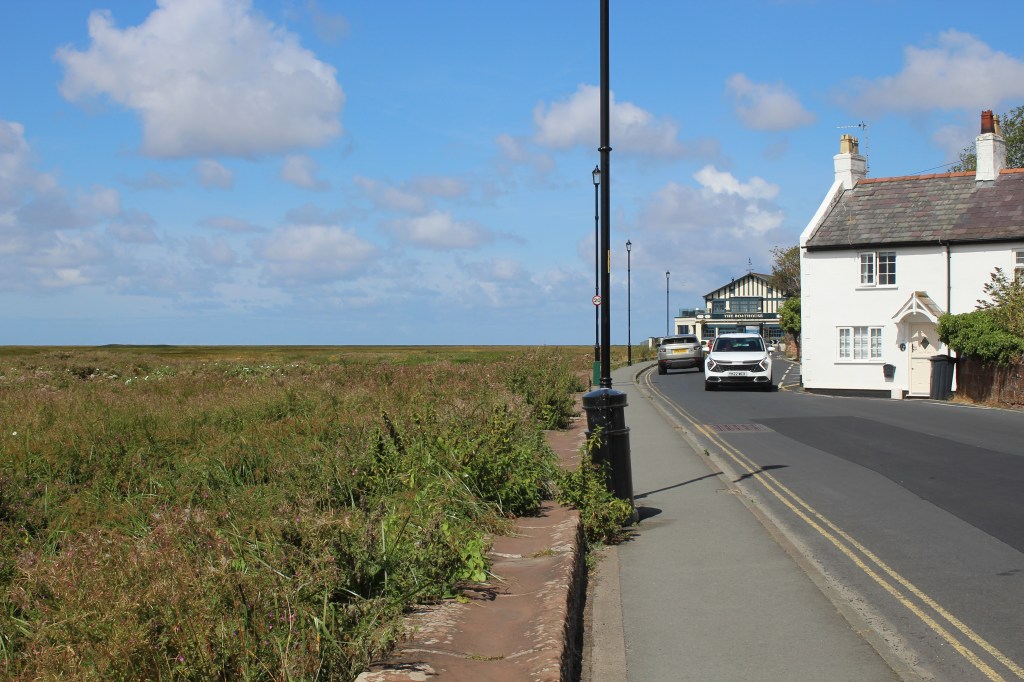
    The Parade 2

    Looking northwards along The Parade

        Parkgate is well worth a visit and you don’t have to be a birder to enjoy it either.

  • Low Tide at Parkgate

    (Sunday 2nd August, 2026)

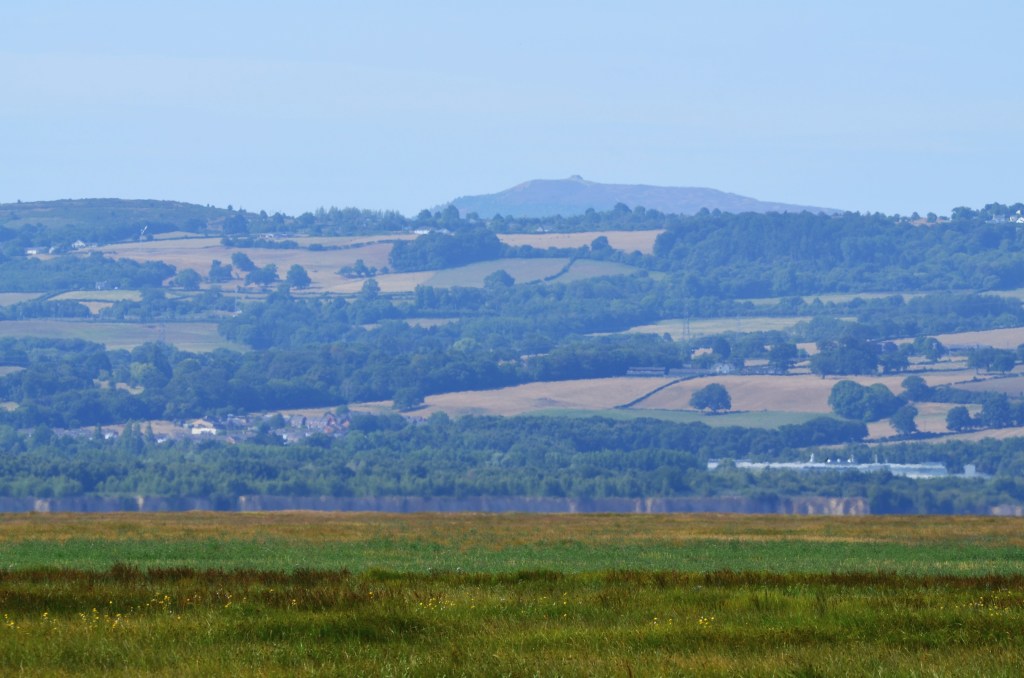
    Over to Parkgate on the Wirral Peninsula this morning where it was a sunny 21°C with just a faint breeze (ESE). Visibility was very good and we had panoramic views of the Dee Estuary: Moel Famau and the other hills on the Clwydian Range stood out sharply to the south of us and, in the opposite direction at the estuary’s mouth, we made out the many wind turbines that stretch across Liverpool Bay.

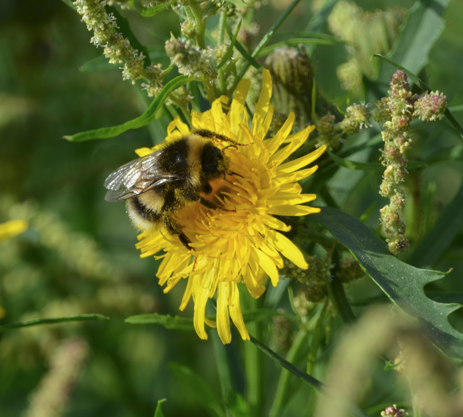
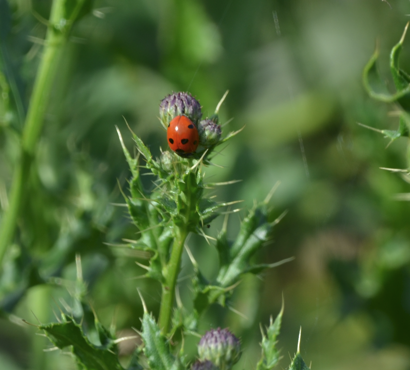
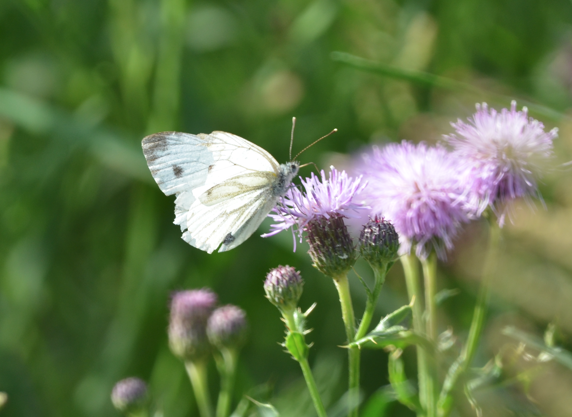
        The trees and bushes near the Old Baths have clearly been stressed by the current drought, their leaves browning and crisping before dropping early. Conversely, Dandelions, bindweed, knapweed and thistles out on the marsh seem to be thriving – all obviously more able to cope. A welcome consequence of this hardiness is the variety of insects that visit them. We spotted ladybirds, White-tailed bumblebees and several white butterflies – mostly Small whites, although we did see one Green-veined butterfly too.

    White-tailed Bumblebee, Parkgate
    Seven spot
    Small white Parkgate

    Top: White-tailed bumblebee; middle: Seven-spot ladybird; bottom: Small white butterfly

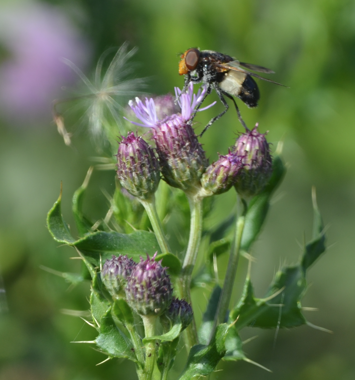
        We were intrigued by several hoverflies which seemed to be especially partial to thistle flowers. These are Pellucid hoverflies (also known as Pellucid flies). They are mostly black except for a distinctive white band around their abdomens and they have very large, reddish-brown eyes, which provide them with a wide field of vision. As with other hoverflies, Pellucid hoverflies have evolved to mimic bees or wasps and this mimicry acts as a visual deterrent to predators such as birds, amphibians or spiders that might ordinarily prey on them but will hesitate if they believe they might get stung!

    Pellucid Hoverfly

    Pellucid Hoverfly

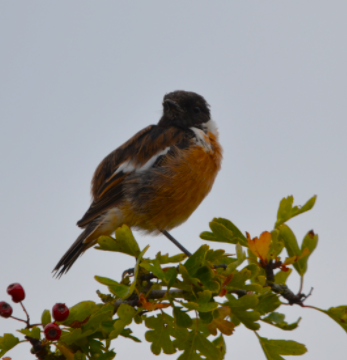
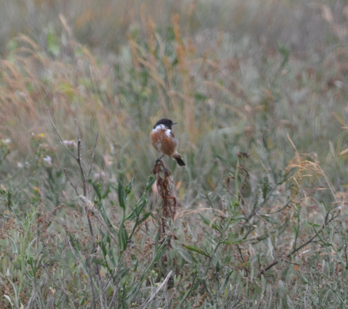
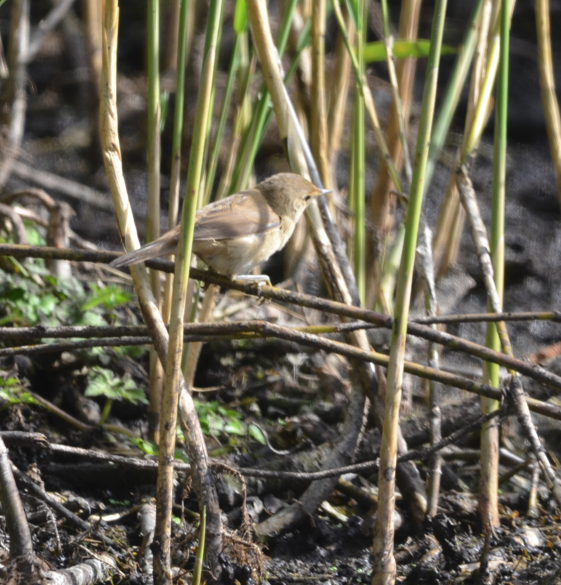
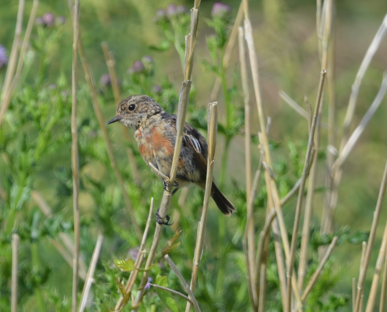
        A pair of small birds scooted low in front of us. They were very quick but Stu managed to take a snap of one of them clinging to a reed, before it swiftly departed again. This looks like it’s a juvenile Stonechat. Even without the more defined red-orange breast of the adult, it’s still a striking-looking bird.

    Juvenile Stonechat

    Juvenile Stonechat

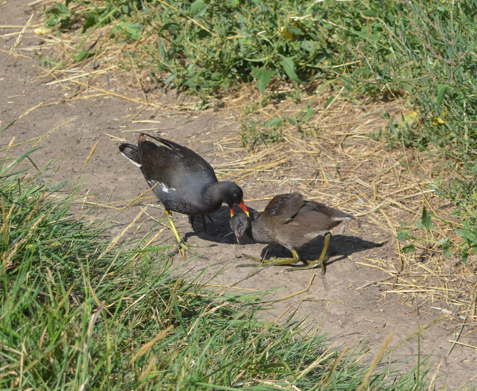
        Down at the Donkey Stand, we looked over the other side of the wall and watched an adult Moorhen as it ferried its chick back through the reeds to shelter.

    Moorhen scolding

    Moorhen encouraging its chick to seek shelter

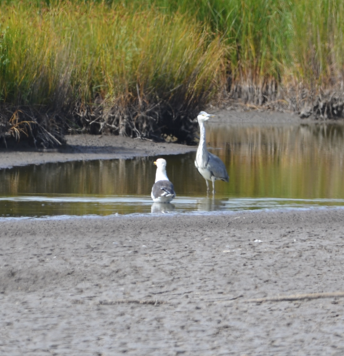
    Further out. the ‘flash’ looked bone-dry apart from one small section of water in the far corner where a Grey heron stood forlornly hoping for the best. We were there just after low tide although I believe the flash (or shallow pond) relies on rainwater as much as water from the river and – like everywhere else – Parkgate hasn’t had much rainfall recently.

    Gull and Heron

    Heron and gull lamenting the absence of water.

    On the nearer side of the flash were several Lapwings and Black-headed gulls, most of which were sprawled on the ground and making the most of the sun. They didn’t stir, even when a Marsh harrier flew low nearby. Talk about lethargic!

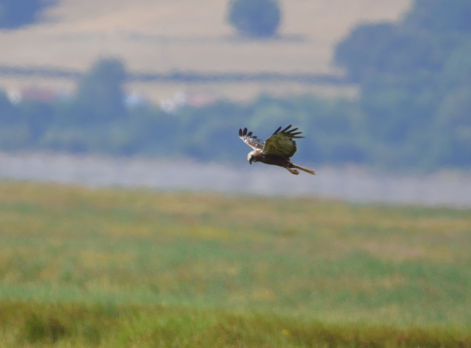
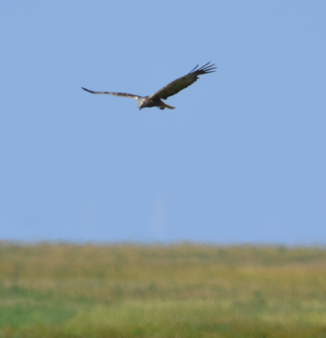
    Male Marsh harrier

    Marsh harrier

        To be fair, the harrier seemed to be concentrating on a long stretch of the marsh that it was patrolling and that was mostly obscured form our view. Flying characteristically low, the bird would every now and then twist and drop down, feet first. This is how the Marsh harrier grabs the small mammals, amphibians and fish that make up much of their diet, although Marsh harriers are opportunistic predators that will also take small waterbirds like Moorhens, too. This Marsh harrier was a male and, though the male is smaller than female – well, less bulky – it’s still a large bird and surprisingly agile. Fascinating to watch.

    Male Marsh harrier 2

        There was a scattering of House martins that seemed to be darting between the marsh and the rooves of the buildings along The Parade, where they presumably have nests: an ideal vantage point. As we turned to go, we glimpsed a pair of Common buzzards further out, leisurely rising as the thermals carried them both skywards.

    Panorama

    Moel Famau from Parkgate

    The important stuff

    We called in at Daleside in Hawarden on the return journey where we each had a Vanilla slice with our customary cappuccinos. Very gooey!

  • A Trickle of Water

    (Sunday 26th July)

    Over to Loggerheads Country Park in Denbighshire this morning. A westerly wind blowed the odd gust but, as ever, we were pretty much sheltered down in the woods. The 16°C temperature was much cooler than it had been in the last few days, but there hadn’t been any rainfall for quite some time – in fact, North Wales had officially been declared as being in a drought only days earlier.

        The pond just beyond the old sluice gate was completely dried up and the exposed earth resembled crazy paving. Admittedly, this is just a shallow area of water – a ‘spillover’ if you like – and we quite often see insects such as dragonflies and damselflies roaming over it and, on occasion, a solitary Heron. But not today.

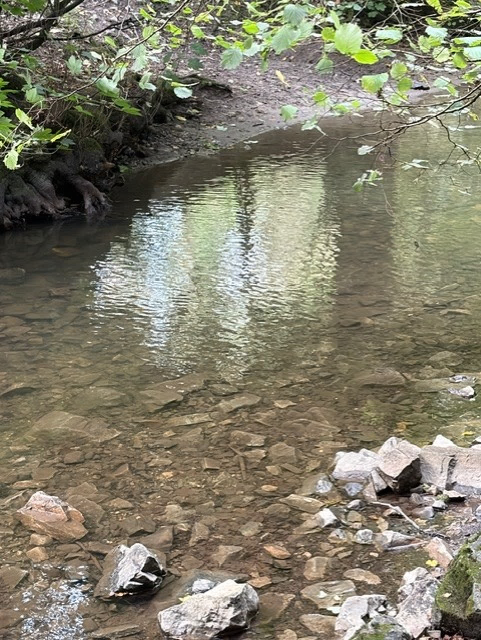
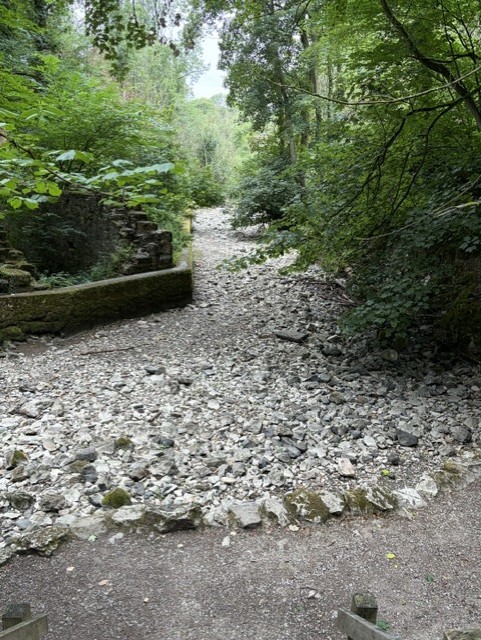
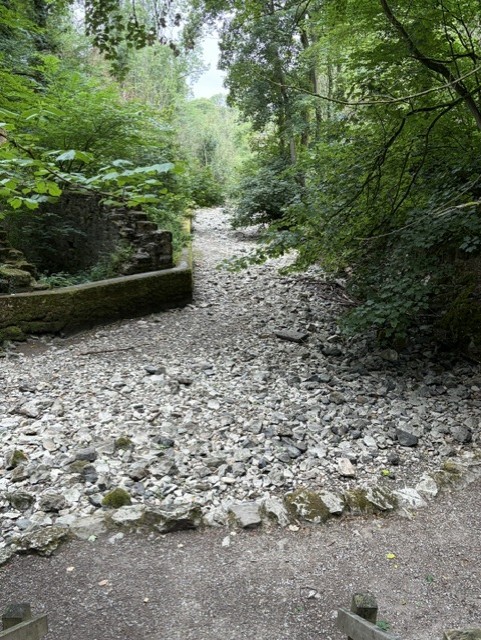
        Halfway across the stone bridge leading into the woods, we paused to look upstream: the River Alyn was still flowing reasonably well, but when we looked downstream, after just twenty or so metres, the river became a mere trickle of water before disappearing altogether. I should point out that the Alyn does naturally disappear underground at Loggerheads into the limestone swallow holes and caves before the river reappears further downstream, a phenomenon that is more noticeable during prolonged spells of dry weather in the summer months. But even taking this into account, this was the lowest we’d ever seen the Alyn at Loggerheads.

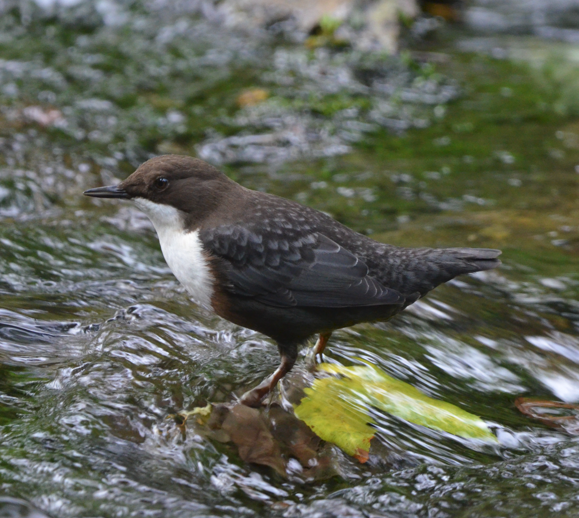
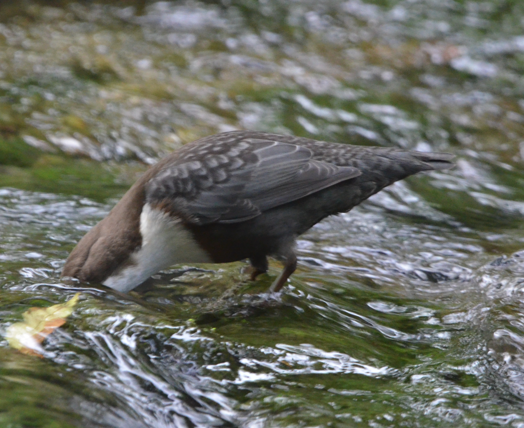
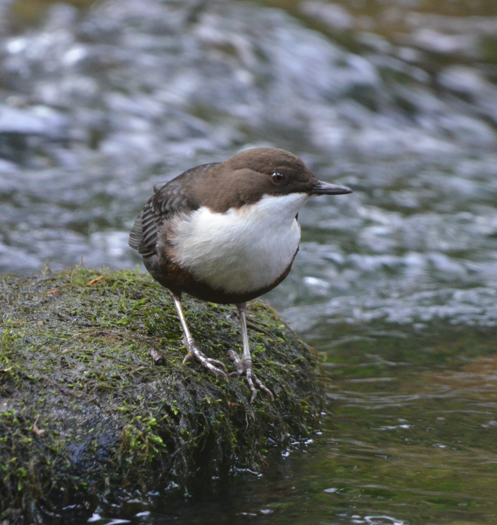
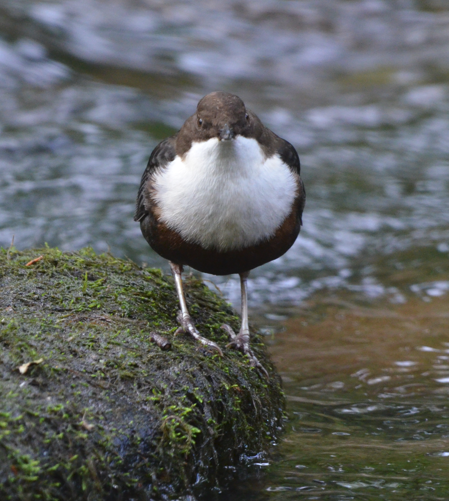
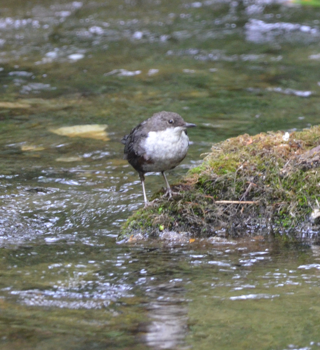
        We weren’t expecting to see much in the way of birds or wildlife at all, given the lowness of the river, to be honest. However, we often see White-throated dippers along this stretch of the river and we know they don’t tend to stray far from their habitat, so we crossed our fingers. We were in luck – before long we saw, perched on a rock mid-stream, a Dipper perform the familiar bobbing action that gives the bird its name. We watched for a while as the Dipper submerged itself in the water searching for food before it eventually flew off upstream.

    Dipper dry

    White-throated Dipper

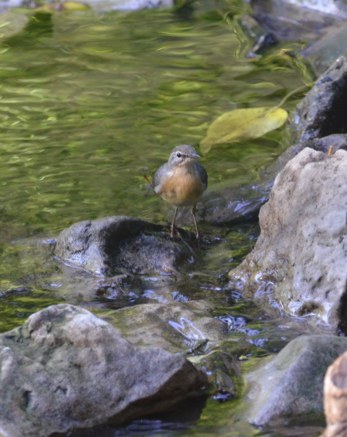
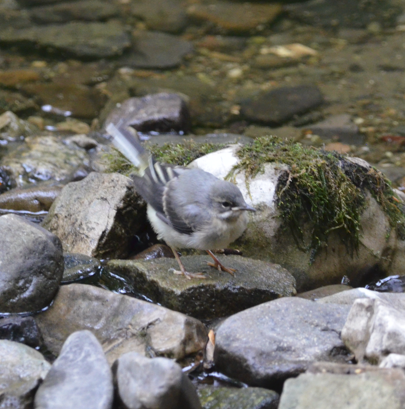
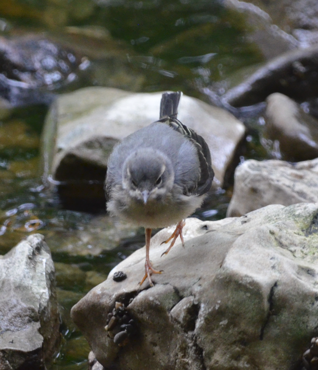
        Moments later, we were surprised to see three Grey wagtails – two adults with a much duller-coloured juvenile. When we were last here at Loggerheads six or seven weeks ago, there was the same family set-up – that is, two adults and one juvenile. Although Grey wagtails will carry on feeding their young and staying close by them after they leave the nest – monitoring their progress, if you like – this is typically for about two weeks. So, the juvenile that we saw back then should already have become independent and have had to find its own territory, which means that the juvenile we saw today is probably from the adults’ second brood.

    Grey wagtail dry river
    Grey wagtail dry river 3

    Grey wagtail

        We carried on along the Leete path beyond the wooden ‘bat’ bridge (the bridge has a carving of a bat suspended above the centre of it). Looking down at where the river usually flows, we could see only the dry rock of the riverbed.

        There was a distinct absence of birdsong too, everywhere eerily quiet. This is probably due to many of the birds not wanting to draw the attention of predators as they go through their summer moult: replacing feathers compromises the birds’ ability to fly well, leaving them vulnerable. (Some birds, such as ducks, shed all their flight feathers at once, leaving them completely flightless for the three or four weeks it takes for them to be replaced).  

    River Alyn stone dry

    The dried up River Alyn by the ‘bat’ bridge

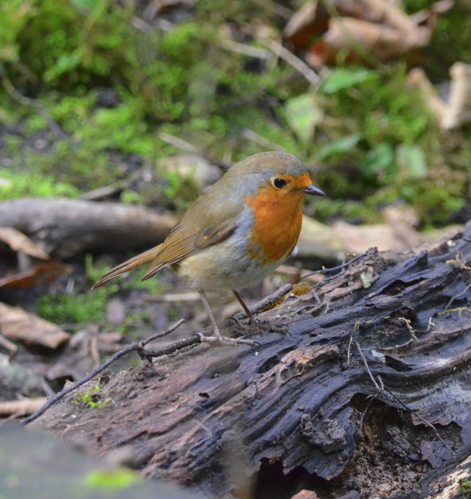
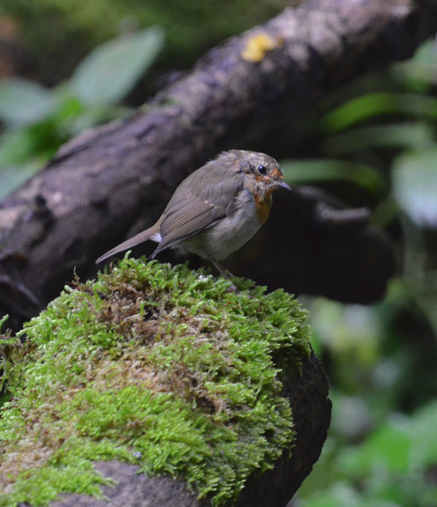
        Besides the Grey wagtails and the Dipper, there were still one or two birds about today. We saw a couple of scruffy-looking Robins skipping through the undergrowth and we watched several Nuthatches darting from tree to tree. None of them made any noise though!

        The morning had remained largely overcast although under the protection of the trees this didn’t really matter. But now it started to rain. Well, it wasn’t really rain, which would have been very welcome, but more a thin spray of the faintest vapour which disappeared almost immediately.

    The important stuff

    Over to Tŷ’r Felin (The Mill House café) which has moved from the small room right next to the mill and now sits in the much larger area in one of the main buildings at the entrance to the park. We sat outside under the tree sipping our Cappuccinos and savouring the delights of a slice of Bara Brith, with full butter of course (Col), and a slice of Cherry Cake (Stu). Marvellous!

  • Butterfly Highway

    (Monday 6th July – Friday 10th July)

    The UK once again recorded very high temperatures during this latest heatwave although it’s been even warmer in the rest of Europe. With Chief Photographer Stu currently away on holiday, this week’s blog is just a record of the butterflies and one or two other insects that have visited the garden.

    Peacock g
    Peacock ggg
    Peacock gg

    Above: Peacock butterflies

         I’ve spent a lot of time venturing no further than the garden in this hot weather and this has turned out to be a good thing as I managed to photograph quite a variety of butterflies during the course of the week. In fact, there were a further two  species of butterfly that appeared but which I was unable to get a decent photograph of – a Gatekeeper and several Green-veined Whites. But it certainly is encouraging to see such a diverse range.

    Red Admiral gg
    Red Admiral g
    Red underwing

    Top and middle: Red admiral with wings open; bottom: Red admiral showing underwing

        Undoubtedly the Buddleia bush (also known as the Butterfly bush for good reason) at the bottom of the garden has been helpful in attracting the various butterflies. The Red admirals and Peacocks appear to be the biggest fans of the flowers, although Small tortoiseshells, Small whites and Green-veined whites have also been drawn to the bush, though in lesser numbers. The flowers have a lovely scent which seems more pronounced as the evening draws in so presumably the plant attracts night-time pollinators too.

    Small white g
    Green vein g
    Small tortoise g

    Top: Small white; middle: Large white (underwing); bottom: Small tortoiseshell

        The other benefit of the Buddleia is that the butterflies tend to dawdle on the flowers and spread their wings, so can be motionless for at least a few moments which was ideal for getting the odd photograph!

        Not all butterfly species are drawn to Buddleias though: when the Commas (there are two of them) are not whizzing maniacally up and down the garden, they usually prefer to rest on the Hazel leaves – as do the Large whites. But the butterflies that I see more than any others here are the Holly blues, although they rarely stay in one place for very long.

    Comma g
    Holly blue g

    Top: Comma; bottom: Holly blue

        Besides the butterflies, both Buff-tailed and White-tailed Bumblebees are regular visitors: I’d just been snapping away and still had the camera at hand when I caught sight of an insect that I don’t ever recall seeing before, though I believe they are increasingly common in the UK. This is the Hornet hoverfly, sometimes referred to as the Hornet mimic hoverfly. As its name might suggest, it is similar in size and appearance to the European hornet and imitates its buzzing flight, chiefly to deter predators from approaching it when it visits flowers. Unlike the four-winged European hornet, however, the hoverfly– like all true flies – only has two wings. It also lacks a sting.

    White-tailed Bumblebee
    Mimic hornet
    Mimic hornet a

    Top: White-tailed Bumblebee; middle and bottom: (Mimic) Hornet hoverfly (apologies for the blurred picture)

    The important stuff

    From the garden I went all the way to Café Chez Col where I had a lovely cup of tea, which tasted almost as if I’d made it myself, and an Almond slice made by some bloke who makes “exceedingly good cakes”. Very nice!

  • Egrets and Ditches

    (Sunday 28th June, 2026)

    We were at Mostyn this morning where the 21°C temperature offered a pleasant change from the recent heatwave that we endured in the UK earlier this week. The breeze (WSW) was barely noticeable as we made our way from the path behind Abakhan and headed towards the shore at Mostyn.

        Several Housemartins flew over the cornfield to our left, gathering insects on the wing. Bare only a matter of weeks ago, this field now has an impressive crop of corn flourishing in it.

        Encouragingly, we saw an abundance of butterflies during the walk. Primarily, these were Small whites and Green-veined whites, although there were other species making an occasional appearance such as Small tortoiseshells and Gatekeepers. We weren’t sure if the large number was a consequence of the recent hot weather or if this just happens to be a particularly good place for butterflies. Certainly the area does appear to be flourishing at the moment with trees, hedges and undergrowth all looking verdantly leafy, although some rain might be welcome.

    Small tortoiseshell Mostyn
    Gatekeeper Mostyn
    Small white Mostyn

    Top: Small tortoiseshell; middle: Gatekeeper (underwing); bottom: Small white butterfly

        There were several Goldfinches merrily chirruping away as they stop-started along the treetops. One of them strayed from the rabble and tooted out a tune from its perch on a telephone wire.

    Goldfinch Mostyn

    Goldfinch

        A male Blackbird was perched on a post with something in its beak, though we couldn’t quite make out what this was (we were a bit confused by the long branch but this is actually behind the bird). The bird’s feathers looked a little bit bedraggled and, as it’s a little bit too early for the annual moult, I think this can be put down to two things. Adult Blackbirds that are rearing young chicks can have a ragged or even bald appearance as they can be susceptible to parasites that might have infested their nests. Also their feathers are probably not being preened as often as they perhaps ought to be either: parent birds can easily neglect to carry out their regular self-care due to the need to find and deliver food for their offspring.

    Blackbird Mostyn

    Male Blackbird looking a bit bedraggled

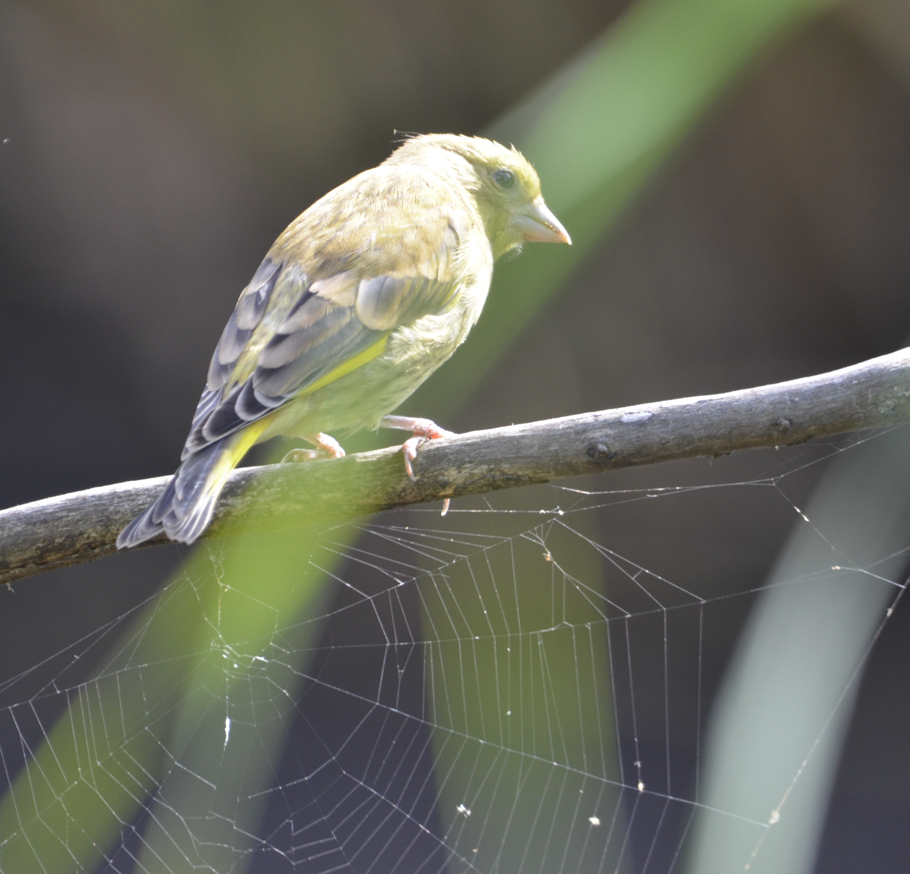
        A little further along from the Blackbird, we saw a Greenfinch contentedly sitting low on a branch, seemingly just letting the world go by. This one is male as you can see from the olive green feathers on his back – the females and juveniles tend to be  much more muted in colour overall.

    Mostyn Greenfinch

    Male Greenfinch

        As we came to the end of the path, we scanned the irrigation ditch which lies parallel to the estuary shore. We were looking for the Kingfisher that we’d seen the last time we were here, a month ago but we didn’t manage to see it this time.

        What we did see, though, were two Little egrets. Each bird was in a different stretch of the water and each of them seemed to be staying within its own particular territory, although I suspect that they were only adapting temporarily while they waited for the tide of the nearby Dee Estuary to recede once again, at which point they would migrate to the mud and sand to feast on what the water uncovered.

    Little egret Mostyn

    Little egret – note the two crest plumes and the chest feathers of the breeding plumage. You can also see the egret’s yellow feet

        Each of the Little egrets had long plumes at the back of their heads and on their chests. These are typically seen during the breeding season but, as both males and females grow breeding plumages, it’s very difficult to tell the sexes apart. The male is slightly larger in size but this is only a useful indicator if the two sexes are standing next to each other. Though we usually get a good look at the black bills and black legs of Little egrets, we don’t ordinarily get a decent view of their feet, as they’re usually submerged in water or otherwise difficult to see. However, this time we could clearly see their yellow feet which make a distinct contrast to their black legs.

    We looked along the shore but, probably because the tide was high and almost reaching the boulder breakers, there were no sea birds to be seen at all today. Apart from one angler who was putting away his fishing gear as we were returning from the shore, we saw nobody else on the entire walk. A lovely spot.

    Robin Mostyn

    An old friend

    The important stuff

    We retraced our footsteps and went to the Café at Abakhan for a cappuccino each, which were accompanied by a Raspberry Bakewell slice (Col) and a Cranberry and white chocolate slice (Stu). Naturally, we were both very pleased to have achieved one of our ‘five a day’ healthy fruit portions!

  • Treecreeper at Royden Park

    (Sunday 21st June, 2026)

    Over to Royden Park on the Wirral Peninsula this morning. It was sunny with a very light north-easterly breeze, the temperature a comfortable 21°C, though it climbed higher after midday.

        We followed the path from the car park and cut through the woods to Roodee Mere. Here, there is a nesting platform in the water on which we often see a Grey heron perching while it surveys the mere for food. This time, however, the space was being shared by a Canada goose and a Moorhen. As you can see, each bird has a nest either side of the central box.

    Sharing nest space
    Canada goose on nest

        Judging by the number of chicks present in and around the water, many of the Moorhens had already produced their first broods. Moorhens might have two or even three broods during the breeding season and chicks from the first brood will often help their parents with feeding the later broods. While this obviously helps the parent birds, it’s also useful practice for when these first-brood chicks go on to have their own offspring the following year.

    Skipping on lily
    Welcome to the jungle

    Moorhen juveniles negotiating the lily-pads …

        Water-lilies were plentiful on one section of the mere and several young Moorhens took obvious delight in agilely skipping across the lily pads: they seemed to be doing this purely for the sake of it. The more responsible parents – who were probably too heavy now – simply swam through the pads, although this didn’t appear to be half as much fun!

    Moorhen swimming

    …while the heavier adult has to swim

        A Herring gull circled above the mere and dropped down amongst the lily pads: at first, we were a little concerned in case it was after one of the chicks but it seemed to have spotted something under the water. The gull made a couple of attempts to retrieve whatever fish or amphibian it had seen but eventually gave up and flew off.

    Herring gull fishing

    It wasn’t clear what drew the Herring gull to the water (above), although this mystery fish appeared soon after (below)

    Mystery fish

    By coincidence, we did see a large fish that was swimming close to the surface – you can’t really tell what fish it is, though it’s size might indicate a carp. It’s possible that this was what had interested the Herring gull but we can’t say for sure. In turn, the fish might have been interested in one of the many dragonflies that were zipping around the mere today.

    Dragonfly 4

    A four-spotted chaser dragonfly resting on a hazel leaf

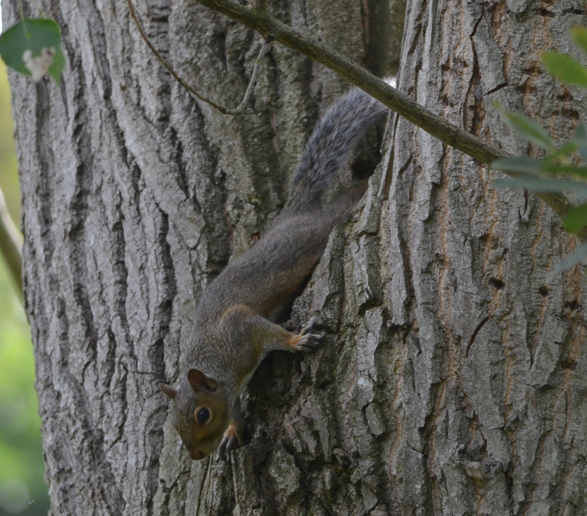
        There were one or two Grey squirrels out and about, demonstrating their acrobatic skills. One in particular entertained us as it descended head-first from a nearby tree before jumping across the path in front of us and disappearing in the undergrowth. Moments later another squirrel appeared on the wooden jetty at the side of the mere, where it nibbled at some bird food that presumably had been left for the Moorhens.  

    Squirrel at Royden
    Squirrel at Royden 2

    Shameless squirrel

        While we were stood there watching this scrounging squirrel, a small bird flew across from the surrounding wood and landed low on a tree just in front of us. It was a Treecreeper and we watched as it scaled the tree then fluttered down to the second trunk of the same tree and climbed again before repeating this procedure for a third and final time, after which we lost sight of it.

        Although the Treecreeper is quite common throughout the United Kingdom, we were lucky to have seen it as its mottled brown back and wing feathers act as great camouflage against the bark of trees. It has a white underbelly that is generally hidden from view as it climbs, but we happened to catch a glimpse as it flew in front of us.   

    Treecreeper

    Treecreeper blending in against the lichen and bark

        The tree was a common alder with its distinctive round leaves and it looked like it had been coppiced at some point in the past, which would explain the three trunks radiating from it. As it climbs, the Treecreeper uses its long, curved beak to probe cracks in the bark for insects to feed on. I reckon we were lucky here too in that the Treecreeper didn’t fly off to another tree but simply dropped down, enabling us to keep sight of it.

        Treecreepers use their strong toes to grip the bark and they have very stiff tail feathers which offer extra support when pushed against the tree and this helps to reduce strain on their legs as they climb. Most references describe the Treecreeper as spiralling upwards around the trunk as it climbs and this is what I remember from the two previous occasions that I’ve seen them. However, this particular Treecreeper climbed vertically up the same side of the trunk without looping round until it was quite high up the tree. A fascinating little bird to see,

    The important stuff

    On to the Courtyard Café for cappuccinos and a slice each (or should I say ‘doorstop’ each) of Caramel biscoff cake (Stu) and Carrot cake (Col). Scrumptious!

  • Jay at Loggerheads

    (Sunday, 7th June 2026)

    Over to Loggerheads Country Park in Denbighshire today. The wind (SSW) was quite blowy on occasion but you barely noticed it here as the woods are so sheltered. Although overcast the morning remained dry and the temperature didn’t rise above 15°C.

        The ditch between the car park and the buildings had been drained and cleaned up, prior to relining it. While we were examining this work, we noticed a Grey heron standing motionless in the pond just beyond the sluice gate. We carried on down the path for a better view and stood watching as the bird stealthily stalked the pond in search of prey, although it loos like its collecting nest material in the photograph below.

    Grey Heron logpond

    Grey heron with leaves in its beak

        As we came to the stone bridge that crosses the River Alyn to join the Leete path, we saw a plant with bright, white, four-petalled flowers. This is Dame’s rocket which more commonly flowers as a purple or lilac colour. The white petals on this version seemed to hold their own light and certainly stood out against the predominantly green foliage in the background.

    Dame's rocket

    Dame’s rocket

        Surprisingly, the wild garlic flowers that had carpeted the woods only weeks before had all but gone, with just the occasional earthy whiff reaching us. A reminder of how quickly time marches on, I suppose.

    Bedrock

    The River Alyn’s waters often disappear underground, leaving the bed dry

        A short way along the river we were reassured to see the White-throated dipper once again: we hadn’t seen any Dippers since they had (presumably) abandoned their nest further downstream after the Alyn’s water had receded, a not uncommon occurrence here at Loggerheads which we’ve covered elsewhere on the blog.[1] Good to see, although it was just the one Dipper that made a fleeting appearance this morning.

    Dipper blinking again

    White-throated dipper photographed mid-blink

        Nature doesn’t always provide us with pleasantness, it has to be said, and shortly after our Dipper had disappeared upstream, there was a raucous commotion in the trees on the opposite bank. We looked over to see a Eurasian jay with a small bird in its beak, while another small bird had the Jay’s tail in its beak.

    Jay

    Eurasian jay devouring prey

        The two smaller birds were Great tits and, though it was difficult to be absolutely sure, it looked like the Jay had taken an adult Great tit and that this poor bird’s mate was valiantly trying to rescue it. The second bird flew off as the Jay turned on it, tentatively returning a little while later, by which time the Jay had finished off its partner.

    Jay 2

    Jay with remnants of Great tit on branch

        The Jay is probably the most secretive of our corvids in the United Kingdom and you don’t often see them, though you do occasionally here their cacophonous screeching, which is hard to miss really. The Jay’s diet is varied and it will eat fruits, berries, acorns, and insects, but will also eat small rodents, young birds, and eggs. Occasionally – as in this case – it will also take adult birds. With its pinkish plumage, black and white flashes on its wings, and the distinctive sky-blue and black patch on its upper wing, the Jay is arguably our most colourful corvid but seeing our first Jay in two or three years behaving in this brutal way was obviously not the best way to witness it’s reappearance. However, it is what birds – and other animals – do, and we should treat such behaviour as dispassionately as we can.

        We saw two adult Grey wagtails and one fledgling all flying low along the course of the river to forage around the stones on which they alighted. It looked like the juvenile was still being fed by one or both of the adults for the most part. Much paler than its parents underneath, with barely any yellow, this youngster did seem to be learning about habitat and food sources from its parents. These are skills it will need when it becomes fully fledged, which cannot be that far off now.

    Grey wagtail male
    Wagtail juvenile
    Grey wag 2

    The adult Grey wagtail (top picture) is much more yellow underneath than the juvenile (middle and bottom pictures)

         We caught sight of a Chaffinch as it flew from our side of the river to the trees over on the far bank. As we followed this colourful male’s progress, we almost missed the female with her more muted colouring, which enabled her to blend in with the branch on which she was perched.

    Blackbird male

    Male Blackbird

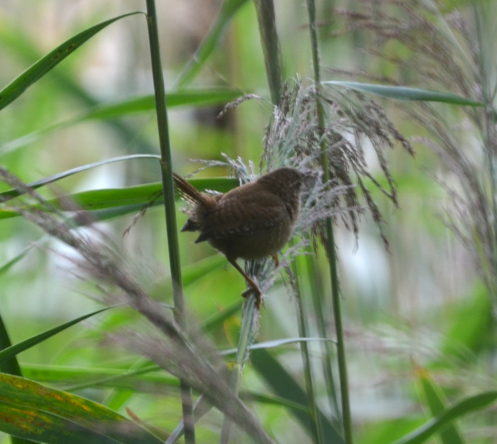
        Whenever we’re here at Loggerheads Country Park, we seem to hear but rarely see Wrens. Today, we could hear one singing from the trees behind us and being answered – or competing with – one whose call was coming from across the river. As we were a little further downstream now, where the waters have receded, Stu was able to walk across the riverbed and get a photograph of this lovely little bird.

    Wren on tree stump

    The Wren delivered a fine solo performance for us

    The important stuff

    Over to The Mill House café (Tŷ’r Felin) for our well-earned refreshments. Cappuccinos, unsurprisingly, with a Lemon muffin with gooey lemon curd in the middle for Col, and a Chocolate mini-egg pie (or something) for Stu. Very nice and very healthy!

    [1] See Along the Leete 14th April, 2024; and The River Vanishes 27th July, 2025

  • A Morning at Mostyn

    (Sunday 24th May, 2026)

    We were down at Mostyn this morning, looking over towards the Wirral Peninsula from the Flintshire side of the Dee Estuary. Bright and sunny, the temperature was still pleasantly comfortable at 23°C and the wind (SSW) barely noticeable. Although the temperature climbed during the afternoon, it was still much lower than those expected over the next few days. [Note: the UK May Bank Holiday heat record was broken at Kew Gardens in London the following day, where the temperature reached 34.8°C. It was exceptionally warm throughout most of the UK and locally temperature of 32.2°C was recorded at Hawarden Airport, just twenty miles away. Such temperatures would have been a bit too much for us pair of old duffers, we reckon].

    pathmost

        We parked up near Abakhan Stores and followed the narrow path towards the rear of the buildings. Several Goldfinches darting from tree to tree either side of the us as we progressed: the collective noun for Goldfinches is a charm, the word deriving from the Old English word c’irm which describes the chattering sound they make. Apparently, the birds are not particularly charming in the modern sense, but we love them all the same![1]

    Dogrose2

    Dog roses

        Either side of this path are fields with irrigation ditches running along the bottom. And where there’s water, of course, there are insects, which in turn attract the birds. Above the field to our left, two House martins displayed their aerial acrobatics as they fed on the wing, one moment carving wide graceful arcs through the sky, the next moment adeptly feinting left and right at seemingly impossible angles to catch their prey unawares. Wonderful to watch!

    Lancaster

    TSS Duke of Lancaster

        At the bottom of the path lies the TSS Duke of Lancaster which is fenced off and has lain beached down here since 1979. The ship was originally built in the mid-1950s for British Railways which, at the time, operated ferry services as well as trains. The TSS Duke of Lancaster primarily served passengers travelling between Heysham, in Lancashire, and Belfast. You can find more detailed information about the ship’s history on Wikipedia.[2]

    Lancaster2

        Looking out over the Dee Estuary, we saw a large flock of Oystercatchers making the most of low tide and using their distinctive orange beaks to forage in the mudflats nearby.

    Oyster2
    Oystercatchers
    Oysteragain

    Oystercatchers

    Occasionally, a group of them would take to the air at some unseen signal and fly out to a sandspit further out into the wide expanse of the estuary, returning in similar fashion later. (At its mouth, the Welsh and the English sides of the Dee Estuary are about five miles apart).

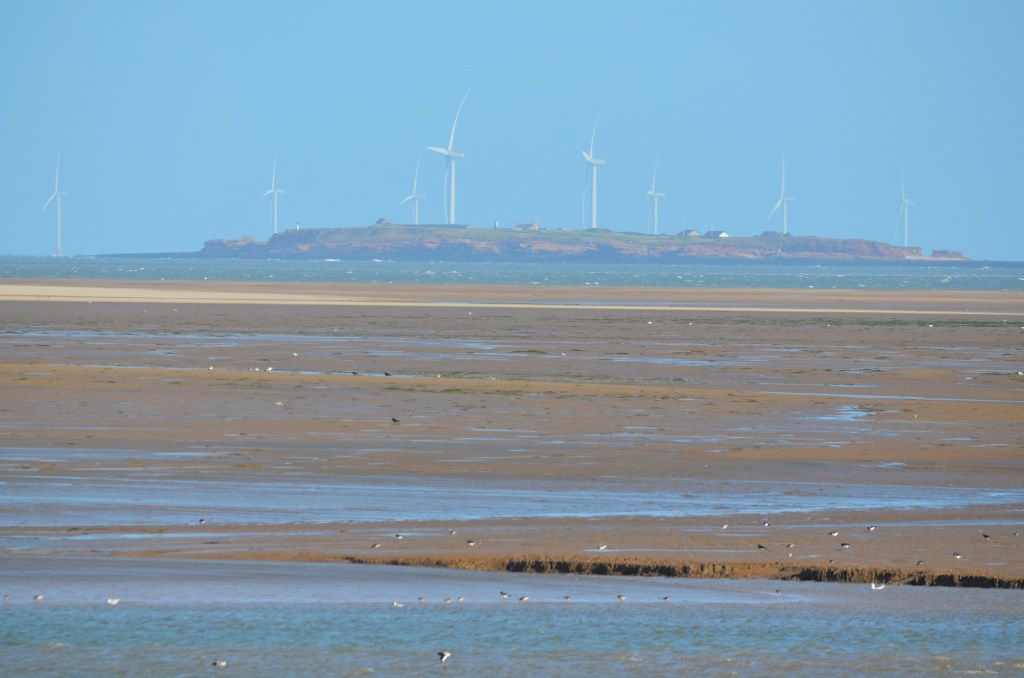
    Hilbre

    Looking towards Hilbre Island near the Wirral side of the Dee Estuary

    A Grey heron flew in and began hunting for food in the shallows. It stood motionless for minutes on end before spearing its unfortunate prey with a lightning strike of its beak.

    Reflective heron

    Above: A reflective Grey heron; and, below: a Herring gull

    Herring gull

        As we set off back along the path on our return journey, Stu pointed towards the irrigation ditch and said: “Kingfisher!” I turned round and, but I only saw the distinctive electric-blue and turquoise of its back as it flew away from us along the ditch. We stayed for a while, scanning the area with our binoculars and, eventually, managed to locate it quite some distance away in a tree overhanging the water. We were just able to pick out the turquoise / blue of its feathers from the surrounding tree foliage before it moved off again. No photographs but great to see and we now have a reasonable idea of its territory.

        We were accompanied by our Goldfinch friends on the way back along the path and we clocked a rabbit at the edge of the field on the opposite side to the ditch, where there is a small thicket bordering the field. Whether it sensed danger or not, the rabbit decided to retreat back undercover.

    Peacock butterfly

    Peacock butterfly taking the sun

    The important stuff

        Well, after all this excitement, we were in dire need of refreshment. So we sauntered off to the cool and spacious Café at Abakhan where we partook of a cappuccino each and a Caramel Slice (Col) and Coffee and Walnut cake (Stu).

    Dee-estuary

    [1] From Living with Birds https://www.livingwithbirds.com/tweetapedia/21-facts-on-goldfinch

    [2] https://en.wikipedia.org/wiki/TSS_Duke_of_Lancaster

  • Wagtails along the Alyn

    Sunday 17th May

    Back to Loggerheads Country Park in Denbighshire this morning. The temperature was 12°C and there was a very gentle wind (WSW), although the odd cold gust blew through the woods. Overcast when we first arrived, the sun shone through from mid-morning onwards.

        We were greeted by lots of lovely pale, pink flowers on long stems with large leaves at their base – the common bistort certainly catches the eye.

    Bistorts at Loggerheads

    Common bistort

        A pair of House martins have constructed a nest up in the eaves of the gift shop once again and we watched as both parents shared feeding duties, each darting in with insects caught on the wing. We saw two chicks that briefly revealed themselves, although there may be more.     

    House martin entering nest

    House martin entering nest and (below)about to emerge in search of more insects for its chicks

    House martin leaving nest

        The woods are thriving now, with lush green grasses and leaves sprouting everywhere and with the chorusing of birds and the liquid sound of running water. Apart from the bistorts, there are occasional little bursts of buttercups, herb robert, red campion, dog violets, and Welsh poppies too. Our nostrils detected the pungent aroma of wild garlic which was being gently wafted by the light wind. Pure vitality fills the senses.

    Leete path

        To the sound of two Song thrushes singing across the woods to each other – they may have been throwing out challenges or merely chatting loudly – we carried on along the Leete path.

        Nuthatches and Great tits fed from the impromptu ‘feeding table’ at the water’s edge – these two species seem to tolerate one another probably because they’re roughly the same size. However, we did see a Nuthatch shooing away a Blue tit which is smaller in size. The bully!

    Great tit and Nuthatch

    Great tit and Nuthatch tolerating one another

       Disappointingly, the Dippers seem to have abandoned their nest to move elsewhere and we were unable to locate them this time.

    Abandoned Dipper nest

    The recently abandoned Dipper nest, beneath which the river has clearly receded

    We had noticed today that the Alyn was a little lower than it was a fortnight ago, resulting in the waterflow vanishing from below their nest. As Dipper chicks dive straight into the water directly beneath once they’re ready to fledge, this seems to be the obvious reason for the nest being abandoned. However, as Dippers are early nesters, it’s quite possible that any young might have already fledged, in which case the nest would be abandoned naturally. Hard to say.

    River Alyn low water

        Still, we were encouraged to see that the Grey wagtails have bred successfully and we saw the proud father, with the distinctive black bib of its breeding plumage, shadowing two fledglings as they all flew up and down the River Alyn. (The mother came out later, too!). After they leave the nest, Grey wagtail fledglings are still dependant on their parents for food for a further week or two.

    Two Grey wagtails

    The two fledglings have very little yellow on them

    grey wagtail solo

        I’m not sure that the male was feeding his offspring today, though. Rather, he appeared to be simply accompanying them up and down the river, gathering together on rocks mid-stream before flying off again. Perhaps he was familiarising the two fledglings to their surroundings although, quite soon, these two youngsters will have to leave their parents’ territory and find places of their own. Their parents might then go on to produce one or two more broods.

    Grey wagtail male?

    …unlike their mother!

        It’s reassuring that the water is clean enough for the Grey wagtails to find food in and to have produced at least this one brood, anyway. We’ll keep a look-out for any future Grey wagtail fledglings and also remain vigilant in our search to locate any Dippers once again. But that’s for another time!

    The important stuff

    As is customary, we finished off our outing at The Mill House café (Tŷ’r Felin), where we each had a very welcome cappuccino accompanied by a slice of Millionaire’s shortbread (Stu) and a Mars bar krispi (Col). Lovely!

  • Above the Dee Valley

    (Sunday 10th May, 2026)

    39 metres (127 feet in old money) above the Dee Valley to be more accurate. Yes, we went over to Pontcysyllte Aqueduct in Wrexham County Borough this morning. Although the sun popped out occasionally to remind us of its existence, the temperature struggled to get any higher than 12°C which seemed colder at height. Still, it was a reasonably bright day and we had some magnificent views from our vantage point in the sky!

    road bridge

    Looking down at Cystylltau Bridge, which was constructed during the 17th century.

    Berwyn Railway Viaduct

    Looking west towards Berwyn Railway Viaduct

        The aqueduct carries the Llangollen Canal across the valley and, as you’d expect, this particular stretch of water is popular with narrowboats although, today, we saw two teams of canoeists crossing over as well. There is a towpath on one side of the aqueduct, providing great views over the River Dee as it courses through the valley below, and this was busy with people crossing from both sides.

    Dog being chauffered

        This dog is clearly used to being chauffered across the aqueduct.

    It certainly makes a difference looking down on the green tree canopy below, rather than leaning back and looking up. As you can see from the photographs, the foliage is absolutely flourishing everywhere.

    Dee Valley 2

        The cast-iron trough that carries the water has to be cleaned and maintained of course. This happens every five years: each end is closed and a plug opened to drain the water into the River Dee below. It’s basically the same as emptying your bath at home, although this is a slightly bigger bath!

    Sculpture

    The words on this sculpture by Anthony Lysycia are from Sir Walter Scott who had described the aqueduct as ‘the stream in the sky’. Scott had also wondered how fishes could swim above flying birds, hence the central depiction.  

    Narrowboats moored

        Thomas Telford and William Jessop get the credit for building the aqueduct, although they did get a little bit of assistance from the more than 500 men that were also involved in the work over a period of ten long years. There’s a little museum at one end of the aqueduct where you can learn all about its history. Quite fascinating.

    Boats reflected

        While there are railings on the towpath side, there aren’t over the far side: I’ve been over in a narrowboat only the once and remember looking out of the window and not seeing anything other than sky on that one side! It really was a thrilling experience (a bit hairy, to be honest). The aqueduct is well worth a visit, whatever form of transport you opt for.

    Dee Valley

    Although holes were drilled to take railings, they were never actually added to the far side of the canal’s cast-iron trough.

    Gripping the edge

    While this looks like you’d get a close view of the valley below, it might not be to everyone’s taste!