Category: Denbighshire

  • A Trickle of Water

    (Sunday 26th July)

    Over to Loggerheads Country Park in Denbighshire this morning. A westerly wind blowed the odd gust but, as ever, we were pretty much sheltered down in the woods. The 16°C temperature was much cooler than it had been in the last few days, but there hadn’t been any rainfall for quite some time – in fact, North Wales had officially been declared as being in a drought only days earlier.

        The pond just beyond the old sluice gate was completely dried up and the exposed earth resembled crazy paving. Admittedly, this is just a shallow area of water – a ‘spillover’ if you like – and we quite often see insects such as dragonflies and damselflies roaming over it and, on occasion, a solitary Heron. But not today.

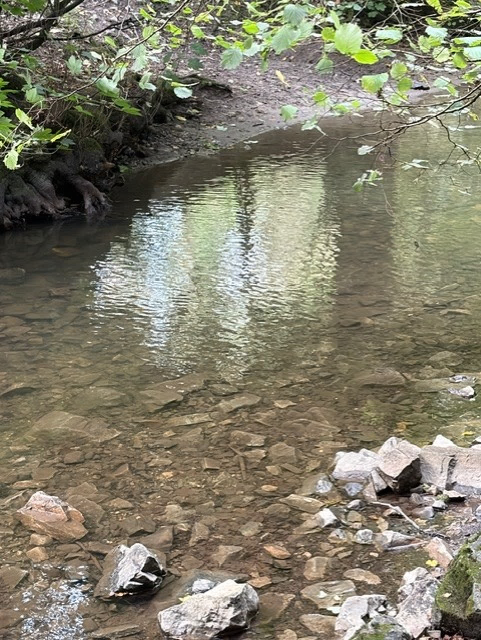
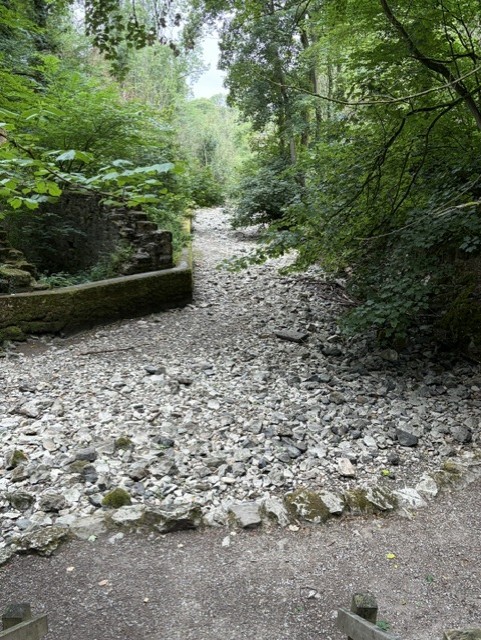
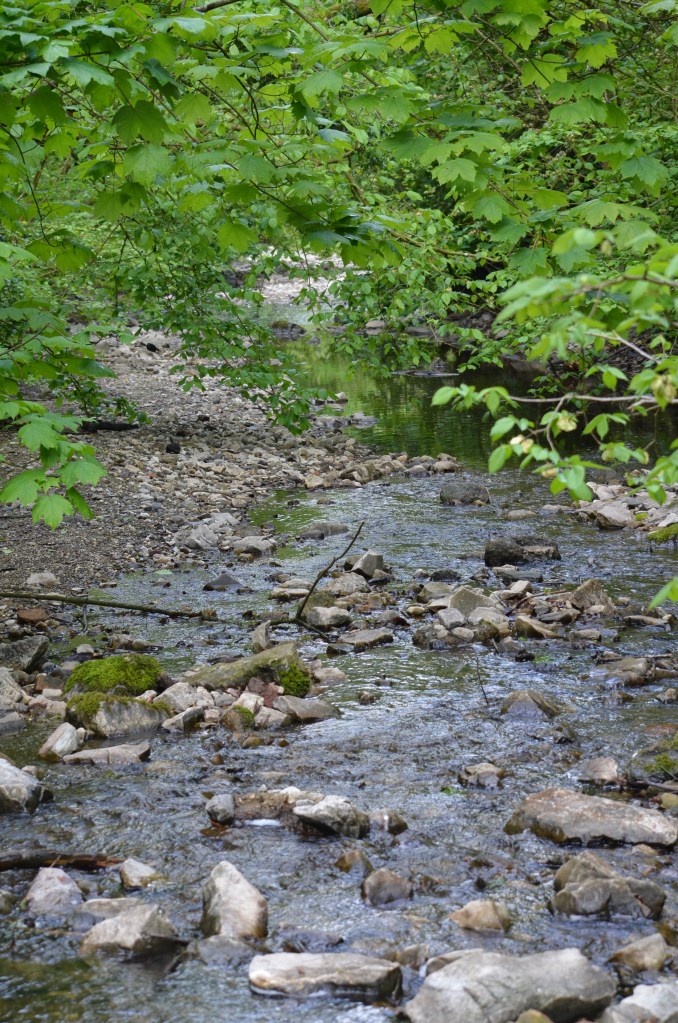
        Halfway across the stone bridge leading into the woods, we paused to look upstream: the River Alyn was still flowing reasonably well, but when we looked downstream, after just twenty or so metres, the river became a mere trickle of water before disappearing altogether. I should point out that the Alyn does naturally disappear underground at Loggerheads into the limestone swallow holes and caves before the river reappears further downstream, a phenomenon that is more noticeable during prolonged spells of dry weather in the summer months. But even taking this into account, this was the lowest we’d ever seen the Alyn at Loggerheads.

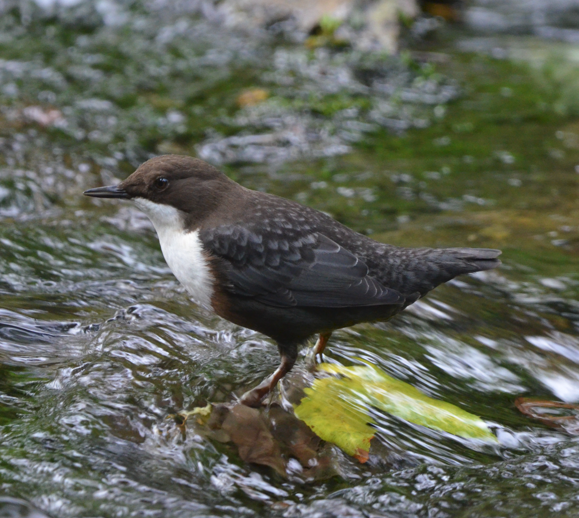
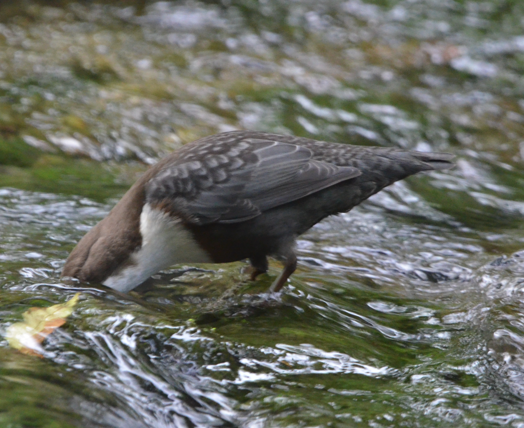
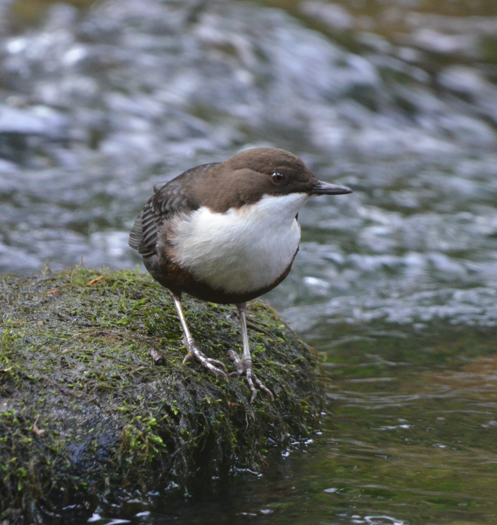
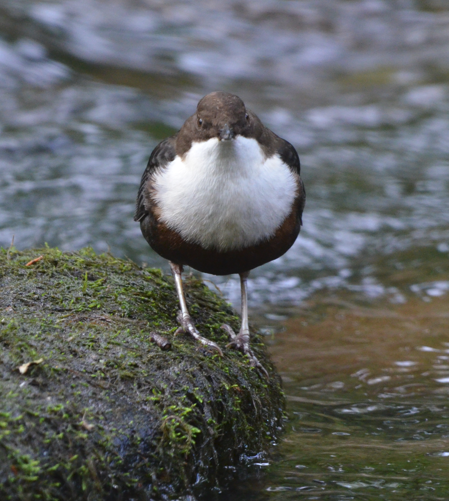
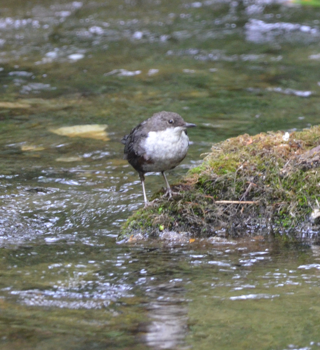
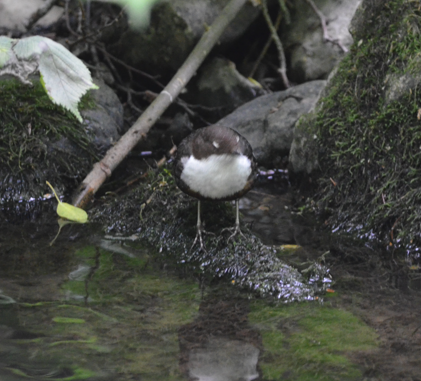
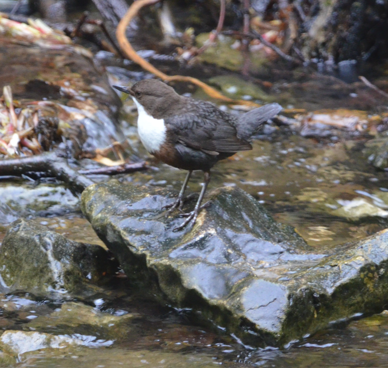
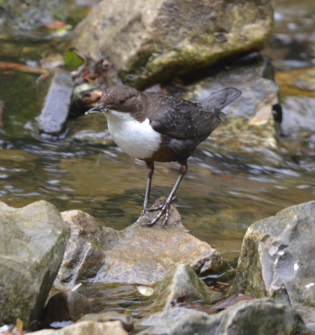
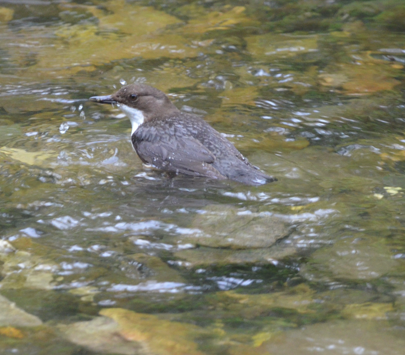
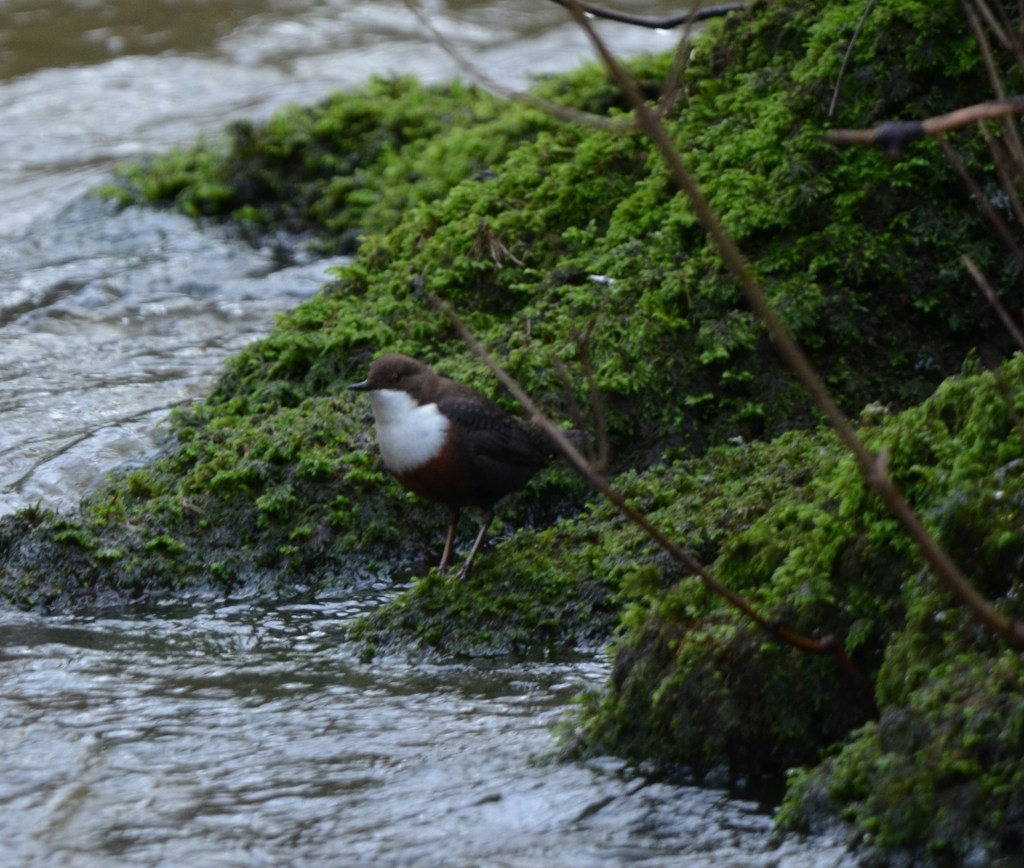
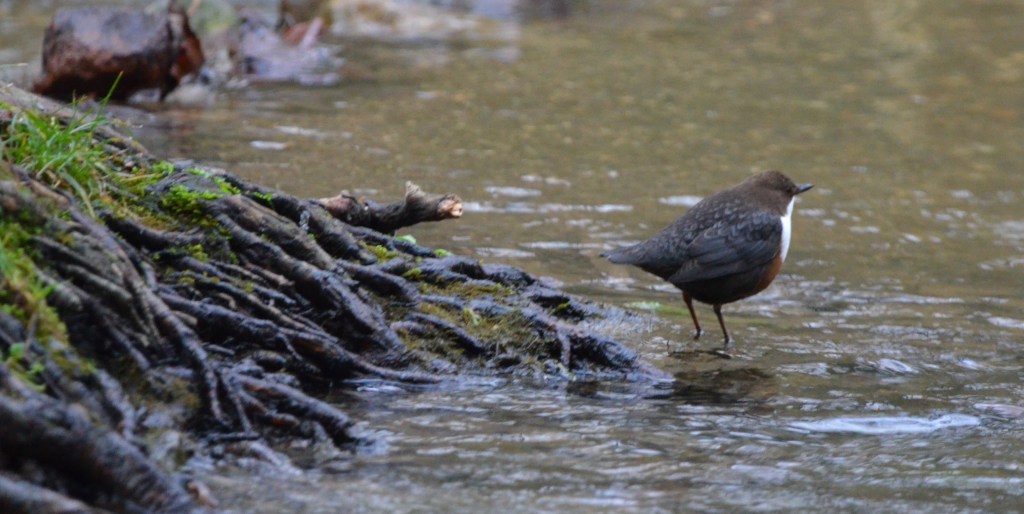
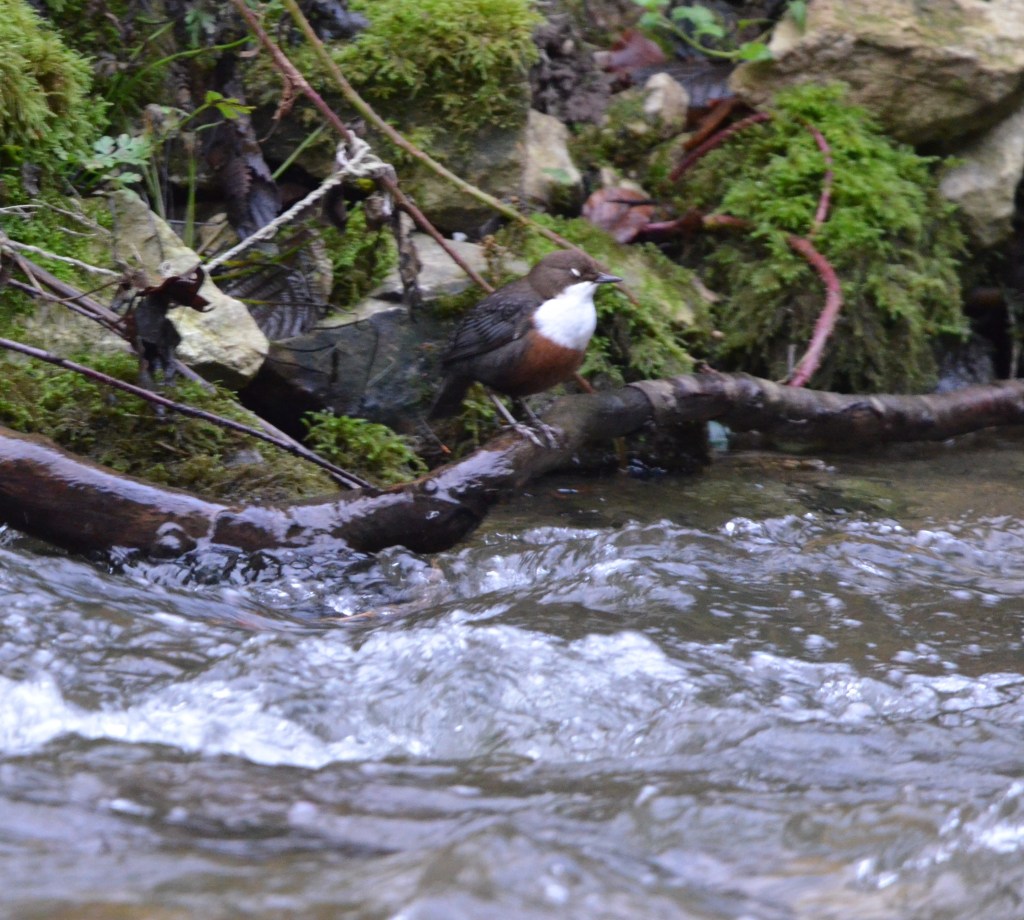
        We weren’t expecting to see much in the way of birds or wildlife at all, given the lowness of the river, to be honest. However, we often see White-throated dippers along this stretch of the river and we know they don’t tend to stray far from their habitat, so we crossed our fingers. We were in luck – before long we saw, perched on a rock mid-stream, a Dipper perform the familiar bobbing action that gives the bird its name. We watched for a while as the Dipper submerged itself in the water searching for food before it eventually flew off upstream.

    Dipper dry

    White-throated Dipper

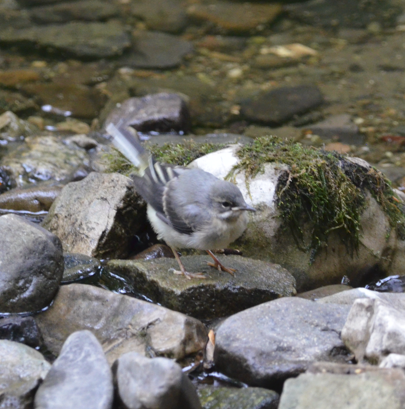
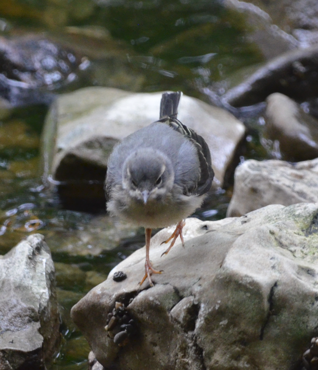
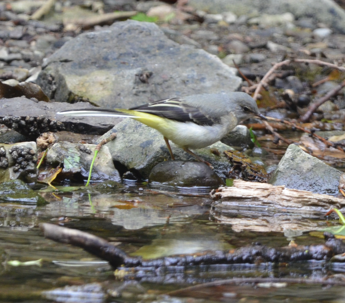
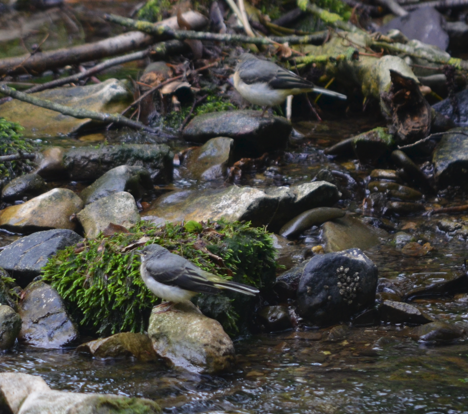
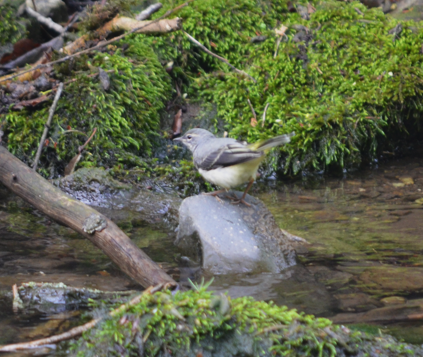
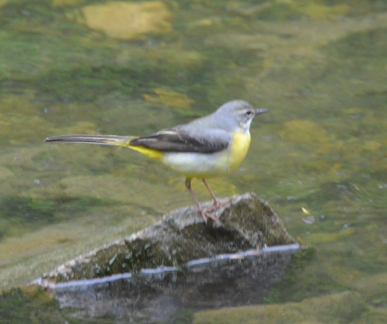
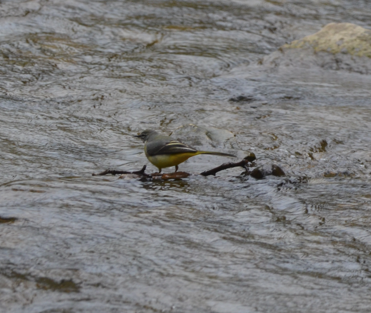
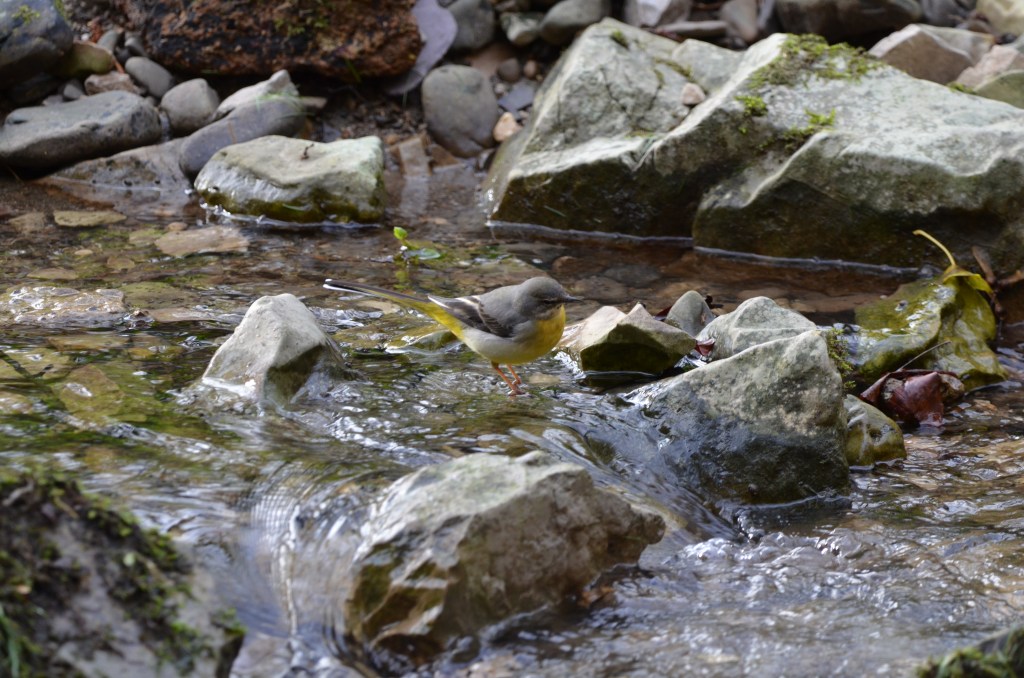
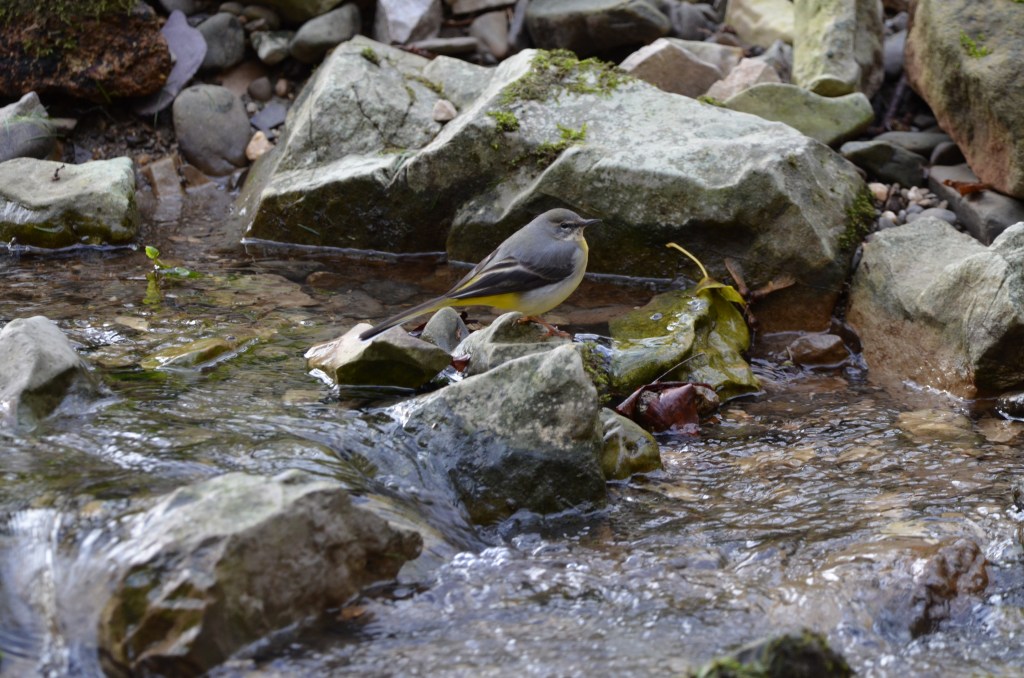
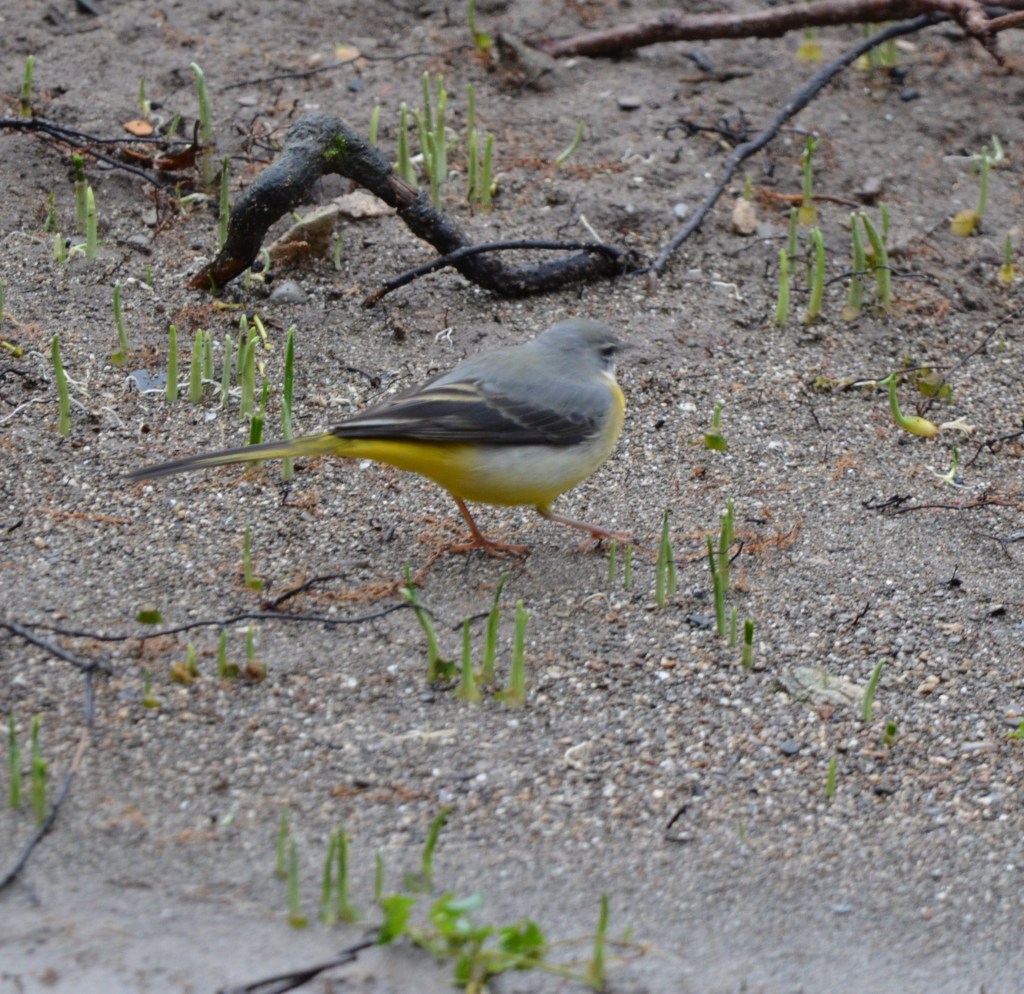
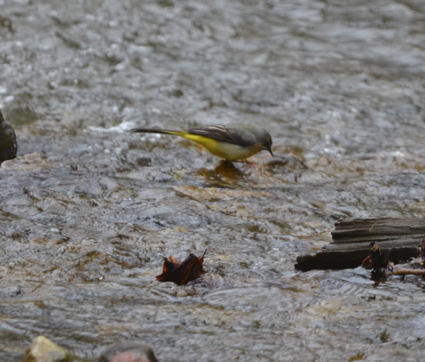
        Moments later, we were surprised to see three Grey wagtails – two adults with a much duller-coloured juvenile. When we were last here at Loggerheads six or seven weeks ago, there was the same family set-up – that is, two adults and one juvenile. Although Grey wagtails will carry on feeding their young and staying close by them after they leave the nest – monitoring their progress, if you like – this is typically for about two weeks. So, the juvenile that we saw back then should already have become independent and have had to find its own territory, which means that the juvenile we saw today is probably from the adults’ second brood.

    Grey wagtail dry river
    Grey wagtail dry river 3

    Grey wagtail

        We carried on along the Leete path beyond the wooden ‘bat’ bridge (the bridge has a carving of a bat suspended above the centre of it). Looking down at where the river usually flows, we could see only the dry rock of the riverbed.

        There was a distinct absence of birdsong too, everywhere eerily quiet. This is probably due to many of the birds not wanting to draw the attention of predators as they go through their summer moult: replacing feathers compromises the birds’ ability to fly well, leaving them vulnerable. (Some birds, such as ducks, shed all their flight feathers at once, leaving them completely flightless for the three or four weeks it takes for them to be replaced).  

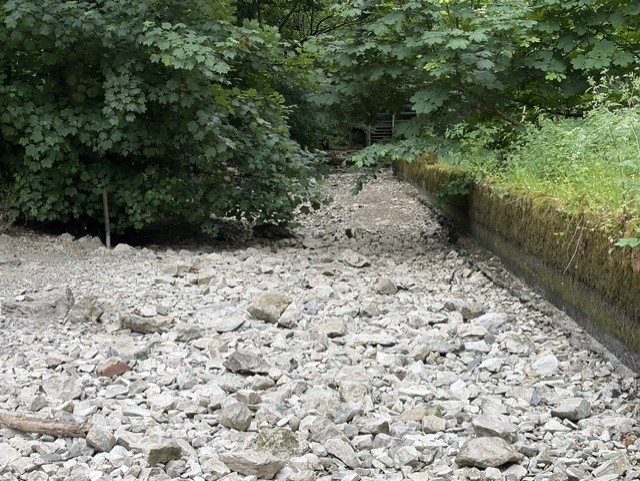
    River Alyn stone dry

    The dried up River Alyn by the ‘bat’ bridge

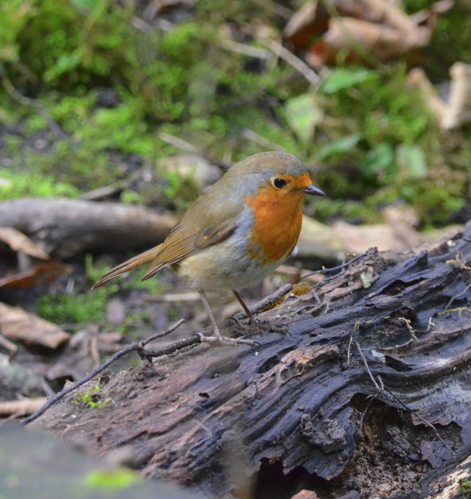
        Besides the Grey wagtails and the Dipper, there were still one or two birds about today. We saw a couple of scruffy-looking Robins skipping through the undergrowth and we watched several Nuthatches darting from tree to tree. None of them made any noise though!

        The morning had remained largely overcast although under the protection of the trees this didn’t really matter. But now it started to rain. Well, it wasn’t really rain, which would have been very welcome, but more a thin spray of the faintest vapour which disappeared almost immediately.

    The important stuff

    Over to Tŷ’r Felin (The Mill House café) which has moved from the small room right next to the mill and now sits in the much larger area in one of the main buildings at the entrance to the park. We sat outside under the tree sipping our Cappuccinos and savouring the delights of a slice of Bara Brith, with full butter of course (Col), and a slice of Cherry Cake (Stu). Marvellous!

  • Jay at Loggerheads

    (Sunday, 7th June 2026)

    Over to Loggerheads Country Park in Denbighshire today. The wind (SSW) was quite blowy on occasion but you barely noticed it here as the woods are so sheltered. Although overcast the morning remained dry and the temperature didn’t rise above 15°C.

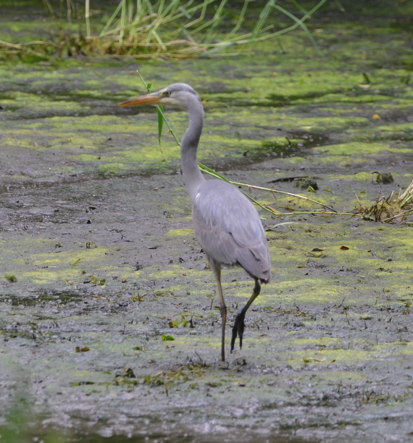
        The ditch between the car park and the buildings had been drained and cleaned up, prior to relining it. While we were examining this work, we noticed a Grey heron standing motionless in the pond just beyond the sluice gate. We carried on down the path for a better view and stood watching as the bird stealthily stalked the pond in search of prey, although it loos like its collecting nest material in the photograph below.

    Grey Heron logpond

    Grey heron with leaves in its beak

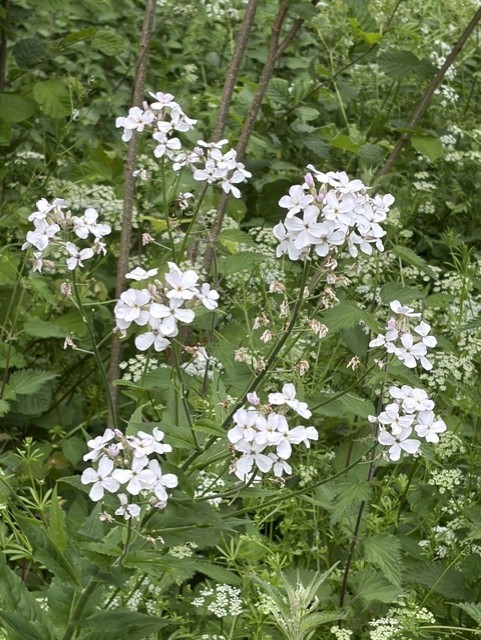
        As we came to the stone bridge that crosses the River Alyn to join the Leete path, we saw a plant with bright, white, four-petalled flowers. This is Dame’s rocket which more commonly flowers as a purple or lilac colour. The white petals on this version seemed to hold their own light and certainly stood out against the predominantly green foliage in the background.

    Dame's rocket

    Dame’s rocket

        Surprisingly, the wild garlic flowers that had carpeted the woods only weeks before had all but gone, with just the occasional earthy whiff reaching us. A reminder of how quickly time marches on, I suppose.

    Bedrock

    The River Alyn’s waters often disappear underground, leaving the bed dry

        A short way along the river we were reassured to see the White-throated dipper once again: we hadn’t seen any Dippers since they had (presumably) abandoned their nest further downstream after the Alyn’s water had receded, a not uncommon occurrence here at Loggerheads which we’ve covered elsewhere on the blog.[1] Good to see, although it was just the one Dipper that made a fleeting appearance this morning.

    Dipper blinking again

    White-throated dipper photographed mid-blink

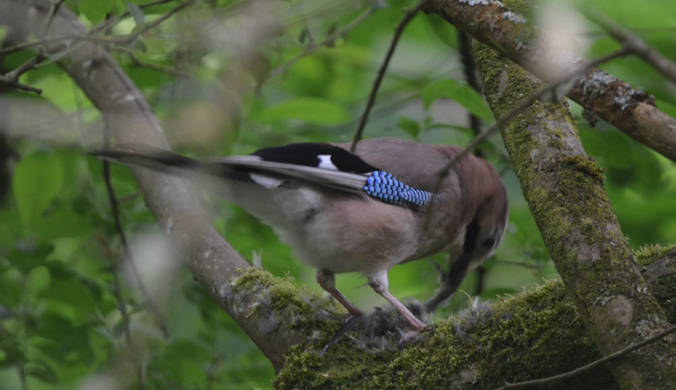
        Nature doesn’t always provide us with pleasantness, it has to be said, and shortly after our Dipper had disappeared upstream, there was a raucous commotion in the trees on the opposite bank. We looked over to see a Eurasian jay with a small bird in its beak, while another small bird had the Jay’s tail in its beak.

    Jay

    Eurasian jay devouring prey

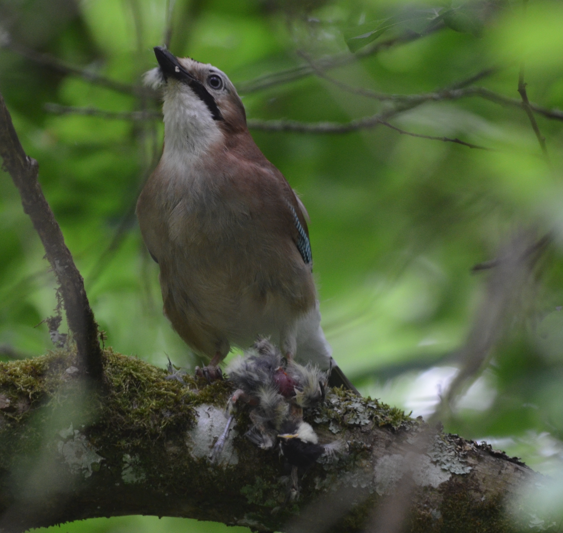
        The two smaller birds were Great tits and, though it was difficult to be absolutely sure, it looked like the Jay had taken an adult Great tit and that this poor bird’s mate was valiantly trying to rescue it. The second bird flew off as the Jay turned on it, tentatively returning a little while later, by which time the Jay had finished off its partner.

    Jay 2

    Jay with remnants of Great tit on branch

        The Jay is probably the most secretive of our corvids in the United Kingdom and you don’t often see them, though you do occasionally here their cacophonous screeching, which is hard to miss really. The Jay’s diet is varied and it will eat fruits, berries, acorns, and insects, but will also eat small rodents, young birds, and eggs. Occasionally – as in this case – it will also take adult birds. With its pinkish plumage, black and white flashes on its wings, and the distinctive sky-blue and black patch on its upper wing, the Jay is arguably our most colourful corvid but seeing our first Jay in two or three years behaving in this brutal way was obviously not the best way to witness it’s reappearance. However, it is what birds – and other animals – do, and we should treat such behaviour as dispassionately as we can.

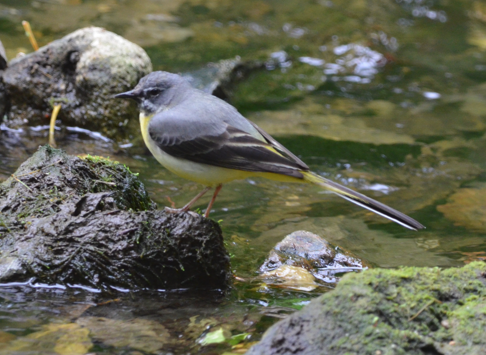
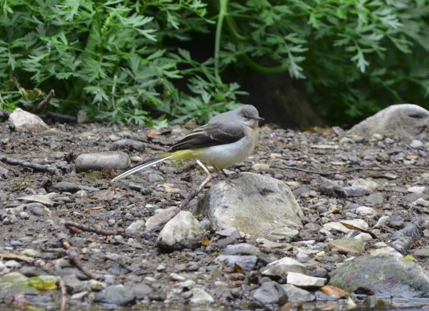
        We saw two adult Grey wagtails and one fledgling all flying low along the course of the river to forage around the stones on which they alighted. It looked like the juvenile was still being fed by one or both of the adults for the most part. Much paler than its parents underneath, with barely any yellow, this youngster did seem to be learning about habitat and food sources from its parents. These are skills it will need when it becomes fully fledged, which cannot be that far off now.

    Grey wagtail male
    Wagtail juvenile
    Grey wag 2

    The adult Grey wagtail (top picture) is much more yellow underneath than the juvenile (middle and bottom pictures)

         We caught sight of a Chaffinch as it flew from our side of the river to the trees over on the far bank. As we followed this colourful male’s progress, we almost missed the female with her more muted colouring, which enabled her to blend in with the branch on which she was perched.

    Blackbird male

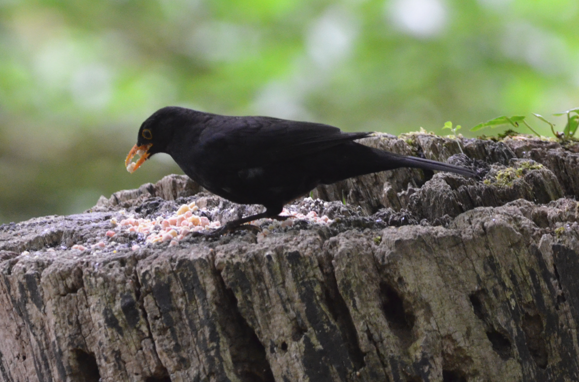
    Male Blackbird

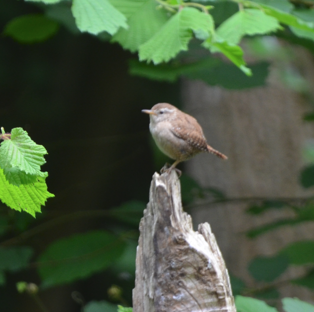
        Whenever we’re here at Loggerheads Country Park, we seem to hear but rarely see Wrens. Today, we could hear one singing from the trees behind us and being answered – or competing with – one whose call was coming from across the river. As we were a little further downstream now, where the waters have receded, Stu was able to walk across the riverbed and get a photograph of this lovely little bird.

    Wren on tree stump

    The Wren delivered a fine solo performance for us

    The important stuff

    Over to The Mill House café (Tŷ’r Felin) for our well-earned refreshments. Cappuccinos, unsurprisingly, with a Lemon muffin with gooey lemon curd in the middle for Col, and a Chocolate mini-egg pie (or something) for Stu. Very nice and very healthy!


    [1] See Along the Leete 14th April, 2024; and The River Vanishes 27th July, 2025

  • Wagtails along the Alyn

    Sunday 17th May

    Back to Loggerheads Country Park in Denbighshire this morning. The temperature was 12°C and there was a very gentle wind (WSW), although the odd cold gust blew through the woods. Overcast when we first arrived, the sun shone through from mid-morning onwards.

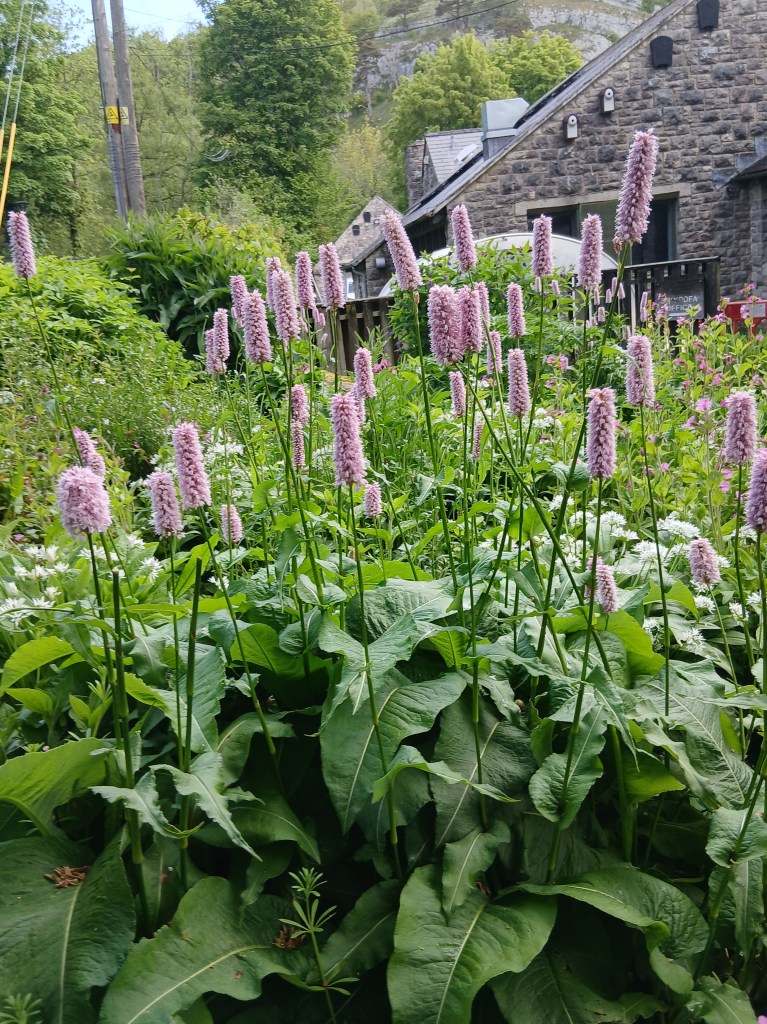
        We were greeted by lots of lovely pale, pink flowers on long stems with large leaves at their base – the common bistort certainly catches the eye.

    Bistorts at Loggerheads

    Common bistort

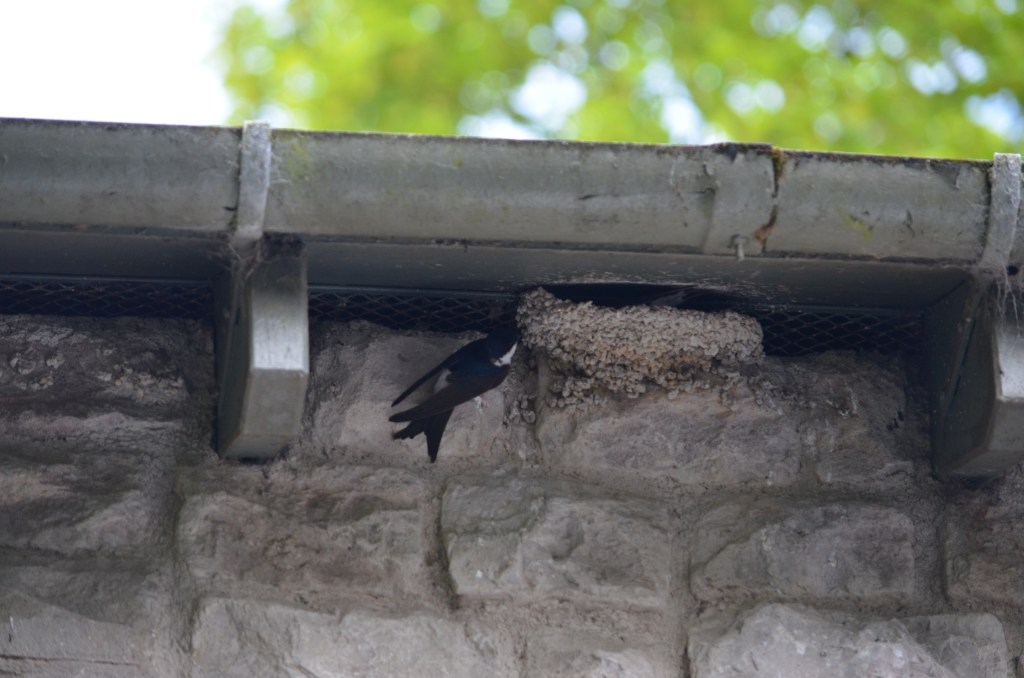
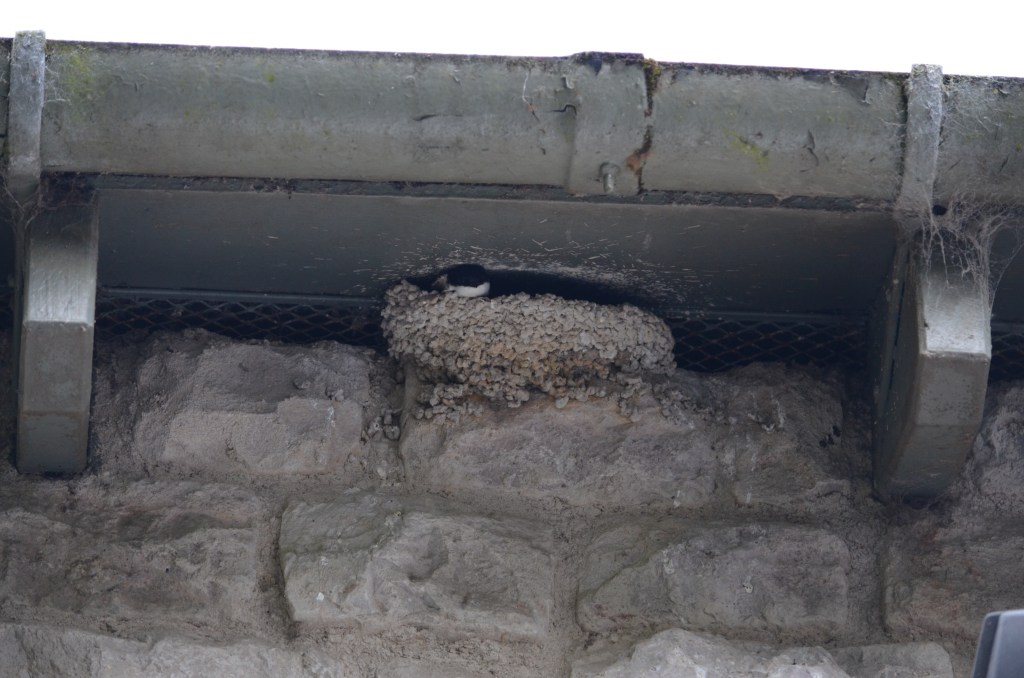
        A pair of House martins have constructed a nest up in the eaves of the gift shop once again and we watched as both parents shared feeding duties, each darting in with insects caught on the wing. We saw two chicks that briefly revealed themselves, although there may be more.     

    House martin entering nest

    House martin entering nest and (below)about to emerge in search of more insects for its chicks

    House martin leaving nest

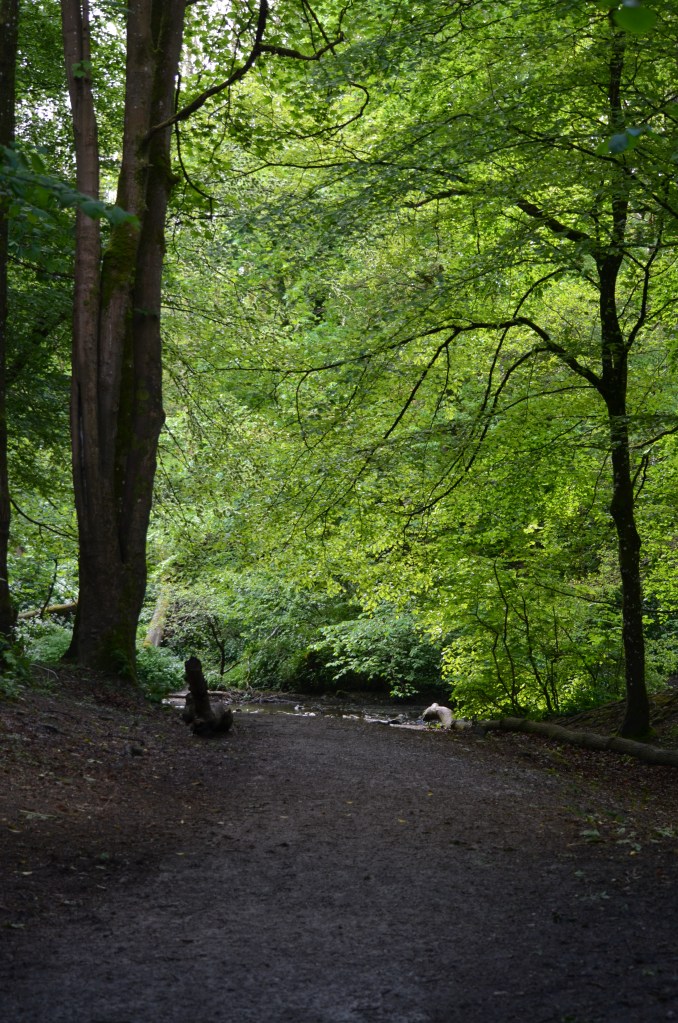
        The woods are thriving now, with lush green grasses and leaves sprouting everywhere and with the chorusing of birds and the liquid sound of running water. Apart from the bistorts, there are occasional little bursts of buttercups, herb robert, red campion, dog violets, and Welsh poppies too. Our nostrils detected the pungent aroma of wild garlic which was being gently wafted by the light wind. Pure vitality fills the senses.

    Leete path

        To the sound of two Song thrushes singing across the woods to each other – they may have been throwing out challenges or merely chatting loudly – we carried on along the Leete path.

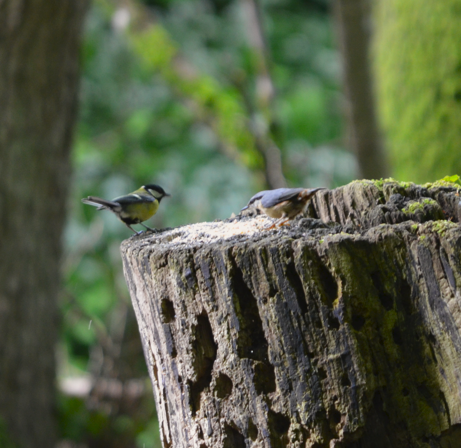
        Nuthatches and Great tits fed from the impromptu ‘feeding table’ at the water’s edge – these two species seem to tolerate one another probably because they’re roughly the same size. However, we did see a Nuthatch shooing away a Blue tit which is smaller in size. The bully!

    Great tit and Nuthatch

    Great tit and Nuthatch tolerating one another

       Disappointingly, the Dippers seem to have abandoned their nest to move elsewhere and we were unable to locate them this time.

    Abandoned Dipper nest

    The recently abandoned Dipper nest, beneath which the river has clearly receded

    We had noticed today that the Alyn was a little lower than it was a fortnight ago, resulting in the waterflow vanishing from below their nest. As Dipper chicks dive straight into the water directly beneath once they’re ready to fledge, this seems to be the obvious reason for the nest being abandoned. However, as Dippers are early nesters, it’s quite possible that any young might have already fledged, in which case the nest would be abandoned naturally. Hard to say.

    River Alyn low water

        Still, we were encouraged to see that the Grey wagtails have bred successfully and we saw the proud father, with the distinctive black bib of its breeding plumage, shadowing two fledglings as they all flew up and down the River Alyn. (The mother came out later, too!). After they leave the nest, Grey wagtail fledglings are still dependant on their parents for food for a further week or two.

    Two Grey wagtails

    The two fledglings have very little yellow on them

    grey wagtail solo

        I’m not sure that the male was feeding his offspring today, though. Rather, he appeared to be simply accompanying them up and down the river, gathering together on rocks mid-stream before flying off again. Perhaps he was familiarising the two fledglings to their surroundings although, quite soon, these two youngsters will have to leave their parents’ territory and find places of their own. Their parents might then go on to produce one or two more broods.

    Grey wagtail male?

    …unlike their mother!

        It’s reassuring that the water is clean enough for the Grey wagtails to find food in and to have produced at least this one brood, anyway. We’ll keep a look-out for any future Grey wagtail fledglings and also remain vigilant in our search to locate any Dippers once again. But that’s for another time!

    The important stuff

    As is customary, we finished off our outing at The Mill House café (Tŷ’r Felin), where we each had a very welcome cappuccino accompanied by a slice of Millionaire’s shortbread (Stu) and a Mars bar krispi (Col). Lovely!

  • The Lush Woods

    (Sunday 3rd May, 2026)

    Over to Loggerheads Country Park in Denbighshire this morning. despite the low temperature (9°C), it was dry and the air was full of birdsong. In fact, even as we left the car park we heard a Chiffchaff singing from a nearby tree: we caught a brief glimpse of the bird before it climbed out of view.

        As we approached the stone bridge that leads onto the Leete path, a stoat sprinted across our route. It was gone in the blink of an eye and, for a brief moment, I was the only one who seemed to have seen it. However, another walker confirmed he’d seen it too which was reassuring!

    garlic Loggerheads

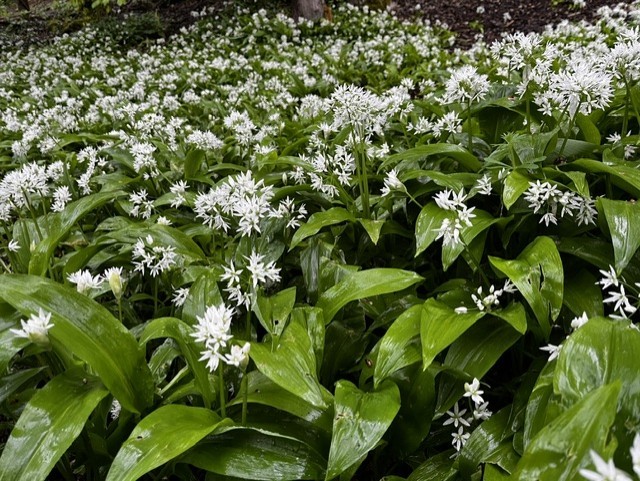
    Wild garlic in full flower

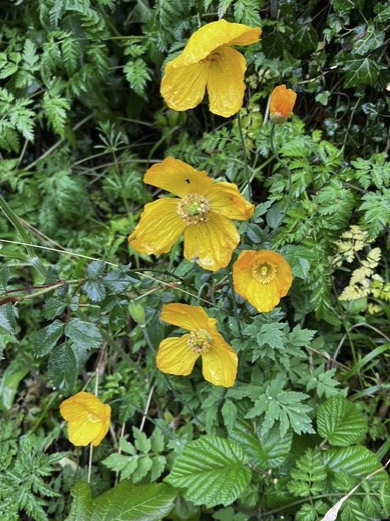
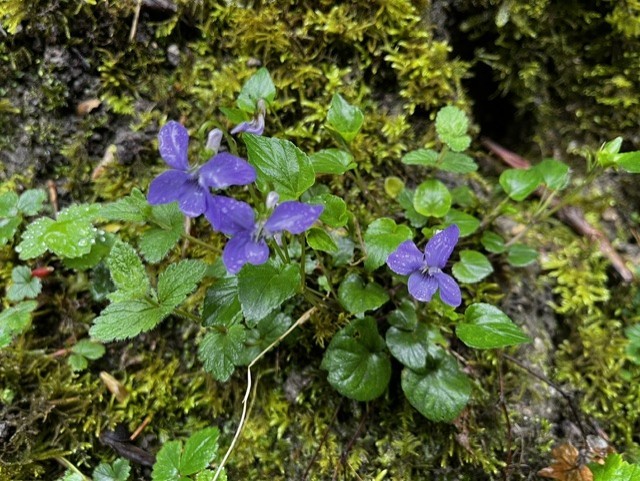
        We were last here at the end of March when most of the trees were still leafless and there were very few flowers growing, but what a difference we saw today. Welsh poppies, primroses and dog violets offered splashes of colour on each side of the path. The white flowers of the wild garlic were carpeting the undergrowth from the edges of both banks of the river now, and the mild aroma was just lovely.

    Welsh poppies Loggerheads
    dog violets Loggerheads

    Welsh poppies and dog violets

        The ash, hazel, and sycamore trees that line the path are all in leaf now, as are other trees such as beeches and birches that lie deeper in the woods. Together with the ferns and mosses (and evergreens!), everywhere you look there are vibrant shades of green. It was such a visual contrast to our last visit.  

    Dipper on another rock

    White-throated Dipper

        We were very pleased to see that the White-throated dipper was back at Loggerheads – we hadn’t seen any Dippers here since early February, although they might simply have been exploring another part of the river. This particular Dipper watched the waters from a rock, bobbing up and down in characteristic fashion. Every so often it walked into the river, submerging itself to collect aquatic invertebrates or whatever else it might find edible. It then took its food across to what we’re certain is its nest: the Dipper kept going to the same place and coming back with its beak empty. We suspect that the female might have already laid her eggs inside the nest, so we’ll keep watch and may have more to report at a future date.

    Dipper on rock
    Dipper in Alyn

    Top: Dipper, mid-bob and, bottom: Going for a dip. (If you look closely at each picture, you can see it has caught some food in its beak).

        A constant patroller of this stretch of the River Alyn is the Grey wagtail. We usually see just the one bird, but today we saw two of them keeping each other company. We’ve mentioned before on this blog that Dippers and Grey wagtails share very similar habitats and, while we quite often see both species at the same time, I don’t think we’ve ever seen them so close to each other before. At one point, one of the Grey wagtails was feeding only a metre or so away from the Dipper, which was also feeding. Each bird nonchalantly continued to concentrate on its own little section of water as if this was all perfectly normal.

    Grey wagtail 3rd May

    Grey wagtail

        The freshwater invertebrates and flies that Dippers and Grey wagtails both feed on does depend on there being good water quality. Considering all the negative reports on the state of UK rivers, the fact that both of these bird species are present on this stretch of the Alyn – and are breeding here – is a good sign of the river’s condition. Let’s hope it stays that way.

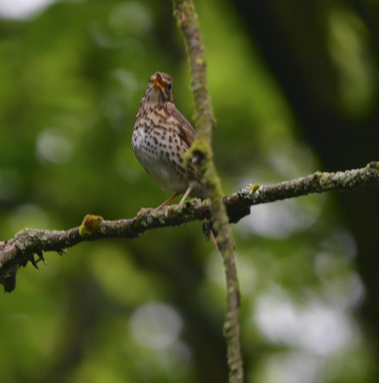
        All along the Leete path we seemed to have been followed by the same Song thrush today, although I suppose there may actually be more than one thrush at Loggerheads – who knows? Anyway, just as we regained the path and began to wend our way towards the café, ‘the’ (or maybe ‘a’) Song thrush landed on a branch overhanging our path and gave us a terrific solo rendition of its repertoire. Brilliant!

    Song thrush Loggerheads

    Song thrush

    The important stuff

    To The Mill House café (Tŷ’r Felin) for some of life’s little essentials: the usual cappuccinos with a Lemon curd blondie for Col and a Biscoff brownie for Stu. Very enjoyable!   

  • Down in the Woods

    (Sunday 29th March, 2026)

    There was a south-westerly blowing this morning, although we escaped the worst of the gusts by virtue of being in the woods at Loggerheads Country Park in Denbighshire. It was still a bit chilly (8°C) but I think we’re all becoming accustomed to this topsy-turvy ‘spring’ weather. At least it was dry.

        Just as we joined the Leete path from the little stone bridge near the mill, we saw a Song thrush fly in and settle on a high branch of one of the trees upstream from us. We’ve seen both Song thrushes and Mistle thrushes in these woods over the years but we’re seeing them less and less as time passes – nationally, both are in decline.

        Nuthatches, on the other hand, have greatly increased their numbers since the 1970s and we often see them hopping up and down tree trunks, or flitting about filching nuts and seeds.

    Another Nuthatch 29 March
    Nuthatch 29 March

    This Nuthatch used ‘diversionary’ tactics to conceal its food source

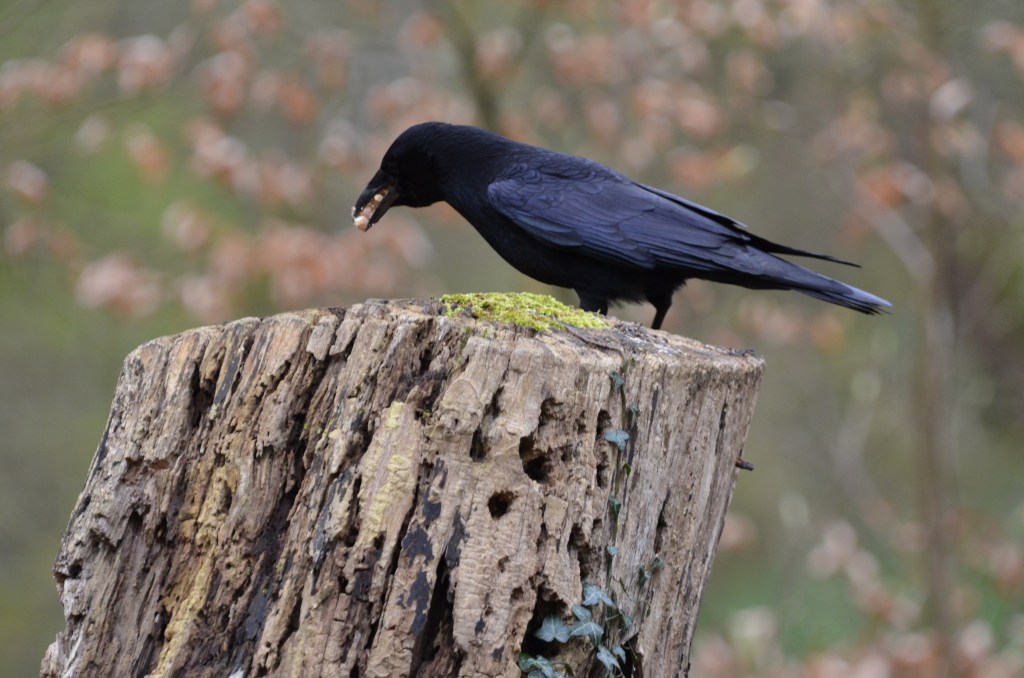
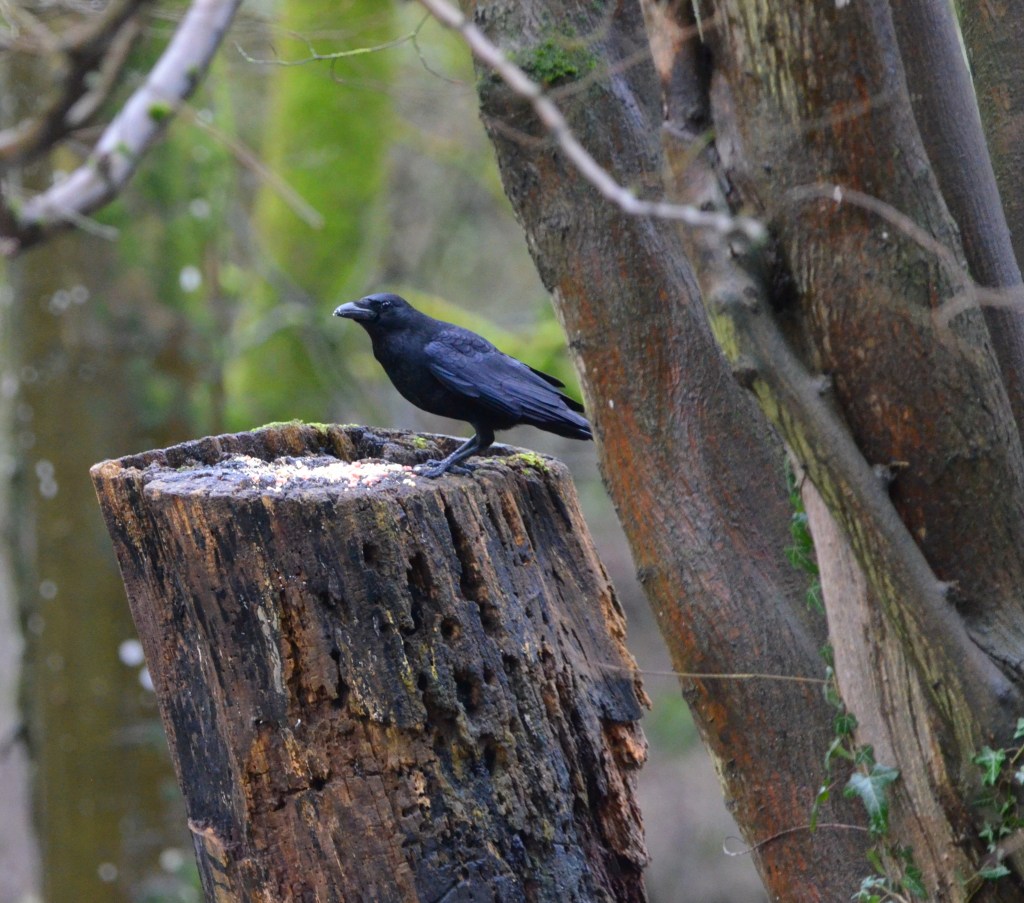
    Today was no exception and it is amusing to watch them fly from tree to tree, executing a sort of diversionary route – presumably to foil either predators or, more probably, to avoid revealing their food source to other birds. Mind you, there was little they could do once the Carrion crow discovered their source!

    Crow feeding at stump

        …but the Carrion crow discovered it anyway!

    Apart from the odd bit of hawthorn blossom here and there, the trees are generally free of any foliage (well, not counting the evergreens). But I don’t think it will be too long before everything begins to flourish. We noticed, for example, the aroma of wild garlic which reached us when the occasional gust of wind pushed through the woods. There is an abundance of garlic leaves to be seen on either side of the River Alyn, but no sign of the plant’s distinctive white flowers just yet.

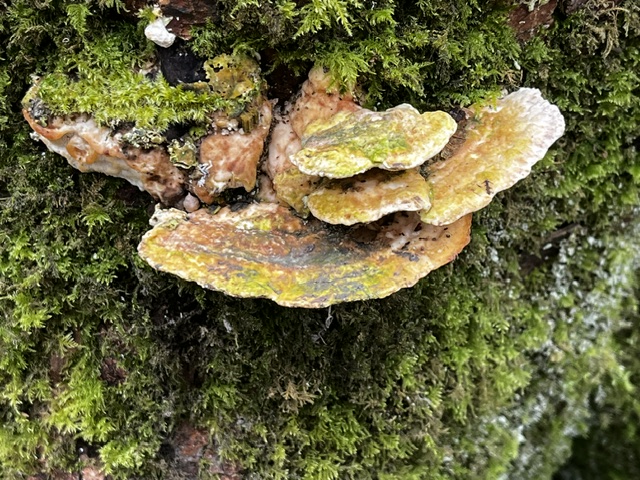
    False turkey tail

    False turkey-tail (we think!)

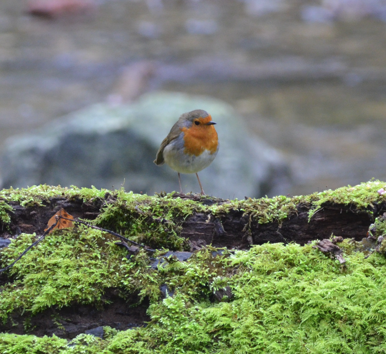
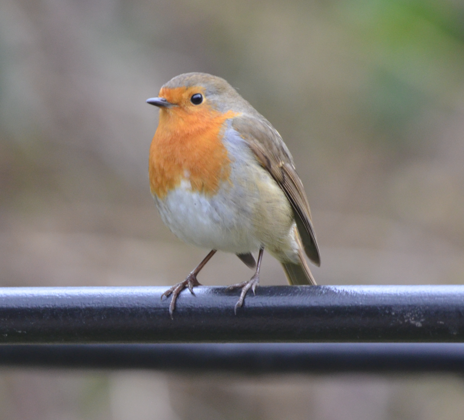
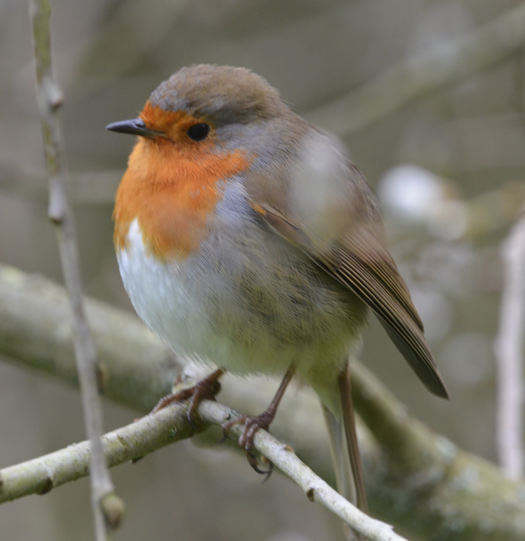
        There are other signs that spring (or should that be summer?) is finally on the way. We watched, transfixed as two Robins circled around us, flying close to the ground, disappearing then re-emerging from the undergrowth. Male and female Robins look very similar and are difficult to sex but, as neither of these birds was acting in the typical territorial mode that Robins usually display, we’re fairly confident that we were watching a male and female.  One of them posed for the camera, as you can see below!

    Robin 29 March

        We saw another pairing shortly afterwards: on a few of our visits to Loggerheads over the last few months, we’ve spotted a single Grey wagtail at various stretches of the river. Today we saw two together, although they’d separated before Stu managed to get a photograph of both of them simultaneously. It was encouraging to see though, and hopefully they’ll manage to breed successfully.

    The other wagtail
    One of the wagtails

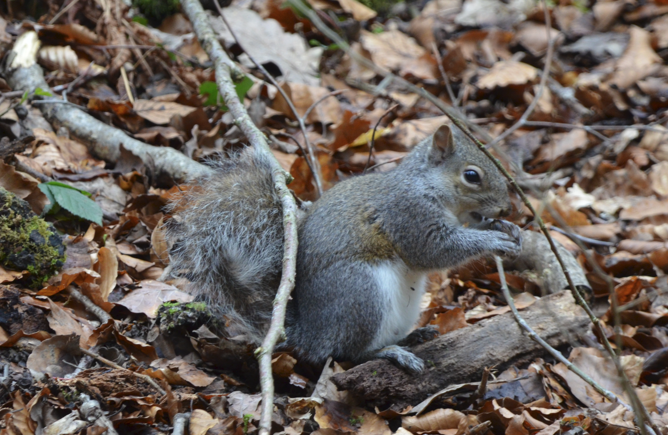
    After last week’s success at Burton Wetlands, Stu managed to capture another Grey squirrel on film – it seems like they’ve finally grown tired of hiding from him!

    Squirrel at Loggerheads

    The important stuff

    Over to The Mill House café (Tŷ’r Felin) for a cappuccino each and a Blondie Jammie-dodger (Col) and Millionaire’s shortcake (Stu). Scrumptious!  
  • A Misty Morning at Loggerheads

    (Sunday 8th March)

    Midweek I saw my first butterfly of the year in the garden – a yellow (male) Brimstone. At last! I thought, the spring’s here. But another false alarm it seems. While this morning wasn’t quite a pea-souper, it was very misty when we set off to Loggerheads Country Park in Denbighshire, and we had resigned ourselves to not seeing much. But, of course, nature rarely disappoints.

        The undergrowth was still quite bare except for the odd clump of primroses and daffodils, although this will change soon, I’m sure. The River Alyn was flowing strongly, but less rapidly than last week, a sign of the recent reduction in rainfall locally. Funny how you notice these things!
    Nuthatch facing with food

    Nuthatch scanning its surroundings even as it feeds

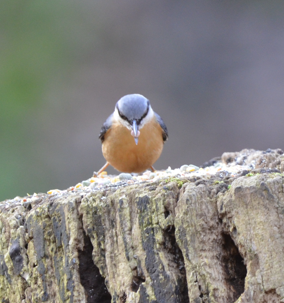
        Once again, there were Nuthatches feeding at the tree stump, looking like little aerial masked bandits. It was interesting to note that they approached the tree stump in stages, first flying from the tops of the trees along the riverbank to one of the trees closer to the stump. From here they scanned the area below to make sure it was clear, then they nipped down and grabbed some food in their beaks before darting smartly back. It looked like they were shoving one or two morsels into the bark of the trees, but Nuthatches are notoriously difficult to watch closely as they are so quick in their movements.  

    Nuthatch classic

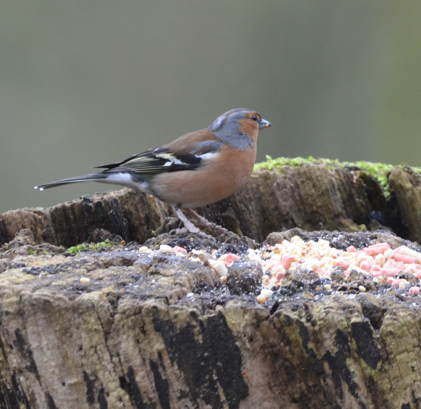
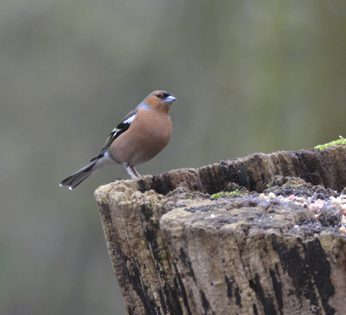
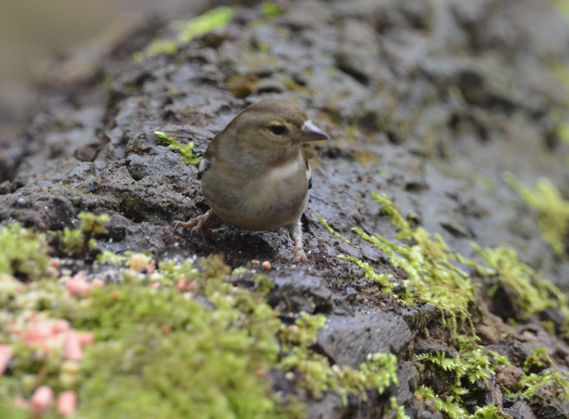
        A Chaffinch appeared as soon as the Nuthatches were out of the way. With its lovely, striking vermilion chest and distinctive white wing bars and pale grey cap, this male Chaffinch certainly caught the eye. There was a female too, though she was not quite as colourful as the male – more brown than red, and with a patch of olive-green on her back – and she arrived and fed separately.

    Chaffinch at Loggerheads

    Chaffinch

        The Chaffinch is sometimes known as the Bachelor finch: Fringilla Coelebs is its Latin name, Fringilla meaning finch or small bird, and coelebs deriving from caelebs meaning single, unmarried, or bachelor. This name was given by the Swedish biologist Carl Linnaeus who observed that it was only the females who migrated south from Sweden for the winter, while the males stayed behind near to their breeding grounds, often grouping together with other males. It’s possible that the females were actually distancing themselves from the males due to food competition – outside of the breeding season, the males are less likely to share food resources, apparently.

    Chaffinch on the edge

        The more familiar English name Chaffinch is probably derived from the bird’s habit of rummaging through threshed chaff looking for grains of seed.

    Female Chaffinch

    Female Chaffinch

        In the United Kingdom, the birds tend to lay their eggs between late April and mid-June and, generally, Chaffinches will produce only the one brood each year. The lateness of these clutches being laid is thought to be a deliberate strategy as the much thicker foliage and vegetation that appear now helps to hide the nests and protect the chicks from predators.

    Blue tit at Loggerheads

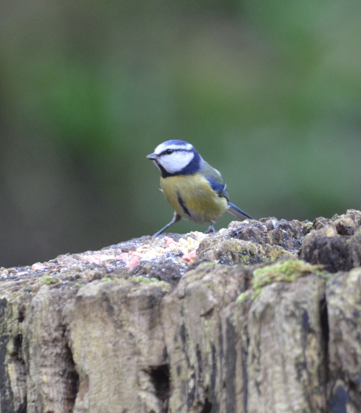
    Blue tit

        After the Chaffinches made their brief, separate appearances a small group of Blue tits descended from nearby branches and stole in to help themselves. We were then stalked by a Robin or two (we couldn’t quite work out the numbers) all the way back to the café.

    Robin stalking

    This Robin stalked us along the Leete path!
    Robin stalking nearer

    This one just came to say hello!

    The important stuff

    A cappuccino each at The Mill House café (Tŷ’r Felin) and a slice of gooey Millionaire’s shortbread. Very nice!   At the very moment we were ready to leave, the Grey wagtail flew overhead and landed on the roof of the gift shop, only to disappear over the far side. Obviously it was not in the mood for a selfie today!

  • St. David’s Day in the Park

    (Sunday 1st March, 2026)

    Loggerheads Country Park in Denbighshire to be exact. The River Alyn was flowing strongly, there was a southerly breeze, which was barely perceptible in the woods, and the morning was sunny and dry with the temperature climbing to 12°C. After the long, wet winter, are we finally entering spring? Well, it’s the United Kingdom we’re talking about so I won’t make any rash claims just yet!

    Grey wagtail second time

    Grey wagtail

        Just a short distance down the Leete path we saw our old friend the Grey wagtail. We’re unable to determine if this bird is male or female as it’s generally difficult to separate the sexes. One tell-tale sign is that males develop a black bib during the breeding season, and are a deeper yellow than the females, so we’ll keep a look-out and report any developments in the next month or so. This Grey wagtail was mooching about on the far side of the river when we first spotted it: later it immersed its feet in the shallows of the water, feeding on any insects and small crustaceans that it could find.

    Grey wagtail Saint David's Day

        Further along the path a couple of Nuthatches were feeding. Not birds that like to hang around for too long, Nuthatches: they darted in from high in the trees nearby, grabbed some food and then quickly departed. Despite this skittishness, Stu managed to take some very good photographs of these lovely little birds.

    Nuthatch scoffing again
    Nuthatch face-on
    Nuthatch scoffing

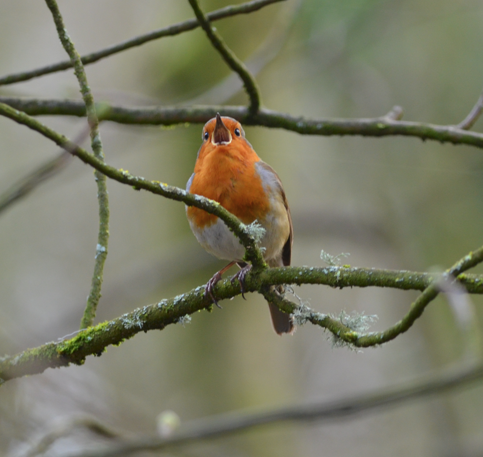
        The Robin, on the other hand, wasn’t at all shy about being seen! This one tracked us as we walked through the woods and then, as we paused on the wooden bridge to look up and downstream, it landed on the branches of a nearby tree and began to sing. I thought it was auditioning for ‘Song of the Morning’ or something. It was a pleasant tune of course – but LOUD! Below is a great picture of the Robin belting out it’s song.

    Robin auditioning

    Robin auditioning for us – LOUDLY!

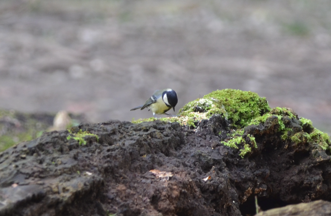
        Later, as we retraced our path and passed the spot where we’d earlier watched the Nuthatches, we saw a couple of other birds feeding. Drawing closer, we saw that one had a distinctive black stripe down its yellow breast, marking it out as a Great tit. The second bird was a Coal tit.

    Great tit at Loggerheads

    Great tit

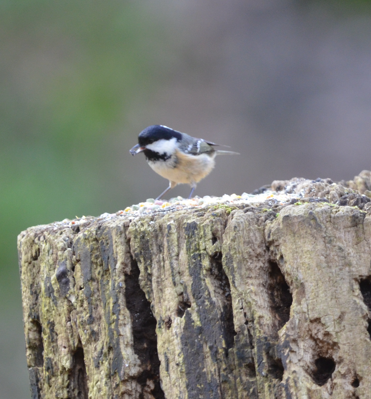
        The Coal tit is widespread throughout the United Kingdom but is much smaller than the Great tit and a lot more timid, tending to only appear fleetingly. Certainly, we rarely catch sight of them on our excursions. It has pale straw-coloured underparts, white cheeks and a black cap and black bib, and has a predominantly grey back.

        The Coal tit is similar to both the less common Marsh tit and the even rarer Willow tit and is sometimes mistaken for one or other of these birds. Apart from the rarity factor, the Coal tit can be differentiated from either of these two in other ways: first, it has white wing bars which neither the Marsh tit nor the Willow tit possess; and second, it has a distinctive patch of white stretching from its crown down to the back of its neck. This is not always visible of course, particularly if you’re looking at the bird head-on but you can just make it out in the picture here.

    Coal tit at Loggerheads

    Coal tit: the white patch from its crown to the back of its neck is just visible in the photograph

        The Coal tit prefers coniferous woodland and relies on seeds from conifer cones, particularly during the winter. However, the bird also enjoys the nuts of deciduous trees such as beech, so – like other tits – it is adaptable in its choice of habitat. Luckily, Loggerheads is a mixed woodland area of broadleaf and coniferous trees, so the Coal tit gets the best of both worlds!

    The important stuff

    We had our customary cappuccinos at The Mill House café (Tŷ’r Felin). Stu chose a Bara brith flapjack to accompany his coffee, while Col had a Jammie dodger blondie with his. A lovely way to celebrate Wales’s national day!

  • Nuthatches at Loggerheads

    (Sunday 8th February)

    Over to Loggerheads Country Park in Denbighshire this morning. An overcast morning, peaking at 7°C, it was at least dry – for the first time in several days. In fact, the sun came out temporarily, although only as we made our way home! Much of the UK has been hit by a prolonged spell of extraordinarily wet weather so far this year, with many areas flooded, so it was a relief to see that the Loggerheads flood defence works that were completed recently have proven successful. Still, the volume of rushing water in the River Alyn reflected the amount of rainfall that has fallen in recent weeks.

    Loggerheads snowdrops

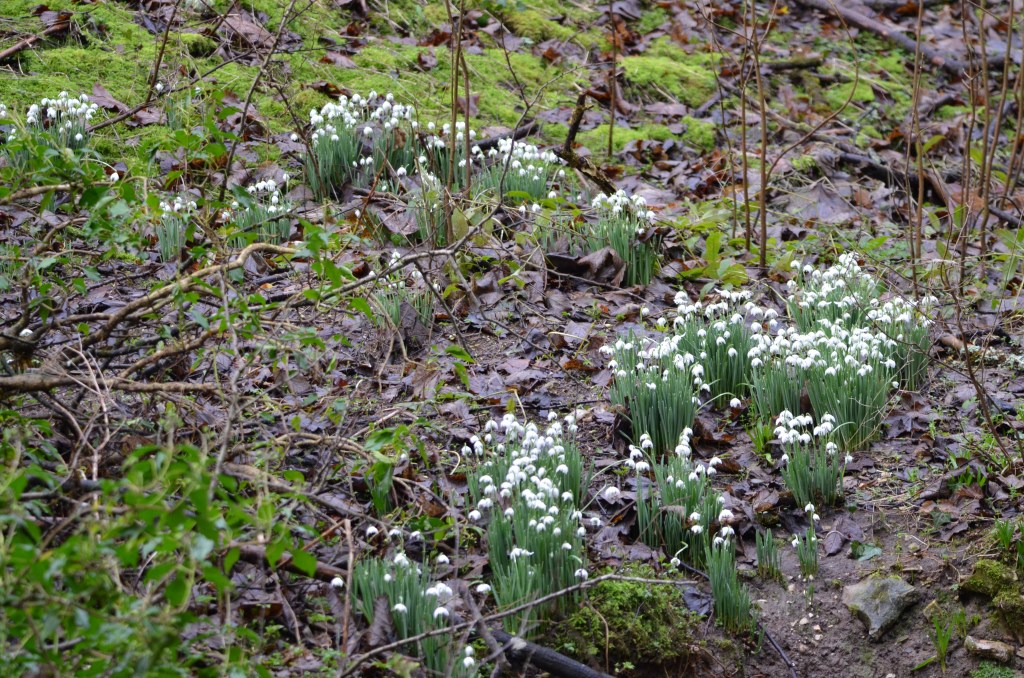
    Snowdrops decorated the ground here and there and we saw a few clusters of Jelly ear fungus as we wandered down the Leete path.

    Jelly ear fungus 2

    Jelly ear fungus

    Jelly ear fungus

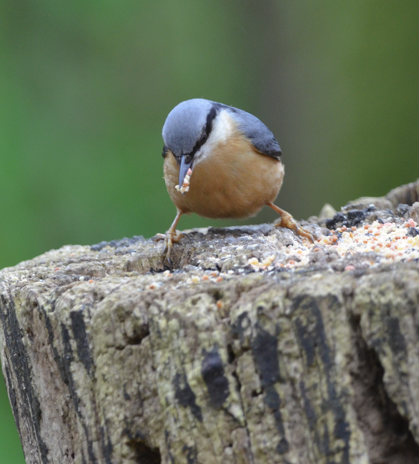
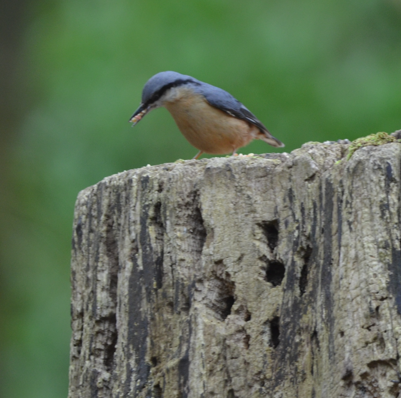
        On an old tree-stump at the water’s edge, we saw Nuthatches darting in from nearby trees to collect nuts which had been left by someone concerned for the winter welfare of the local bird population. They didn’t hang round long, so getting photographs was a bit tricky.

    Nuthatch close-up

    Nuthatch collecting food

    Nuthatch turning

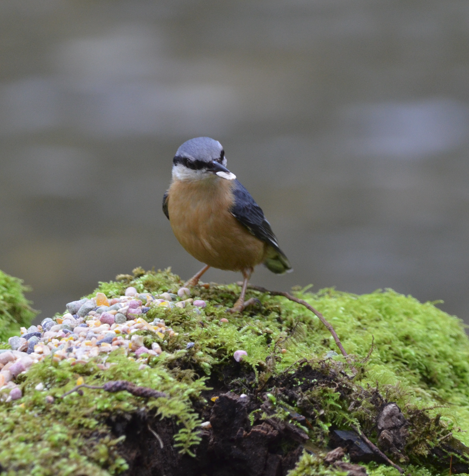
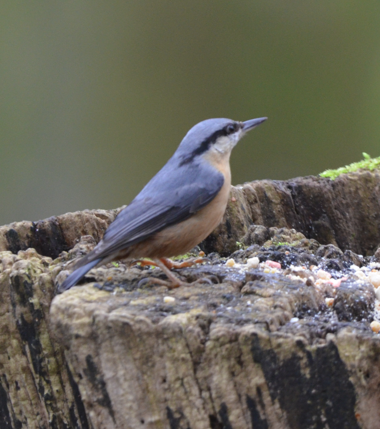
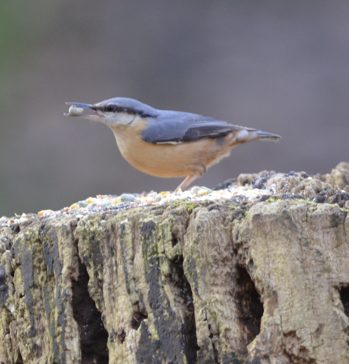
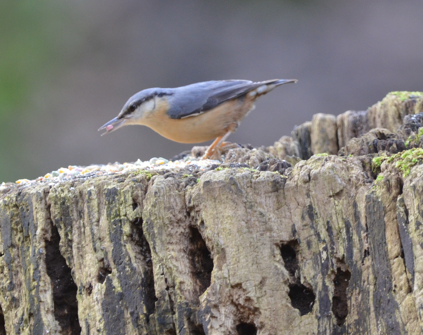
    We’ve seen crows feeding here before, but this was the first time we’d witnessed Nuthatches helping themselves! Slightly bigger than a Robin, these birds have quite a distinctive shape to them, having large heads and short tails. Their wings and back are slate grey and they have an orange-red underbelly. Their white throat and cheek are separated by a black eye-stripe that always reminds me of a mask-wearing bandit, although perhaps that’s just me!

    Nuthatch tree-stump

        There were two Nuthatches and, based on their well-defined colouring, I think they were both males – females tend to have a more muted complexion – and each of them took it in turns to land on the ‘platform’ of the tree trunk. Nuthatches, incidentally, are the only UK birds that can walk up and down tree trunks, which their strong feet and claws allow them to do. (Treecreepers and woodpeckers can walk up but not down). The name Nuthatch comes from their habit of lodging nuts firmly into the bark of trees, then repeatedly pecking at them so as to get to the edible kernel inside.

    Carrion crow on tree-stump

    Carrion crow reminding the Nuthatches of its territorial rights

        Eventually, a Carrion crow alighted on the trunk, at which point the Nuthatches sensibly took refuge in the nearby trees. The crow didn’t seem to be feeding – it was probably just reminding its avian cousins that this was its territory!

    Bat on bridge

    Bat hanging around

        We continued down the path to the wooden bridge where the Bat likes to hang out. It’s hard to believe that, where these torrents of water were flowing so forcefully today, that the river can be reduced to a trickle, or even dry up completely during long spells without rain, particularly in the summer months.

    Torrent River Alyn

    The River Alyn at full spate

        The birds were evidently enjoying this particular change in the weather as much as we were: we saw Chaffinches, Blue tits, Great tits and Woodpigeons making the most of it. We spotted a couple of our old friends, too: first, the White-throated dipper presented itself for a photo-opportunity and then we saw the Grey wagtail who was trawling along the sandy mud of the far riverbank. Always a pleasure to see these two birds.

    Old friend Dipper

    White-throated dipper

    Old friend Grey wagtail

    Grey wagtail

    The important stuff

    Over to The Mill House café (Tŷ’r Felin), where we had our customary cappuccinos and a cake each – Toffee Biscoff for Stu and Vegan Cookie for Col. It was still dry but we sat inside by the Mill anyway. Very pleasant.

  • Goldcrests at Loggerheads

    (Sunday 28th December, 2025)

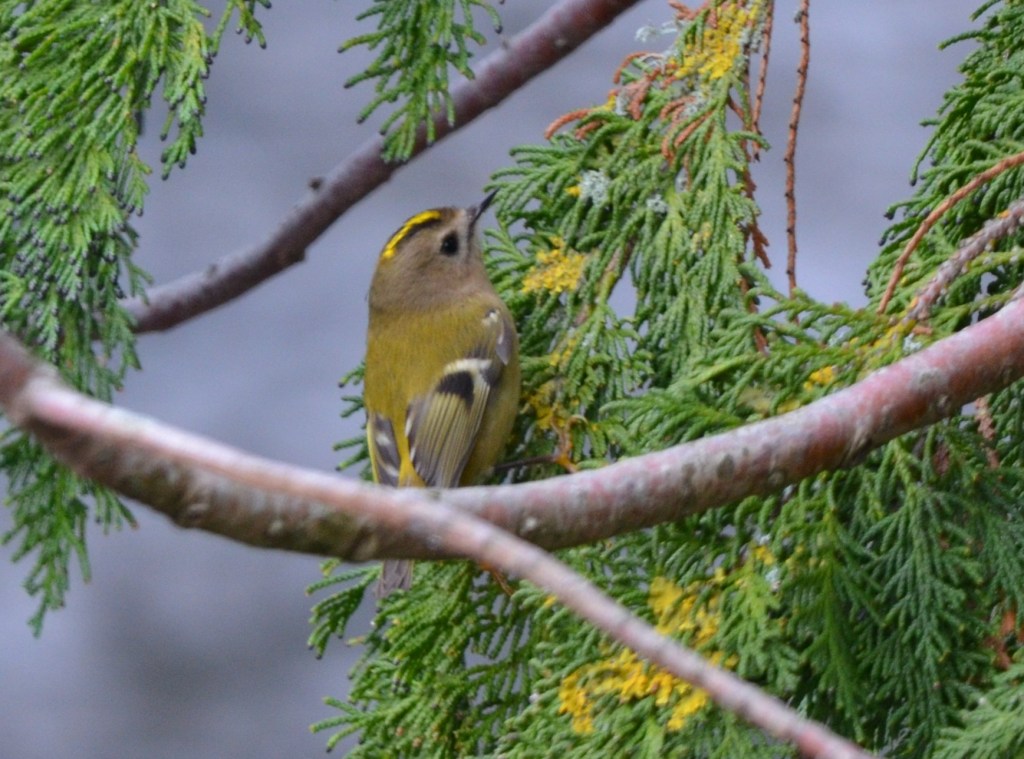
        Sometimes you just get lucky. We were just about to leave Loggerheads Country Park, in Denbighshire, and head home. Before we did so, we thought we’d take a last quick look from the little bridge opposite the We Three pub. Looking upstream, we caught glimpses of yellow as tiny birds darted around the lower foliage of a tall conifer. (Judging by the leaves, I think the tree is a cypress of some sort, but I’m not entirely sure). These birds were not easy to track but, looking through the binoculars, I could see that they were Goldcrests – the smallest bird in the British Isles and, in fact, Europe. These tiny birds are rarely longer than 9.5cm (3.7 in), with a wingspan no greater than 15.5 cm (6.1 in). On average, they weigh just 6g ( less than 0.25 oz) and are often described as weighing the same as a twenty-pence piece.

    Goldcrest in conifer

        Goldcrest

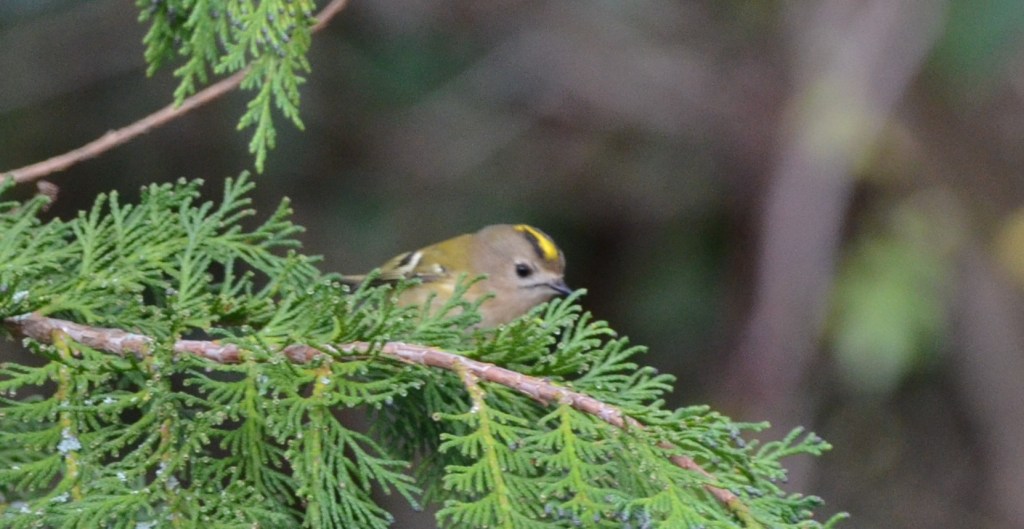
    The Goldcrest has whitish-grey underparts, olive-green upperparts and two contrasting white wing bars, and a distinctive yellow crest on its head, from which it gets its name. The male has a smudge of orange running through the centre of its yellow crest, although this is not always visible: presumably it becomes so when it ‘displays’ during the breeding season. So, the Goldcrest in the photographs could be either male or female. And kudos to Stu – considering how active these birds were as they probed the cones and leaves for food – the photographs turned out really well.

    Goldcrest 2

        Goldcrests are actually quite a common bird in the British Isles, where resident birds are joined by migrant birds from Scandinavia during the winter months, although neither of us had actually seen them ‘live’ before. And despite our climate becoming warmer, Goldcrests are still susceptible to the cold: they can ‘burn off’ a lot of body weight overnight when the temperature drops, even when they huddle together. It had been a cold night – and it didn’t climb above 5°C for the whole of the morning – so probably these Goldcrests were replenishing lost energy.  

    Dipper about to submerge itself

    Dipper about to submerge itself

        Earlier in the morning we had seen a White-throated dipper – in fact we traced it to a couple of different spots along the River Alyn. Over time, we’ve noticed that Dippers seem to favour the faster-flowing white water of the river. This one first performed its characteristic bobbing dance, before submerging itself in the river in search of food. Very entertaining!

    Blinking Dipper

    Dipper showing white eyelid feathers as it blinks

    Grey wagtails also hunt in areas of the river where there is fast-running water, but though both species’ territories overlap, somehow they’re both able to share the river’s resources without too much disputation, as far as we can make out. We often see both species out and about at the same time, as we did today.

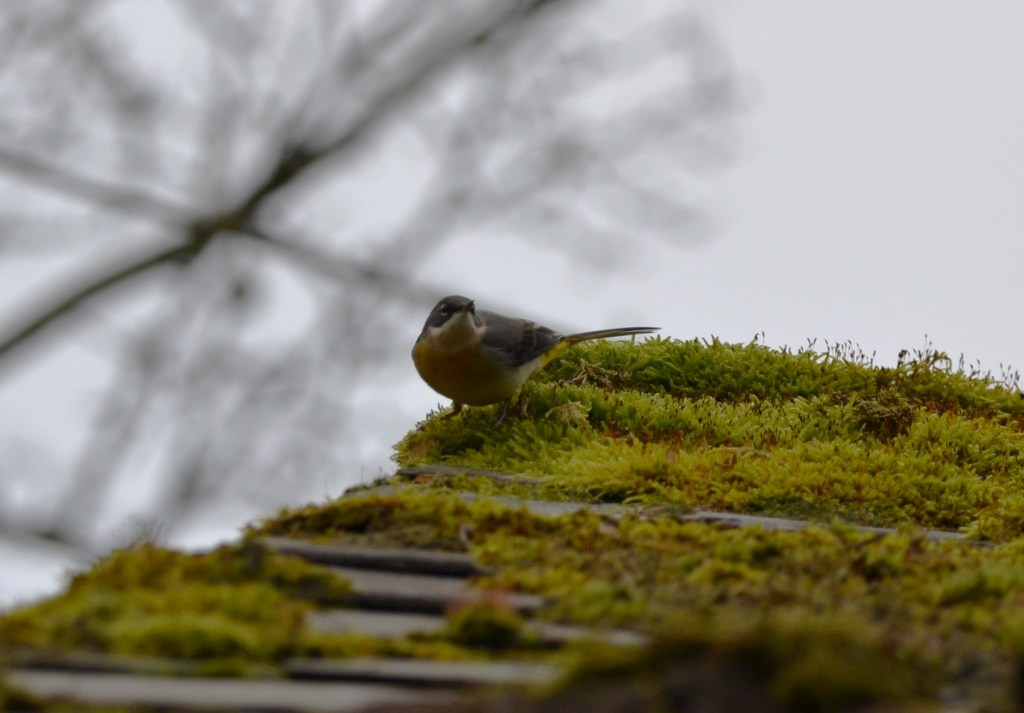
    Grey wagtail on mill roof

    Grey wagtail on the roof of the mill house

    The Grey wagtail flew off before it could be photographed although it – or perhaps another wagtail, we can’t be sure – appeared a little later on the roof of the old mill which is the one in the picture. While some birds are camera-shy, the same can’t be said of our old friend the Robin: a born star that just loves being photographed!

    Robin posing

    Robin posing for the camera

    The important stuff

    The Mill House café (Tŷ’r Felin) provided us with much needed sustenance after all that hard work. A cappuccino and a Chocolate Biscoff each soon restored our equilibrium!

  • The tail-end of the storm

    (Sunday 16th November, 2025)

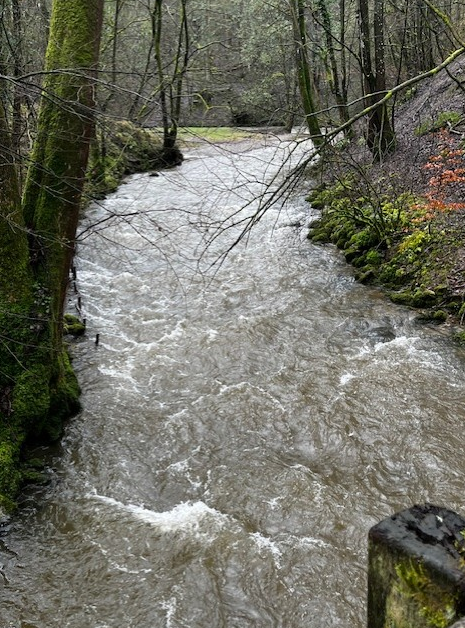
        Over to Loggerheads Country Park in Denbighshire, this morning. The River Alyn was running very high in the aftermath of Storm Claudia – Friday and Saturday had been particularly wet and, though it was a cool 8°C when we arrived, the rain had ceased and the day was dry. The rebuilding of the river wall that was completed in 2024 has clearly been successful: in past years, the old mill, the café and the visitor centre have all been subject to flooding after persistent heavy rain, whereas today there was no such damage.

        I thought it was worth including a photograph of the river from earlier this year, just to show the difference that prolonged spells of dry weather and wet weather can produce. As has been mentioned elsewhere on this blog, the Alyn is particularly affected because of the river’s ‘disappearance’ underground (see The River Vanishes, Sunday 27th July, 2025).

    River Alyn dry bed 3

    The bed of the River Alyn back in July this year…

    Alyn full spate 2

       …compared to the aftermath of Storm Claudia on Sunday.

    Our Grey wagtail put in a guest appearance this morning and we’re certain it was the same one that we saw only last month: while we recognised the bird, I wonder did it recognise us? (Oh! It’s those two again!). There were several House sparrows, Great tits, Robins, Common crows, and a lone Grey heron flying high above the trees, its legs extended horizontally behind it.

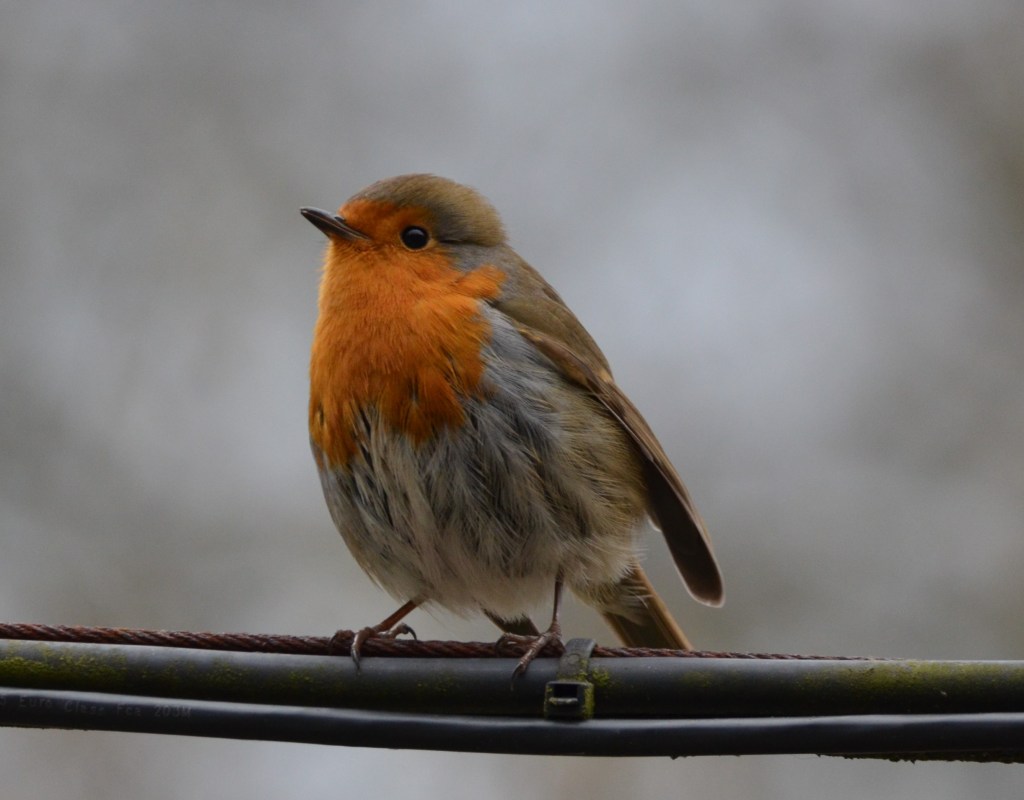
    Robin calendar

        A Robin practicing its ‘winter calendar’ pose

    But it was the sight of a pair of Nuthatches that drew our attention: we were sitting beneath an old oak tree and, for some reason, I looked up. I don’t recollect hearing any noise, or being aware of any movement, so I’m not sure why our attention was suddenly locked onto the oak branches above. Pure luck, I suppose. As I raised my binoculars, the nearest bird walked headfirst down the trunk. The way I’m describing it, you might be imagining a stately descent but, really, the bird performed a sequence of rapid steps before turning around in the opposite direction, and then quickly hopped up the branches of the tree. This was a female Nuthatch, given the paleness of its red/orange breast (I’m discounting its being a juvenile given the lateness of the season, but I may well be wrong). I’m guessing that the other Nuthatch was male, although it was a little higher up the tree and I was concentrating on the nearest one. No photographs, unfortunately, as they are such quick, darting creatures, but we’ll maybe see them again the next time we’re here.

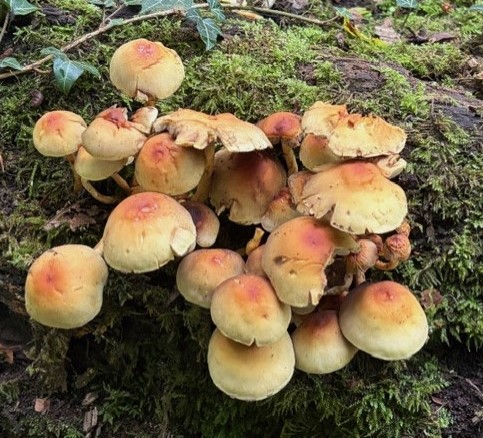
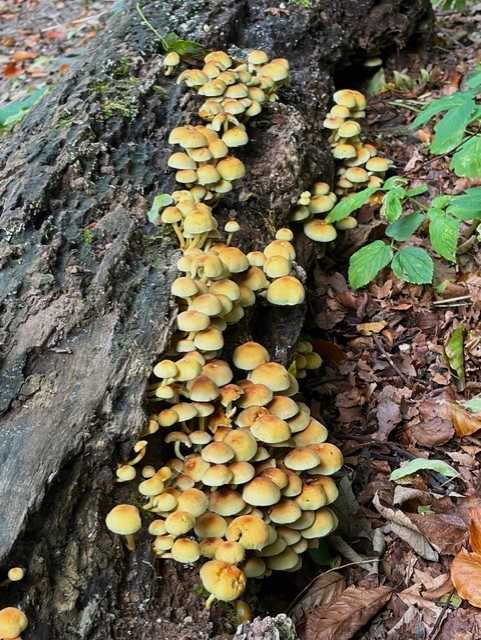
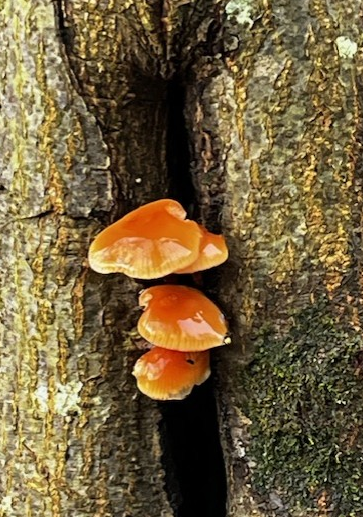
    Velvet shank

    Above: Velvet shank. Below: unknown bracket mushrooms

    Bracket mushroom

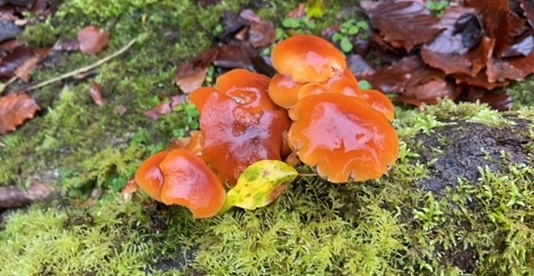
        Late autumn is a good time of year in the British Isles to see various fruiting bodies of fungi although this is one area in which we’re admittedly lacking in knowledge. (Only one?!) But, looking online, I think the buff-coloured spherical fungus is a mushroom called Velvet shank. I’m hesitant to say anything too detailed on the other fungus apart from it appears to be some form of bracket mushroom.

    Coin tree

    No change at the coin tree

    The coin tree, which we generally pass without consideration, is thought to be the modern version of the traditional practice of making offerings to wood deities and spirits. The coins have been hammered into the bark and are almost impossible to extract – allegedly!

    The important stuff

    We sat outside The Mill House café (Tŷ’r Felin) with our customary cappuccinos, each tucking into a slice of Bakewell. Very nice!