Category: North Wales

  • Above the Dee Valley

    (Sunday 10th May, 2026)

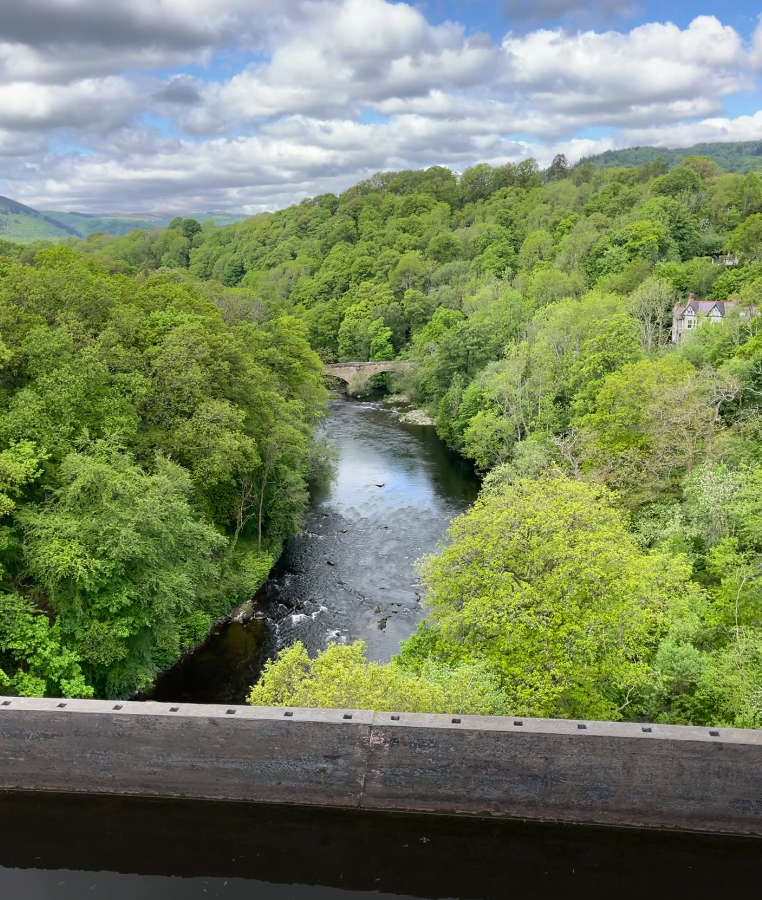
    39 metres (127 feet in old money) above the Dee Valley to be more accurate. Yes, we went over to Pontcysyllte Aqueduct in Wrexham County Borough this morning. Although the sun popped out occasionally to remind us of its existence, the temperature struggled to get any higher than 12°C which seemed colder at height. Still, it was a reasonably bright day and we had some magnificent views from our vantage point in the sky!

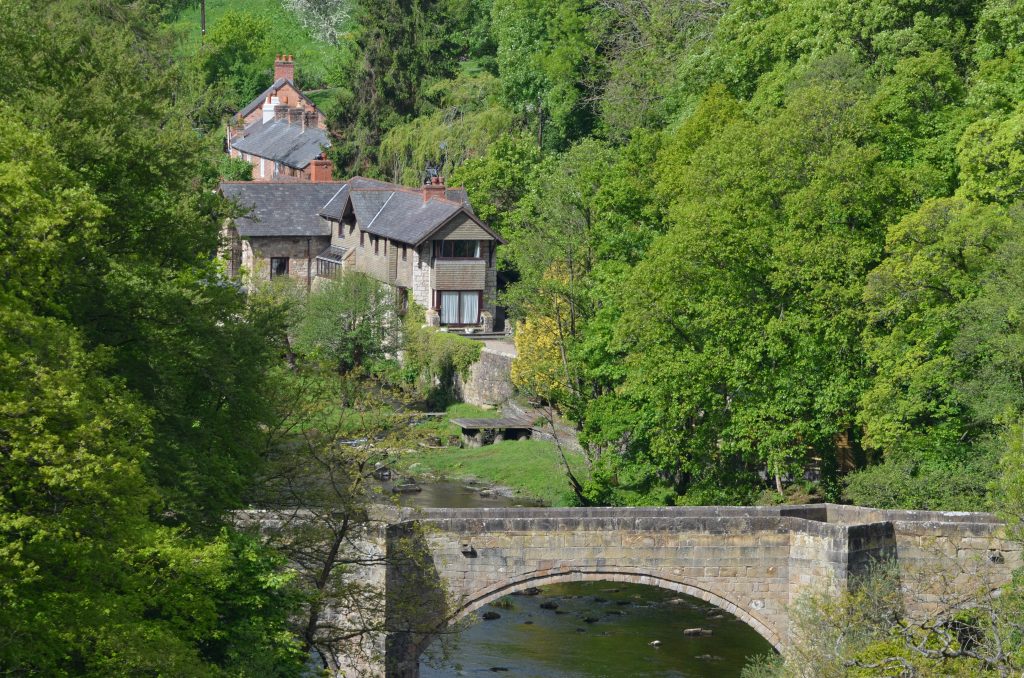
    road bridge

    Looking down at Cystylltau Bridge, which was constructed during the 17th century.

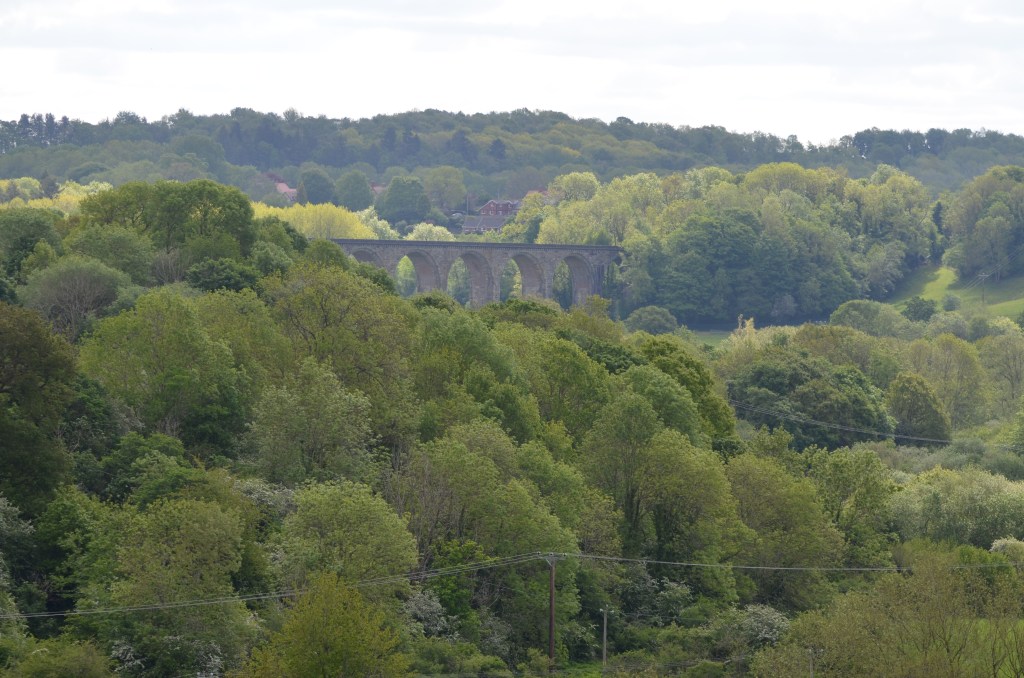
    Berwyn Railway Viaduct

    Looking west towards Berwyn Railway Viaduct

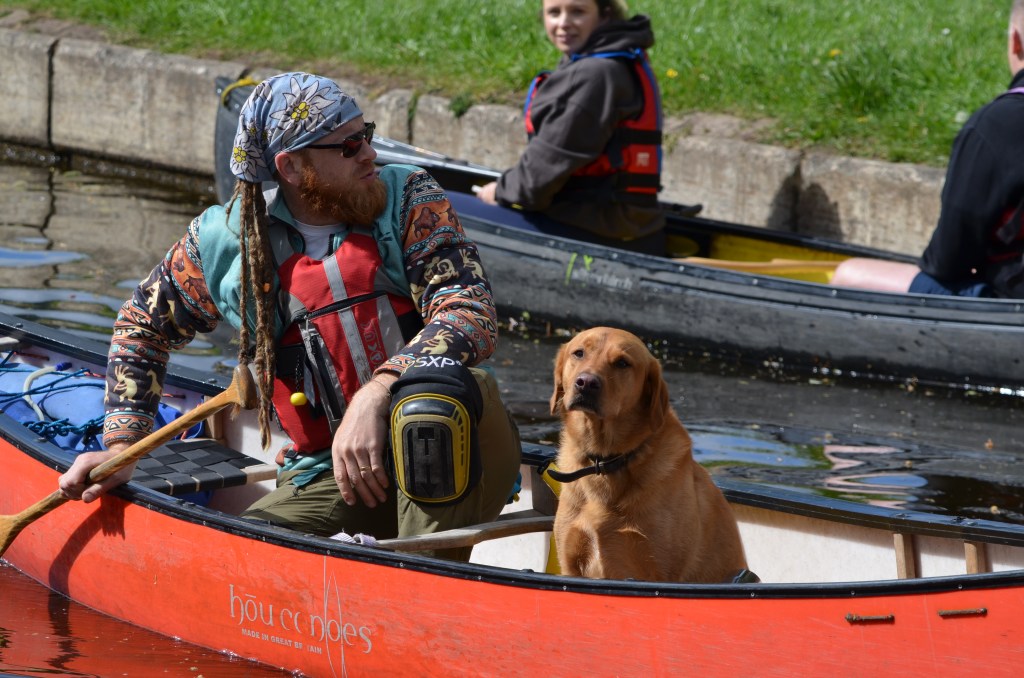
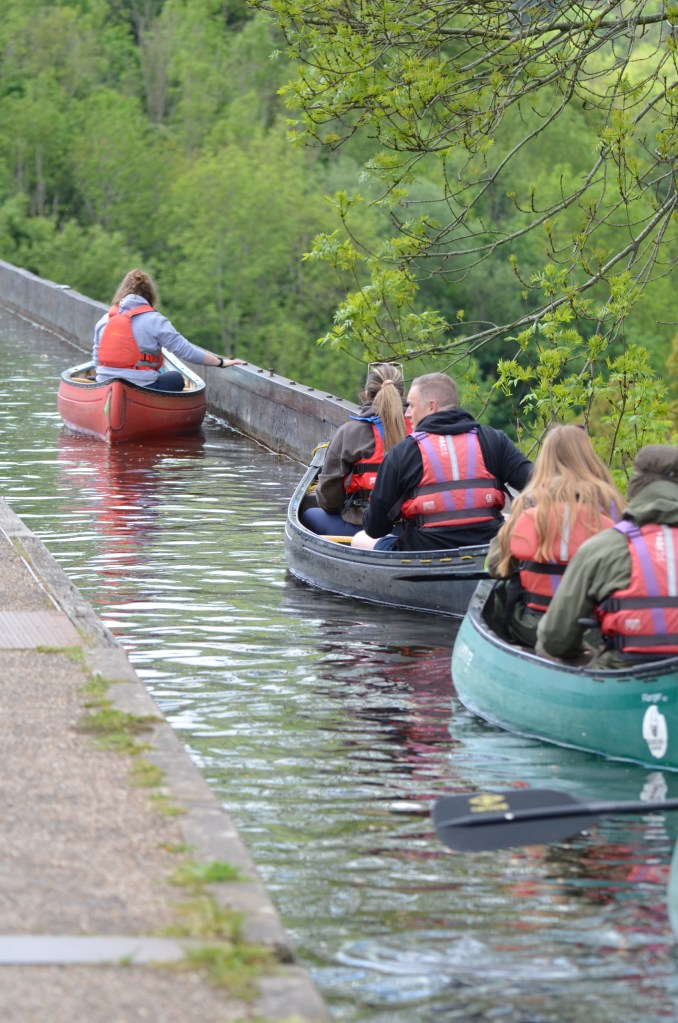
        The aqueduct carries the Llangollen Canal across the valley and, as you’d expect, this particular stretch of water is popular with narrowboats although, today, we saw two teams of canoeists crossing over as well. There is a towpath on one side of the aqueduct, providing great views over the River Dee as it courses through the valley below, and this was busy with people crossing from both sides.

    Dog being chauffered

        This dog is clearly used to being chauffered across the aqueduct.

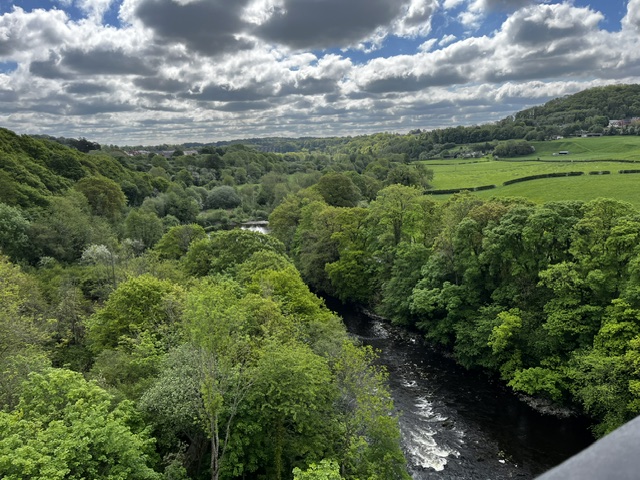
    It certainly makes a difference looking down on the green tree canopy below, rather than leaning back and looking up. As you can see from the photographs, the foliage is absolutely flourishing everywhere.

    Dee Valley 2

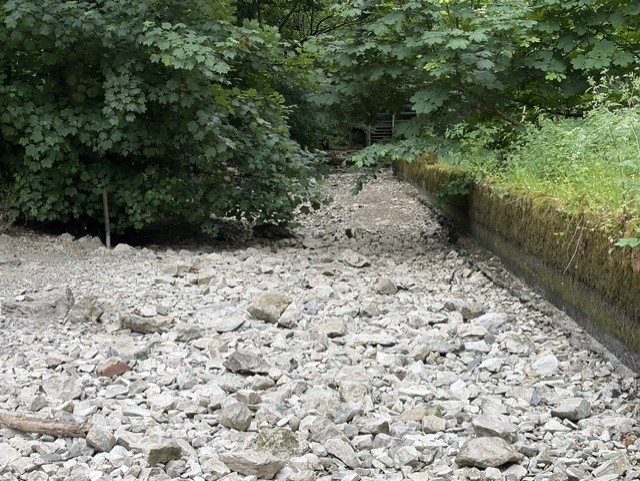
        The cast-iron trough that carries the water has to be cleaned and maintained of course. This happens every five years: each end is closed and a plug opened to drain the water into the River Dee below. It’s basically the same as emptying your bath at home, although this is a slightly bigger bath!

    Sculpture

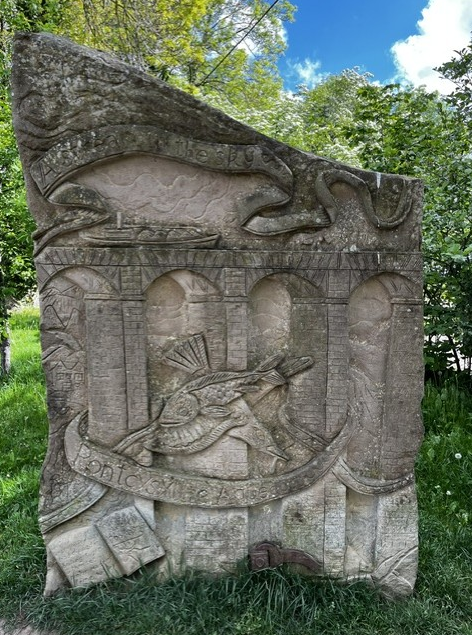
    The words on this sculpture by Anthony Lysycia are from Sir Walter Scott who had described the aqueduct as ‘the stream in the sky’. Scott had also wondered how fishes could swim above flying birds, hence the central depiction.  

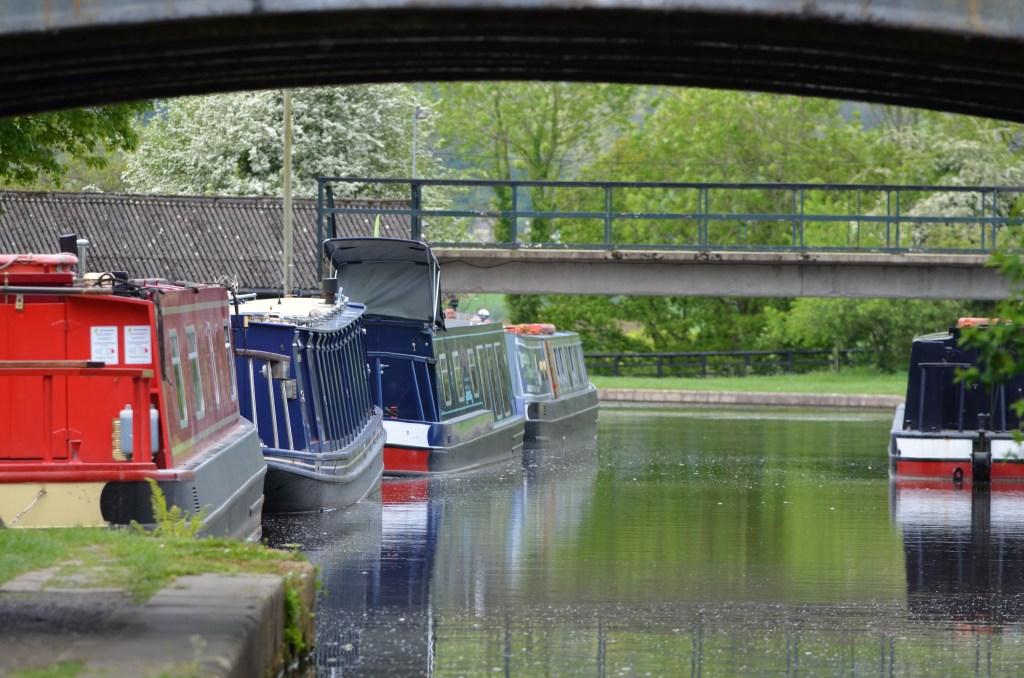
    Narrowboats moored

        Thomas Telford and William Jessop get the credit for building the aqueduct, although they did get a little bit of assistance from the more than 500 men that were also involved in the work over a period of ten long years. There’s a little museum at one end of the aqueduct where you can learn all about its history. Quite fascinating.

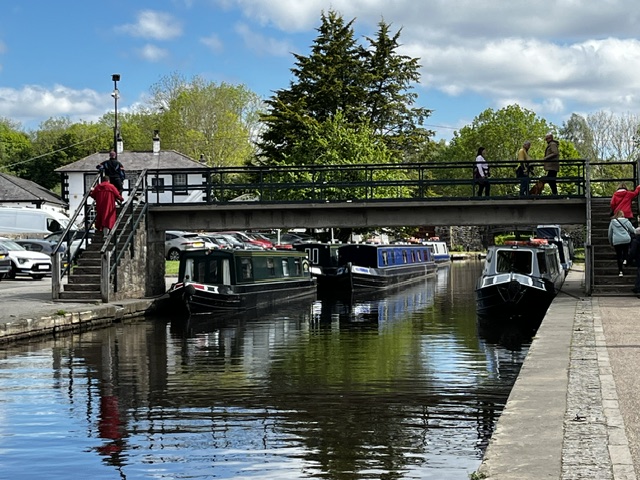
    Boats reflected

        While there are railings on the towpath side, there aren’t over the far side: I’ve been over in a narrowboat only the once and remember looking out of the window and not seeing anything other than sky on that one side! It really was a thrilling experience (a bit hairy, to be honest). The aqueduct is well worth a visit, whatever form of transport you opt for.

    Dee Valley

    Although holes were drilled to take railings, they were never actually added to the far side of the canal’s cast-iron trough.

    Gripping the edge

    While this looks like you’d get a close view of the valley below, it might not be to everyone’s taste!

  • RSPB Conwy

    (Sunday 19th April, 2026)

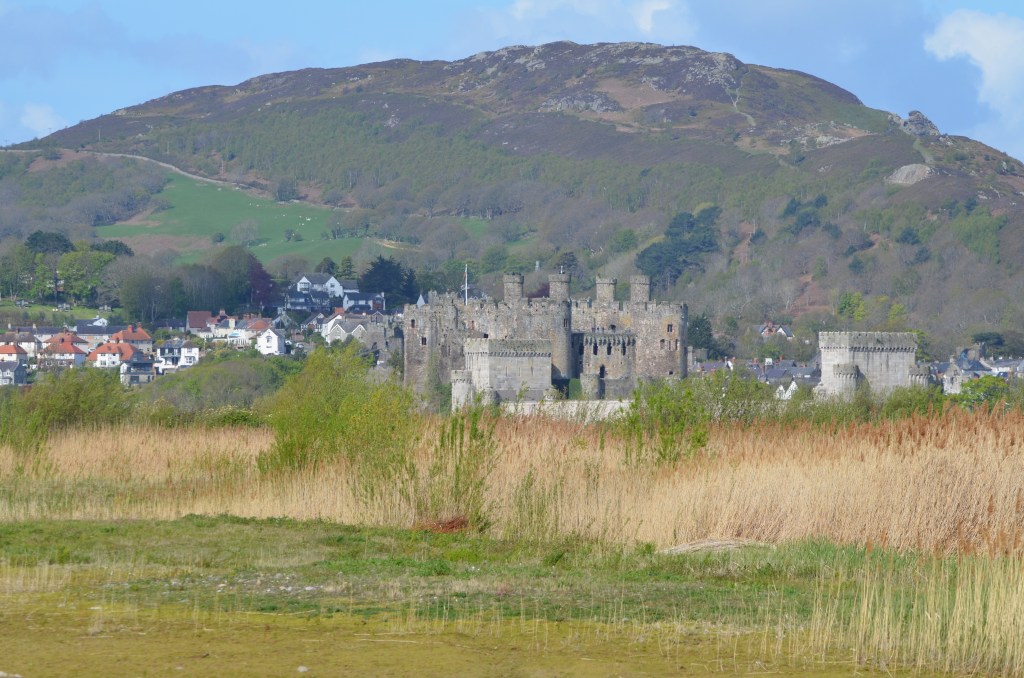
    We were at RSPB Conwy in the borough county of Conwy this morning. Although only 11°C, it felt much warmer: the day was sunny with barely any wind. The nature reserve is family-friendly with a play area and sandpit near the entrance, and Conwy Castle and the surrounding hills and mountains provide an impressive background.

    Conwy Castle

    Looking across the river towards Conwy Castle

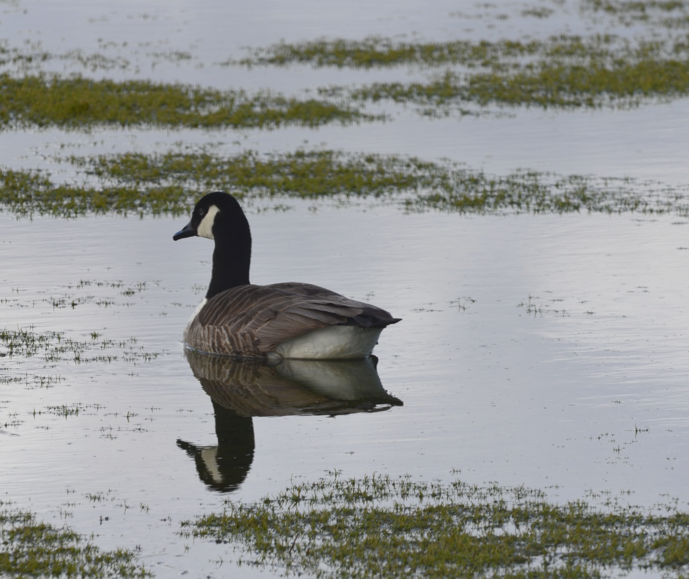
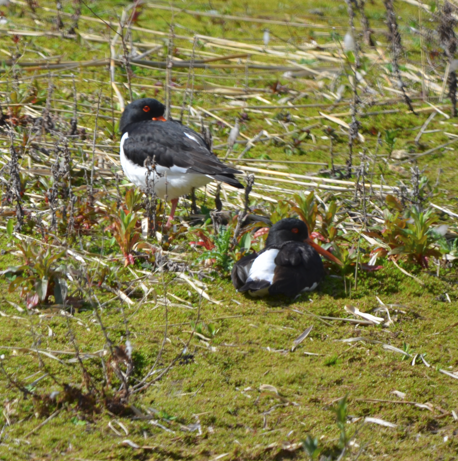
        There were several Canada geese nesting by the main lagoon while Oystercatchers and Lapwings roved the shallows. Shelducks and Coots bobbed along the water and Moorhens moved furtively around the undergrowth.

    Canada goose at Conwy

        Top: Canada goose; bottom left: Lapwing; bottom right: Oystercatchers.

    There was also a pair of Gadwalls, a species of duck that we hadn’t encountered before. In fact, we almost missed them as they were amongst a group of Mallards and we initially assumed them both to be female Mallards, before noticing the white tail feathers and dark grey bill of the male Gadwall. While the females of both duck species are very similar at first sight, the differences do become more apparent once you take a closer look.    

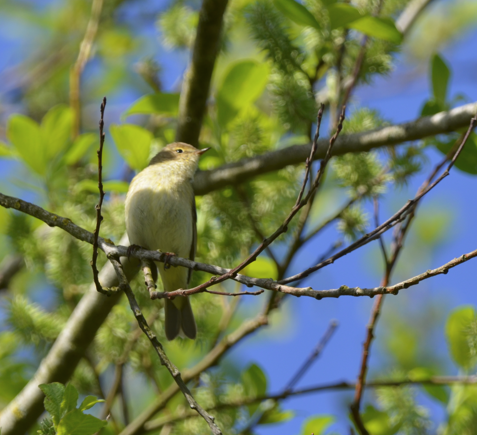
        As we walked between hides, we heard the distinctive sound of a Chiffchaff calling from a nearby tree. It’s difficult to separate the Chiffchaff from the Willow warbler as they are both very similar in size and appearance. Willow warblers have pale brown legs whereas Chiffchaffs have dark brown or even black legs but you don’t always get a clear view of them. You can, though, differentiate the birds through their songs: the Willow warbler has a descending trill kind of song, while the Chiffchaff’s song is a steady two-note repeated phrase – supposedly it sings its own ‘chiff-chaff’ name. Luckily for us, then, that this Chiffchaff sang for our benefit!

    Chiffchaff

    Chiffchaff

        Trichomonosis is a word we’ve all become more familiar with in recent years: this parasitic disease affects many birds by making them unable to swallow food or water, which inevitably leads to emaciation and often death for those birds. The disease is transmitted via saliva and regurgitated food, so it can be passed by parent birds feeding their young and through courtship feeding. It can also be passed via contaminated food or water at bird feeders: the RSPB has recently advised against the use of flat bird tables and tray feeders in particular as well as limiting feeding during summer months.  

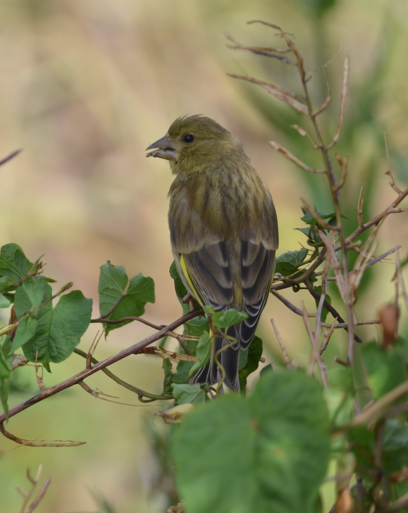
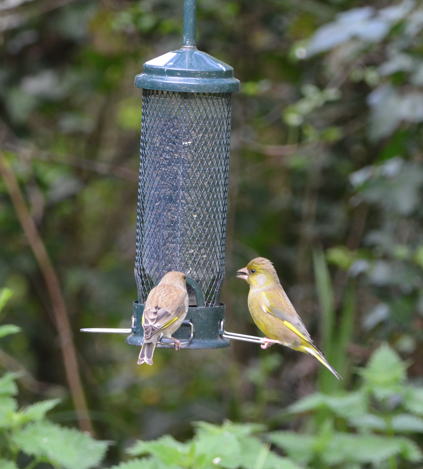
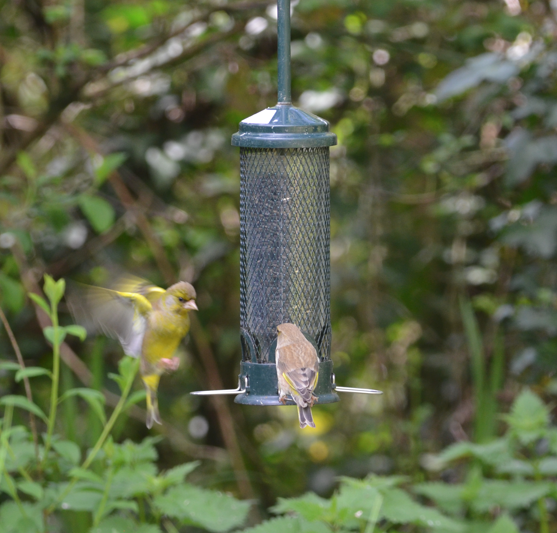
        Particularly affected by trichomonosis in recent years have been Greenfinches and Chaffinches and, while we still come across Chaffinches on our travels, we’ve struggled to see any Greenfinches at all in the last couple of years, so it was very pleasing to see no less than three of them appear together at one of the RSPB feeders. Let’s hope that circumstances are improving for them and other birds.

    Greenfinches

    Above: Greenfinches; below: a great shot of a Greenfinch coming in to land.

    Greenfinch flight

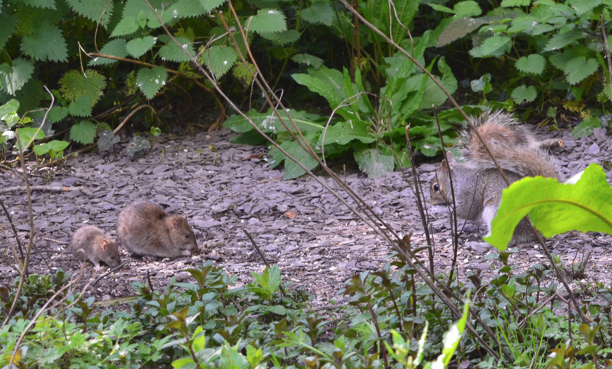
        One of the unlooked for consequences of feeders – and I’m not referring to that awful bird disease here – is that rodents such as rats and squirrels are attracted to the overspill that lands on the ground. Those that we saw today were having a grand old time with this free food!

    Rodents at feeder

    Squirrel and rats feeding on overspill from feeder.

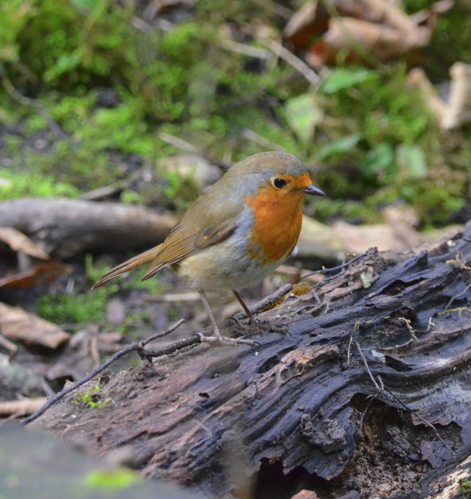
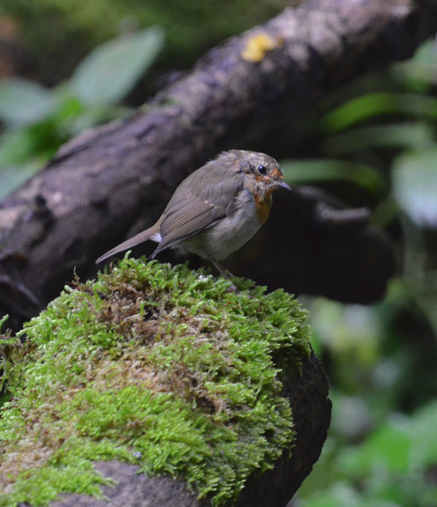
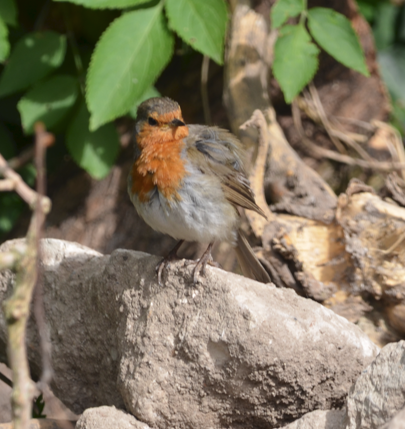
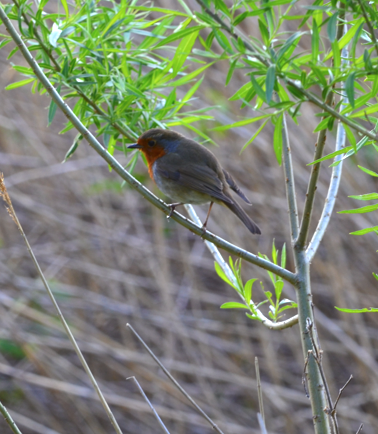
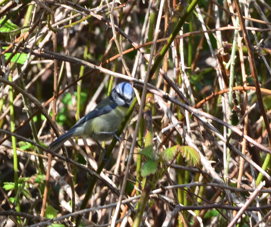
        Blue tits and Great tits skittered from tree to tree and were clearly enjoying the balmy weather. We heard Dunnocks and Wrens amongst the avian choir, although we didn’t catch sight of any. We did see our old friend, the Robin, though!

       Robin and Blue tit

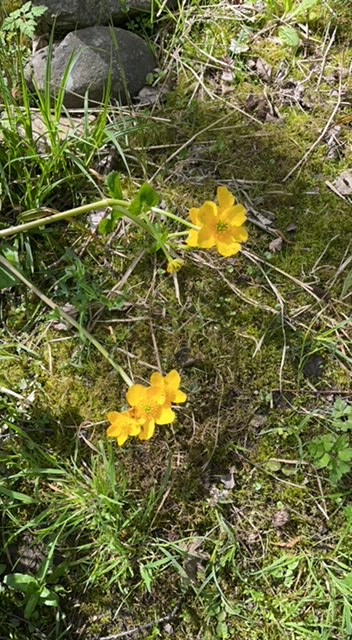
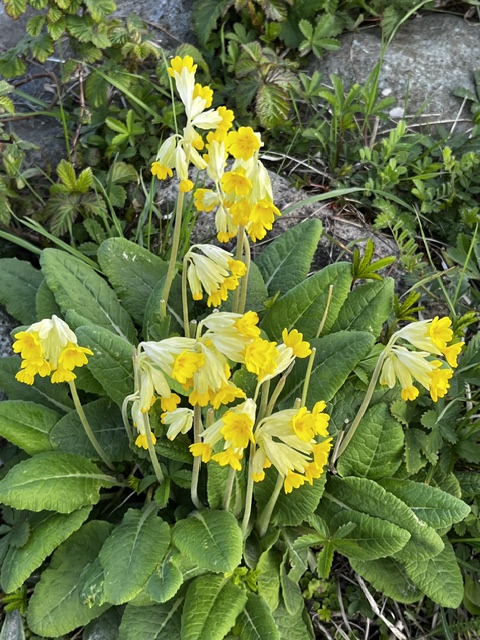
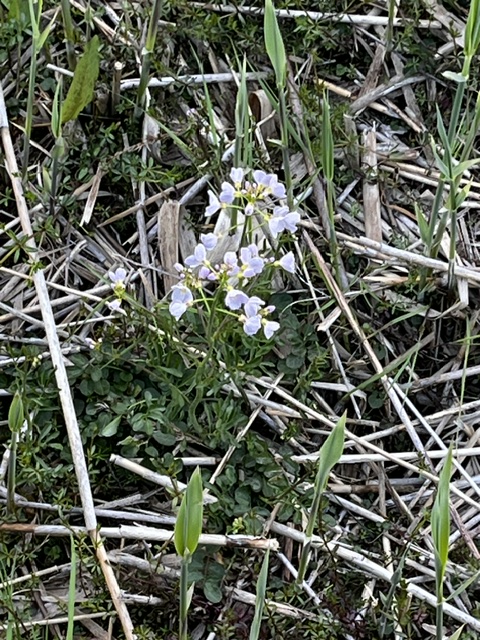
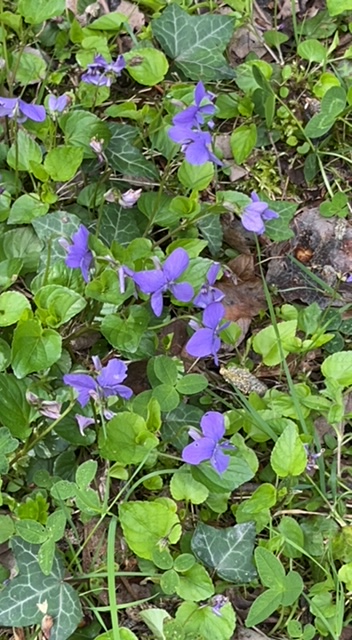
    There are lots of plants flowering now and it was great to see the ground awash with colour: the pale lilac of Cuckoo flowers (also known as ‘Lady’s smock’ I believe); the bold yellows of cowslips and marsh marigolds, the daintier pale yellow of primroses, and the purple of the many dog violets scattered at the sides of the paths. Hawthorn has also begun to produce its white blossom. It seemed as if everywhere was beginning to flourish.

         From left to right: Marsh marigolds, Cowslips, Cuckoo flowers (also known as Lady’s smock)

    Talking of dog violets, the caterpillars of several butterflies, including the Pearl bordered fritillary, the Silver washed fritillary, and the Dark green fritillary like to munch on these particular flowers. So, something to look out for in the coming months.

    Dog violets

    Dog violets

    The important stuff

    Having burnt off so much energy, we went to the spacious café for replenishment: Stu had a Caramel Slice with his cappuccino and I had a slice of Bara Brith (and butter) with mine. Very nice!

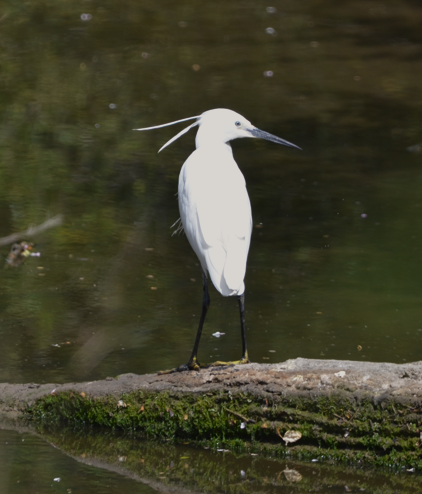
        Suitably topped-up, we went outside and took one last look through the binoculars before we left. We saw several Little egrets nesting high in the trees on the far side of the estuary, although they were that far away we didn’t notice them until they were pointed out to us by a helpful member of staff. Well worth a visit.

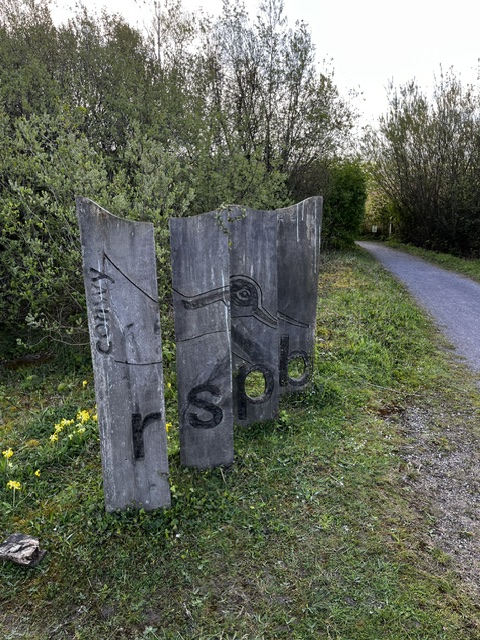
    Sign

  • A Misty Morning at Loggerheads

    (Sunday 8th March)

    Midweek I saw my first butterfly of the year in the garden – a yellow (male) Brimstone. At last! I thought, the spring’s here. But another false alarm it seems. While this morning wasn’t quite a pea-souper, it was very misty when we set off to Loggerheads Country Park in Denbighshire, and we had resigned ourselves to not seeing much. But, of course, nature rarely disappoints.

        The undergrowth was still quite bare except for the odd clump of primroses and daffodils, although this will change soon, I’m sure. The River Alyn was flowing strongly, but less rapidly than last week, a sign of the recent reduction in rainfall locally. Funny how you notice these things!
    Nuthatch facing with food

    Nuthatch scanning its surroundings even as it feeds

        Once again, there were Nuthatches feeding at the tree stump, looking like little aerial masked bandits. It was interesting to note that they approached the tree stump in stages, first flying from the tops of the trees along the riverbank to one of the trees closer to the stump. From here they scanned the area below to make sure it was clear, then they nipped down and grabbed some food in their beaks before darting smartly back. It looked like they were shoving one or two morsels into the bark of the trees, but Nuthatches are notoriously difficult to watch closely as they are so quick in their movements.  

    Nuthatch classic

        A Chaffinch appeared as soon as the Nuthatches were out of the way. With its lovely, striking vermilion chest and distinctive white wing bars and pale grey cap, this male Chaffinch certainly caught the eye. There was a female too, though she was not quite as colourful as the male – more brown than red, and with a patch of olive-green on her back – and she arrived and fed separately.

    Chaffinch at Loggerheads

    Chaffinch

        The Chaffinch is sometimes known as the Bachelor finch: Fringilla Coelebs is its Latin name, Fringilla meaning finch or small bird, and coelebs deriving from caelebs meaning single, unmarried, or bachelor. This name was given by the Swedish biologist Carl Linnaeus who observed that it was only the females who migrated south from Sweden for the winter, while the males stayed behind near to their breeding grounds, often grouping together with other males. It’s possible that the females were actually distancing themselves from the males due to food competition – outside of the breeding season, the males are less likely to share food resources, apparently.

    Chaffinch on the edge

        The more familiar English name Chaffinch is probably derived from the bird’s habit of rummaging through threshed chaff looking for grains of seed.

    Female Chaffinch

    Female Chaffinch

        In the United Kingdom, the birds tend to lay their eggs between late April and mid-June and, generally, Chaffinches will produce only the one brood each year. The lateness of these clutches being laid is thought to be a deliberate strategy as the much thicker foliage and vegetation that appear now helps to hide the nests and protect the chicks from predators.

    Blue tit at Loggerheads

    Blue tit

        After the Chaffinches made their brief, separate appearances a small group of Blue tits descended from nearby branches and stole in to help themselves. We were then stalked by a Robin or two (we couldn’t quite work out the numbers) all the way back to the café.

    Robin stalking

    This Robin stalked us along the Leete path!
    Robin stalking nearer

    This one just came to say hello!

    The important stuff

    A cappuccino each at The Mill House café (Tŷ’r Felin) and a slice of gooey Millionaire’s shortbread. Very nice!   At the very moment we were ready to leave, the Grey wagtail flew overhead and landed on the roof of the gift shop, only to disappear over the far side. Obviously it was not in the mood for a selfie today!

  • Old Year, New Year

    (Sunday 4th January, 2026)

        Our journey to Burton Marsh this morning was somewhat curtailed by a huge smothering of snow that blew in from the mouth of the Dee estuary. It was a crisp 2°C when we set off, with a sharp north-westerly drifting in, and we saw flocks of Canada geese and Pink-footed geese out on the marsh. Nearby, we detected several Pheasant hens moving stealthily through the undergrowth and, as we scanned the ground with binoculars and cameras, we sensed the vast sky around us beginning to darken. Seconds later we were retreating towards the car, thoroughly covered in snow! At least it wasn’t snowing inside Ness Gardens café though!

    Pheasant female

    Pheasant (female), Burton Marsh, 4th January 2026

        As a consequence of our brief outing, there wasn’t a great deal to report. This weekend doesn’t look a great deal better: the birds are out, but not the birders! However, we’ve been inspired to post this selection of photographs from 2025, after receiving an e-mail notification from fellow blogger Bob Ramsak who posted his favourite bird photographs of 2025 https://bobramsak.com/my-25-best-bird-photos-of-2025/ Please take a look at Bob’s site – you won’t be disappointed.

        Anyway, back to The Dee and Thereabouts and we hope you enjoy this week’s post, which is really a selection of photographs of our 2025 discoveries. We only started the blog in June but even in this short space of time we’ve encountered quite a variety of fauna and flora (and fungi) on our travels, as well as the variety in terrain that our area holds. We’ll continue to try and entertain you with our ramblings (in both senses of the word) throughout 2026!

    Common mallow

    Common mallow, Burton Marsh, 22nd June

    Meadowsweet

    Meadowsweet, Burton Mere Wetlands, 13th July 2025

    Dryad's saddle

    Dryad’s saddle, Burton Mere Wetlands, 13th July 2025

    Great white egret

    Great white egret, Burton Mere Wetlands, 3rd August 2025

    Water lily

    Water lily, Burton Mere Wetlands, 3rd August 2025

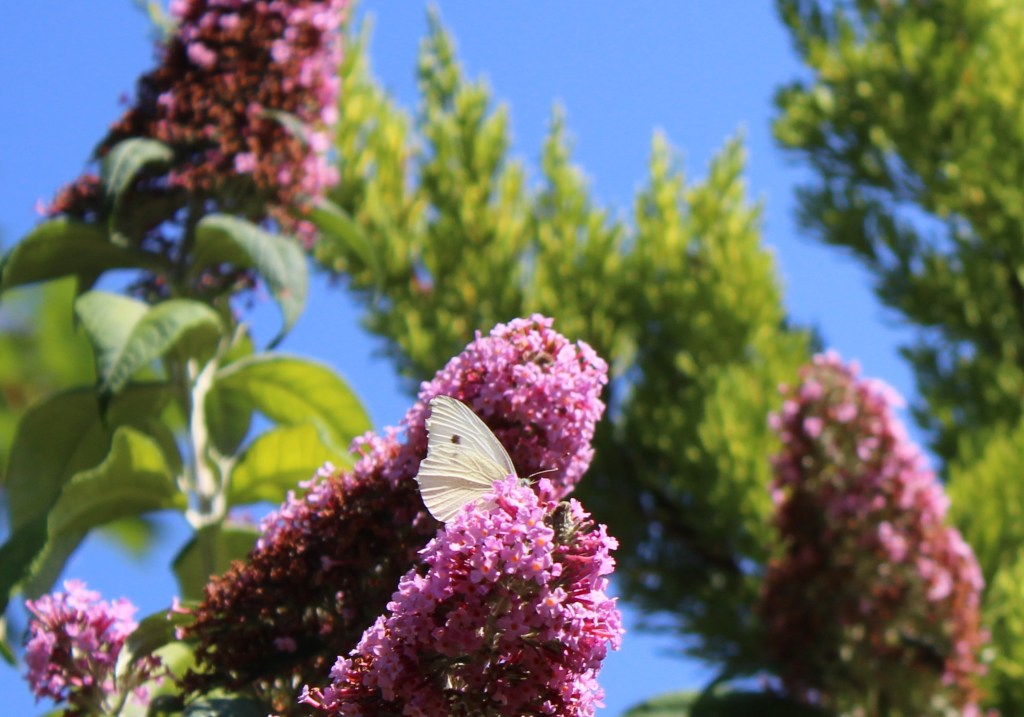
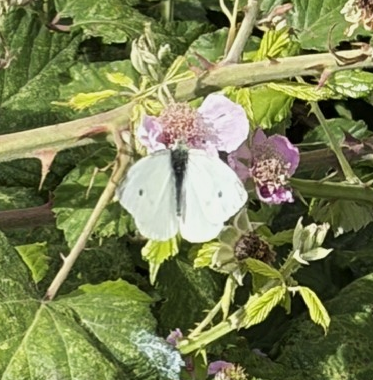
    Small white butterfly female

    Small white butterfly (female), Parkgate, 10th August 2025

    Marsh harrier female

    Marsh harrier (female), Parkgate, 10th August 2025

    Black-tailed godwits and Avocets in flight

    Avocets and Bar-tailed godwits spooked by Marsh harrier, Parkgate, 10th August 2025. (Bar-tailed godwits in summer ‘breeding’ coats).

    Blackcap in hand

    Blackcap, Ness Gardens, 13th August 2025

    Greenfinch being held

    Greenfinch, Ness Gardens, 13th August 2025

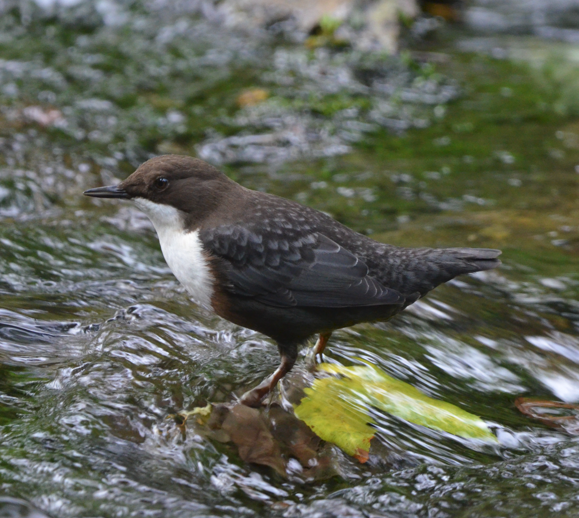
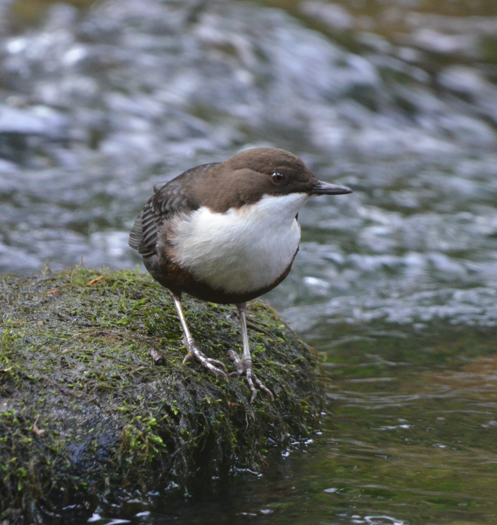
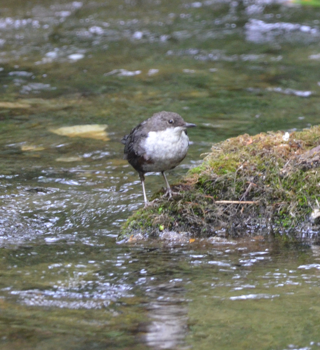
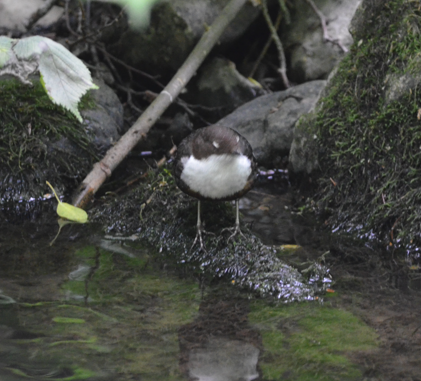
    Dipper facing

    White-throated dipper, Loggerheads Country Park, 24th August 2025

    Wren facing

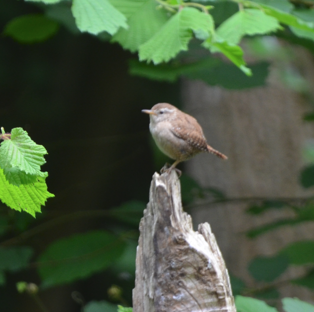
    Wren, Loggerheads Country Park, 24th August 2025. You can see how tiny it is in comparison to the mushrooms and hazel leaves nearby.

    Green-veined white

    Green-veined white butterfly (female), Loggerheads, 24th August 2025

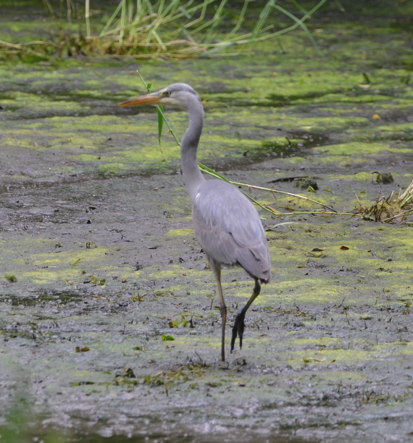
    Grey heron, Royden Park, 31st August 2025

    Shelducks and Redshank

    Shelducks and Redshank, Thurstaston Beach, 14th September 2025

    Curlews at Thurstaston

    Curlews, Thurstaston Beach, 14th September 2025

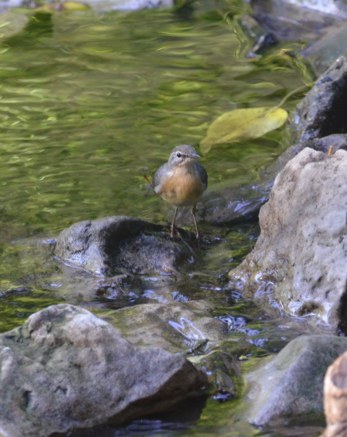
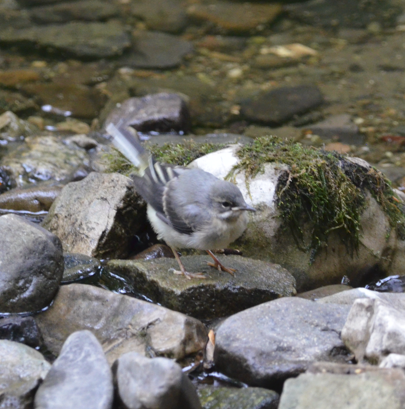
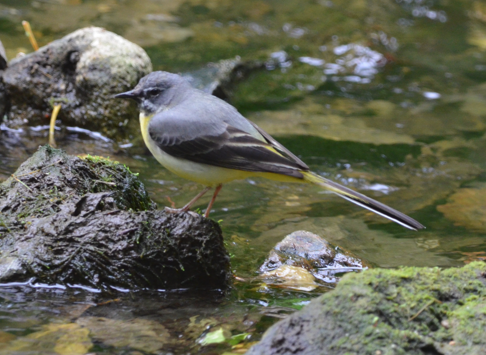
    Grey wagtail (female)

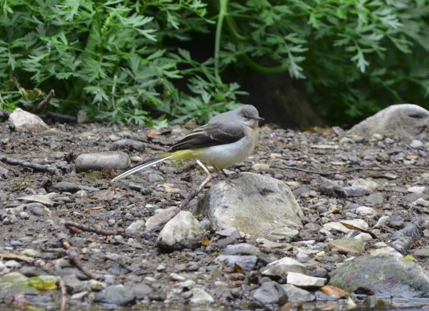
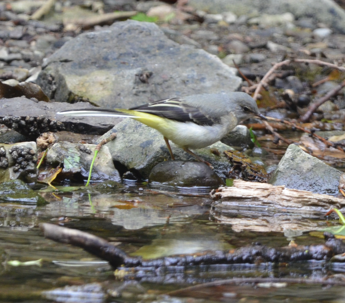
    Grey wagtail, Loggerheads Country Park, 5th October 2025

    Fairy inkcaps

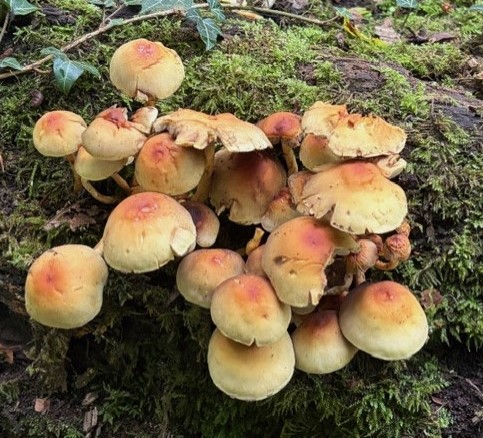
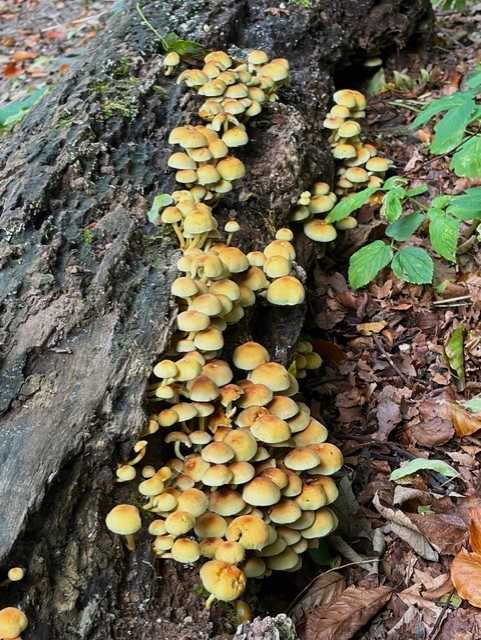
    Fairy inkcaps, Loggerheads Country Park, 5th October 2025

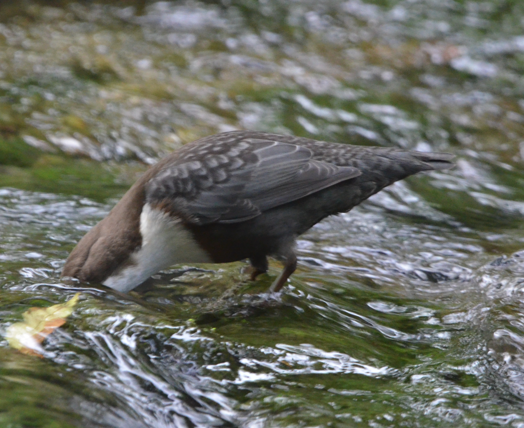
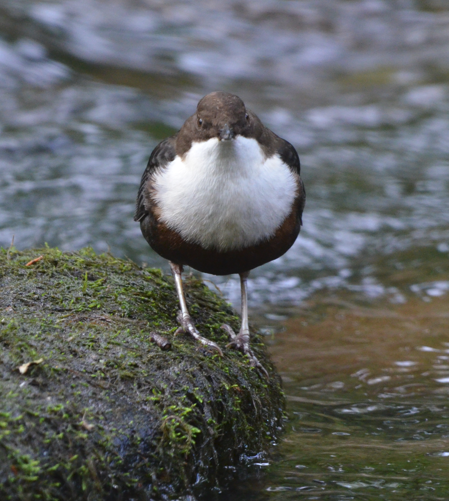
    Dipper mid-stream

    White-throated dipper, Loggerheads Country Park, 5th October 2025

    Moored houseboat at Chirk

    Narrowboat at Chirk Bank, 12th October 2025

    Chirk Aqueduct and Viaduct

    Aqueduct and Viaduct, Chirk, 12th October 2025

    Velvet shank

    Velvet shank, Loggerheads Country Park, 16th November 2025

    Female Kestrel facing into the wind

    Kestrel (female), facing into the wind, Parkgate, 2nd November 2025

    Black-headed gull winter plumage

    Black-headed gull (winter plumage), Royden Park, 30th November 2025

    Goldcrest in conifer

    Goldcrest, Loggerheads Country Park, 28th December 2025

  • The Rivers Dee

        Until recently, I thought that there were two rivers known as the River Dee – one in Scotland, and one in Wales (which is the one, plus its estuary, that this blog, The Dee and Thereabouts, centres on). But I’ve recently learned that altogether, there are five rivers named Dee: two in Scotland, one in Cumbria, one in Wales, and one in the Republic of Ireland.

    River Dee, Aberdeenshire, Scotland.

        This River Dee begins in an area of the Cairngorm Mountains known as the Wells of Dee. It’s the highest source of any river in the British Isles, the river source’s plateau being approximately 1,220 metres high. The river is 87 miles long and flows through Aberdeenshire, eventually spilling out into the North Sea at Aberdeen Harbour.

    River Dee, Dumfries and Galloway, Scotland.

        Another Scottish River Dee, this time in the south-west of the country. The river originates at Loch Dee in the Galloway Hills. It travels for 38 miles before reaching Kirkcudbright and then discharging into the Solway Firth on the Irish Sea.

    River Dee, Cumbria, England.

        This River Dee is formed by several smaller streams radiating from Blea Moor Moss, in the Yorkshire Dales National Park, in Cumbria[1]. The river travels through Dentdale, which takes its name from the village of Dent ,and flows for about ten miles before joining the River Rawthey, near the town of Sedbergh. (The River Rawthey is in turn a tributary of the River Lune, which eventually – after 50 odd miles – empties into Morecombe Bay).

    River Dee, Republic of Ireland.

        This River Dee flows from Bailieborough (Bailieboro) in County Cavan for 37 miles through County Meath and County Louth. The river joins the River Glyde at Annagassan village in County Louth, and both of these rivers then form a short confluence before they discharge into Dundalk Bay on the east coast of Ireland, out to the Irish Sea.

    River Dee (Afon Dyfrdwy in Welsh), Wales.  

        This River Dee flows through several counties in North Wales: namely, Gwynedd, Denbighshire, Wrexham County Borough, and Flintshire; and briefly enters England at points in Shropshire and Cheshire. The Dee Estuary acts as a natural dividing line between the western side of the Wirral Peninsula, in England, and the eastern side of Flintshire, in Wales.

        The River Dee’s source is on the mountain of Dduallt in Snowdonia, at about 450 metres high. The 68 miles of river flows through Bala Lake (Llyn Tegid), Corwen, Llangollen, Bangor-on-Dee, Farndon, and Holt. Once it reaches Chester, the River Dee becomes tidal and is noteworthy for its tidal bore which is usually produced during a spring or autumnal equinox, although tidal bores may occur at any time of the year if conditions are favourable.

    River Dee at Chester

        The River Dee at Chester

    Cormorant at Chester

    …and some local residents. (Above: Cormorants. Below: Grey heron

    Grey heron at Chester

    After Chester, the river crosses the border to Saltney, which lies mostly in Wales, although some of the town is in England, as the aptly named Boundary Lane reminds us. (Here, the border technically runs down the middle of the road! This is the only suburban street which divides England and Wales in this way). The River Dee travels on past Queensferry to Connah’s Quay, where it opens out into the Dee Estuary. The estuary itself is about 12 miles long and 4.5 to 5 miles wide: note that these are approximate figures, as information varies, depending on which sources you look at.

        Towns on the Welsh side of the estuary include Flint, Holywell, and Mostyn. On the Wirral side of the estuary, lie Neston, Parkgate, Heswall, West Kirby and Hoylake. Just north of Talacre in Flintshire is the Point of Ayr, which is the northernmost tip of Wales, and between here and Hilbre Point, near Hoylake and West Kirby on the north-west of Wirral Peninsula is where the Dee enters Liverpool Bay on the Irish Sea.

        From Chester to Connah’s Quay, the Dee has a very straight ‘canalised’ section. This artificial channel was dug out by Dutch engineers between 1732-36 in an attempt to return Chester to its historic importance as a port. However, this was only partially successful as the River Dee eventually silted up again. The work also effectively diverted the river away from places it once meandered around, including Blacon, Saughall, Shotwick, Burton, and Parkgate. 

    Further reading

    Much of the information for each of these Dee rivers was gained from just looking at the various maps available on Google Maps, OS maps, and Wikipedia. I also found the following sources useful:

    https://chester.shoutwiki.com/wiki/River_Dee

    https://www.keithatkinson.me.uk/history-of-shotton/5-the-river-dee-the-latchcraft-pits/

    https://www.liverpool.ac.uk/~cmi/dee/dee1870.html

    https://ntslf.org/tides/about-tides/tidal-river-bores

    https://www.parkgatesociety.co.uk/


    [1] I take a childish pleasure in reporting that there is a Mossy Bottom as well as a Hazel Bottom near Blea Moor Moss. And there you were, thinking I was all grown up!