(Sunday 25th January, 2026)
We’d had reports of Short-eared owl sightings at Parkgate, specifically in the area around the Old Baths, just beyond The Boat House pub. So, we parked up and scanned the marsh. Short-eared owls largely hunt during the day, particularly in the late afternoon. Today, unfortunately, was not our day for seeing any. (A Short-eared owl was seen and photographed that day – surprise, surprise, in the late afternoon! Ah, well. Maybe next time…)
We may not have seen any owls, but we did see a couple of Marsh harriers and a Kestrel (all female): we were certainly in a good viewing spot.
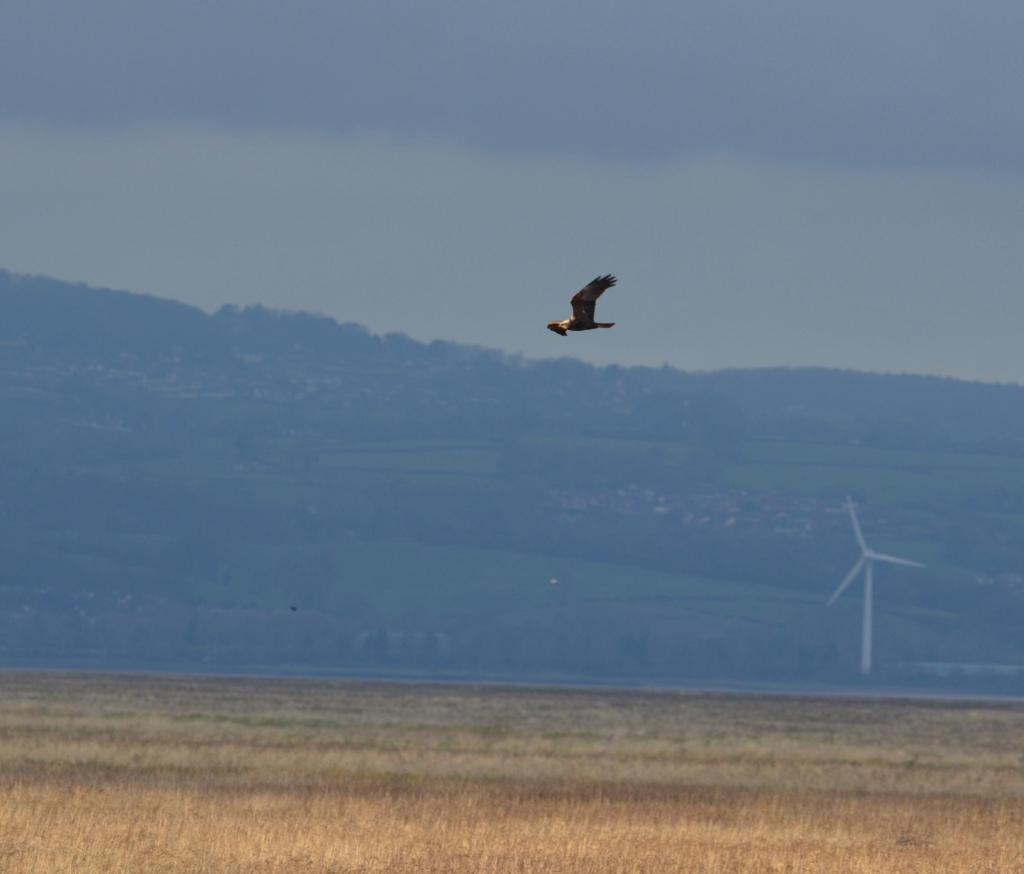
Marsh harrier (female)
There were flocks and flocks of geese honking their way across and around the wide estuary sky. Many were Pink-footed geese and we also saw Canada geese and some Brent geese, although we didn’t get any clear photographs of the latter. (It was quite misty in the distance – as you can see from the photographs).
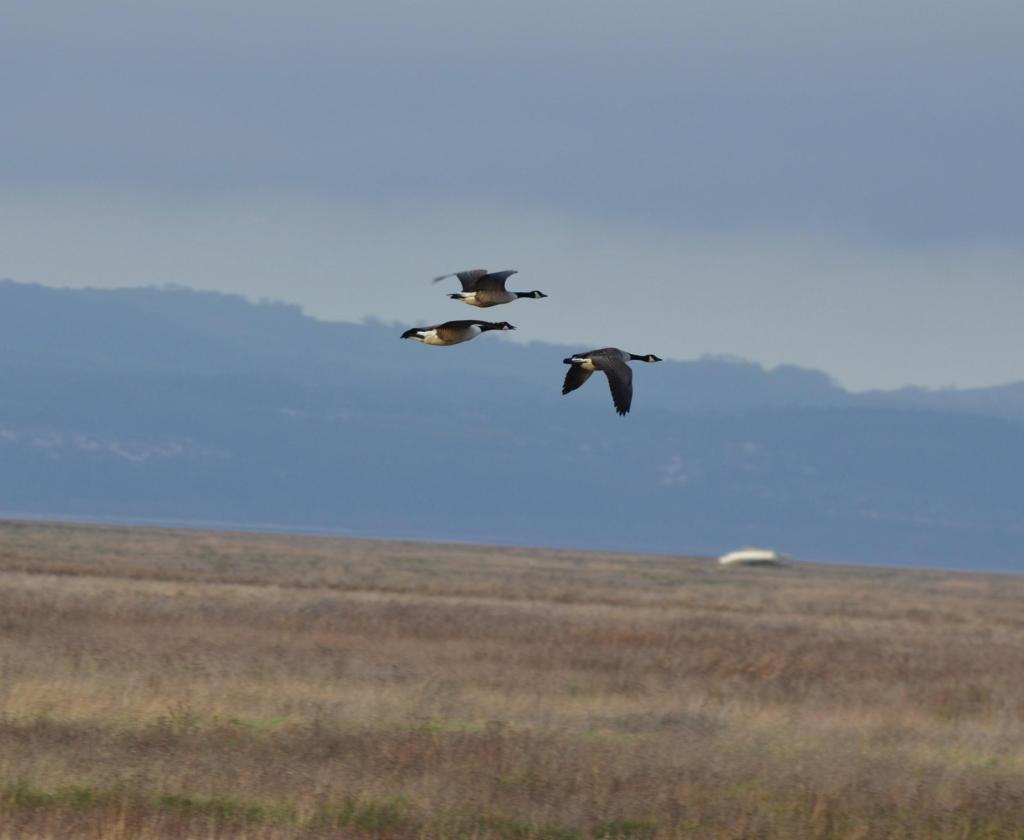
Canada geese
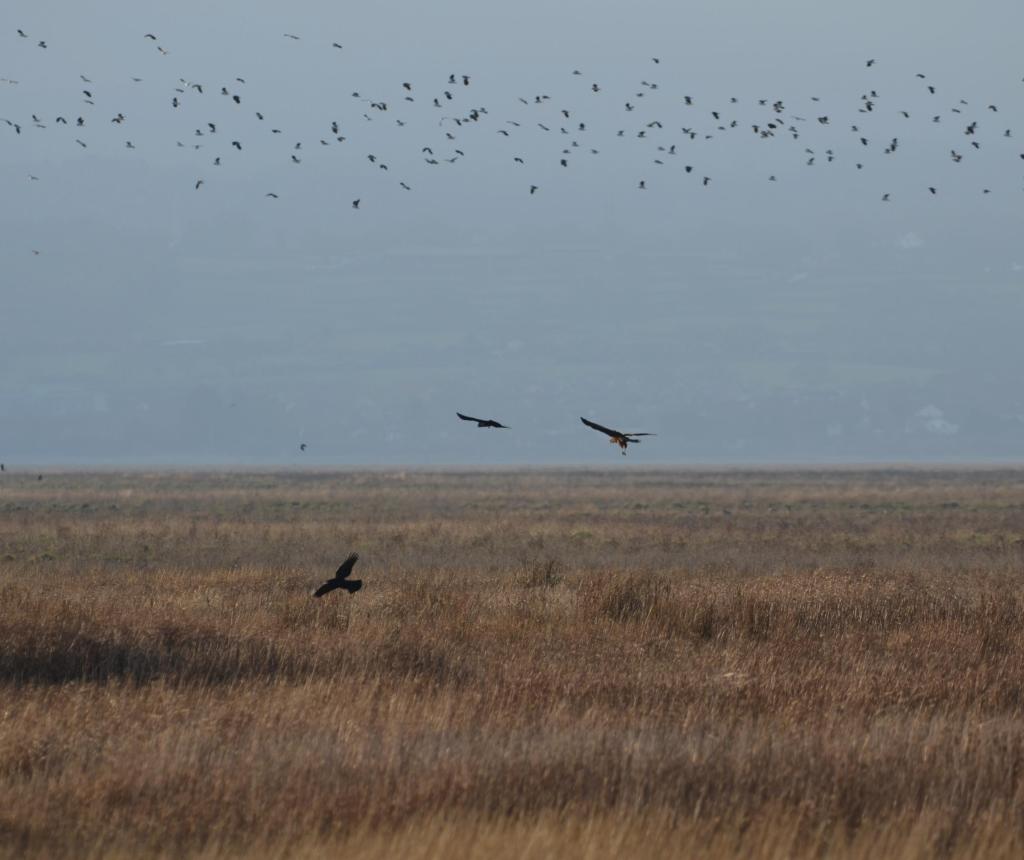
Kestrel (female): she’s in the centre, to the right!
The kestrel hovered characteristically, before dropping down and settling on the post (which I believe was where our elusive Short-eared owl perched later!) This behaviour is well established in kestrels, particularly in the winter months when the birds want to conserve energy – hovering is what Kestrels are known for (‘windhover’ is the archaic name for the bird), but it’s generally a less-preferred hunting strategy than perching. Here, we do tend to see Kestrels hovering more because there are far fewer vantage points on the marshes – apart from the odd post, of course. They’re a joy to watch when they are hovering, head down facing the ground, while they make minor aerodynamic adjustments with their wings and fanned-out tails in order to maintain their position.
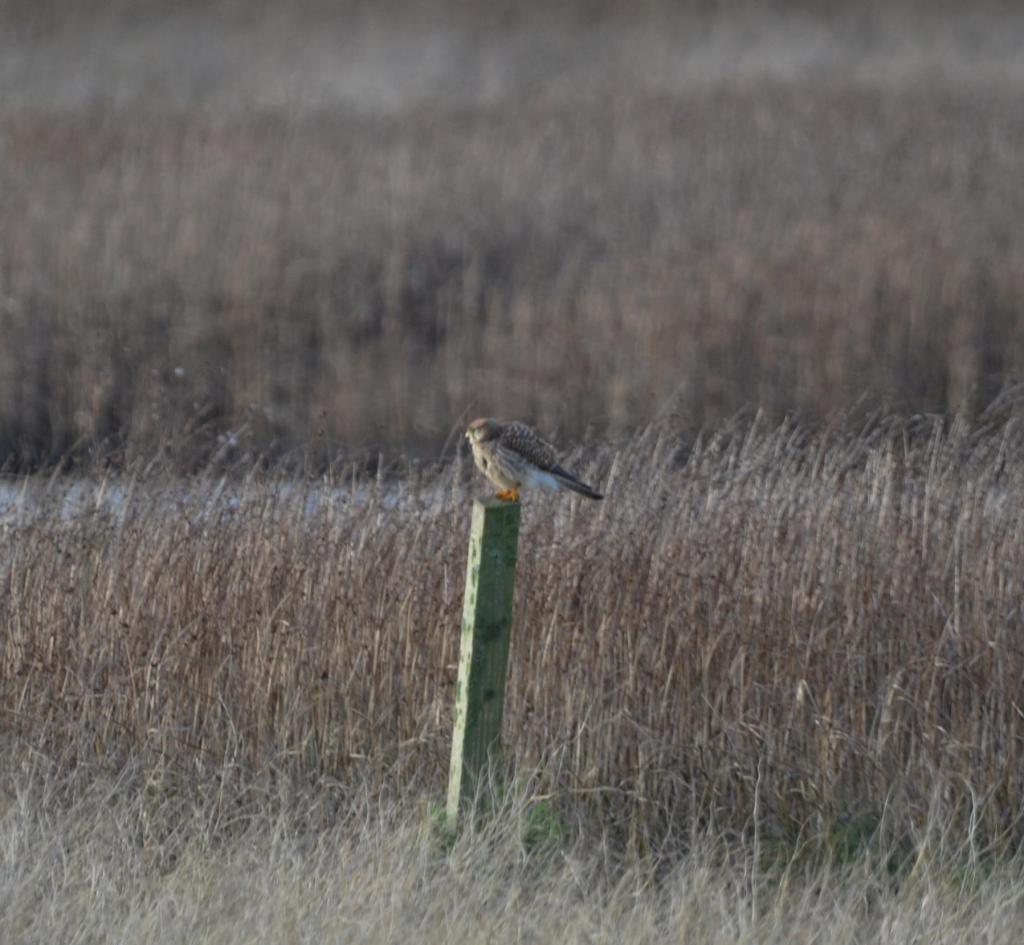
Kestrel using the post as a vantage point
Kestrels are so keen-sighted that they can see ultraviolet light, which enables them to detect urine trails left by their prey! They’ll hold their position and then suddenly swoop – they’re wonderful to watch, but you can see that these actions do take up reserves of energy.
While we still commonly see Kestrels over the marshes – more usually hovering – their numbers declined by 37% between 1995 and 2023[1], although it’s difficult to pinpoint a specific reason. Suggestions for the decrease in number include habitat loss through farming practices; secondary poisoning (through eating voles and mice that have consumed rat-poison); and their chicks being subject to predation from corvids and other birds of prey, such as Goshawks.
It probably doesn’t help that Kestrels don’t build nests, preferring to take over those abandoned by other birds, or to use natural cavities such as tree hollows or cliff ledges – they’re not fussy, just so long as they don’t have to do any construction work themselves! The Kestrel population in the UK is being monitored jointly by BTO/JNCC/RSPB[2] as well as other bodies such as the Hawk Conservancy Trust.
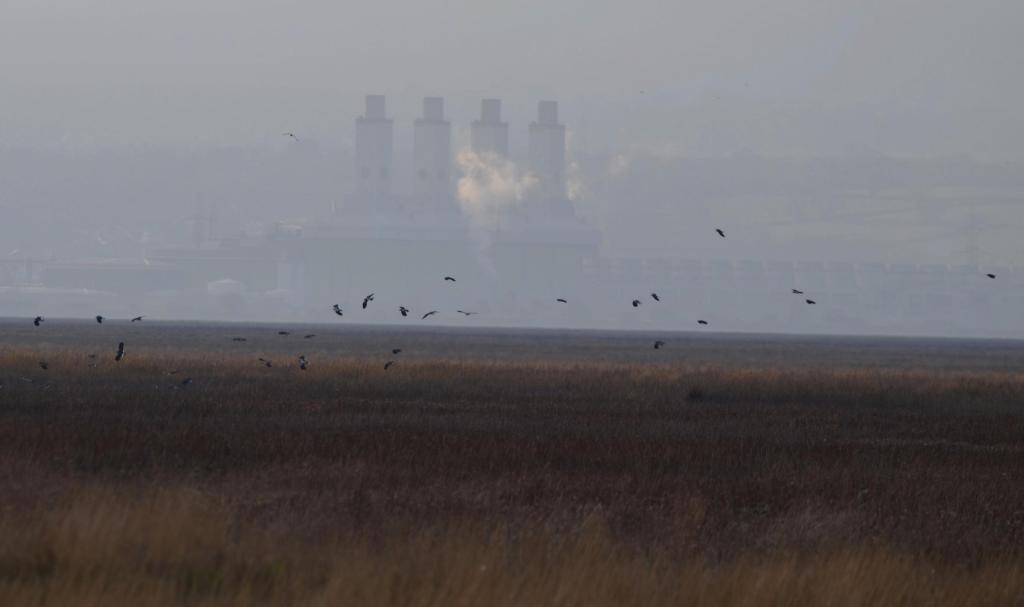
Ghostly power station in the mist
Eventually, we moved to the Donkey Stand at the opposite end of The Parade, where a third female Marsh harrier appeared flying low over the marsh. (It may possibly have been one of the two that we’d seen earlier at the opposite at the Old Baths). We also saw several Mallards and some Teal on the nearby stretch of water, but no photographs I’m afraid.
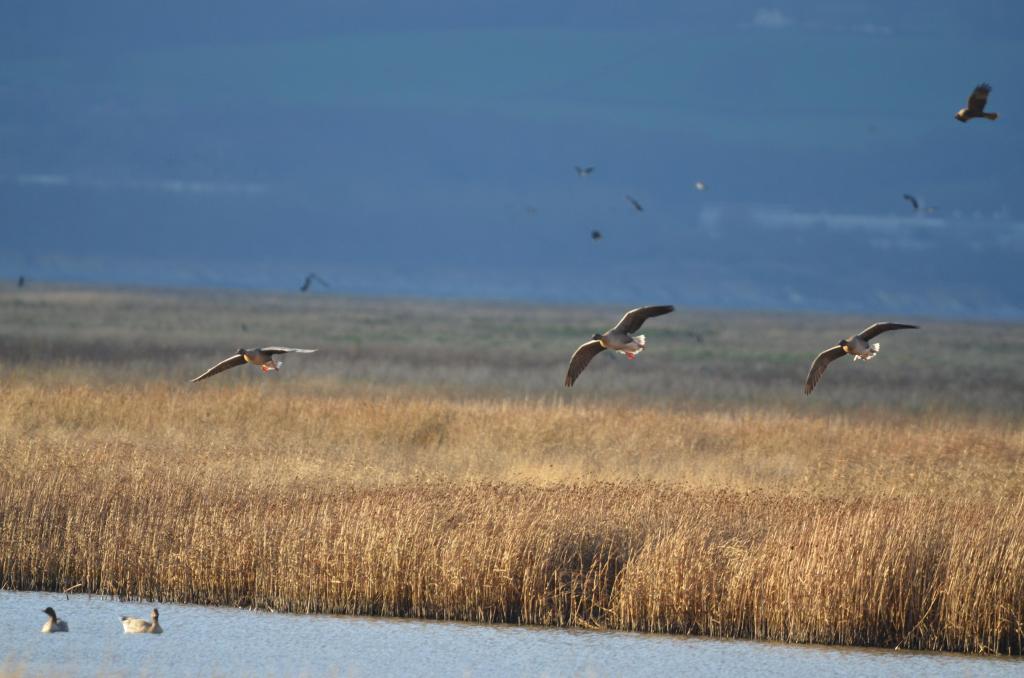
Marsh harrier (top right) near Donkey Stand
Although I remember seeing a couple of Little egrets, I have no recollection of seeing this Great white egret below disturbing several Pink-footed geese, which Stu photographed. I must have been concentrating on something else! Talking of which…
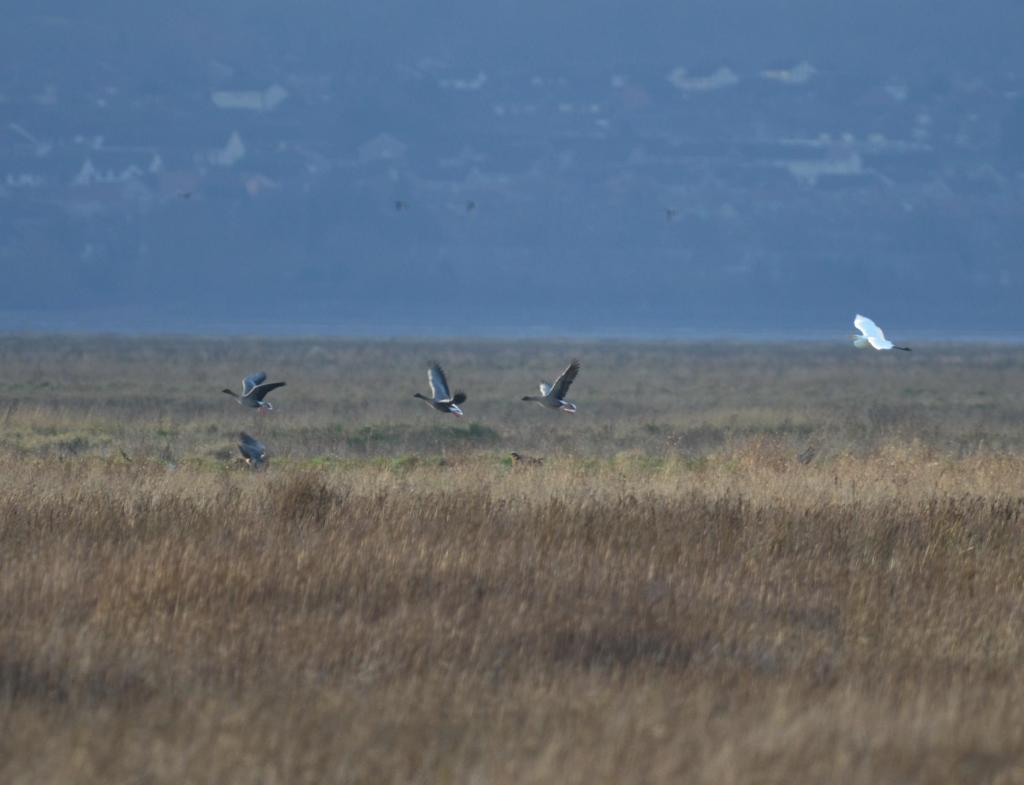
Great white egret and Pink-footed geese
The important stuff
Over to Ness Gardens for refreshments. A cappuccino and a generous slice of Bakewell tart each. Very nice, and well-deserved!
[1] Information from Bird Trends Explorer, BTO data.bto.org/trends_explorer/?species=Kestrel
[2] British Trust for Ornithology / Joint Nature Conservation Committee / Royal Society for the Protection of Birds


Leave a reply to Colin J Cancel reply