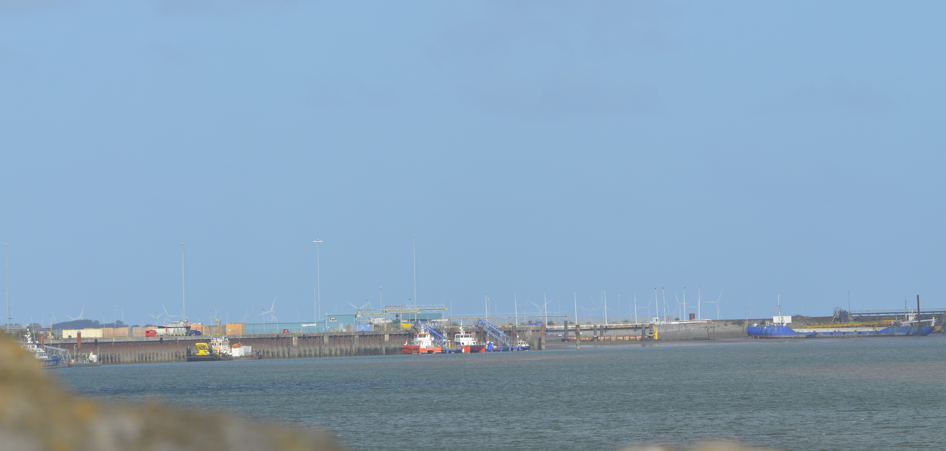
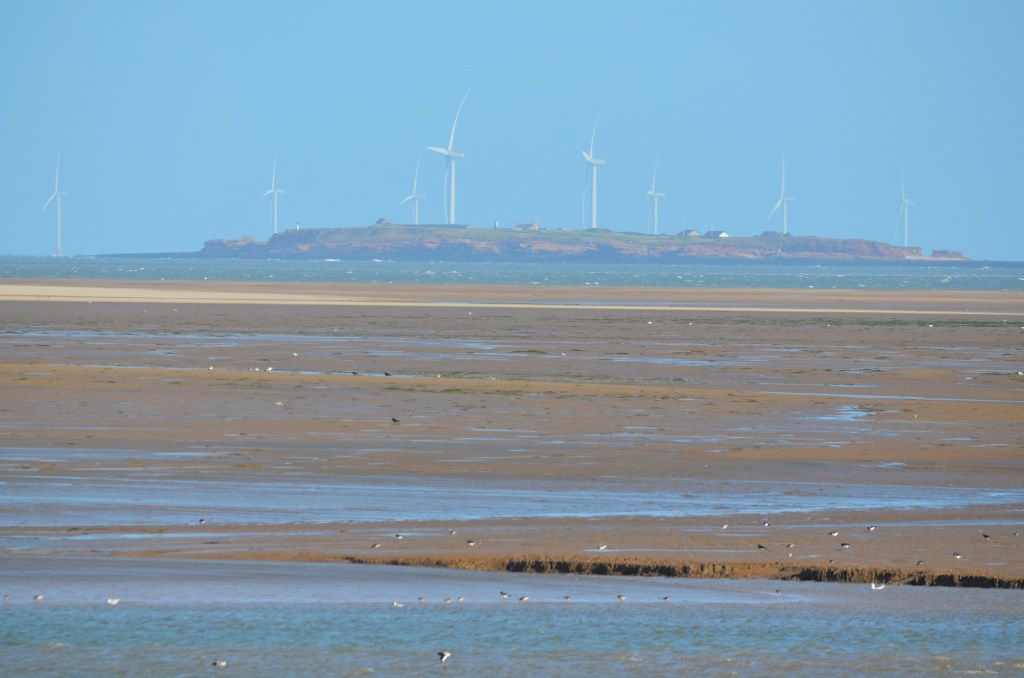
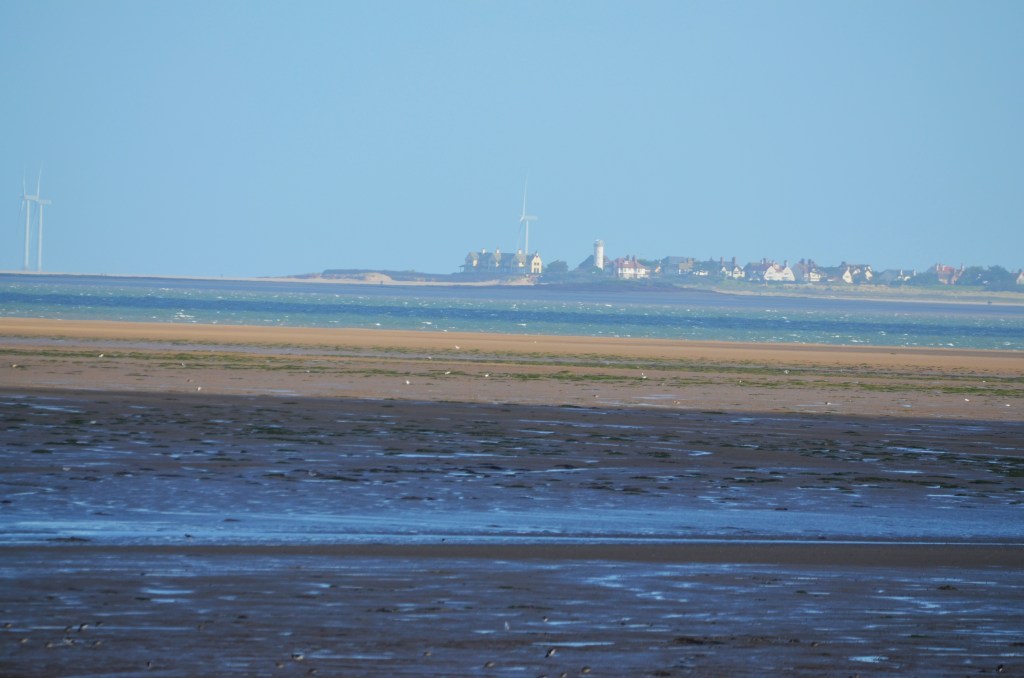
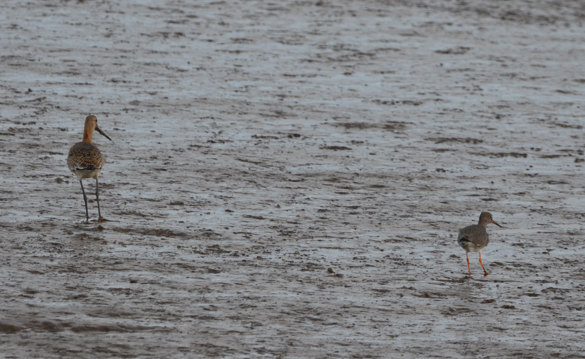
Category: Wirral

  • Parkgate Again

    (Thursday 6th August, 2026)

    Today, I was over in Parkgate on the Wirral Peninsula – for the second time this week. On this occasion I was accompanied by my mother, my brother, Michael, and my niece, Sophie. Regular readers will know that our chief cameraman is Stu but he had to go to work today and help keep the British economy ticking over, so all photographs were taken by Sophie today. Thanks very much Sophie!
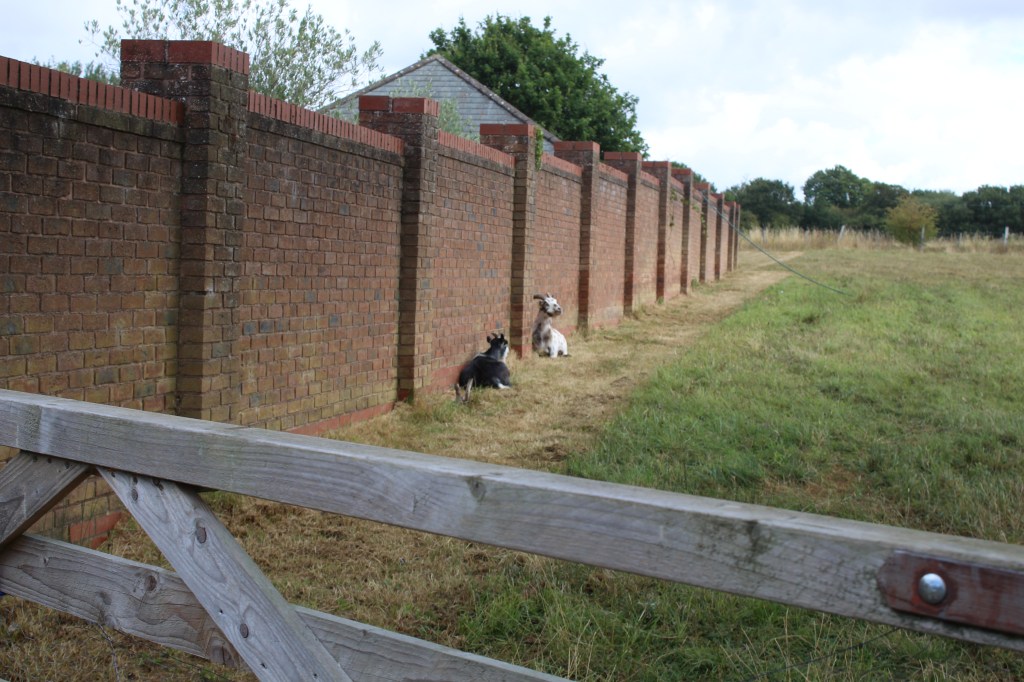
    Goats at Parkgate

    Goats near the Old Baths carpark

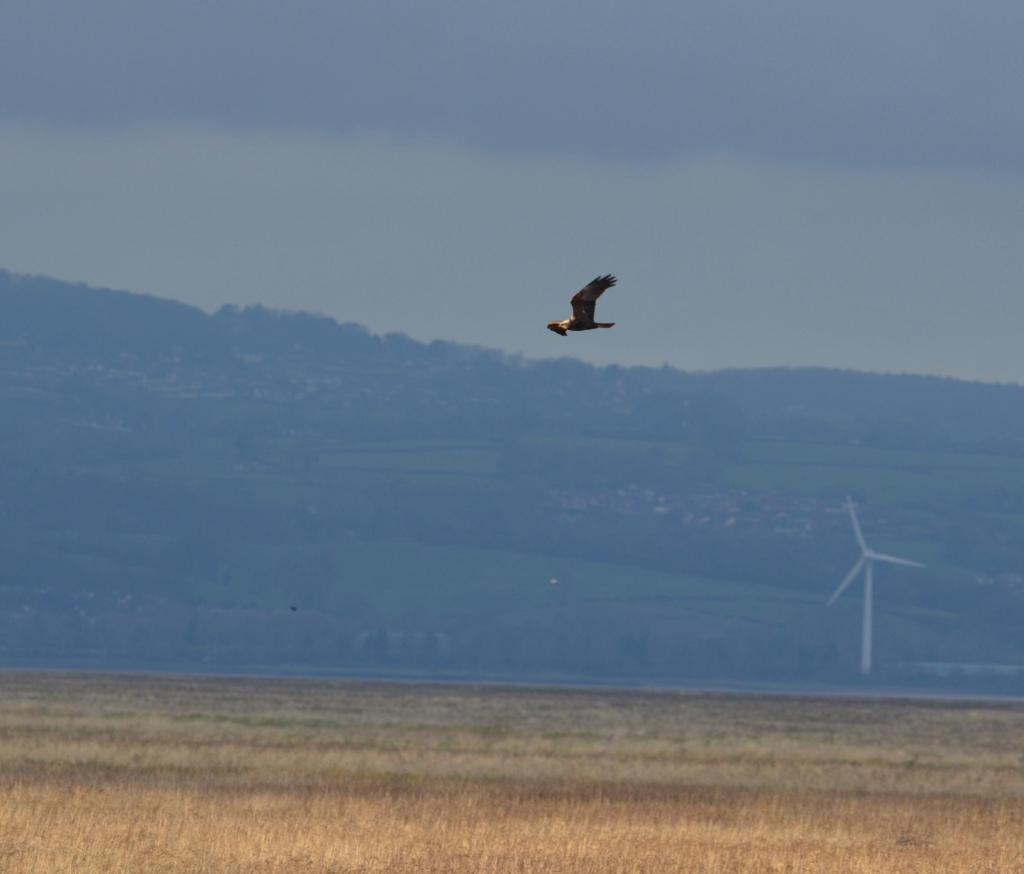
        Parkgate village lies on the English side of the Dee Estuary and is a great place to visit for birdwatching. The expansive salt marsh is 100 square kilometres and all sorts of bird species can be found here: it’s home to waders, wildfowl, herons and egrets, birds of prey, warblers…the list goes on. During today’s visit, for example, we saw several people excitedly watching a group of Spoonbills out on one of the flashes (shallow ponds). There was also a Marsh harrier patrolling low over the marsh and, later, a Kestrel hovered, facing into the wind, eyeing the ground below.  

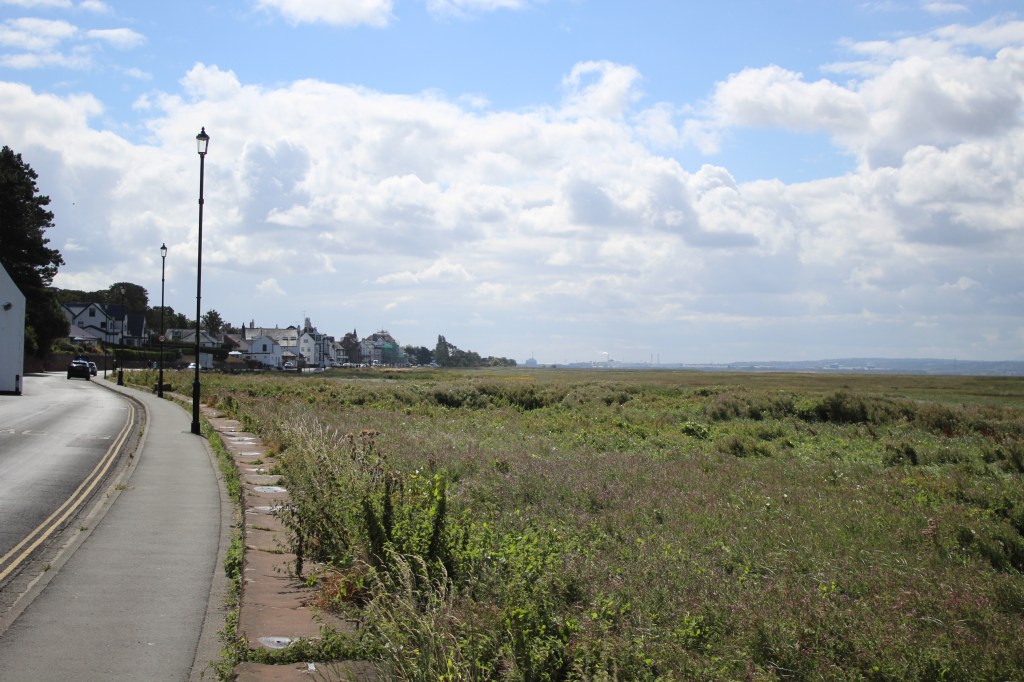
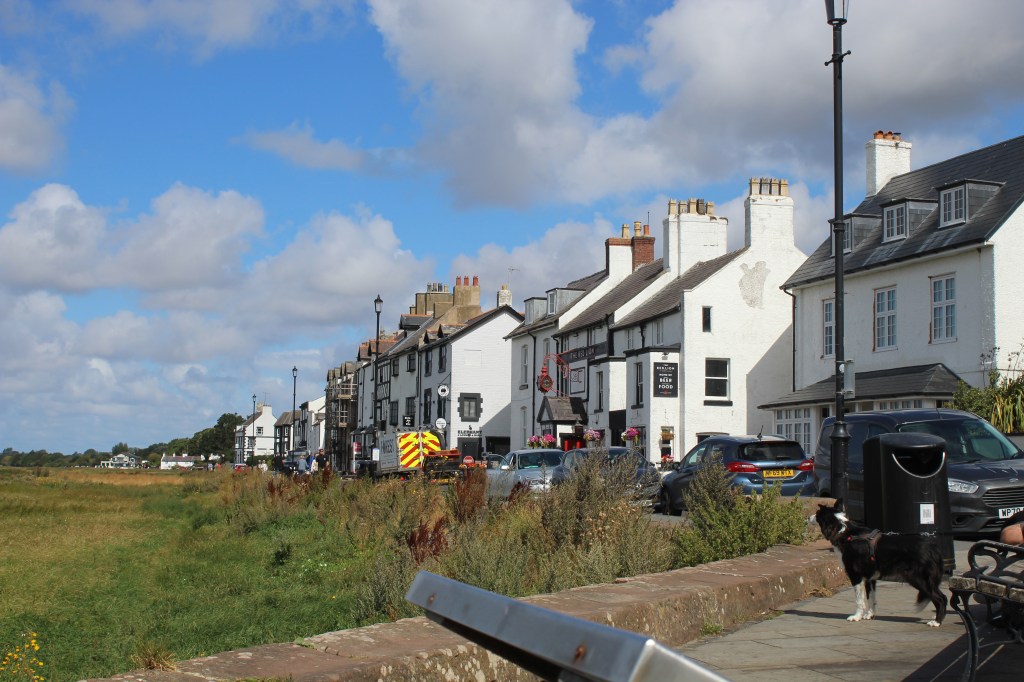
    The Parade

    Looking southwards along The Parade

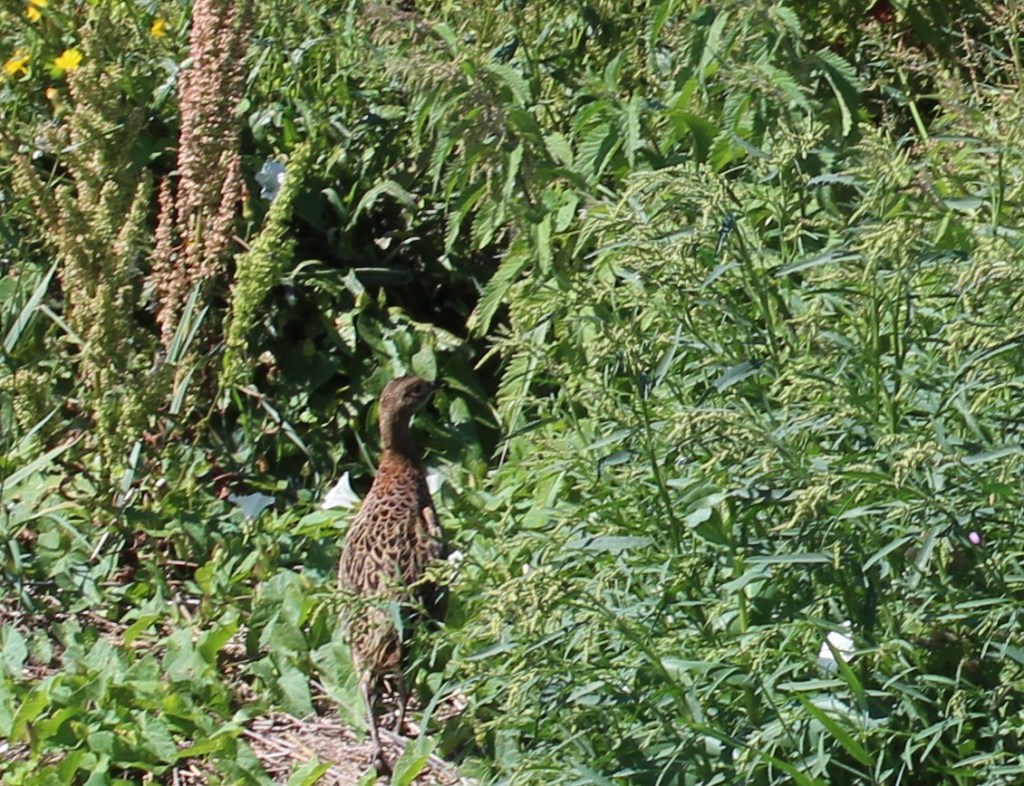
    Pheasant in undergrowth

    Female Pheasant

        However, Parkgate is more than a destination for birders and wildlife-lovers and I was reminded of this as I went through Sophie’s photos later. Often, when we visit places, we can be so intent on a particular purpose that we overlook other aspects that might be just as interesting – both to others as well as to ourselves. So it was refreshing to see Parkgate through a different perspective.

    The Parade 3

        For the benefit of those who are unfamiliar with Parkgate and might be considering a visit, here’s a little bit of information about its history.

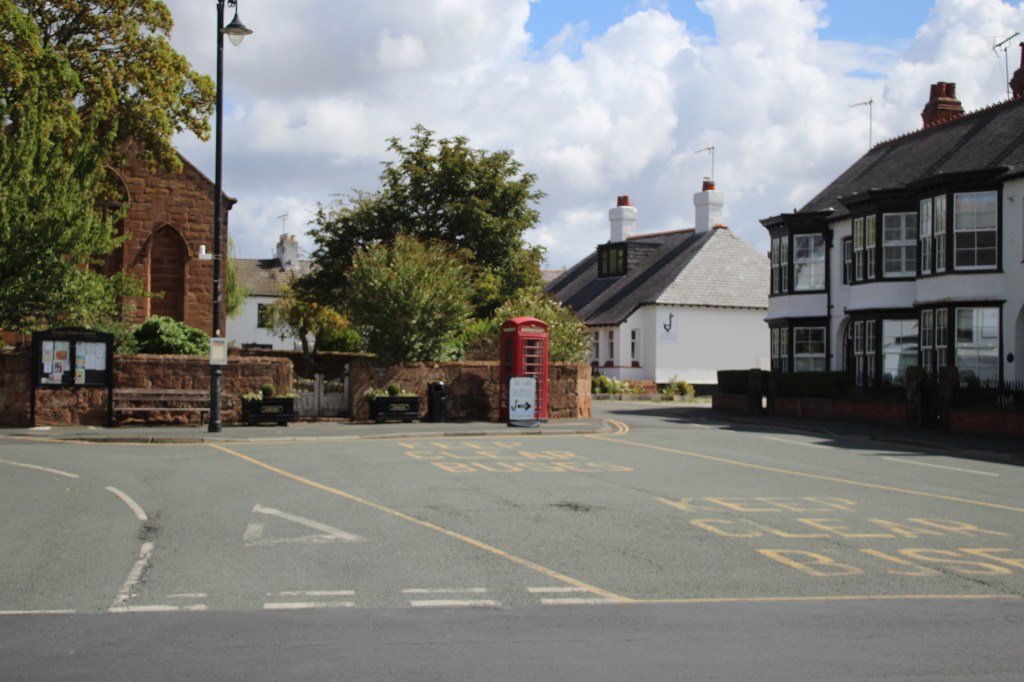
    School Lane, Parkgate

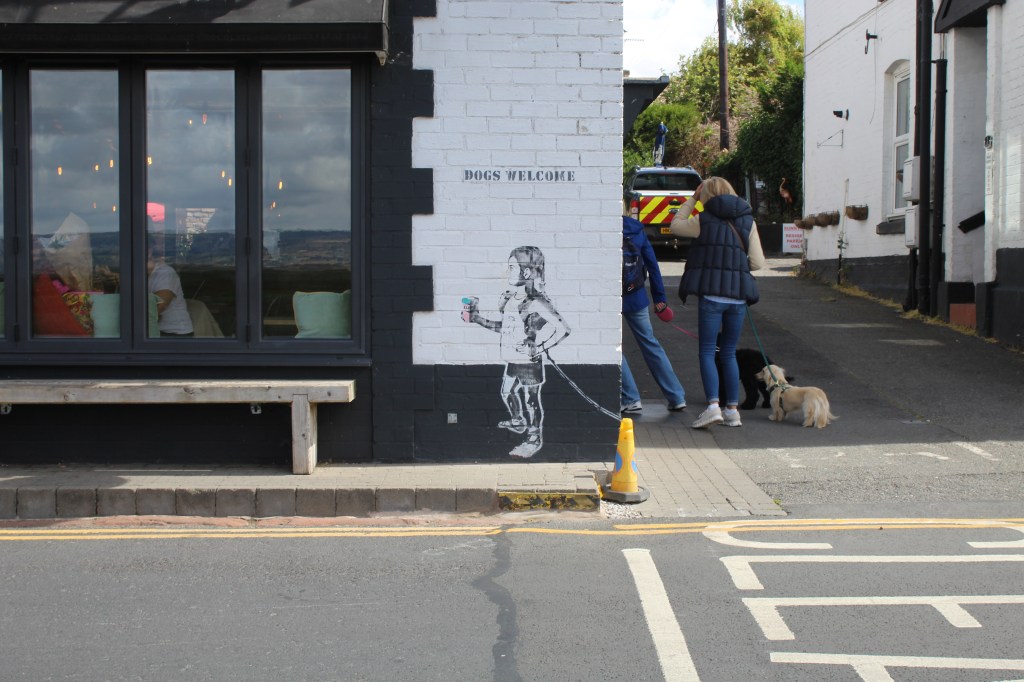
    Above: School Lane (St. Thomas’ Church is on the left); below: Girl with traffic cone on lead

    Park your dog

        Lady Emma Hamilton (originally Amy Lyon) was born in the nearby village of Ness – and raised in Hawarden in Flintshire – and composer George Frideric Handel sailed back from Ireland via Parkgate which, at the time, in 1742, was a busy port. Towards the end of the eighteenth century the accumulating silt on the River Dee meant that Parkgate could no longer function as a port and was supplanted by the port of Liverpool on the River Mersey.  

    From the Donkey Stand

    View from the Donkey Stand

        Parkgate then switched to being a seaside resort and successfully drew people in to take the fashionable salt waters. Open-air baths were built during the 1920s which became very popular and helped Parkgate maintain its status as a resort right up until the late 1930s. Sadly, not a lot remains of the baths now except the odd section of wall at the Old Baths carpark which lies beyond the Boathouse pub.

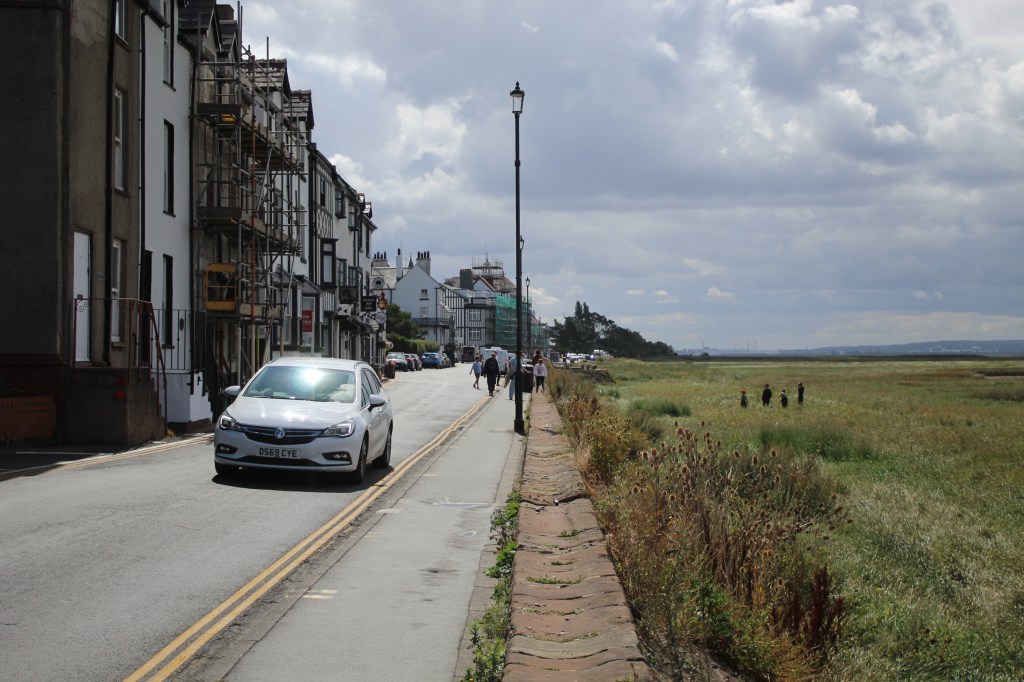
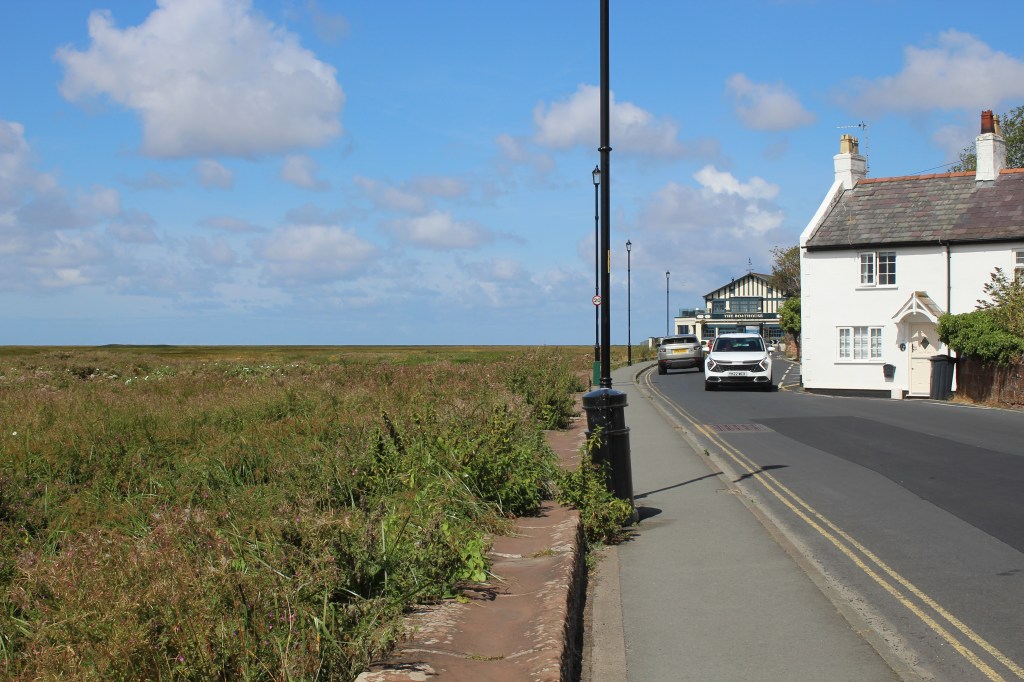
    The Parade 2

    Looking northwards along The Parade

        Parkgate is well worth a visit and you don’t have to be a birder to enjoy it either.

  • Low Tide at Parkgate

    (Sunday 2nd August, 2026)

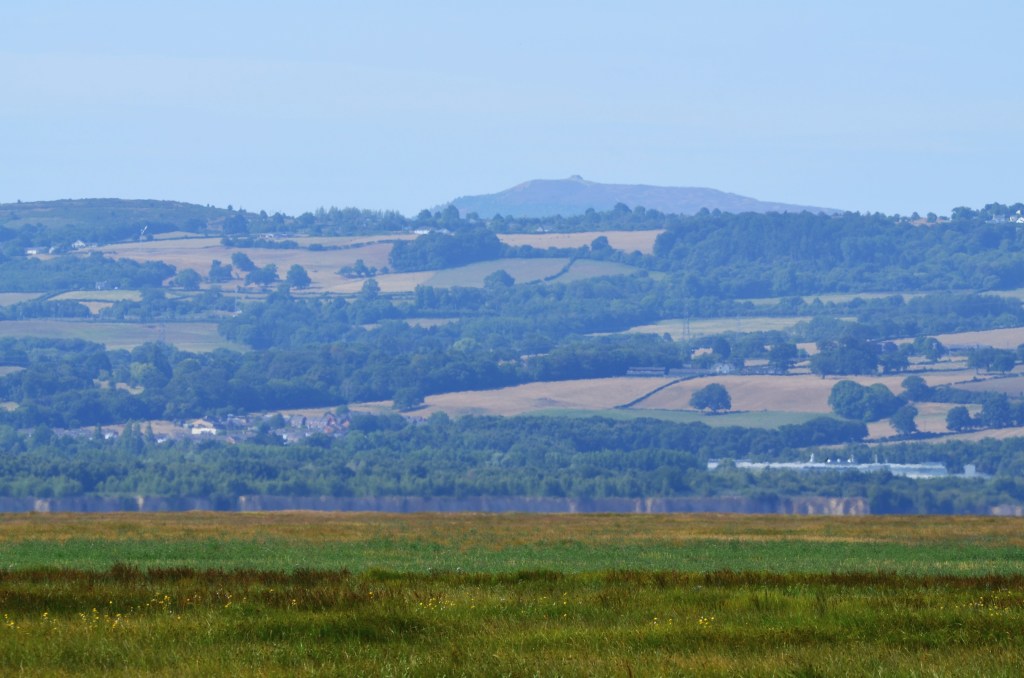
    Over to Parkgate on the Wirral Peninsula this morning where it was a sunny 21°C with just a faint breeze (ESE). Visibility was very good and we had panoramic views of the Dee Estuary: Moel Famau and the other hills on the Clwydian Range stood out sharply to the south of us and, in the opposite direction at the estuary’s mouth, we made out the many wind turbines that stretch across Liverpool Bay.

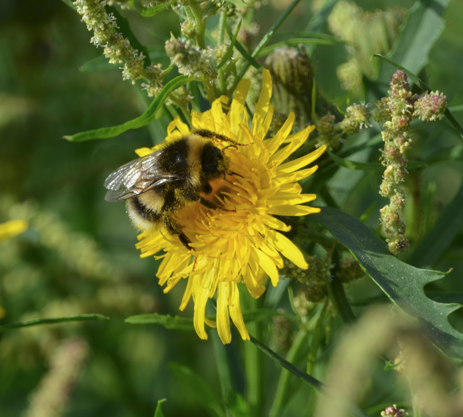
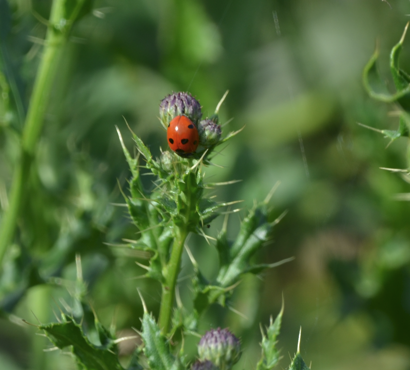
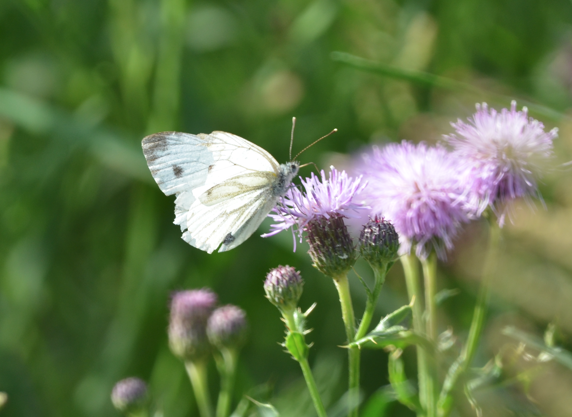
        The trees and bushes near the Old Baths have clearly been stressed by the current drought, their leaves browning and crisping before dropping early. Conversely, Dandelions, bindweed, knapweed and thistles out on the marsh seem to be thriving – all obviously more able to cope. A welcome consequence of this hardiness is the variety of insects that visit them. We spotted ladybirds, White-tailed bumblebees and several white butterflies – mostly Small whites, although we did see one Green-veined butterfly too.

    White-tailed Bumblebee, Parkgate
    Seven spot
    Small white Parkgate

    Top: White-tailed bumblebee; middle: Seven-spot ladybird; bottom: Small white butterfly

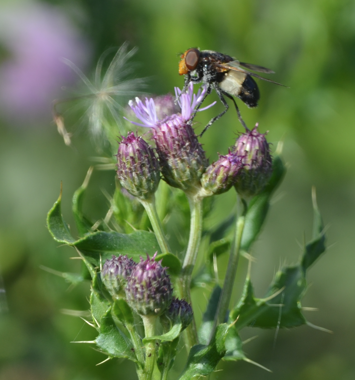
        We were intrigued by several hoverflies which seemed to be especially partial to thistle flowers. These are Pellucid hoverflies (also known as Pellucid flies). They are mostly black except for a distinctive white band around their abdomens and they have very large, reddish-brown eyes, which provide them with a wide field of vision. As with other hoverflies, Pellucid hoverflies have evolved to mimic bees or wasps and this mimicry acts as a visual deterrent to predators such as birds, amphibians or spiders that might ordinarily prey on them but will hesitate if they believe they might get stung!
    Pellucid Hoverfly

    Pellucid Hoverfly

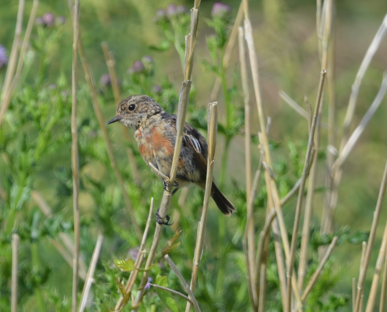
        A pair of small birds scooted low in front of us. They were very quick but Stu managed to take a snap of one of them clinging to a reed, before it swiftly departed again. This looks like it’s a juvenile Stonechat. Even without the more defined red-orange breast of the adult, it’s still a striking-looking bird.

    Juvenile Stonechat

    Juvenile Stonechat

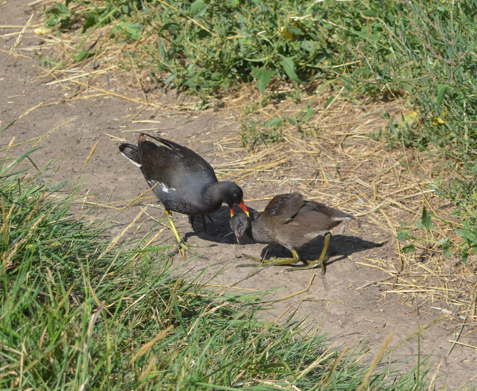
        Down at the Donkey Stand, we looked over the other side of the wall and watched an adult Moorhen as it ferried its chick back through the reeds to shelter.

    Moorhen scolding

    Moorhen encouraging its chick to seek shelter

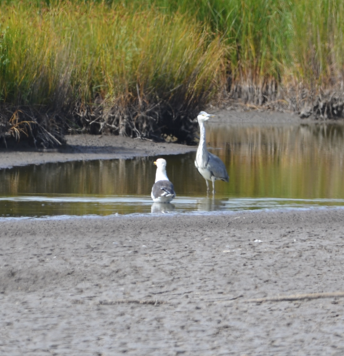
    Further out. the ‘flash’ looked bone-dry apart from one small section of water in the far corner where a Grey heron stood forlornly hoping for the best. We were there just after low tide although I believe the flash (or shallow pond) relies on rainwater as much as water from the river and – like everywhere else – Parkgate hasn’t had much rainfall recently.

    Gull and Heron

    Heron and gull lamenting the absence of water.

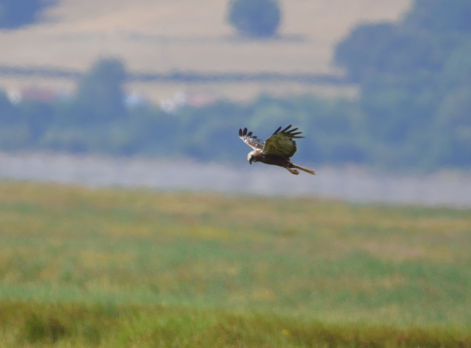
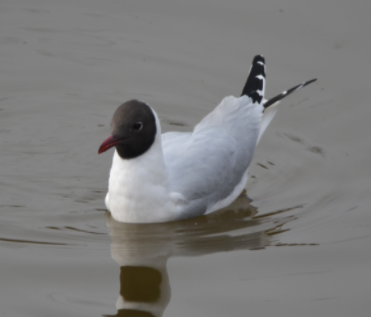
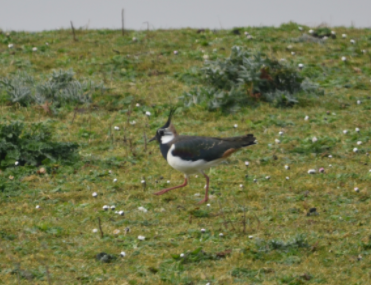
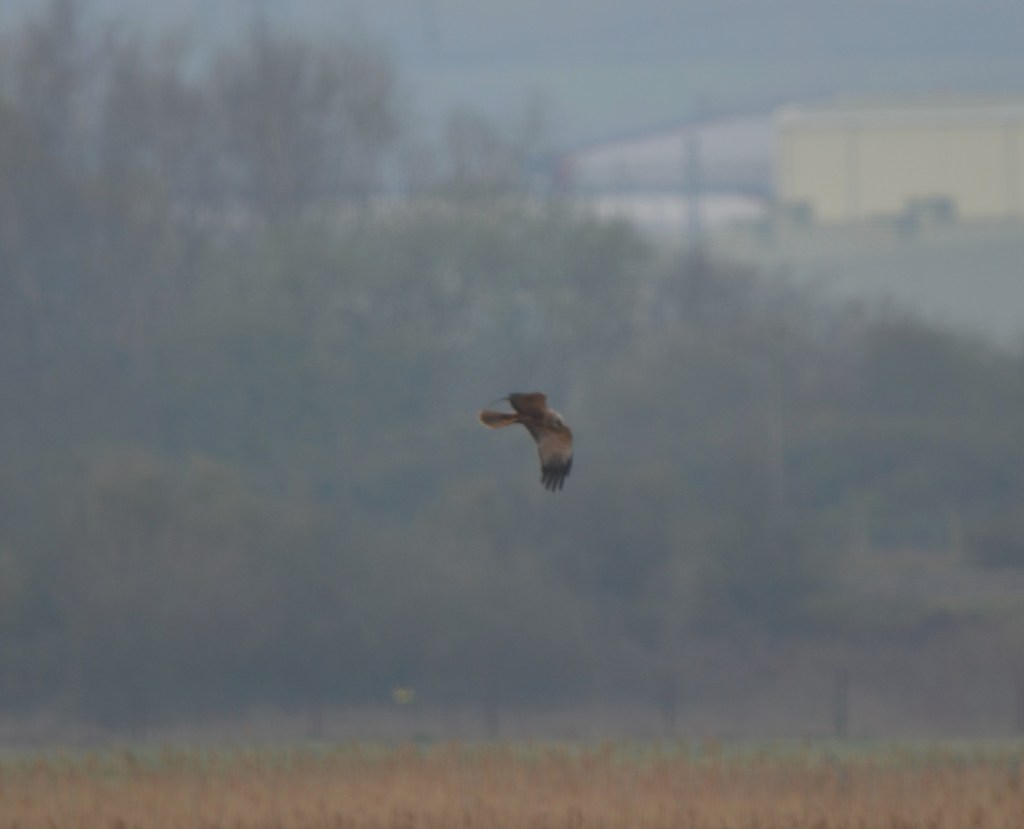
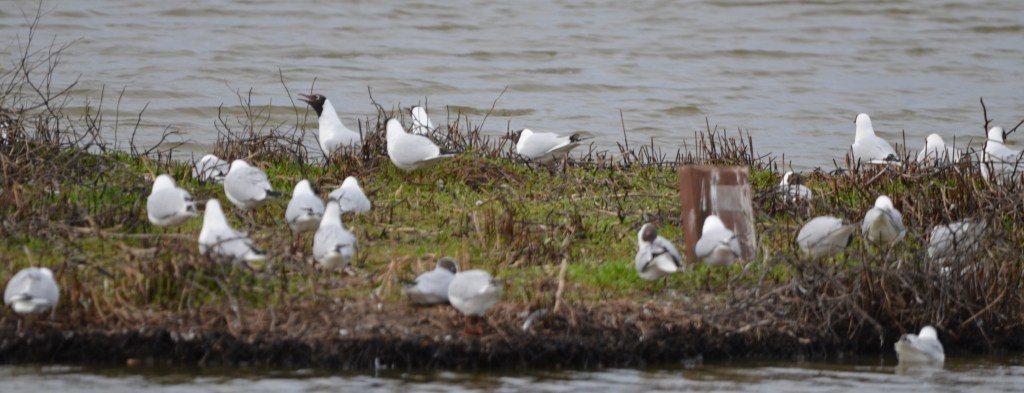
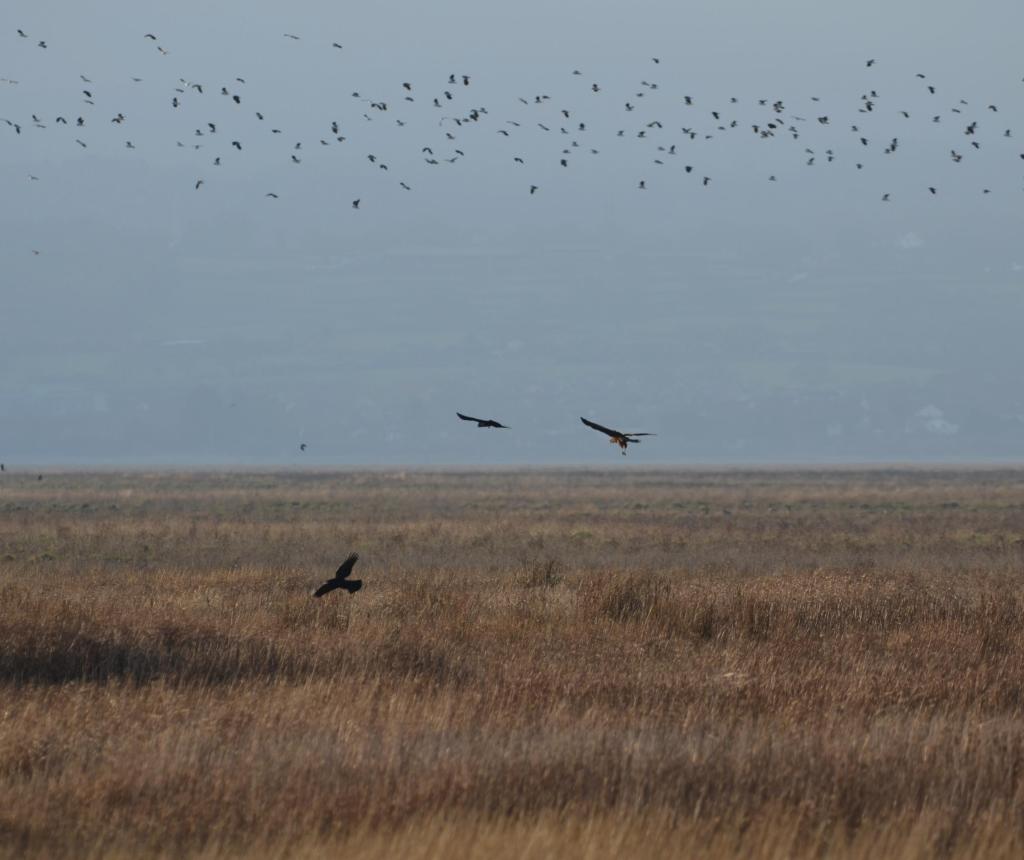
    On the nearer side of the flash were several Lapwings and Black-headed gulls, most of which were sprawled on the ground and making the most of the sun. They didn’t stir, even when a Marsh harrier flew low nearby. Talk about lethargic!

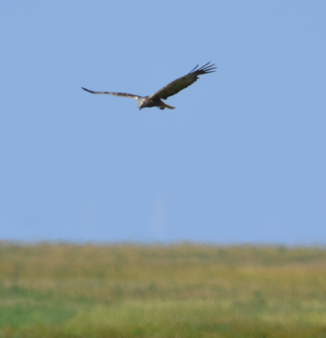
    Male Marsh harrier

    Marsh harrier

        To be fair, the harrier seemed to be concentrating on a long stretch of the marsh that it was patrolling and that was mostly obscured form our view. Flying characteristically low, the bird would every now and then twist and drop down, feet first. This is how the Marsh harrier grabs the small mammals, amphibians and fish that make up much of their diet, although Marsh harriers are opportunistic predators that will also take small waterbirds like Moorhens, too. This Marsh harrier was a male and, though the male is smaller than female – well, less bulky – it’s still a large bird and surprisingly agile. Fascinating to watch.

    Male Marsh harrier 2

        There was a scattering of House martins that seemed to be darting between the marsh and the rooves of the buildings along The Parade, where they presumably have nests: an ideal vantage point. As we turned to go, we glimpsed a pair of Common buzzards further out, leisurely rising as the thermals carried them both skywards.

    Panorama

    Moel Famau from Parkgate

    The important stuff

    We called in at Daleside in Hawarden on the return journey where we each had a Vanilla slice with our customary cappuccinos. Very gooey!

  • Treecreeper at Royden Park

    (Sunday 21st June, 2026)

    Over to Royden Park on the Wirral Peninsula this morning. It was sunny with a very light north-easterly breeze, the temperature a comfortable 21°C, though it climbed higher after midday.

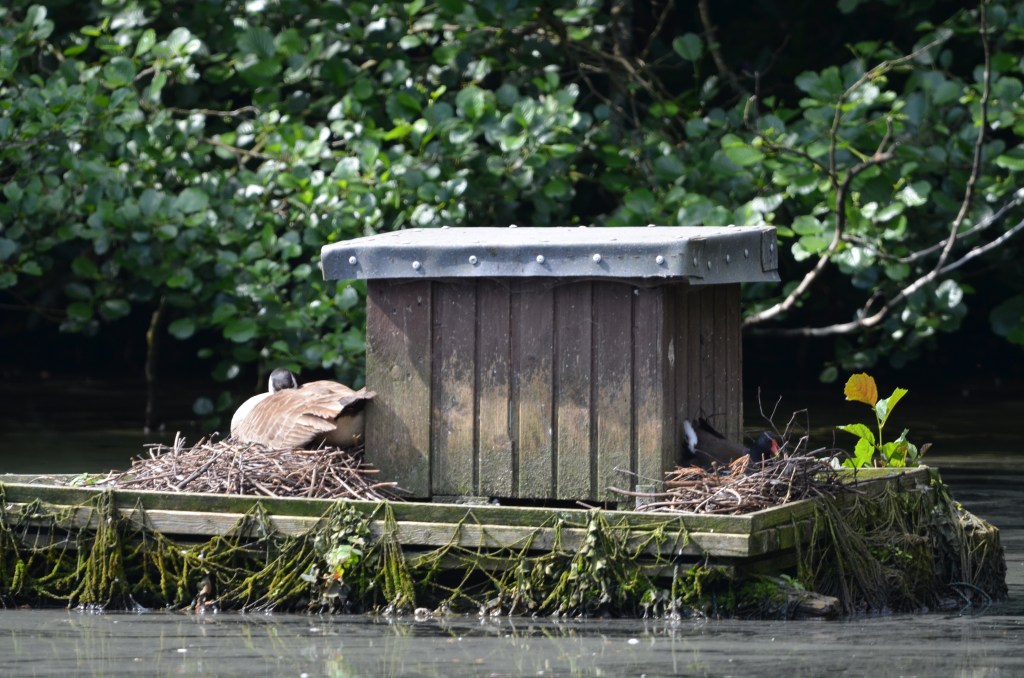
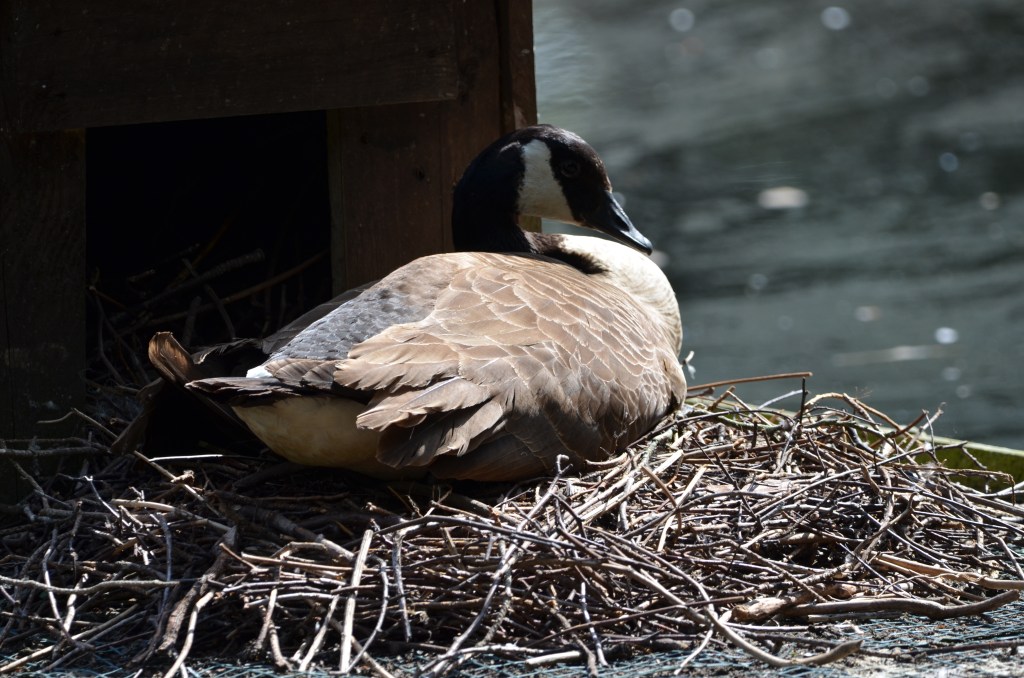
        We followed the path from the car park and cut through the woods to Roodee Mere. Here, there is a nesting platform in the water on which we often see a Grey heron perching while it surveys the mere for food. This time, however, the space was being shared by a Canada goose and a Moorhen. As you can see, each bird has a nest either side of the central box.

    Sharing nest space
    Canada goose on nest

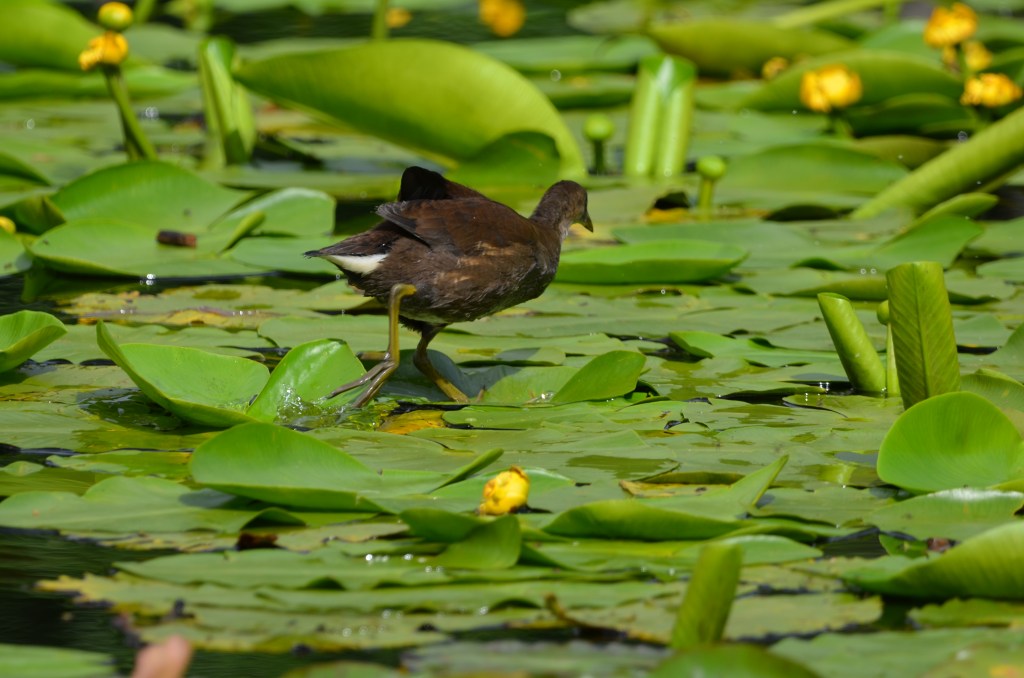
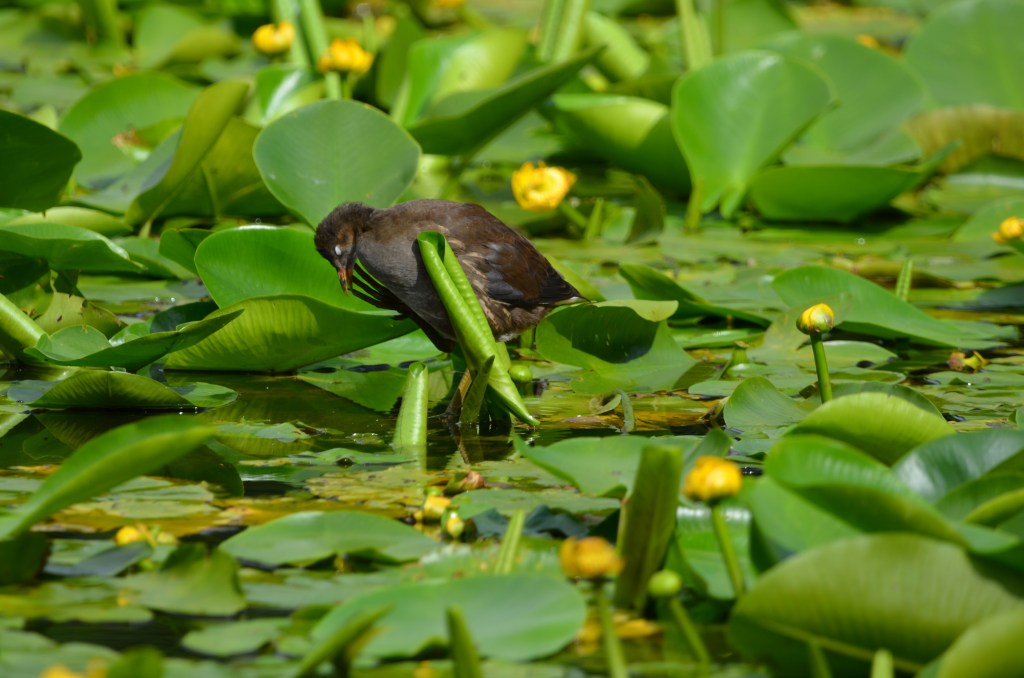
        Judging by the number of chicks present in and around the water, many of the Moorhens had already produced their first broods. Moorhens might have two or even three broods during the breeding season and chicks from the first brood will often help their parents with feeding the later broods. While this obviously helps the parent birds, it’s also useful practice for when these first-brood chicks go on to have their own offspring the following year.

    Skipping on lily
    Welcome to the jungle

    Moorhen juveniles negotiating the lily-pads …

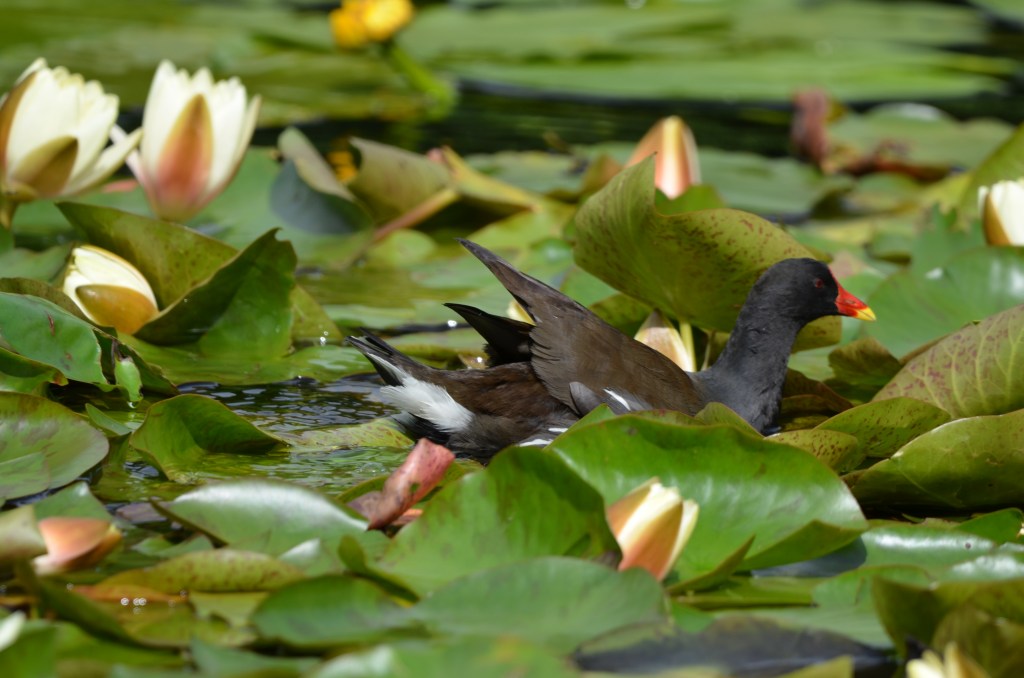
        Water-lilies were plentiful on one section of the mere and several young Moorhens took obvious delight in agilely skipping across the lily pads: they seemed to be doing this purely for the sake of it. The more responsible parents – who were probably too heavy now – simply swam through the pads, although this didn’t appear to be half as much fun!

    Moorhen swimming

    …while the heavier adult has to swim

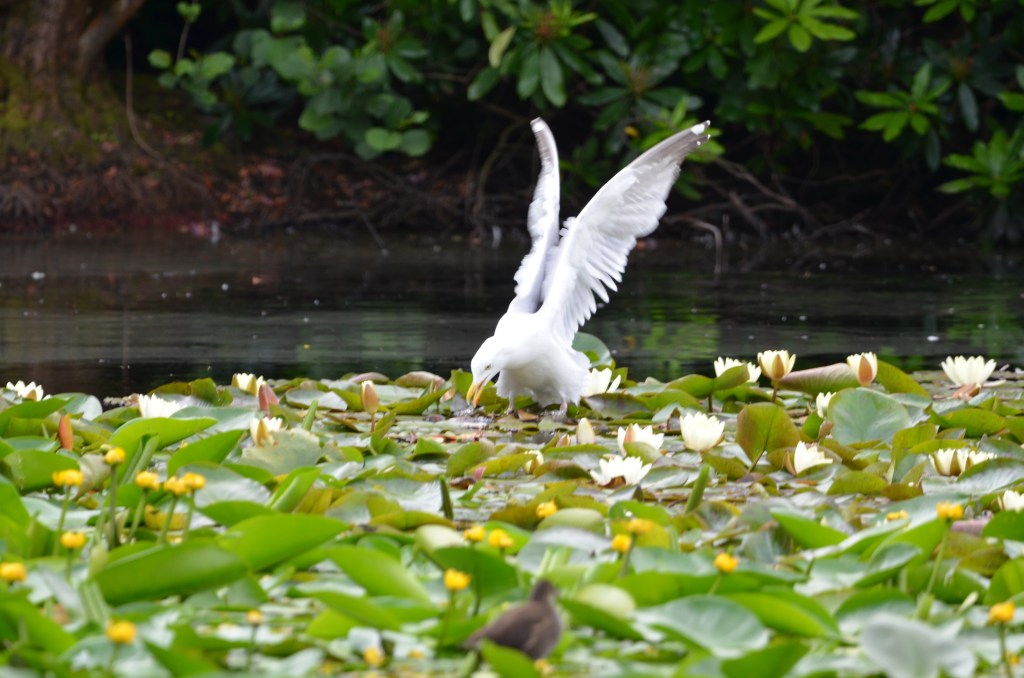
        A Herring gull circled above the mere and dropped down amongst the lily pads: at first, we were a little concerned in case it was after one of the chicks but it seemed to have spotted something under the water. The gull made a couple of attempts to retrieve whatever fish or amphibian it had seen but eventually gave up and flew off.

    Herring gull fishing

    It wasn’t clear what drew the Herring gull to the water (above), although this mystery fish appeared soon after (below)

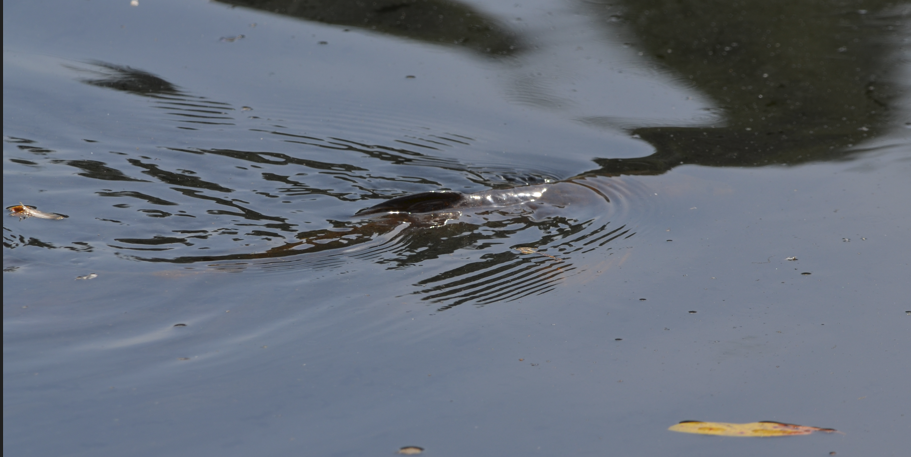
    Mystery fish

    By coincidence, we did see a large fish that was swimming close to the surface – you can’t really tell what fish it is, though it’s size might indicate a carp. It’s possible that this was what had interested the Herring gull but we can’t say for sure. In turn, the fish might have been interested in one of the many dragonflies that were zipping around the mere today.

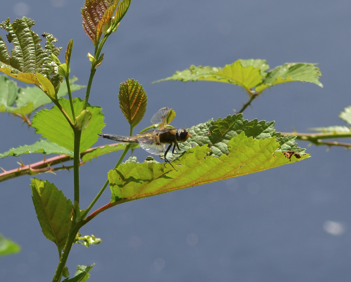
    Dragonfly 4

    A four-spotted chaser dragonfly resting on a hazel leaf

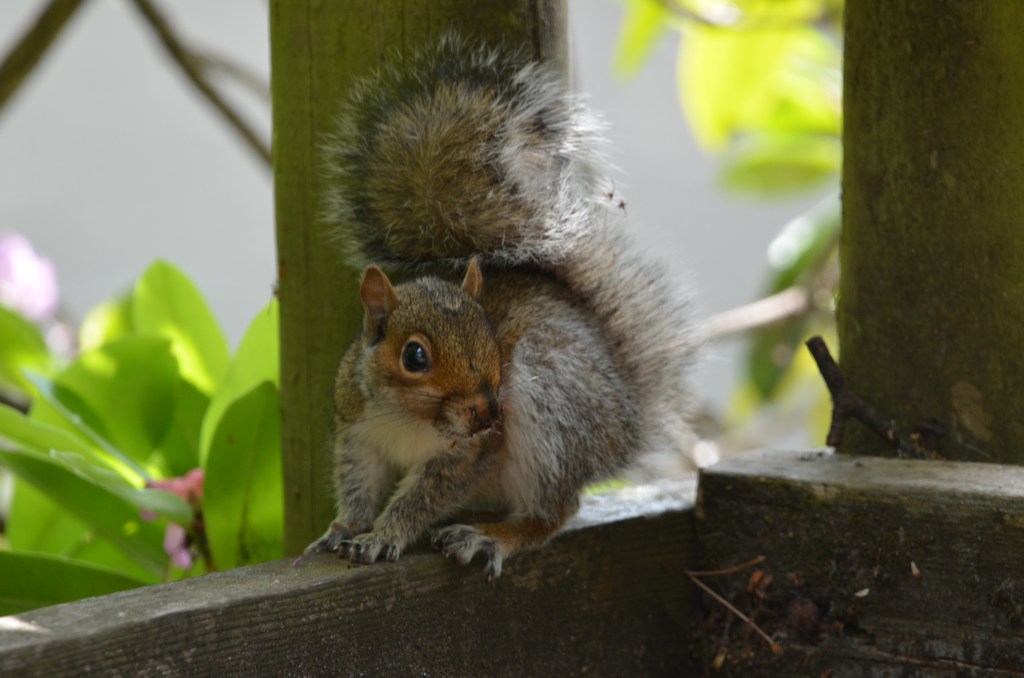
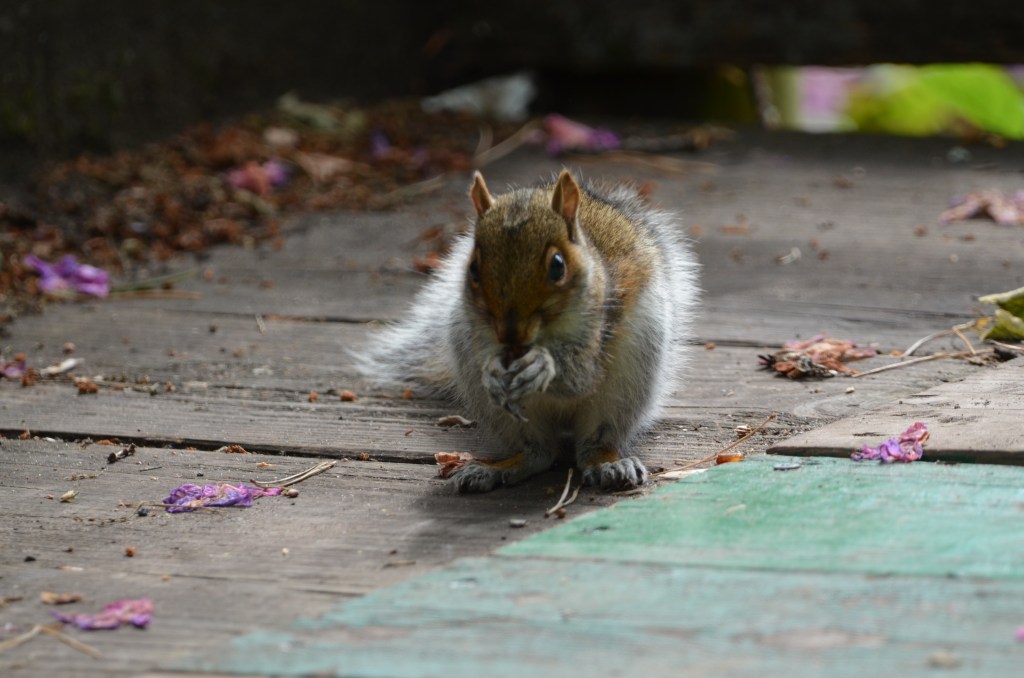
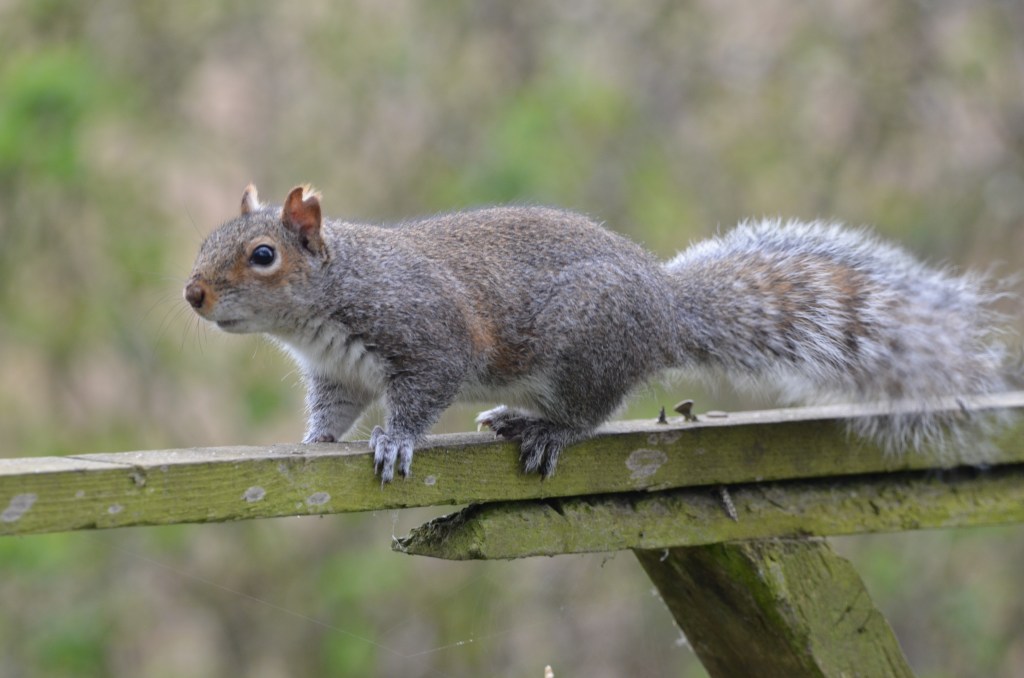
        There were one or two Grey squirrels out and about, demonstrating their acrobatic skills. One in particular entertained us as it descended head-first from a nearby tree before jumping across the path in front of us and disappearing in the undergrowth. Moments later another squirrel appeared on the wooden jetty at the side of the mere, where it nibbled at some bird food that presumably had been left for the Moorhens.  

    Squirrel at Royden
    Squirrel at Royden 2

    Shameless squirrel

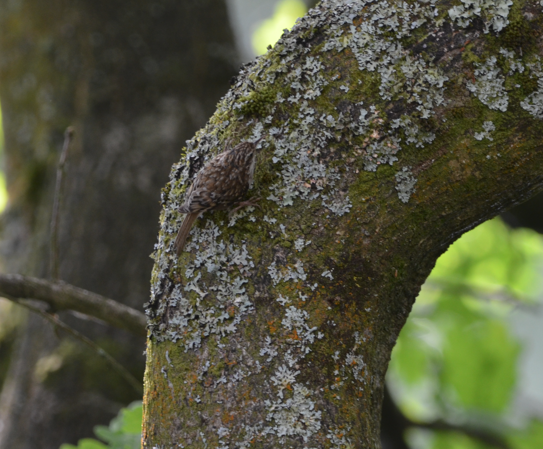
        While we were stood there watching this scrounging squirrel, a small bird flew across from the surrounding wood and landed low on a tree just in front of us. It was a Treecreeper and we watched as it scaled the tree then fluttered down to the second trunk of the same tree and climbed again before repeating this procedure for a third and final time, after which we lost sight of it.

        Although the Treecreeper is quite common throughout the United Kingdom, we were lucky to have seen it as its mottled brown back and wing feathers act as great camouflage against the bark of trees. It has a white underbelly that is generally hidden from view as it climbs, but we happened to catch a glimpse as it flew in front of us.   

    Treecreeper

    Treecreeper blending in against the lichen and bark

        The tree was a common alder with its distinctive round leaves and it looked like it had been coppiced at some point in the past, which would explain the three trunks radiating from it. As it climbs, the Treecreeper uses its long, curved beak to probe cracks in the bark for insects to feed on. I reckon we were lucky here too in that the Treecreeper didn’t fly off to another tree but simply dropped down, enabling us to keep sight of it.

        Treecreepers use their strong toes to grip the bark and they have very stiff tail feathers which offer extra support when pushed against the tree and this helps to reduce strain on their legs as they climb. Most references describe the Treecreeper as spiralling upwards around the trunk as it climbs and this is what I remember from the two previous occasions that I’ve seen them. However, this particular Treecreeper climbed vertically up the same side of the trunk without looping round until it was quite high up the tree. A fascinating little bird to see,

    The important stuff

    On to the Courtyard Café for cappuccinos and a slice each (or should I say ‘doorstop’ each) of Caramel biscoff cake (Stu) and Carrot cake (Col). Scrumptious!

  • Four Seasons in One Day

    (Sunday 12th April, 2026)

    Over to Wirral Country Park at Thurstaston this morning where we experienced sunshine, wind, rain and hailstones during our brief excursion!

        The morning began well enough with a moderate temperature of 12°C which felt much warmer when the sun came out. However, the south-westerly wind was very gusty, particularly as we traversed the exposed part of the path near the cliffs. But at least it was dry at this point.

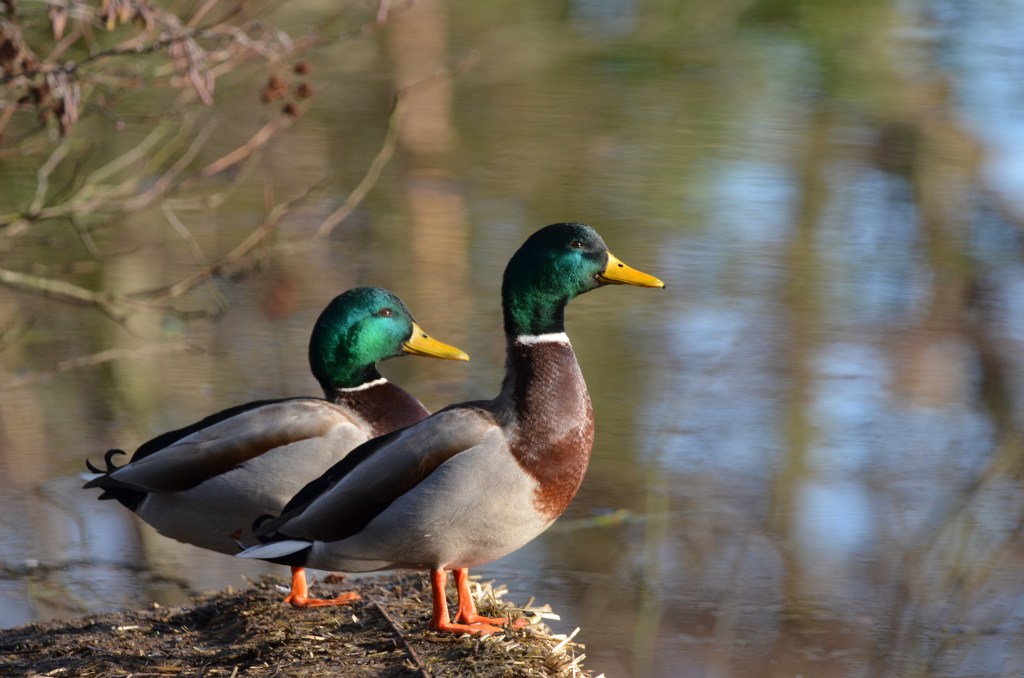
    Mallard at Thurstaston

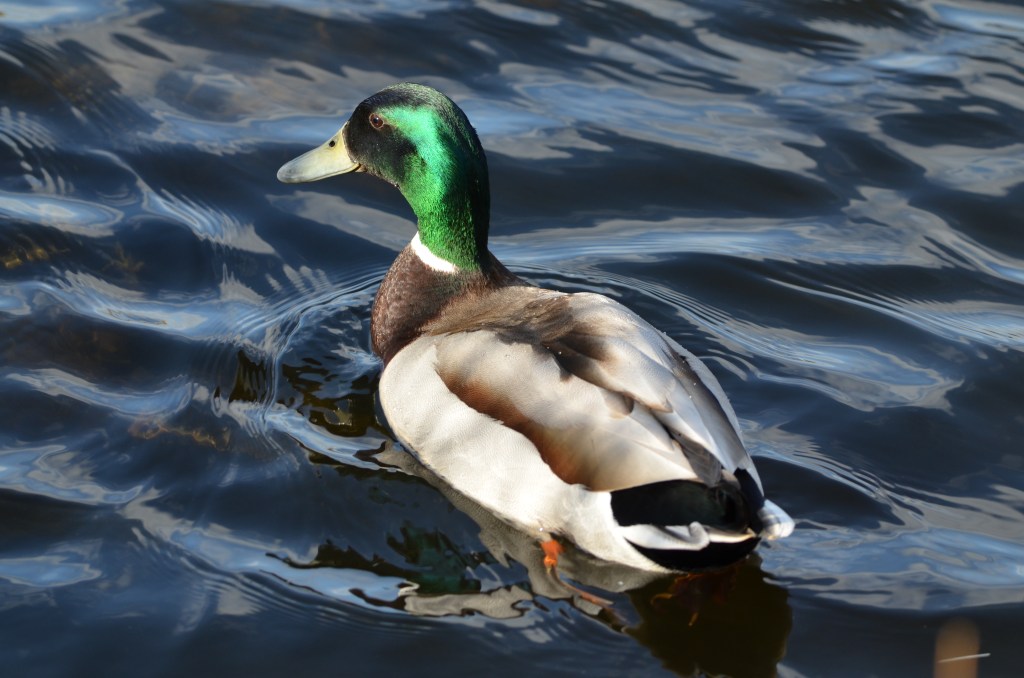
    Mallard drake

        Unfortunately, there weren’t a great deal of birds about, which we put down largely to the weather: the occasional crow or gull that was brave enough to take to the air was swiftly blown off course by the wind. Any other birds witnessing this spectacle would have had second thoughts, I’m sure.

    The Dee Estuary at low tide

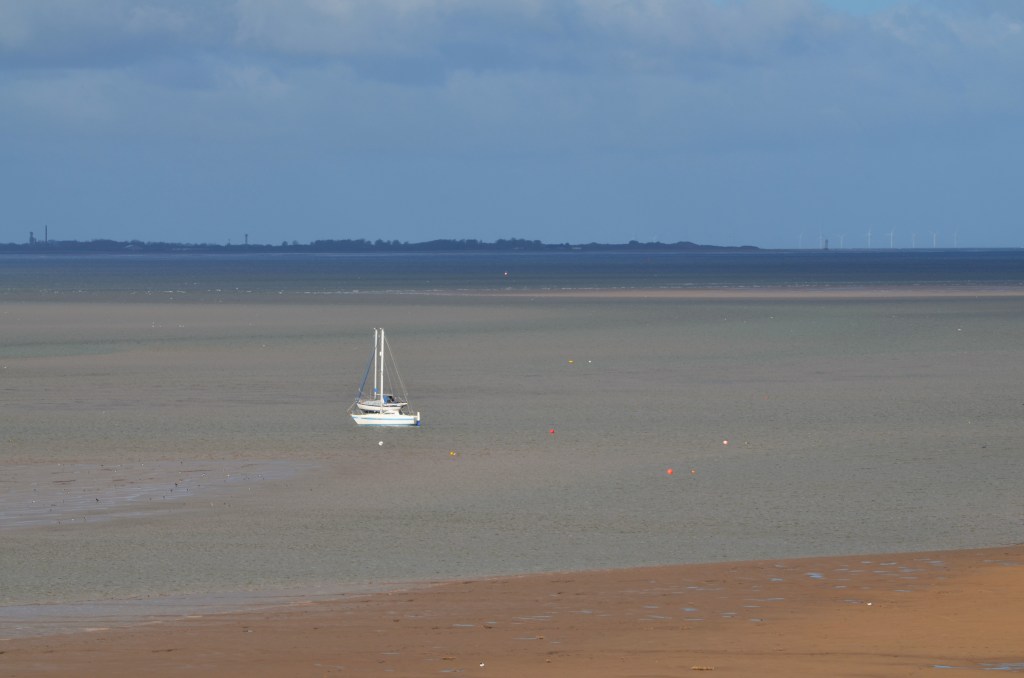
    Looking towards Welsh side of the Dee Estuary from Thurstaston, at low tide. (You can just make out Point of Ayr Lighthouse, Talacre, on the top right, next to the wind turbines).

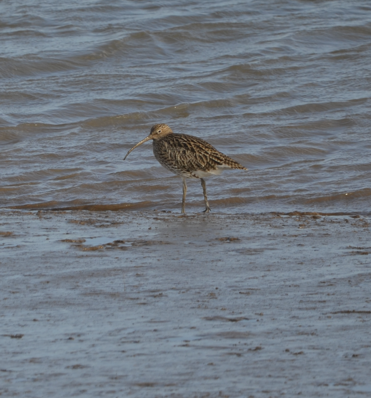
        We also happened to arrive at low tide – this doesn’t mean that birds aren’t feeding, but because the estuary shoreline is farther out any birds that are feeding are themselves farther out and dispersed along the vast area at the edge of the water. So, further away from us and spread out wide too. If you look at the photograph (you may need to zoom!), you can see some wading birds, Oystercatchers mostly, and crows to the left of the two boats. We did hear the distinctive sound of a Curlew calling from somewhere on the beach, but we didn’t actually locate it visually. Still, it’s reassuring to know that there are still some about here, despite numbers declining (Curlews are on the Red List of Birds of Conservation Concern).

        In the park itself, we saw a Wren skipping along the low branches of a hawthorn bush, but it was reluctant to have its photograph taken this particular morning. Likewise, we saw a Long-tailed-tit a little further along which didn’t hang around long enough for a photograph either. It was unusual to see one of these birds by itself – usually, you see several together chattering excitedly to each other as they flit about, but this one was alone.

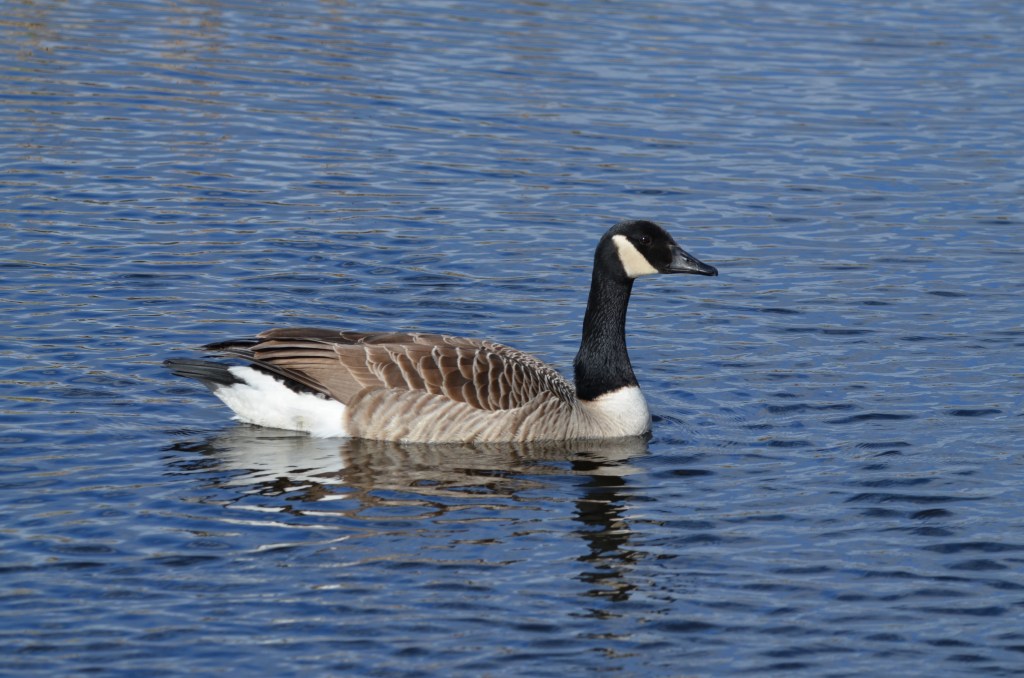
    Canada goose at Thurstaston

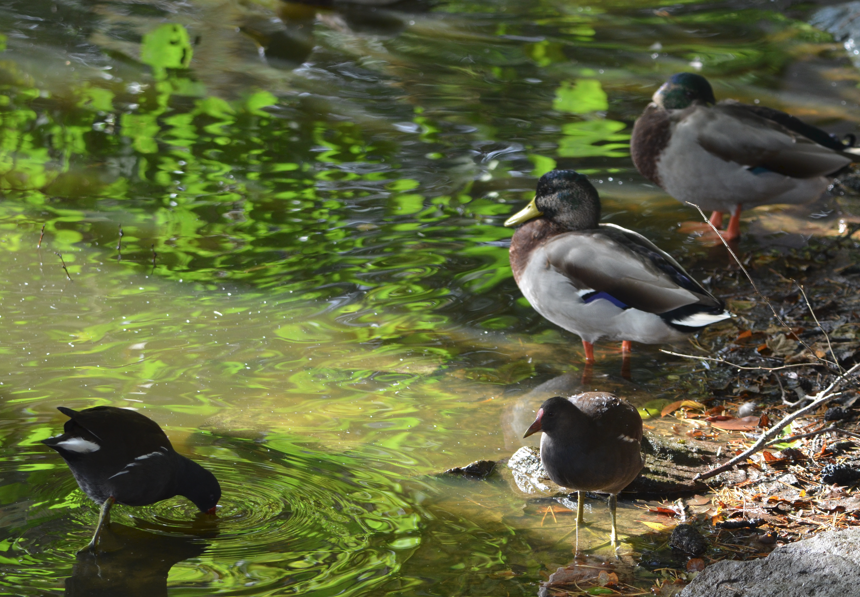
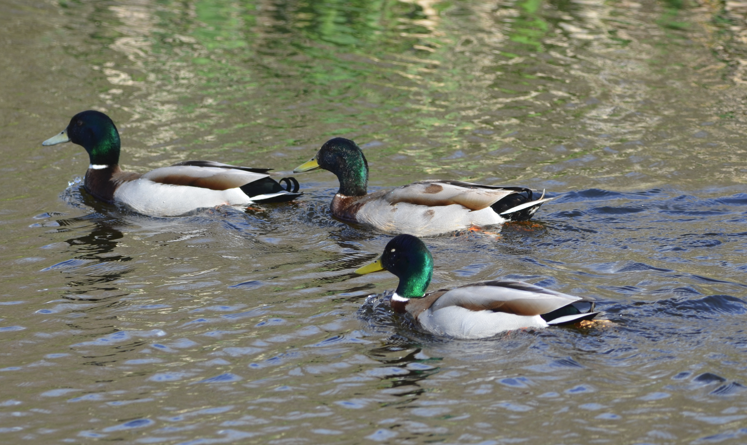
        Luckily, it was business as usual for the Canada goose and the three Mallard drakes who were all pretty much unconcerned by the weather, happily swimming around in the little ponds of the park.

    Three drake Mallards

    The important stuff

    We went to Flissy’s Coffee Shop on Station Road and sat outside while we waited for our refreshments. It was quite pleasant because we were out of the wind now but, seemingly out of nowhere, we were deluged by a combination of hailstones and rain. We adjourned inside to dry out and finish our customary cappuccinos and Bakewell slices. Squelch!

  • At The Wetlands

    (Sunday 22nd March, 2026)

    Over to the RSPB Burton Mere Wetlands on the Wirral side of the Dee Estuary this morning. Although a little overcast, it was dry with a very light westerly breeze, and the temperature was a decent enough 11°C. We arrived about 09:15 and already the car park was quite full.

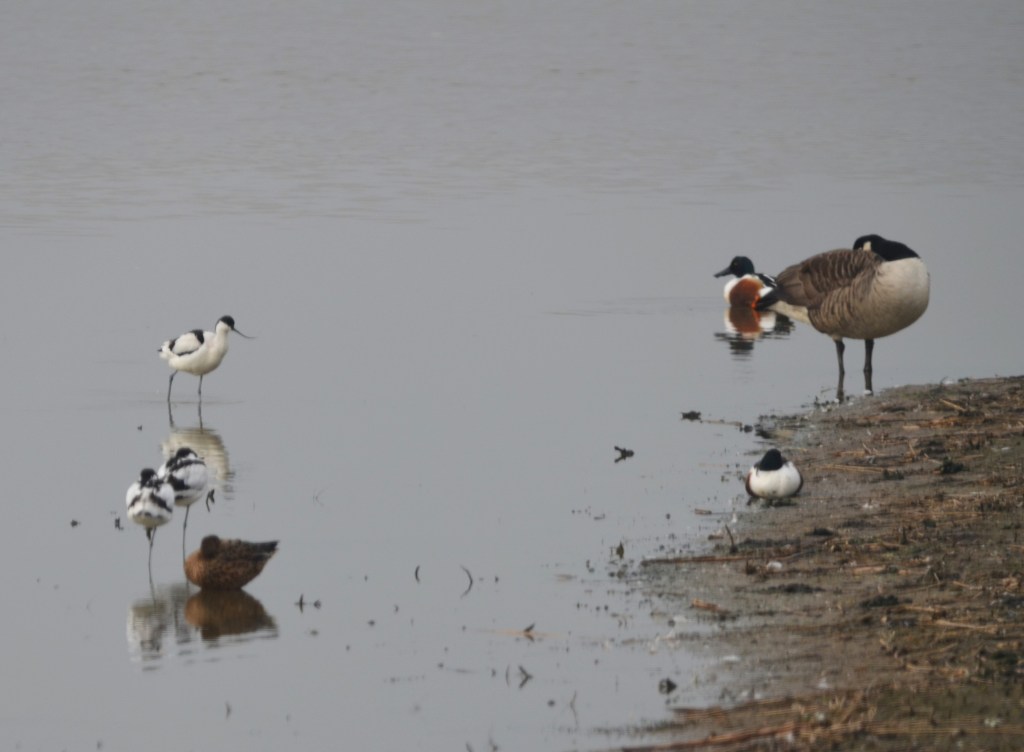
        From the visitor centre we saw Avocets, Lapwings, Mallards, Coots and Moorhens feeding and generally gathering together, though some remained in their respective groups. There was a pair of Mediterranean gulls amongst the many Black-headed gulls that had settled on the islet. And a few Northern shovellers glided through the shallow waterways too.

    Avocets, and Northern shovellers
    Black-headed gull at BM
    Lapwing at BM

    Top: Avocets, Northern shovellers and Canada goose. Middle: Black-headed gull. Bottom: Lapwing.

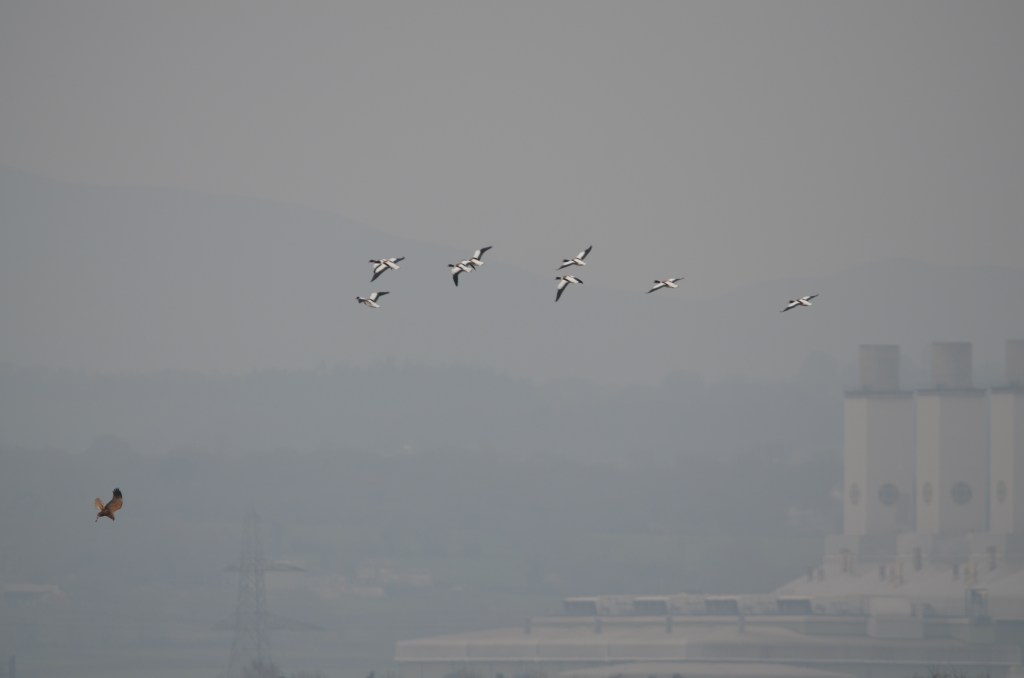
        We watched as first one Marsh harrier came in from the marsh, then saw two of them flying together. We watched them both sky dancing, which is the term used to describe their aerial courtship ritual and often involves the male passing food to the female in mid-flight, although I’m not sure that this happened between the two birds we were watching today. Unsurprisingly, the birds in and around the scrape were being vigilant every time the harriers appeared.

    Marsh harrier BM

    Above: Marsh harrier (male). Below: A flock of Shelducks and the harrier share the sky.

    Marsh harrier & Shelducks in flight

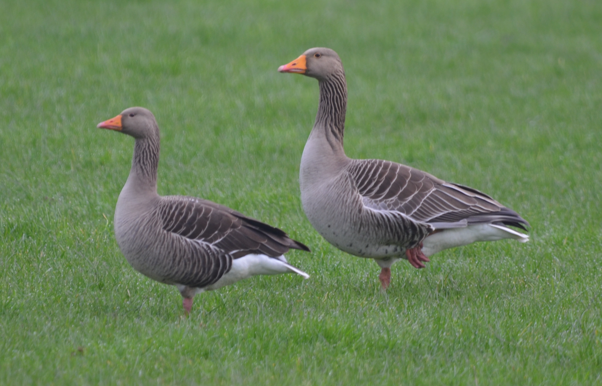
    We wandered down to the picnic area beyond the Bunker Hide. Last year we saw Yellow wagtails on the fields inland from the estuary. None this time, although we saw a few Greylag geese and Canada geese here and there. They had presumably sought a more peaceful sanctuary away from the noise and traffic of the main scrapes!

    Greylag geese BM

        Greylag geese happy to get away from it all

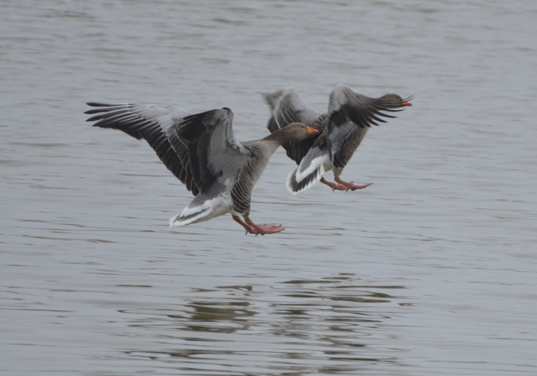
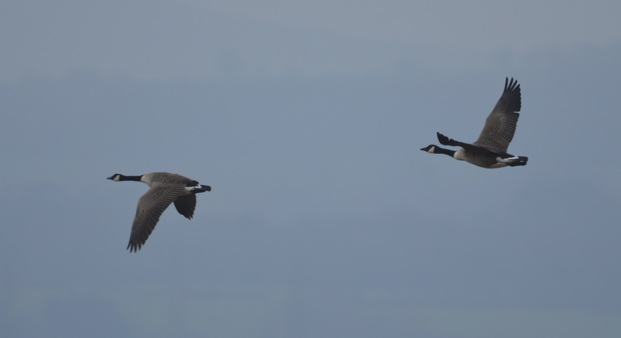
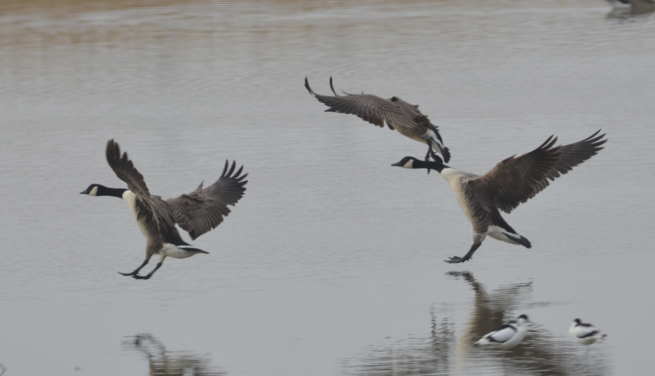
    Mind you, some of the geese clearly preferred the water. We watched these Greylags and Canada geese as they flew across the marsh and came into land.

    Greylags landing BM
    Canada geese in flight BM
    Geese landing BM

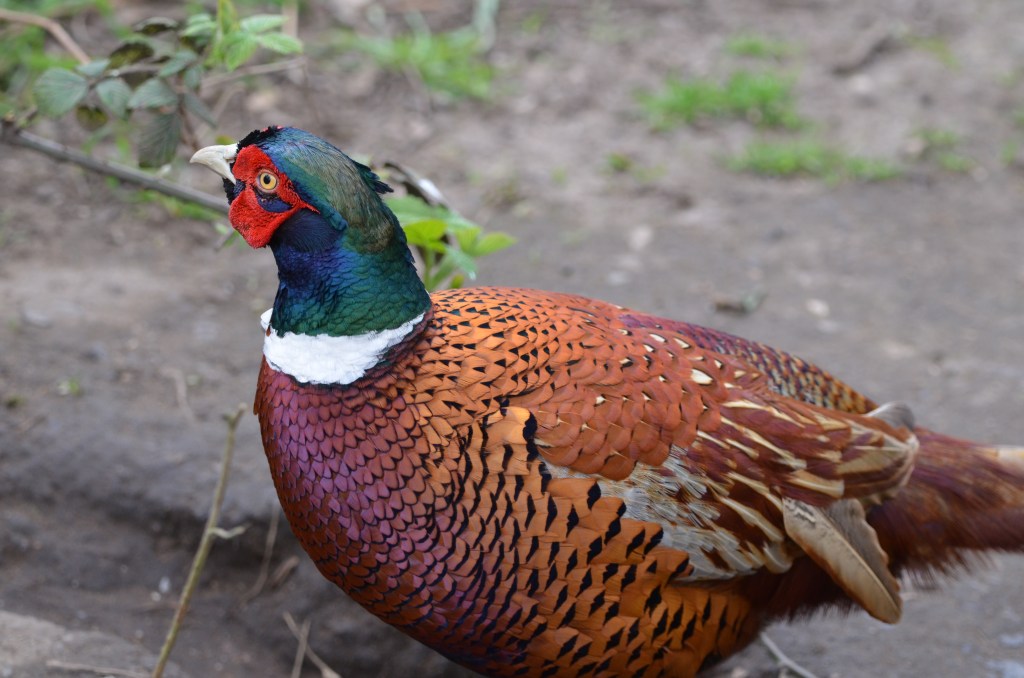
    We’d heard the loud shrieking of a Pheasant earlier when we were near the picnic area. I’m not sure if this was the same bird on the other side of the visitor centre, but I’m glad we saw it close up: you tend to forget how colourful these birds are – well, the males at least. Actually, I think this is something we tend to do with a lot of the more common birds and wildlife in general. In our determination to see and record animals seldom if ever before seen, I think we sometimes overlook those that we see regularly. (I live near a couple of Pheasant farms and see the birds often, so I can be almost oblivious to the sight of them, although I don’t think you could ever be oblivious to their call!)

    Pheasant at BM

    Pheasant

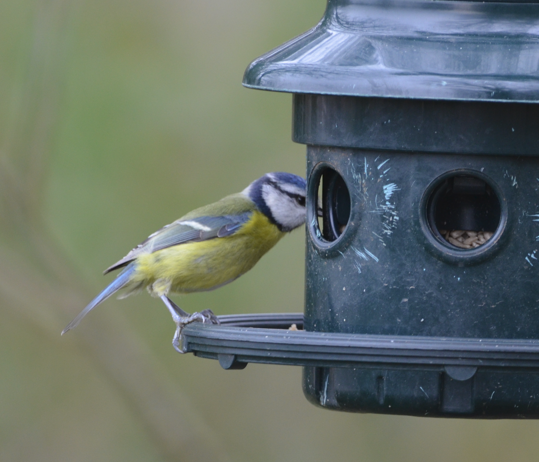
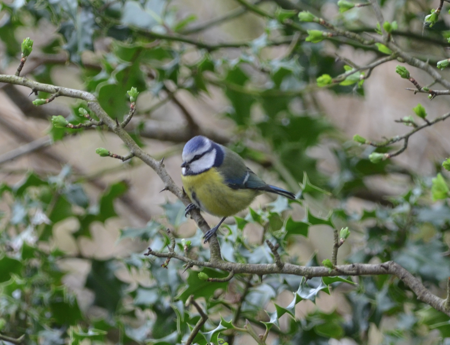
        A Grey heron flew over in that ungainly way they have while we were focussing on the birds that were busying themselves near the feeder, mostly Great tits and Blue tits. We also spotted a Wren on a nearby branch before it flitted away and we’re pretty sure we saw a Reed warbler as well. Unfortunately, we were unable to get a photograph.

    Blue tit investigating
    Blue tit BM

    Blue tit chomping away while another waits its turn.

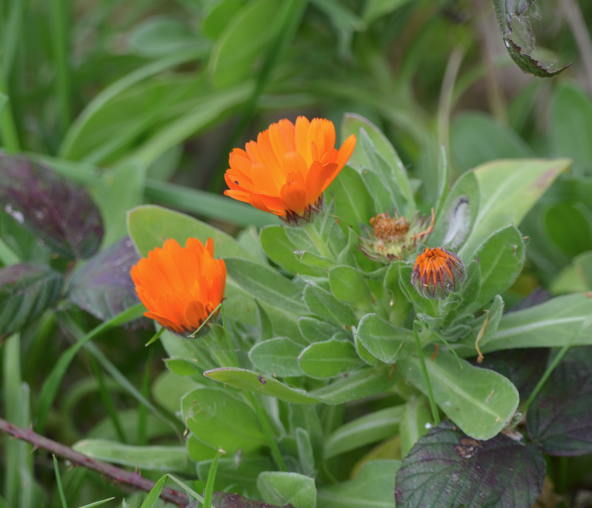
    Marsh marigolds BM

    Marsh marigolds

        However, I’m pleased to say that Stu managed to get a photograph of a Grey squirrel. What’s remarkable about that, I hear you ask! Well, regular readers of these pages will know that squirrels don’t usually hang around long enough for him to capture on film. But the Burton squirrels evidently hadn’t heard of the international embargo against this blog’s photographer and two of them were happy to display their acrobatic skills for us. Very entertaining they were too! And we’re both very grateful that at least one of them was happy to have its photo taken!

    Grey squirrel at BM

    A Grey squirrel which, unusually, didn’t disappear as soon as Stu got his camera out!

        I mentioned earlier that the car park was very busy even shortly after nine in the morning. Obviously Burton Mere Wetlands is a popular place to visit but people may have also been enticed by the chance of seeing the otters which have been seen here recently. I’m not sure at which part of the reserve you’re likely to see them, although the staff at the visitor centre should be able to help. We didn’t see any otters but still enjoyed our visit immensely.

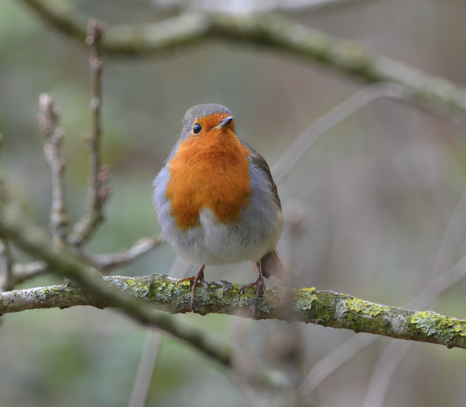
    Robin at BM
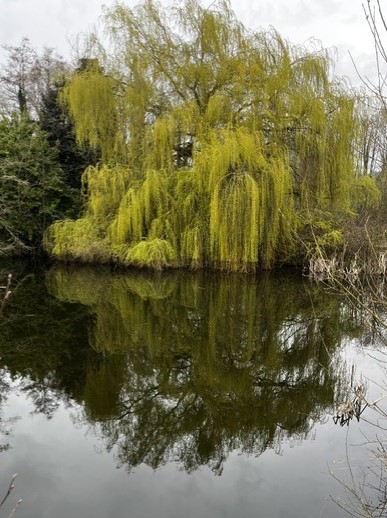
    Weeping BM

    The important stuff

    We had our usual cappuccinos with a slice of Carrot cake (Stu) and a Toasted teacake (Col). Very nice!

  • Rain and Wind Stop Play

    (Sunday 15th March, 2026)

    Over to Parkgate on the Wirral Peninsula this morning. It was dry and reasonably bright to begin with and it reached 10°C while we were there. We started off at the Old Baths but there was a fierce wind (SSW) blowing from across the Dee, directly at us, which meant that it was difficult for us to focus our binoculars and cameras without them shaking.

        We counted four Avocets in the channel and two Little egrets nearby, and there were several small flocks of geese circling the marsh, but for the most part the birdlife was staying low and out of the wind!

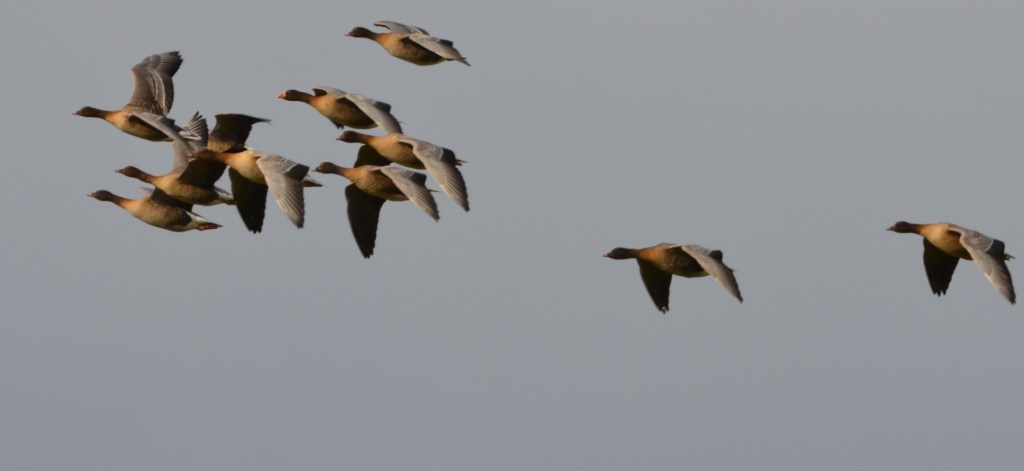
    Pink-footed geese at Parkgate

    Pink-footed geese

        We transferred to the Donkey Stand at the opposite end of The Parade where, somehow, the wind seemed to have eased. There were several Black-headed gulls on the little island in the middle of the Flash, all of which were making plenty of noise. We just thought it was the gulls making their normal racket until we saw two Marsh harriers flying low over the marsh, which is when we realised that they’d actually been sounding the alarm. The harriers quickly swept past and arced back towards a clump of reeds in the distance.

    Black-headed gulls at Parkgate

    Black-headed gulls

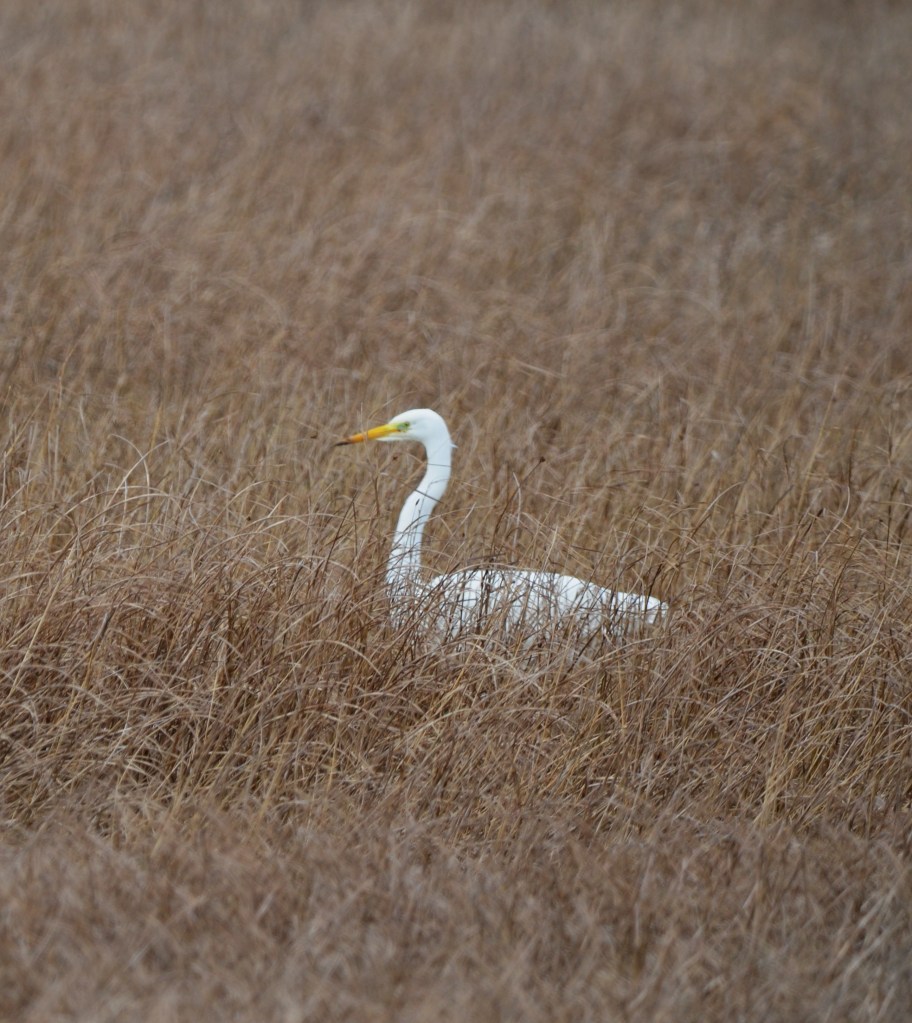
        Where earlier we’d seen two Little egrets, here there were two Great white egrets stalking separate sections of the marsh. The latter are much larger birds and have yellow beaks throughout most of the year but, during the breeding season, their beaks become black. You can see that the beak of the Great white egret in the photograph below is just beginning to change to black at the tip.

    Great white egret at Parkgate

    Great white egret. Note the yellow beak just beginning to turn black.

        Although the wind had lessened, we could clearly see that it was raining over on the Welsh side of the Dee. Inevitably, the rain reached us before too long and we brought forward an early end to our visit. Never mind – there’s always next time!

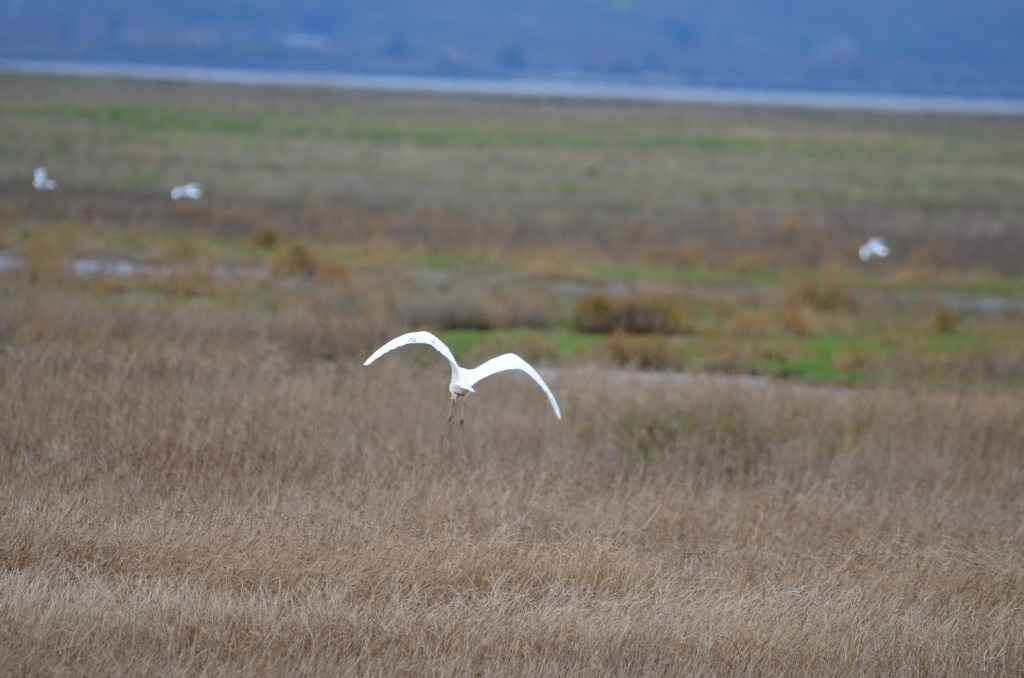
    Great white egret flying into the wind

    Great white egret flying into the wind

    The important stuff

    Today was Mothering Sunday and any chance of finding a café with a spare table was clearly going to be difficult, so we repaired to Chez Col where we both enjoyed a chocolate mini-roll and an orange Kit-Kat each, washed down with a – dare I say it, as I made it – lovely cup of tea!

  • A Different Perspective

    (Sunday 22nd February, 2026)

    Over to Royden Park, Wirral this morning. The temperature was 13°C which felt almost tropical, considering that only a matter of days before it had been a very chilly 4°C. The wind (WSW) was light, only picking up later during the afternoon, so a very welcome change in the weather all round.

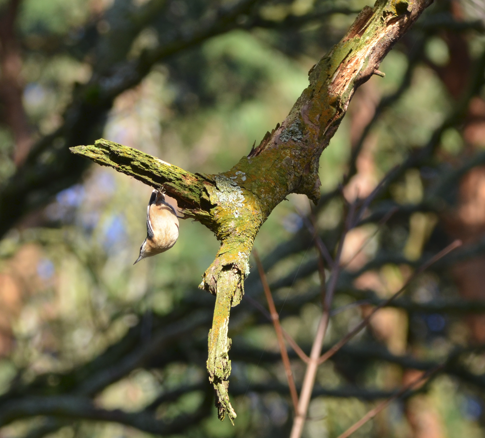
    Gravity-defying Nuthatch

    Gravity-defying Nuthatch

        As we set off from the car park, we saw a gravity-defying Nuthatch on a branch high above us. We watched, fascinated, as the bird demonstrated its acrobatic skill – It didn’t appear to be feeding so much as simply showing off! There was a certain exuberance in this behaviour, so perhaps it was just celebrating the sunshine and the climb in temperature too.   

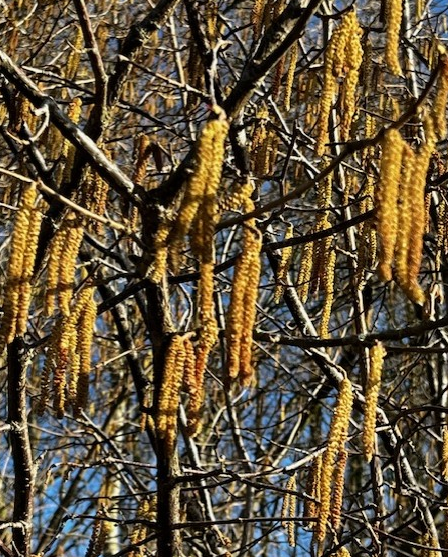
    Hazel catkins

    Hazel catkins

        We followed the path that skirts the edge of the walled garden where we saw several coppiced hazelnut trees with their distinctive yellow catkins.

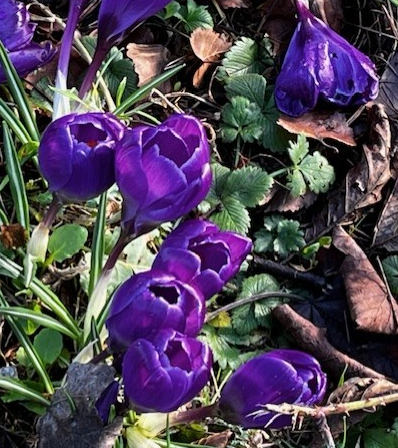
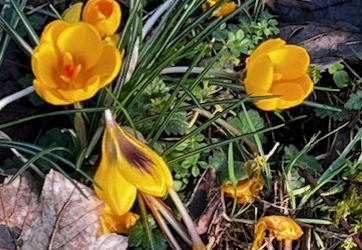
    Crocuses

    There were other signs of early spring too: snowdrops and crocuses dotted the undergrowth here and there, while buds had started appearing on the branches of trees.

        We passed by the miniature railway and moved through the woods towards the Roodee Mere. As we slowly circled the mere, a troop of Long-tailed tits chattered loudly and excitedly as they leap-frogged from tree to tree. They disappeared as magically as they’d arrived, so no time for photographs I’m afraid!

        We heard a woodpecker but were unable to locate it visually. The largest of the three woodpeckers that breed in the United Kingdom, Green woodpeckers are regularly spotted in this area so we listened carefully for the ‘laughing’ sound that they’re known for (the old country name for the bird is ‘yaffle’), but we listened without success. Maybe another time.

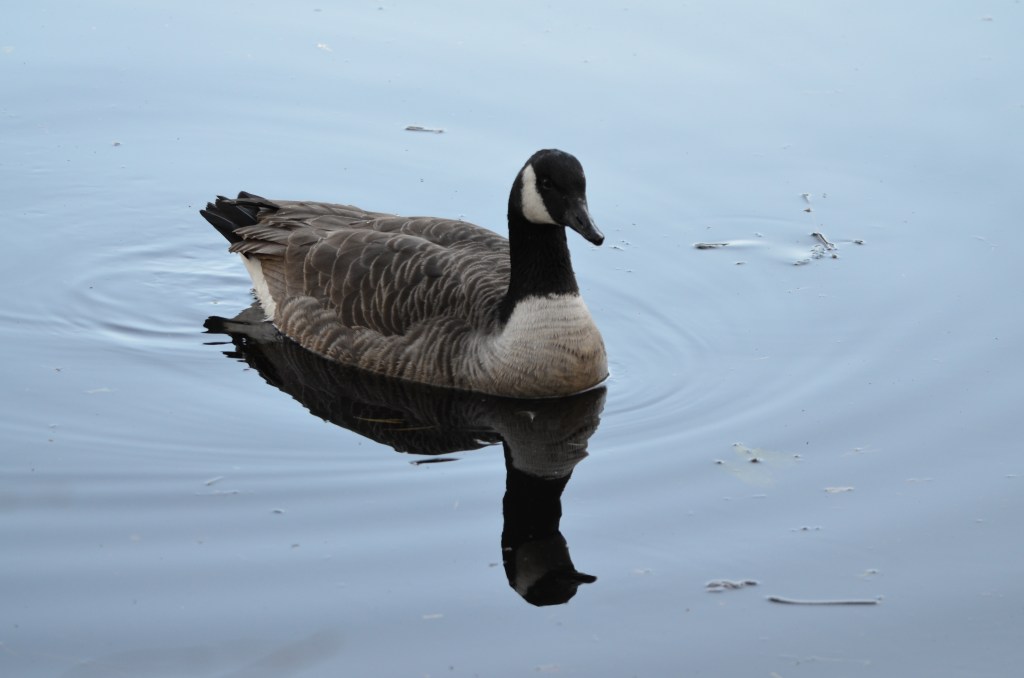
    Canada goose
    Mallards at Roodee Mere
    Coot at Roodee Mere

    From top: Canada goose; Mallards; Coot

        It’s at this time of year that birds begin to act a bit more territorially and we watched as a honking Canada goose ran across the water flapping its wings and chased away a pair of Black-headed gulls. We’re not sure why, really, as there were Mallards, Coots and Moorhens sharing the mere (though the Moorhens were hiding in the undergrowth, we could hear them)and the pair of Canada geese seemed unperturbed by any of those particular birds. The Black-headed gull is one of the smaller gull species, so shouldn’t really represent a threat. Perhaps it was simply because the gulls’ sudden aerial descent simply startled the geese. Shortly afterwards, the gulls returned unchallenged.

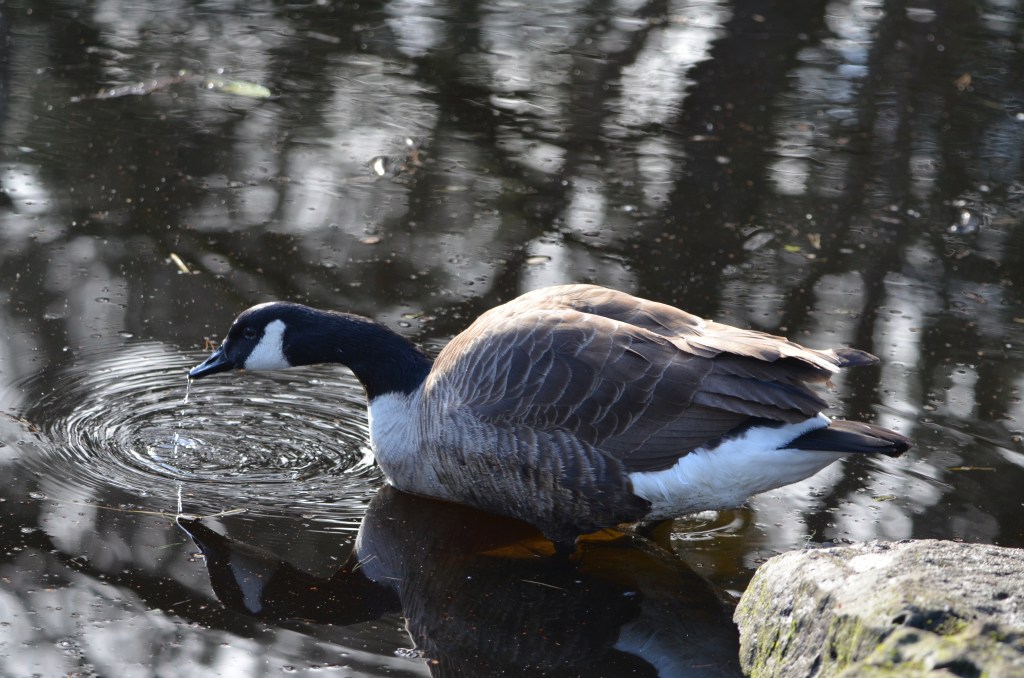
    Thirsty Canada goose

    Canada goose drinking, having worked up a thirst chasing off the Black-headed gulls… (they returned later anyway!)

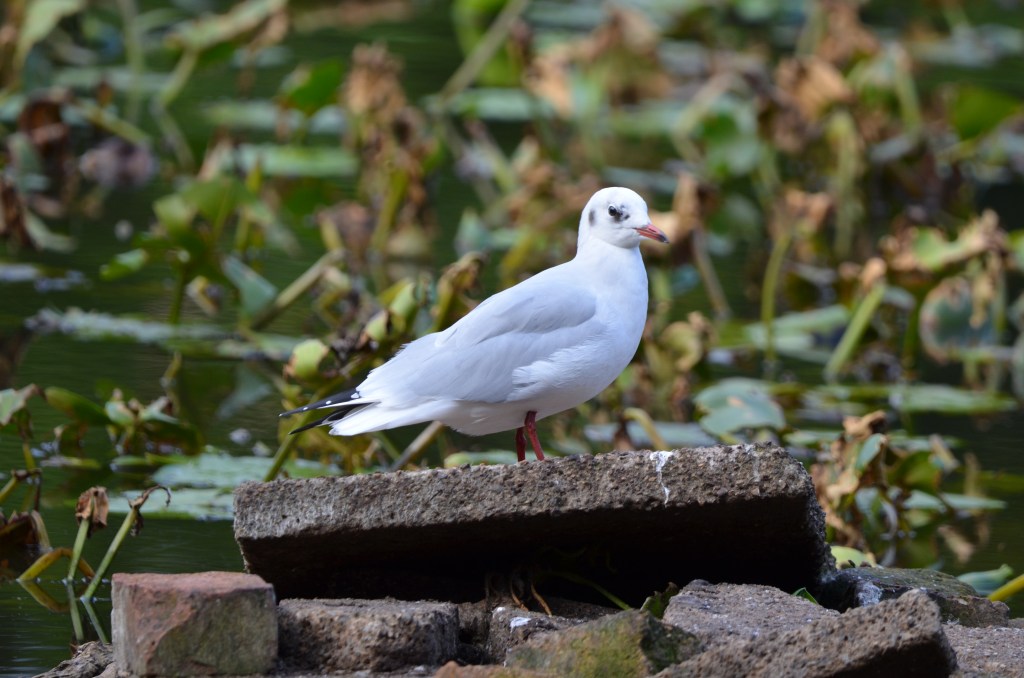
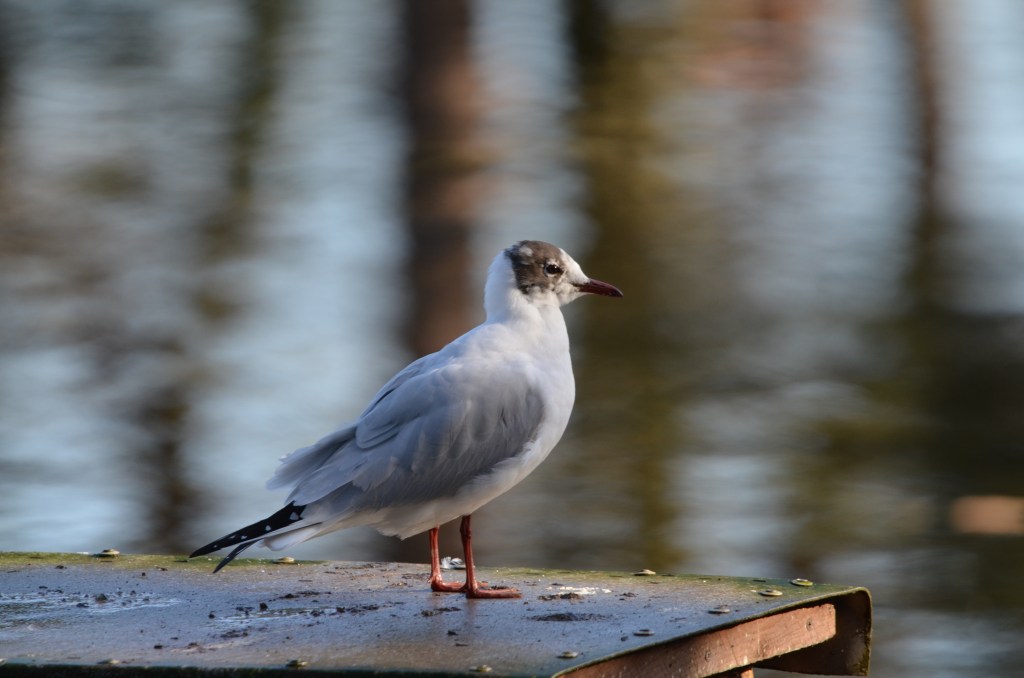
        What was noticeable is that the Black-headed gulls were just beginning to regain their summer breeding plumage: you can see the black colour (really a dark brown) starting to return to the face of the adult bird in the photograph.

    Black-headed gull returns

    Black-headed gull beginning to regain its summer plumage

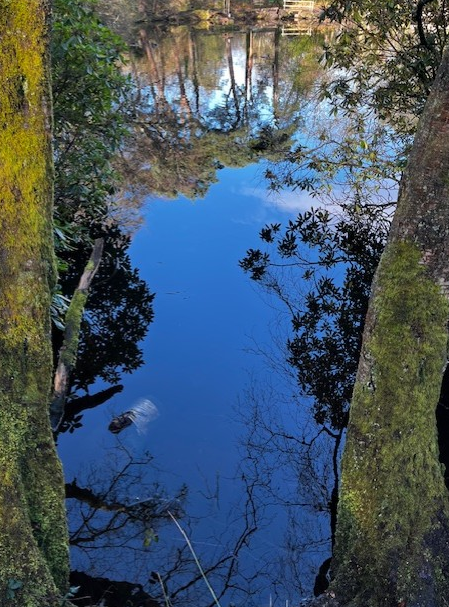
        The Nuthatch that we witnessed looking at the world through a different perspective earlier had clearly made an impression on Stu: while he didn’t photograph Roodee Mere from an upside-down position, the image here might make you think he had! Certainly viewing things differently makes you think again about your surroundings and is particularly effective here, thanks in large part to the undisturbed clearness of the water.  

    Roodee Mere through a different perspective

    Roodee Mere through a different perspective

    The Important Stuff

    After all these physical and artistic exertions, it was only fair that we rewarded ourselves with some suitable refreshments. So, a cappuccino each and a slice of Bakewell tart (Stu) and a slice of Carrot cake (Col) at The Courtyard café. Delicious!

  • At the Old Baths

    (Sunday 25th January, 2026)

    We’d had reports of Short-eared owl sightings at Parkgate, specifically in the area around the Old Baths, just beyond The Boat House pub. So, we parked up and scanned the marsh. Short-eared owls largely hunt during the day, particularly in the late afternoon. Today, unfortunately, was not our day for seeing any. (A Short-eared owl was seen and photographed that day – surprise, surprise, in the late afternoon! Ah, well. Maybe next time…)

        We may not have seen any owls, but we did see a couple of Marsh harriers and a Kestrel (all female): we were certainly in a good viewing spot.

    Marsh harrier at Old Baths

    Marsh harrier (female)

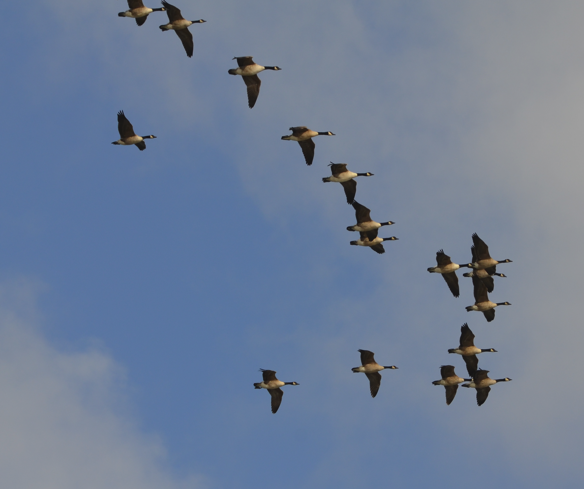
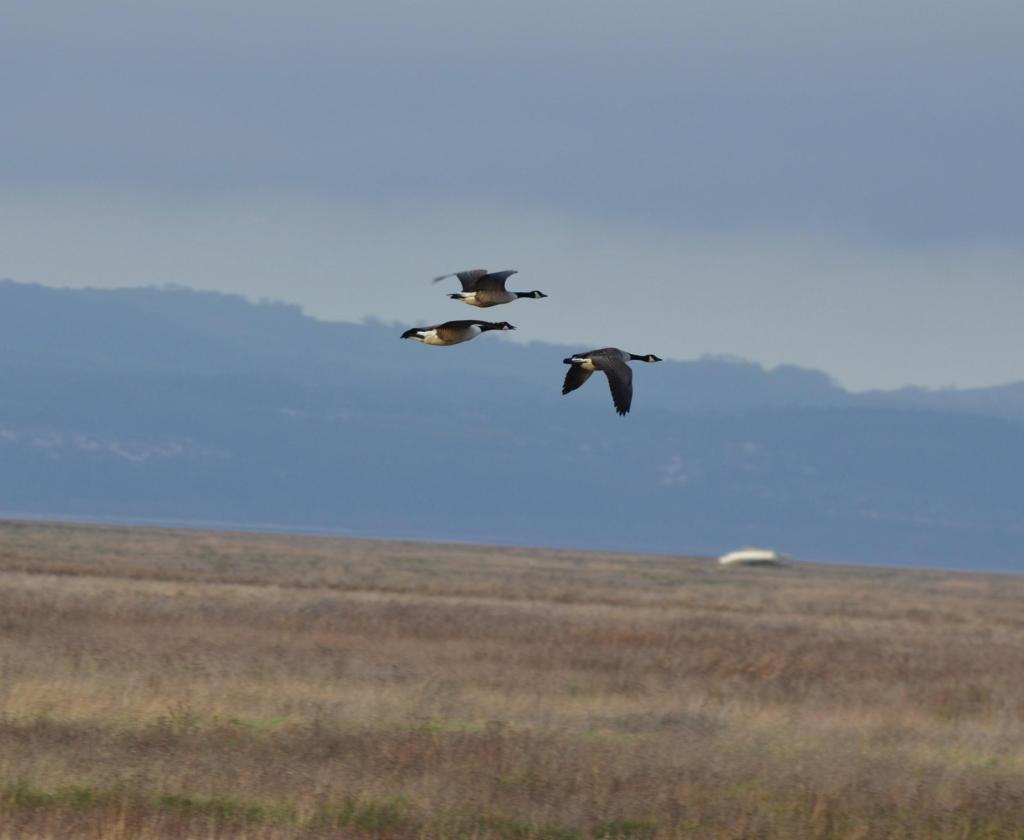
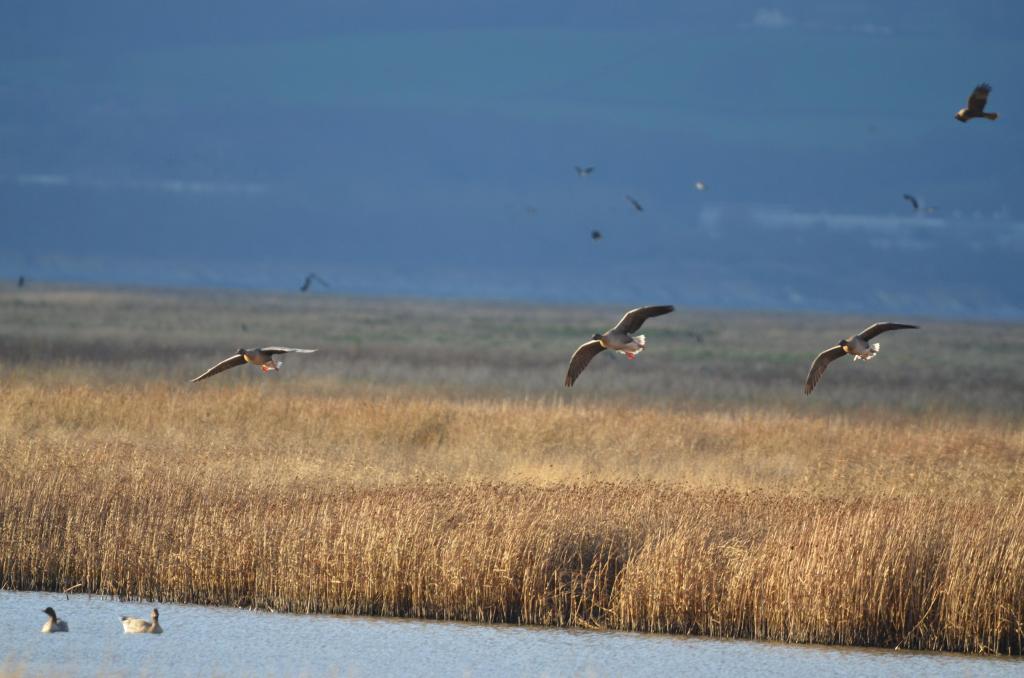
    There were flocks and flocks of geese honking their way across and around the wide estuary sky. Many were Pink-footed geese and we also saw Canada geese and some Brent geese, although we didn’t get any clear photographs of the latter. (It was quite misty in the distance – as you can see from the photographs).

    Canada geese at Old Baths

    Canada geese

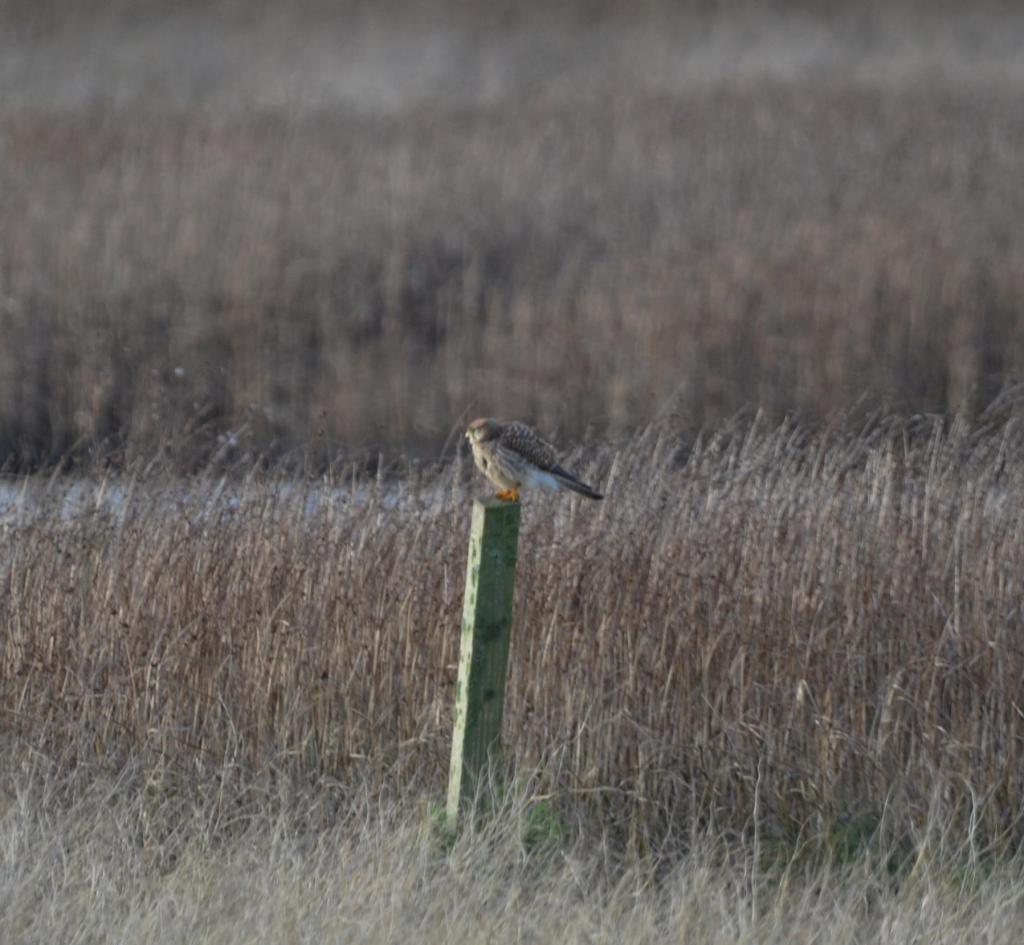
    Kestrel hovering at Old Baths

        Kestrel (female): she’s in the centre, to the right!

    The kestrel hovered characteristically, before dropping down and settling on the post (which I believe was where our elusive Short-eared owl perched later!) This behaviour is well established in kestrels, particularly in the winter months when the birds want to conserve energy – hovering is what Kestrels are known for (‘windhover’ is the archaic name for the bird), but it’s generally a less-preferred hunting strategy than perching. Here, we do tend to see Kestrels hovering more because there are far fewer vantage points on the marshes – apart from the odd post, of course. They’re a joy to watch when they are hovering, head down facing the ground, while they make minor aerodynamic adjustments with their wings and fanned-out tails in order to maintain their position.

    Kestrel on post at Old Baths

    Kestrel using the post as a vantage point

        Kestrels are so keen-sighted that they can see ultraviolet light, which enables them to detect urine trails left by their prey! They’ll hold their position and then suddenly swoop – they’re wonderful to watch, but you can see that these actions do take up reserves of energy.

        While we still commonly see Kestrels over the marshes – more usually hovering – their numbers declined by 37% between 1995 and 2023[1], although it’s difficult to pinpoint a specific reason. Suggestions for the decrease in number include habitat loss through farming practices; secondary poisoning (through eating voles and mice that have consumed rat-poison); and their chicks being subject to predation from corvids and other birds of prey, such as Goshawks.

        It probably doesn’t help that Kestrels don’t build nests, preferring to take over those abandoned by other birds, or to use natural cavities such as tree hollows or cliff ledges – they’re not fussy, just so long as they don’t have to do any construction work themselves!  The Kestrel population in the UK is being monitored jointly by BTO/JNCC/RSPB[2] as well as other bodies such as the Hawk Conservancy Trust.

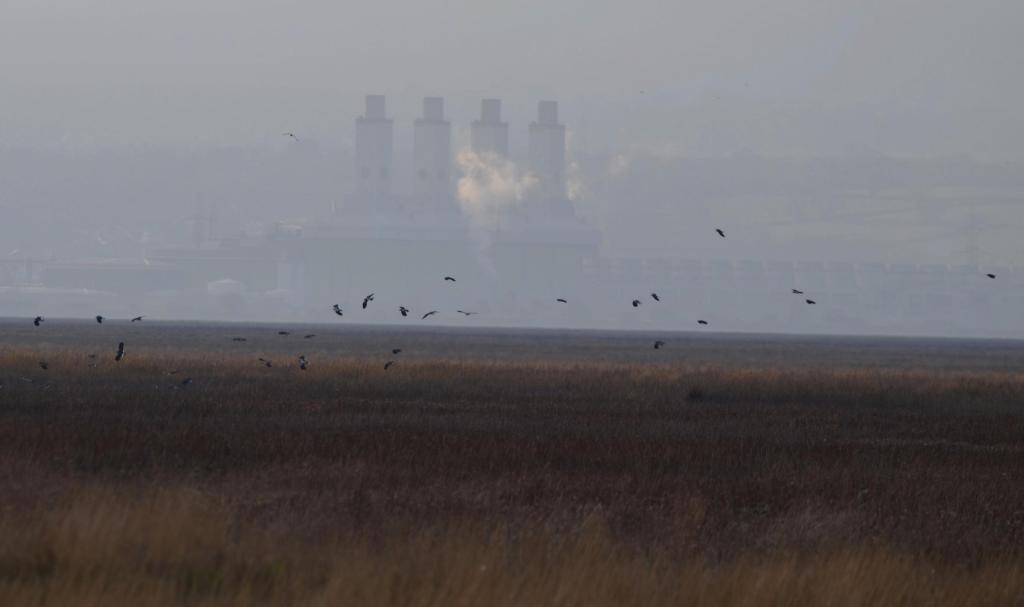
    Ghostly power station

    Ghostly power station in the mist

        Eventually, we moved to the Donkey Stand at the opposite end of The Parade, where a third female Marsh harrier appeared flying low over the marsh. (It may possibly have been one of the two that we’d seen earlier at the opposite at the Old Baths). We also saw several Mallards and some Teal on the nearby stretch of water, but no photographs I’m afraid.

    Marsh harrier at Donkey Stand

    Marsh harrier (top right) near Donkey Stand

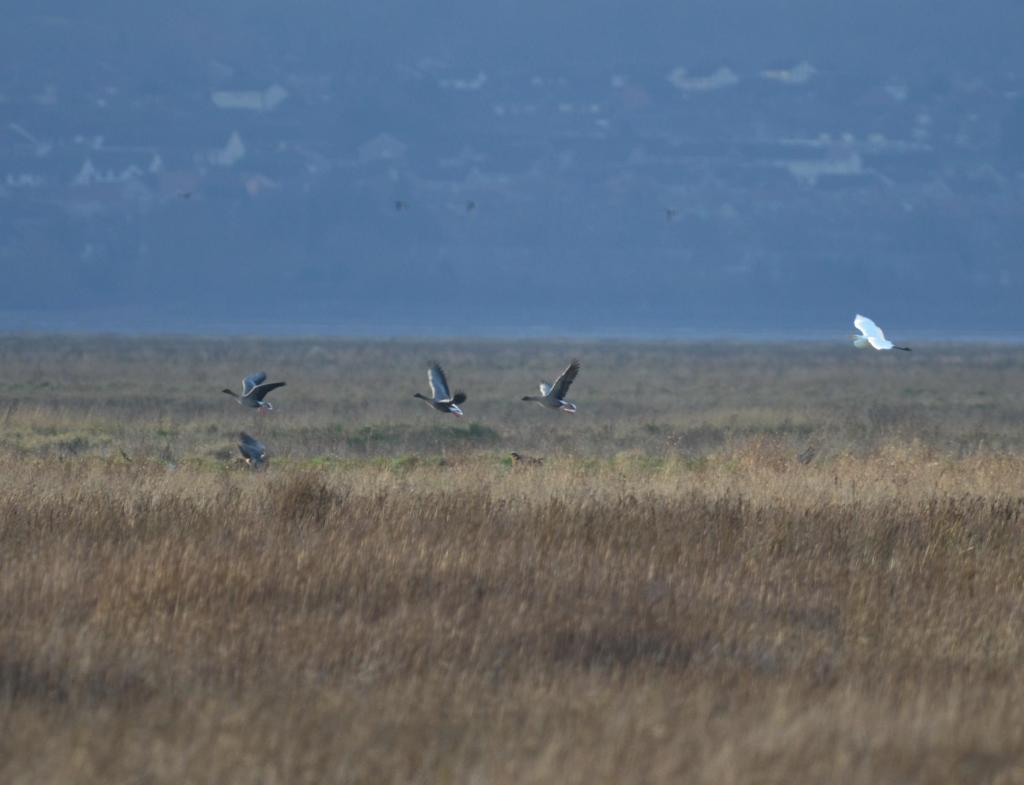
        Although I remember seeing a couple of Little egrets, I have no recollection of seeing this Great white egret below disturbing several Pink-footed geese, which Stu photographed. I must have been concentrating on something else! Talking of which…

    Great white egret and geese

    Great white egret and Pink-footed geese

    The important stuff

    Over to Ness Gardens for refreshments. A cappuccino and a generous slice of Bakewell tart each. Very nice, and well-deserved!


    [1] Information from Bird Trends Explorer, BTO data.bto.org/trends_explorer/?species=Kestrel

    [2] British Trust for Ornithology / Joint Nature Conservation Committee / Royal Society for the Protection of Birds

  • Old Year, New Year

    (Sunday 4th January, 2026)

        Our journey to Burton Marsh this morning was somewhat curtailed by a huge smothering of snow that blew in from the mouth of the Dee estuary. It was a crisp 2°C when we set off, with a sharp north-westerly drifting in, and we saw flocks of Canada geese and Pink-footed geese out on the marsh. Nearby, we detected several Pheasant hens moving stealthily through the undergrowth and, as we scanned the ground with binoculars and cameras, we sensed the vast sky around us beginning to darken. Seconds later we were retreating towards the car, thoroughly covered in snow! At least it wasn’t snowing inside Ness Gardens café though!

    Pheasant female

    Pheasant (female), Burton Marsh, 4th January 2026

        As a consequence of our brief outing, there wasn’t a great deal to report. This weekend doesn’t look a great deal better: the birds are out, but not the birders! However, we’ve been inspired to post this selection of photographs from 2025, after receiving an e-mail notification from fellow blogger Bob Ramsak who posted his favourite bird photographs of 2025 https://bobramsak.com/my-25-best-bird-photos-of-2025/ Please take a look at Bob’s site – you won’t be disappointed.

        Anyway, back to The Dee and Thereabouts and we hope you enjoy this week’s post, which is really a selection of photographs of our 2025 discoveries. We only started the blog in June but even in this short space of time we’ve encountered quite a variety of fauna and flora (and fungi) on our travels, as well as the variety in terrain that our area holds. We’ll continue to try and entertain you with our ramblings (in both senses of the word) throughout 2026!

    Common mallow

    Common mallow, Burton Marsh, 22nd June

    Meadowsweet

    Meadowsweet, Burton Mere Wetlands, 13th July 2025

    Dryad's saddle

    Dryad’s saddle, Burton Mere Wetlands, 13th July 2025

    Great white egret

    Great white egret, Burton Mere Wetlands, 3rd August 2025

    Water lily

    Water lily, Burton Mere Wetlands, 3rd August 2025

    Small white butterfly female

    Small white butterfly (female), Parkgate, 10th August 2025

    Marsh harrier female

    Marsh harrier (female), Parkgate, 10th August 2025

    Black-tailed godwits and Avocets in flight

    Avocets and Bar-tailed godwits spooked by Marsh harrier, Parkgate, 10th August 2025. (Bar-tailed godwits in summer ‘breeding’ coats).

    Blackcap in hand

    Blackcap, Ness Gardens, 13th August 2025

    Greenfinch being held

    Greenfinch, Ness Gardens, 13th August 2025

    Dipper facing

    White-throated dipper, Loggerheads Country Park, 24th August 2025

    Wren facing

    Wren, Loggerheads Country Park, 24th August 2025. You can see how tiny it is in comparison to the mushrooms and hazel leaves nearby.

    Green-veined white

    Green-veined white butterfly (female), Loggerheads, 24th August 2025

    Grey heron, Royden Park, 31st August 2025

    Shelducks and Redshank

    Shelducks and Redshank, Thurstaston Beach, 14th September 2025

    Curlews at Thurstaston

    Curlews, Thurstaston Beach, 14th September 2025

    Grey wagtail (female)

    Grey wagtail, Loggerheads Country Park, 5th October 2025

    Fairy inkcaps

    Fairy inkcaps, Loggerheads Country Park, 5th October 2025

    Dipper mid-stream

    White-throated dipper, Loggerheads Country Park, 5th October 2025

    Moored houseboat at Chirk

    Narrowboat at Chirk Bank, 12th October 2025

    Chirk Aqueduct and Viaduct

    Aqueduct and Viaduct, Chirk, 12th October 2025

    Velvet shank

    Velvet shank, Loggerheads Country Park, 16th November 2025

    Female Kestrel facing into the wind

    Kestrel (female), facing into the wind, Parkgate, 2nd November 2025

    Black-headed gull winter plumage

    Black-headed gull (winter plumage), Royden Park, 30th November 2025

    Goldcrest in conifer

    Goldcrest, Loggerheads Country Park, 28th December 2025

  • At Heswall Beach

    (Sunday 21st December, 2025)

        This morning, we went across to Heswall Beach on the Wirral side of the Dee Estuary. The car park at the bottom of Riverbank Road was deserted when we arrived, which may have been down to the weather: although it was dry and the temperature was a reasonable 8°C, there was an easterly wind making its presence known. And this wind was sufficiently icy to keep people indoors, apart from one or two brave souls.

    Black-headed gull on waymarker

        Black-headed gull on waymarker

    Usurping Carrion crow

    …later dethroned by a usurping Carrion crow

    Anyway, there was a single Black-headed gull (in winter plumage) which seemed impervious to the weather and spent a good deal of time perched on top of the red waymarker on the beach. (Well, I’m referring to the wooden structure that resembles a lampshade, which I’m guessing is some sort of waymarker or indicator – and on which the gull seemed quite content until it was later dislodged by a pugnacious Carrion crow).

    Little egrets mooching

       Little egrets

    There were some Little egrets mooching about along the channel several metres out and several Carrion crows foraged individually here and there. At one point, a Marsh harrier emerged briefly from the thin mist and quickly disappeared inland.

    Pink-footed geese

    Pink-footed geese

    Pink-footed geese flying

    We saw several Pink-footed geese nearby. These were resting on the ground about 30 metres out but every now and then they’d take off – presumably to their roosting place. Pink-footed geese are used to the cold conditions of Iceland and Greenland but spend their winters in the United Kingdom. They are known to be wary birds so it’s probable that we inadvertently disturbed them with our presence. In fact, we saw quite a few geese flocks flying across the estuary although most were too far away for us to establish which species they were. As we’ve mentioned elsewhere in the blog, the area is vast, and today this vastness seemed to be emphasised by the general quietness.

    Heswall Beach

        Heswall Beachas you can see, the wildlife was having a duvet day

    After an hour or so, we decided to call it a day: the wildlife just didn’t seem to want to drag themselves out today, and we couldn’t blame them really. So we headed back towards Chester Road and detoured via Boathouse Lane to Parkgate. Here, we again saw geese flocking over the Dee Estuary – well, I did, while Stu drove. It was a nice little diversion before we eventually arrived at the Ness Gardens café. And it’s always a joy driving through these roads and lanes and seeing the old sandstone buildings which are characteristic of the area.

    The important stuff

    As we headed towards the Ness Gardens café, which is officially The Botanic Kitchen, we were serenaded by a Robin that was singing loudly from a small tree at the side of the path. (Blimey, they make some noise considering their size). Once we were inside though, and this will hardly surprise our regular readers, we each consumed a cup of cappuccino and a slice of Bakewell. Lovely!