(Sunday 22nd February, 2026)
Over to Royden Park, Wirral this morning. The temperature was 13°C which felt almost tropical, considering that only a matter of days before it had been a very chilly 4°C. The wind (WSW) was light, only picking up later during the afternoon, so a very welcome change in the weather all round.
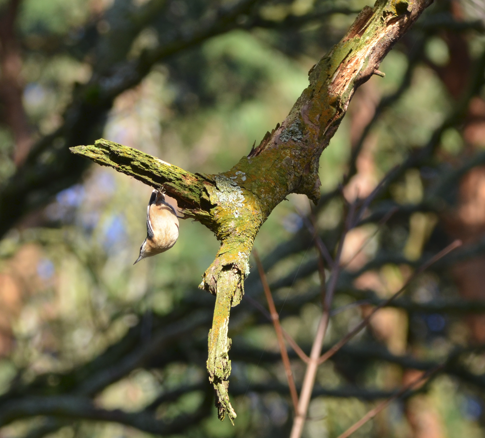
Gravity-defying Nuthatch
As we set off from the car park, we saw a gravity-defying Nuthatch on a branch high above us. We watched, fascinated, as the bird demonstrated its acrobatic skill – It didn’t appear to be feeding so much as simply showing off! There was a certain exuberance in this behaviour, so perhaps it was just celebrating the sunshine and the climb in temperature too.
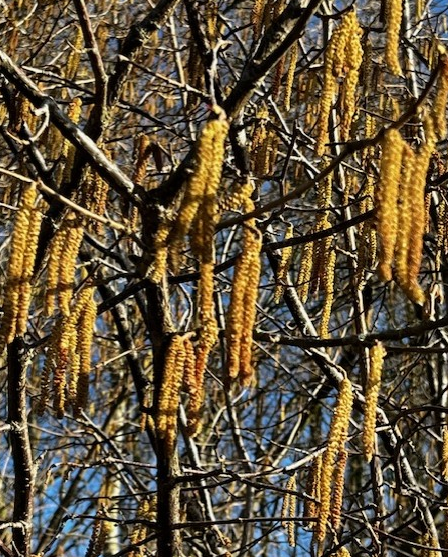
Hazel catkins
We followed the path that skirts the edge of the walled garden where we saw several coppiced hazelnut trees with their distinctive yellow catkins.
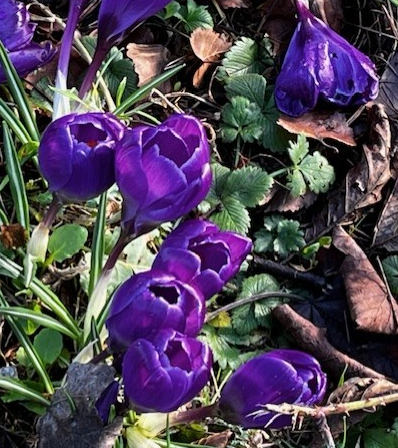
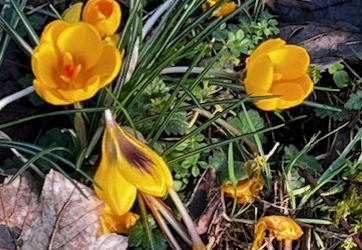
Crocuses
There were other signs of early spring too: snowdrops and crocuses dotted the undergrowth here and there, while buds had started appearing on the branches of trees.
We passed by the miniature railway and moved through the woods towards the Roodee Mere. As we slowly circled the mere, a troop of Long-tailed tits chattered loudly and excitedly as they leap-frogged from tree to tree. They disappeared as magically as they’d arrived, so no time for photographs I’m afraid!
We heard a woodpecker but were unable to locate it visually. The largest of the three woodpeckers that breed in the United Kingdom, Green woodpeckers are regularly spotted in this area so we listened carefully for the ‘laughing’ sound that they’re known for (the old country name for the bird is ‘yaffle’), but we listened without success. Maybe another time.
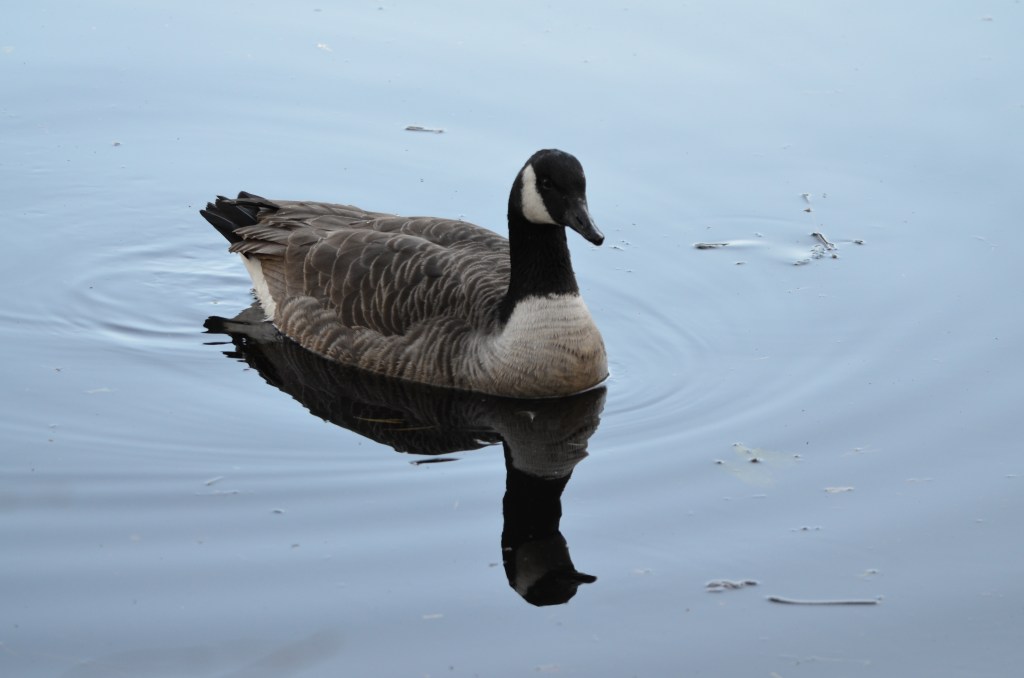
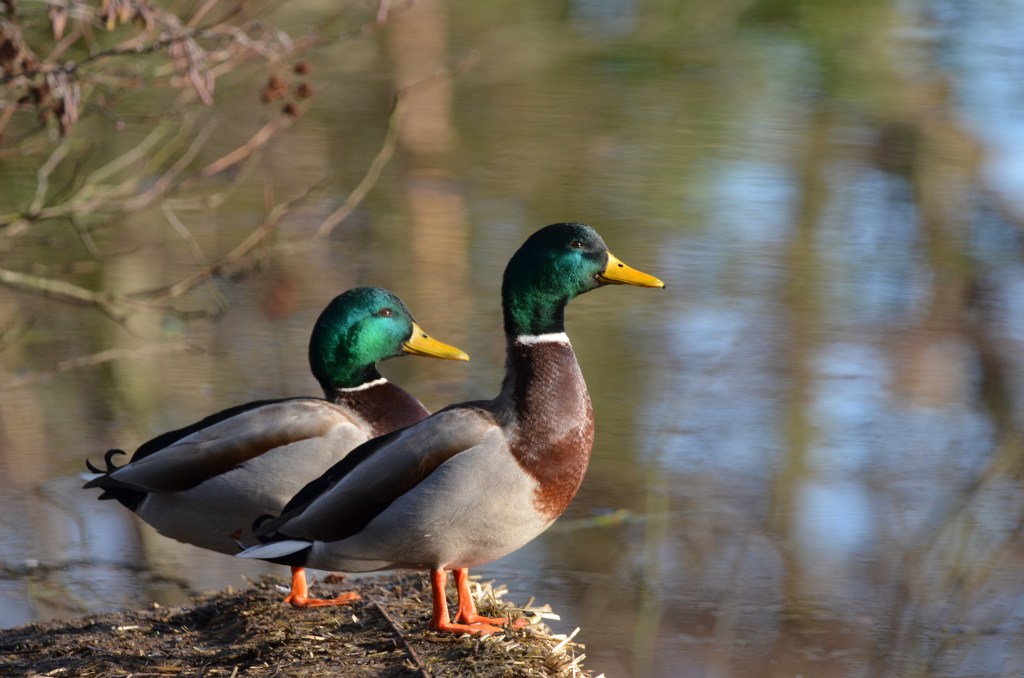
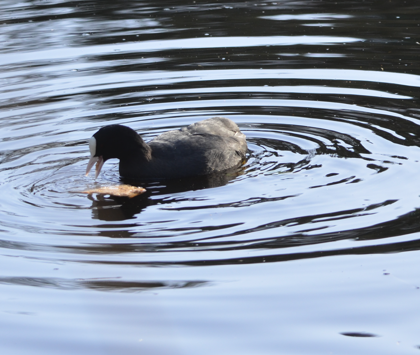
From top: Canada goose; Mallards; Coot
It’s at this time of year that birds begin to act a bit more territorially and we watched as a honking Canada goose ran across the water flapping its wings and chased away a pair of Black-headed gulls. We’re not sure why, really, as there were Mallards, Coots and Moorhens sharing the mere (though the Moorhens were hiding in the undergrowth, we could hear them)and the pair of Canada geese seemed unperturbed by any of those particular birds. The Black-headed gull is one of the smaller gull species, so shouldn’t really represent a threat. Perhaps it was simply because the gulls’ sudden aerial descent simply startled the geese. Shortly afterwards, the gulls returned unchallenged.
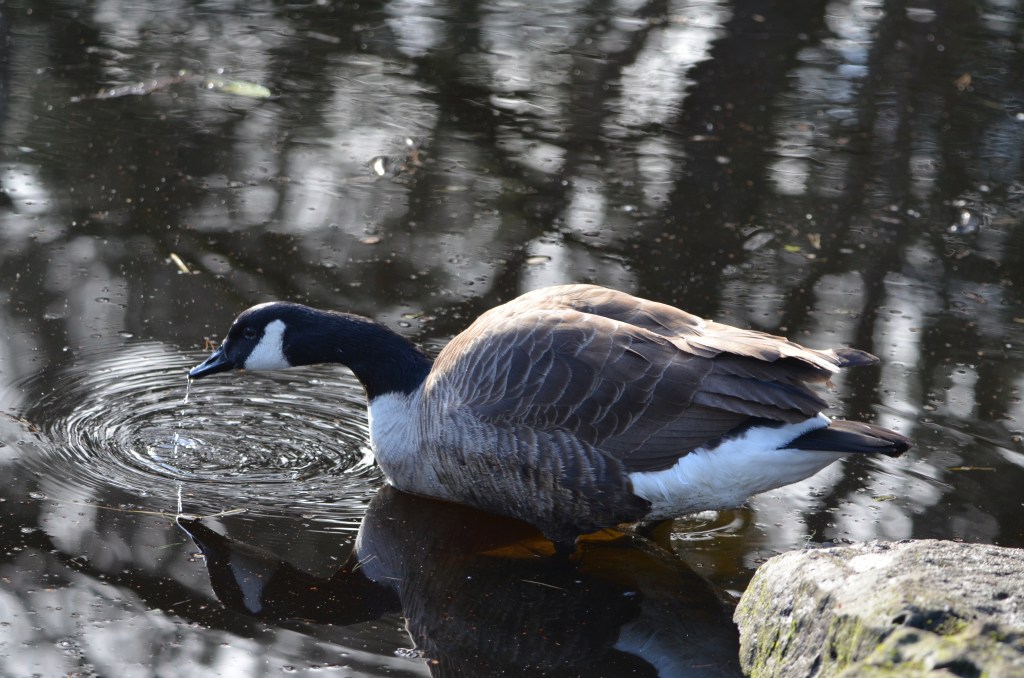
Canada goose drinking, having worked up a thirst chasing off the Black-headed gulls… (they returned later anyway!)
What was noticeable is that the Black-headed gulls were just beginning to regain their summer breeding plumage: you can see the black colour (really a dark brown) starting to return to the face of the adult bird in the photograph.
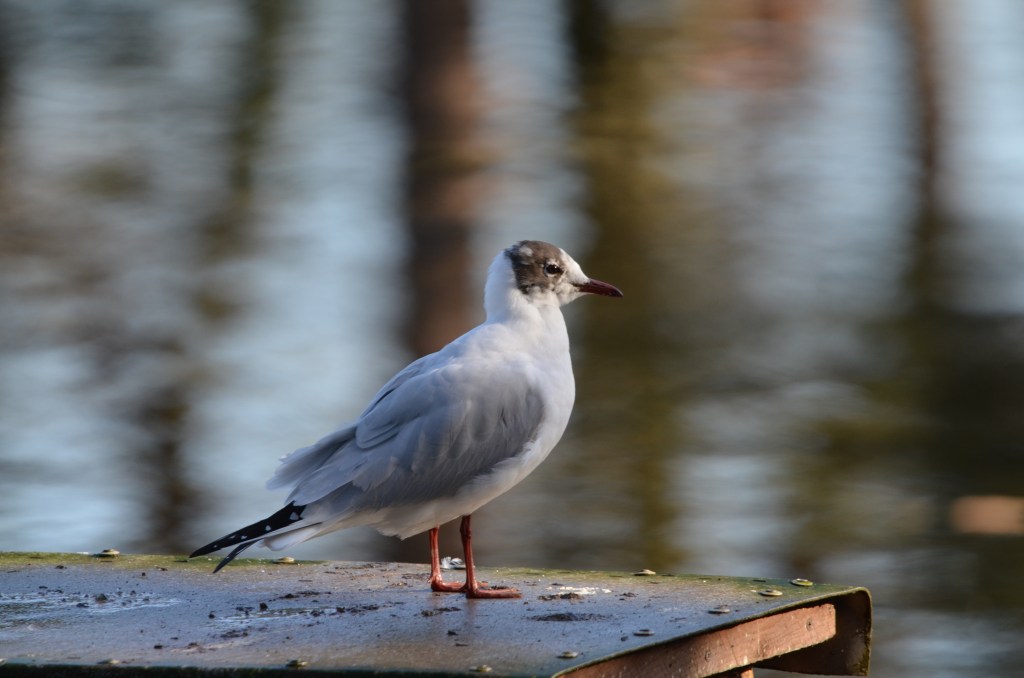
Black-headed gull beginning to regain its summer plumage
The Nuthatch that we witnessed looking at the world through a different perspective earlier had clearly made an impression on Stu: while he didn’t photograph Roodee Mere from an upside-down position, the image here might make you think he had! Certainly viewing things differently makes you think again about your surroundings and is particularly effective here, thanks in large part to the undisturbed clearness of the water.
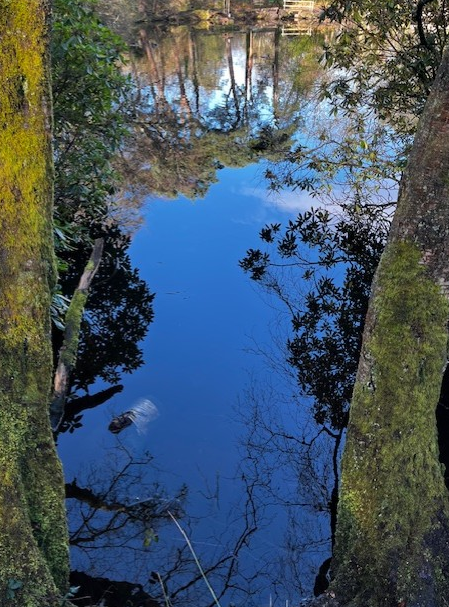
Roodee Mere through a different perspective
The Important Stuff
After all these physical and artistic exertions, it was only fair that we rewarded ourselves with some suitable refreshments. So, a cappuccino each and a slice of Bakewell tart (Stu) and a slice of Carrot cake (Col) at The Courtyard café. Delicious!

Leave a Reply