(Sunday 30th November, 2025)
We were at Royden Park today – more specifically Roodee Mere near the miniature railway. It was quite a cool 6°C, although the very light wind (WSW) and the occasional burst of sunlight belied the temperature. Mind you, it was much warmer when we were last here in August: the Grey heron was having a leisurely feast at the time, if you remember? Today we saw the heron again: first very briefly before it slinked away through the undergrowth; and a little later we caught a glimpse of it flying above the trees. We suspected it was on its way to Frankby Mere, though we couldn’t be sure.

A very still Roodee Mere…
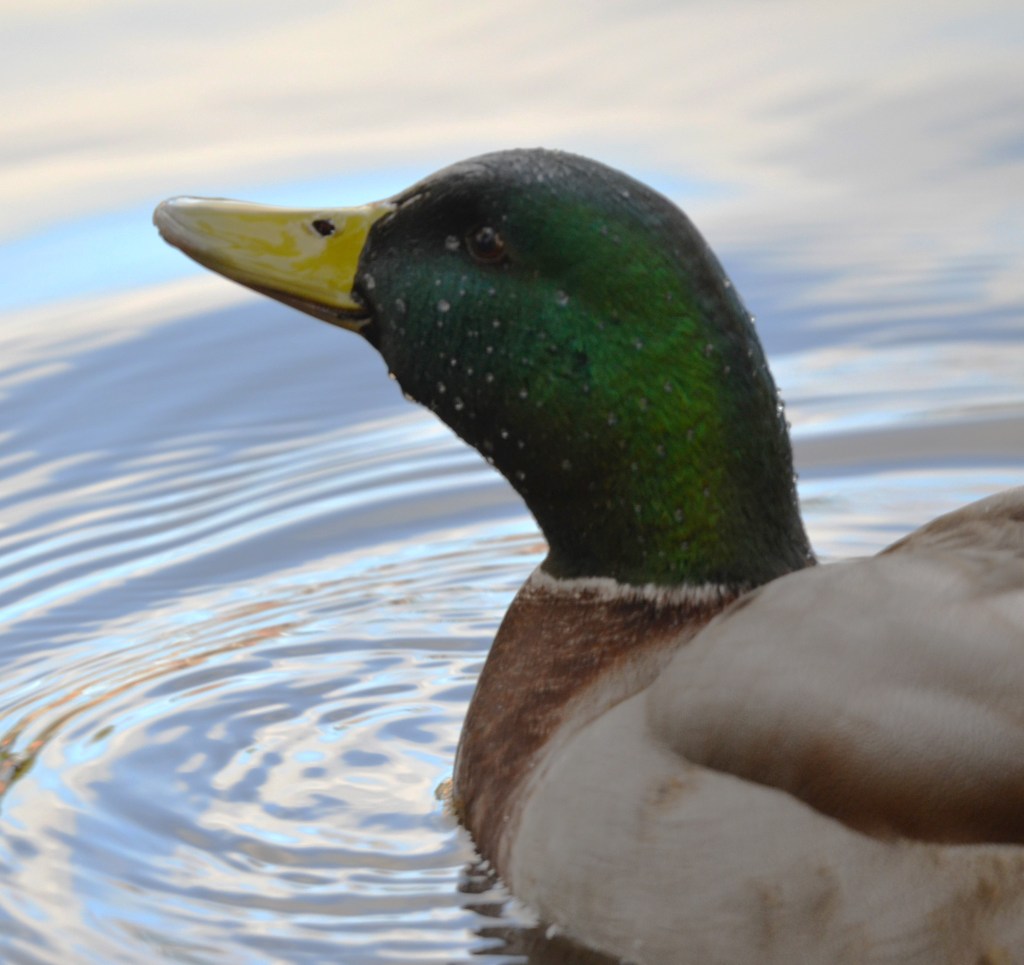
While the Grey heron shied away today, there were plenty of Moorhens and Mallards to be seen. Stu got a couple of shots of one of the Mallards just after he’d dipped his head beneath the water (the male Mallard that is – not Stu) and you can see the beads of water on him. The majority of these Mallards were males – I counted only two females.
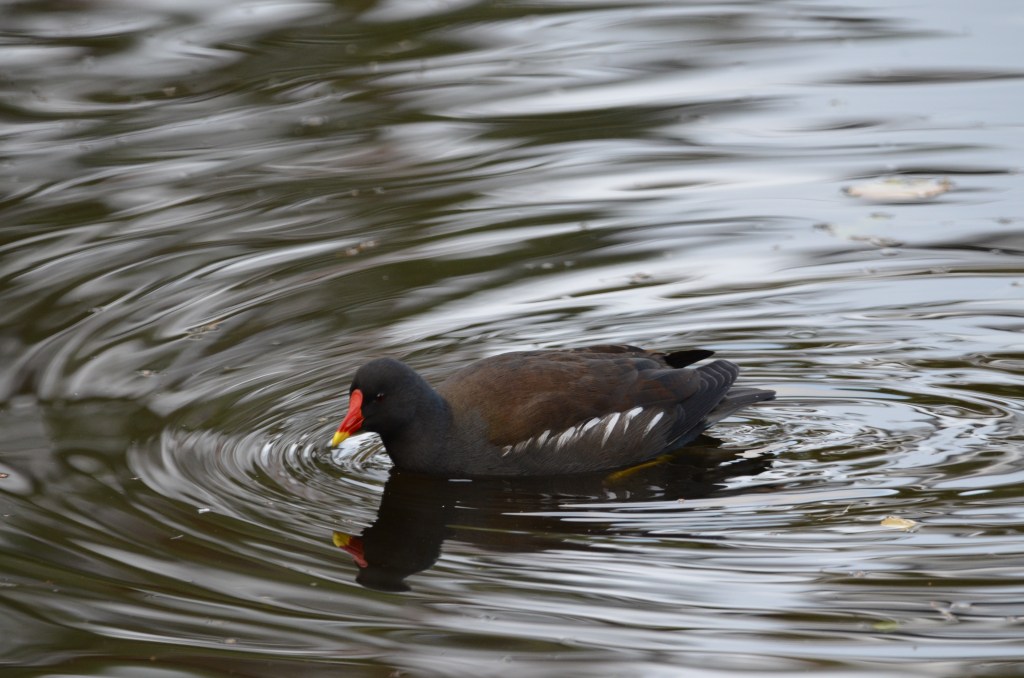
…until a Moorhen created some ripples
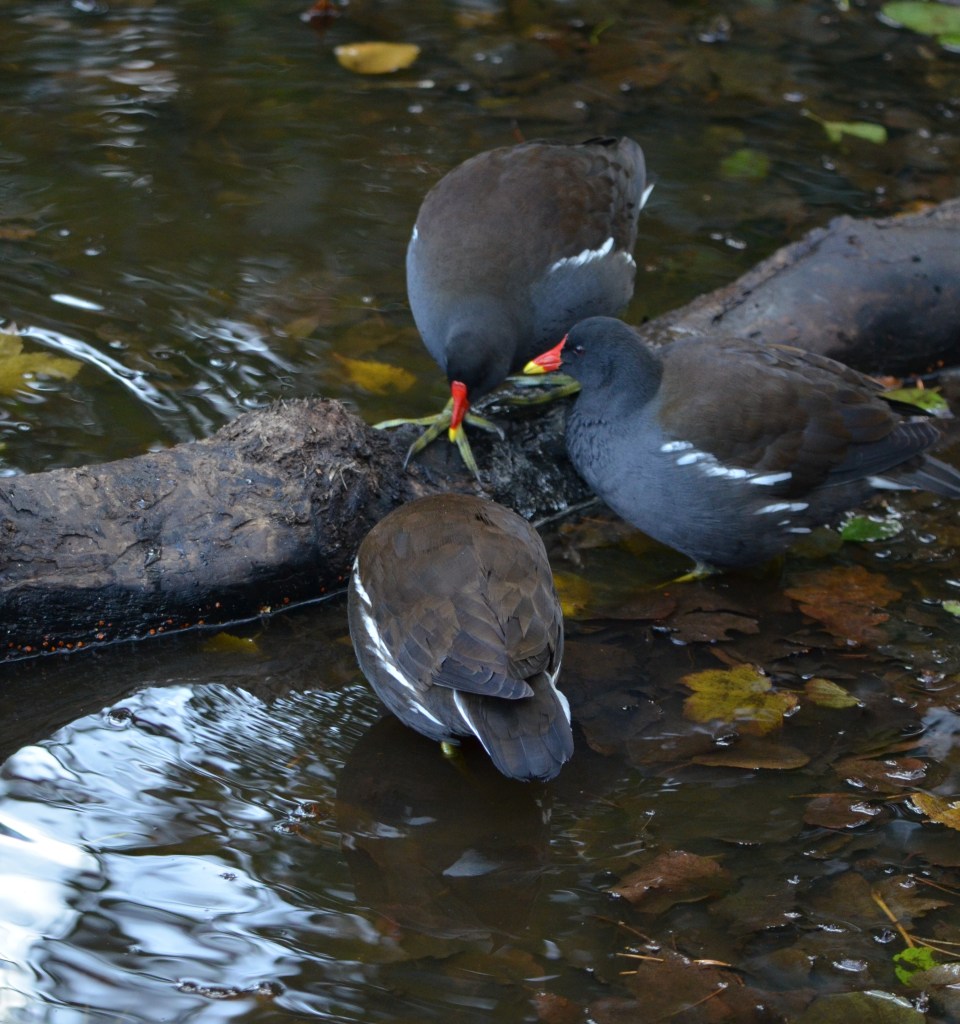
“Just like falling off a log”, said the Moorhen
Now, something I only recently learnt about is what is known as an ‘eclipse plumage’. This occurs in Mallards and other ducks at the end of the breeding season, when the males moult their feathers and replace them with less colourful brownish feathers – similar to the females’ in fact. From this point until their second moult, several weeks later, the males are unable to fly as they also moult their flight feathers at the same time as discarding their ‘breeding’ feathers. Consequently, they are vulnerable to predators and the male Mallards often disappear to separate areas away from the females and their nests. Clearly, this bunch of male Mallards had all recovered their plumage after their second moult, which probably accounted for the greater number of males than females. And they were once again able to fly. There are several interesting resources on the subject of eclipse plumage and the article on the Scottish Wildlife Trust blog is a good place to start: https://scottishwildlifetrust.org.uk/

Mallard just after he immersed his head in the water
Meanwhile, a solitary Black-headed gull appeared at the mere and, despite being one of the smaller gulls, they are very loud: there were several noisy Magpies in the treetops making their distinctive rattling sound but they were all drowned out by this small gull! To be clear, the Black-headed gull was in its winter plumage, which is when they lose their black heads, retaining only a dark spot behind each eye. Just to add to the confusion, the dark head of the summer plumage is more a chocolate brown than black, although it certainly looks black from a distance. The beak and legs on the Black-headed gull are red, as you can see.
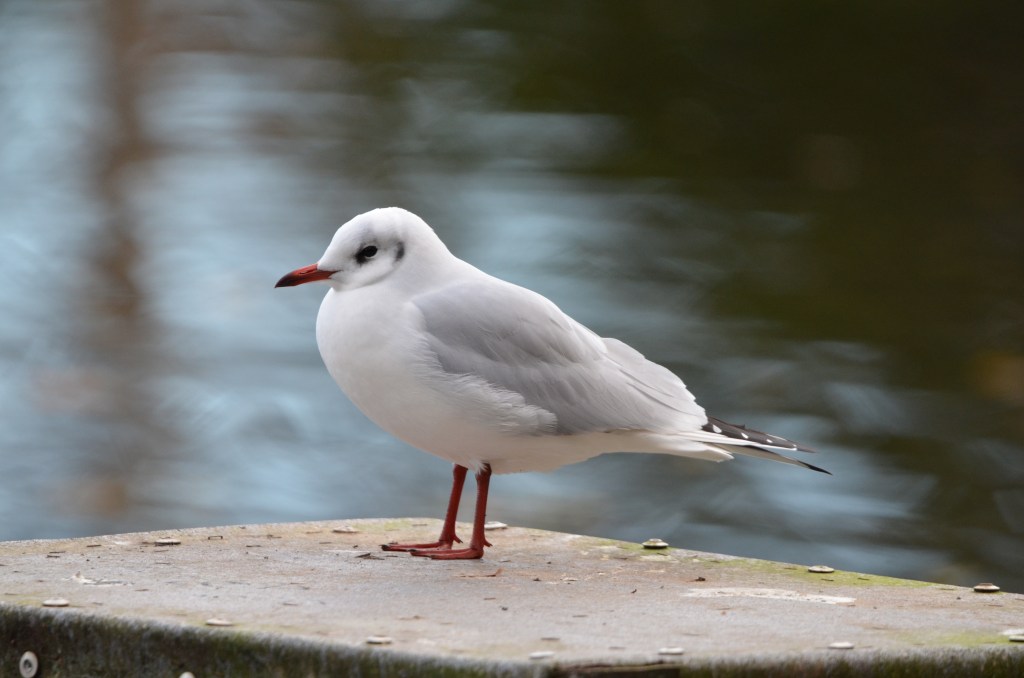
Black-headed gull in winter plumage
There are a few birds that have a summer plumage that’s distinct from their winter wardrobe – Knots and the Black-tailed Godwits which lose their lovely, rusty red colouring, come to mind – and it’s generally thought that the more subdued winter colours help the birds blend into their environment and offer protection from predators. This change in plumage doesn’t apply to all birds though. Adult Robins of both sexes, for example, retain their red breast year-round: it’s thought to be a territorial warning to other birds.
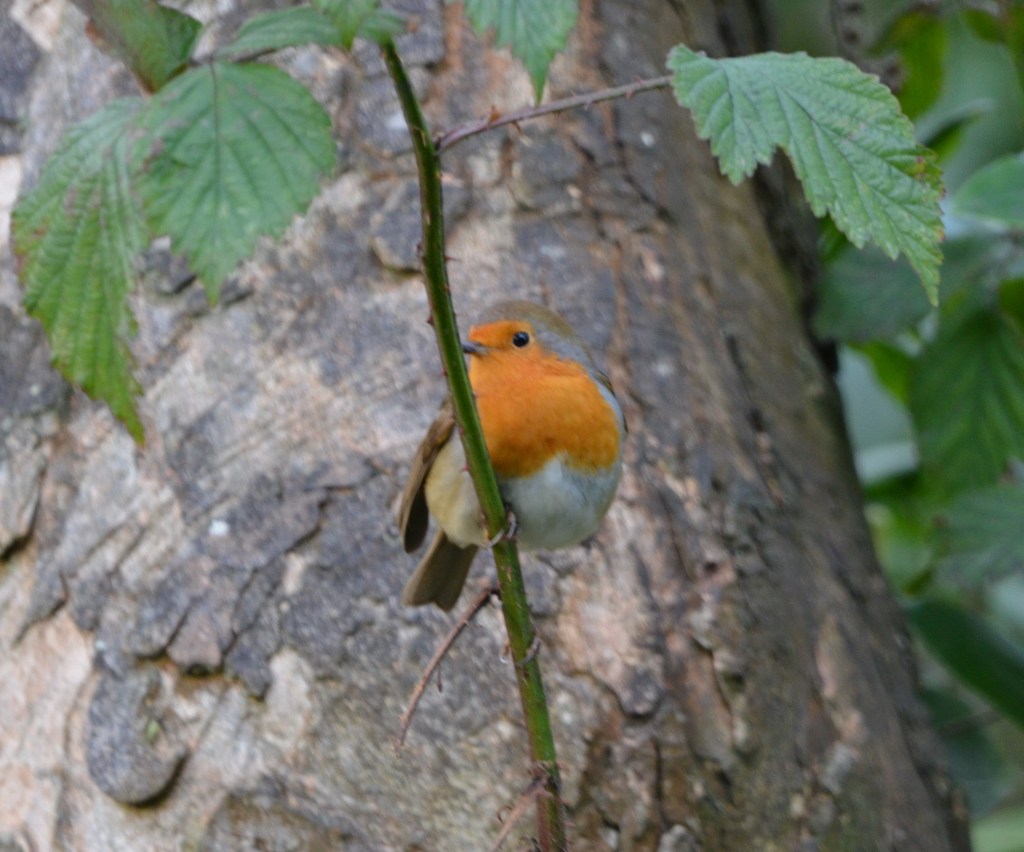
This Robin played hide-and-seek with the photographer
The important stuff
We enjoyed our usual cappuccinos and a good-sized Bakewell slice each at The Courtyard Café. Ah! Bliss!

Leave a comment