(Sunday 15th June, 2025)
Over to Loggerheads this morning. We watched from the benches at the side of the River Alyn until, eventually, our hoped-for Grey wagtail flew in low and landed on the small spit of sandy shore on the opposite bank. There was only the one wagtail, and we thought its mate was probably nesting in the cliff fissures nearby, where they’ve dwelt in previous years. We’ve spotted them annually for a few years now, though it may be the progeny that has returned, rather than the parents.
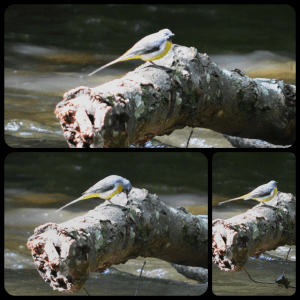
This Grey wagtail then flew downriver and landed obligingly on a jutting rock directly in front of us, which afforded Stu the opportunity of taking some photographs. I even wondered whether the wagtail, which seemed to be preening its feathers for quite a while, was taking its time deliberately for his benefit!
We’ve never encountered White-throated dippers – more commonly, just Dippers – along this stretch of the river, although we just missed out some years ago. What I mean by this is a couple informed us that they had just been watching a Dipper from the wooden bridge at the entrance. Stu and I headed over there quickly, but the Dipper had gone.
Anyway, my point is that Dippers like fast-flowing rivers, as do Grey wagtails when they’re breeding. Sharing the same habitat, some Grey wagtails are known to have fed Dipper chicks. This ‘interspecific feeding’, which generally refers to when adults feed the young of other species, occurs more often than you might think and various theories have been put forward as to why this occurs. I find the thinking that male adults will feed a fledgling that begs the most convincing, but there are plenty of further theories too. Interspecific feeding might make an interesting subject in a future edition!

Leave a Reply