Category: nature

  • Parkgate Again

    (Thursday 6th August, 2026)

    Today, I was over in Parkgate on the Wirral Peninsula – for the second time this week. On this occasion I was accompanied by my mother, my brother, Michael, and my niece, Sophie. Regular readers will know that our chief cameraman is Stu but he had to go to work today and help keep the British economy ticking over, so all photographs were taken by Sophie today. Thanks very much Sophie!
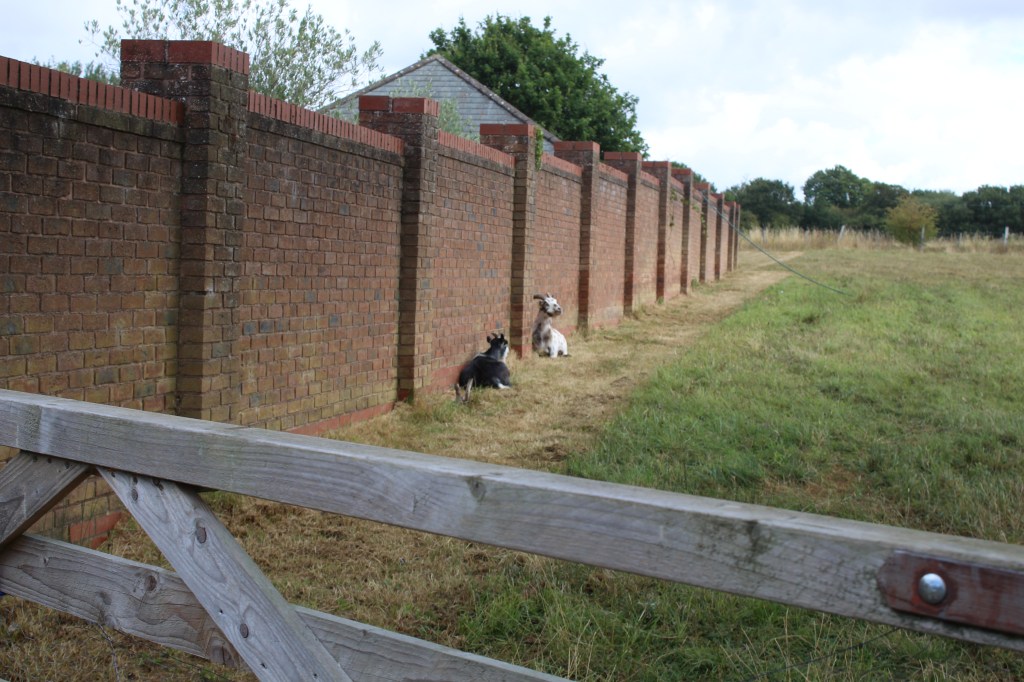
    Goats at Parkgate

    Goats near the Old Baths carpark

        Parkgate village lies on the English side of the Dee Estuary and is a great place to visit for birdwatching. The expansive salt marsh is 100 square kilometres and all sorts of bird species can be found here: it’s home to waders, wildfowl, herons and egrets, birds of prey, warblers…the list goes on. During today’s visit, for example, we saw several people excitedly watching a group of Spoonbills out on one of the flashes (shallow ponds). There was also a Marsh harrier patrolling low over the marsh and, later, a Kestrel hovered, facing into the wind, eyeing the ground below.  
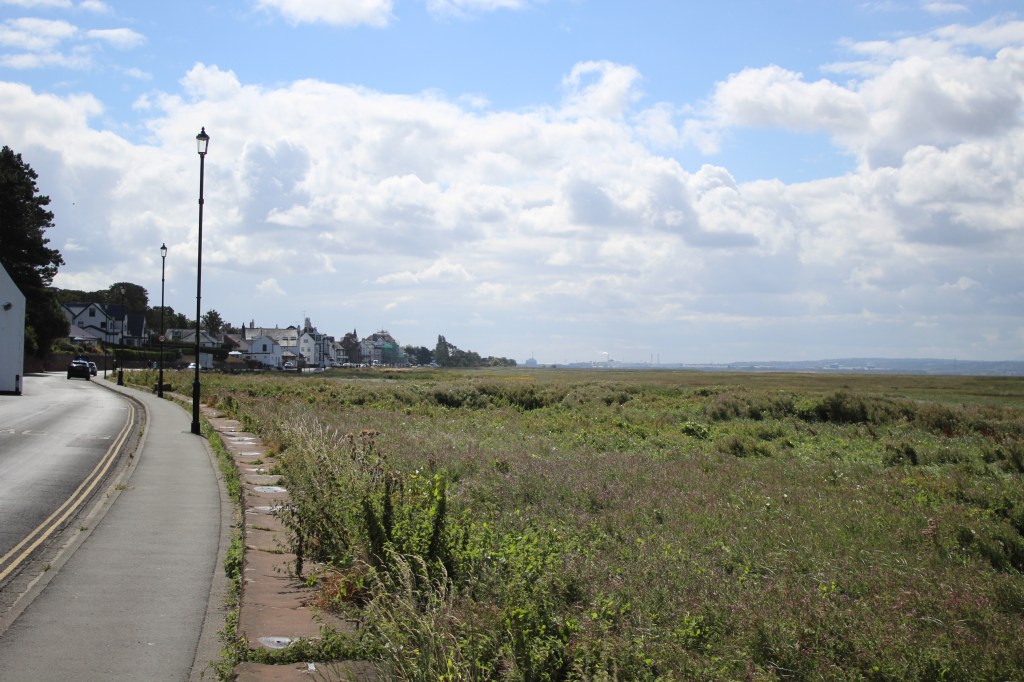
    The Parade

    Looking southwards along The Parade

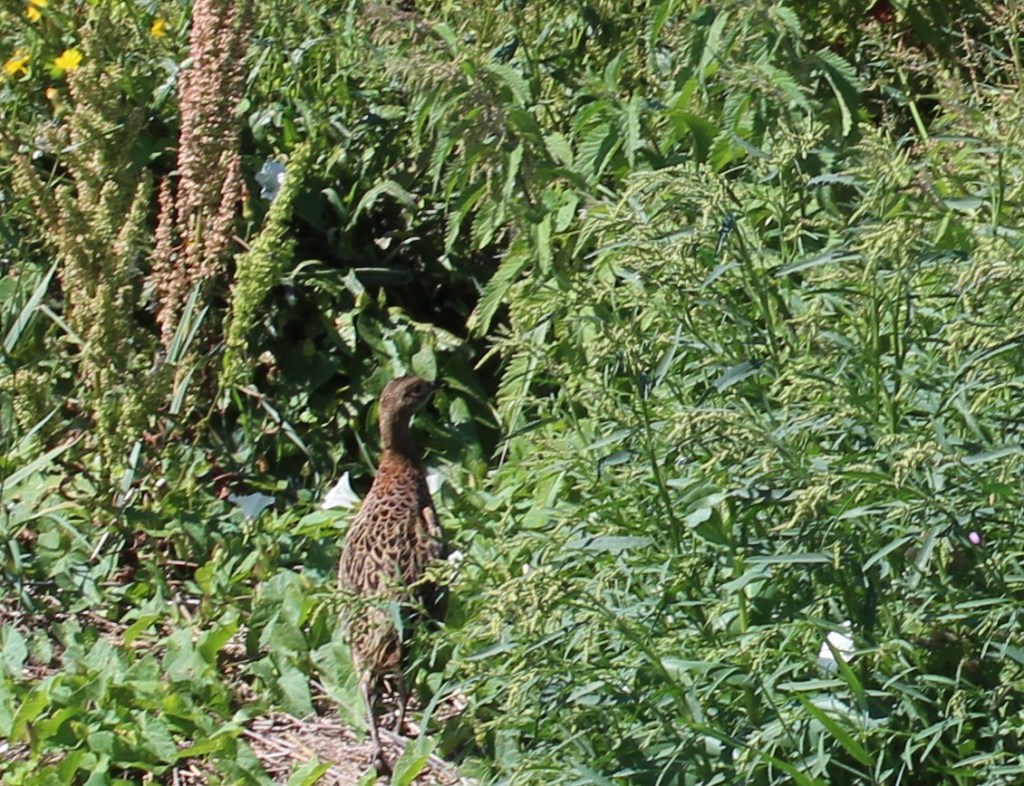
    Pheasant in undergrowth

    Female Pheasant

        However, Parkgate is more than a destination for birders and wildlife-lovers and I was reminded of this as I went through Sophie’s photos later. Often, when we visit places, we can be so intent on a particular purpose that we overlook other aspects that might be just as interesting – both to others as well as to ourselves. So it was refreshing to see Parkgate through a different perspective.
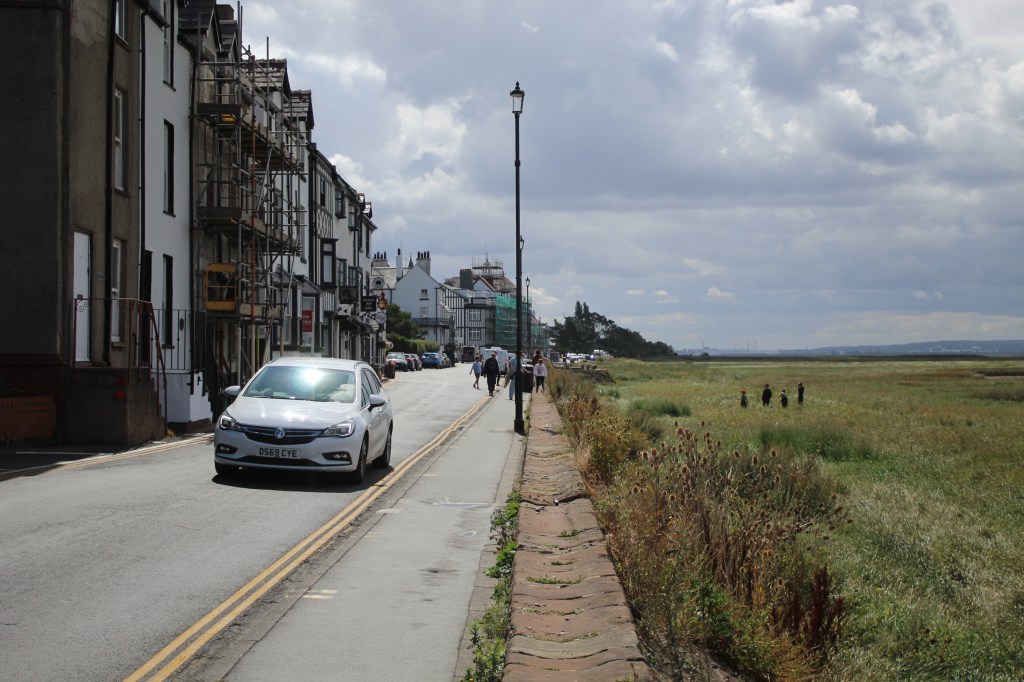
    The Parade 3

        For the benefit of those who are unfamiliar with Parkgate and might be considering a visit, here’s a little bit of information about its history.
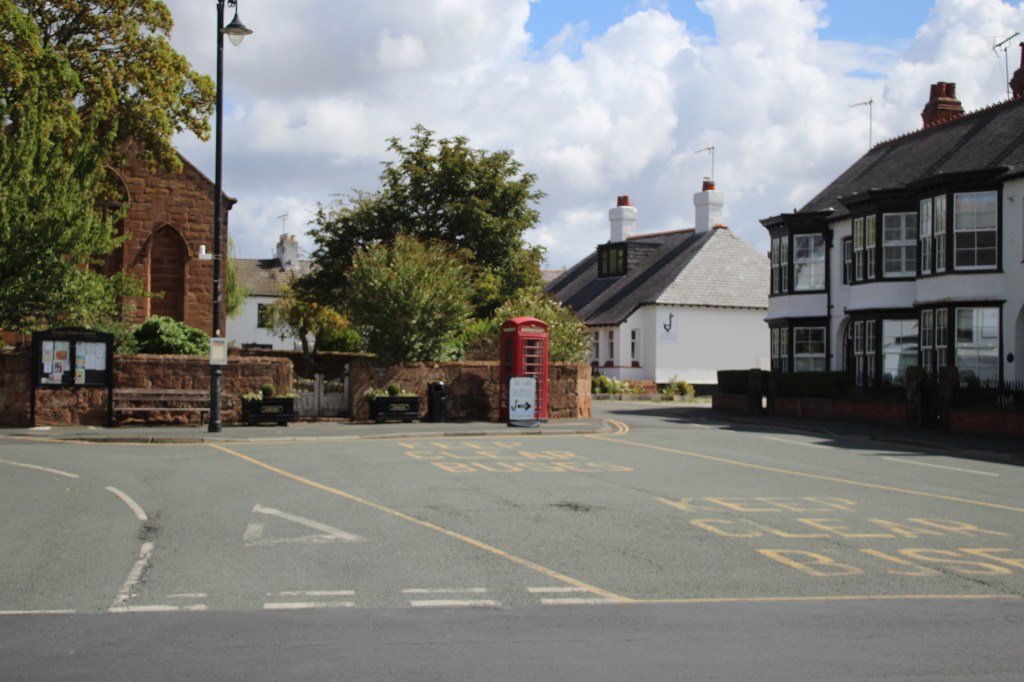
    School Lane, Parkgate

    Above: School Lane (St. Thomas’ Church is on the left); below: Girl with traffic cone on lead
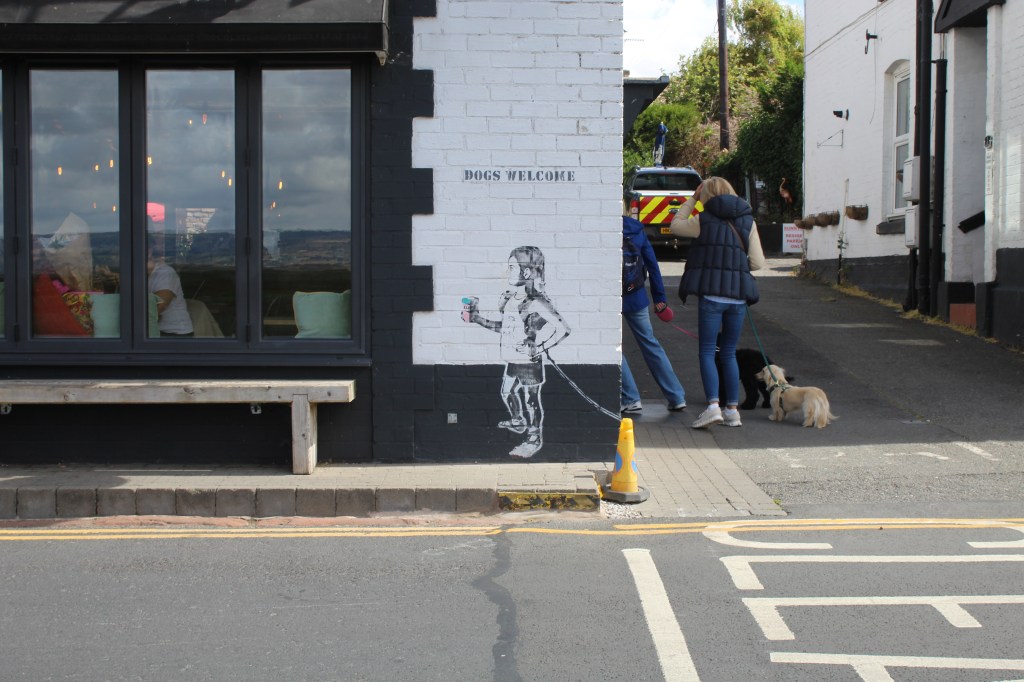
    Park your dog

        Lady Emma Hamilton (originally Amy Lyon) was born in the nearby village of Ness – and raised in Hawarden in Flintshire – and composer George Frideric Handel sailed back from Ireland via Parkgate which, at the time, in 1742, was a busy port. Towards the end of the eighteenth century the accumulating silt on the River Dee meant that Parkgate could no longer function as a port and was supplanted by the port of Liverpool on the River Mersey.  
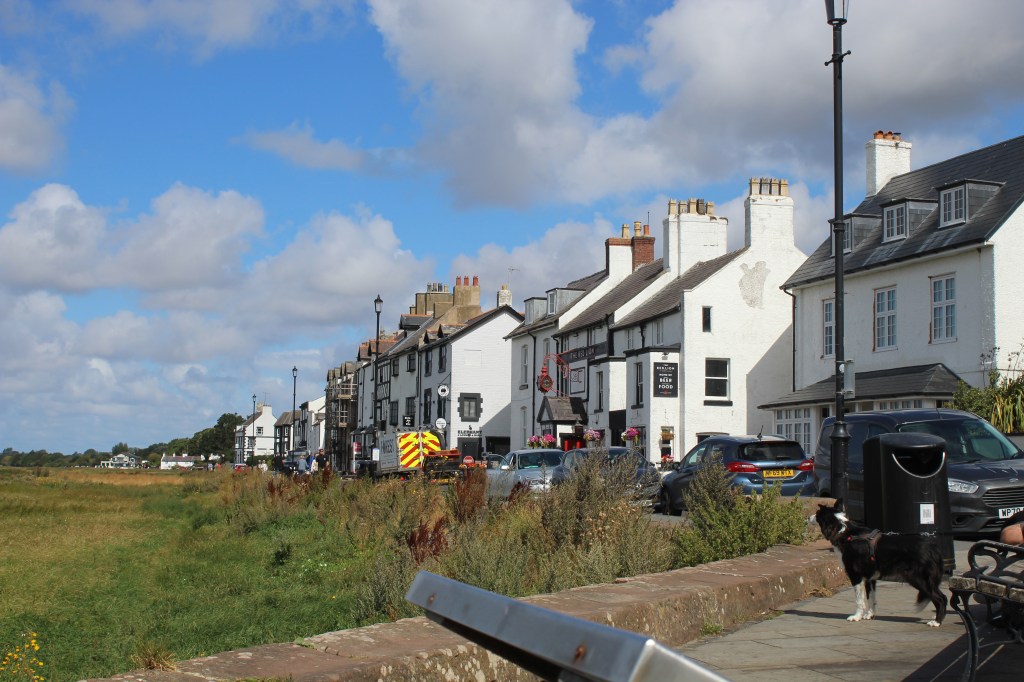
    From the Donkey Stand

    View from the Donkey Stand

        Parkgate then switched to being a seaside resort and successfully drew people in to take the fashionable salt waters. Open-air baths were built during the 1920s which became very popular and helped Parkgate maintain its status as a resort right up until the late 1930s. Sadly, not a lot remains of the baths now except the odd section of wall at the Old Baths carpark which lies beyond the Boathouse pub.
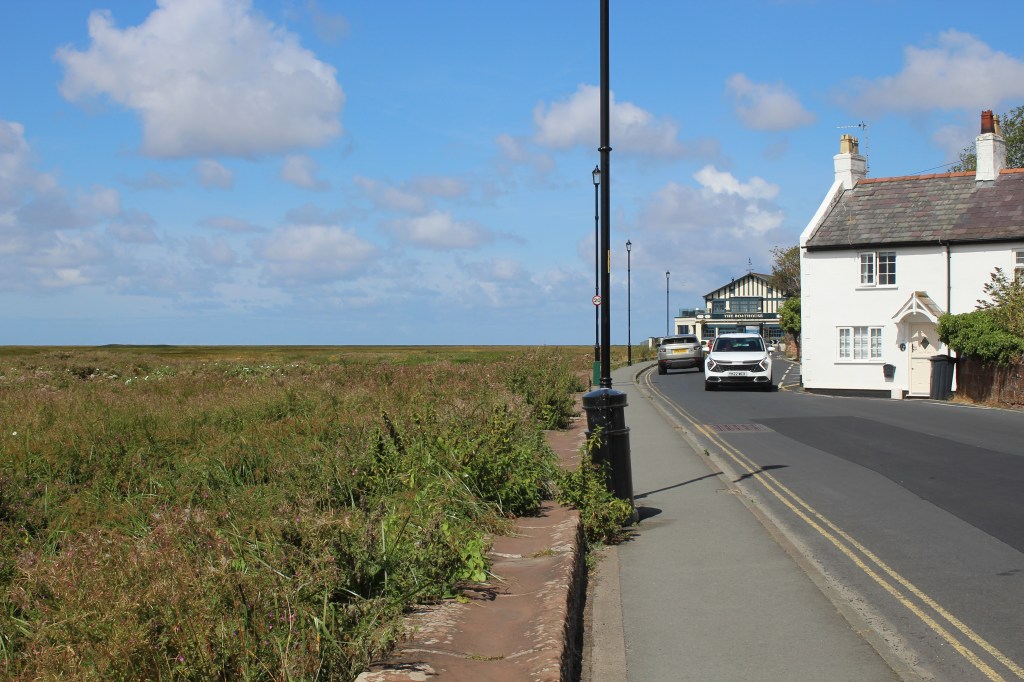
    The Parade 2

    Looking northwards along The Parade

        Parkgate is well worth a visit and you don’t have to be a birder to enjoy it either.
  • Low Tide at Parkgate

    (Sunday 2nd August, 2026)

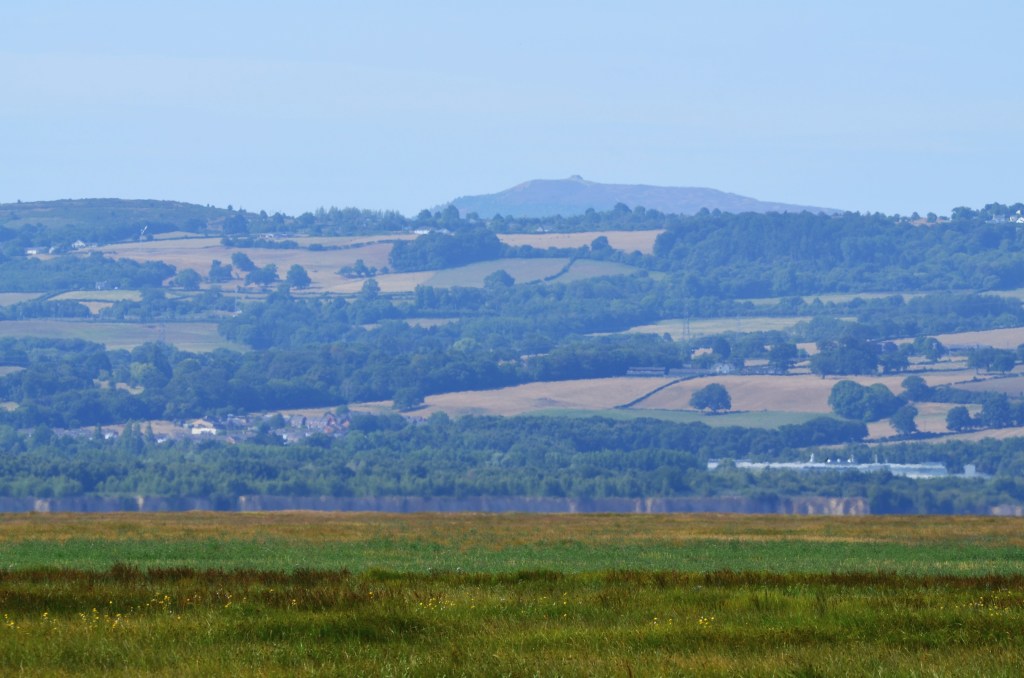
    Over to Parkgate on the Wirral Peninsula this morning where it was a sunny 21°C with just a faint breeze (ESE). Visibility was very good and we had panoramic views of the Dee Estuary: Moel Famau and the other hills on the Clwydian Range stood out sharply to the south of us and, in the opposite direction at the estuary’s mouth, we made out the many wind turbines that stretch across Liverpool Bay.

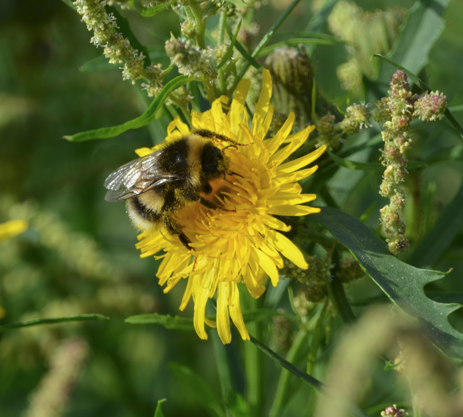
        The trees and bushes near the Old Baths have clearly been stressed by the current drought, their leaves browning and crisping before dropping early. Conversely, Dandelions, bindweed, knapweed and thistles out on the marsh seem to be thriving – all obviously more able to cope. A welcome consequence of this hardiness is the variety of insects that visit them. We spotted ladybirds, White-tailed bumblebees and several white butterflies – mostly Small whites, although we did see one Green-veined butterfly too.

    White-tailed Bumblebee, Parkgate
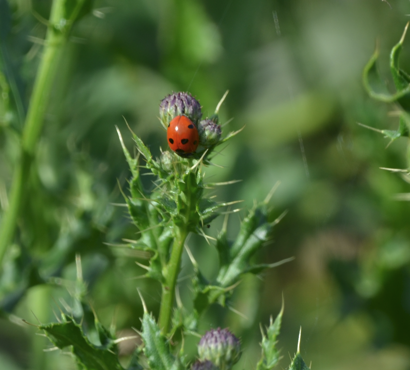
    Seven spot
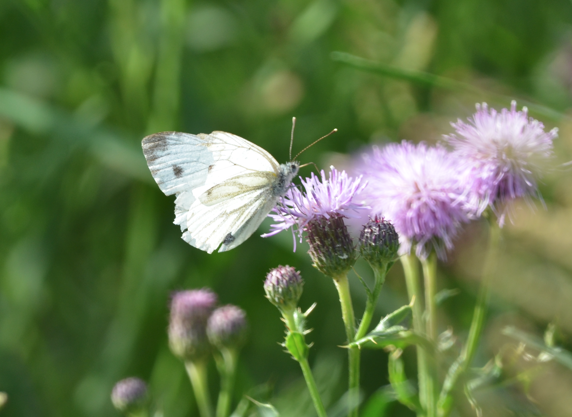
    Small white Parkgate

    Top: White-tailed bumblebee; middle: Seven-spot ladybird; bottom: Small white butterfly

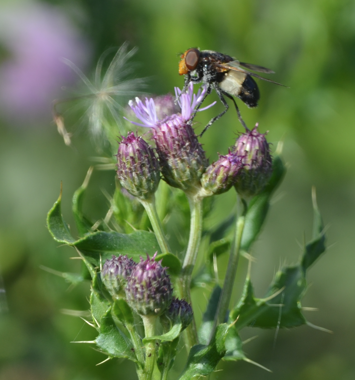
        We were intrigued by several hoverflies which seemed to be especially partial to thistle flowers. These are Pellucid hoverflies (also known as Pellucid flies). They are mostly black except for a distinctive white band around their abdomens and they have very large, reddish-brown eyes, which provide them with a wide field of vision. As with other hoverflies, Pellucid hoverflies have evolved to mimic bees or wasps and this mimicry acts as a visual deterrent to predators such as birds, amphibians or spiders that might ordinarily prey on them but will hesitate if they believe they might get stung!

    Pellucid Hoverfly

    Pellucid Hoverfly

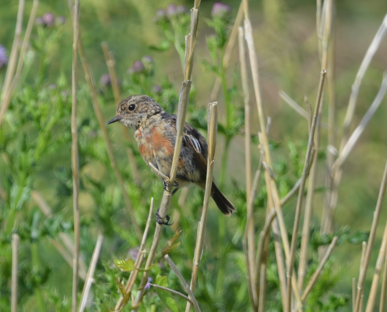
        A pair of small birds scooted low in front of us. They were very quick but Stu managed to take a snap of one of them clinging to a reed, before it swiftly departed again. This looks like it’s a juvenile Stonechat. Even without the more defined red-orange breast of the adult, it’s still a striking-looking bird.

    Juvenile Stonechat

    Juvenile Stonechat

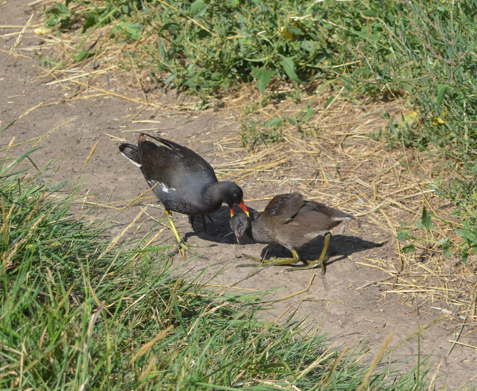
        Down at the Donkey Stand, we looked over the other side of the wall and watched an adult Moorhen as it ferried its chick back through the reeds to shelter.

    Moorhen scolding

    Moorhen encouraging its chick to seek shelter

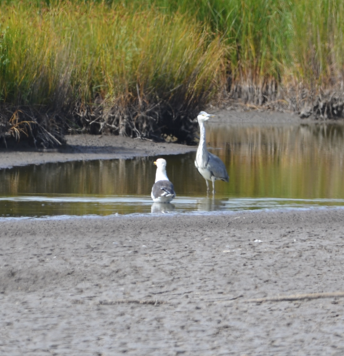
    Further out. the ‘flash’ looked bone-dry apart from one small section of water in the far corner where a Grey heron stood forlornly hoping for the best. We were there just after low tide although I believe the flash (or shallow pond) relies on rainwater as much as water from the river and – like everywhere else – Parkgate hasn’t had much rainfall recently.

    Gull and Heron

    Heron and gull lamenting the absence of water.

    On the nearer side of the flash were several Lapwings and Black-headed gulls, most of which were sprawled on the ground and making the most of the sun. They didn’t stir, even when a Marsh harrier flew low nearby. Talk about lethargic!

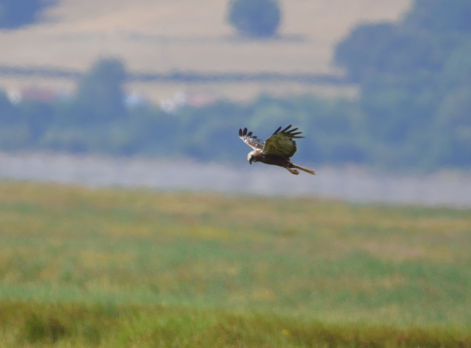
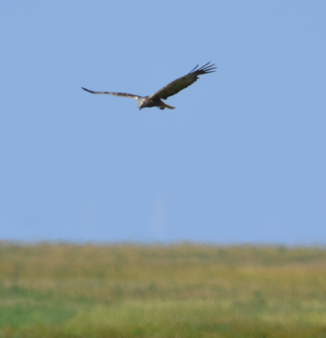
    Male Marsh harrier

    Marsh harrier

        To be fair, the harrier seemed to be concentrating on a long stretch of the marsh that it was patrolling and that was mostly obscured form our view. Flying characteristically low, the bird would every now and then twist and drop down, feet first. This is how the Marsh harrier grabs the small mammals, amphibians and fish that make up much of their diet, although Marsh harriers are opportunistic predators that will also take small waterbirds like Moorhens, too. This Marsh harrier was a male and, though the male is smaller than female – well, less bulky – it’s still a large bird and surprisingly agile. Fascinating to watch.

    Male Marsh harrier 2

        There was a scattering of House martins that seemed to be darting between the marsh and the rooves of the buildings along The Parade, where they presumably have nests: an ideal vantage point. As we turned to go, we glimpsed a pair of Common buzzards further out, leisurely rising as the thermals carried them both skywards.

    Panorama

    Moel Famau from Parkgate

    The important stuff

    We called in at Daleside in Hawarden on the return journey where we each had a Vanilla slice with our customary cappuccinos. Very gooey!

  • Treecreeper at Royden Park

    (Sunday 21st June, 2026)

    Over to Royden Park on the Wirral Peninsula this morning. It was sunny with a very light north-easterly breeze, the temperature a comfortable 21°C, though it climbed higher after midday.

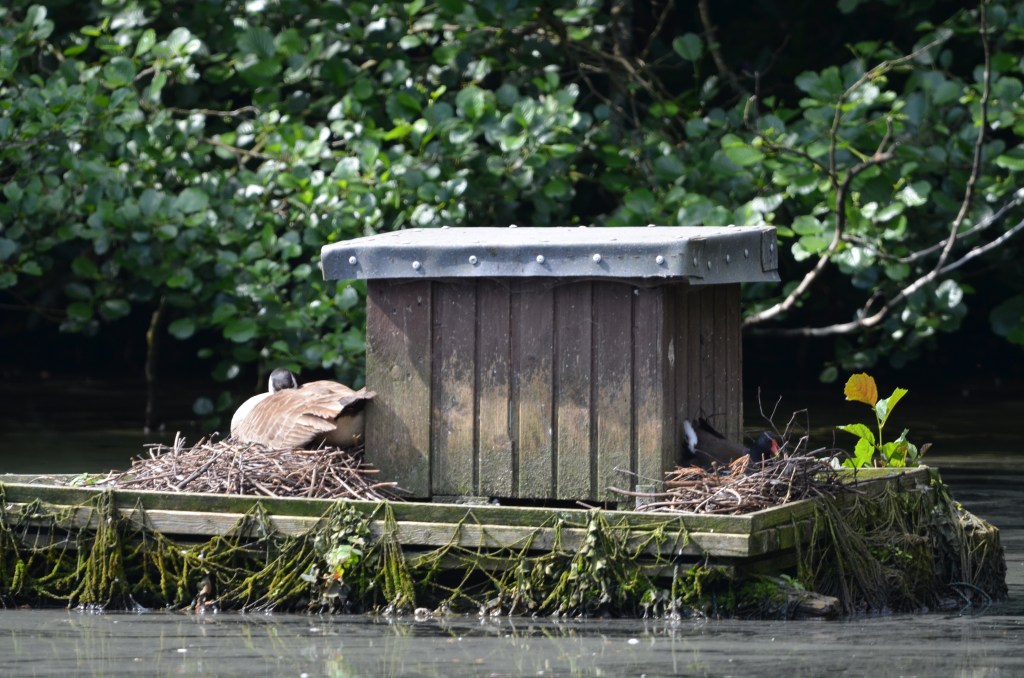
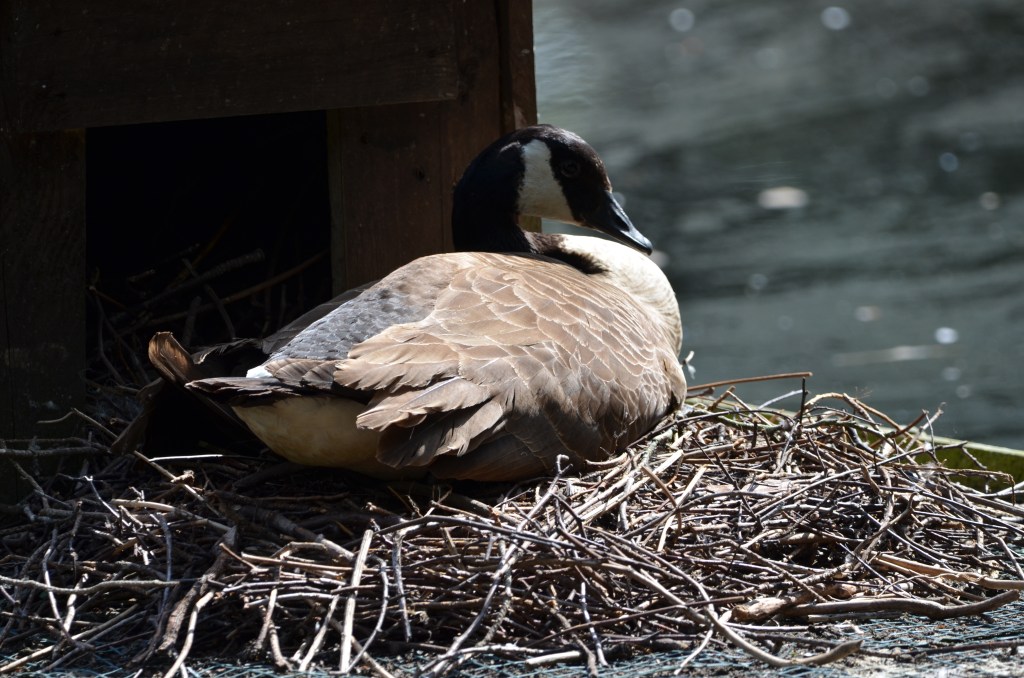
        We followed the path from the car park and cut through the woods to Roodee Mere. Here, there is a nesting platform in the water on which we often see a Grey heron perching while it surveys the mere for food. This time, however, the space was being shared by a Canada goose and a Moorhen. As you can see, each bird has a nest either side of the central box.

    Sharing nest space
    Canada goose on nest

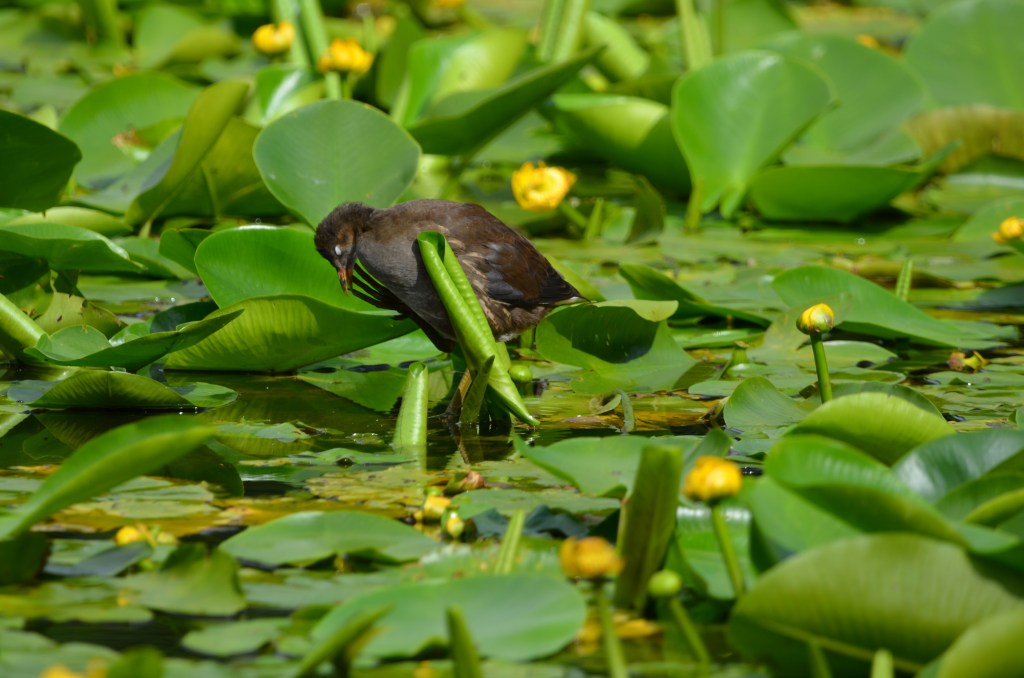
        Judging by the number of chicks present in and around the water, many of the Moorhens had already produced their first broods. Moorhens might have two or even three broods during the breeding season and chicks from the first brood will often help their parents with feeding the later broods. While this obviously helps the parent birds, it’s also useful practice for when these first-brood chicks go on to have their own offspring the following year.

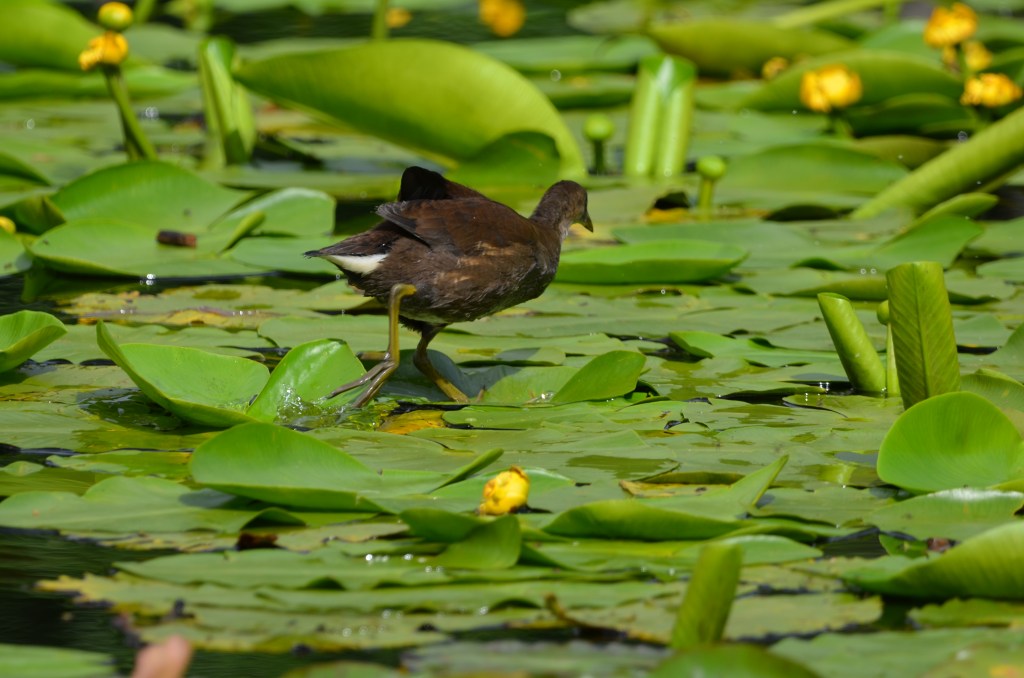
    Skipping on lily
    Welcome to the jungle

    Moorhen juveniles negotiating the lily-pads …

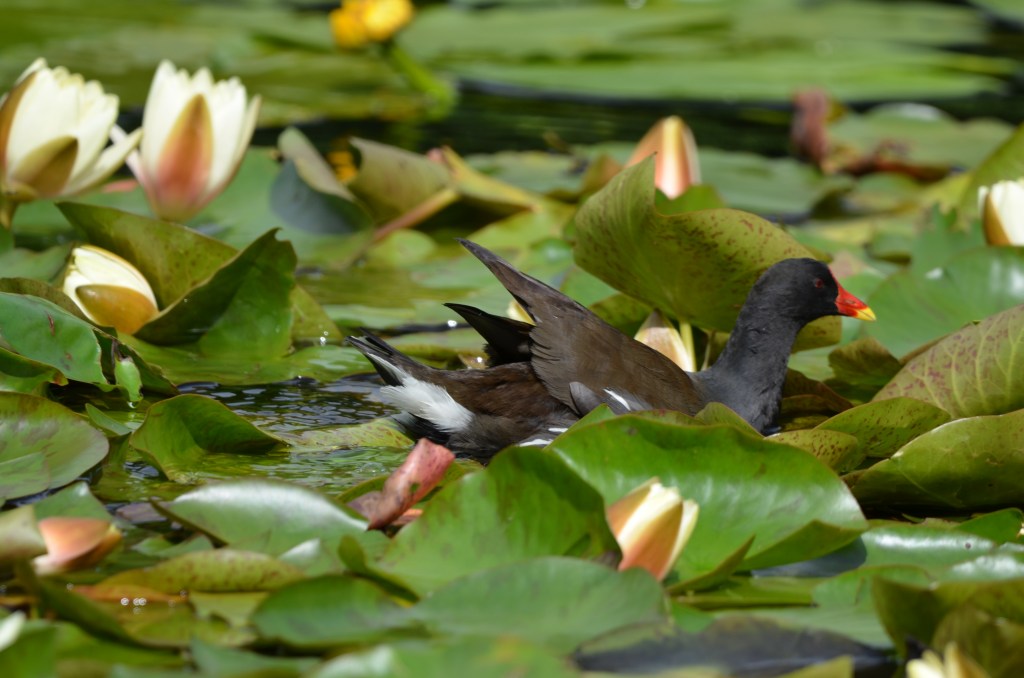
        Water-lilies were plentiful on one section of the mere and several young Moorhens took obvious delight in agilely skipping across the lily pads: they seemed to be doing this purely for the sake of it. The more responsible parents – who were probably too heavy now – simply swam through the pads, although this didn’t appear to be half as much fun!

    Moorhen swimming

    …while the heavier adult has to swim

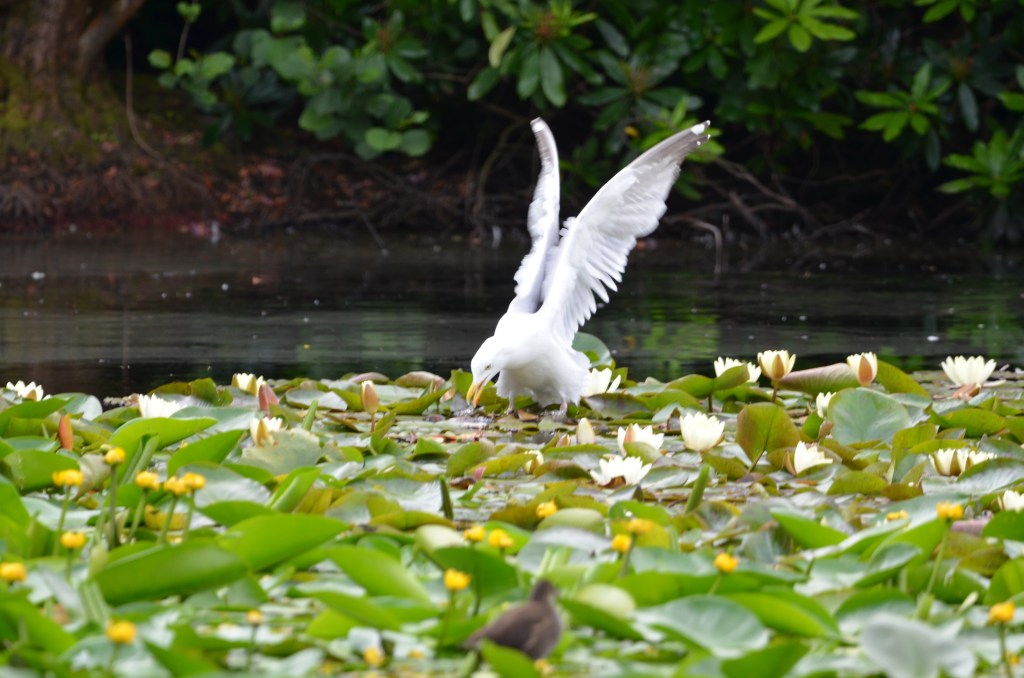
        A Herring gull circled above the mere and dropped down amongst the lily pads: at first, we were a little concerned in case it was after one of the chicks but it seemed to have spotted something under the water. The gull made a couple of attempts to retrieve whatever fish or amphibian it had seen but eventually gave up and flew off.

    Herring gull fishing

    It wasn’t clear what drew the Herring gull to the water (above), although this mystery fish appeared soon after (below)

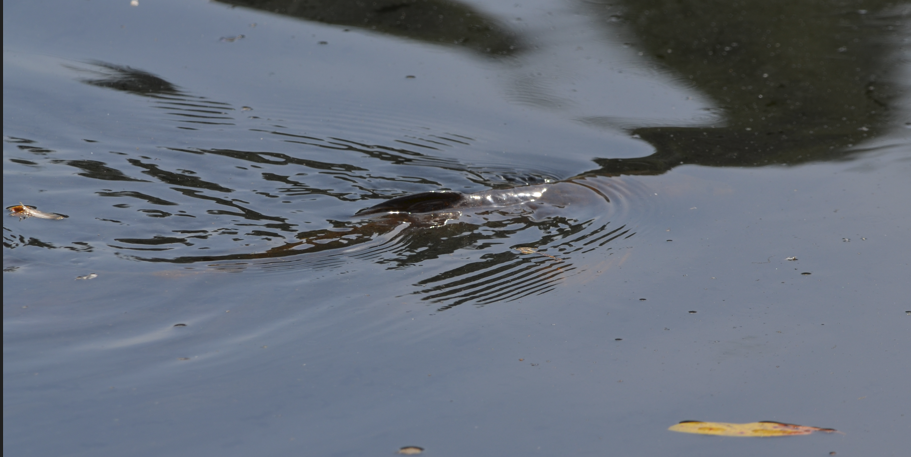
    Mystery fish

    By coincidence, we did see a large fish that was swimming close to the surface – you can’t really tell what fish it is, though it’s size might indicate a carp. It’s possible that this was what had interested the Herring gull but we can’t say for sure. In turn, the fish might have been interested in one of the many dragonflies that were zipping around the mere today.

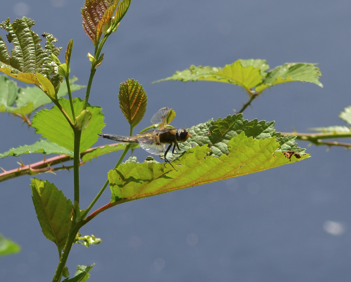
    Dragonfly 4

    A four-spotted chaser dragonfly resting on a hazel leaf

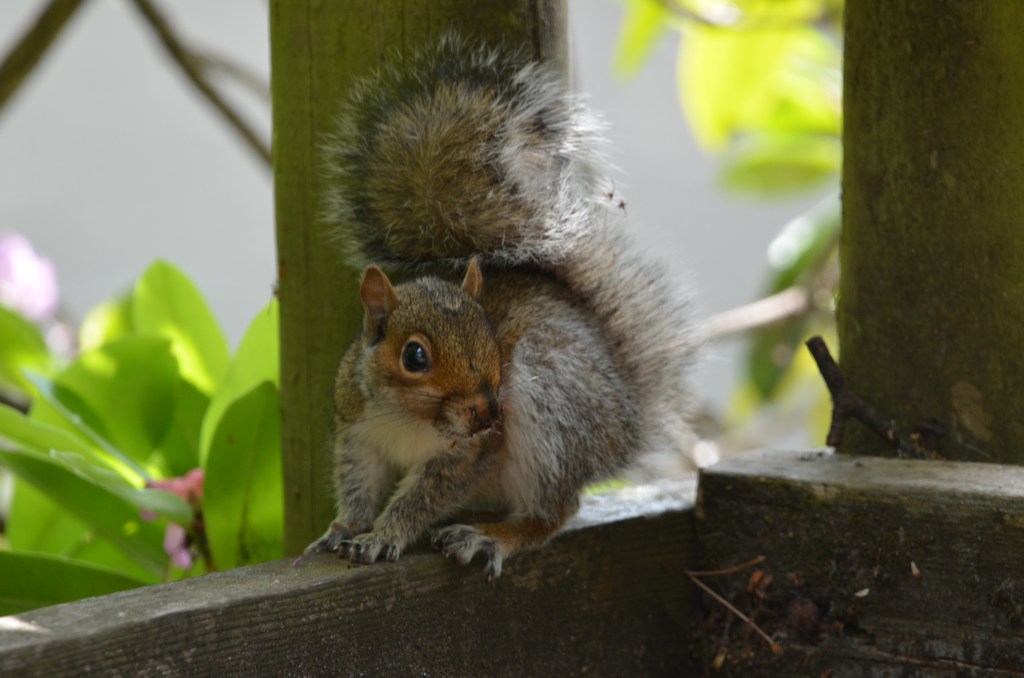
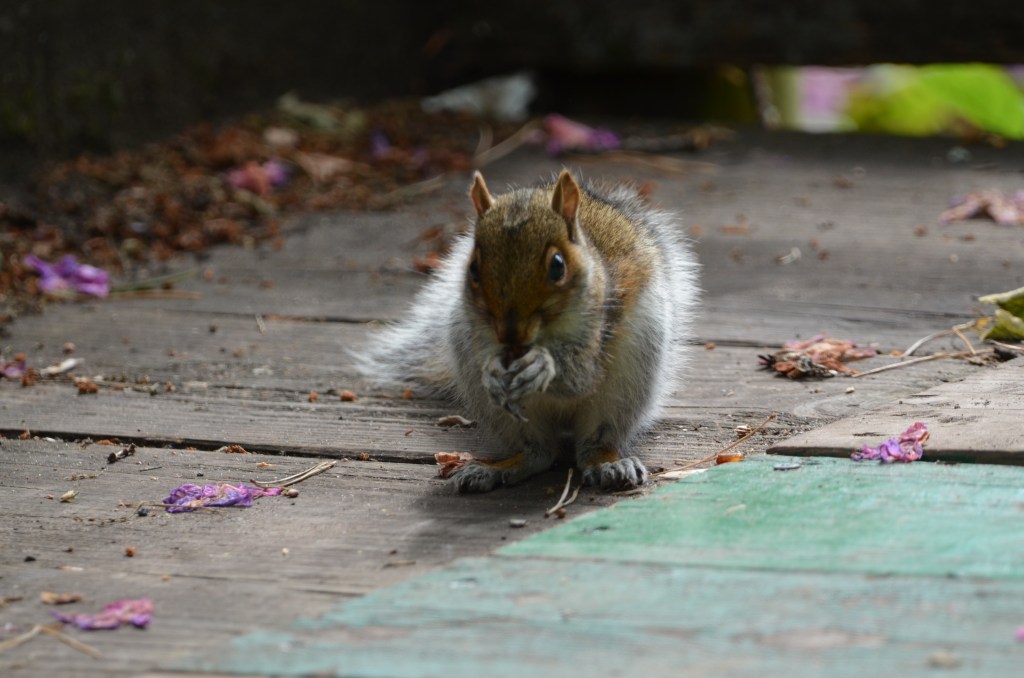
        There were one or two Grey squirrels out and about, demonstrating their acrobatic skills. One in particular entertained us as it descended head-first from a nearby tree before jumping across the path in front of us and disappearing in the undergrowth. Moments later another squirrel appeared on the wooden jetty at the side of the mere, where it nibbled at some bird food that presumably had been left for the Moorhens.  

    Squirrel at Royden
    Squirrel at Royden 2

    Shameless squirrel

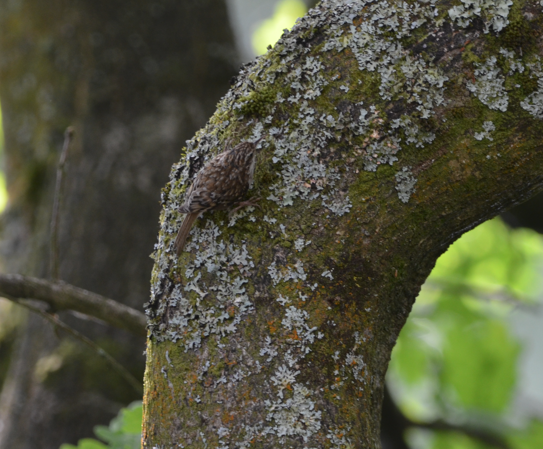
        While we were stood there watching this scrounging squirrel, a small bird flew across from the surrounding wood and landed low on a tree just in front of us. It was a Treecreeper and we watched as it scaled the tree then fluttered down to the second trunk of the same tree and climbed again before repeating this procedure for a third and final time, after which we lost sight of it.

        Although the Treecreeper is quite common throughout the United Kingdom, we were lucky to have seen it as its mottled brown back and wing feathers act as great camouflage against the bark of trees. It has a white underbelly that is generally hidden from view as it climbs, but we happened to catch a glimpse as it flew in front of us.   

    Treecreeper

    Treecreeper blending in against the lichen and bark

        The tree was a common alder with its distinctive round leaves and it looked like it had been coppiced at some point in the past, which would explain the three trunks radiating from it. As it climbs, the Treecreeper uses its long, curved beak to probe cracks in the bark for insects to feed on. I reckon we were lucky here too in that the Treecreeper didn’t fly off to another tree but simply dropped down, enabling us to keep sight of it.

        Treecreepers use their strong toes to grip the bark and they have very stiff tail feathers which offer extra support when pushed against the tree and this helps to reduce strain on their legs as they climb. Most references describe the Treecreeper as spiralling upwards around the trunk as it climbs and this is what I remember from the two previous occasions that I’ve seen them. However, this particular Treecreeper climbed vertically up the same side of the trunk without looping round until it was quite high up the tree. A fascinating little bird to see,

    The important stuff

    On to the Courtyard Café for cappuccinos and a slice each (or should I say ‘doorstop’ each) of Caramel biscoff cake (Stu) and Carrot cake (Col). Scrumptious!

  • On Silent Wings

    (Thursday 2nd October, 2025)

        I was in the back yard this evening just getting a breath or two of fresh air after work and, without consciously realising, I had fallen into my usual habit of scanning the treetops and rooves of nearby houses. There was neither sight nor sound of any birds – even the familiar chacking of my numerous Jackdaw neighbours was absent. I didn’t think anything of this really: it was approaching dusk and I assumed all of our avian friends had settled in for the night.

        However, as I was looking around me, something caught my attention higher up in the sky. I saw a dozen or so birds flying quite high. They were together, but in a loose flock if you know what I mean, and they were flying silently. These birds had me puzzled to tell the truth: I hesitantly identified them as gulls, but they disappeared from view before I could be sure. I leaned back, trying to see if there were any more birds, and after a few moments I spotted another group. Again, these were quite high up and I didn’t have my binoculars, but judging by their outlines, these were definitely gulls, although I don’t know which type of gull.

        Over the next fifteen minutes or so, several more of these eerily silent gulls flew by, all seemingly heading north-west towards the Wirral side of the Dee estuary. I would never have seen them, even known that they were there, because of their uncharacteristic silence – well, gulls are often the most raucous of birds we encounter!

        I looked online later to see if this was usual behaviour for gulls flying across the evening sky and, as you might expect, there was no definitive answer, although others have evidently witnessed gulls passing in similarly quiet circumstances. One or two people suggested that the gulls were heading out to sea in the knowledge that fishing boats were in the vicinity (presumably with their hauls). This may or may not be true, but this evening’s high tide was around 20:00 hours (although the high tide time varies depending on exactly which part of Wirral the gulls were heading). Nevertheless, the gulls flew past me about an hour or so beforehand, so it’s possible that the intention was to be onshore as the tide began to retreat, exposing the crustaceans and molluscs that they favour. I can’t help thinking that this theory is a bit limited though, given that most gull species will eat anything!

    No photographs for this post I’m afraid – just an observation. (The gulls were too far away for my humble camera-phone anyway). 1

    1. I witnessed this phenomenon again on the following evening although the gulls were flying lower this time. It was windier than the previous night due to Storm Amy (although Scotland bore the brunt of the winds) and I thought possibly the storm might have had a bearing on the gulls’ behaviour. However, I’m inclined to think that it’s more the timing of the tides. I’m writing this three days later (Monday 6th October) and I haven’t seen any similar activity in the last three evenings. Anyway, something to look out for – well, if you’re me at least!
      ↩︎

  • Rain stops play

    (Sunday 7th September, 2025)

        We were at Loggerheads Country Park this morning and, although it was overcast, it was a reasonably mild 18°C, with a light south-westerly wind which was barely perceptible in the shelter of the woods. As we crossed the little bridge to the Leete path, we glimpsed a Dipper scooting upstream. We’ve seen them before along this stretch, but this was to be our only sighting today.[1]

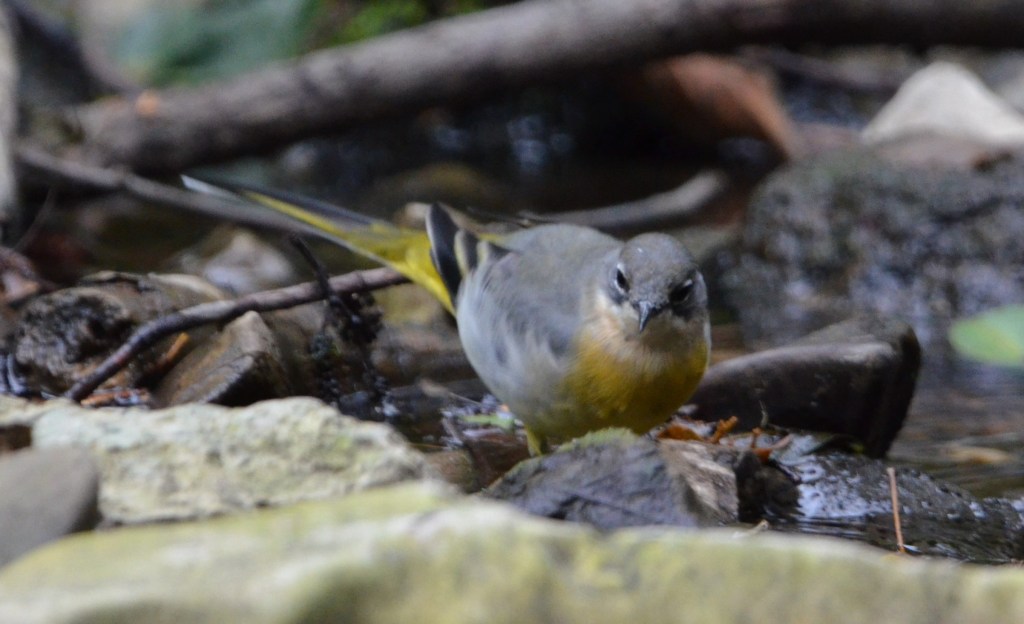
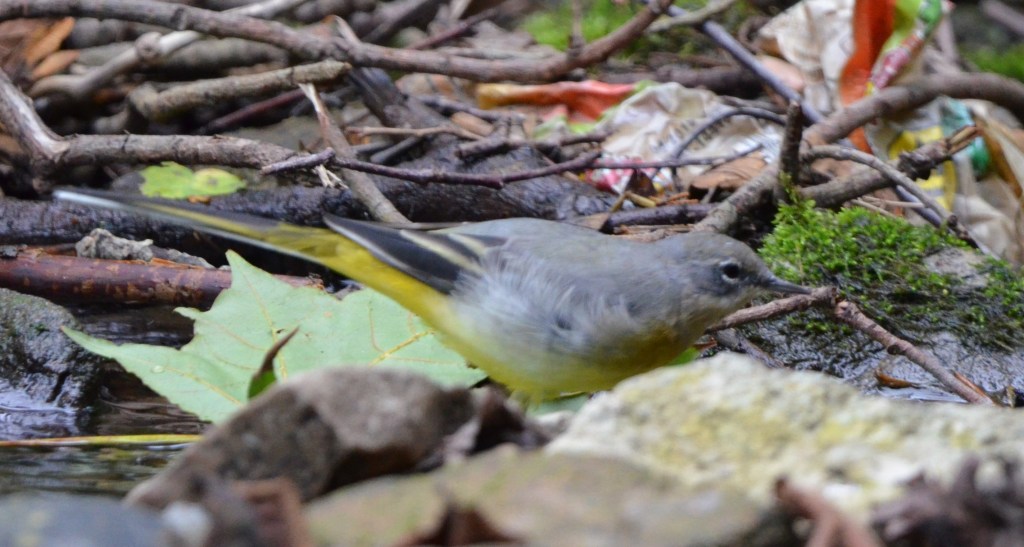
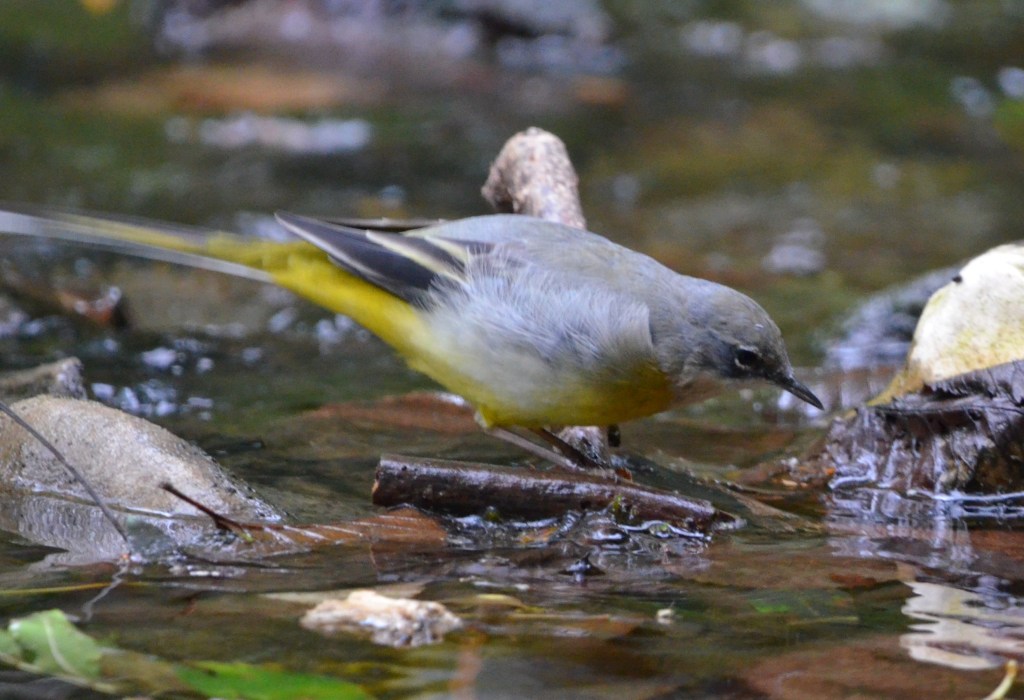
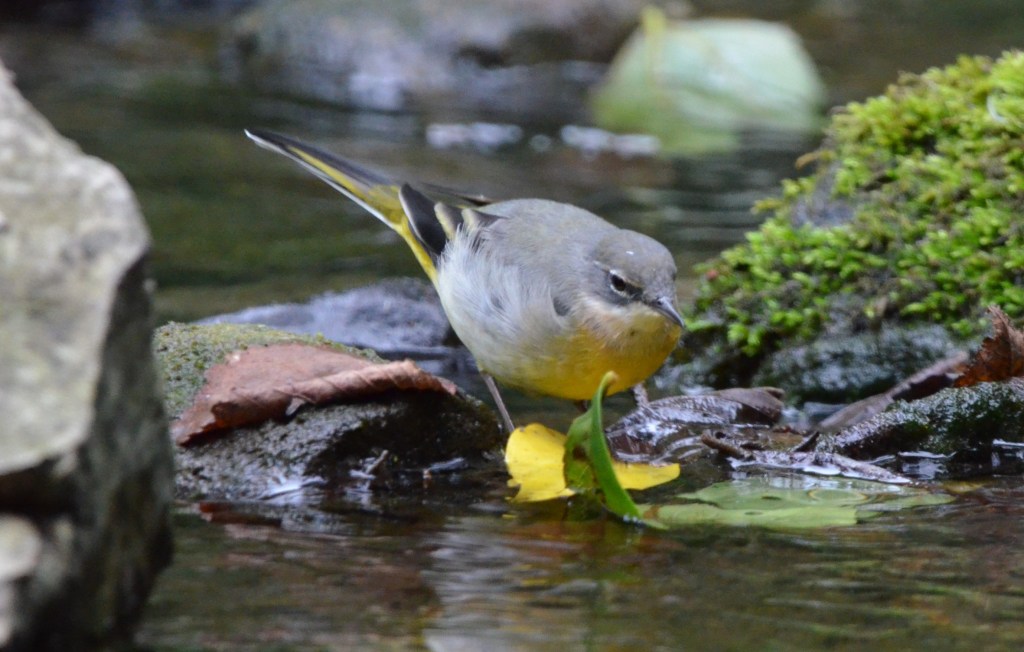
        We followed the Leete a short way, while scanning the riverside, each of us hoping to catch another sighting of the Dipper. I detected a little movement as I trailed my binoculars slowly over the landscape – or riverscape to be more accurate. Looking again, I saw that the movement was the long, see-sawing tail belonging to a Grey wagtail, which was perched on a rock as it scanned the water for food. This one was either a female or a juvenile as it lacked the distinctive black bib that males display during the summer (and I’m classing this as summer, or summer’s end, despite it being meteorological autumn). The grey, white, black, and lemony yellow form a lovely combination as you can see.

    Grey wagtail facing
    Grey wagtail side view

        Seen close-up, the Grey wagtail does strike you as being more colourful than its dullish-sounding name suggests, particularly in its underside feathers, and people often mistake it for the Yellow wagtail: the ‘Grey’ of its name refers to its grey back. The Yellow wagtail has an olive-green back and is much more yellow overall. Habitat is often a giveaway when trying to establish species, and Grey wagtails and Yellow wagtails differ from each other quite markedly in this respect. Grey wagtails are usually to be found near running water, where they can hunt for food, whereas Yellow wagtails prefer open fields and meadows, especially favouring ground that’s been disturbed by livestock, such as cattle or sheep, as this means that the birds can easily graze on the worms and grubs that are revealed as a result.

    Grey wagtail side view 2
    Grey wagtail and leaves

        We have seen Grey wagtails along the River Alyn here many times over the years and we’re fairly confident that they build their nests in the nearby cliffs that overlook the river. We were also lucky enough to see a family of Yellow wagtails quite recently in a cow field, happily scrabbling around the feet of their much larger bovine companions.[2]

    There was a little more water – or slightly less exposed river-bed – than the last time we were here. The river still disappears, but now just that little bit further downstream. However, there is still evidently enough food – aquatic and aerial – to satisfy the Dippers and Grey wagtails that share this short stretch of the Alyn. As the title of today’s post suggests we beat a hasty retreat after only an hour-and-a-half or so. The rain came down heavily and, within seconds, the ground became saturated and we were a little bit soggy ourselves.

    The important stuff

    Sadly, Caffi Florence closed its doors recently, which is such a shame. The staff were wonderful and obviously we have many happy memories. Today, though, we had to go elsewhere for our coffee and cakes and we decided on Daleside Garden Centre in Hawarden (yes, I know, it’s officially ‘Klondyke Strikes’, but we all still refer to it as ‘Daleside’). Anyway, the cappuccinos were accompanied by an Eton Mess slice (Stu) and a Raspberry Meringue (Col). Very nice!


    [1] Morning Dippers, Sunday 24th August, 2025

    [2] Bittersweet Memories, Sunday 3rd August, 2025

  • Birds, Butterflies and Belugas

    (Thursday 21st August, 2025)

        Over to the RSPB wetlands at Burton on the Wirral peninsula today with my mother, my youngest brother, Michael, and his eldest daughter, Sophie. None of them had visited here before. The sun came out from time to time, but it was otherwise overcast. When we arrived, we were told that a Bittern had been seen at the reedbed: it showed itself twice during the time that we were there, but not in our presence I’m afraid!

        A Greenfinch and a Great tit were taking it in turns to visit the feeder, just beyond the visitor centre. While absorbed in this sight, we noticed movement in the undergrowth, and after a few moments we saw several rats shuffling along stealthily: they looked very well-fed and were obviously regular visitors to the ground beneath the feeder, capitalising on all that the birds habitually spilled.

    Mallard on tree trunk

        Above: Mallard on tree trunk (Photo: Sophie)

    We meandered around the mere, noting a Mallard squatting on the upper part of a tree-trunk that was half-in, half-out of the water, and a pair of Moorhens that were investigating the edge of the shore for food. While we were looking over at some Canada geese that were swimming at the northern part of the mere, there was a commotion in the water nearby: a Cormorant surfaced, took a few breaths, and then dived in search of fish again. A chance now-you-see-me-now-you-don’t sighting which we were all happy to have witnessed.

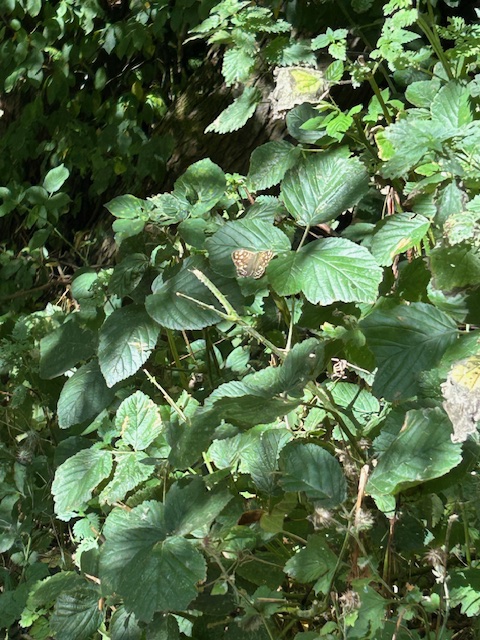
    Left: Comma – note the distinct white mark that gives the butterfly its name, and Right: Speckled wood (Photos: Sophie)

    There were plenty of butterflies today, including Small whites, Green-veined whites, and lots and lots of Speckled woods. In fact, as my niece, Sophie, was focussing her camera-phone on one Speckled wood that was stretching out its wings atop a leaf, a pair of them were spinning around each other as they passed. Sophie also managed to photograph a Comma, its wings upright, and another butterfly which we suspect is a Dark-green fritillary, though we can’t be sure. This is guesswork really, as camera-phones are limited in the photographic detail that they capture, so the resultant picture isn’t exactly pristine. However, given the area that we were in – ancient oaks predominantly – and the fact that the commonest fritillary in the United Kingdom is the Dark-green, we’ll plump for that. (Please let us know if you have other thoughts).

    Fritillary

        Above: Dark green fritillary? (Photo: Sophie)

    Regular readers will remember that on Sunday just gone (17th August), we reported lots of small flocks of Canada geese orbiting the marshes nearby. Judging by the amount of Canada geese at the wetlands today, they had all ended up here! They were by far the most numerous bird species to be seen from the main Reception area and also from the Bunker hide, and now looking from the Marsh Covert hide, it seemed that all we could see was Canada geese. However, as if to dispel this idea, Sophie suddenly drew our attention to a Common buzzard that she’d spotted circling to the south, and which rapidly rose in the air on the thermals. We all watched it through the windows, noting its large size even at a distance.

        A number of orange-red dragonflies shadowed us along the paths between the Marsh Covert and Border hides and seemed, at times, to be leading us onwards. These are Common darters, and we even saw one pair mating while they were in flight. A Marsh harrier crossed close overhead and, while we didn’t manage to photograph it, we did have a clear view of its underwing, which was the distinctive grey, fringed with black outer feathers, of the male.

        From the Border hide we could see lots of Greylag geese, Lapwings, and Black-tailed godwits, and we also observed a couple of Redshanks on the far bank and some Teal on the isle nearby, just visible amongst another group of Greylags. On the return journey, just as we emerged from the small copse, a Kestrel flew across our path.

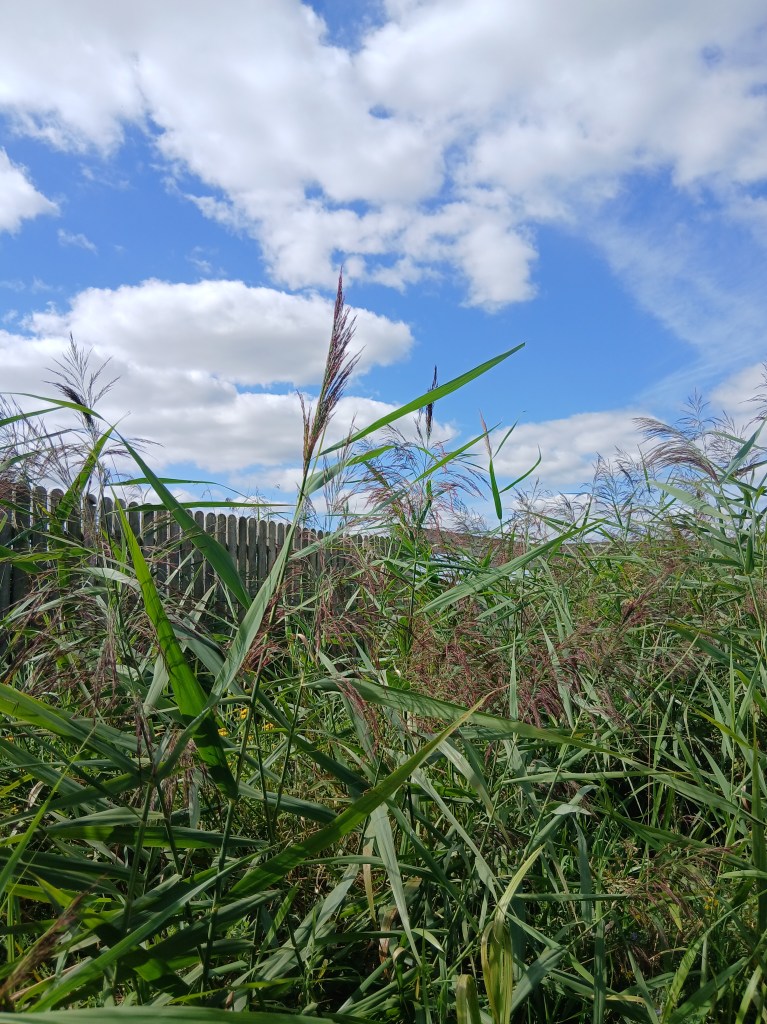
    Common reed

       Above: Common reed

    Sophie and I detoured to the reedbed to see if the Bittern was there, but sadly not. As I mentioned at the very beginning of this article, the Bittern was only eluding us – it seems that everybody else saw it that day! A lucky few also saw a Kingfisher and a Hobby. Maybe another time, but I do know that Michael, Sophie and my mother were thrilled to have seen so much during their visit. As we emerged from the reedbed viewing spot, my mother, who was waiting with Michael, said: ‘Did you see the big bird, then?’ I thought we’d missed a Heron or an Egret or another large bird, but she meant the Airbus Beluga which had just flown past. Very amusing!

    The important stuff

    All four of us had cappuccinos, accompanied by Blueberry muffins (Sophie, Michael, and my mother) and a very tasty vegetarian pastie (Col). Awesome!

  • Spotted in the garden

    (Wednesday 23rd July, 2025)

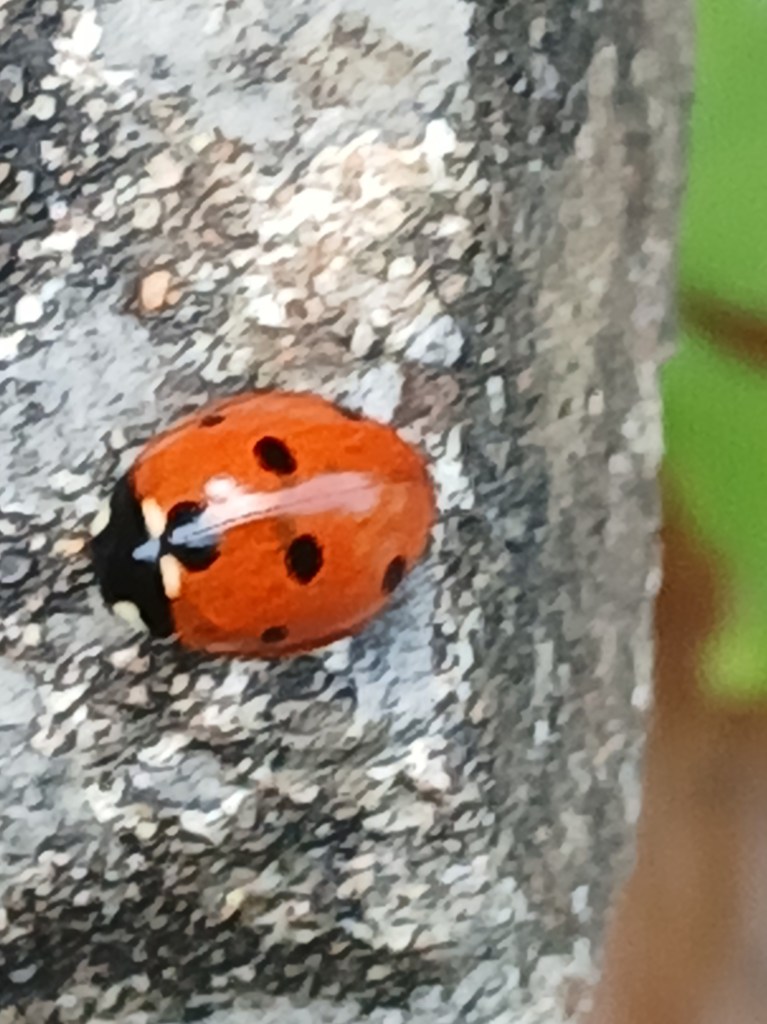
    Seven-spotted ladybird

    Down to the garden for my customary post-work respite, and I found a Seven-spotted ladybird reposing on one of the coping stones of the lower wall. There were several Small white butterflies and a Large white at the bottom of the garden. There were a couple of Holly blues too: at first, I thought that it may have been the same one travelling the length and height of the ivy,

    but I was eventually disabused of this notion when I witnessed two of them spinning around each other, though I’m not sure whether they were bickering or flirting!

        As I watched these spinning butterflies, my line of vision was interrupted by what I’m fairly certain was a Meadow pipit scampering across the top of the two steps that descend to the lawn. Its markings were darker than the whiteish cream of the textbooks, and overall it was brownish although obviously mottled below. The tail was distinctive though the legs were more of a red hue than a pink. I’m sure it wasn’t a Tree pipit, although pipits are notoriously difficult to tell apart. (Well, they are for me).

        Later I watched our resident Goldfinch alight on the very top of a huge Norwegian spruce in a neighbouring garden, which towers above all of the trees nearby. Uncharacteristically for this Goldfinch, he remained silent but watchful until he suddenly launched himself from his perch and dived towards the ground, but his descent was quickly screened by the border foliage, so I didn’t see the result of this kamikaze leap.[1]


    [1] I’m pleased to say that Mr. Goldfinch re-appeared the next evening and sang from his customary perch at the end of the television aerial. He practised his scales for a while and then flew off – no mad diving this time!

  • Seven spots followed by a Comma

    (Thursday 10th July, 2025)

        In the garden for a brief break from work (meetings, meetings…) and it was incredible what I saw in ten minutes: I must have timed it right. First was a Holly blue: these small butterflies usually fly at head height, but this one flew over twice that height again. As I followed its haphazard trajectory, I noticed a red and black ladybird apparently munching away on an ivy leaf. Drawing closer, I saw it was a Seven-spot ladybird.


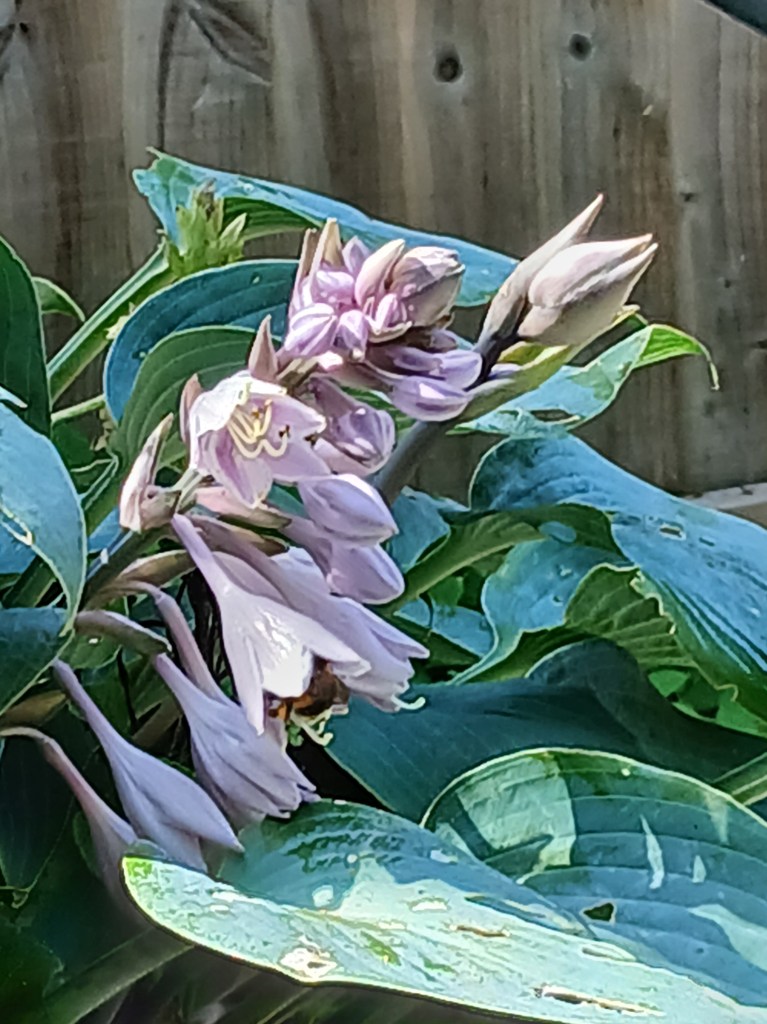
    I watched a Bumblebee (you can just see its bottom) and a much smaller bee extracting nectar from my Hosta plants which have recently bloomed a lovely pale purple. While I was doing so, something caught my vision and I turned to the hedge again. It was a Red admiral which very obligingly alighted on a leaf and spread out its wings to display its lovely markings.

        Two white butterflies then attracted my attention as they flew down the garden, spinning round each other. I thought they might be Large whites but I wasn’t sure, so I picked up my binoculars to get a closer look. Well, it’s difficult enough to follow birds in flight – particularly ‘flitters’ such as Swallows, Martins and Swifts – but trying to keep up with butterflies is a lot harder. Never mind this pair of butterflies (Large whites I can confirm), it was my head that was spinning. However, as I gave up chasing them, I spotted another Red admiral which was chilling out on the Buddleia at the far end of the garden.

        Once again, I reacted to movement and was amazed to see a Comma which landed on a bramble leaf nearby. This was only the second Comma I’ve ever seen, so I was pretty chuffed. On the way back in to the ‘office’, I saw another Holly blue flying high again, unless it was the same one as before. My short but well-earned break turned out to be a butterfly marvel!

  • Peacocks and Painted Ladies

    (Wednesday 9th July, 2025)

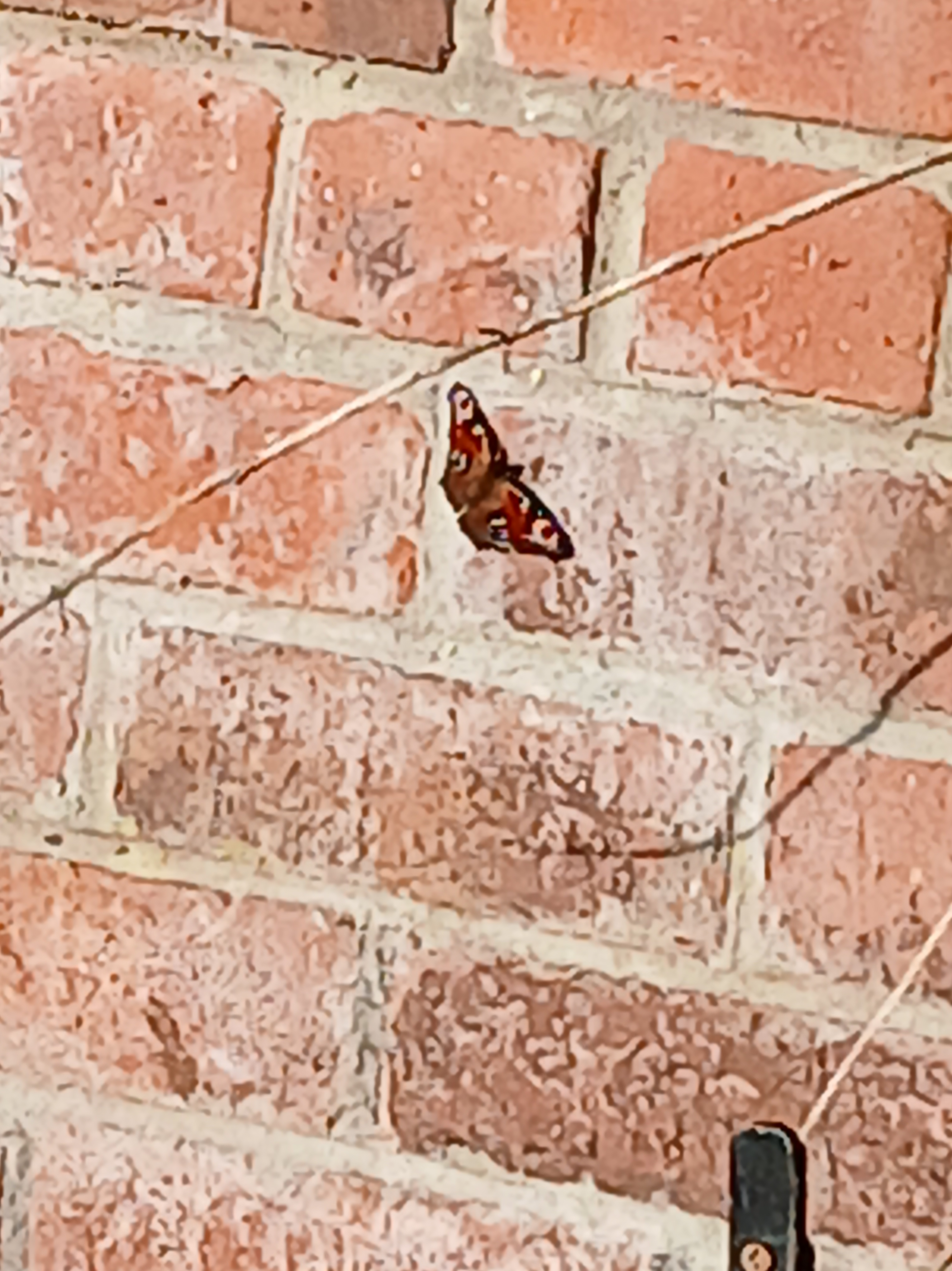
        It was still sunny here this evening so I went outside into the back yard to enjoy the warmth for a few moments. A Peacock butterfly evidently had the same desire, opening its wings as soon as it landed on the wall. When I say ‘on’ I mean it was on the surface of the wall rather than on the coping stones at the top, which you might expect. The Peacock was just hanging there vertically!

    Peacock butterfly on wall

    The wall is an old, rather wonky wall that reaches from the back of the house as far as the gate to the garden. It’s a west-facing wall and catches the sun (when it’s sunny) in the afternoons and evenings. I have several plants along it for that reason. Anyway, I managed to take a photograph, although it was with my phone’s camera, and not the best picture you will ever see.

        Only moments later, a Painted lady landed, but this time on the ground. I suppose it didn’t want to compete with the Peacock’s earlier acrobatics, but the Painted lady also spread out its wings obligingly for me. I was a bit slow off the mark this time however, so didn’t manage a photo. Mind you, that may be no bad thing, judging by the standard of the Peacock photograph!

        I was thrilled to see two different species of butterflies displaying their wings in quick succession, especially as they both just appeared in the back yard. It just shows you that sometimes you really don’t have to go far to see nature’s wonders.

  • Butterfly blues

     (Thursday 3rd July, 2025)

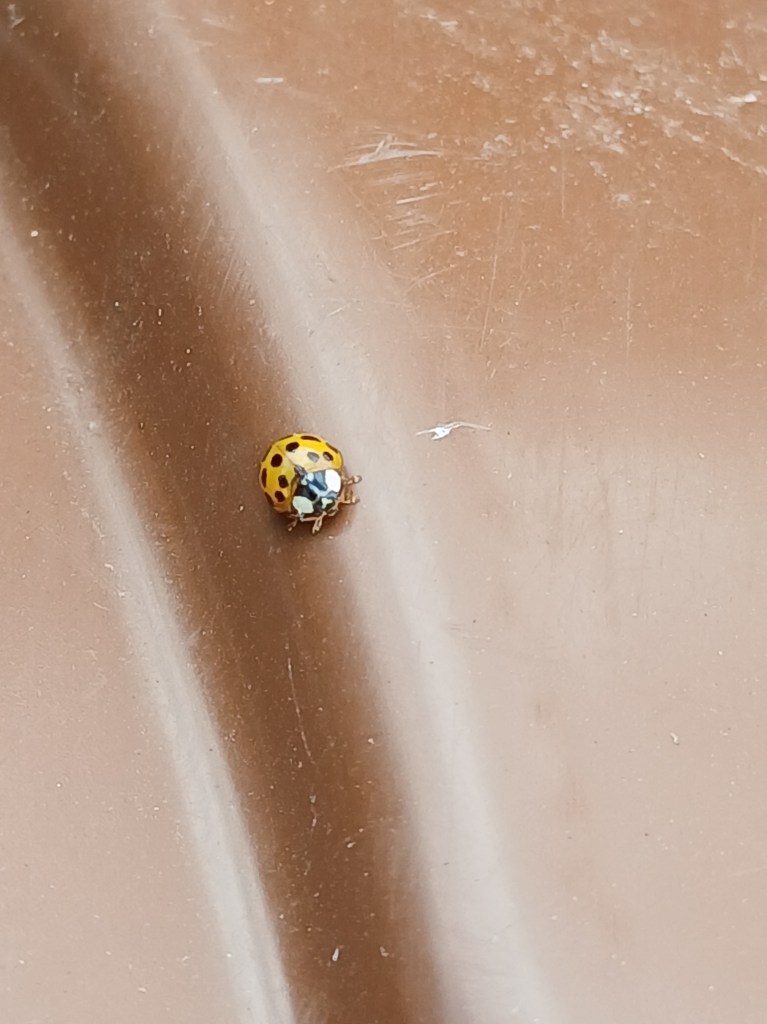
    Harlequin ladybird

    Down to the garden after work – I noticed a Harlequin ladybird on the brown bin lid as I went by. This one was a pale yellow with black spots, though what it was doing on the bin lid I have no idea. Jackdaws and Crows predominated today and both corvids were very voluble in their own raucous ways.

    My resident Robin appeared,

        hopping along the ridge of the fence to see what was to be seen, and three Goldfinch seemed to be tree-hopping, twittering as they did so.

        I watched excitedly as a large, yellow butterfly fluttered around the Buddleia at the far end of the garden, and then flew towards me before disappearing over the hedge. This was the first Brimstone I had seen for a couple of years. In fact, this was my first ever sighting of a male Brimstone, having only ever seen one Brimstone previously, which was the lime-green female. (The female was at the entrance to the path that edges the golf club, which is about half a mile away, although further away in time) I am so pleased to have seen one again. I’m not very knowledgeable about butterflies, but I believe the Brimstone is very scarce here in North Wales.

        It was certainly a day for butterflies: besides the Brimstone, there were a few solo, Green-veined whites, and a pair of Large whites twisting around each other as they flew over me to the other side of the hedge. And there was a Holly blue climbing up and down the ivy of the hedge, not unlike a bee in its rather haphazard flight. And I’m sure I saw a male Common blue. Certainly, it was a lot brighter blue than the  mauve-blue shade I associate with the Holly blue, but I was puzzled as this Common blue was flying up and along the high hedge – apparently it’s generally the Holly blue that flies high while other blue butterflies fly low. Unfortunately, I didn’t manage to photograph it so it will have to remain a ‘maybe’.