Category: Denbighshire

  • A hot day at Burton Mere

    (Sunday 13th July, 2025)

        I went across to Burton Mere Wetlands today. It was a hot 28°C but slightly cooler than yesterday’s 32°C. Naturally, there were lots of birds at the Wetlands including Canada geese, Greylag geese, Mallards, Moorhens, Shovellers, Shelducks, Black-headed gulls and Avocets. There were also a few Black-tailed godwits and lots of Knots at the Scrape, and both species were in their stunning brick-red summer attire; and from the Border hide I saw what looked like several hundred Lapwings.

        I’m certain I missed many more bird species: I have to admit that my attention was more focussed on the number and variety of butterflies on display. Because the butterfly number was so low in the UK last year, it’s been very comforting to see how much more numerous they are this year. Today at the wetlands there were Small whites, Large whites, Red admirals, Speckled woods, Small tortoiseshells, Commas, and Meadow browns.

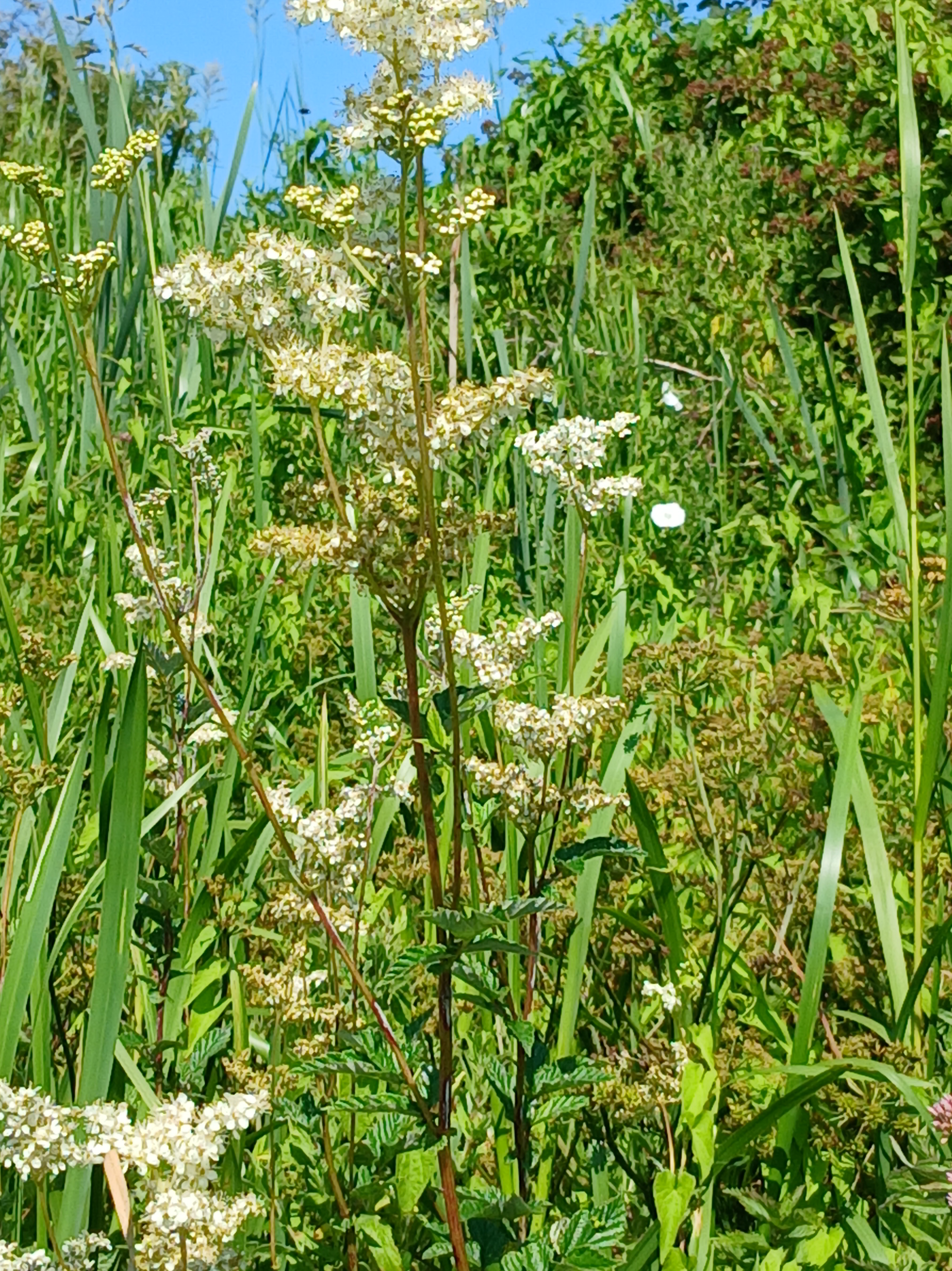
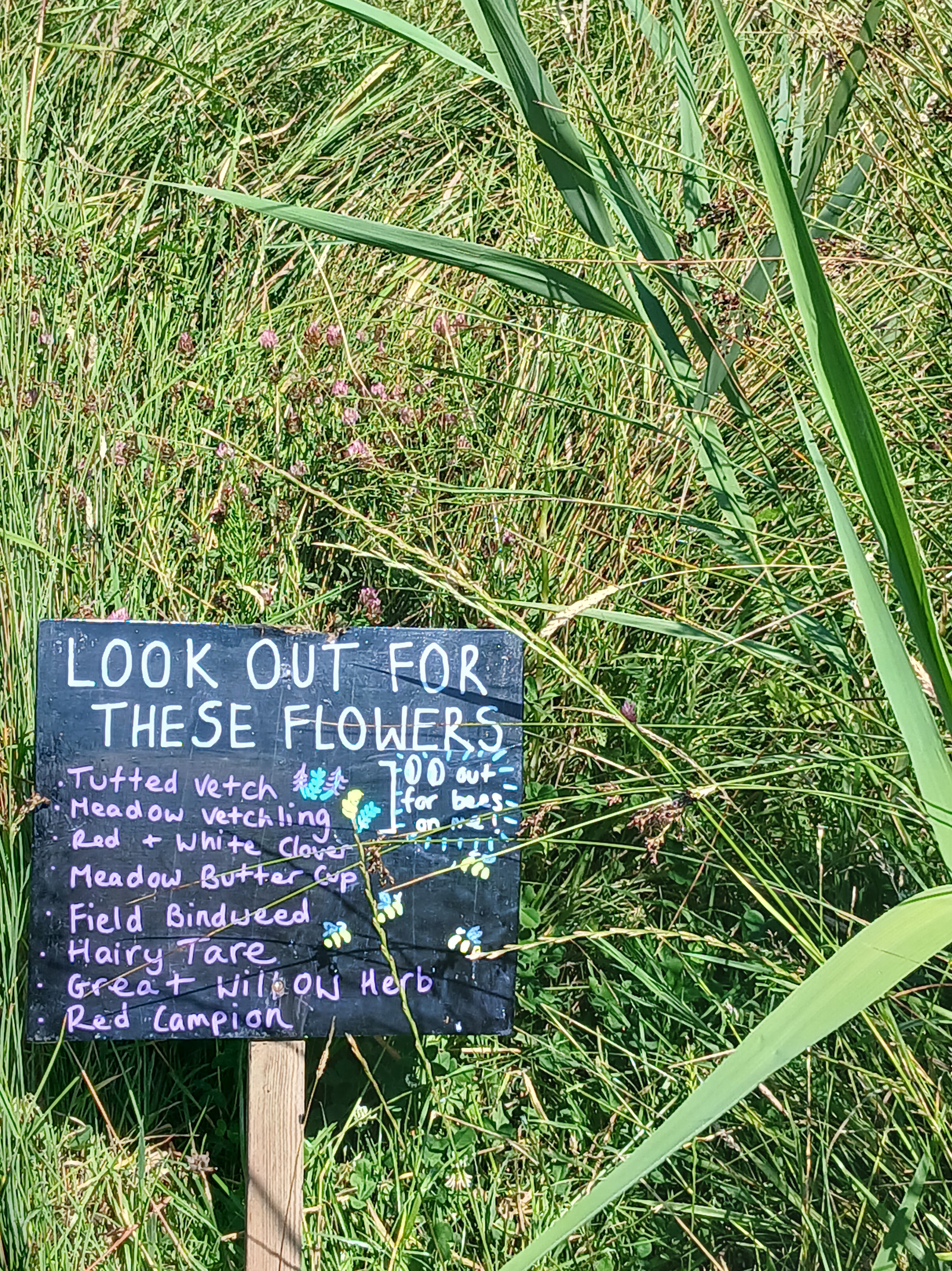
        All of these moths and butterflies – and various bees, hoverflies and other insects – are drawn to the various plants of the marshland. The Meadowsweet is a lovely, creamy colour and smells wonderful (well, it’s there in its name of course); and Tufted vetch is particularly abundant at present. There is clover – both red, and white – and Red campion as well as many, many more wildflowers and plants that play their part in attracting these pollinators. In fact, visitors (adults and children) are encouraged to look and see what’s around them.
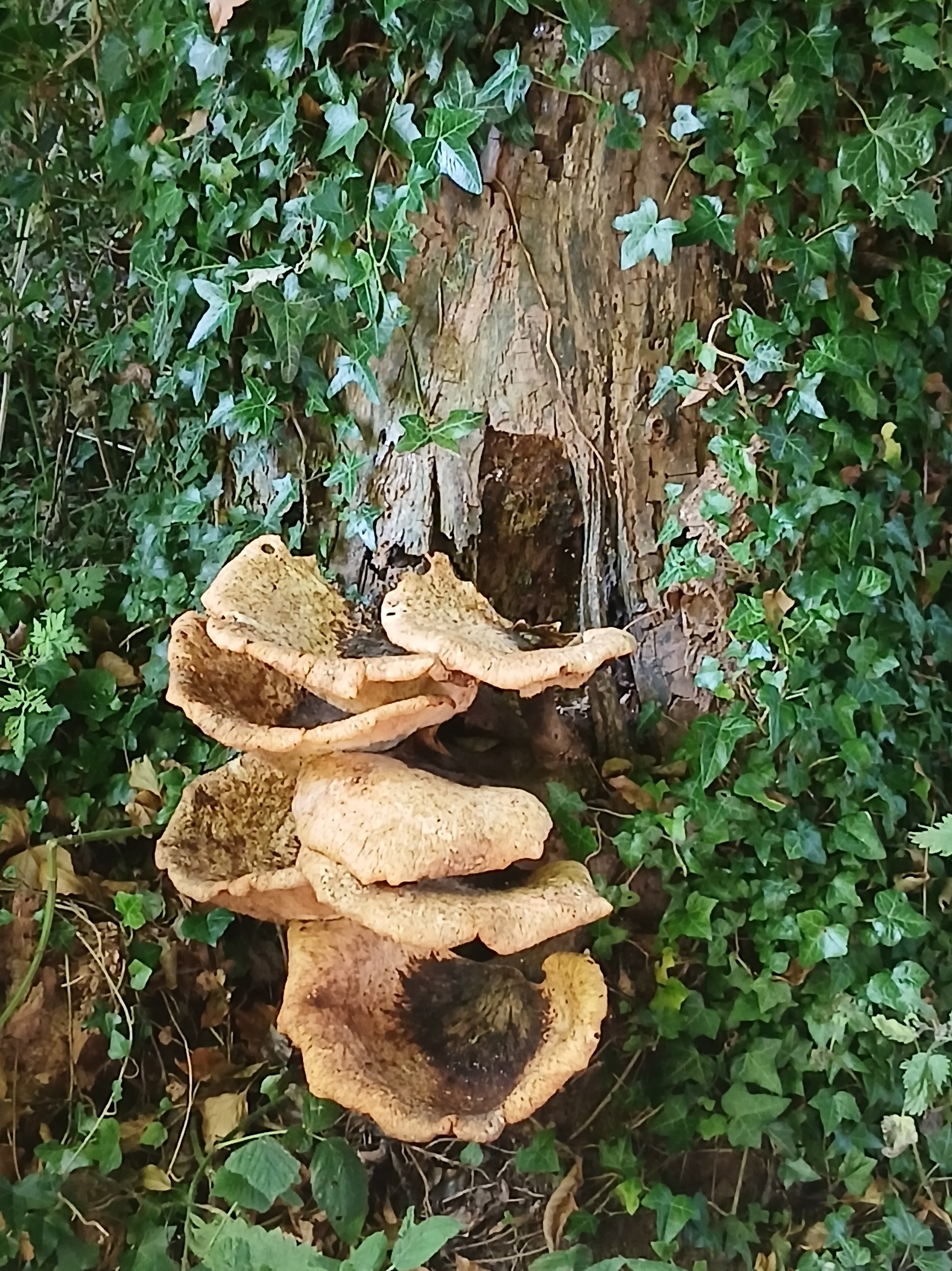
        I noticed several large, light-brown mushrooms at the base of a dead tree just off one of the paths. For all that I’m a fun guy, I know very little about fungi (oh dear…!) so I had to look these up later. The mushrooms are known as ‘Dryad’s saddle’ which is a name that relates to supernatural beings from Ancient Greek mythology. I imagined these dryads (tree-nymphs) resting while taking a break from their usual activities, which are essentially dedicated to protecting the tree or trees in their charge. As you can see, the mushrooms grow one above another almost in ladder form, and I imagined the tree-nymphs had scampered up them to conceal themselves at my approach. It obviously worked because I didn’t see any at all that day!

        The visitor’s centre has a couple of whiteboards on which the current day’s sightings and the previous day’s sightings are listed. This is not just confined to birds, but also butterflies, moths, and plants and wildflowers. I think this is a great idea: inevitably, you miss things, so it’s good to check the boards. Not so much to see what you’ve missed, but more to give you an idea of the variety of flora and fauna that’s around you, just waiting for you to discover on your next visit. I’d seen a couple of Common blue damselflies and one Brown hawker dragonfly as I headed back from the Border hide, but only back at the visitor centre did I learn that the Five-spot burnet moth inhabited the area. And I only learnt this because somebody listed it on the whiteboard. Now I know, of course, you can guarantee that I’ll never see one here!   

    The important stuff

    I went to the café and had a lovely cup of tea and a slice of Sour Cherry and Pistachio cake, which left me fully restored after the morning’s exertions in the sun. Lovely!
  • Singing in the Rain

    (Sunday 10th March 2024)

        At Loggerheads Country Park this morning with Stu, in constant rain. As we walked down the left bank of the river towards the wooden bridge, there was a flash of yellow as a bird swooped in front of us: sure enough a grey wagtail had crossed our path. It bobbed its tail for us for a moment or two before departing. We crossed over and began our walk along the muddy Leete path. As we entered the wood just beyond the kennels, we heard a song thrush. Through my binoculars we could see him on top of a conifer singing joyously, impervious to the relentless rain. He sang a musical phrase and repeated it a couple of times, then selected another phrase from his varied repertoire, repeated that a couple of times and so on.  

        We continued along the increasingly soggy path, encountering blackbirds and robins on the way. After another two miles, we decided to turn back – the path was just getting more muddy and watery. Re-approaching the kennels, we were amazed to hear the song thrush was still there perched on top of his conifer and still happily singing!  I have read that song thrushes are happy when it rains as there are more worms wriggling their way to the surface to escape the water, but surely they would be on the ground tucking in? The Mistle Thrush is the thrush that has the reputation for singing from the treetops in bad weather – in fact, it has also been known by the name of Storm Cock due to this habit. But this was a song thrush that we saw and heard. Perhaps it’s something that runs in the family!

  • Along the Leete

    (Sunday 14th April, 2024)

            Stu and I were at Loggerheads this morning. ‘But they get on so well together!’ I hear you say. So, to avoid any misunderstanding, we were both at Loggerheads Country Park in Denbighshire, which is a popular wooded area through which the river Alyn flows. (Actually, when I say flow…well, I will come back to that later).

    It was virtually mud-free on the path now, and: in fact, this was the first time we walked the full length of the Leete for quite some time. It was a refreshing change to not get bogged down!

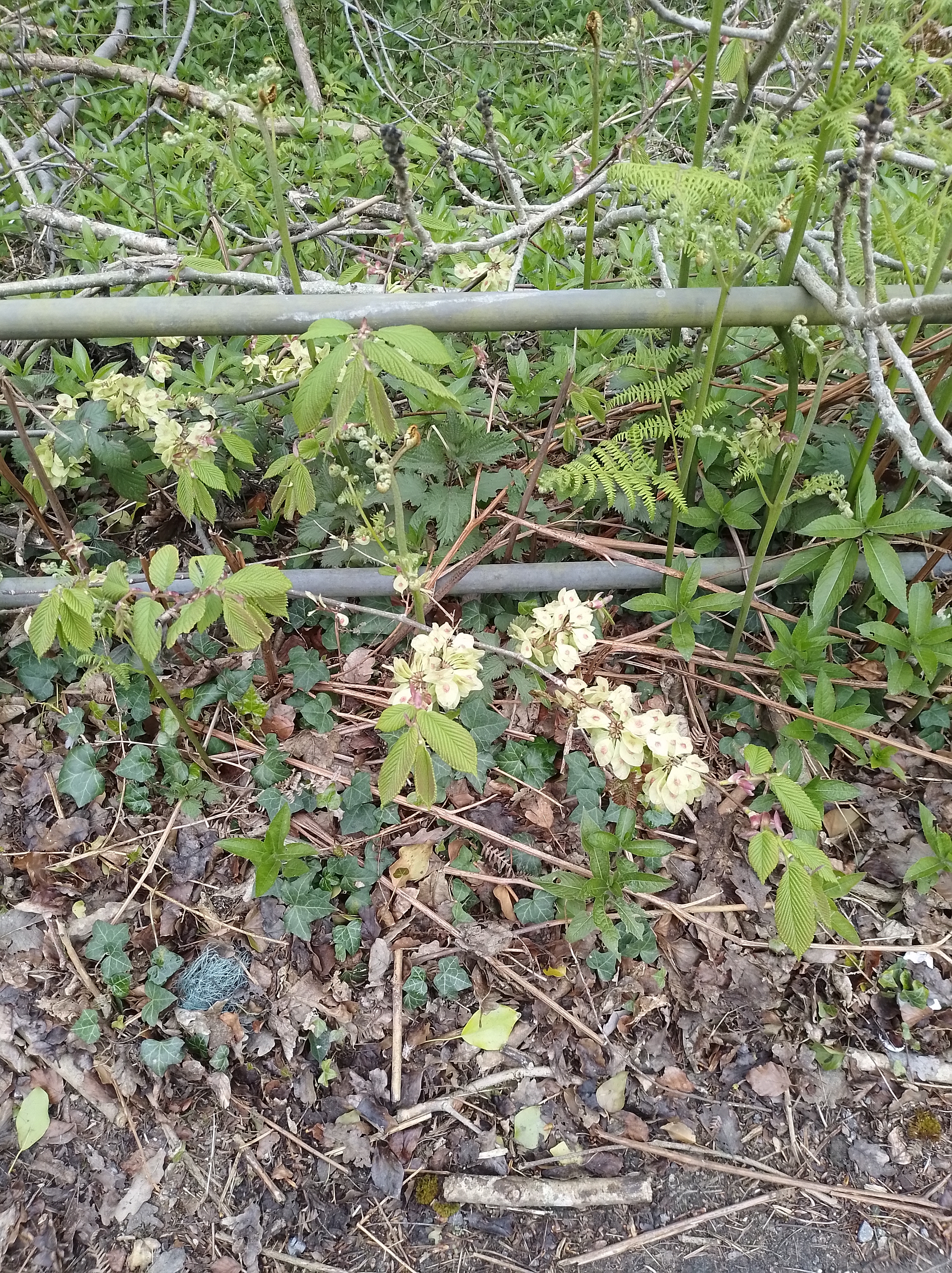
        We saw blue tits, great tits, robins, blackbirds and what Stu thought was a chaffinch, and what I thought was a stonechat – I was convinced the bird had a black head but it only appeared fleetingly so its identity will remain forever unknown. The forest floor was bedecked with a range of flowering plants: there were creamy-yellow primroses, bluebells, dandelions, daisies, wood violets, celandines, campion, and the odd residual clump of daffodils. We also spotted a single group of wood anemones on the far bank before crossing the bridge to join the Leete path. Colour was everywhere and such a contrast to earlier visits in the year when, apart from the few conifers, everything was a dull and neutral shade.

        Towards the end of the Leete path at the Cilcain end, we saw that many of the trees had been coppiced. Not only does this allow in more light due to the clearing of the canopy, but it also opens up the views down to the valley floor and across to Moel Famau and the Clwydian range. Coppicing is carried out regularly to encourage plant and tree growth and sustainability.

        Today the river Alyn was in full spate. As I intimated at the beginning, the Alyn’s water flow is not always constant and can vary considerably; this being most noticeable during prolonged dry weather spells, when the level drops and the bed runs dry particularly at the far end of the Leete Path. ‘Leat’ (also spelled ‘lete’ and ‘leet’) is defined in the Merriam-Webster dictionary as ‘an artificial water trench leading to or from a mill’, and there is indeed an old mill by the Visitor Centre which was a corn mill and later a sawmill in its working life. River levels drop of course, but the Alyn also flows underground quite extensively at certain points because of natural gaps in the limestone bed which swallows a lot of the water, much of which is also carried into an underground cave system to the north of the park. Often, as you travel the Leete path in a north-westerly direction, the bare stones of the riverbed are the only markers of the river. I must point out though that this is mainly during prolonged dry spells, and when the temperature has risen.