Tag: photography

  • Geese on the Wing

    (Sunday 17th August, 2025)

       Over to Burton Marsh this morning on the western side of the Wirral peninsula. After parking up, we followed the path north-westwards towards Neston, flushing out a male Pheasant from the marsh scrub as we walked close by, although it was completely accidental. It was a little hazy looking over the marsh towards the Flintshire Bridge, but this quickly cleared during the morning.
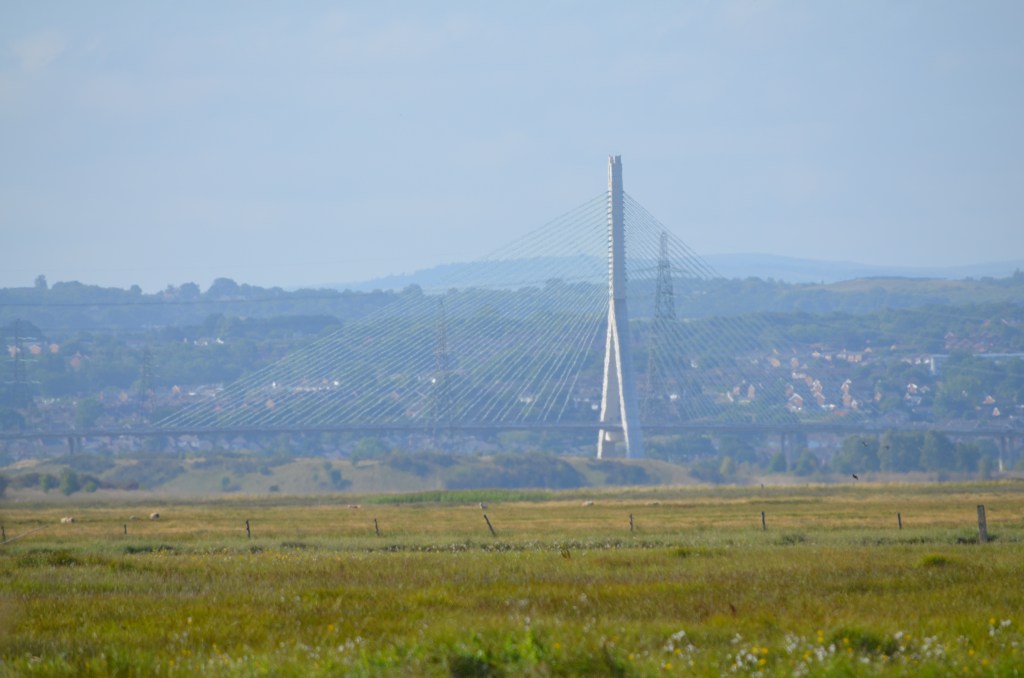
    Flintshire Bridge in the haze

    We saw several separate flocks of Canada geese flying over various sections of the marsh’s broad expanse. (I should call them ‘skeins’ of geese as they were all flying, but the term seems a little pretentious somehow). We were fortunate that one small flock passed quite close above and we witnessed two of the geese move from the rear to the front, which is something that neither of us had seen before other than on television. As the pair moved up, the flying-V formation was somehow maintained. The photograph below captures the moment just after the two Canada geese had changed positions with the rest of the birds.
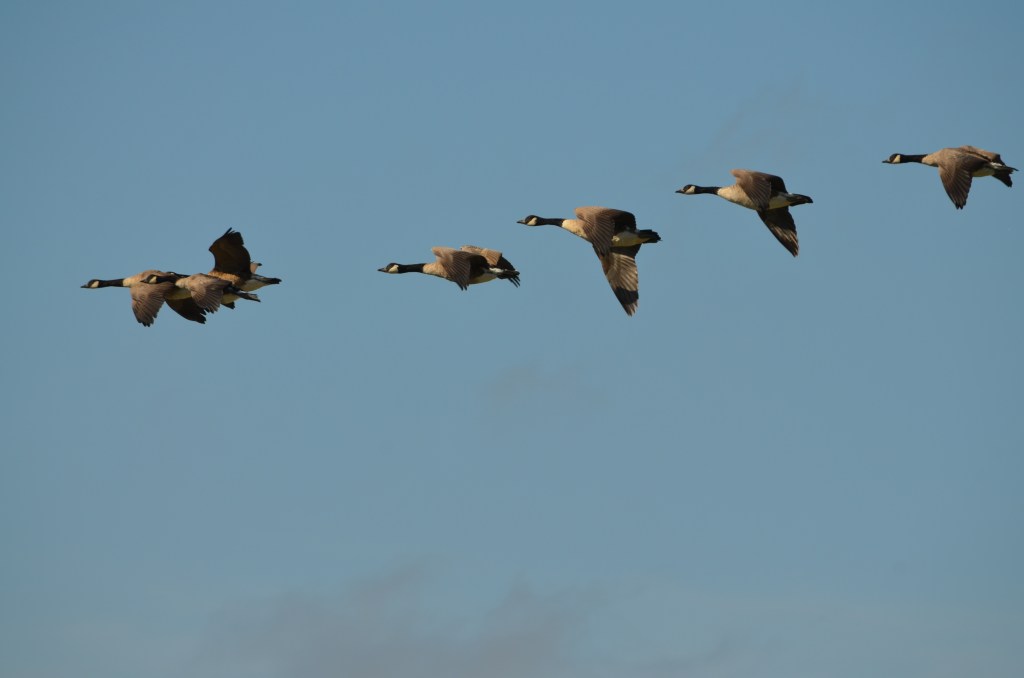
    Canada geese switching positions

        I believe that Canada geese resident in the United Kingdom are viewed as non-migratory, although I can guarantee that my local golf-course pond will be absent of Canada geese and Greylag geese for the winter months again this year, so they must go elsewhere within the country. (Mind you, I think that the two pairs of Moorhens that remain here, near my home in North Wales, breathe a sigh of relief at their temporary absence!) I only mention this because I’m convinced that the numerous (let’s be pretentious) skeins of Canada geese flying over the marshes were stretching their wings to keep in trim for a longer flight to be taken soon – perhaps to the eastern part of the country? Whatever the reason, the geese were very active this morning. One group of about seven geese had two stragglers trying desperately to catch up with the rest of their companions: we immediately named them ‘Colin’ and ‘Stuart’, to nobody else’s amusement but our own!

    Still chortling at our amazing wittiness, we observed lots of Swallows zipping low down over the marsh gathering and eating as many insects as they could, in order to help ready themselves for the 6,000 mile journey back to South Africa and Namibia, where they will over-winter. We saw hundreds more Swallows later, massing on the telephone lines by Net’s Café, where we inevitably ended up so as to satisfy our demanding stomachs.

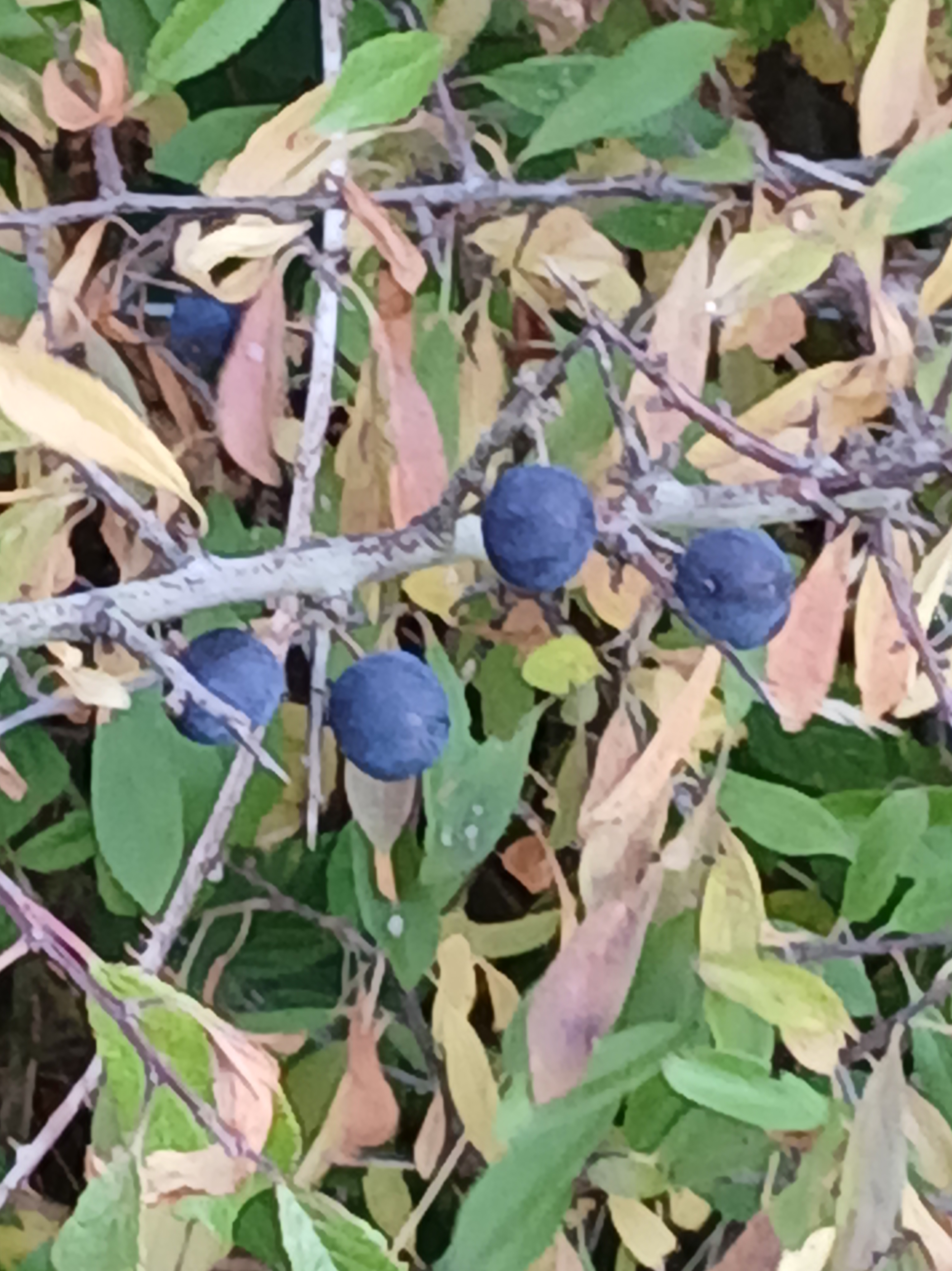
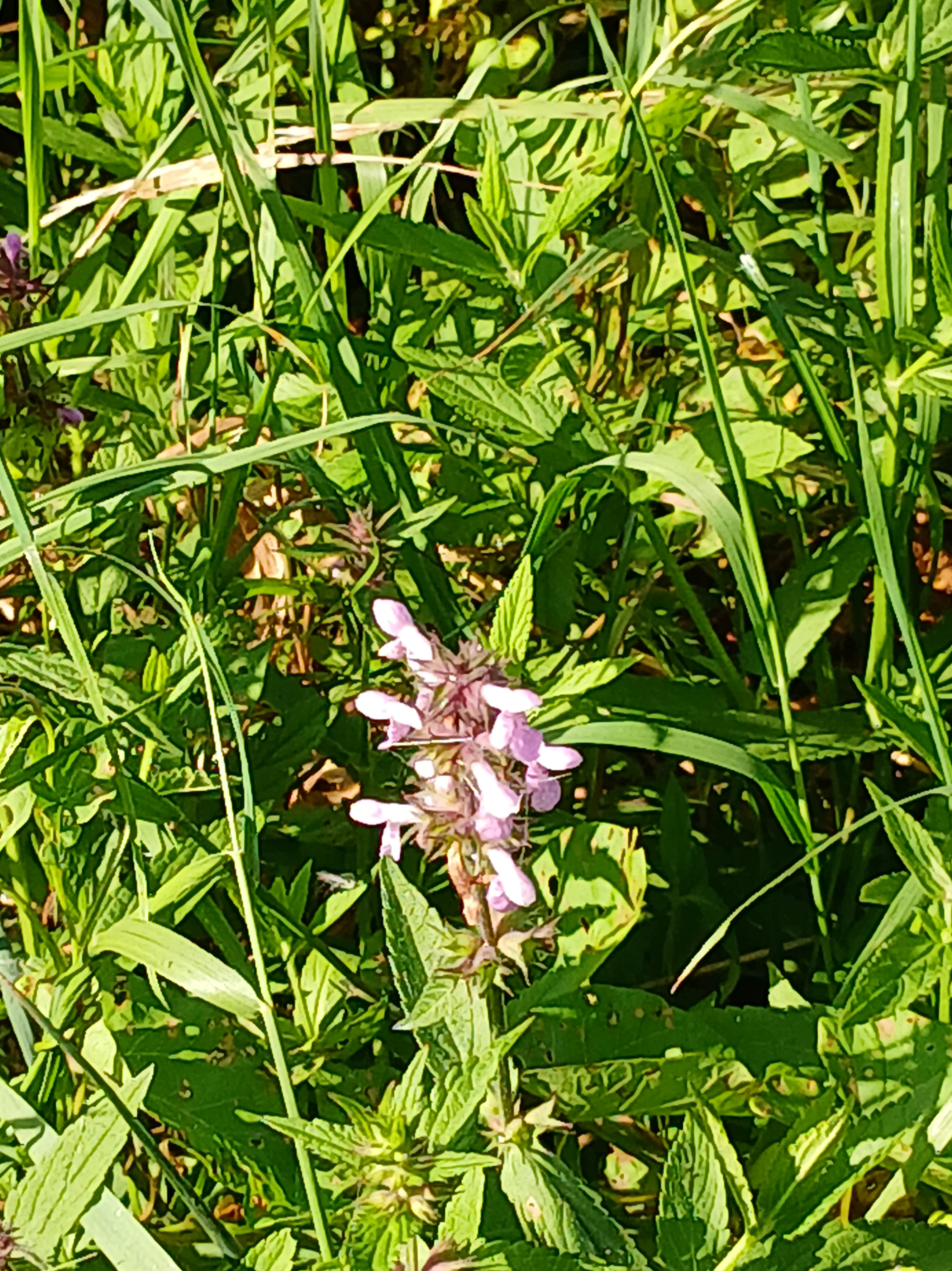
    Common mallow, Meadowsweet, Yellow iris, Common hemp-nettle (the leaves of which don’t carry a sting but can nevertheless be an irritant to skin) and Crab apple trees bordered the lanes. Fruits were also supplied by Hawthorns (haw berries) Blackthorns (sloes) and Dog roses (rosehips). The thorny thickets formed by these shrubs and trees are also ideal for nesting, as they help offer protection from predators.   
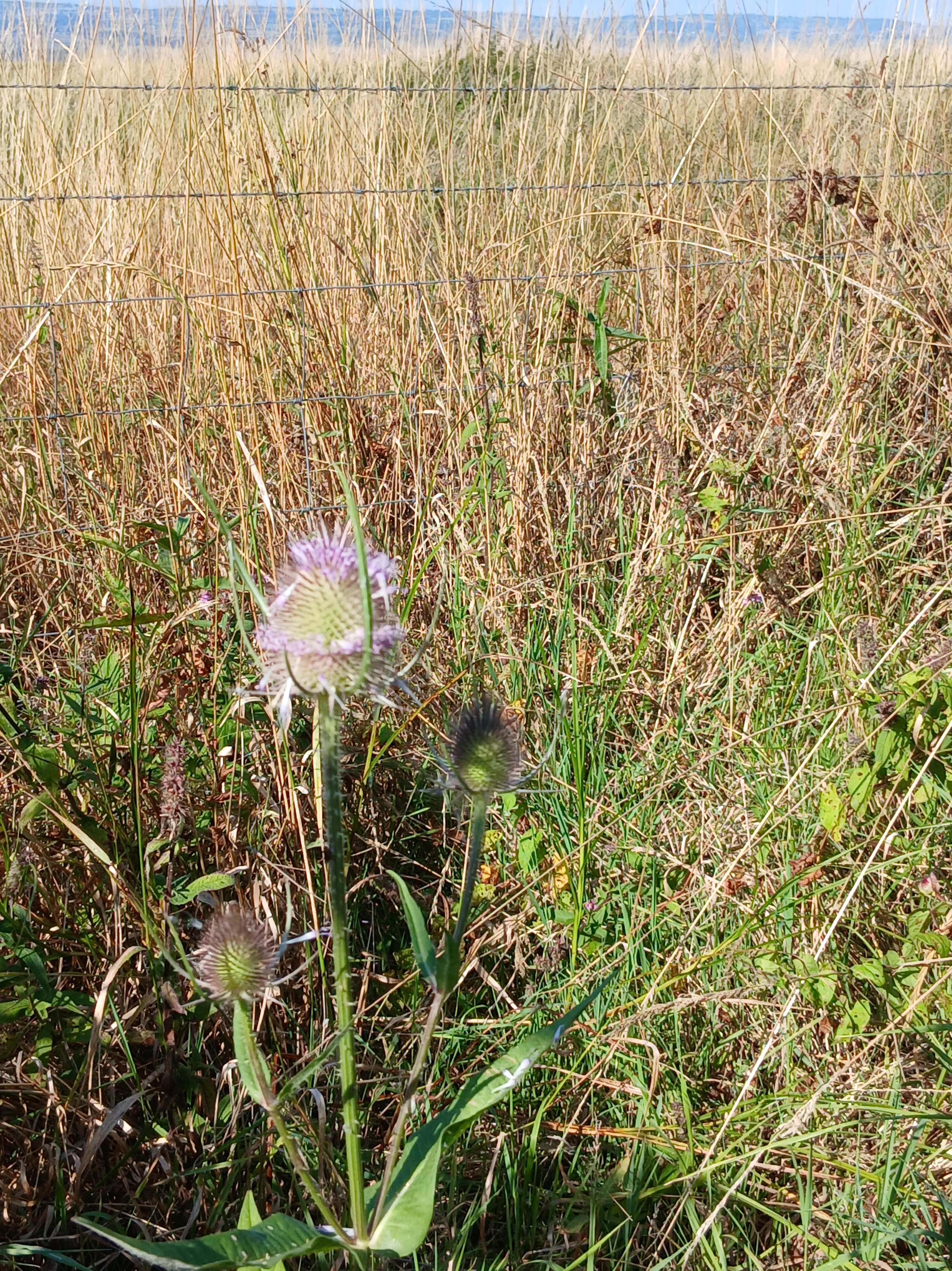
        Teasel, Blackthorn, and Common hemp-nettle

    The important stuff

    As mentioned above, we concluded the day’s outing at Net’s Café, where we both had our usual cappuccinos – accompanied by a Chocolate Brownie (Stu) and a slice of Cinnamon and Apple cake (Col). Scrumptious!
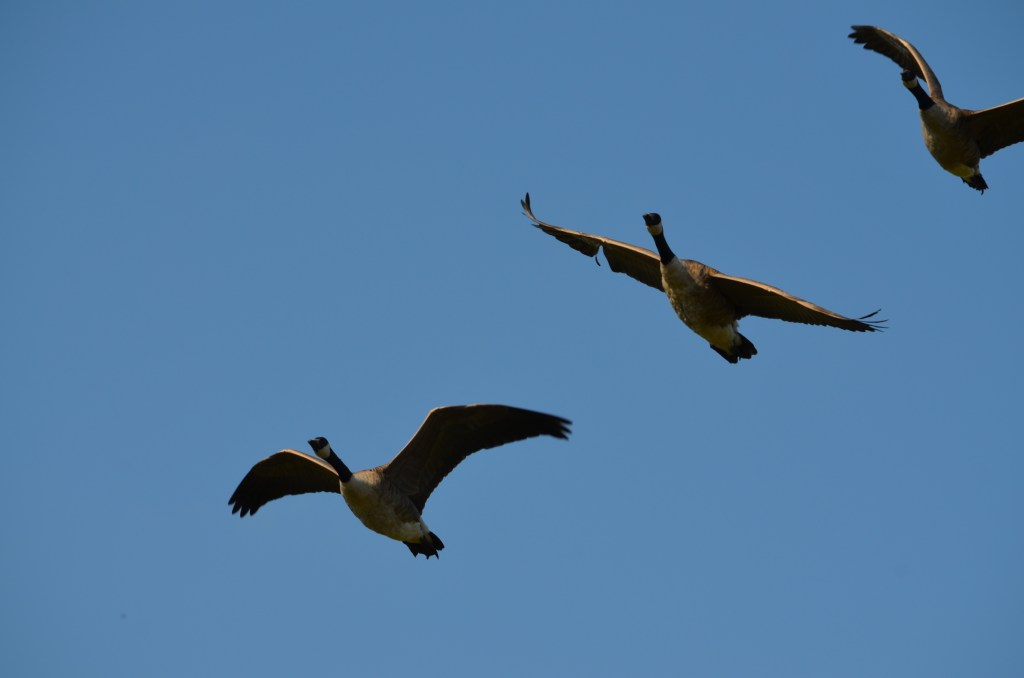
    Canada geese on the turn
  • Bird-ringing at Ness Gardens

    (Wednesday 13th August, 2025)

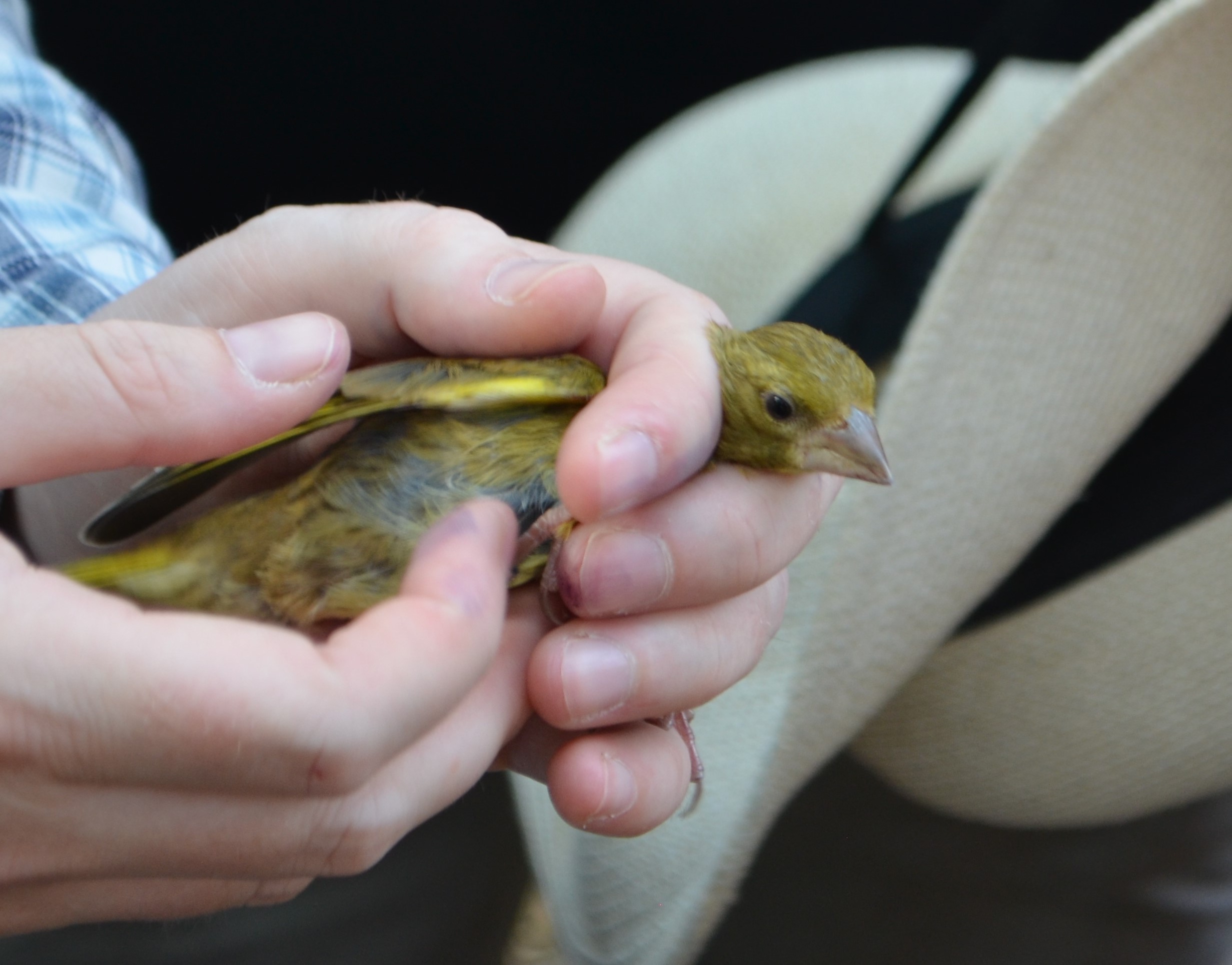
        Over to Ness Botanical Gardens today for the bird-ringing demonstration being held by the Merseyside Ringing Group. The team had set up mist nets between poles on known or suspected flight paths earlier in the morning, and these nets enable the birds to be caught safely. Each bird is identified by species, sexed (although this is often quite difficult with young birds), weighed, measured from shoulder to wing-tip, and tagged with a unique identifying ring, which is placed around one of their legs. Similar data is recorded for those birds that have been ringed previously and, in this way, a picture can be built up of the behaviours, migratory patterns, population size and general health of the various species of birds.

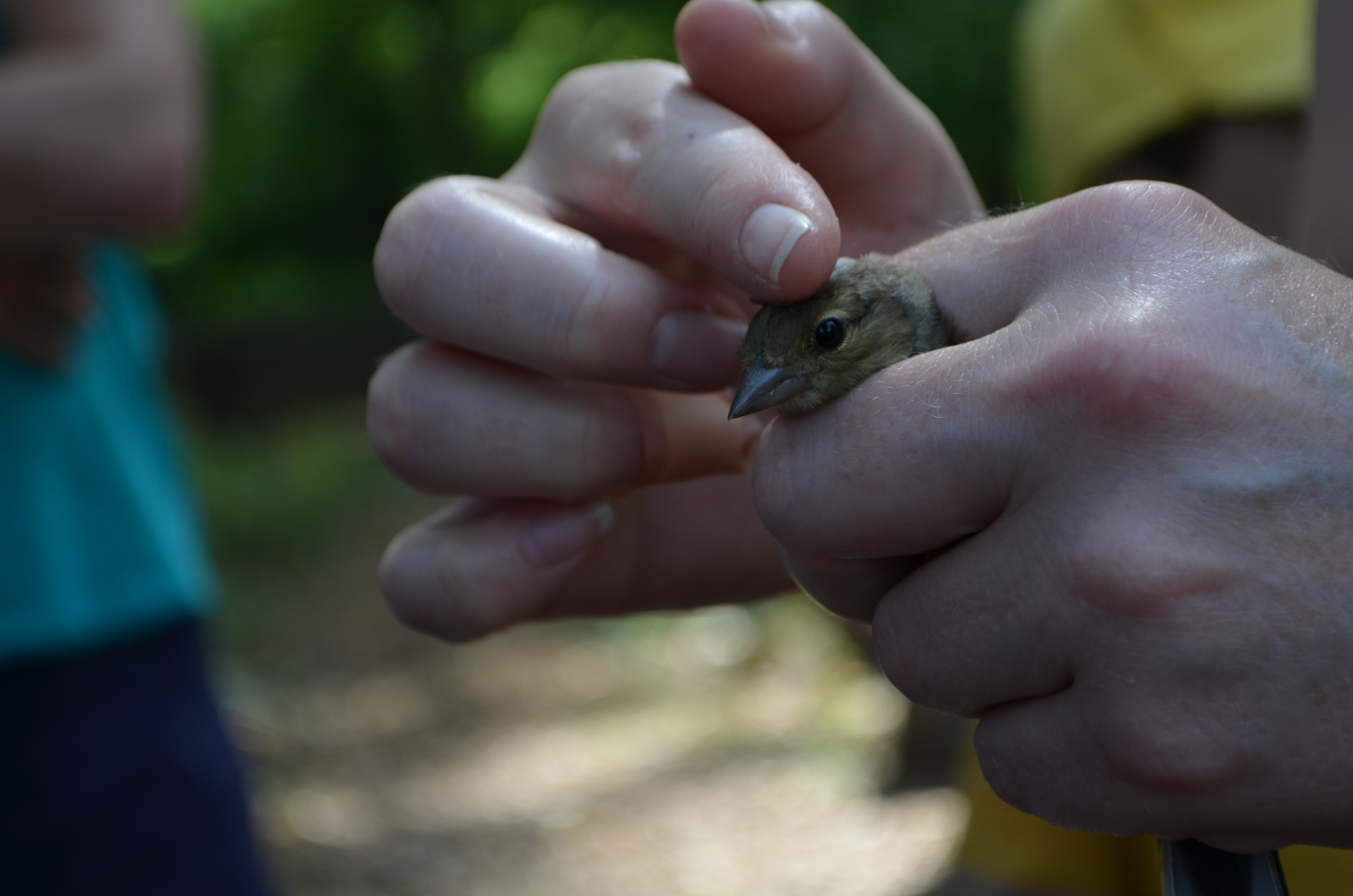
        Above: Greenfinch and Great tit being held prior to release

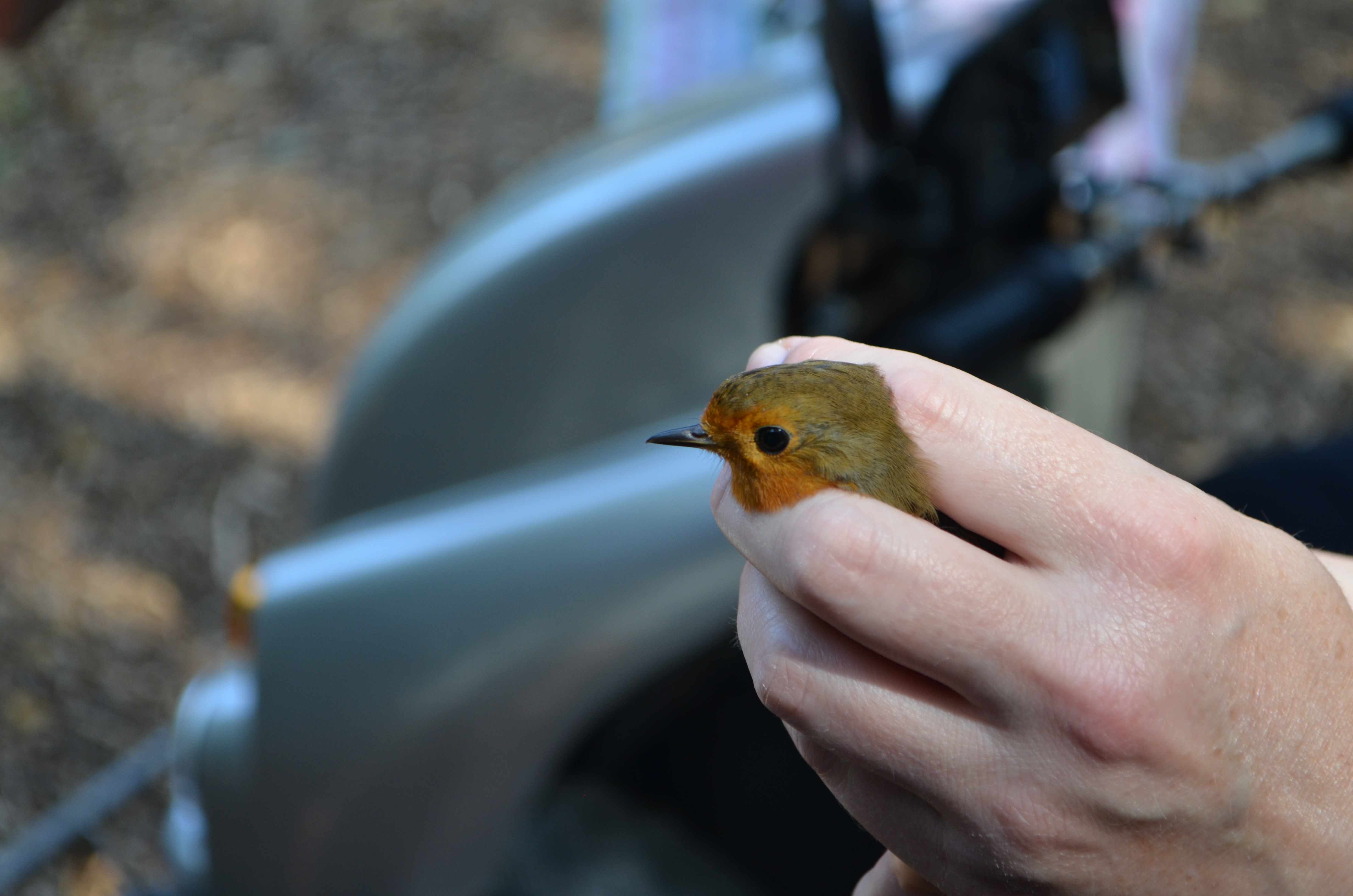
    Quite a variety of birds were captured, including Blue tit, Great tit, Greenfinch, Chaffinch, Blackcap, Chiff-chaff, Dunnock, Blackbird and a Robin. The Ringing Group were all very knowledgeable and engaging, each patiently instructing various members of the audience on how to safely hold the birds and to safely release them back into their habitat. Sometimes, a bird may be temporarily disorientated, which is why you’re advised to offer a supporting hand beneath them, in case they should fall. When I released the Robin, for example, it remained in my supporting hand for a few seconds before eventually flying off. It was great to see the pleasure on people’s faces – young and old – as they held the birds then released them. Pure joy, really!

        Above: Chaffinch and Robin

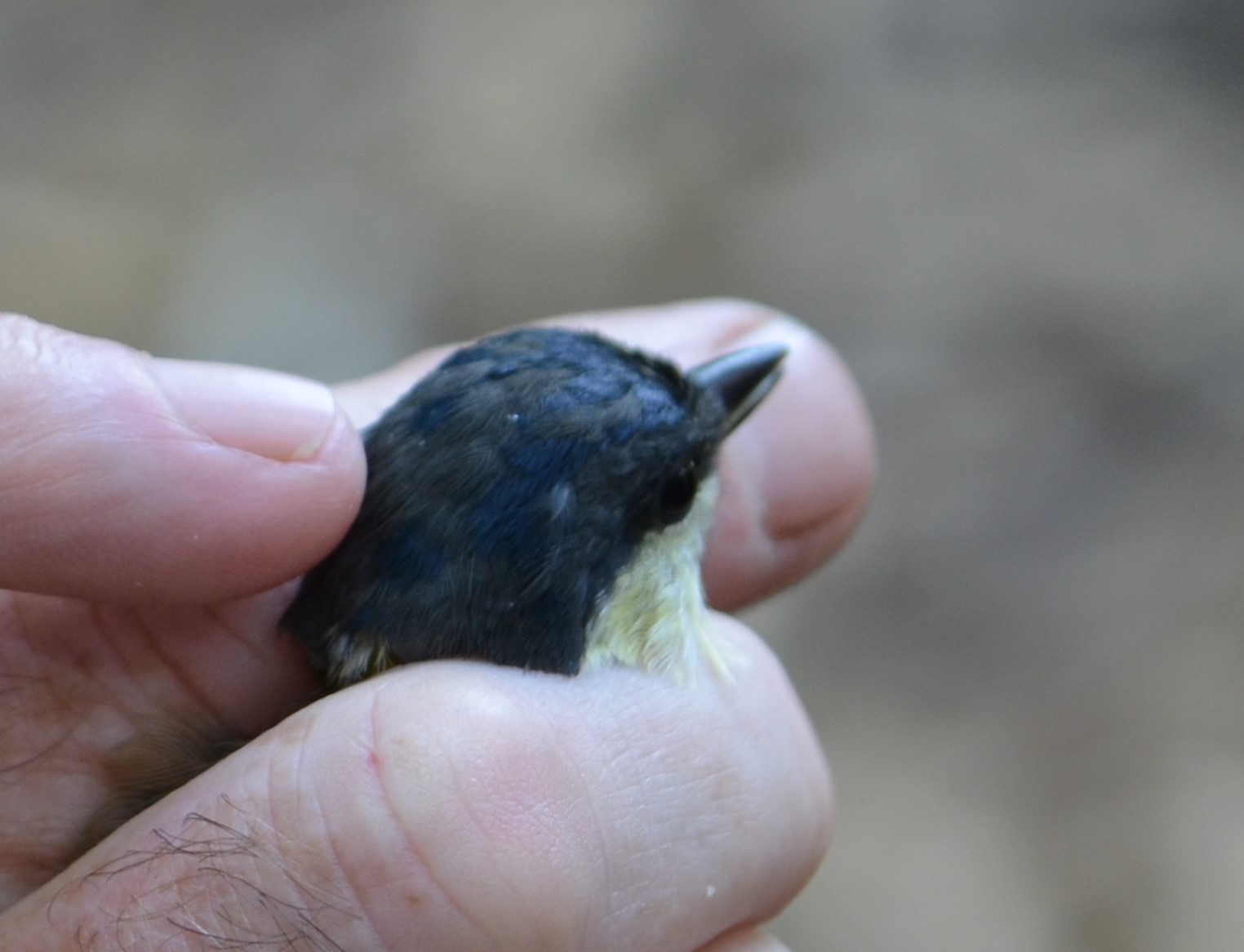
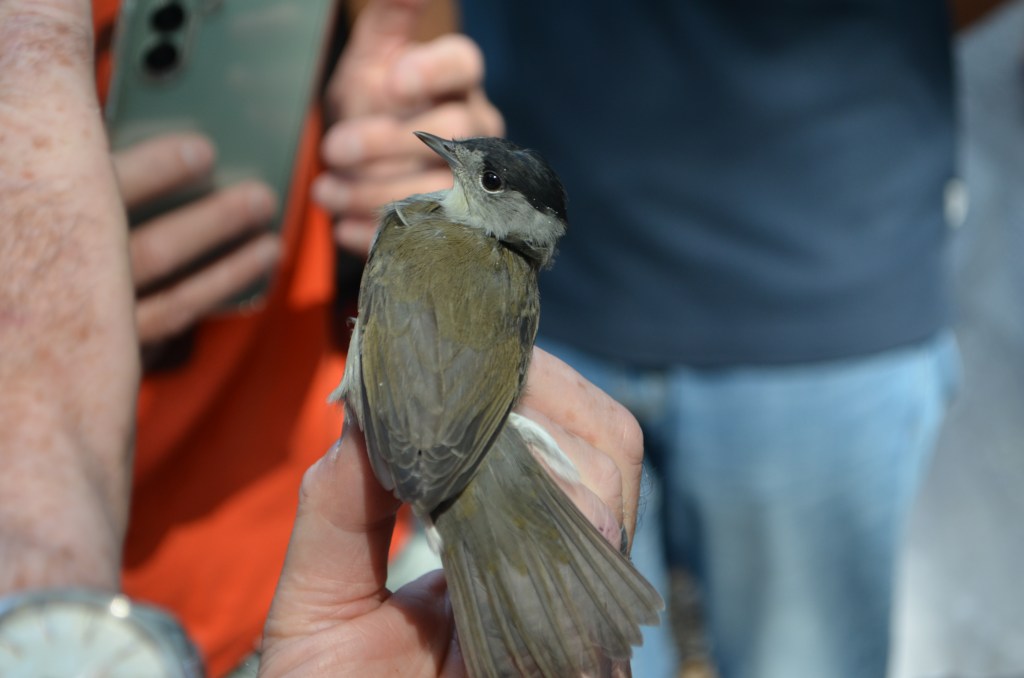
    If you do get the chance to attend a bird-ringing demonstration, you’ll find that not only do you get to see birds in close-up, but that you learn more about them through this close attention. For instance, I didn’t know how fond of blackberries the Blackcap is, until one of the bird-ringers smoothed back a male Blackcap’s feathers on its belly: this revealed the dark stain of blackberries on the bird’s skin beneath, and we could see the evidence on the bird-ringer’s fingers as well!

        Above: Blackcap (male)

    Although we did go up to the viewing point for a few minutes, to look across at the Welsh hills, it was a very hot and sunny day (26°C). This was fine while we were in the shade, but not so bearable out in the open.

    The important stuff

    The café was very busy here today – there were several other events on at the same time (it was Celebrating Nature Day at Ness Gardens today) – and the extra bodies were adding to the general heat. We decided to chance it and drove down to Burtons at the Manor in Burton village. We managed to park and we sat outside, sipping our cappuccinos and chomping on Orange Clementine Cake (Stu) and Victoria Sponge (Col). Marvellous!   

  • The Delights of the Donkey Stand

    (Sunday 10th August, 2025)

        Over to Parkgate this morning, parking at the Old Baths Car Park. Today is the last day to submit data for the 2025 Big Butterfly Count, so perhaps we were looking more closely than usual, but we saw lots of Small white butterflies and Large white butterflies flying in the warm sunshine and at Parkgate Marsh this morning. This year shows much more promise than last year, which was a bit of a wash-out due to the wet spring, and hopefully this will be reflected in healthier numbers once the 2025 butterfly count comes in.

        A lovely day today with very little breeze, and one of the delights here on such days is the expansive view: the green grasses of the marsh itself seem to go right across to the Welsh side of the Dee, the river barely visible; and the vast blue sky over which a giant watercolour brush has swept and left its marks…well, let’s be honest, I can only do a disservice to the beauty of it all, so I’ll stop there – but you get the idea!

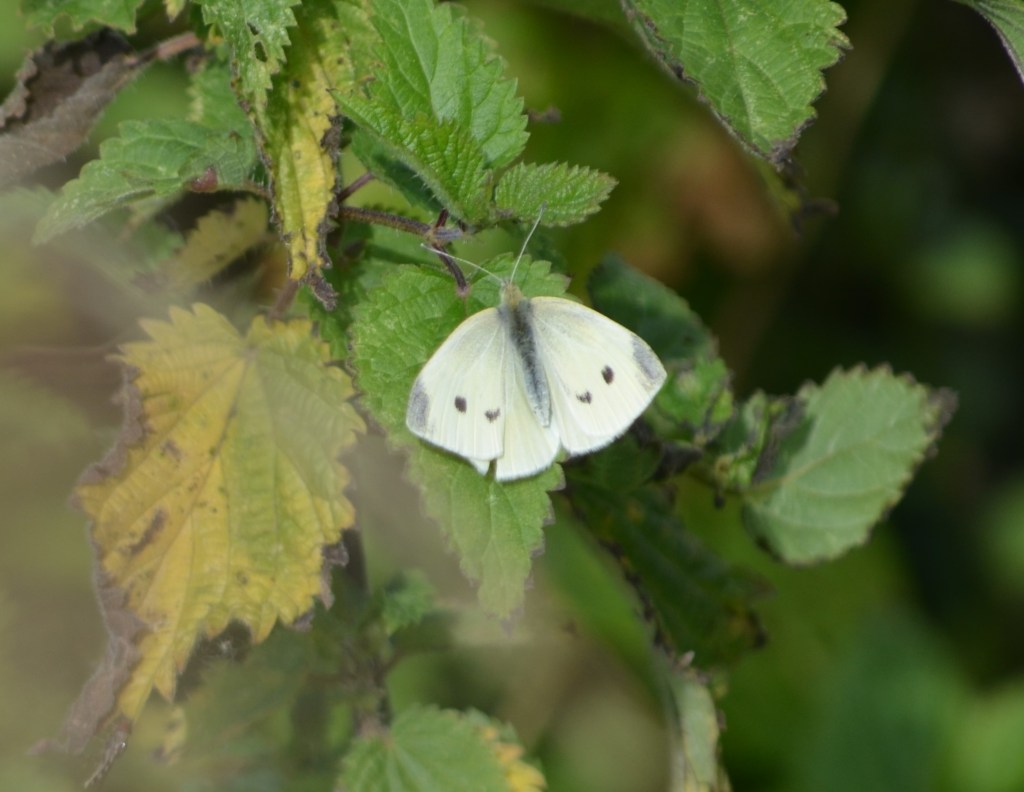
    Small white butterfly female

        A female Small white butterfly very obligingly presented itself for a picture just at this moment. We sauntered down to The Donkey Stand, which is so named because it was where, in former times, children climbed aboard the donkeys that would take them from here to The South Slip and back (where the Old Quay pub is now). We usually head to The Donkey Stand as, not only are there benches on which to rest one’s personality, but it’s also a great viewpoint for the nearby stretch of water (or ‘flash’ as it’s sometimes called), which attracts birds even on quiet days. As we arrived at the benches, we spotted a pair of juvenile Moorhens trying, not very successfully, to move surreptitiously towards their much better-concealed parents on the marsh.

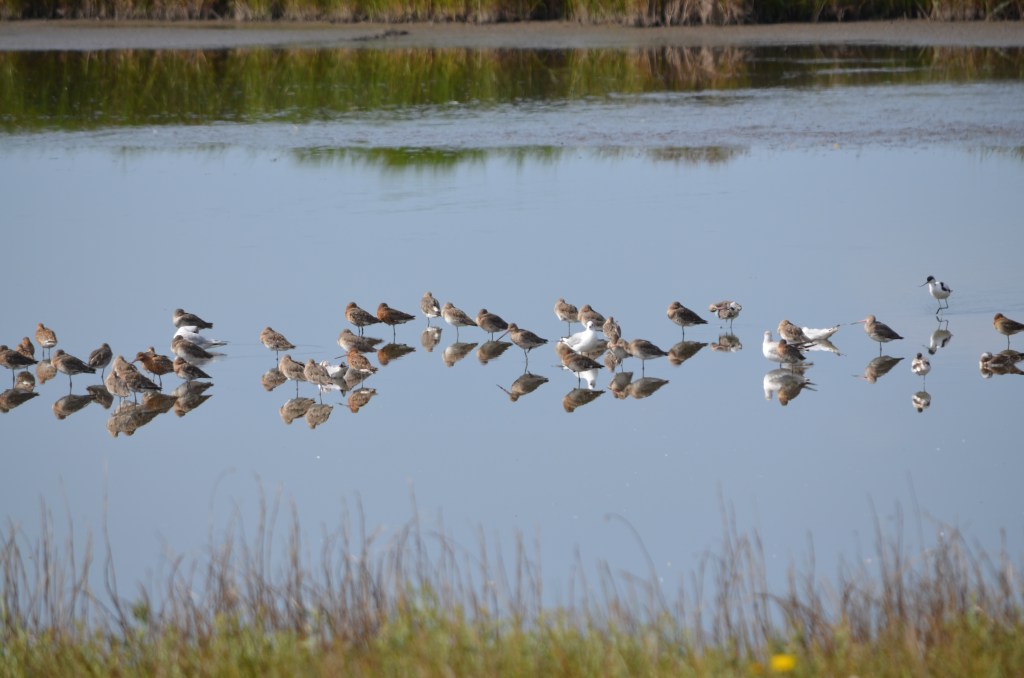
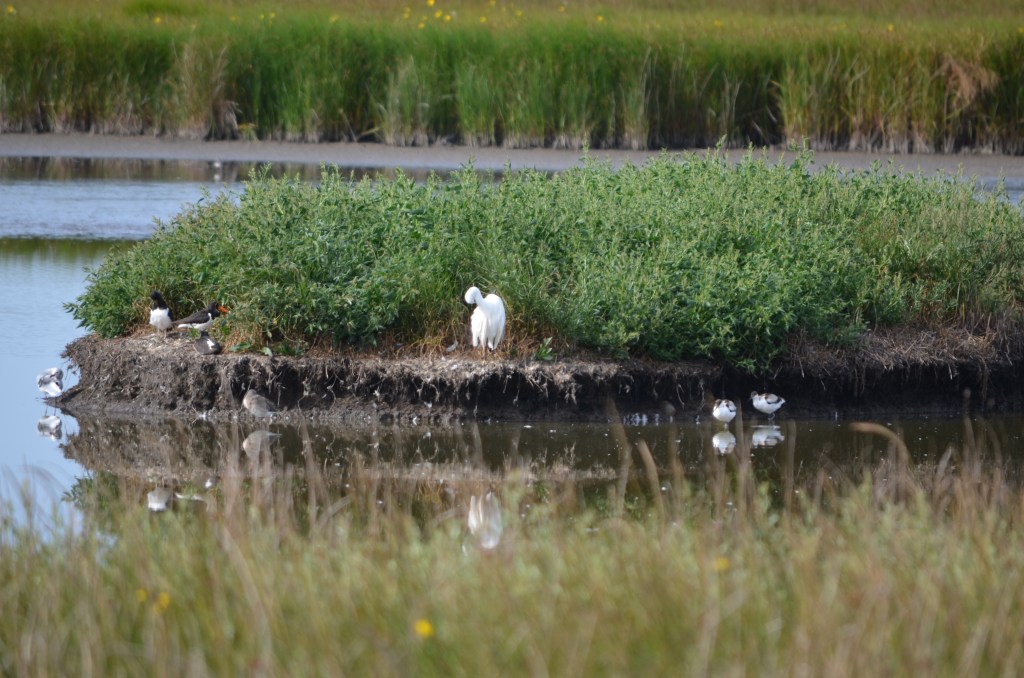
    Godwits, Avocets and Greenshanks
    Reflective Little Egret

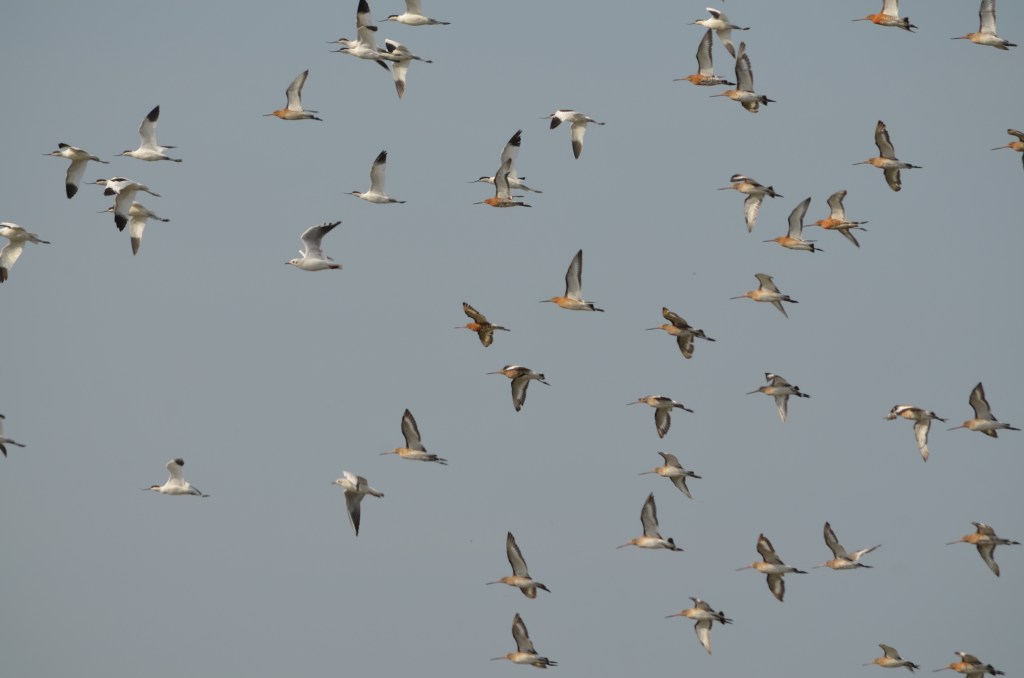
        There was an abundance of birds on the flash: Black-tailed Godwits, many with their lovely, burnished undersides, Avocets and Greenshanks were all wading in the shallows. On the isle in the middle of the water, a Little egret preened itself while a pair of Oystercatchers kept an eye on it. There were in fact three Little egrets that seemed to alternate between preening and suddenly marching through the water in search of food: the abruptness of their actions caused a little consternation with the other birds, who moved out of the way just as abruptly. Away from the main body of birds were two Lesser black-backed gulls, and it was noticeable that the egrets automatically avoided getting too close to these large gulls! (Later, all three Little egrets were on the distant shore when a Great white egret flew in. They scattered in different directions and I’m guessing that it was the suddenness of the Great white’s arrival that startled them, and not outright fear of being attacked).

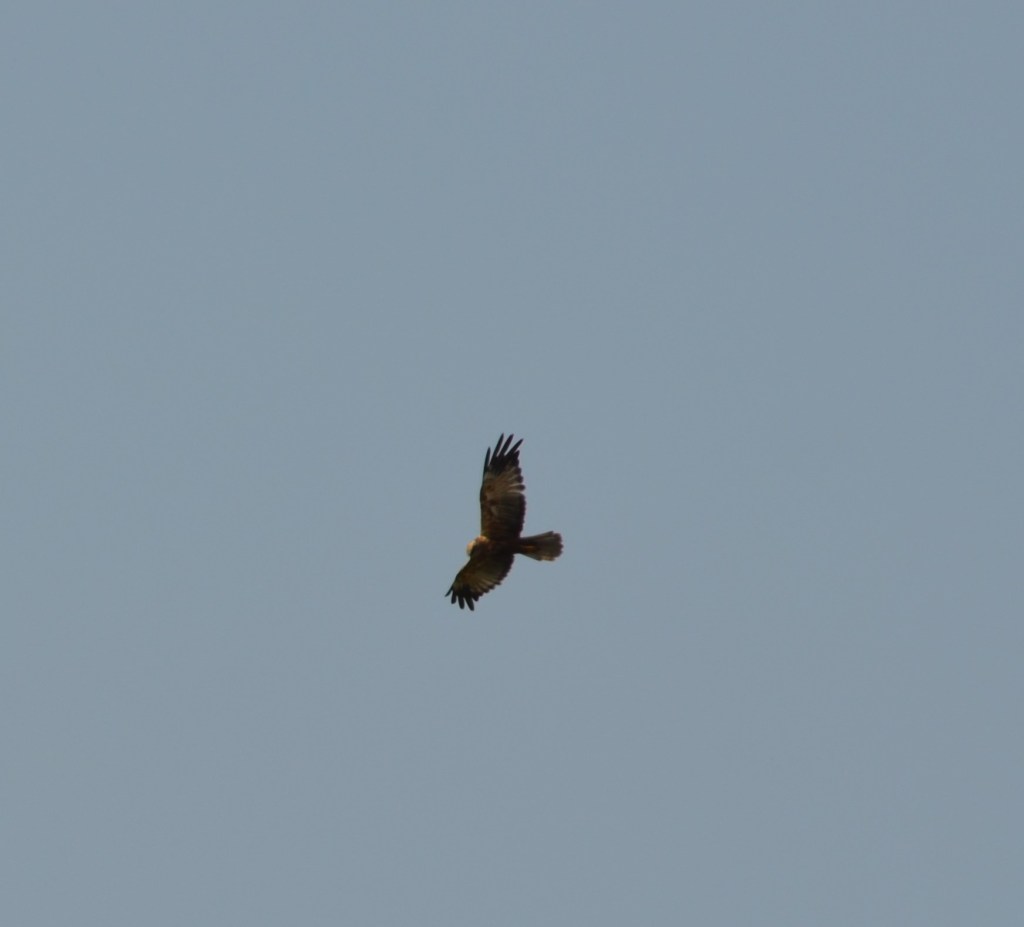
        Stu brought my attention to a Marsh harrier that appeared out of nowhere, flying over the water. It continued its low flight, sweeping across large swathes of the marsh until just as quickly disappearing from sight. We’d seen a Marsh harrier last week at Burton Wetlands, although only briefly. This one returned twice again and stayed around long enough for a photograph – it looks like a female, though I may be wrong. One of its appearances caused the Bar-tailed godwits and the Avocets to take to the air.  

    The important stuff

    After all this hard work, we sat on the bench outside Nicholls of Parkgate, on the opposite side of the road, and sipped our Cappuccinos, munching on Borders chocolate ginger biscuits. Ah! Bliss!