Tag: photography

  • Goldcrests at Loggerheads

    (Sunday 28th December, 2025)

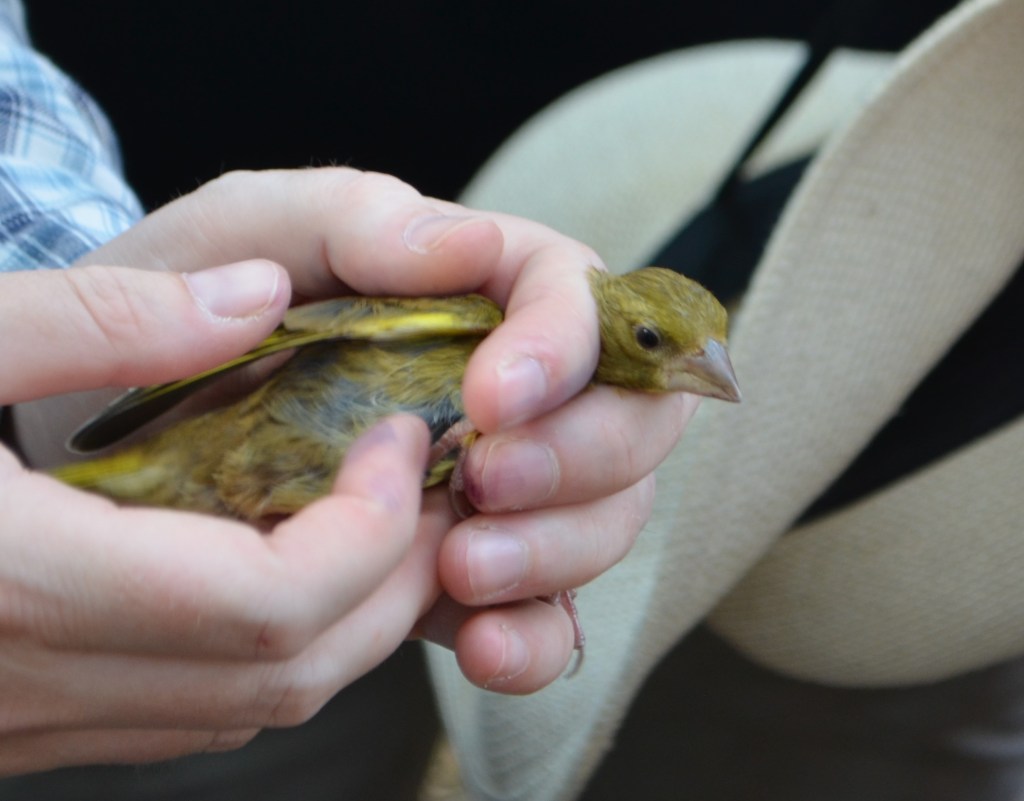
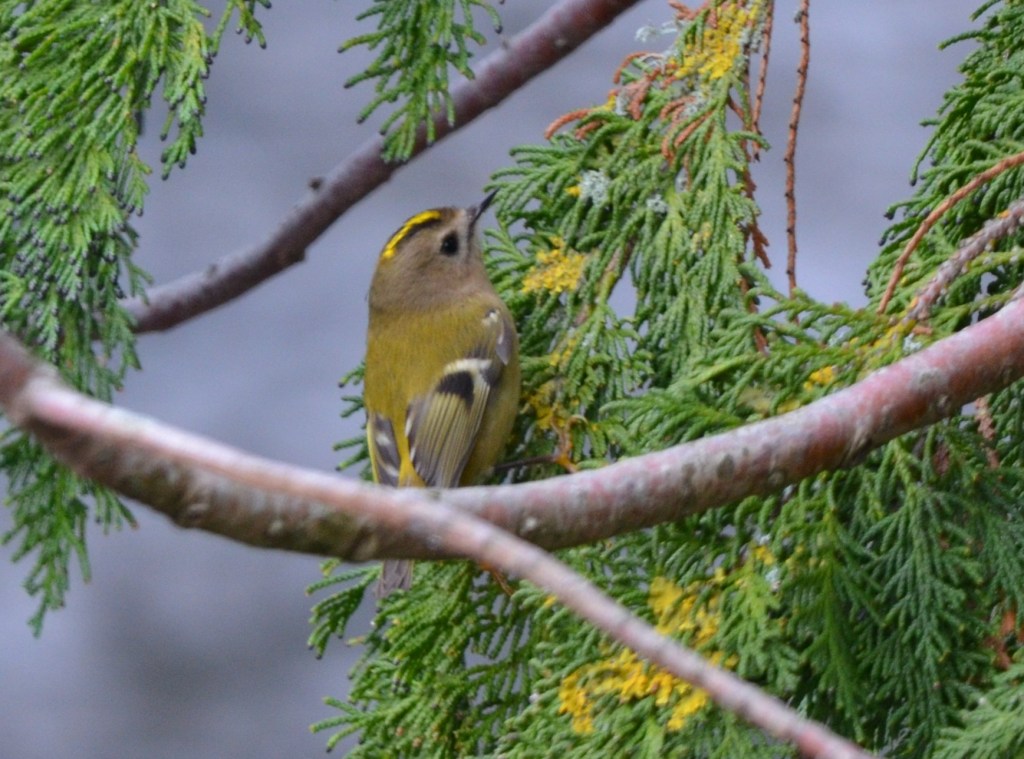
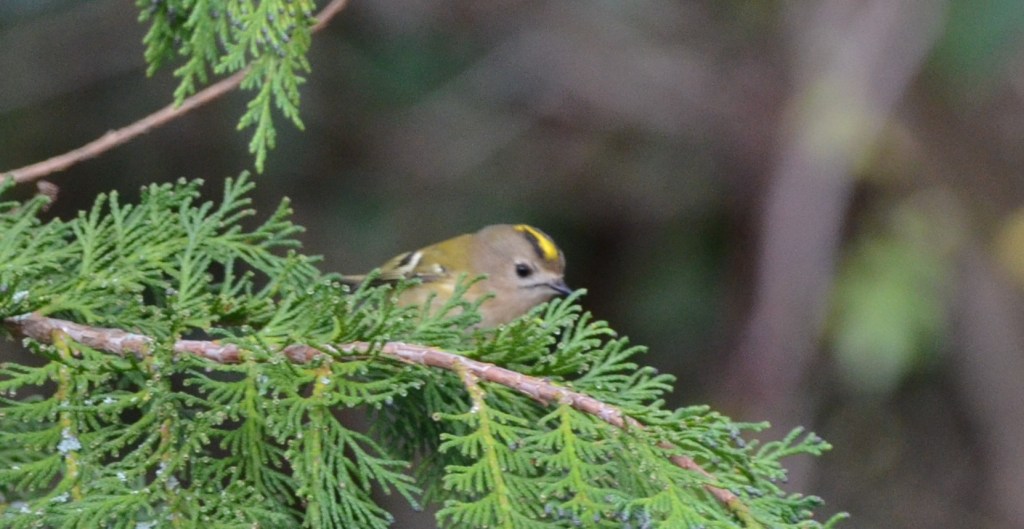
        Sometimes you just get lucky. We were just about to leave Loggerheads Country Park, in Denbighshire, and head home. Before we did so, we thought we’d take a last quick look from the little bridge opposite the We Three pub. Looking upstream, we caught glimpses of yellow as tiny birds darted around the lower foliage of a tall conifer. (Judging by the leaves, I think the tree is a cypress of some sort, but I’m not entirely sure). These birds were not easy to track but, looking through the binoculars, I could see that they were Goldcrests – the smallest bird in the British Isles and, in fact, Europe. These tiny birds are rarely longer than 9.5cm (3.7 in), with a wingspan no greater than 15.5 cm (6.1 in). On average, they weigh just 6g ( less than 0.25 oz) and are often described as weighing the same as a twenty-pence piece.

    Goldcrest in conifer

        Goldcrest

    The Goldcrest has whitish-grey underparts, olive-green upperparts and two contrasting white wing bars, and a distinctive yellow crest on its head, from which it gets its name. The male has a smudge of orange running through the centre of its yellow crest, although this is not always visible: presumably it becomes so when it ‘displays’ during the breeding season. So, the Goldcrest in the photographs could be either male or female. And kudos to Stu – considering how active these birds were as they probed the cones and leaves for food – the photographs turned out really well.

    Goldcrest 2

        Goldcrests are actually quite a common bird in the British Isles, where resident birds are joined by migrant birds from Scandinavia during the winter months, although neither of us had actually seen them ‘live’ before. And despite our climate becoming warmer, Goldcrests are still susceptible to the cold: they can ‘burn off’ a lot of body weight overnight when the temperature drops, even when they huddle together. It had been a cold night – and it didn’t climb above 5°C for the whole of the morning – so probably these Goldcrests were replenishing lost energy.  

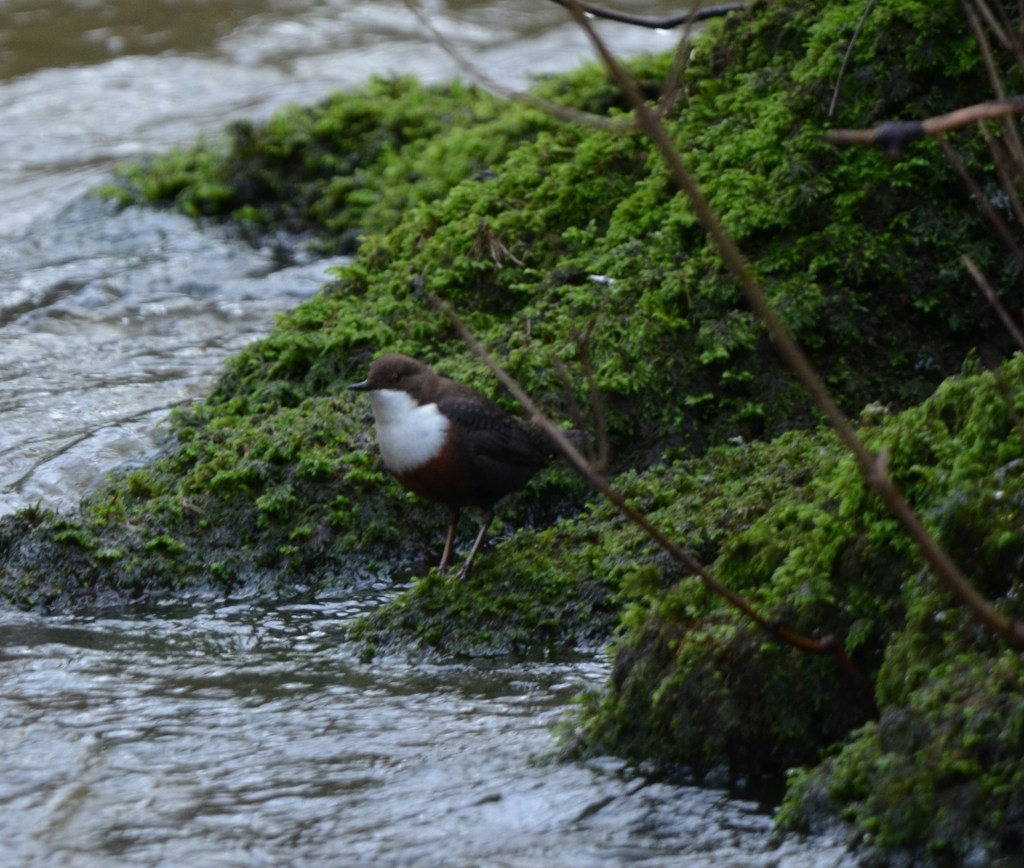
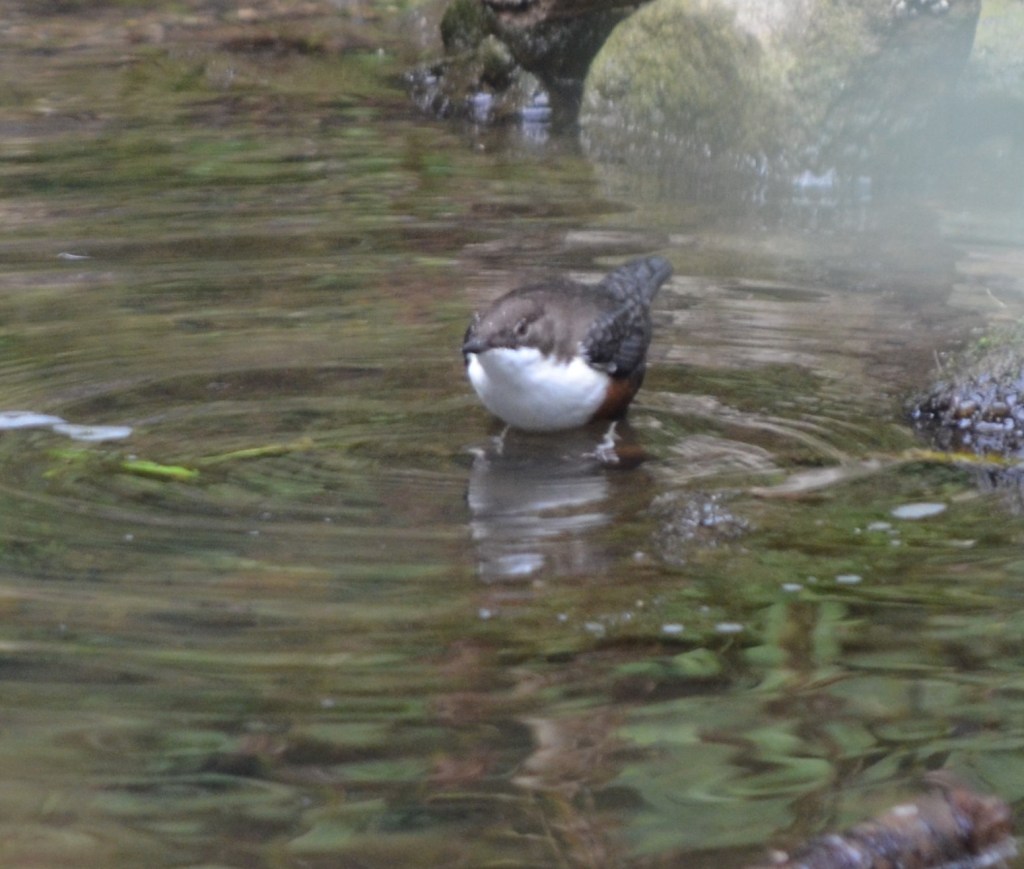
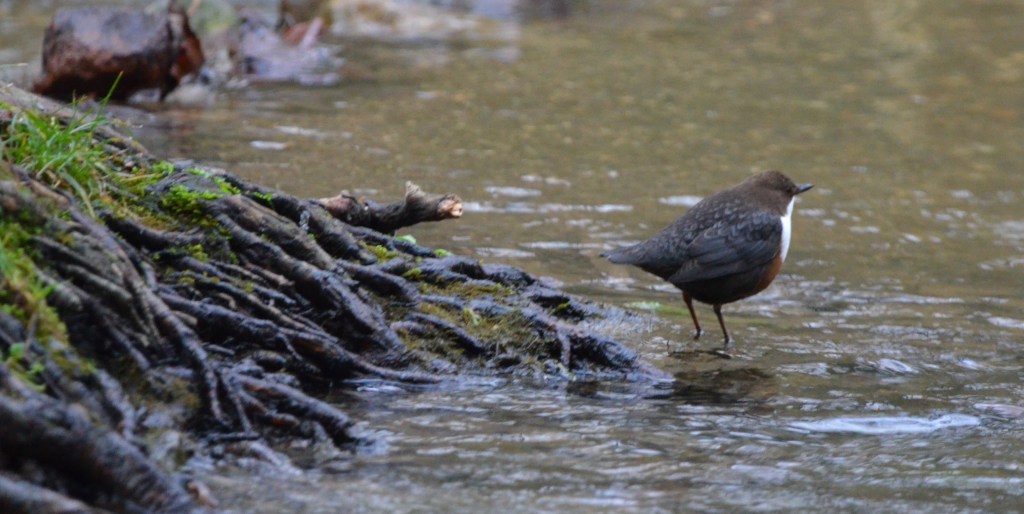
    Dipper about to submerge itself

    Dipper about to submerge itself

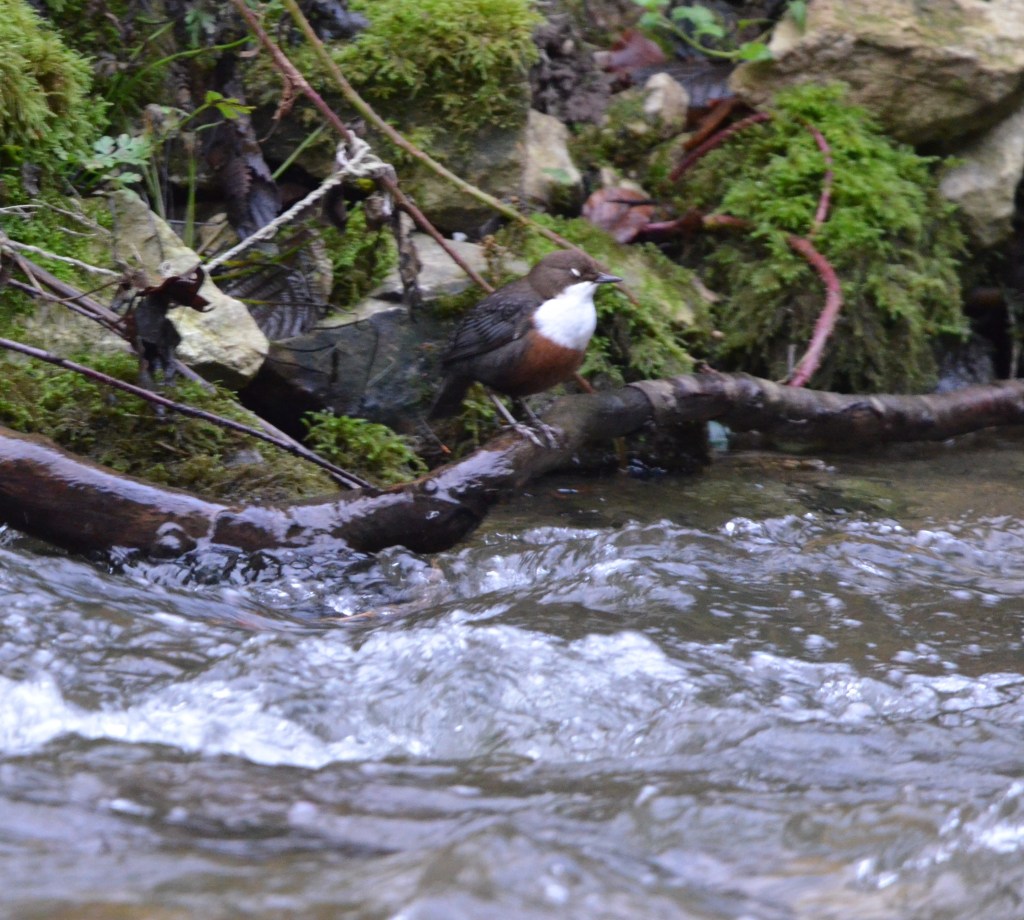
        Earlier in the morning we had seen a White-throated dipper – in fact we traced it to a couple of different spots along the River Alyn. Over time, we’ve noticed that Dippers seem to favour the faster-flowing white water of the river. This one first performed its characteristic bobbing dance, before submerging itself in the river in search of food. Very entertaining!

    Blinking Dipper

    Dipper showing white eyelid feathers as it blinks

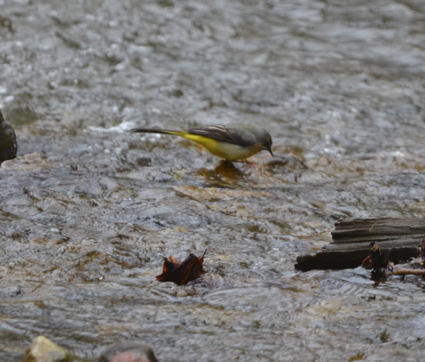
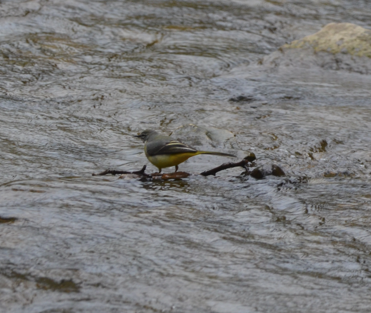
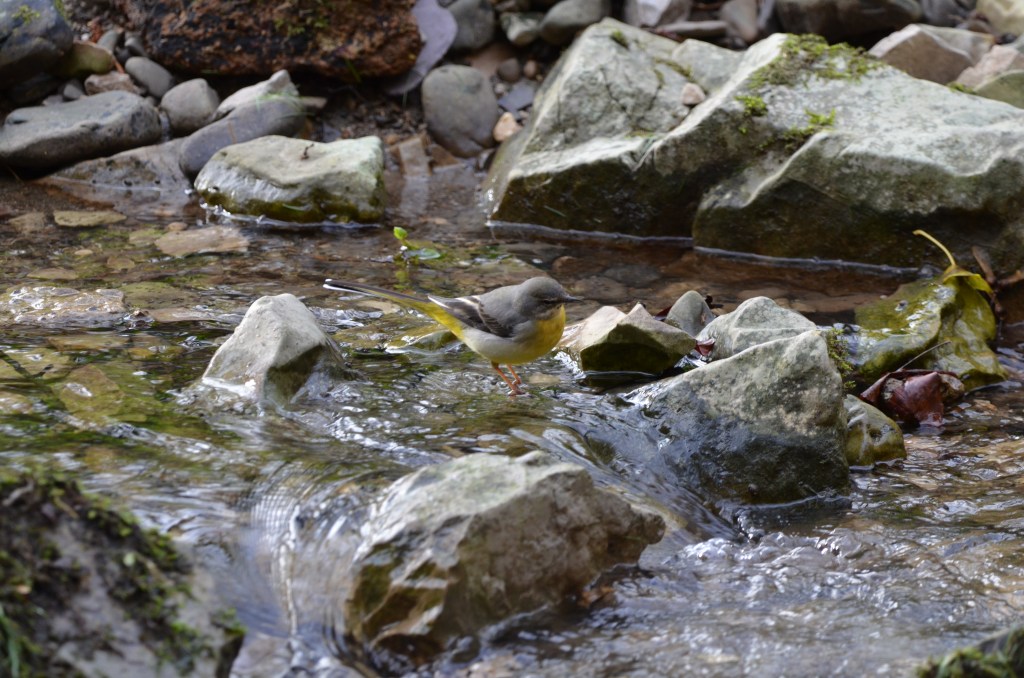
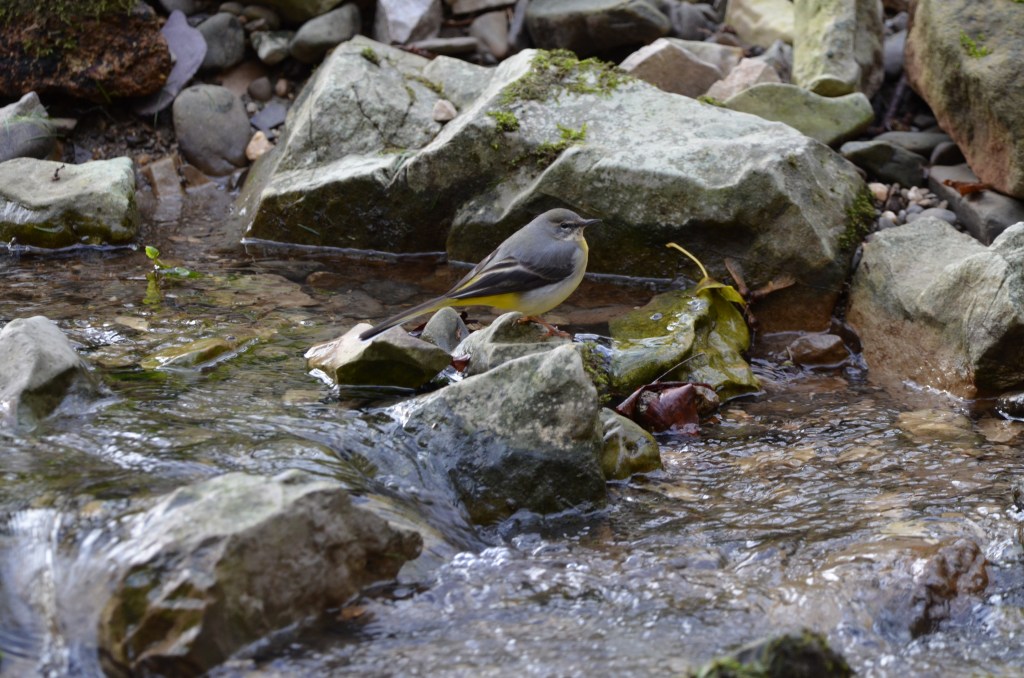
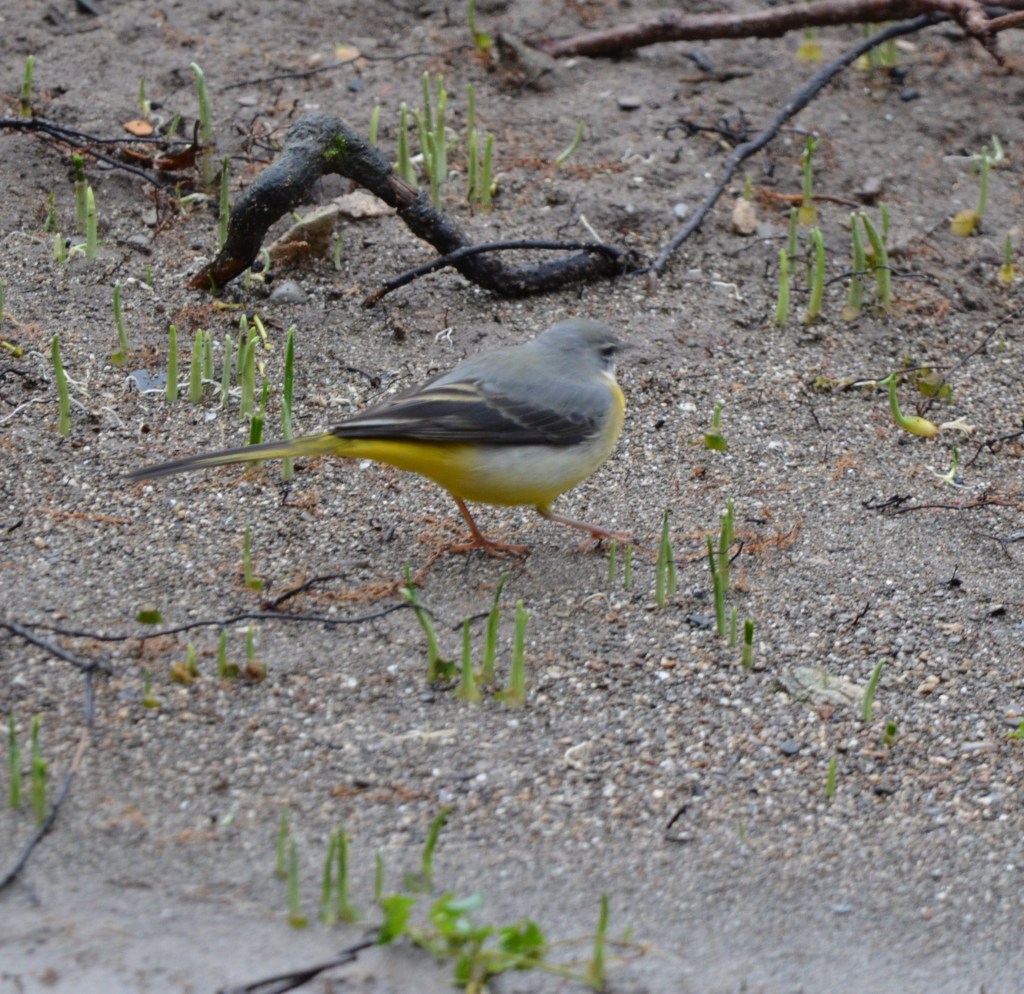
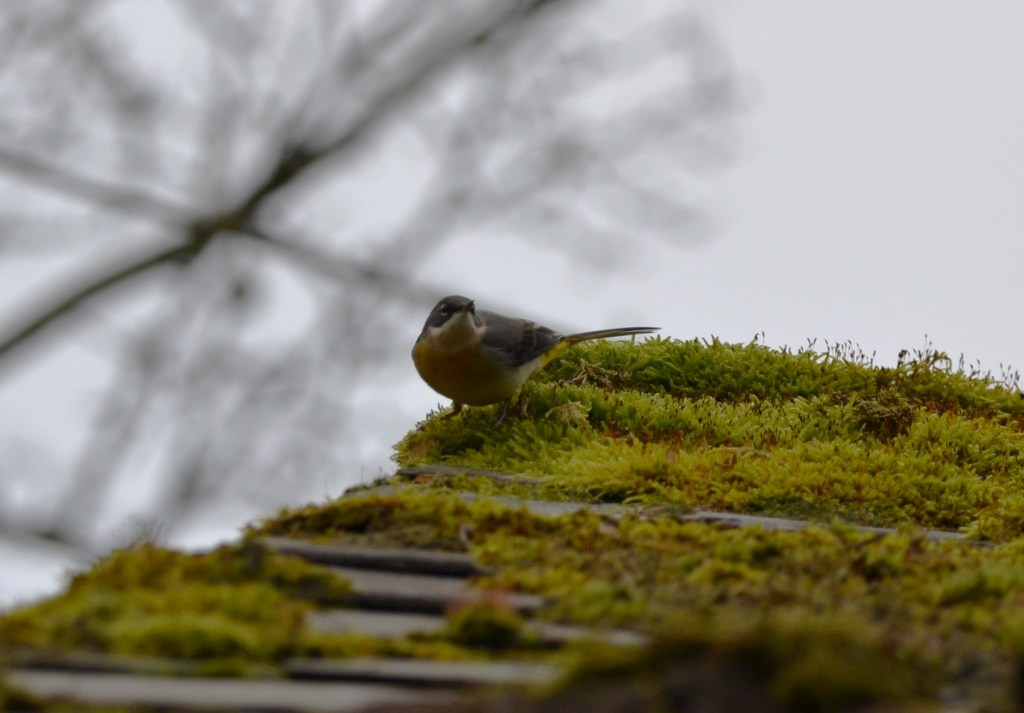
    Grey wagtails also hunt in areas of the river where there is fast-running water, but though both species’ territories overlap, somehow they’re both able to share the river’s resources without too much disputation, as far as we can make out. We often see both species out and about at the same time, as we did today.

    Grey wagtail on mill roof

    Grey wagtail on the roof of the mill house

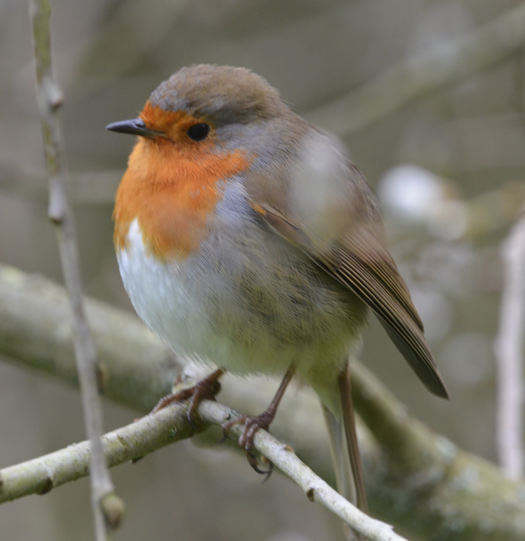
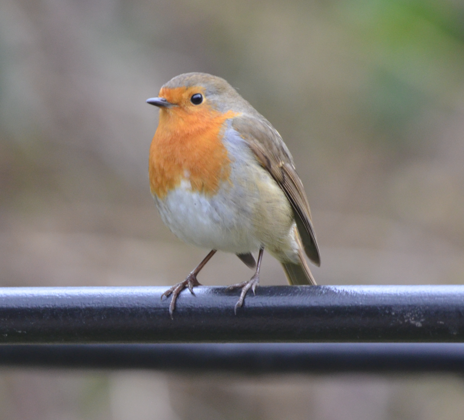
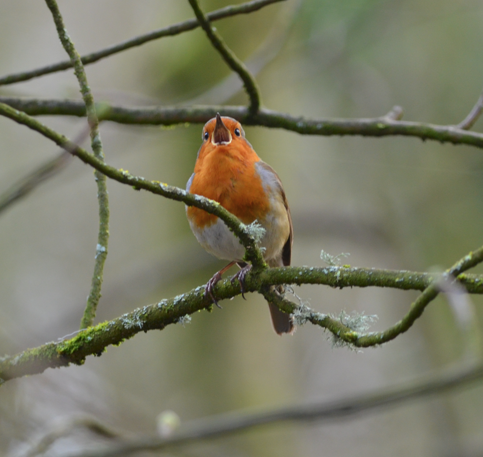
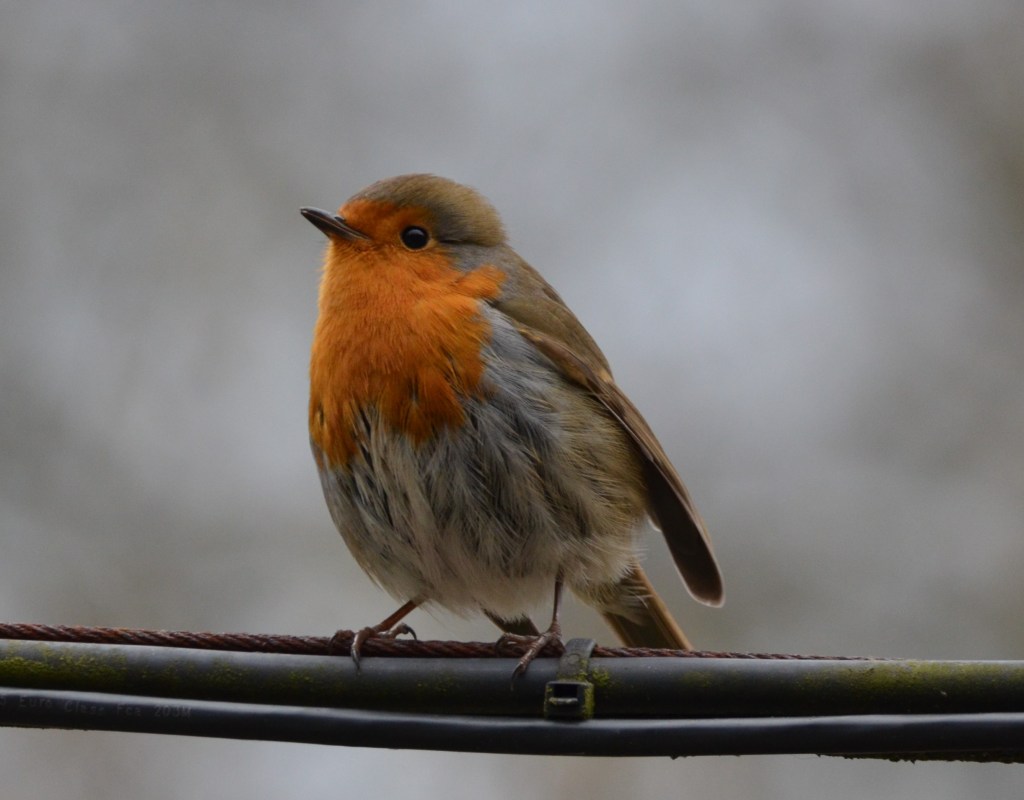
    The Grey wagtail flew off before it could be photographed although it – or perhaps another wagtail, we can’t be sure – appeared a little later on the roof of the old mill which is the one in the picture. While some birds are camera-shy, the same can’t be said of our old friend the Robin: a born star that just loves being photographed!

    Robin posing

    Robin posing for the camera

    The important stuff

    The Mill House café (Tŷ’r Felin) provided us with much needed sustenance after all that hard work. A cappuccino and a Chocolate Biscoff each soon restored our equilibrium!

  • At Heswall Beach

    (Sunday 21st December, 2025)

        This morning, we went across to Heswall Beach on the Wirral side of the Dee Estuary. The car park at the bottom of Riverbank Road was deserted when we arrived, which may have been down to the weather: although it was dry and the temperature was a reasonable 8°C, there was an easterly wind making its presence known. And this wind was sufficiently icy to keep people indoors, apart from one or two brave souls.

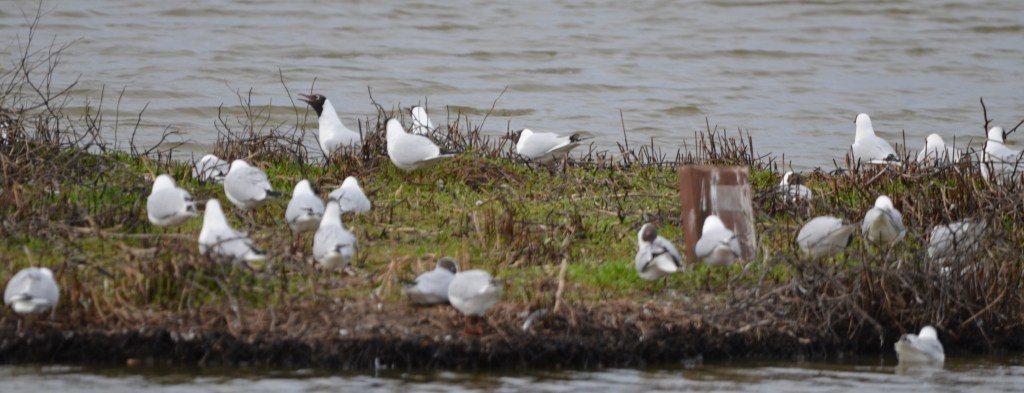
    Black-headed gull on waymarker

        Black-headed gull on waymarker

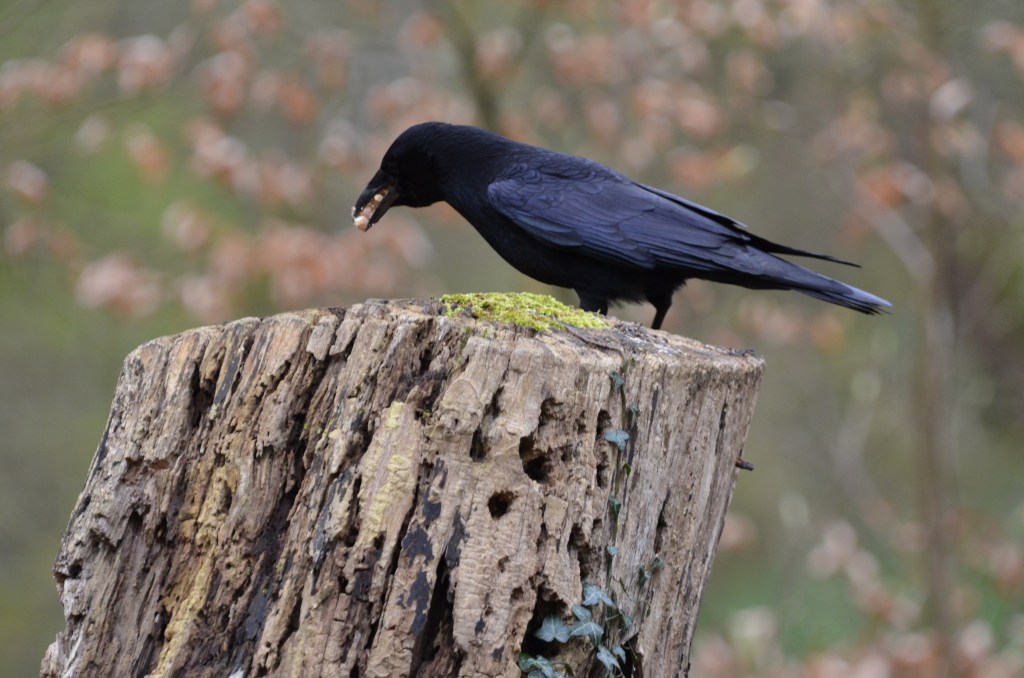
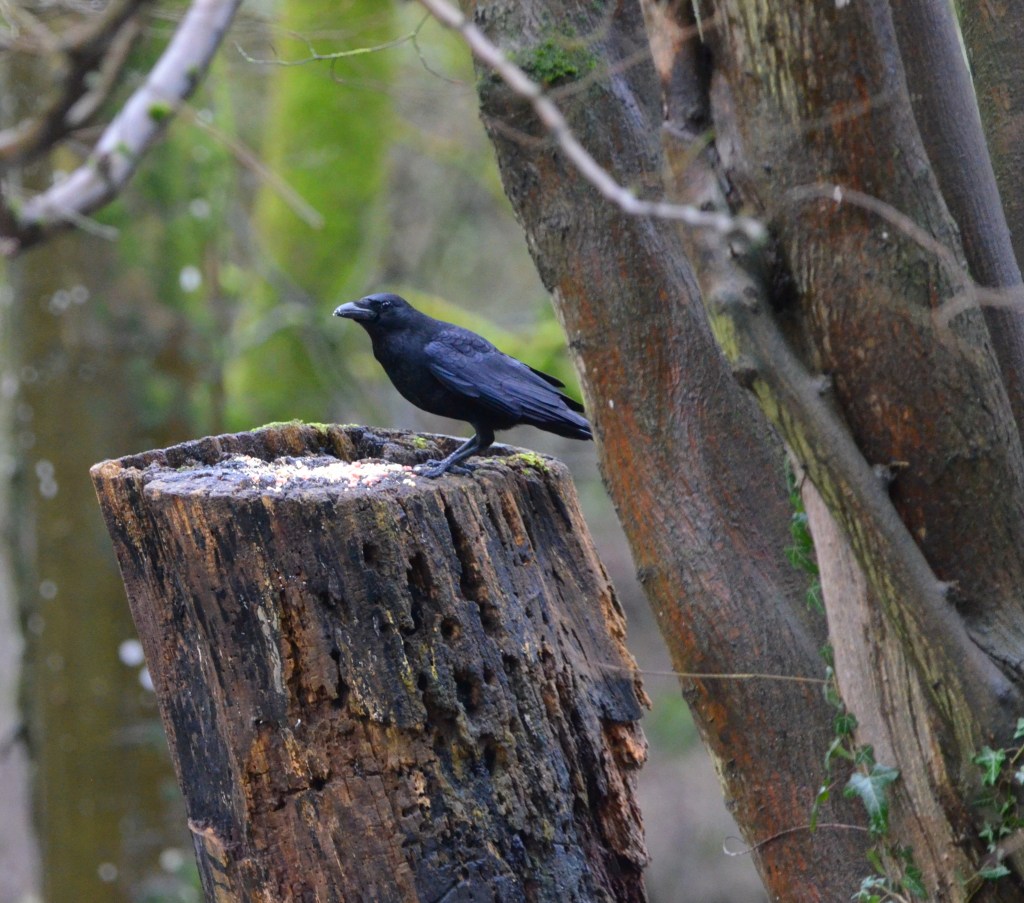
    Usurping Carrion crow

    …later dethroned by a usurping Carrion crow

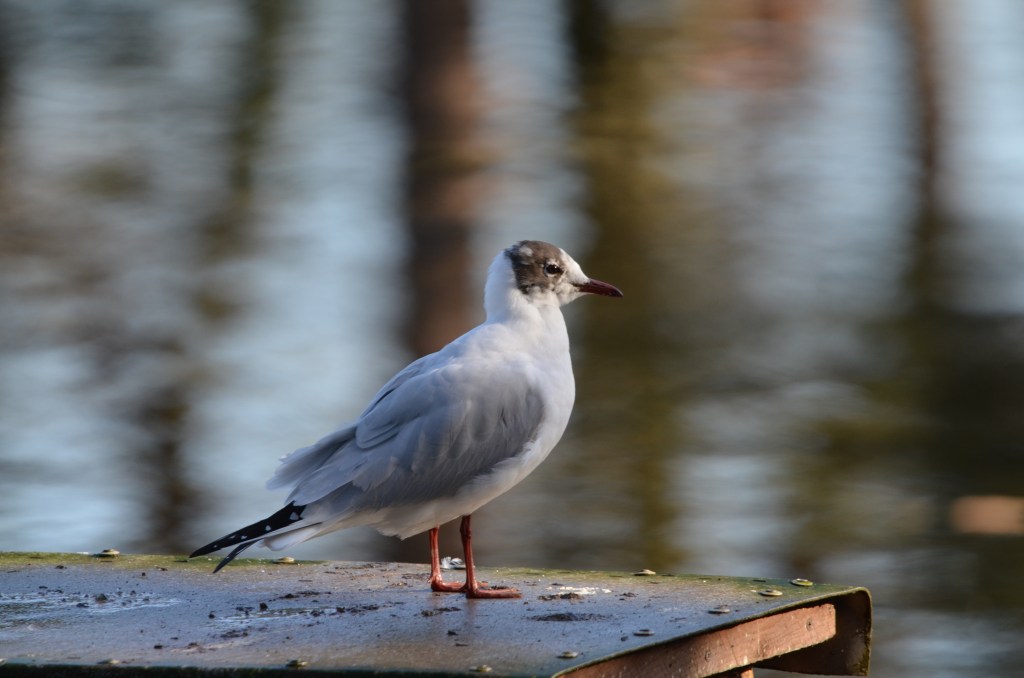
    Anyway, there was a single Black-headed gull (in winter plumage) which seemed impervious to the weather and spent a good deal of time perched on top of the red waymarker on the beach. (Well, I’m referring to the wooden structure that resembles a lampshade, which I’m guessing is some sort of waymarker or indicator – and on which the gull seemed quite content until it was later dislodged by a pugnacious Carrion crow).

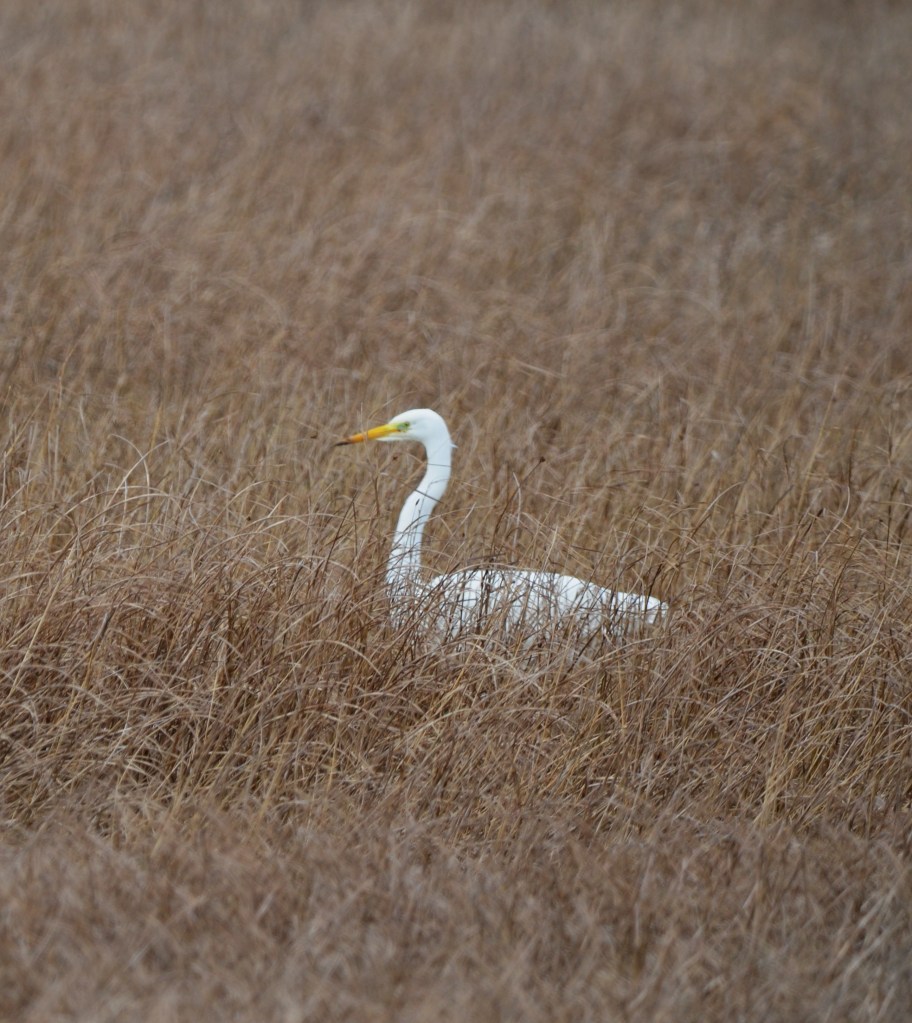
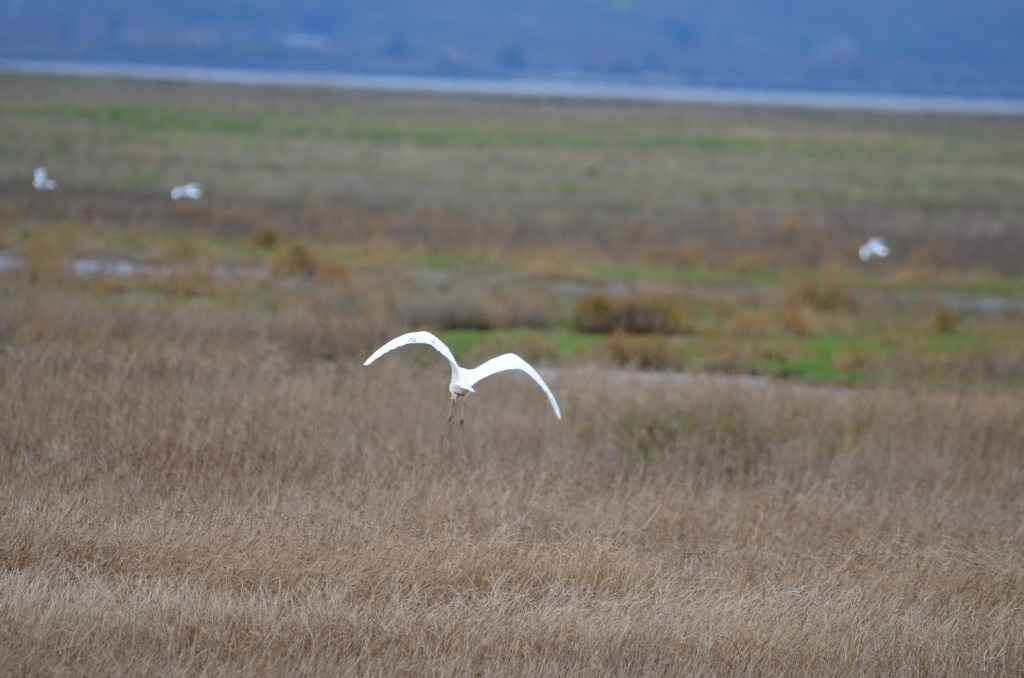
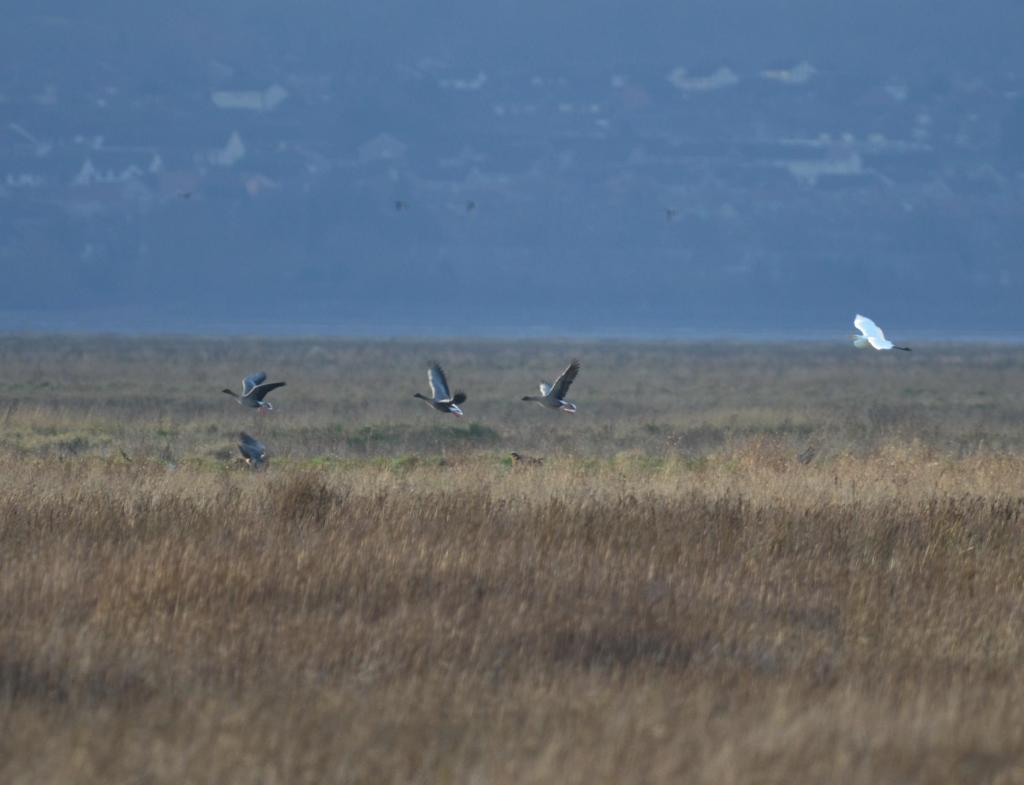
    Little egrets mooching

       Little egrets

    There were some Little egrets mooching about along the channel several metres out and several Carrion crows foraged individually here and there. At one point, a Marsh harrier emerged briefly from the thin mist and quickly disappeared inland.

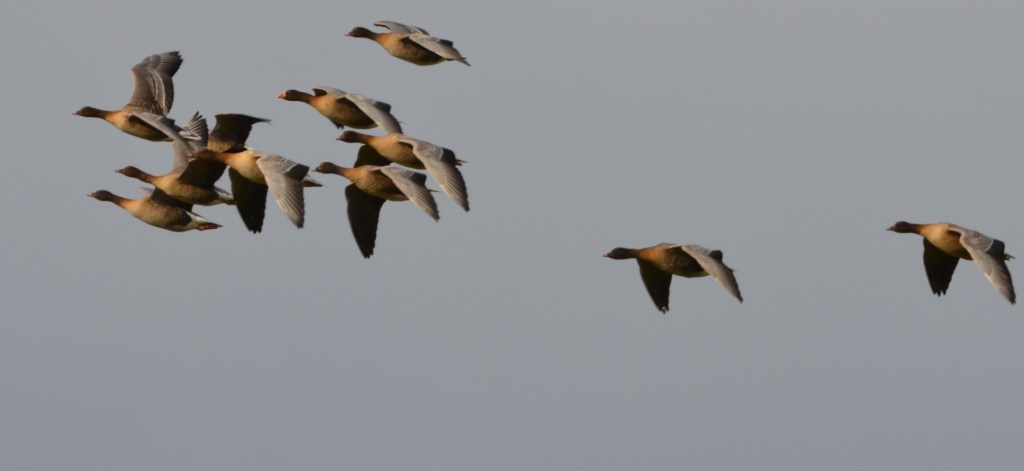
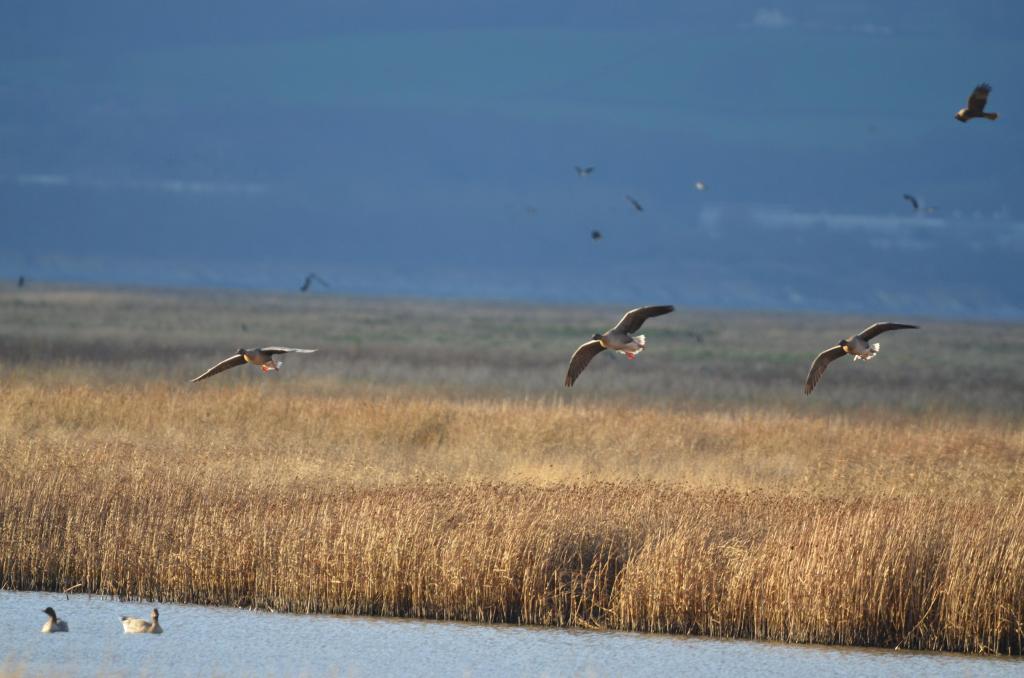
    Pink-footed geese

    Pink-footed geese

    Pink-footed geese flying

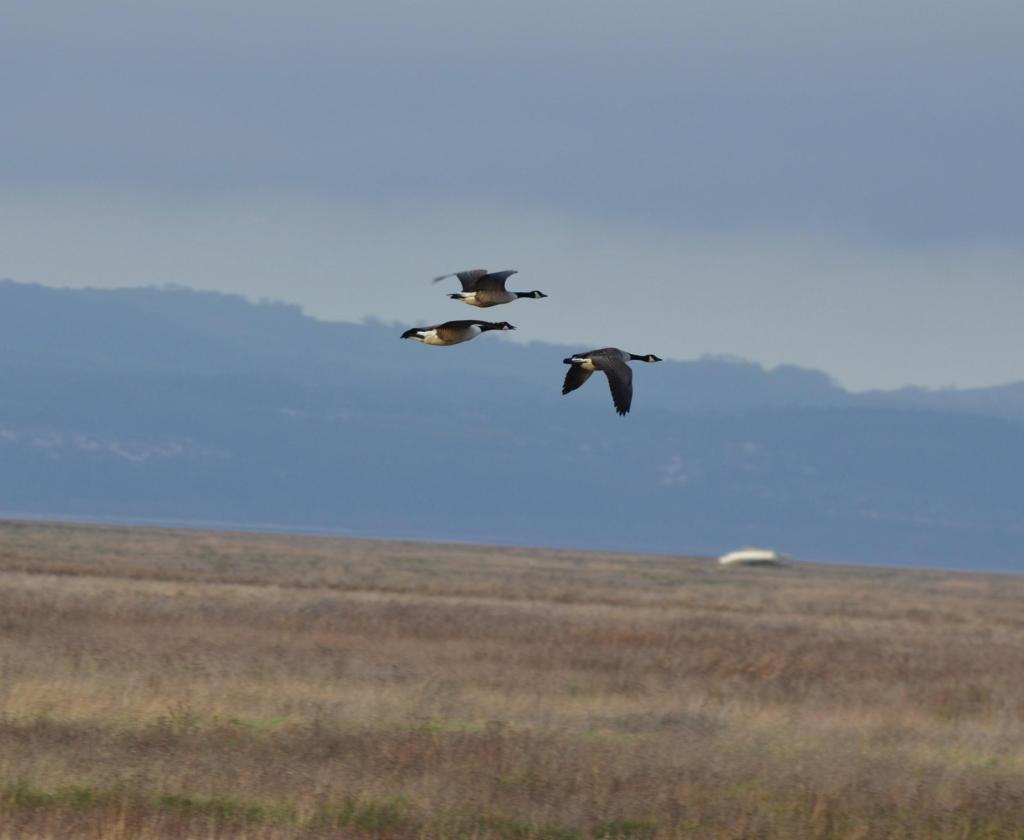
    We saw several Pink-footed geese nearby. These were resting on the ground about 30 metres out but every now and then they’d take off – presumably to their roosting place. Pink-footed geese are used to the cold conditions of Iceland and Greenland but spend their winters in the United Kingdom. They are known to be wary birds so it’s probable that we inadvertently disturbed them with our presence. In fact, we saw quite a few geese flocks flying across the estuary although most were too far away for us to establish which species they were. As we’ve mentioned elsewhere in the blog, the area is vast, and today this vastness seemed to be emphasised by the general quietness.

    Heswall Beach

        Heswall Beachas you can see, the wildlife was having a duvet day

    After an hour or so, we decided to call it a day: the wildlife just didn’t seem to want to drag themselves out today, and we couldn’t blame them really. So we headed back towards Chester Road and detoured via Boathouse Lane to Parkgate. Here, we again saw geese flocking over the Dee Estuary – well, I did, while Stu drove. It was a nice little diversion before we eventually arrived at the Ness Gardens café. And it’s always a joy driving through these roads and lanes and seeing the old sandstone buildings which are characteristic of the area.

    The important stuff

    As we headed towards the Ness Gardens café, which is officially The Botanic Kitchen, we were serenaded by a Robin that was singing loudly from a small tree at the side of the path. (Blimey, they make some noise considering their size). Once we were inside though, and this will hardly surprise our regular readers, we each consumed a cup of cappuccino and a slice of Bakewell. Lovely!

  • A Visit to Royden Park

    (Sunday 30th November, 2025)

        We were at Royden Park today – more specifically Roodee Mere near the miniature railway. It was quite a cool 6°C, although the very light wind (WSW) and the occasional burst of sunlight belied the temperature. Mind you, it was much warmer when we were last here in August: the Grey heron was having a leisurely feast at the time, if you remember? Today we saw the heron again: first very briefly before it slinked away through the undergrowth; and a little later we caught a glimpse of it flying above the trees. We suspected it was on its way to Frankby Mere, though we couldn’t be sure.

    Roodee Mere

       A very still Roodee Mere…

    While the Grey heron shied away today, there were plenty of Moorhens and Mallards to be seen. Stu got a couple of shots of one of the Mallards just after he’d dipped his head beneath the water (the male Mallard that is – not Stu) and you can see the beads of water on him. The majority of these Mallards were males – I counted only two females.

    Rippling Moorhen

    …until a Moorhen created some ripples

    Moorhens gathering

    “Just like falling off a log”, said the Moorhen

    Now, something I only recently learnt about is what is known as an ‘eclipse plumage’. This occurs in Mallards and other ducks at the end of the breeding season, when the males moult their feathers and replace them with less colourful brownish feathers – similar to the females’ in fact. From this point until their second moult, several weeks later, the males are unable to fly as they also moult their flight feathers at the same time as discarding their ‘breeding’ feathers. Consequently, they are vulnerable to predators and the male Mallards often disappear to separate areas away from the females and their nests. Clearly, this bunch of male Mallards had all recovered their plumage after their second moult, which probably accounted for the greater number of males than females. And they were once again able to fly. There are several interesting resources on the subject of eclipse plumage and the article on the Scottish Wildlife Trust blog is a good place to start: https://scottishwildlifetrust.org.uk/  

    Mallard beads of water

    Mallard just after he immersed his head in the water

    Mallard close-up

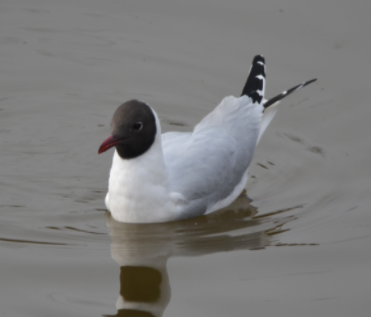
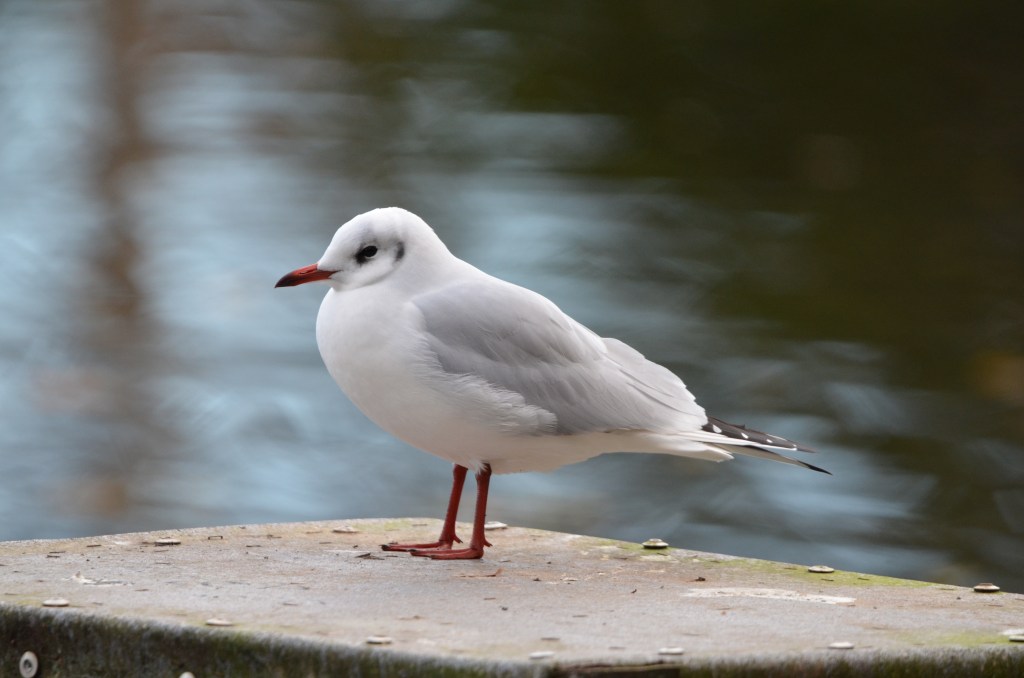
        Meanwhile, a solitary Black-headed gull appeared at the mere and, despite being one of the smaller gulls, they are very loud: there were several noisy Magpies in the treetops making their distinctive rattling sound but they were all drowned out by this small gull! To be clear, the Black-headed gull was in its winter plumage, which is when they lose their black heads, retaining only a dark spot behind each eye. Just to add to the confusion, the dark head of the summer plumage is more a chocolate brown than black, although it certainly looks black from a distance. The beak and legs on the Black-headed gull are red, as you can see.

    Black-headed gull winter plumage

        Black-headed gull in winter plumage

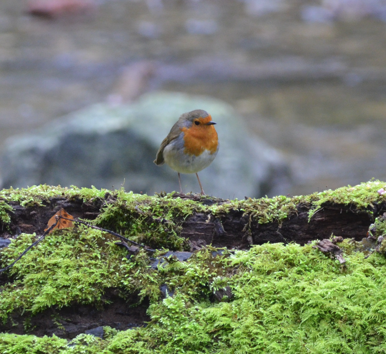
    There are a few birds that have a summer plumage that’s distinct from their winter wardrobe – Knots and the Black-tailed Godwits which lose their lovely, rusty red colouring, come to mind – and it’s generally thought that the more subdued winter colours help the birds blend into their environment and offer protection from predators. This change in plumage doesn’t apply to all birds though. Adult Robins of both sexes, for example, retain their red breast year-round: it’s thought to be a territorial warning to other birds.

    Robin hide-and-seek

    This Robin played hide-and-seek with the photographer

    The important stuff

    We enjoyed our usual cappuccinos and a good-sized Bakewell slice each at The Courtyard Café. Ah! Bliss!  
  • The tail-end of the storm

    (Sunday 16th November, 2025)

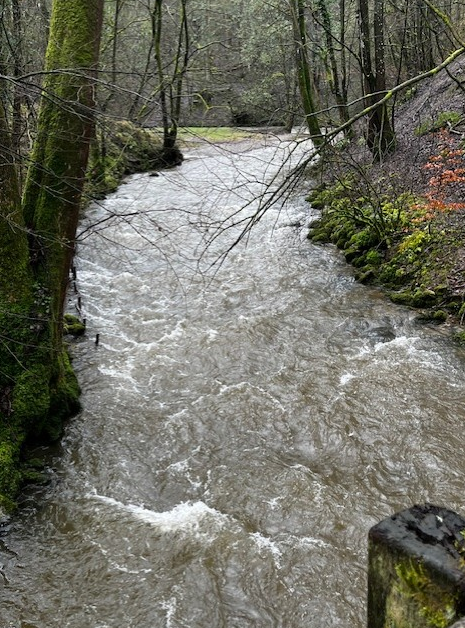
        Over to Loggerheads Country Park in Denbighshire, this morning. The River Alyn was running very high in the aftermath of Storm Claudia – Friday and Saturday had been particularly wet and, though it was a cool 8°C when we arrived, the rain had ceased and the day was dry. The rebuilding of the river wall that was completed in 2024 has clearly been successful: in past years, the old mill, the café and the visitor centre have all been subject to flooding after persistent heavy rain, whereas today there was no such damage.

        I thought it was worth including a photograph of the river from earlier this year, just to show the difference that prolonged spells of dry weather and wet weather can produce. As has been mentioned elsewhere on this blog, the Alyn is particularly affected because of the river’s ‘disappearance’ underground (see The River Vanishes, Sunday 27th July, 2025).

    River Alyn dry bed 3

    The bed of the River Alyn back in July this year…

    Alyn full spate 2

       …compared to the aftermath of Storm Claudia on Sunday.

    Our Grey wagtail put in a guest appearance this morning and we’re certain it was the same one that we saw only last month: while we recognised the bird, I wonder did it recognise us? (Oh! It’s those two again!). There were several House sparrows, Great tits, Robins, Common crows, and a lone Grey heron flying high above the trees, its legs extended horizontally behind it.
    Robin calendar

        A Robin practicing its ‘winter calendar’ pose

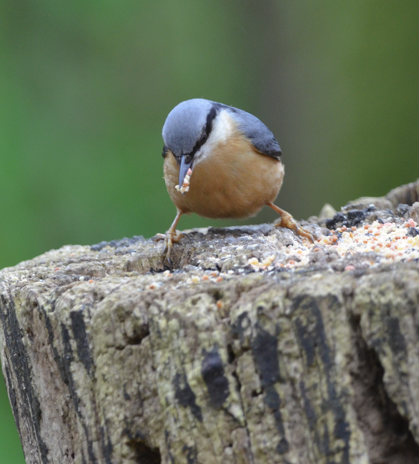
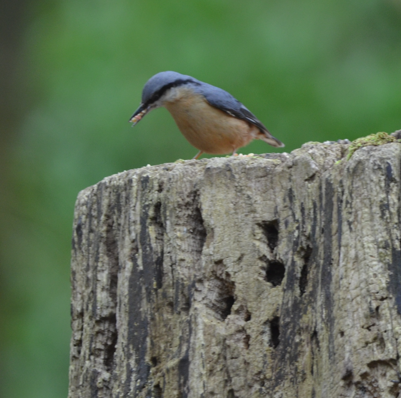
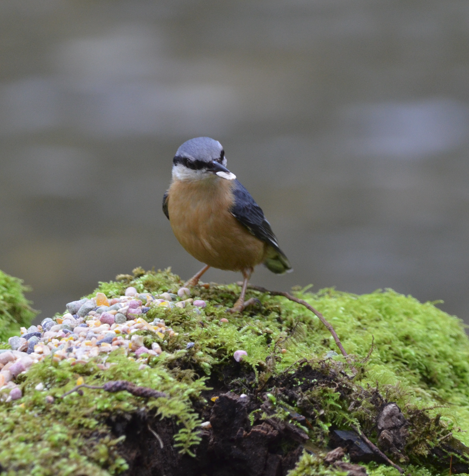
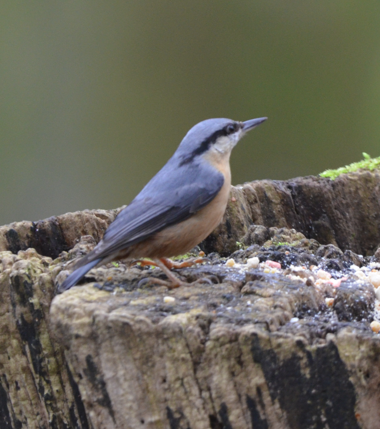
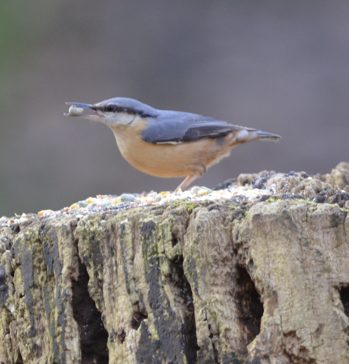
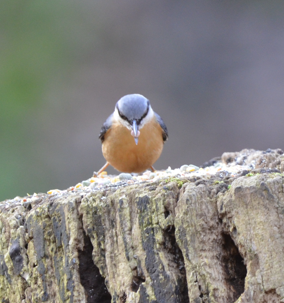
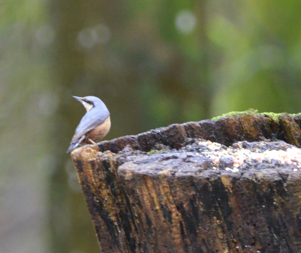
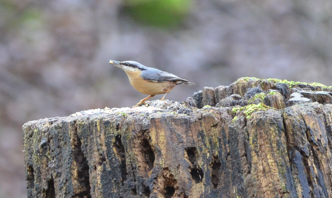
    But it was the sight of a pair of Nuthatches that drew our attention: we were sitting beneath an old oak tree and, for some reason, I looked up. I don’t recollect hearing any noise, or being aware of any movement, so I’m not sure why our attention was suddenly locked onto the oak branches above. Pure luck, I suppose. As I raised my binoculars, the nearest bird walked headfirst down the trunk. The way I’m describing it, you might be imagining a stately descent but, really, the bird performed a sequence of rapid steps before turning around in the opposite direction, and then quickly hopped up the branches of the tree. This was a female Nuthatch, given the paleness of its red/orange breast (I’m discounting its being a juvenile given the lateness of the season, but I may well be wrong). I’m guessing that the other Nuthatch was male, although it was a little higher up the tree and I was concentrating on the nearest one. No photographs, unfortunately, as they are such quick, darting creatures, but we’ll maybe see them again the next time we’re here.

    Velvet shank

    Above: Velvet shank. Below: unknown bracket mushrooms

    Bracket mushroom

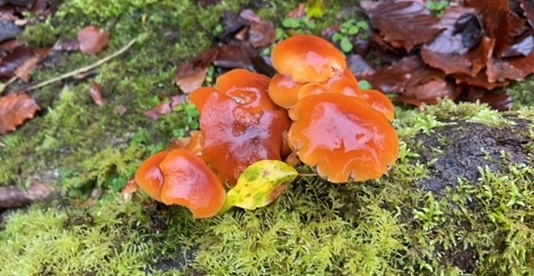
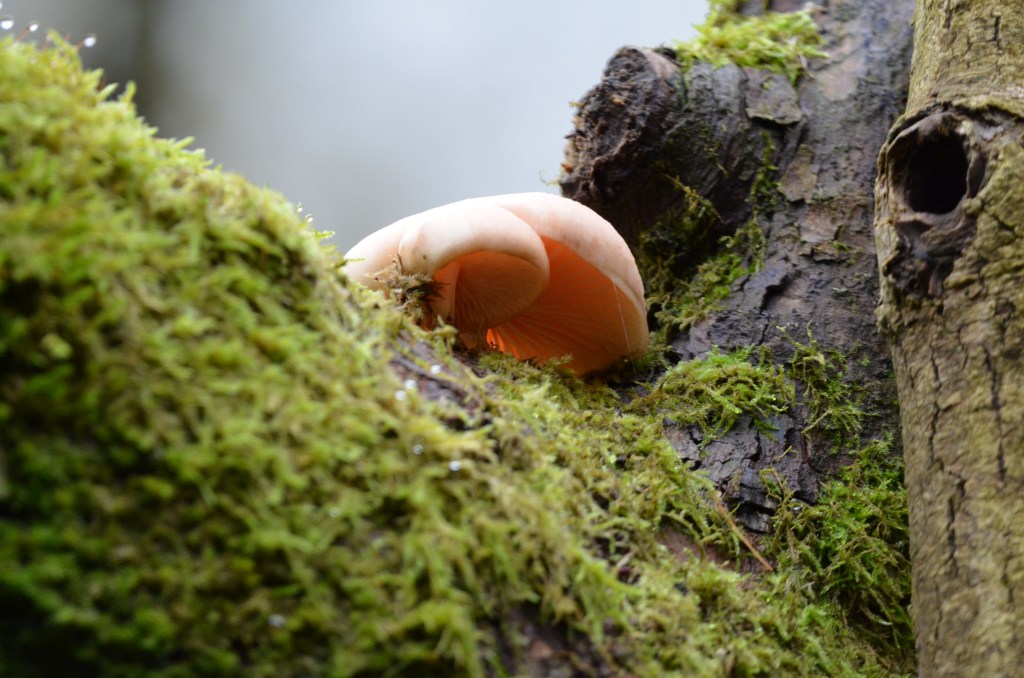
        Late autumn is a good time of year in the British Isles to see various fruiting bodies of fungi although this is one area in which we’re admittedly lacking in knowledge. (Only one?!) But, looking online, I think the buff-coloured spherical fungus is a mushroom called Velvet shank. I’m hesitant to say anything too detailed on the other fungus apart from it appears to be some form of bracket mushroom.

    Coin tree

    No change at the coin tree

    The coin tree, which we generally pass without consideration, is thought to be the modern version of the traditional practice of making offerings to wood deities and spirits. The coins have been hammered into the bark and are almost impossible to extract – allegedly!

    The important stuff

    We sat outside The Mill House café (Tŷ’r Felin) with our customary cappuccinos, each tucking into a slice of Bakewell. Very nice!

  • A dash around the park

    (Sunday 9th November, 2025)

        On Sunday 27th of May, 2021, during what was loosely known as Step 3 of the government lockdown, when limits on social contact outdoors were gradually being lifted, a group of us from work all met up for a walk. It wasn’t only a walk: we had seen each other only periodically since the beginning of the lockdowns, except for the occasional appearance on Zoom, so it was an opportunity to connect outside of work. Although some of the original cast-members have left since then, we’ve kept in touch and have continued to meet up sporadically for occasional walks in West Wirral and North Wales.

        So, Stu and I went to the Wirral Country Park at Thurstaston this morning, where we were joined by special guest stars Claire, Tanya and Evan, and Sue and Jayne, for our latest gathering. Unfortunately, Jayne didn’t bring her pet termite, which she’s named Clint Eatswood, although we hope to meet him at some point!

        As we traversed the park, there was quite a chill in the air, which became more noticeable when we reached the more exposed path that runs along the clifftops. Ordinarily, Stu and I go at a steady, ponderous pace and might have spent some time looking down towards the beach for signs of avian activity, but today was not the day. The park and the Wirral Way were unusually empty of people.

    Mallards braving the weather

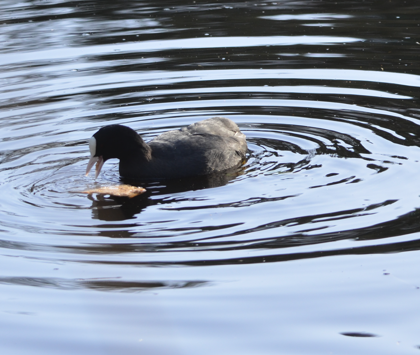
    The Mallards and Coots were oblivious to the cold

    Three Coots

    Even the birds didn’t seem to be up to much – we saw the odd crow but otherwise nothing. Apart, that is, from some Mallards and Coots which seemed quite content to brave the weather. Everyone seemed eager to head to the café (Flissy’s) and get out of the wind, so we were full of admiration for Sue as she appeared to want to walk further than everybody else. We quickly realised, though, that she wasn’t trying to out-distance everyone, but that she’d actually lost her way!

        As it was a bit of a dash today, there’s consequently very little to report. On the other hand, it was a lovely couple of hours spent in great company – just being together with your friends is enough to lift your mood even on the most dismal of days, and we did have a giggle with each other!   

    Information sign

        Too late! The squirrel’s disappeared!

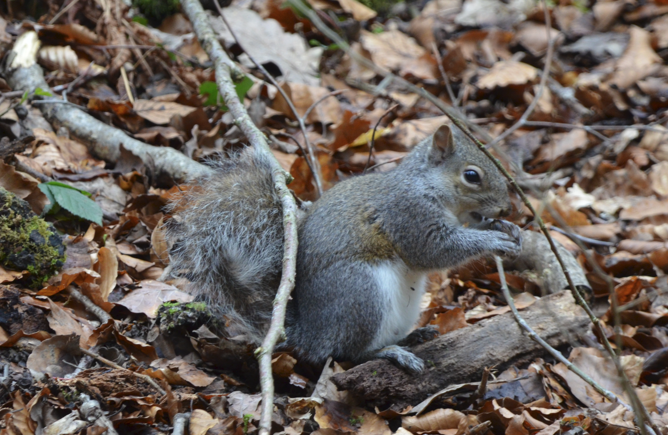
    The photograph of the Max Kirby Bridge information sign puzzled me at first, but I think this is another example of Stu failing to capture a squirrel on his camera. I feel sure that there was one happily chomping a hazelnut as he sat astride the sign, but he skedaddled before being photographed. Stu will have photographed Bigfoot, Nessy, and the Abominable Snowman before he ever takes a photograph of a squirrel! He did get a couple of shots of an enterprising Robin, which was hoovering up the crumbs spilt from our tables (yes, we were outside, as Flissy’s was full). As ever, it’s difficult to say what sex the bird is, as the males and females are so similar.

        Suitably refreshed (and hoping for a warmer day next time), we all headed home. While Stu and I were exiting the car park on to Station Lane, we watched a Common buzzard fly down low in front of us. When we reached the gates a little bit further up the road, we pulled over and saw that there was another buzzard. Both were happily perched on the gates but naturally, both had moved on before we could get a picture. But what a sight to see!

    The important stuff

    As mentioned earlier, we went to Flissy’s for our well-deserved break, where this week’s characters in no particular order enjoyed:

    Cappuccino, bacon & egg batch. Also, took home a Bakewell slice and a piece of Lemon drizzle. Also ate one of Evan’s crumpets, although she insists she was merely helping out (Claire).

    Tea, sausage toastie (Jayne).

    Americano with milk. Bagel with cheese, sausage and a hash brown (Sue).

    Tea, chips. (Tanya).

    Cappuccino and Bakewell slice (Col)

    Cappuccino and Bakewell slice(Stu)

  • Parkgate, early November

    (Sunday 2nd November, 2025)

        Early November, and it was a reasonably mild 11°C at Parkgate, Wirral, this morning, although the (SW) wind-speed increased later, turning the day a little cooler. We parked up at the Old Baths car park and watched as a flock of thirty or more Greenfinches flitted by. A Kestrel hovered over the marsh, swooping from one viewing position to another.

    Grey heron in reeds

       Grey heron

    We spotted a Grey heron standing statue-like in the reeds. I’m always impressed by these birds’ forbearance as they wait for their prey: certainly this one barely moved all the time we watched. We moved off towards the Boathouse and witnessed a dozen or so House sparrows feasting on Teasel seeds on the other side of the wall. Further out across the marsh were separate flocks of geese, although they were a little too far away (and too quick) for us to identify clearly.

        We kept scanning the marsh through our binoculars as we went along The Parade, which made for slow progress: then again, it’s only natural really, given the wealth of wildlife that inhabits this vast area. There were one or two Little egrets stalking the distant ditches, and we spied several more Grey herons, separately watching their own areas of the wetland.

    Another Grey heron, Parkgate

       Another Grey heron

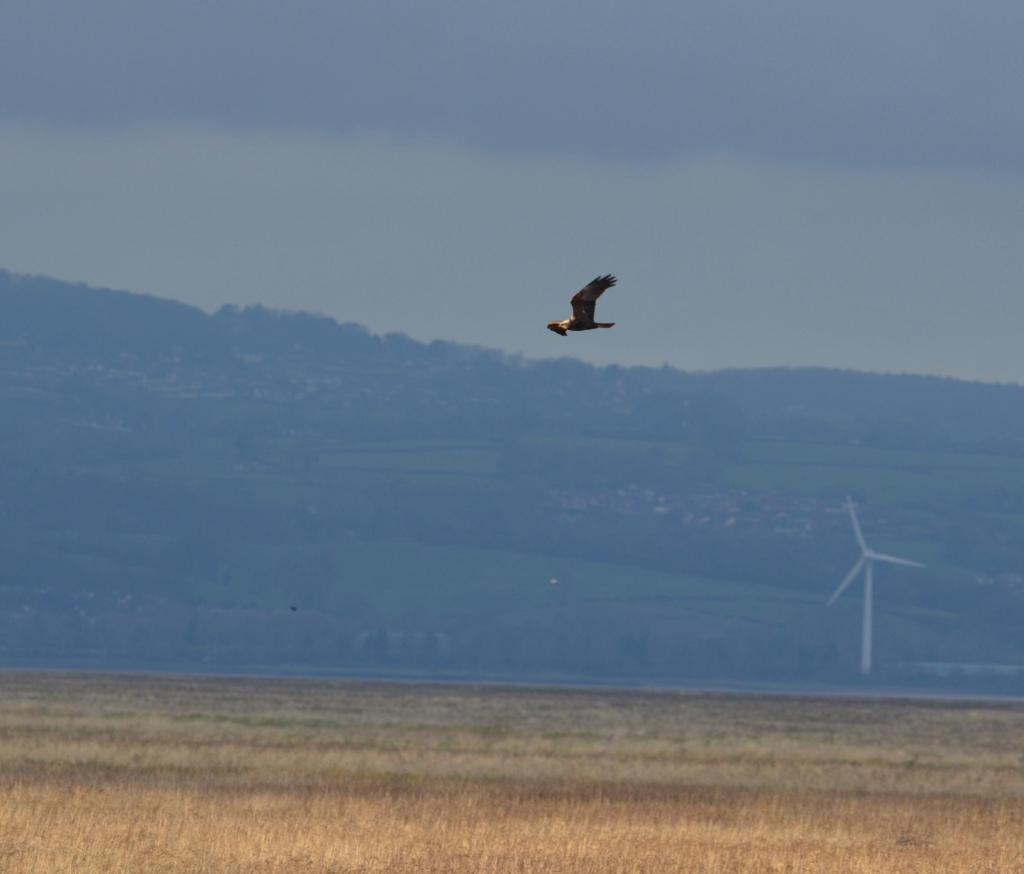
    So engrossed were we that we almost missed the Marsh harrier that suddenly appeared from out of nowhere. It flew quite low, scattering a lot of small birds as it went, although one or two Feral pigeons flew by seemingly oblivious to the threat that this raptor represented! The Marsh harrier flew further out, staying low, until we lost sight of it eventually.

    Marsh harrier, Parkgate

        Marsh harrier (male)

    At the Donkey Stand, we looked out to the pond and could see a family of Northern shovelers, several Mallards and Moorhens at the margins of the water, and what we took to be some Black-headed gulls in their winter plumage. We also counted four Little grebes, each of which kept diving below the water only to resurface quite a while later in a different part of the pond. We were unable to capture the birds on camera, unfortunately.

    Marsh harrier in distance

        The Marsh harrier re-appeared, this time accompanied by its mate, though each of the birds concentrated on different areas of the marsh. Again, a mini-panic ensued as several of the smaller birds desperately flew away from the pond. A lone Carrion crow flew towards the female harrier, loudly cawing as it did so. A second crow joined it and both of the harriers made a tactical withdrawal. It’s always fascinating to watch crows in such situations: they never seem to be deterred by the risk of danger.

    Mallard family, Pargate

    Mallard family

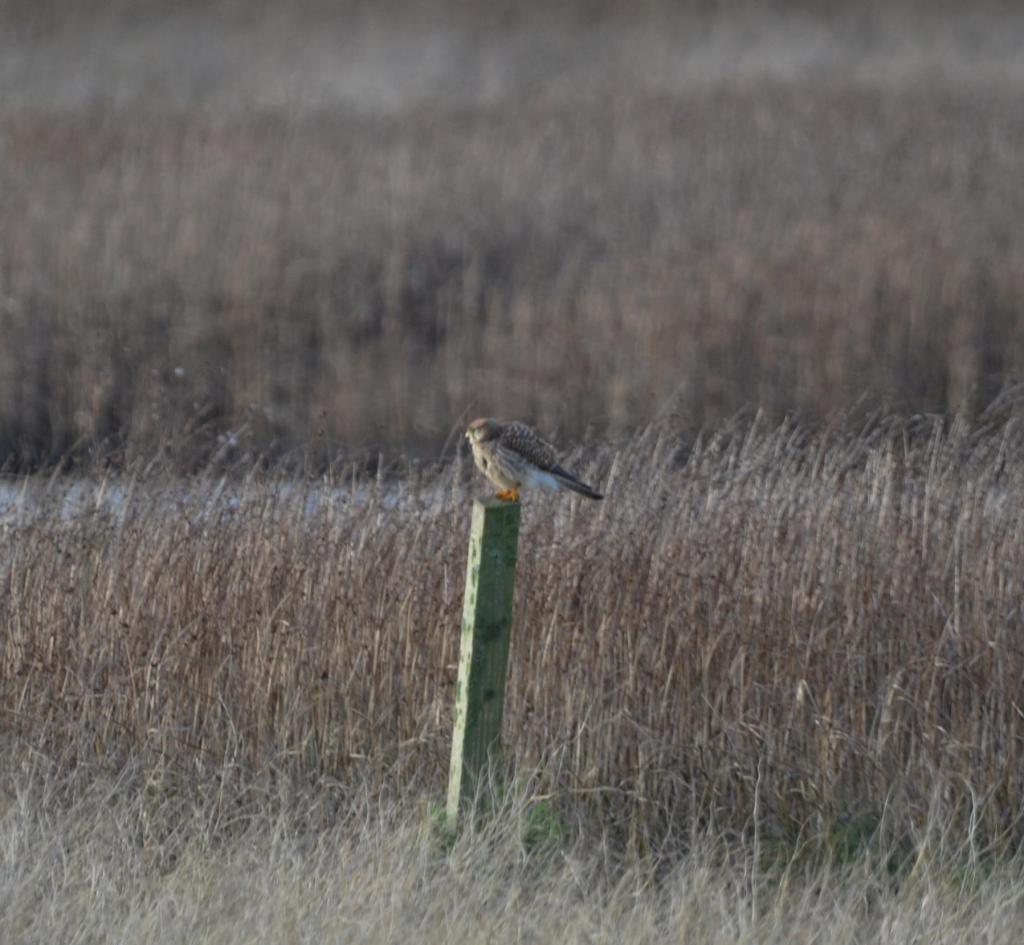
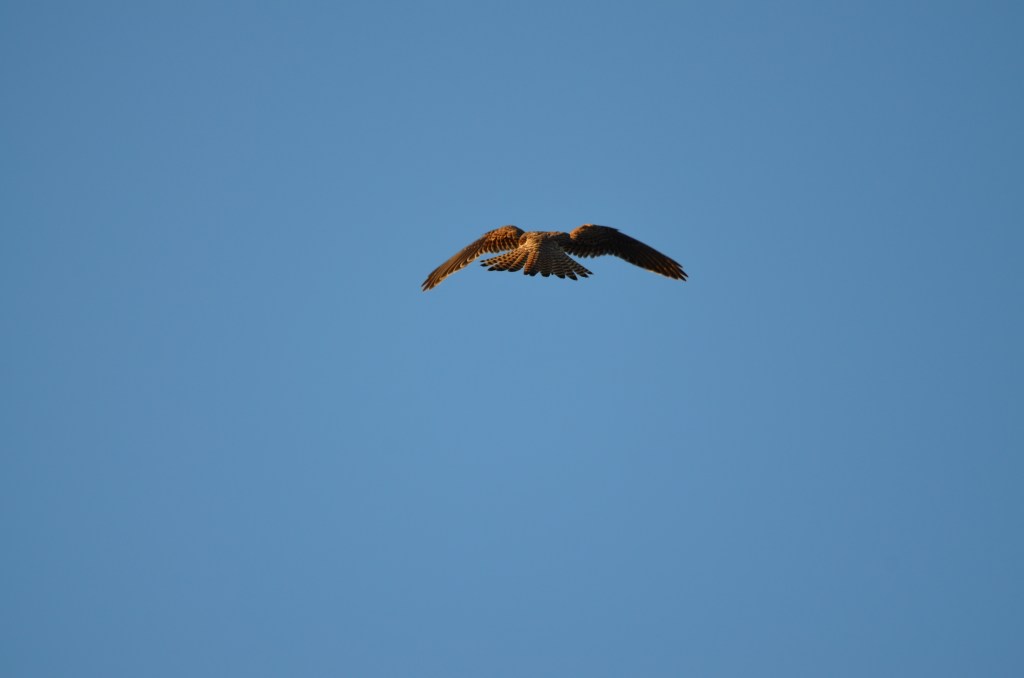
    On our return journey, we carefully scrutinised the marsh and spotted some of the Grey herons again, still standing motionless in hunting mode. There was a family of Mallards hidden amongst the vegetation, and the Kestrel returned and hovered nearby, allowing Stu to get a picture. Before all that though…

    The important stuff

    We remained at the Donkey Stand and had our refreshments al fresco. Stu went across the road to the nearby Elephant café for the regulatory cakes and cappuccinos. a chocolate brownie for Stu, and a shortbread for Col – and, even better, the café very kindly supplied a biscuit with each of our drinks!   

    Female Kestrel facing into the wind

    Female Kestrel facing into the wind

  • The River Returns

    (Sunday 5th October, 2025)

        Over to Loggerheads Country Park in Denbighshire this morning. It was 12°C with occasional westerly gusts of wind, although we were pretty much sheltered by the trees either side of the Leete path. In stark contrast to our recent visits when the riverbed ran dry after just a short distance, this time the River Alyn was in full spate and flowing strongly after all the recent rain. We’ve reported elsewhere in the blog seeing Grey wagtails and White-throated Dippers along this stretch of water and, today, we were fortunate enough to witness individuals of both species here, happily sharing the same habitat while exploiting the surge in water.

    Grey wagtail (female)

        Grey wagtail

    First to arrive was a Grey wagtail – female, judging by the absence of the black bib. She may have been collecting for her brood, or maybe just herself (we saw no sign of a male today). She re-appeared further downstream a little while later, flying low to land on a rock mid-stream from where she scanned the water, her long tail steadily moving up and down as she did so.

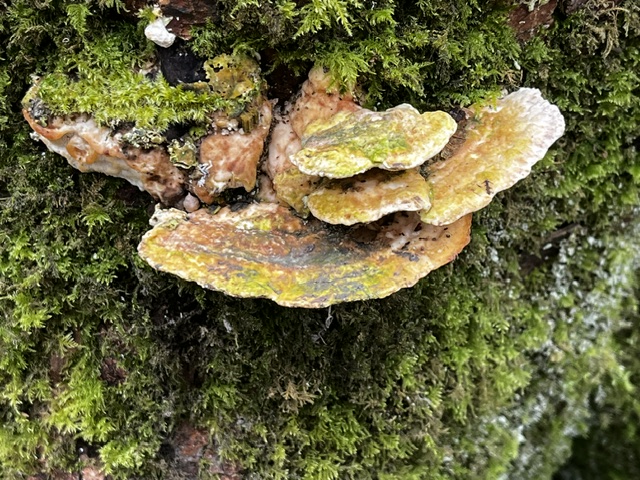
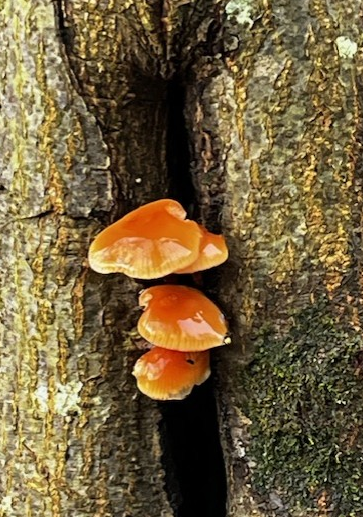
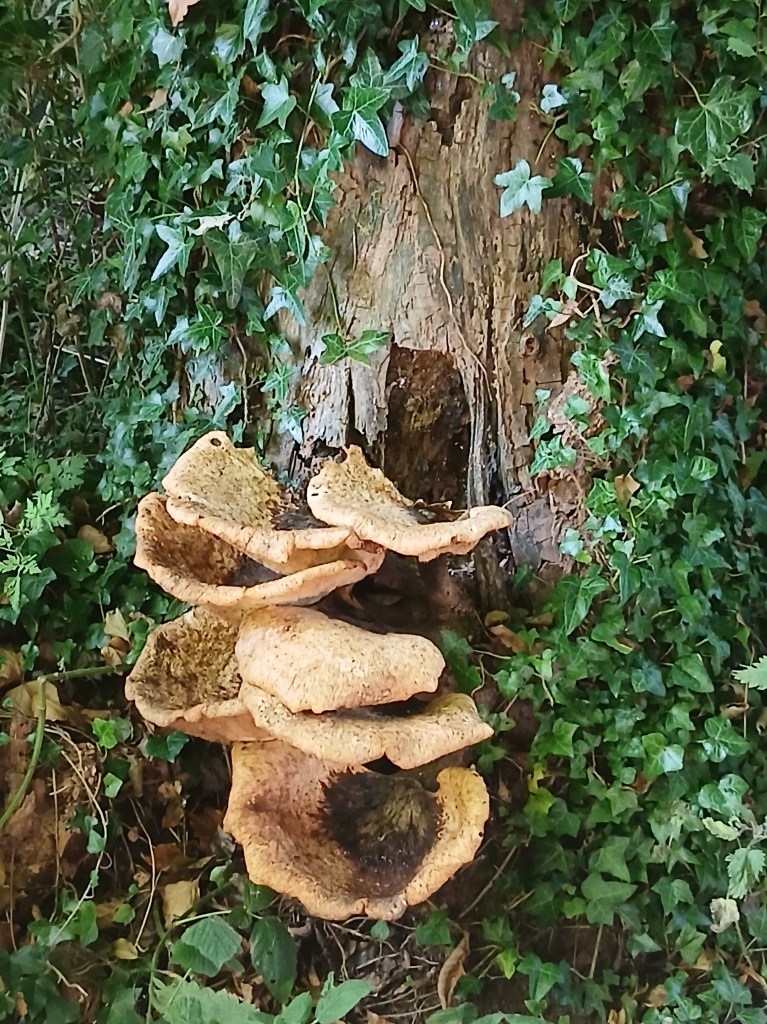
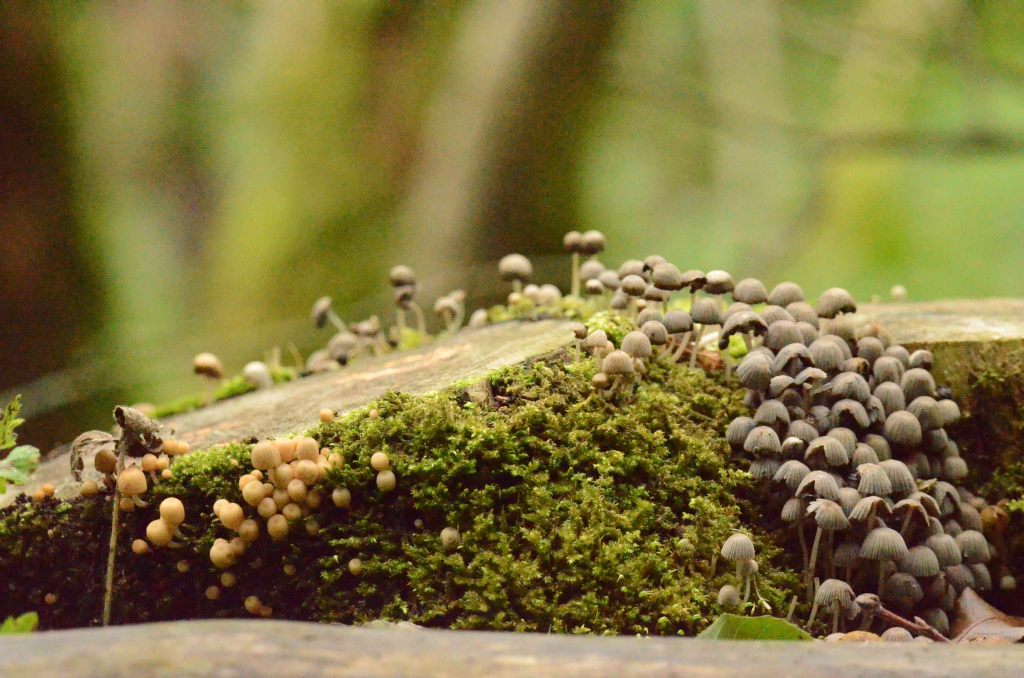
        We moved further through the woods, noticing varieties of fungi as we went. The clusters of fungi decorating the moss-strewn tree trunks appear to be Fairy inkcaps, which are quite common mushrooms throughout Britain. I don’t know what type of mushrooms the bracket fungi are, though: initially I thought Dryad’s saddle, but I’m not so sure now. Until further notice, this shall remain a mystery!

    Fairy inkcaps
    Bracket fungi

      Fairy inkcaps (top) and bracket fungi (bottom) 

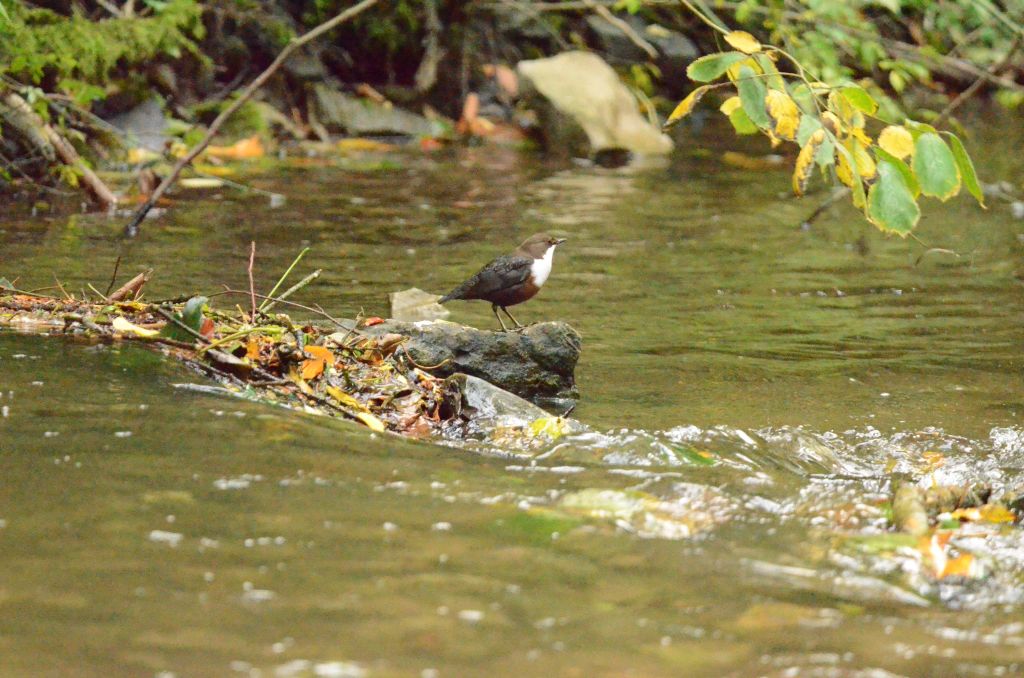
    We pressed on through the woods always with an eye on the river. Our patience and peering paid off as very soon we saw a brown blur approach from the far bank and land in the water, half-submerging itself. Yes, this was a White-throated Dipper.

    Pleasantly plump Dipper
    Dipper facing upstream

    White throated Dipper

    The bird shifted to a small rock to the side of a naturally formed weir and began its comical, characteristic bobbing. It’s apparently this action that gives the bird its name, as it ‘dips’ up and down: and there was I thinking it earned its name because it enjoyed dipping itself underwater! Trying to identify the sex of a Dipper is very difficult as there is little to distinguish between males and females. On the whole, though, males are larger: looking at this one (and we’re sure that it was the same Dipper that we saw put in a couple of separate appearances), I’d say it was male.   

    Dipper mid-stream

    There are a couple of photographs where Stu caught the Dipper with its eyes closed as it was blinking: you can see the white feathers of the eyelids contrast strikingly with its brown head and face.

    Dipper eyes closed
    Dipper eyes closed 2

    We watched the Dipper plunge into the water in search of food, which it did tirelessly again and again – in fact, you can see in one of the photographs that it has caught something in its beak. Dippers have a taste for the larvae of Caddisfly but will eat aquatic insects and worms, crustaceans and even small fish, although I can’t identify this particular appetiser here.

    Dipper inspecting

       The pleasantly plump Dipper with its beak full

    While their solid appearance could be described as ‘pleasantly plump’, their squatness helps make them strong swimmers – they beat their wings rapidly both in and out of the water. Mesmerising. We were exceptionally lucky to have seen both a Grey wagtail and a Dipper along the same stretch of water on the same day.

    The important stuff

    While building work continues at Loggerheads, this doesn’t mean that travellers like us have to remain hungry and thirsty – oh no! You can get refreshments from The Mill House café (Tŷ’r Felin) next to the mill at the visitor centre, so we had our customary cappuccinos and Bakewell slices as we sat in the lee of the stone wall. Lovely!

  • Low tide at Thurstaston beach

    (Sunday 14th September, 2025)

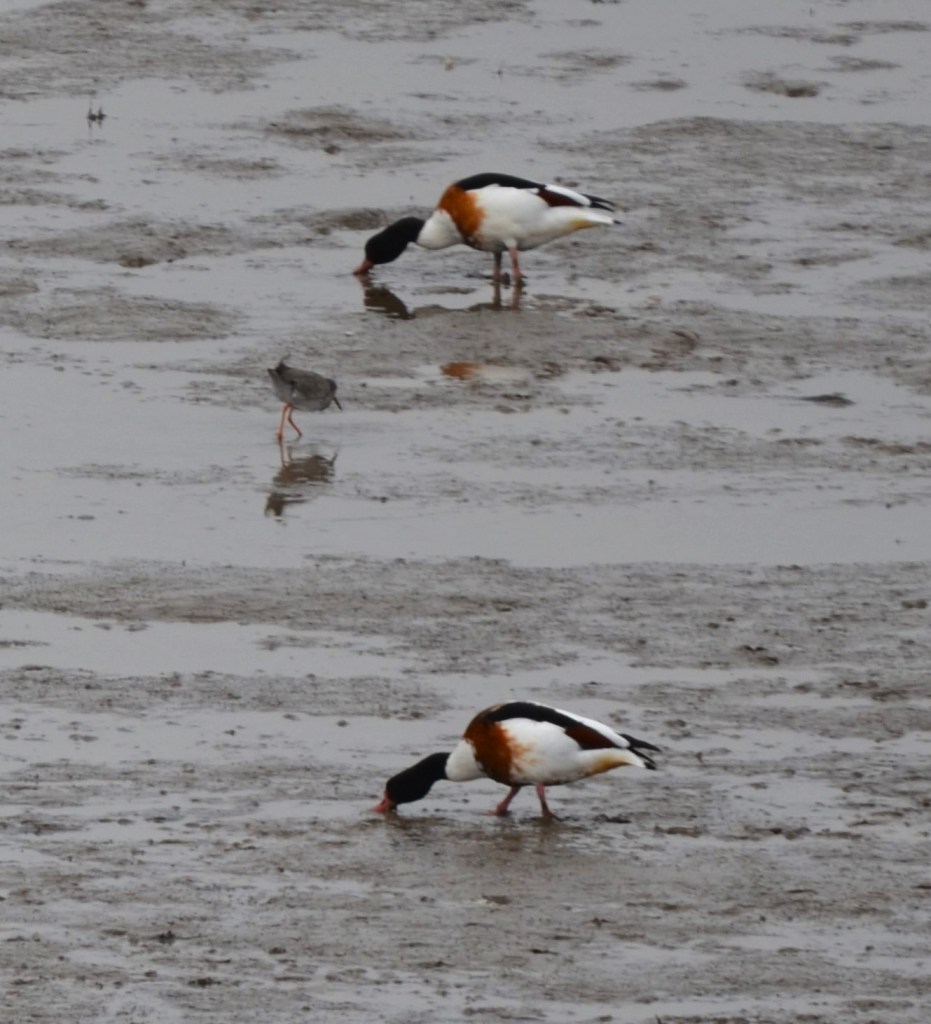
        Over to Wirral Country Park this morning. Although there was barely any wind (SSE), it was overcast and the temperature had dropped to a cold 12°C. Mind you, even at low tide when the sea had retreated, there was still activity on Thurstaston beach as various birds searched the mud and the shallow waters of the channels for pickings. There were Shelducks, Redshanks, Oystercatchers and the inevitable Carrion crows, amongst others.

    Shelducks and Redshank

     Shelducks and Redshanks

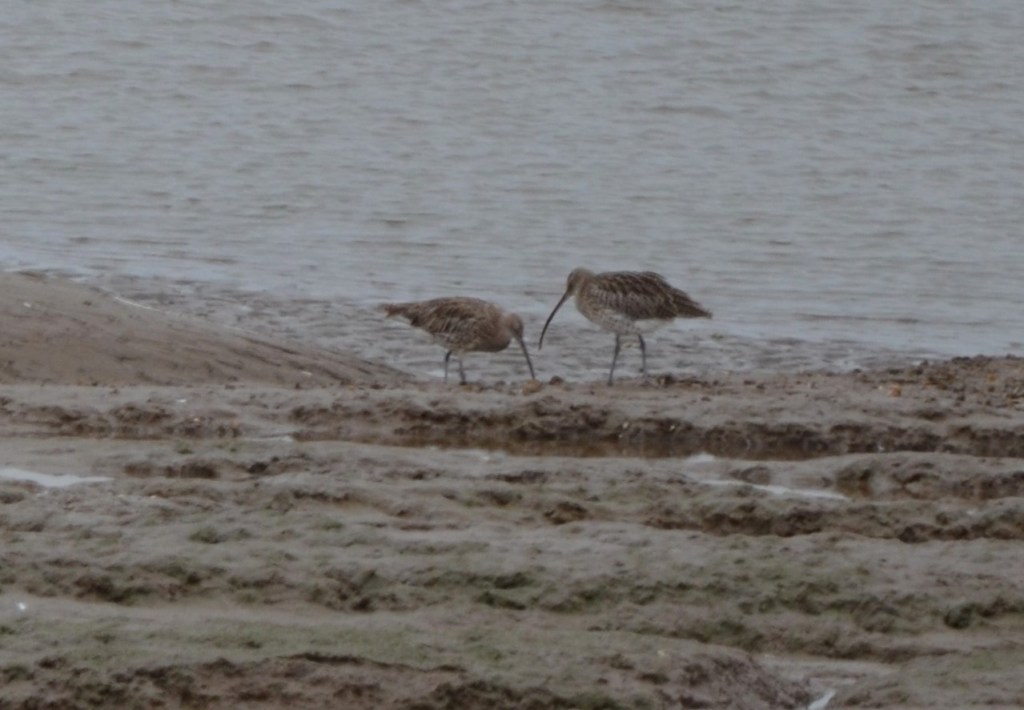
    I could hear a Curlew calling across the sands but was unable to spot it – have you ever noticed how difficult it is to pinpoint where a sound is coming from over a vast area? Luckily, though, Stu managed to capture a pair of Curlews scraping the beach for worms: the picture is a little grainy, but all the photographs today were taken from the clifftops.

    Curlews at Thurstaston

        Curlews

    I’m still not absolutely sure whether the gull wading in the channel near the Little egret is a Yellow-legged gull or a Lesser black-backed gull, but I’m opting for the latter. While both gulls have yellow legs, this gull’s plumage is the dark-grey which I associate with that of the Lesser black-backed gull. However, gulls are notoriously difficult to identify – well, for me they are, and that is my get-out clause, should I be wrong!

    Lesser black-backed gull and Little egret

       Lesser black-backed gull and Little egret

    The Little egret that’s moving in the opposite direction to the gull (whatever type of gull it may be) later joined up with another four Little egrets, and together they stood motionless on the banks of the channel, until occasionally one would swiftly extend its neck downwards and spear its prey in its long beak. I mention this only because I wondered, for no particular reason, what collective noun describes a group of egrets. ‘Congregation’ seems to be the preferred noun, although there are others. I suppose the term might be apt, but only for a well-behaved congregation that is not moving much. Maintaining a spiritual tone, a collection of godwits is known as a ‘prayer of godwits’, although it’s a little more difficult trying to trace where the term ‘godwit’ actually originates.

        This set me on wondering where all these names come from. Some collective nouns do make sense – a ‘murmuration of starlings’, for example. ‘Murmuration’ is described in Merriam Webster as ‘the utterances of low continuous sounds’, which perfectly describes the noise made by the beating pairs of wings of a huge Starling flock swirling around the sky. Others seem a little more obscure: ‘a committee of terns’, ‘a desert of Lapwings’, ‘a curfew of Curlews’, for instance. A ‘parliament of owls’ seems particularly incongruous, seeing as how owls are generally recognised for their sagacity, whereas Parliament, well…

        Eventually, we left the group of Little egrets and all of the other groups to it and headed back. One thing we noticed was, although there seemed to be a plentiful supply of blackberries, rosehips and sloes in the surrounding hedges, these fruits were all small, no doubt a result of the long, dry spell of weather over the last few months, when the plants have had to spread out moisture much more thinly than usual. And, while I realise that we’re now entering autumn, the leaves on many of the trees have already turned and fallen. Food for thought.

    The important stuff

    Talking of food (well, you just knew that was coming), Flissy’s café had plenty of Bakewell slices, so there was no quarrelling between your correspondents today. Highly recommended – the Bakewell, of course, and also not quarrelling!   

  • Rain stops play

    (Sunday 7th September, 2025)

        We were at Loggerheads Country Park this morning and, although it was overcast, it was a reasonably mild 18°C, with a light south-westerly wind which was barely perceptible in the shelter of the woods. As we crossed the little bridge to the Leete path, we glimpsed a Dipper scooting upstream. We’ve seen them before along this stretch, but this was to be our only sighting today.[1]

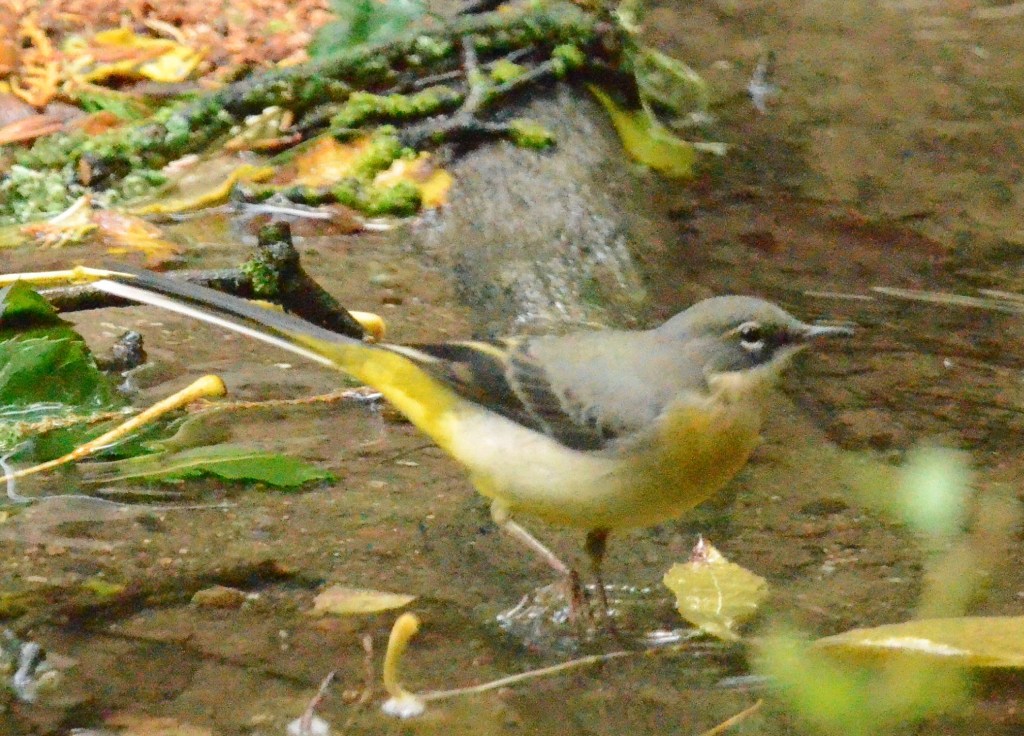
        We followed the Leete a short way, while scanning the riverside, each of us hoping to catch another sighting of the Dipper. I detected a little movement as I trailed my binoculars slowly over the landscape – or riverscape to be more accurate. Looking again, I saw that the movement was the long, see-sawing tail belonging to a Grey wagtail, which was perched on a rock as it scanned the water for food. This one was either a female or a juvenile as it lacked the distinctive black bib that males display during the summer (and I’m classing this as summer, or summer’s end, despite it being meteorological autumn). The grey, white, black, and lemony yellow form a lovely combination as you can see.

    Grey wagtail facing
    Grey wagtail side view

        Seen close-up, the Grey wagtail does strike you as being more colourful than its dullish-sounding name suggests, particularly in its underside feathers, and people often mistake it for the Yellow wagtail: the ‘Grey’ of its name refers to its grey back. The Yellow wagtail has an olive-green back and is much more yellow overall. Habitat is often a giveaway when trying to establish species, and Grey wagtails and Yellow wagtails differ from each other quite markedly in this respect. Grey wagtails are usually to be found near running water, where they can hunt for food, whereas Yellow wagtails prefer open fields and meadows, especially favouring ground that’s been disturbed by livestock, such as cattle or sheep, as this means that the birds can easily graze on the worms and grubs that are revealed as a result.

    Grey wagtail side view 2
    Grey wagtail and leaves

        We have seen Grey wagtails along the River Alyn here many times over the years and we’re fairly confident that they build their nests in the nearby cliffs that overlook the river. We were also lucky enough to see a family of Yellow wagtails quite recently in a cow field, happily scrabbling around the feet of their much larger bovine companions.[2]

    There was a little more water – or slightly less exposed river-bed – than the last time we were here. The river still disappears, but now just that little bit further downstream. However, there is still evidently enough food – aquatic and aerial – to satisfy the Dippers and Grey wagtails that share this short stretch of the Alyn. As the title of today’s post suggests we beat a hasty retreat after only an hour-and-a-half or so. The rain came down heavily and, within seconds, the ground became saturated and we were a little bit soggy ourselves.

    The important stuff

    Sadly, Caffi Florence closed its doors recently, which is such a shame. The staff were wonderful and obviously we have many happy memories. Today, though, we had to go elsewhere for our coffee and cakes and we decided on Daleside Garden Centre in Hawarden (yes, I know, it’s officially ‘Klondyke Strikes’, but we all still refer to it as ‘Daleside’). Anyway, the cappuccinos were accompanied by an Eton Mess slice (Stu) and a Raspberry Meringue (Col). Very nice!


    [1] Morning Dippers, Sunday 24th August, 2025

    [2] Bittersweet Memories, Sunday 3rd August, 2025

  • Hungry Heron

    (Sunday 31st August, 2025)

        Over to Roydon Park on the Wirral Peninsula this morning. We took a little excursion into the woods and sat on a bench underneath a beech tree, just looking and listening. Occasionally runners and walkers passed by, the walkers often with dogs accompanying them, the dogs bounding excitedly at the thousand and one aromas that assaulted their senses. Apart from the raucous rattling of one unseen Magpie in a nearby tree, however, it was generally quiet, although I would say soothingly so. One of the many benefits of getting out and about in nature is that it only takes a few moments before your anxieties begin to wash away and you adapt to the rhythm of your natural surroundings.

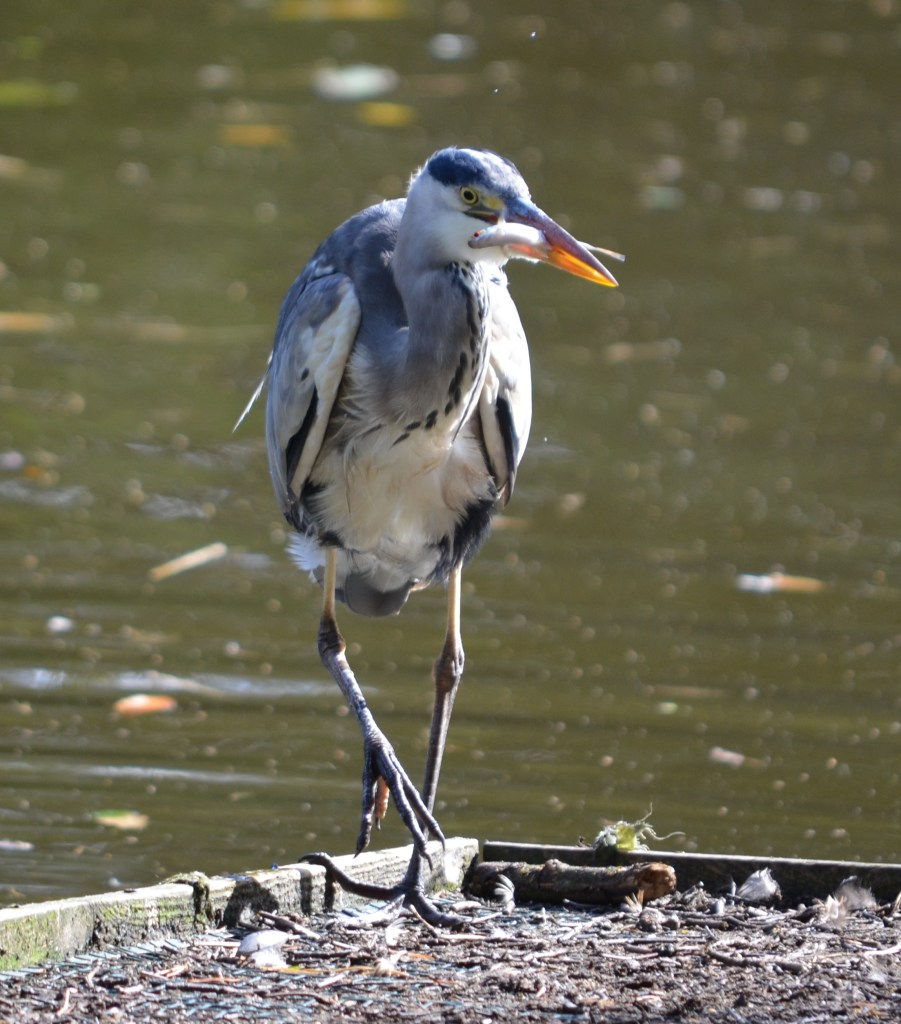
    Grey heron with fish in its beak

        Grey heron with its breakfast

    Eventually, we exited from the woods and detoured to Roodee Mere, the lake near the miniature railway. A Grey heron was standing motionless on a raised platform in the mere, though we could see that its eyes were closely scouring the water for its breakfast. Several minutes went by when it suddenly lunged into the water and retrieved a fish. Stu managed to photograph the heron with the unfortunate fish in its beak.

    The Grey heron trying a different vantage point

    We watched a little longer, and we were amazed to see this persistent bird transfer itself to a low branch of an oak tree that was overhanging the water, then conceal itself in the foliage. As it flew to this new vantage point, it really did bring to mind a Pterodactyl. Mind you, I’ve never actually seen a Pterodactyl – I haven’t been around quite that long – but I’m sure you know what I mean.

    Moorhen chick following mother

       Moorhen chick following its mother

    There were quite a few Mallards swimming on the water, and Moorhens too: we watched one chick trailing its mother as she determinedly led it away from the heron.  (Grey herons will take Moorhen chicks if the opportunity is there, so the mother was right to be cautious). The far side of the mere was bedecked with lilies and other floating vegetation, and we watched in amused fascination as another family of Moorhens, chicks and parents, walked from one lily pad to another with their distinctive high-stepping gait.

    Moorhen chick solo

        Moorhen chick looking for a comb

    Despite the odd gust of wind, it was a relatively warm 19°C and we saw several butterflies flying about at the mere’s perimeter, including Meadow browns, Small whites, and Speckled woods.

    The important stuff

    Retiring to The Courtyard Café for our well-earned edibles, we very nearly came to blows as there was only one Bakewell Slice left! Fortunately, common sense prevailed and so we sat down and enjoyed Lemon Drizzle cake (Stu) and the aforementioned Bakewell (Col). Marvellous!