Tag: parkgate

  • Parkgate Again

    (Thursday 6th August, 2026)

    Today, I was over in Parkgate on the Wirral Peninsula – for the second time this week. On this occasion I was accompanied by my mother, my brother, Michael, and my niece, Sophie. Regular readers will know that our chief cameraman is Stu but he had to go to work today and help keep the British economy ticking over, so all photographs were taken by Sophie today. Thanks very much Sophie!
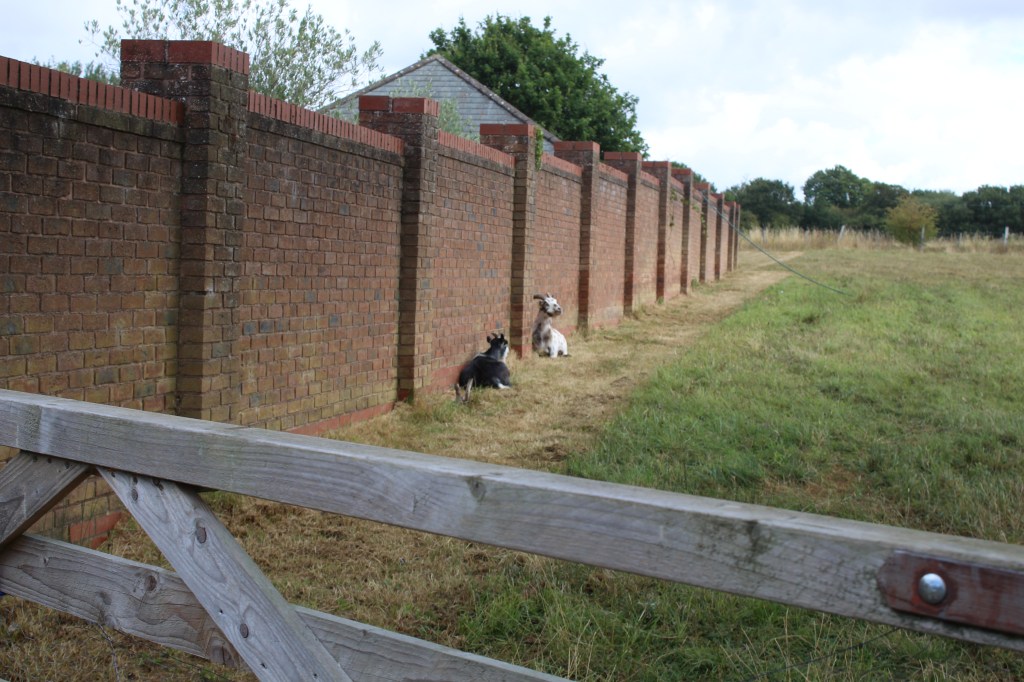
    Goats at Parkgate

    Goats near the Old Baths carpark

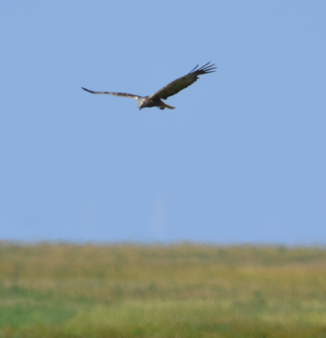
        Parkgate village lies on the English side of the Dee Estuary and is a great place to visit for birdwatching. The expansive salt marsh is 100 square kilometres and all sorts of bird species can be found here: it’s home to waders, wildfowl, herons and egrets, birds of prey, warblers…the list goes on. During today’s visit, for example, we saw several people excitedly watching a group of Spoonbills out on one of the flashes (shallow ponds). There was also a Marsh harrier patrolling low over the marsh and, later, a Kestrel hovered, facing into the wind, eyeing the ground below.  
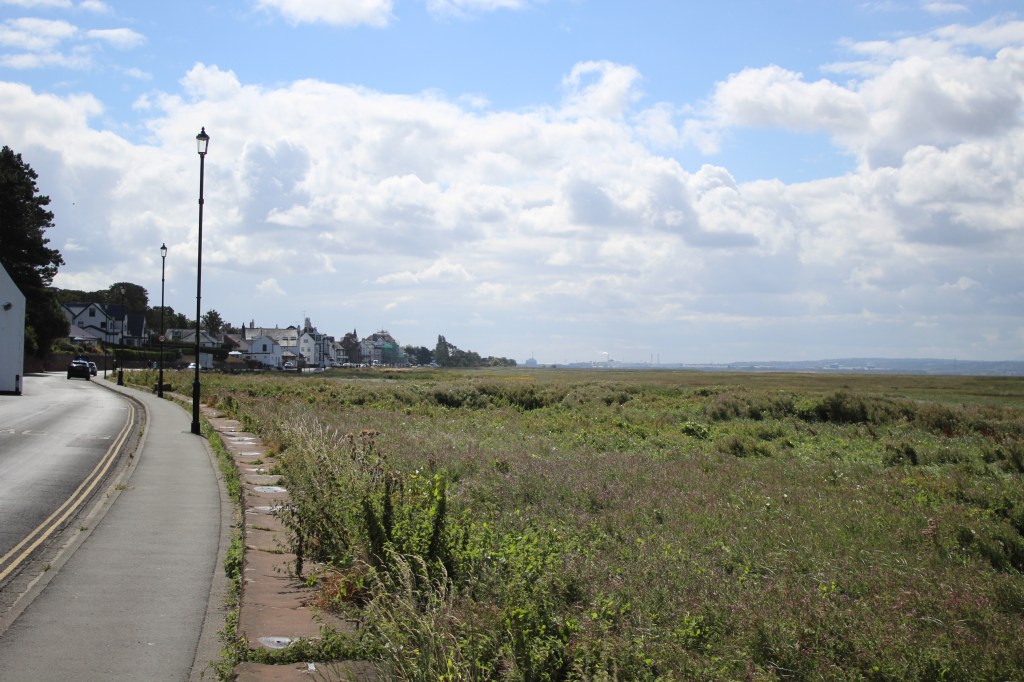
    The Parade

    Looking southwards along The Parade

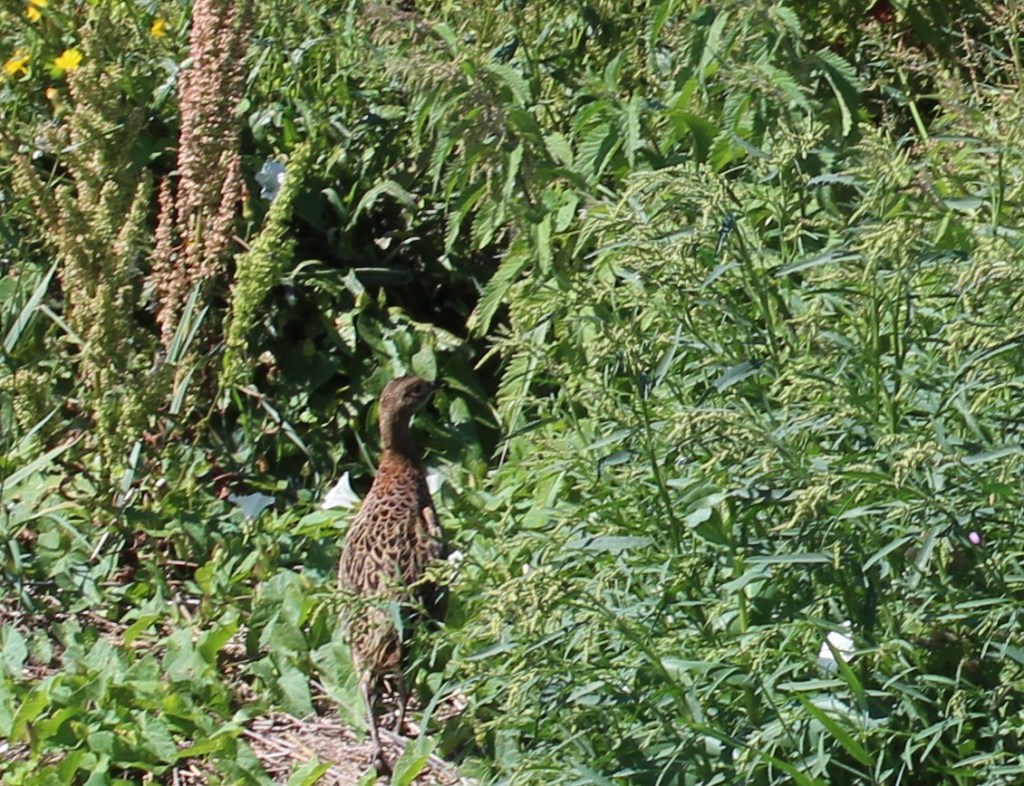
    Pheasant in undergrowth

    Female Pheasant

        However, Parkgate is more than a destination for birders and wildlife-lovers and I was reminded of this as I went through Sophie’s photos later. Often, when we visit places, we can be so intent on a particular purpose that we overlook other aspects that might be just as interesting – both to others as well as to ourselves. So it was refreshing to see Parkgate through a different perspective.
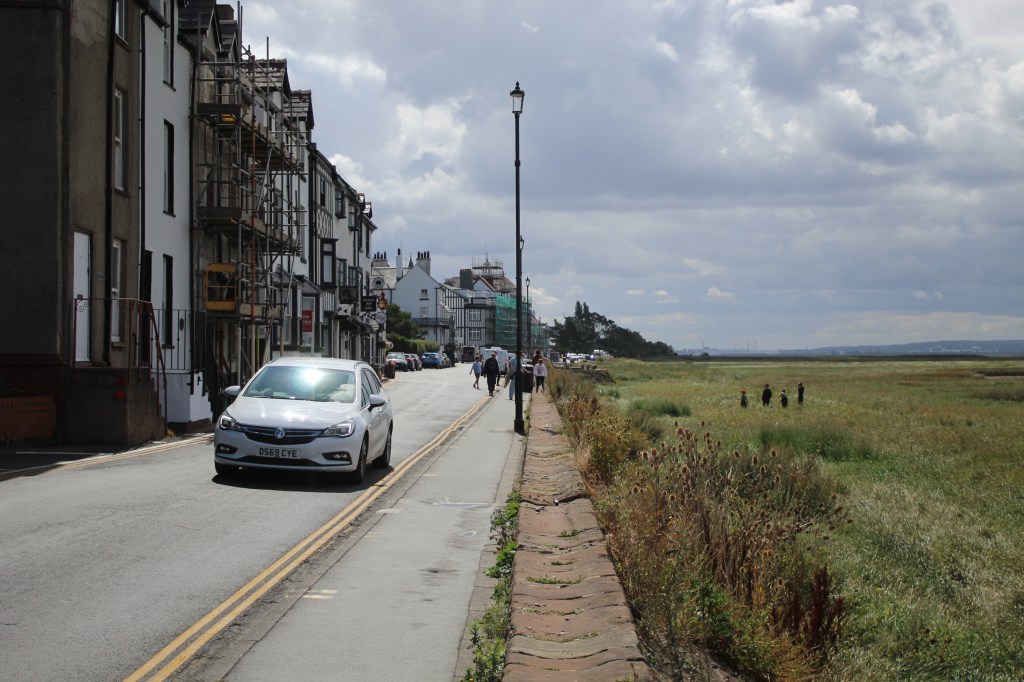
    The Parade 3

        For the benefit of those who are unfamiliar with Parkgate and might be considering a visit, here’s a little bit of information about its history.
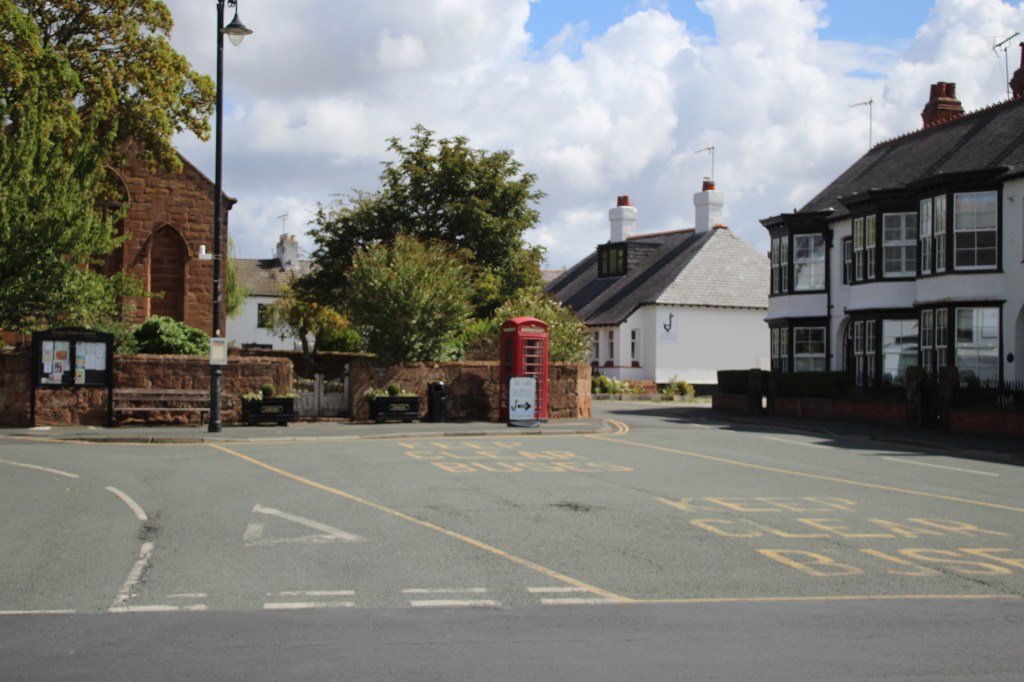
    School Lane, Parkgate

    Above: School Lane (St. Thomas’ Church is on the left); below: Girl with traffic cone on lead
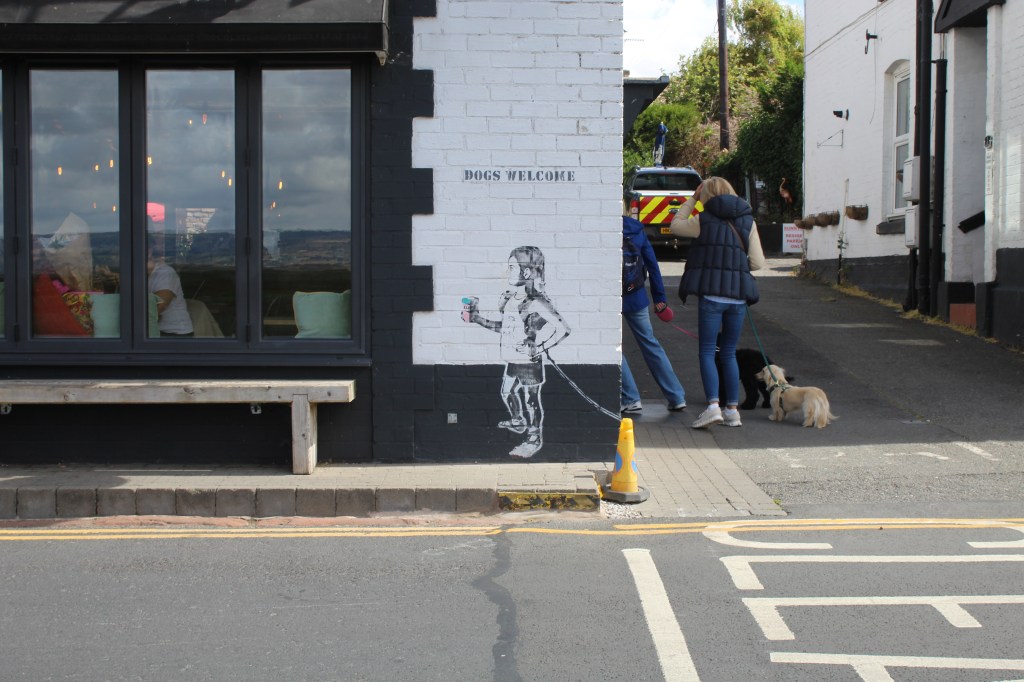
    Park your dog

        Lady Emma Hamilton (originally Amy Lyon) was born in the nearby village of Ness – and raised in Hawarden in Flintshire – and composer George Frideric Handel sailed back from Ireland via Parkgate which, at the time, in 1742, was a busy port. Towards the end of the eighteenth century the accumulating silt on the River Dee meant that Parkgate could no longer function as a port and was supplanted by the port of Liverpool on the River Mersey.  
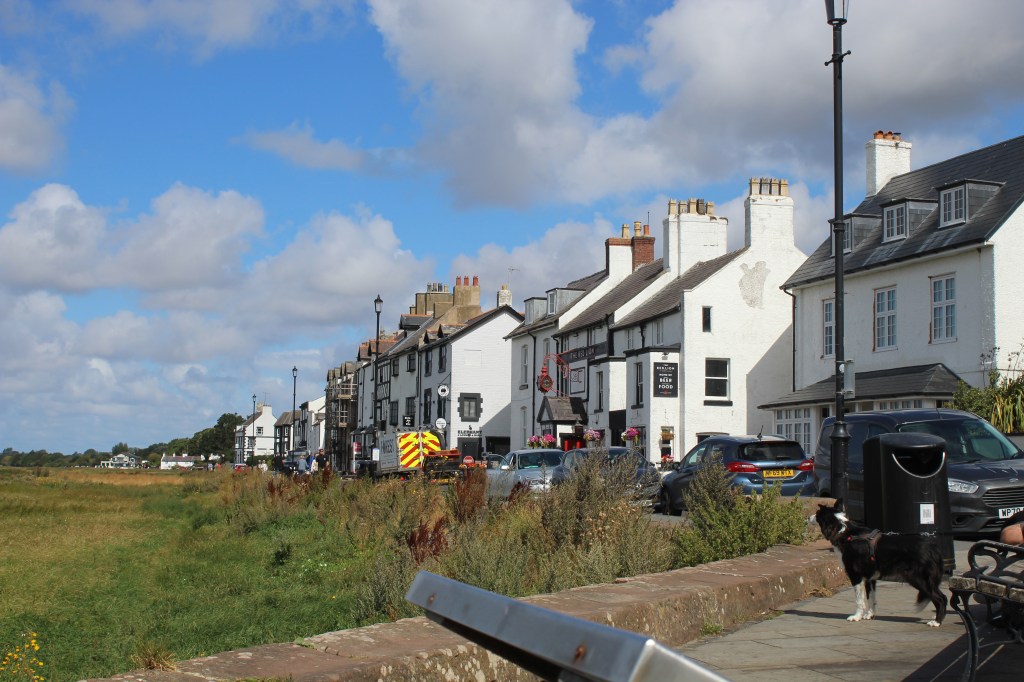
    From the Donkey Stand

    View from the Donkey Stand

        Parkgate then switched to being a seaside resort and successfully drew people in to take the fashionable salt waters. Open-air baths were built during the 1920s which became very popular and helped Parkgate maintain its status as a resort right up until the late 1930s. Sadly, not a lot remains of the baths now except the odd section of wall at the Old Baths carpark which lies beyond the Boathouse pub.
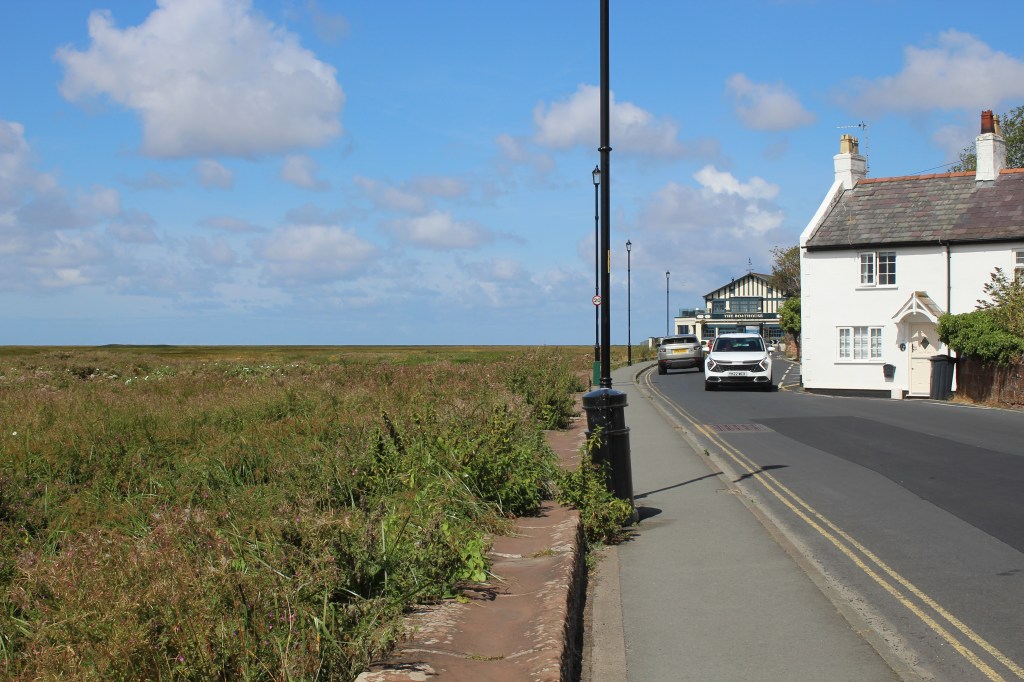
    The Parade 2

    Looking northwards along The Parade

        Parkgate is well worth a visit and you don’t have to be a birder to enjoy it either.
  • Low Tide at Parkgate

    (Sunday 2nd August, 2026)

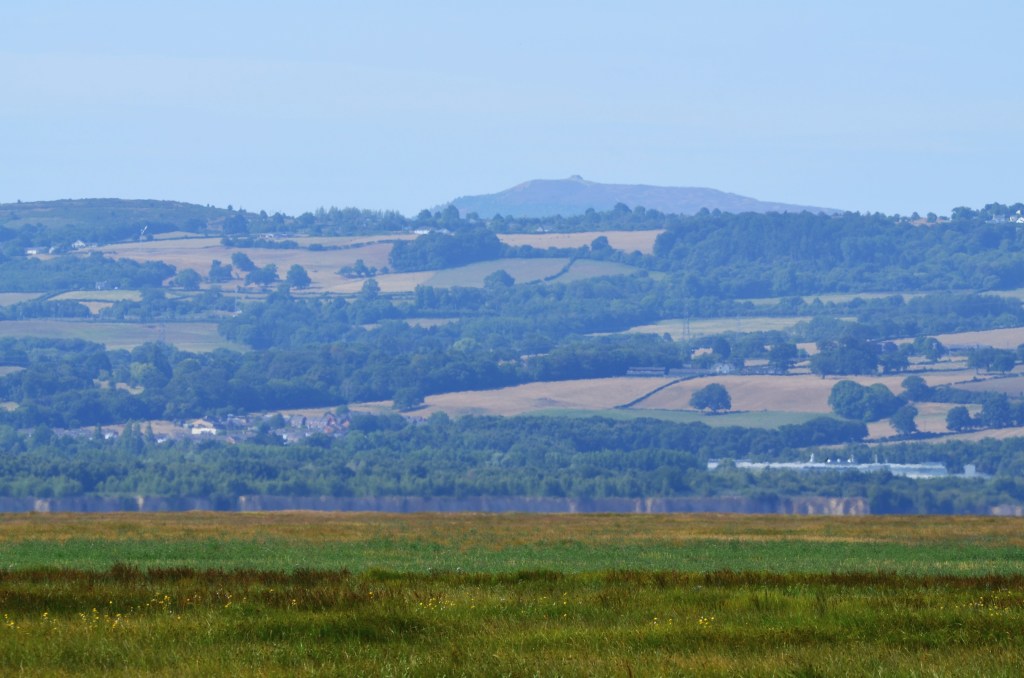
    Over to Parkgate on the Wirral Peninsula this morning where it was a sunny 21°C with just a faint breeze (ESE). Visibility was very good and we had panoramic views of the Dee Estuary: Moel Famau and the other hills on the Clwydian Range stood out sharply to the south of us and, in the opposite direction at the estuary’s mouth, we made out the many wind turbines that stretch across Liverpool Bay.

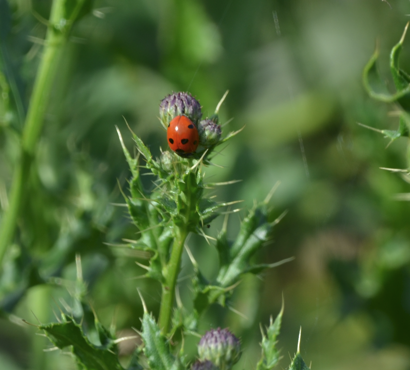
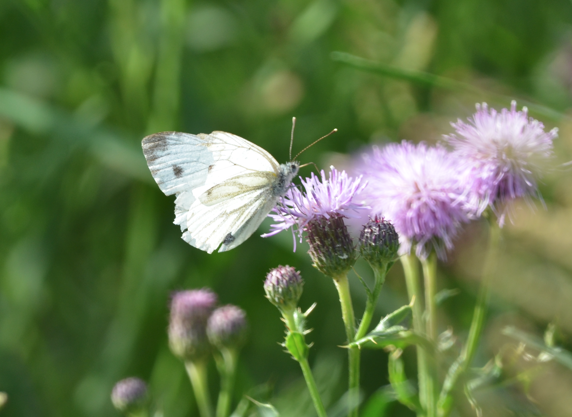
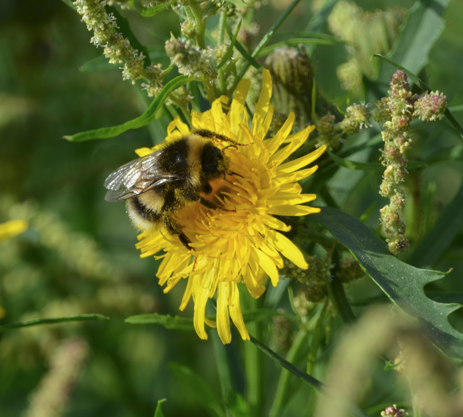
        The trees and bushes near the Old Baths have clearly been stressed by the current drought, their leaves browning and crisping before dropping early. Conversely, Dandelions, bindweed, knapweed and thistles out on the marsh seem to be thriving – all obviously more able to cope. A welcome consequence of this hardiness is the variety of insects that visit them. We spotted ladybirds, White-tailed bumblebees and several white butterflies – mostly Small whites, although we did see one Green-veined butterfly too.

    White-tailed Bumblebee, Parkgate
    Seven spot
    Small white Parkgate

    Top: White-tailed bumblebee; middle: Seven-spot ladybird; bottom: Small white butterfly

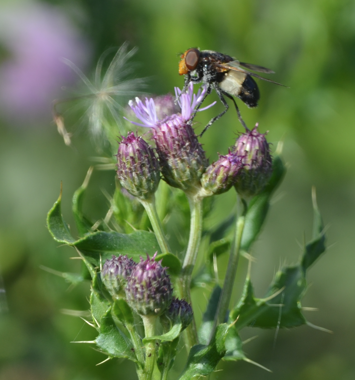
        We were intrigued by several hoverflies which seemed to be especially partial to thistle flowers. These are Pellucid hoverflies (also known as Pellucid flies). They are mostly black except for a distinctive white band around their abdomens and they have very large, reddish-brown eyes, which provide them with a wide field of vision. As with other hoverflies, Pellucid hoverflies have evolved to mimic bees or wasps and this mimicry acts as a visual deterrent to predators such as birds, amphibians or spiders that might ordinarily prey on them but will hesitate if they believe they might get stung!

    Pellucid Hoverfly

    Pellucid Hoverfly

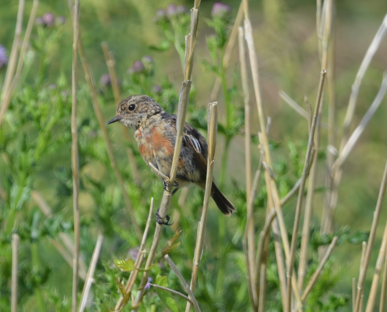
        A pair of small birds scooted low in front of us. They were very quick but Stu managed to take a snap of one of them clinging to a reed, before it swiftly departed again. This looks like it’s a juvenile Stonechat. Even without the more defined red-orange breast of the adult, it’s still a striking-looking bird.

    Juvenile Stonechat

    Juvenile Stonechat

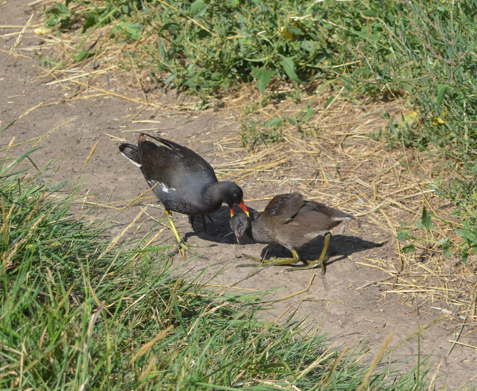
        Down at the Donkey Stand, we looked over the other side of the wall and watched an adult Moorhen as it ferried its chick back through the reeds to shelter.

    Moorhen scolding

    Moorhen encouraging its chick to seek shelter

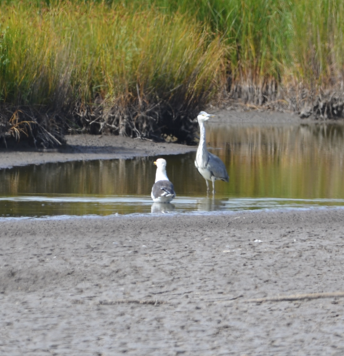
    Further out. the ‘flash’ looked bone-dry apart from one small section of water in the far corner where a Grey heron stood forlornly hoping for the best. We were there just after low tide although I believe the flash (or shallow pond) relies on rainwater as much as water from the river and – like everywhere else – Parkgate hasn’t had much rainfall recently.

    Gull and Heron

    Heron and gull lamenting the absence of water.

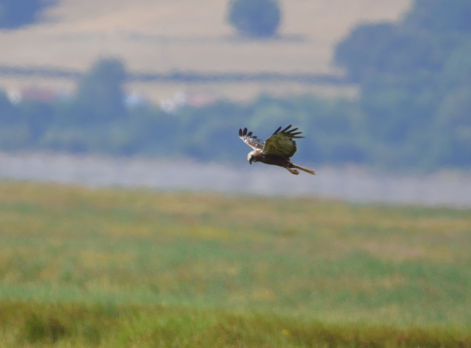
    On the nearer side of the flash were several Lapwings and Black-headed gulls, most of which were sprawled on the ground and making the most of the sun. They didn’t stir, even when a Marsh harrier flew low nearby. Talk about lethargic!

    Male Marsh harrier

    Marsh harrier

        To be fair, the harrier seemed to be concentrating on a long stretch of the marsh that it was patrolling and that was mostly obscured form our view. Flying characteristically low, the bird would every now and then twist and drop down, feet first. This is how the Marsh harrier grabs the small mammals, amphibians and fish that make up much of their diet, although Marsh harriers are opportunistic predators that will also take small waterbirds like Moorhens, too. This Marsh harrier was a male and, though the male is smaller than female – well, less bulky – it’s still a large bird and surprisingly agile. Fascinating to watch.

    Male Marsh harrier 2

        There was a scattering of House martins that seemed to be darting between the marsh and the rooves of the buildings along The Parade, where they presumably have nests: an ideal vantage point. As we turned to go, we glimpsed a pair of Common buzzards further out, leisurely rising as the thermals carried them both skywards.

    Panorama

    Moel Famau from Parkgate

    The important stuff

    We called in at Daleside in Hawarden on the return journey where we each had a Vanilla slice with our customary cappuccinos. Very gooey!