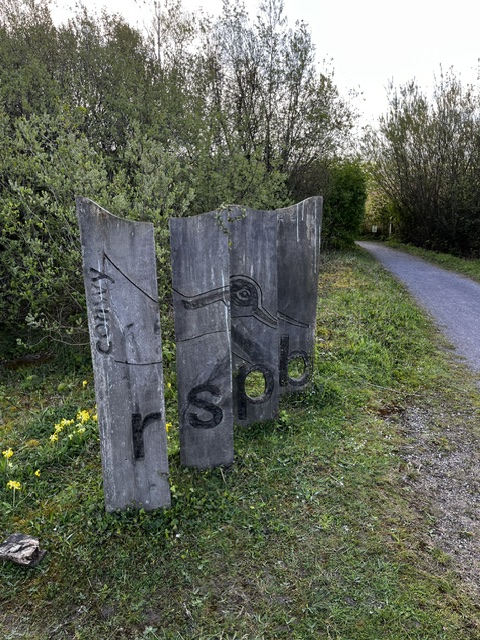
(Sunday 19th April, 2026)
We were at RSPB Conwy in the borough county of Conwy this morning. Although only 11°C, it felt much warmer: the day was sunny with barely any wind. The nature reserve is family-friendly with a play area and sandpit near the entrance, and Conwy Castle and the surrounding hills and mountains provide an impressive background.
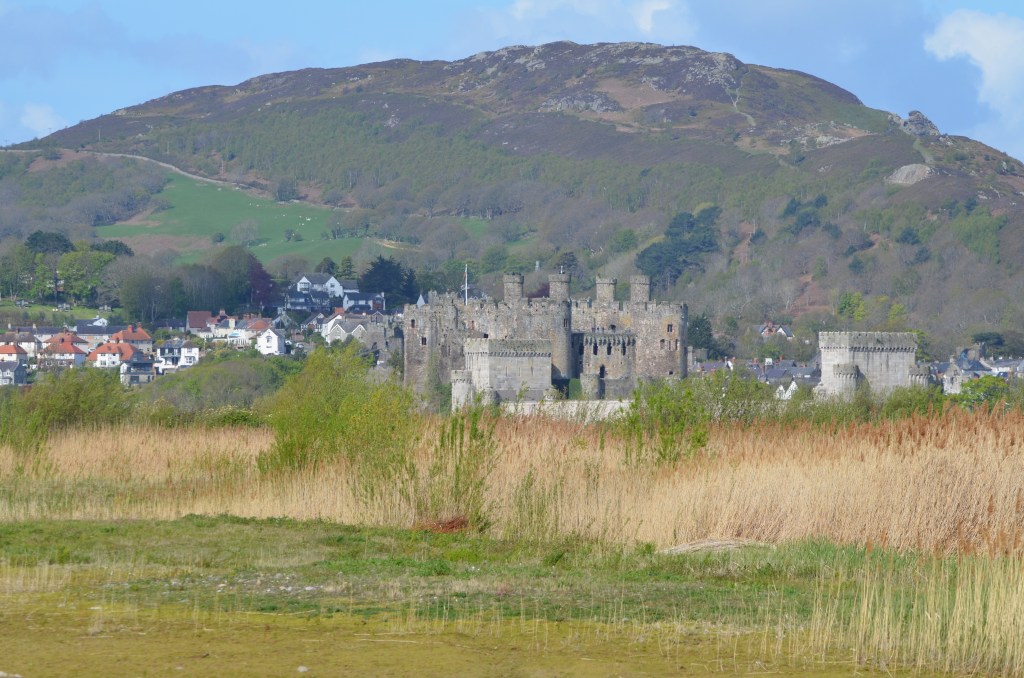
Looking across the river towards Conwy Castle
There were several Canada geese nesting by the main lagoon while Oystercatchers and Lapwings roved the shallows. Shelducks and Coots bobbed along the water and Moorhens moved furtively around the undergrowth.
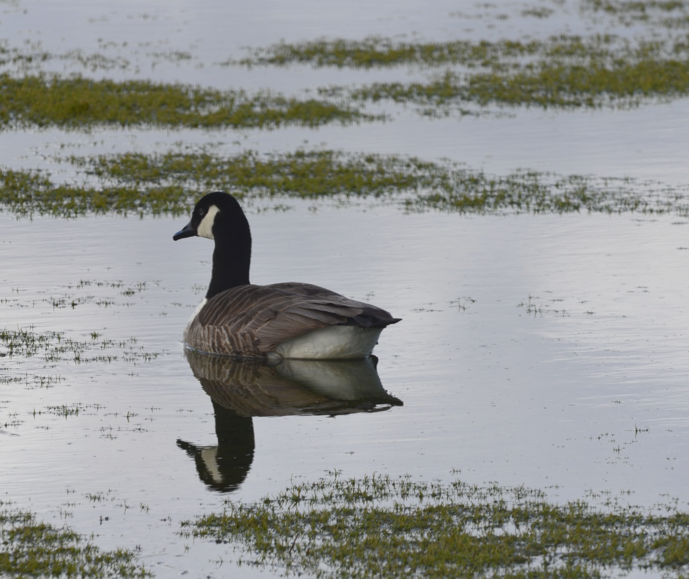
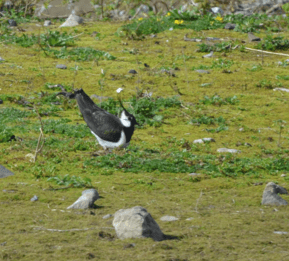
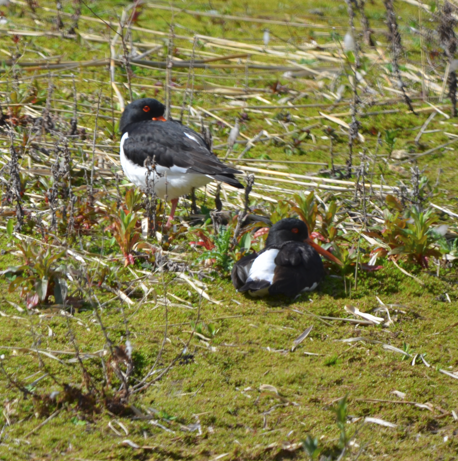
Top: Canada goose; bottom left: Lapwing; bottom right: Oystercatchers.
There was also a pair of Gadwalls, a species of duck that we hadn’t encountered before. In fact, we almost missed them as they were amongst a group of Mallards and we initially assumed them both to be female Mallards, before noticing the white tail feathers and dark grey bill of the male Gadwall. While the females of both duck species are very similar at first sight, the differences do become more apparent once you take a closer look.
As we walked between hides, we heard the distinctive sound of a Chiffchaff calling from a nearby tree. It’s difficult to separate the Chiffchaff from the Willow warbler as they are both very similar in size and appearance. Willow warblers have pale brown legs whereas Chiffchaffs have dark brown or even black legs but you don’t always get a clear view of them. You can, though, differentiate the birds through their songs: the Willow warbler has a descending trill kind of song, while the Chiffchaff’s song is a steady two-note repeated phrase – supposedly it sings its own ‘chiff-chaff’ name. Luckily for us, then, that this Chiffchaff sang for our benefit!
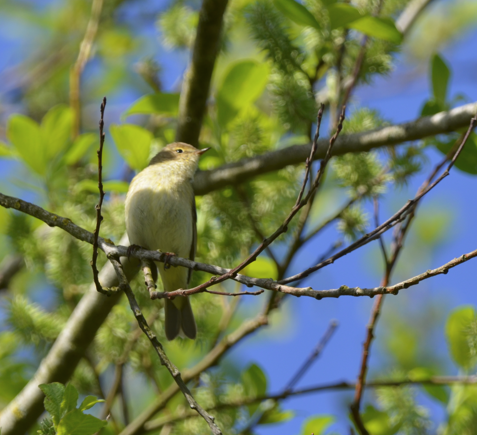
Chiffchaff
Trichomonosis is a word we’ve all become more familiar with in recent years: this parasitic disease affects many birds by making them unable to swallow food or water, which inevitably leads to emaciation and often death for those birds. The disease is transmitted via saliva and regurgitated food, so it can be passed by parent birds feeding their young and through courtship feeding. It can also be passed via contaminated food or water at bird feeders: the RSPB has recently advised against the use of flat bird tables and tray feeders in particular as well as limiting feeding during summer months.
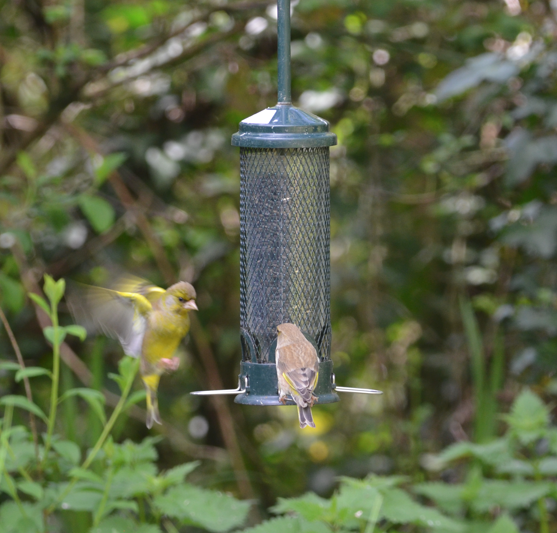
Particularly affected by trichomonosis in recent years have been Greenfinches and Chaffinches and, while we still come across Chaffinches on our travels, we’ve struggled to see any Greenfinches at all in the last couple of years, so it was very pleasing to see no less than three of them appear together at one of the RSPB feeders. Let’s hope that circumstances are improving for them and other birds.
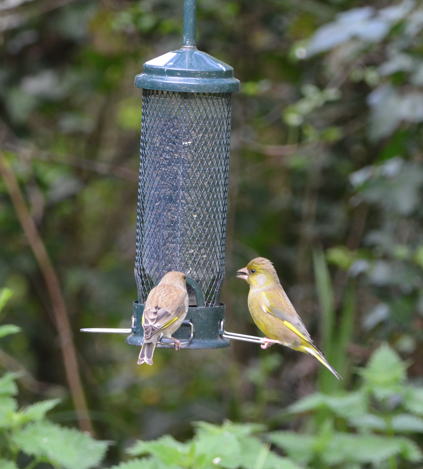
Above: Greenfinches; below: a great shot of a Greenfinch coming in to land.
One of the unlooked for consequences of feeders – and I’m not referring to that awful bird disease here – is that rodents such as rats and squirrels are attracted to the overspill that lands on the ground. Those that we saw today were having a grand old time with this free food!
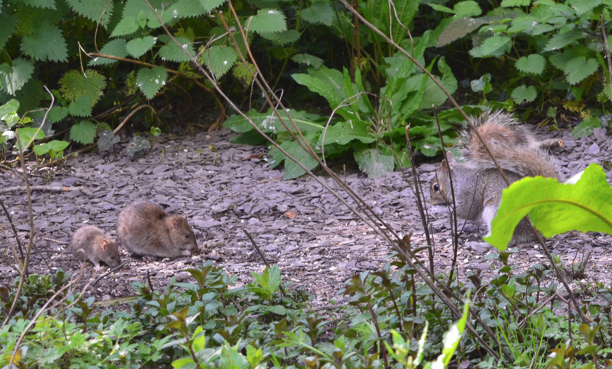
Squirrel and rats feeding on overspill from feeder.
Blue tits and Great tits skittered from tree to tree and were clearly enjoying the balmy weather. We heard Dunnocks and Wrens amongst the avian choir, although we didn’t catch sight of any. We did see our old friend, the Robin, though!
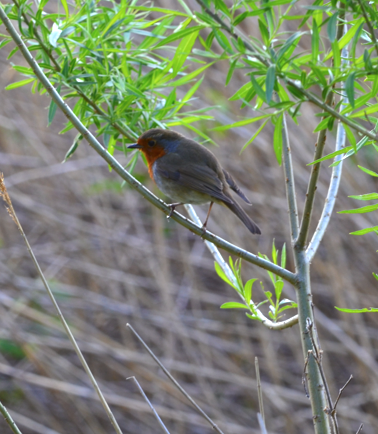
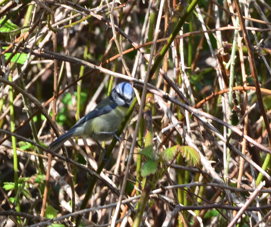
Robin and Blue tit
There are lots of plants flowering now and it was great to see the ground awash with colour: the pale lilac of Cuckoo flowers (also known as ‘Lady’s smock’ I believe); the bold yellows of cowslips and marsh marigolds, the daintier pale yellow of primroses, and the purple of the many dog violets scattered at the sides of the paths. Hawthorn has also begun to produce its white blossom. It seemed as if everywhere was beginning to flourish.
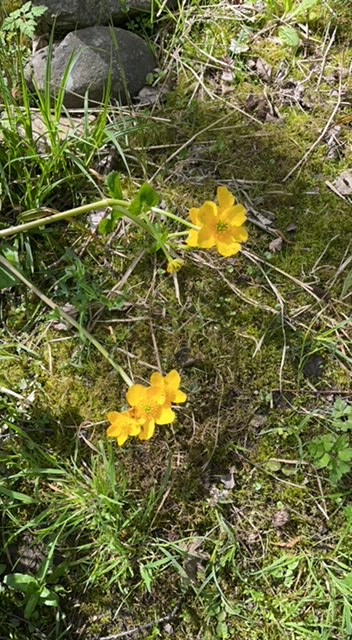
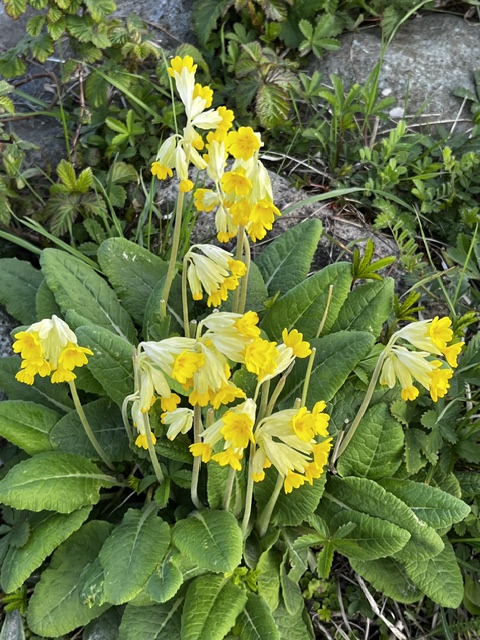
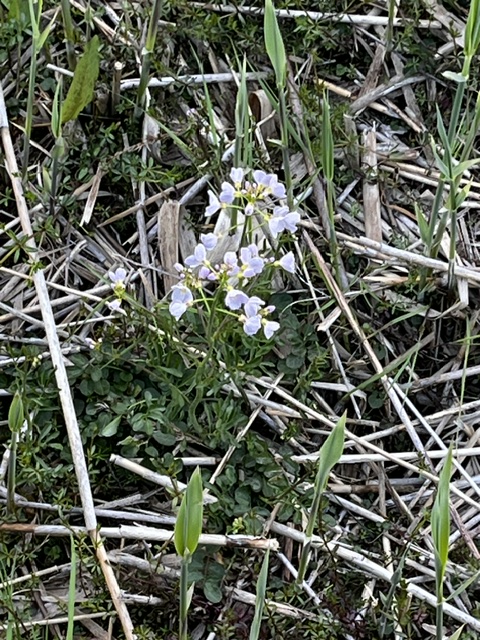
From left to right: Marsh marigolds, Cowslips, Cuckoo flowers (also known as Lady’s smock)
Talking of dog violets, the caterpillars of several butterflies, including the Pearl bordered fritillary, the Silver washed fritillary, and the Dark green fritillary like to munch on these particular flowers. So, something to look out for in the coming months.
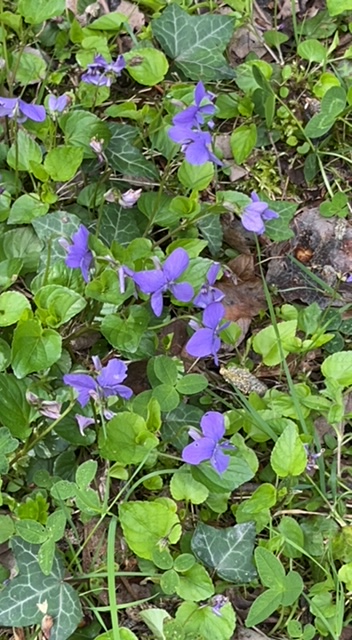
Dog violets
The important stuff
Having burnt off so much energy, we went to the spacious café for replenishment: Stu had a Caramel Slice with his cappuccino and I had a slice of Bara Brith (and butter) with mine. Very nice!
Suitably topped-up, we went outside and took one last look through the binoculars before we left. We saw several Little egrets nesting high in the trees on the far side of the estuary, although they were that far away we didn’t notice them until they were pointed out to us by a helpful member of staff. Well worth a visit.