Tag: birds

  • A hot day at Burton Mere

    (Sunday 13th July, 2025)

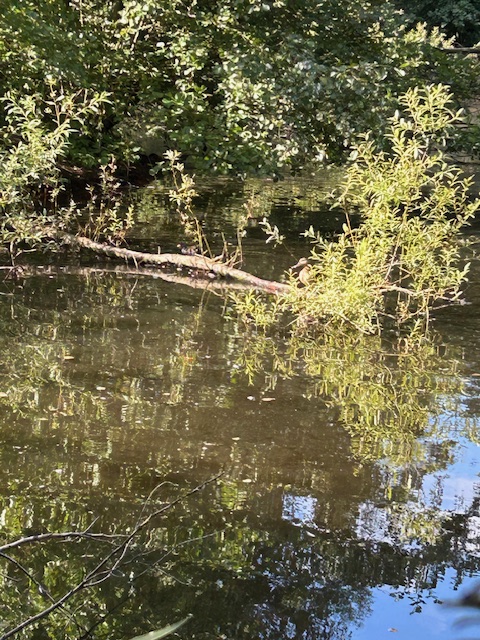
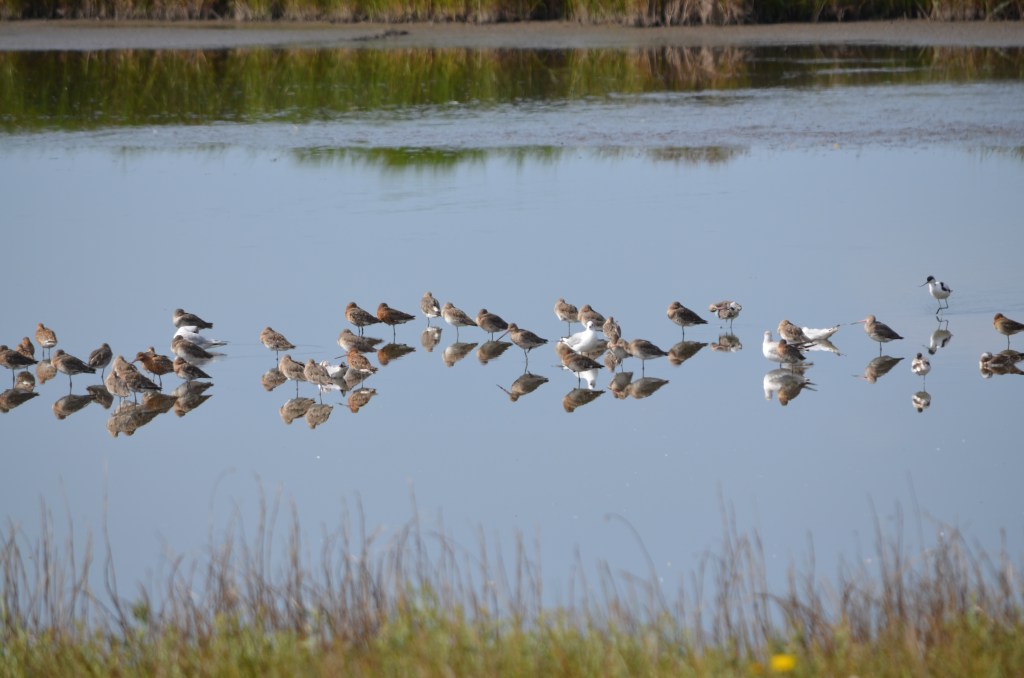
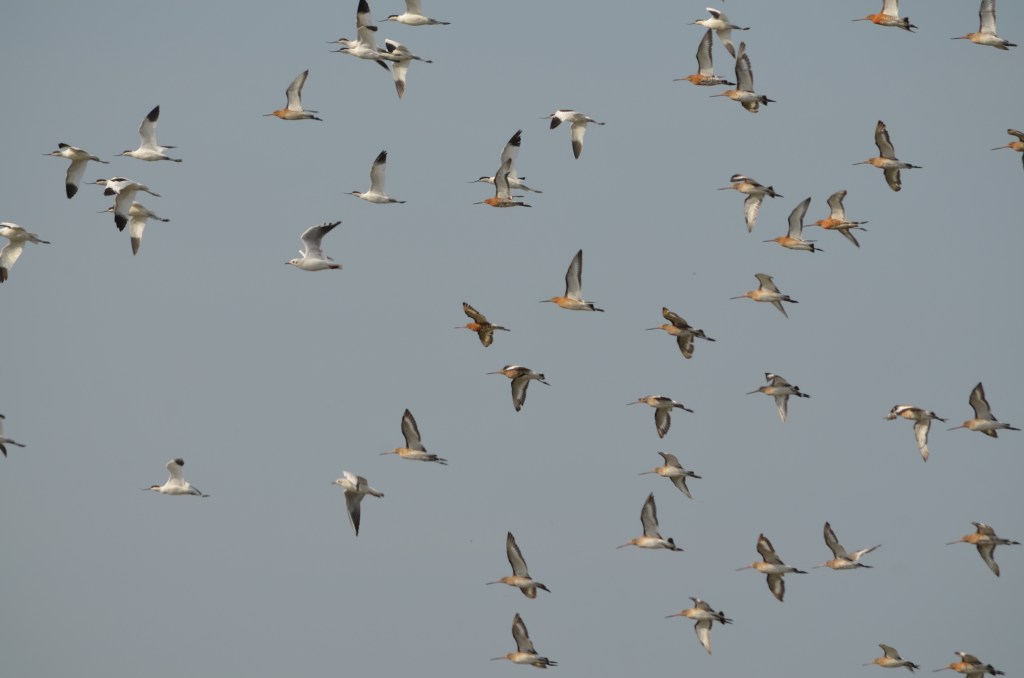
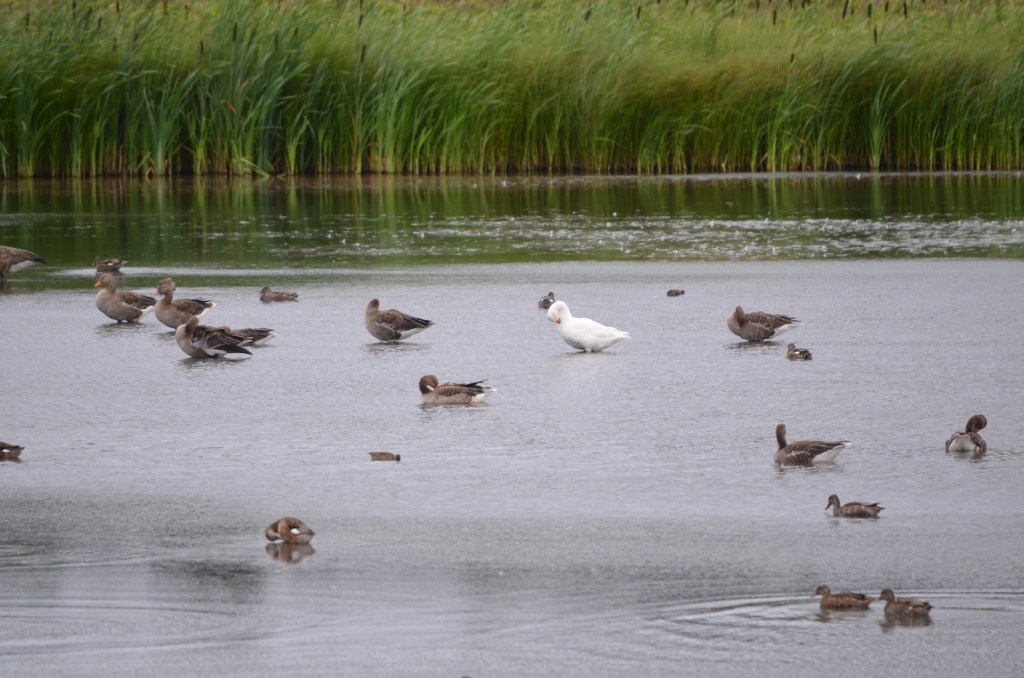
        I went across to Burton Mere Wetlands today. It was a hot 28°C but slightly cooler than yesterday’s 32°C. Naturally, there were lots of birds at the Wetlands including Canada geese, Greylag geese, Mallards, Moorhens, Shovellers, Shelducks, Black-headed gulls and Avocets. There were also a few Black-tailed godwits and lots of Knots at the Scrape, and both species were in their stunning brick-red summer attire; and from the Border hide I saw what looked like several hundred Lapwings.

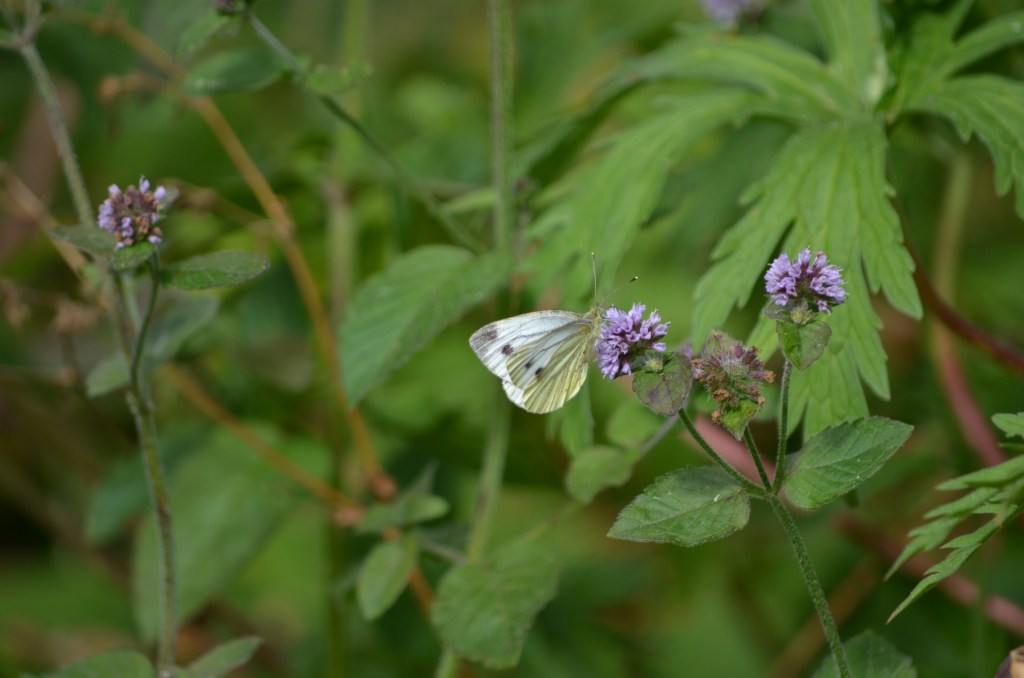
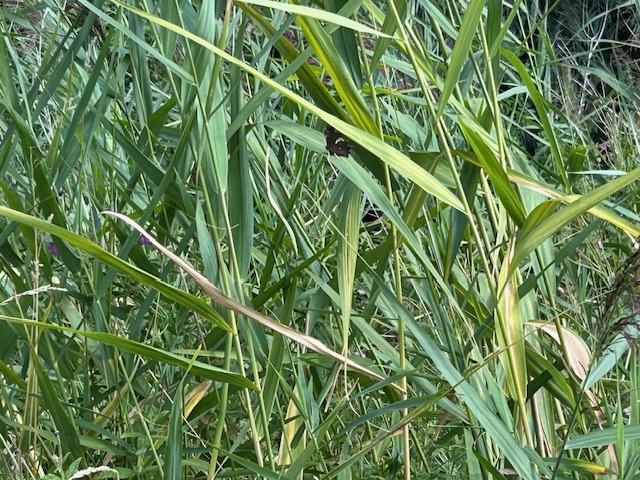
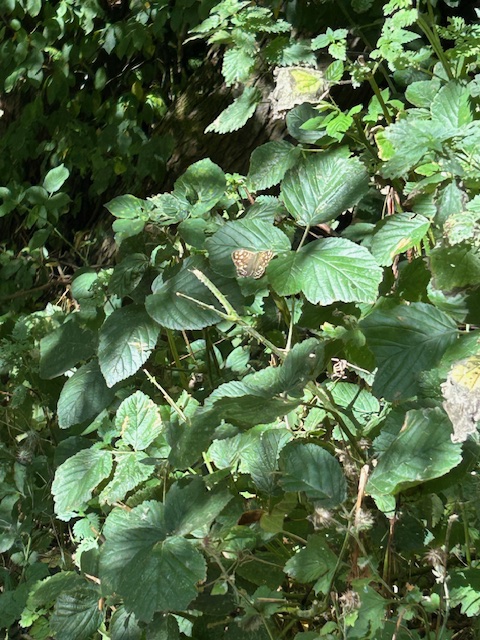
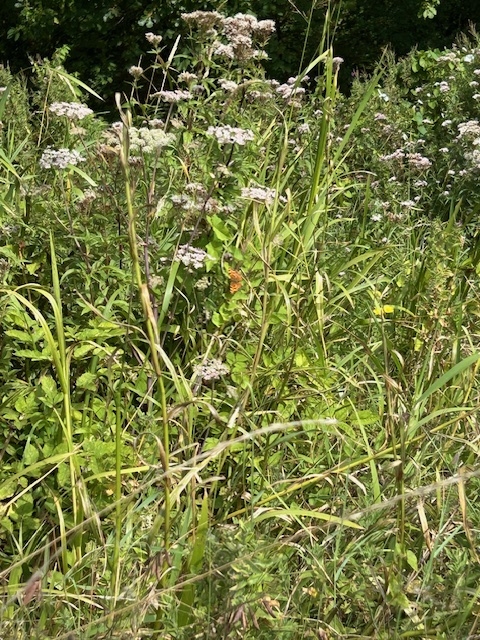
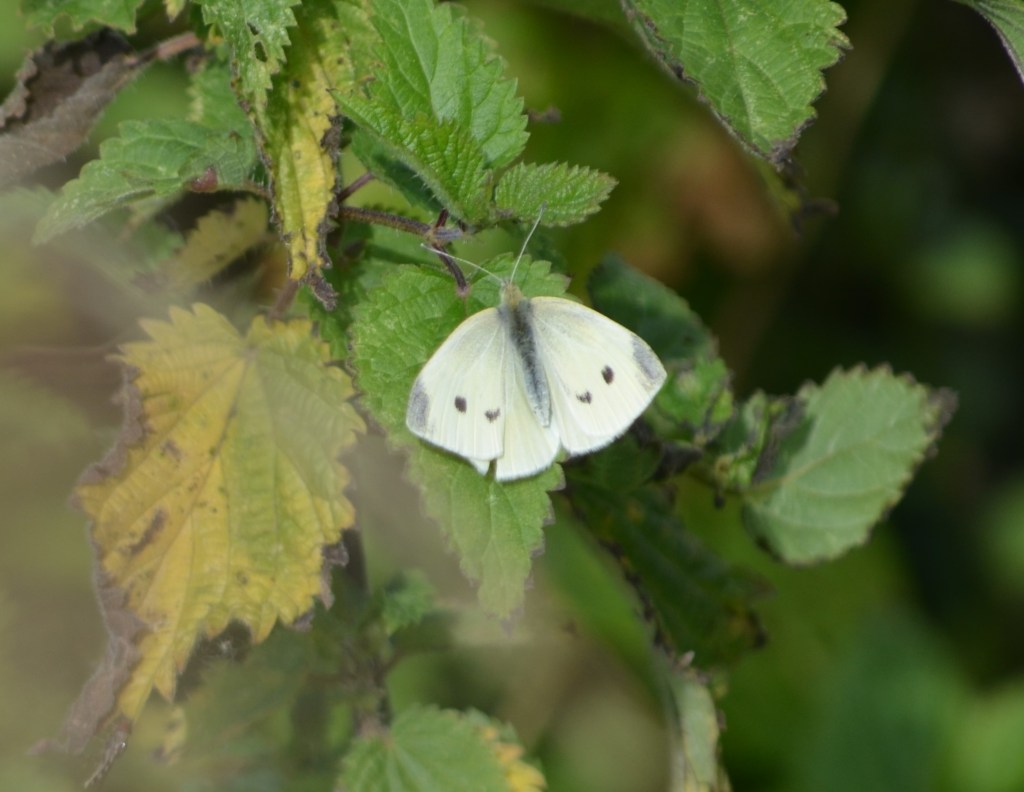
        I’m certain I missed many more bird species: I have to admit that my attention was more focussed on the number and variety of butterflies on display. Because the butterfly number was so low in the UK last year, it’s been very comforting to see how much more numerous they are this year. Today at the wetlands there were Small whites, Large whites, Red admirals, Speckled woods, Small tortoiseshells, Commas, and Meadow browns.

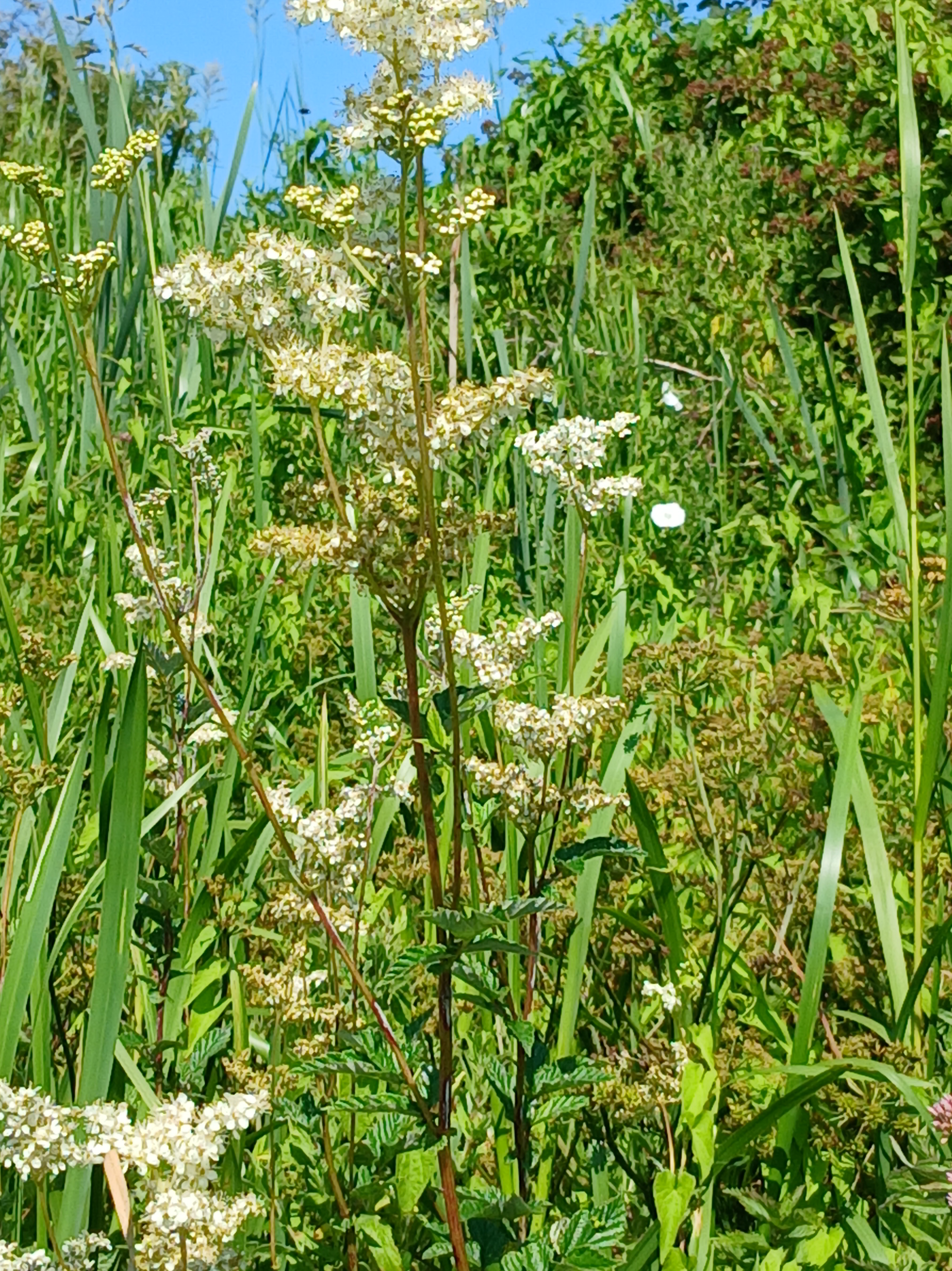
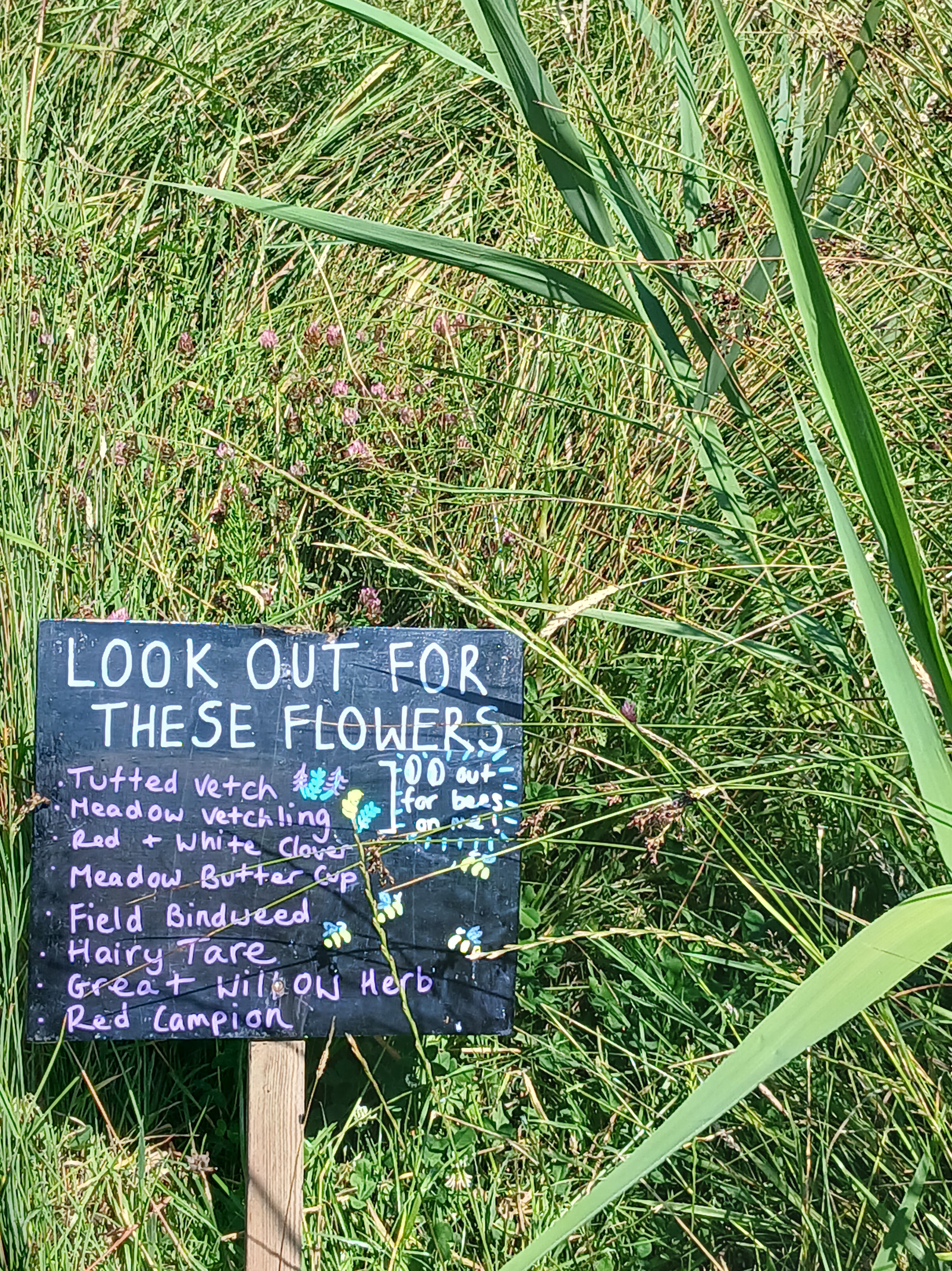
        All of these moths and butterflies – and various bees, hoverflies and other insects – are drawn to the various plants of the marshland. The Meadowsweet is a lovely, creamy colour and smells wonderful (well, it’s there in its name of course); and Tufted vetch is particularly abundant at present. There is clover – both red, and white – and Red campion as well as many, many more wildflowers and plants that play their part in attracting these pollinators. In fact, visitors (adults and children) are encouraged to look and see what’s around them.

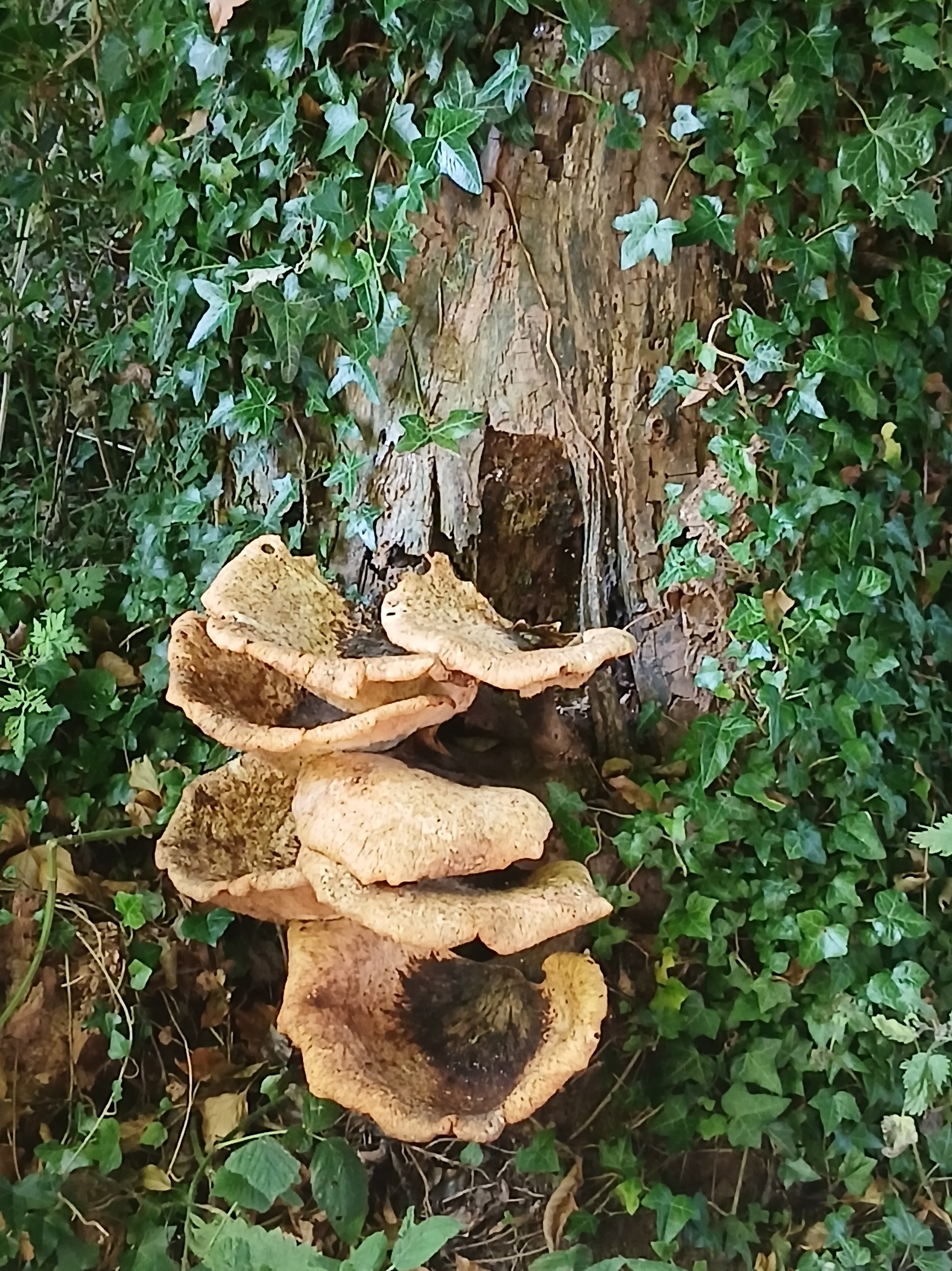
        I noticed several large, light-brown mushrooms at the base of a dead tree just off one of the paths. For all that I’m a fun guy, I know very little about fungi (oh dear…!) so I had to look these up later. The mushrooms are known as ‘Dryad’s saddle’ which is a name that relates to supernatural beings from Ancient Greek mythology. I imagined these dryads (tree-nymphs) resting while taking a break from their usual activities, which are essentially dedicated to protecting the tree or trees in their charge. As you can see, the mushrooms grow one above another almost in ladder form, and I imagined the tree-nymphs had scampered up them to conceal themselves at my approach. It obviously worked because I didn’t see any at all that day!

        The visitor’s centre has a couple of whiteboards on which the current day’s sightings and the previous day’s sightings are listed. This is not just confined to birds, but also butterflies, moths, and plants and wildflowers. I think this is a great idea: inevitably, you miss things, so it’s good to check the boards. Not so much to see what you’ve missed, but more to give you an idea of the variety of flora and fauna that’s around you, just waiting for you to discover on your next visit. I’d seen a couple of Common blue damselflies and one Brown hawker dragonfly as I headed back from the Border hide, but only back at the visitor centre did I learn that the Five-spot burnet moth inhabited the area. And I only learnt this because somebody listed it on the whiteboard. Now I know, of course, you can guarantee that I’ll never see one here!   

    The important stuff

    I went to the café and had a lovely cup of tea and a slice of Sour Cherry and Pistachio cake, which left me fully restored after the morning’s exertions in the sun. Lovely!

  • Bald as a Coot

    (Sunday 29th June, 2025)

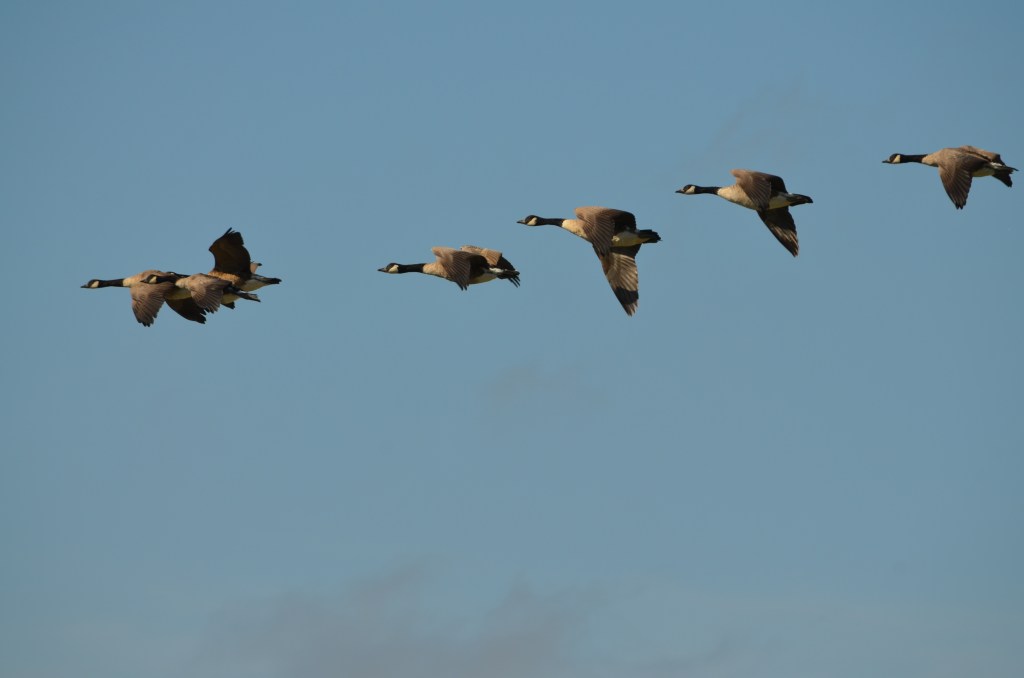
        Over to Wirral Country Park this morning. The fierce westerlies of the last couple of days subsided overnight to leave just a faint breeze: very tranquil! We arrived at low tide, which meant that most of the birds had fed much earlier as it began receding, leaving only a few stragglers on Thurstaston beach. There was a Little egret paddling in one of the channels, and three Shelducks nearby. We heard Oystercatchers calling and there was the usual scattering of Common crows on the broad expanse.

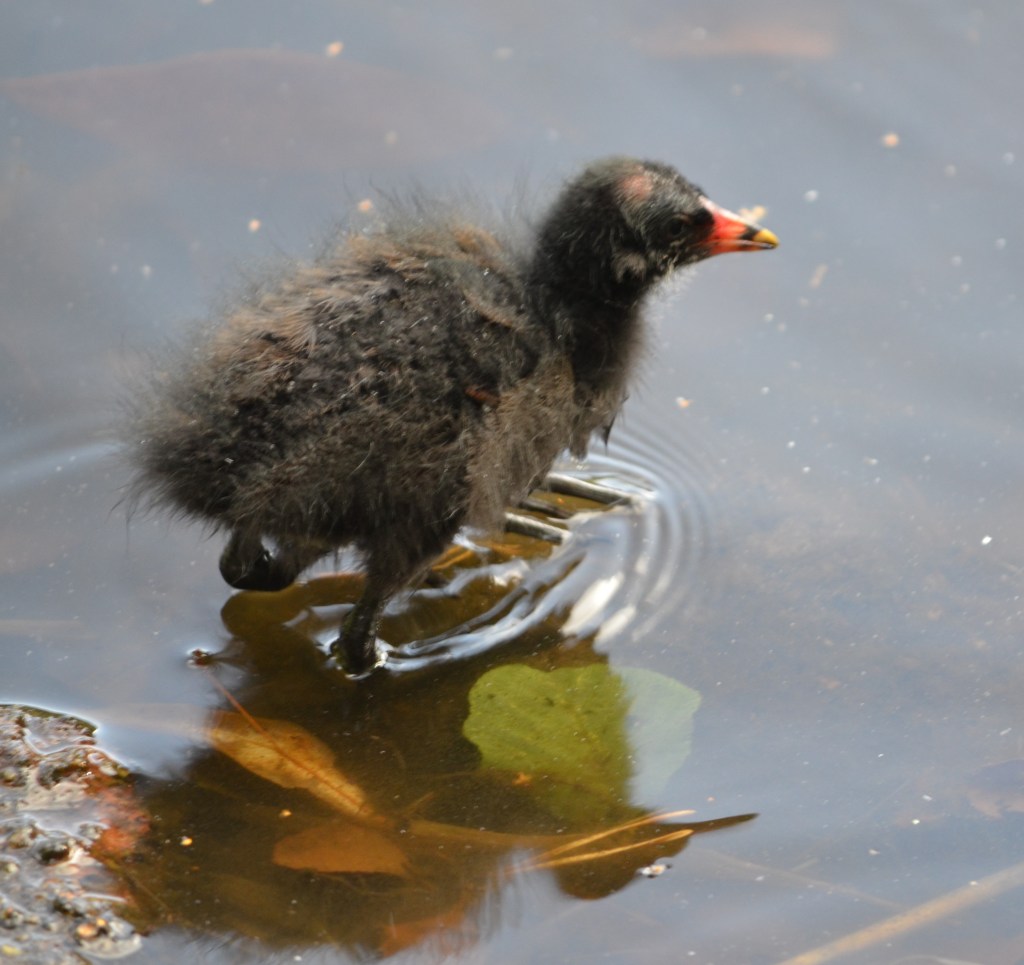
    Juvenile Coot

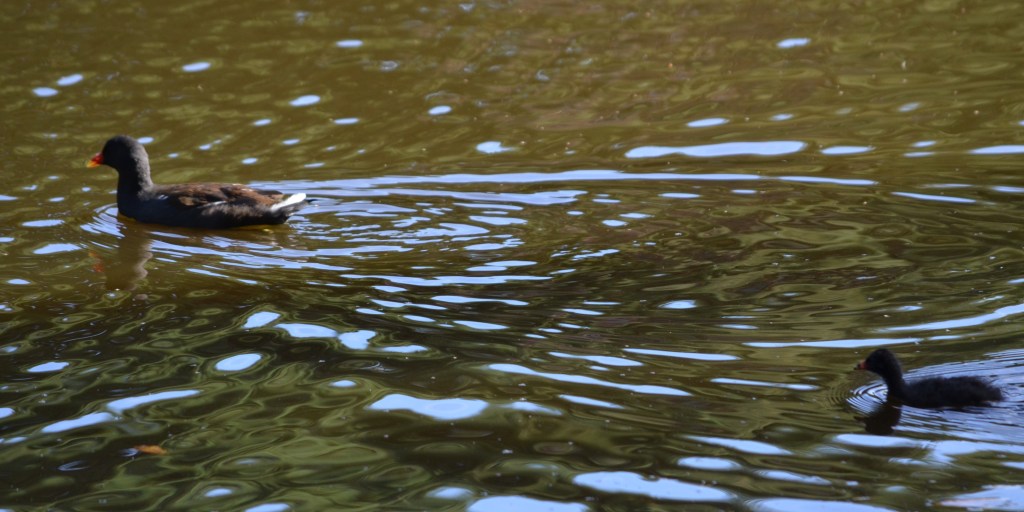
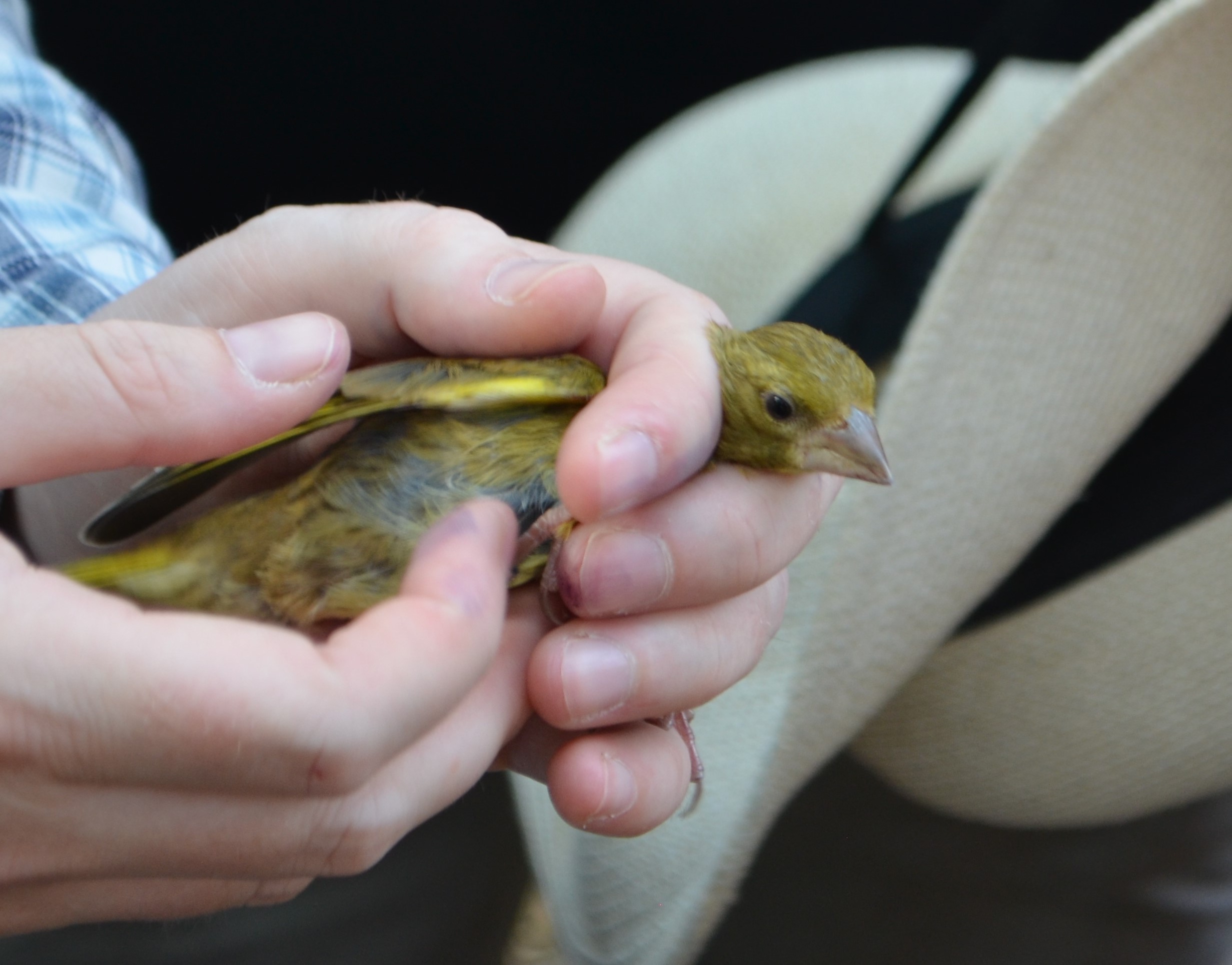
    Above the beach, on the pond nearest the Wirral Way path, there were several Mallards and a pair of Coots with a juvenile shadowing them: unlike its parents, this youngster didn’t yet have the white beak and frontal ‘shield’ above the beak, nor the contrasting black plumage. Instead, its plumage is grey (and paler underneath), as is its beak.


    Coot and Mallard

    The beak and frontal shield change to white after about twelve months. The saying ‘as bald as a Coot’ is ascribed to this featherless section of the adult bird’s head. If you didn’t know this already, now you do!

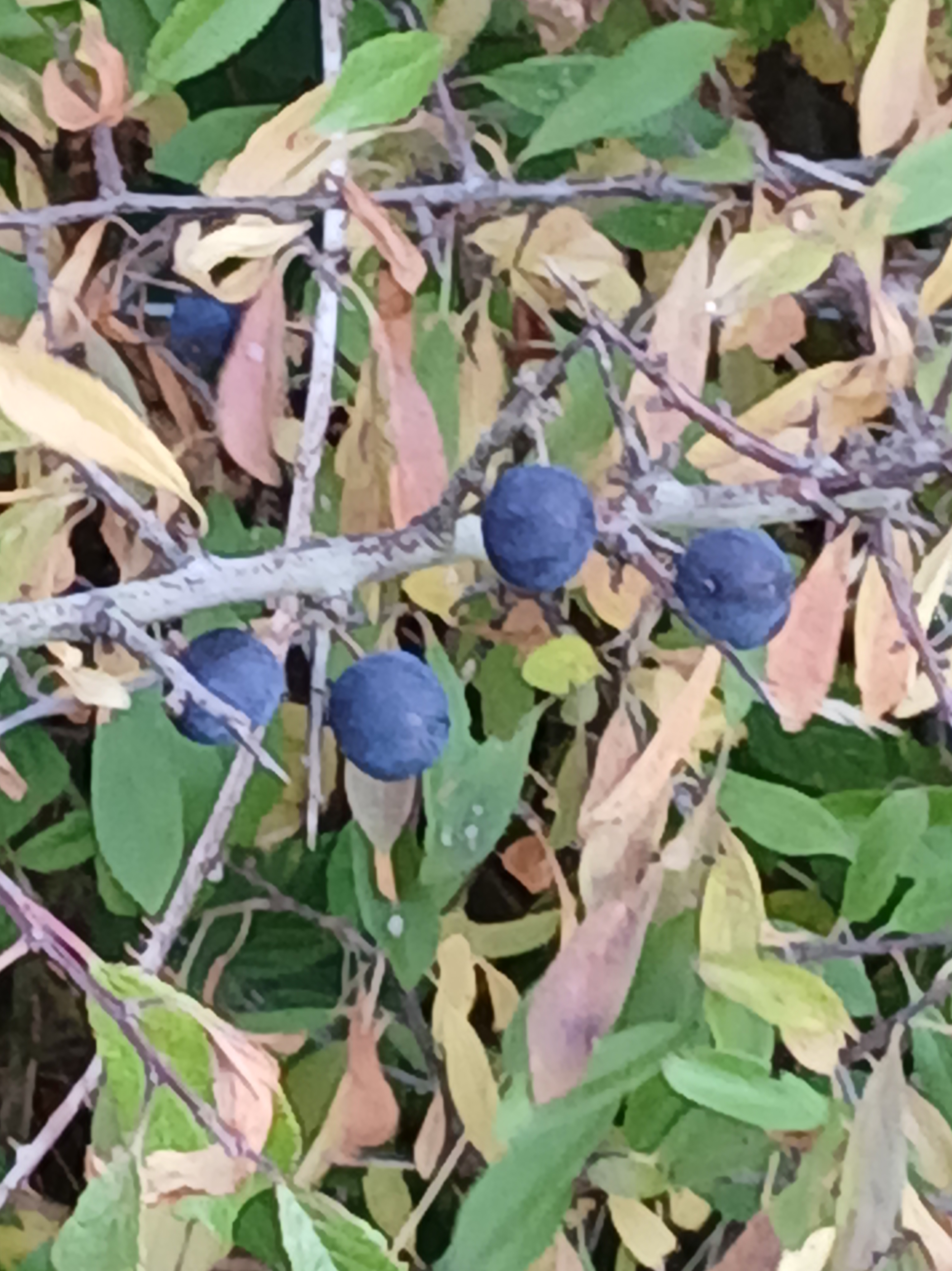
        We noticed the abundance of food for the local wildlife: Blackthorns were bulging with sloes; Hawthorns were vigorously readying their haw berries; Dog roses were flowering, although we didn’t see any rosehips; and there were Crab apples aplenty. Pockets of Dandelions and patches of Tufted vetch added splashes of colour amongst the Stinging nettles and Hogweed. For me, there’s always been something special about Reedmace (I’ve long referred to these plants as bulrushes and, apparently, I’m not alone!). They look exceptionally lovely with their velvety brown flower heads and long, grass-like leaves and somehow ‘belong’ in waters like these ponds.

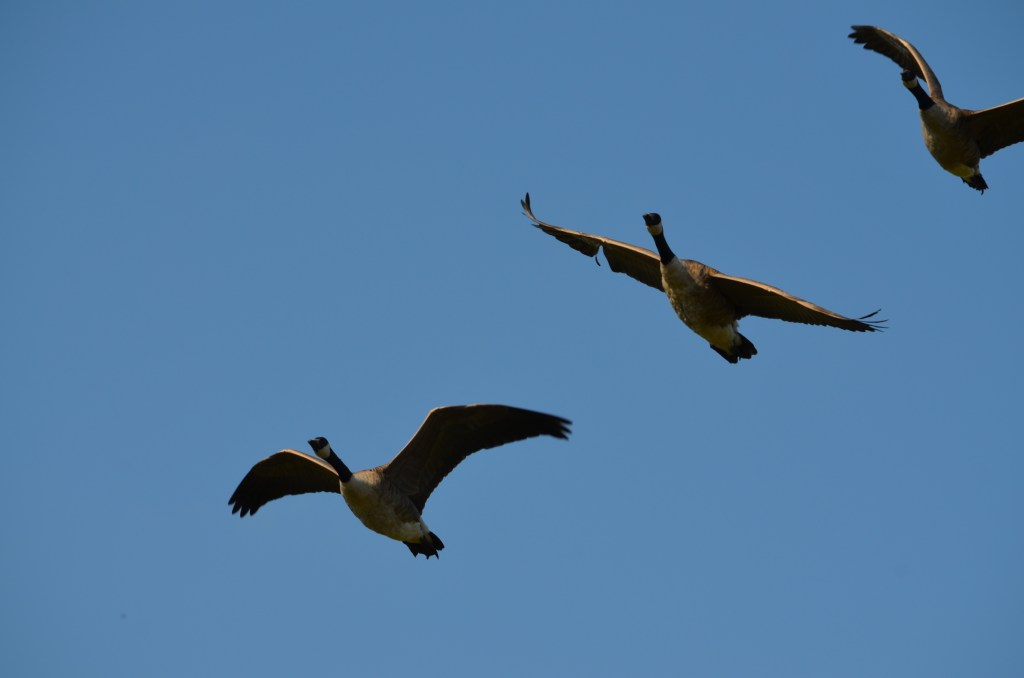
        Heading towards the main pond by the park’s entrance, two or three solo Small white butterflies fluttered by, and a pair of Meadow browns encircled each other. Four juvenile Canada geese swam in the pond: they were still somewhat smaller than their nearby parents, but clearly fit and healthy. Eagle-eyed Stu spotted a Terrapin in the water and took some photographs. It kept bobbing its head beneath the water – presumably searching for food – although it (and its shell) stayed floating on the surface. We first saw two Terrapins in this pond a few years ago now, and hadn’t seen either of them since, so it was a nice surprise to see that one, at least, was still going.

    That well-earned moment

    We finished off at Flissy’s café with a very tasty Bakewell slice each.

  • Purple and Scarlet

    (Tuesday 17th June, 2025)

        My brother and I went to RSPB Burton Mere today, on the Wirral Peninsula. From the huge reception window, looking out to the Scrape, we saw lots of Avocets with their young and perhaps even more Black-headed gulls. Closer towards us, in the relative quiet of the inlet, we saw a Tufted duck watching its brood with its distinctive yellow eyes.

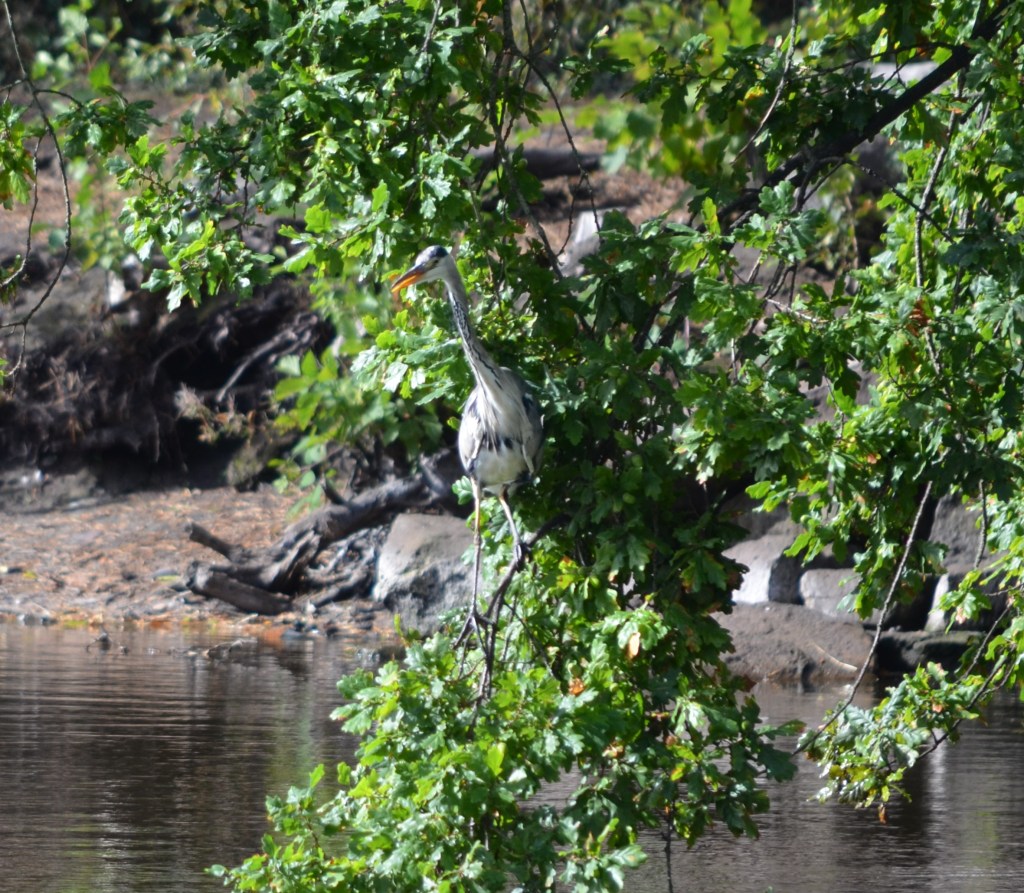
        As we passed the feeder at the beginning of the trail, we saw Coal tits taking food away to dine in secret, which seems to be their habit. There was a single Northern shoveller at the Mere, and a pair of Mallards further beyond it, half-concealed by overhanging foliage. We disturbed a Grey heron, which flew away from the treetops in its ungainly manner: the branch on which it was resting must have been sturdy!

        At the reed hide we saw a Great white egret, elegantly patrolling the waters. There were a couple of keen photographers that had set up here, and I’m sure that they were rewarded with some great shots. As we continued along the trail, a Spoonbill flew over us carrying what looked like a long twig in its beak, which we guessed might be nesting material. It was flying in the direction of the Mere.

        At Marsh Covert were Coots, Moorhens, Canada geese, Lapwings, Redshanks and one Little egret probing the edge of the pool. At Border Hide, amongst the species already mentioned, we saw a small group of Black-tailed godwits, a huge colony of Knots, many of which had their lovely red-orange breeding plumage, Jackdaws, Crows, and Magpies. A first for me was seeing some Teal – there were just the three – and I must admit I felt quite chuffed!

        Although we visited Burton Mere primarily to see birds, there are other non-avian attractions to pique your interest. There were Common blue damselflies and White-tailed bumblebees, and we saw three Small whites, a Red admiral, and a courting couple of Gatekeepers. Most impressive, though, was the Scarlet tiger moth, wings unfurled to regenerate in the sun, which my eagle-eyed brother spotted.

    Scarlet tiger moth

    The moth is diurnal and quite exotic looking and, on returning to the visitor centre later, we saw that somebody else had reported seeing it: yes, the Scarlet tiger moth was listed on the whiteboard alongside all the birds, so my brother was very pleased!

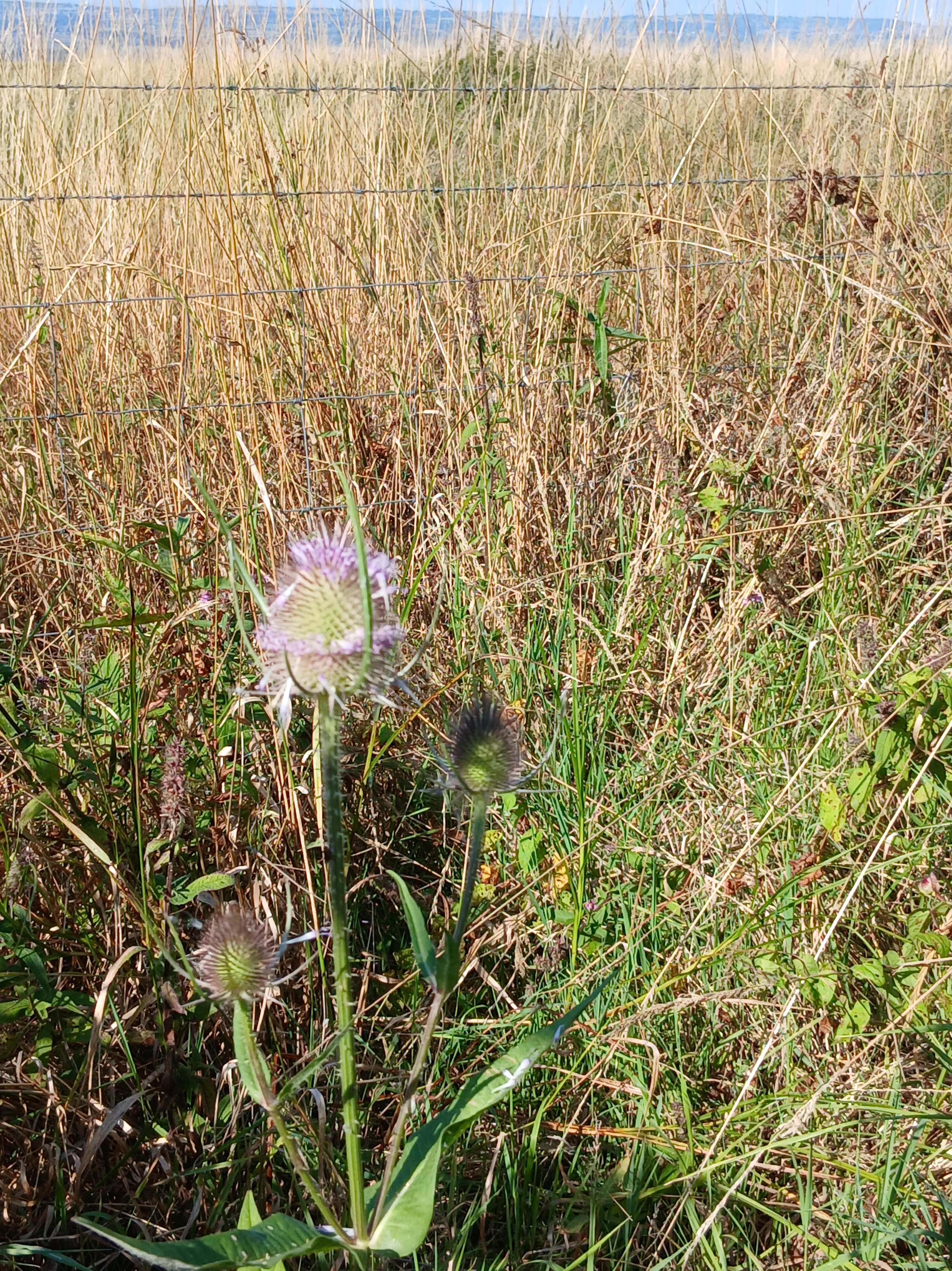
        Amongst the flora were several Spotted orchids and some other orchids with dark purple flowers, which I confess I didn’t recognise. While there are obviously much more plants than recorded here, there were Buttercups, Daisies, Tufted vetch, Red dead-nettle, Teasel, Hogweed, Hedge parsley, Herb robert, Red clover, Red campion, and Bulrushes. (Apparently the Bulrush is properly known as Great reedmace, which is something I have recently learned. But I know what I mean!)

        We had a quick look from Bunker Hide, which offers a different perspective of the Scrape. It was actually the picnic area further on that we enjoyed: this offers a wide, open vista and a male Stonechat obligingly flew across in front of us and perched atop a small tree. House martins or Sand martins circled at speed, but to be frank I wish that occasionally these birds would slow down, not least so that I could actually identify them!

        As ever, a rewarding place to visit.

  • Wagtail on the rocks

    (Sunday 15th June, 2025)

        Over to Loggerheads this morning. We watched from the benches at the side of the River Alyn until, eventually, our hoped-for Grey wagtail flew in low and landed on the small spit of sandy shore on the opposite bank. There was only the one wagtail, and we thought its mate was probably nesting in the cliff fissures nearby, where they’ve dwelt in previous years. We’ve spotted them annually for a few years now, though it may be the progeny that has returned, rather than the parents. 

    Grey wagtail

    This Grey wagtail then flew downriver and landed obligingly on a jutting rock directly in front of us, which afforded Stu the opportunity of taking some photographs. I even wondered whether the wagtail, which seemed to be preening its feathers for quite a while, was taking its time deliberately for his benefit!

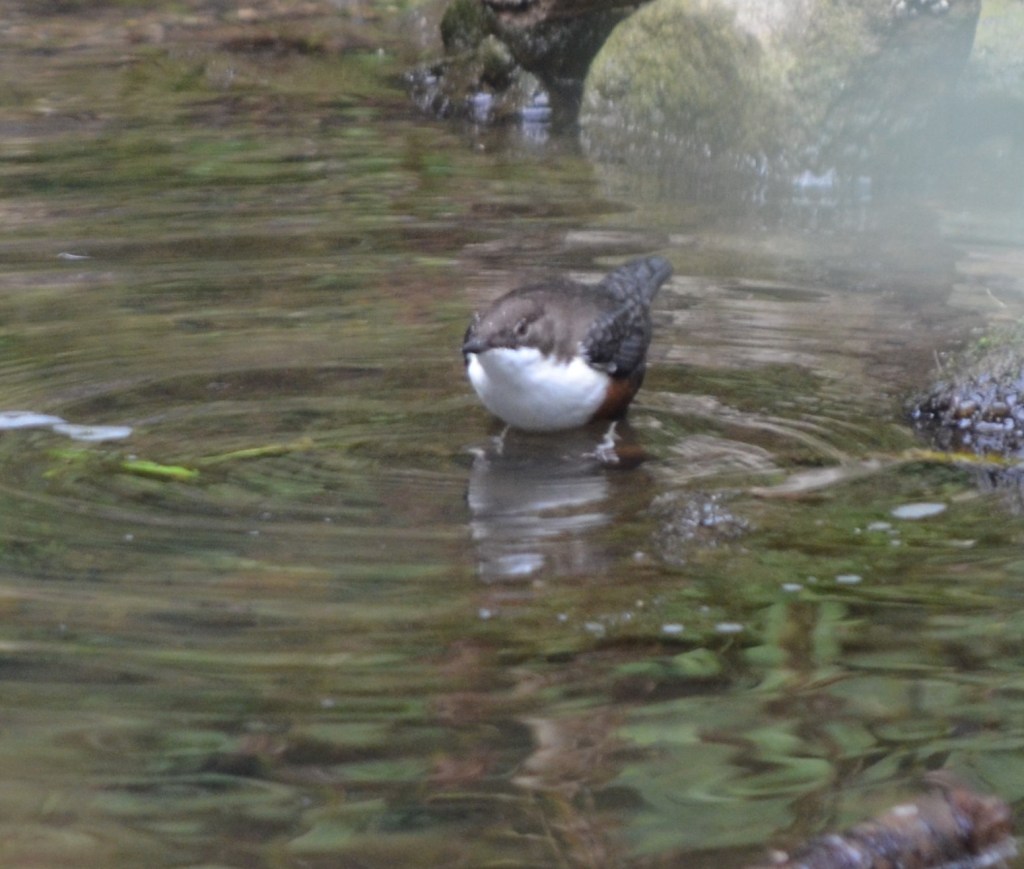
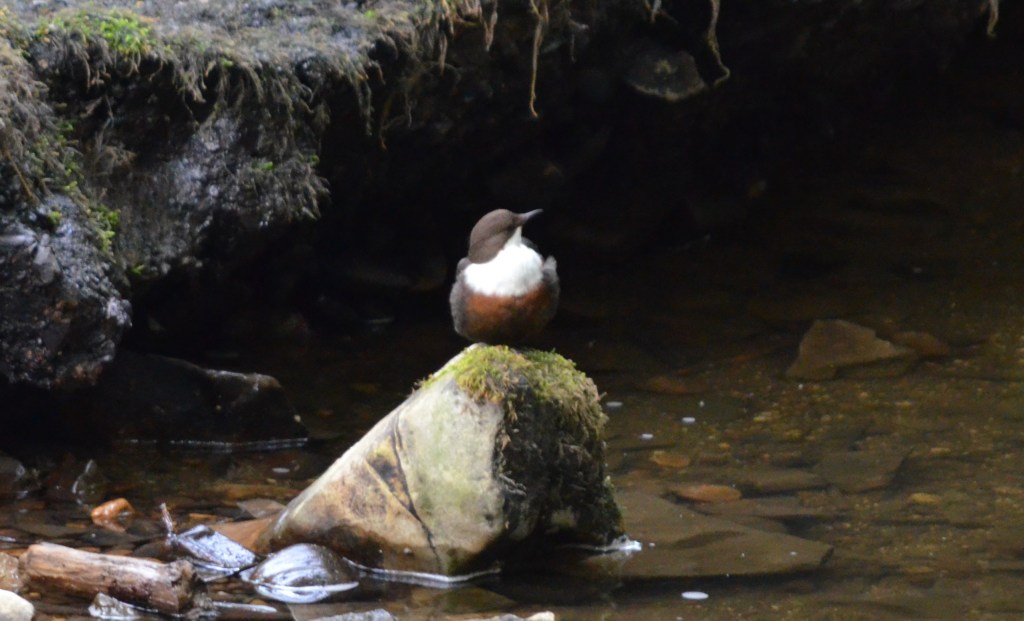
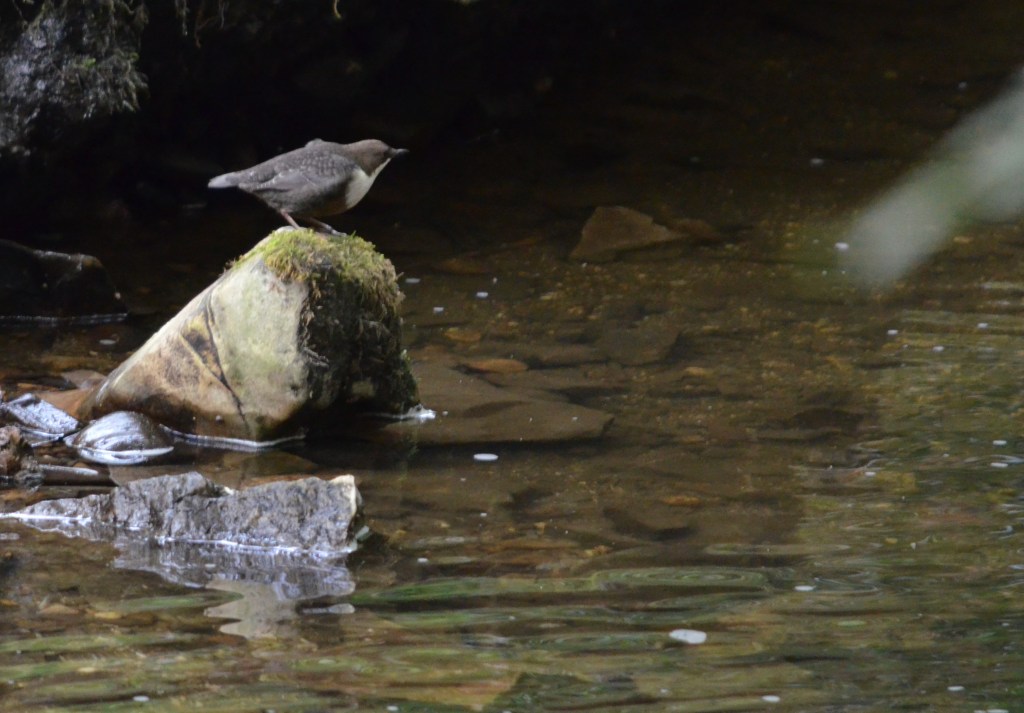
        We’ve never encountered White-throated dippers – more commonly, just Dippers – along this stretch of the river, although we just missed out some years ago. What I mean by this is a couple informed us that they had just been watching a Dipper from the wooden bridge at the entrance. Stu and I headed over there quickly, but the Dipper had gone.

        Anyway, my point is that Dippers like fast-flowing rivers, as do Grey wagtails when they’re breeding. Sharing the same habitat, some Grey wagtails are known to have fed Dipper chicks. This ‘interspecific feeding’, which generally refers to when adults feed the young of other species, occurs more often than you might think and various theories have been put forward as to why this occurs. I find the thinking that male adults will feed a fledgling that begs the most convincing, but there are plenty of further theories too. Interspecific feeding might make an interesting subject in a future edition!

  • Aerial view

    (Monday 16th June, 2025)

        A couple of female Blackbirds put in separate appearances while I was in the garden today: presumably they were gathering food for their respective broods. My eyes were drawn to a snail shell at the base of some past-flowering cowslips. It was bright yellow with dark brown – almost black – concentric bands. I looked it up later and this is the Brown-lipped snail (also known as the Brown-lipped banded snail). The name refers to the band of colour around the shell’s opening.  

    " "

    The shell colour can vary from light yellow to dark brown, although oranges and pinks can occur (I’m beginning to sound like a Weather Forecaster, covering all eventualities!), and there can be from none to five bands (or stripes). You won’t be surprised to learn that the reasons for the variations in shell colour and banding are not known, though it is suspected that camouflage might play a part.

    The Brown-lipped snail is common throughout most of the United Kingdom and can be seen in various habitats, including woodland, hedgerows, and gardens, so the variations may be adaptations to their surroundings, although nobody can say for sure.

        Behind me, I heard a lovely tinkling sound. I looked up and, sure enough, there was the usual Goldfinch singing from his perch at the end of next door’s television aerial. This particular Goldfinch has been taking a turn for a few days now: one day he continued to sing while a Jackdaw perched on the chimney pot a little lower. In fact, the Jackdaw flew off, leaving behind the Goldfinch!

        I left this colourful chorister singing and turned back to the garden. Another Goldfinch sang from the top branches of the willow in my neighbour’s garden and then flew across mine, landing over the far side of the hedge, where it resumed its song. No wonder they’re called a ‘charm’ of Goldfinches!  
  • Fresh after the heatwave

    (Sunday 22nd June, 2025)

        Over to Burton Marsh this morning with Stu. We’ve just had temperatures above 25° C for three consecutive days both sides of the Dee estuary – i.e. North-east Wales and West Wirral). Although the sunshine was welcome, the heat was sultry. This morning there was a stiff WSW wind blowing, and the odd drop of rain, which together had driven away the sun. Unsurprisingly, not many of the birds was willing to come out and play – the change in the conditions felt more like spite than respite!
        We did see a Little egret shadowed by its partner. Both birds disembarked in a long channel of water some distance out, which was mostly occluded by marshland. Even through binoculars, we were unable to see any other activity. The egrets didn’t stay long and soon returned north-eastwards towards Neston.

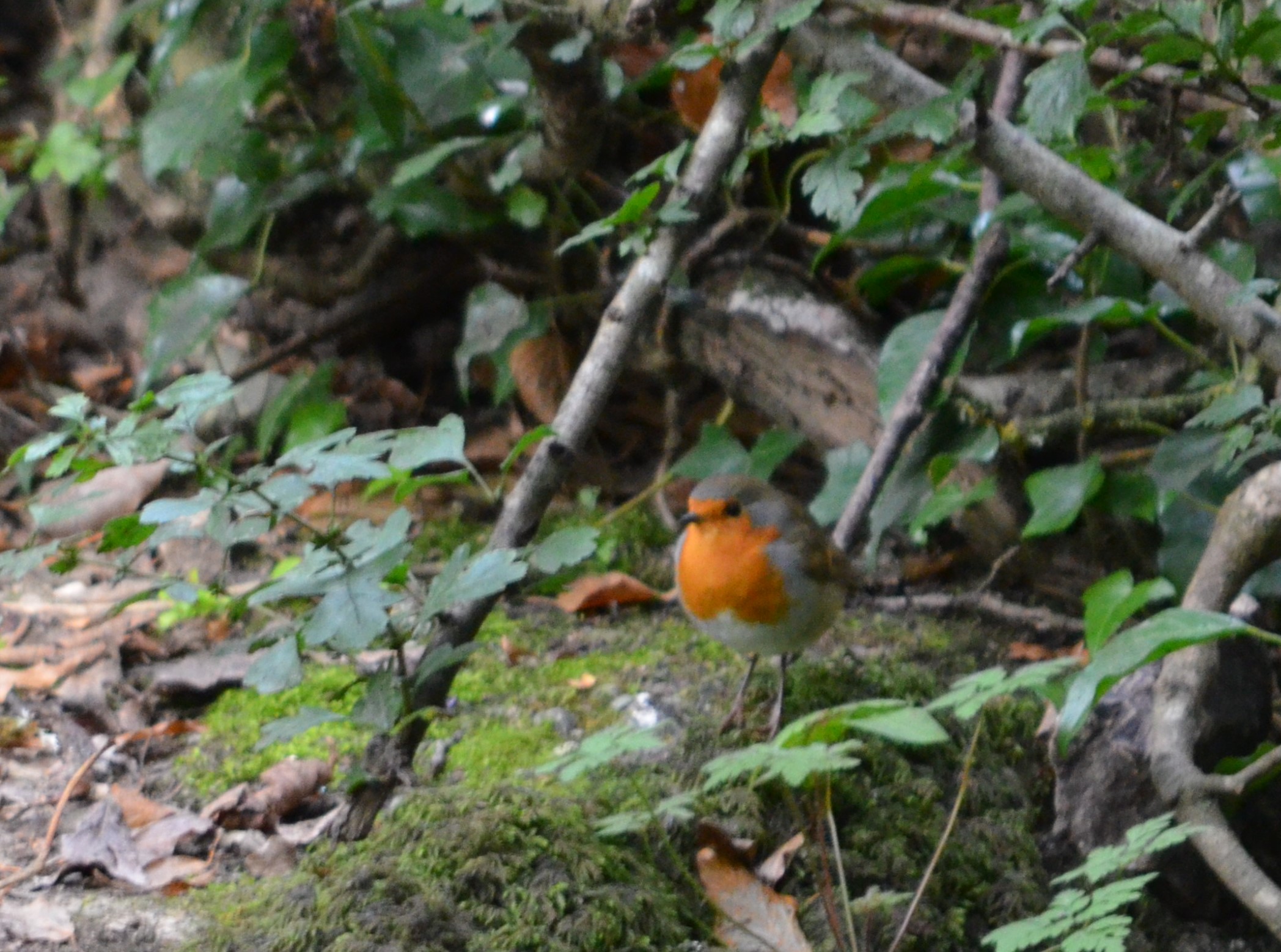
        There were some Blackbirds, a Robin, and the usual indefatigable Crows. (I caught a glimpse of what I thought might have been a Cetti’s warbler, but it was too brief a glimpse for me to be certain – I shall look out next time).

    Despite the absence of the birds, there was still plenty to see.

    ""

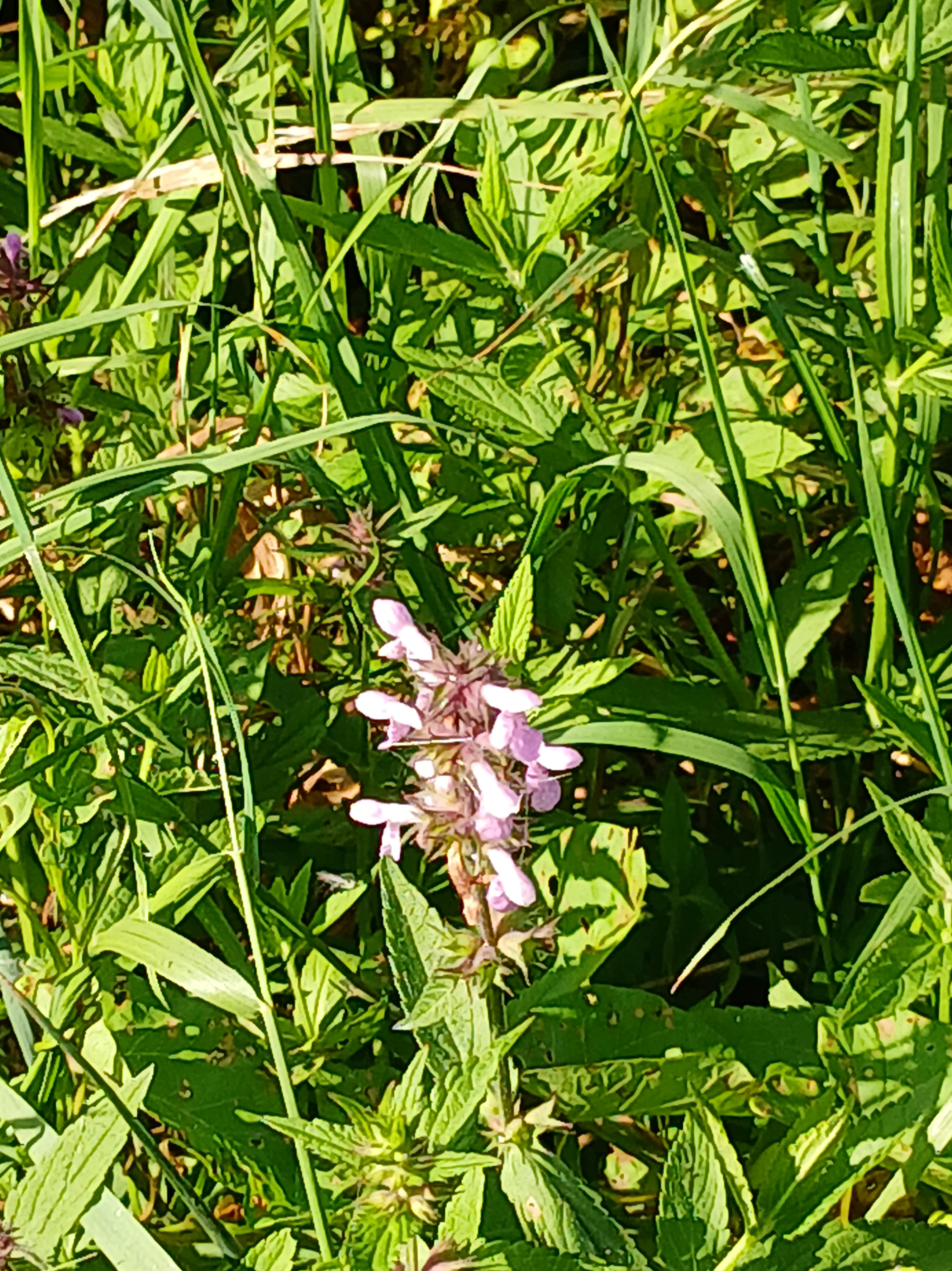
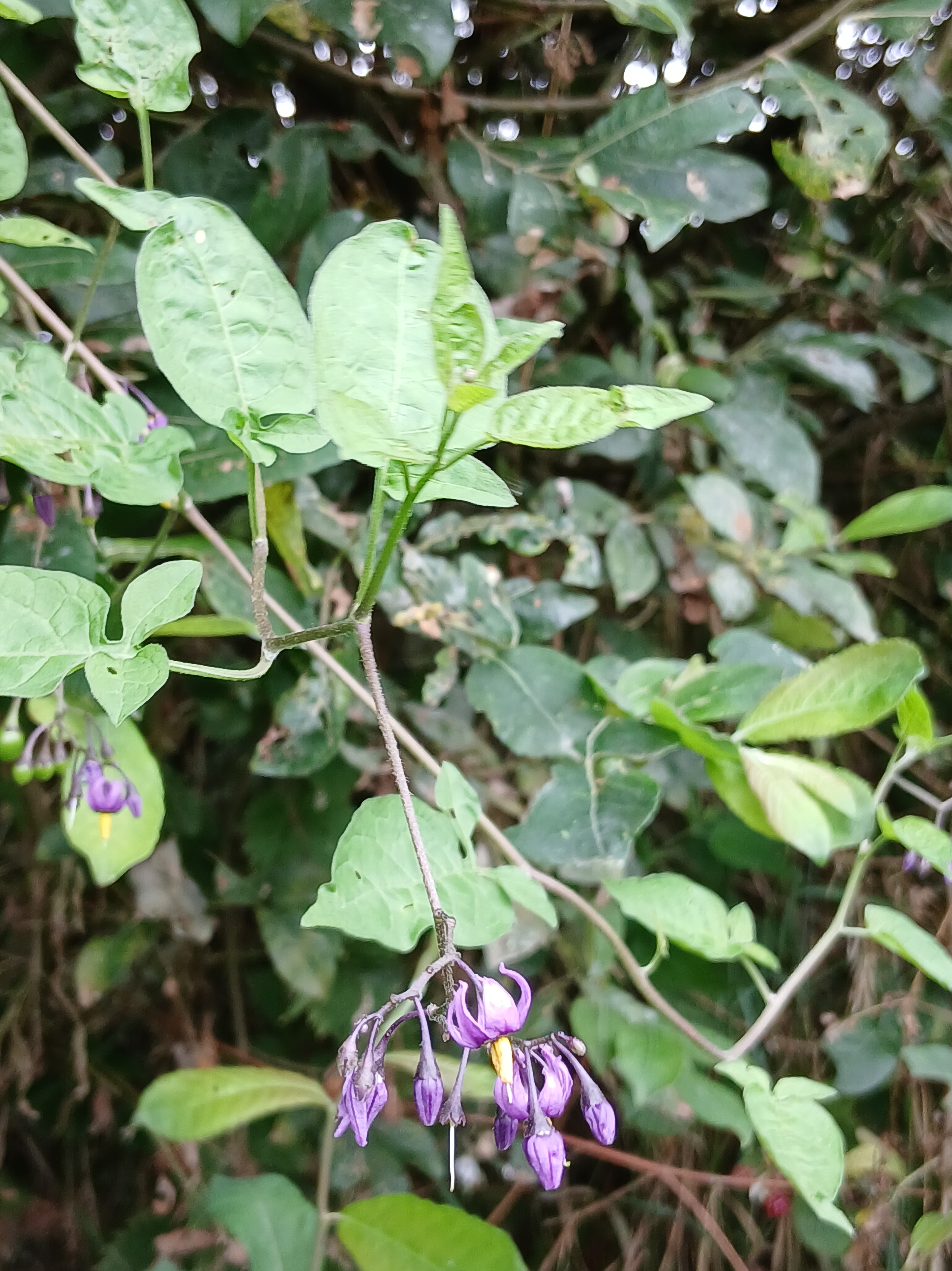
    Meadowsweet abounded and we did the obvious and held the creamy yellow flowers to our noses – oh, what a lovely smell, as the name says really. The Common mallow is a quite lovely plant too, I think, with its tall stem and large flower-heads. The five grooved petals are lilac-pink with dark stripes.

    There was Tufted vetch, splashes of Dandelion, and Field bindweed. I had to look up the latter when I got home. Although the flower shape is obvious on reflection, it was the pale pink and white colours of the petals that threw me. One flower that I did recognise was the Yellow iris, which are also known as Yellow flag (but not by me). These flowers were all a little further out on the marsh and I suppose that they are an indicator of where the water channels and pools lie.

    The important stuff

        After all this hard work, Stu and I retired to Nets Café to sample the cakes on offer: I had a lovely slice of Bara Brith to go with my cappuccino, while Stu had Coffee and walnut cake with his. Very pleasant.

  • An Avian Array at RSPB Burton

    (Sunday 25th May, 2025)

        Stu and I went across to Burton Mere Wetlands, the RSPB’s nature reserve on the Wirral. It was very windy as we got out the car, so it was good to get inside the relative calm of the visitor centre. Initially, it was just us and the staff, but that soon changed as people began to arrive. I tried to list what we saw – we were pointing out different species to each other like excited children – although one or two observations may be wrong. (I’ve indicated where we were uncertain). There was certainly plenty for us to see!

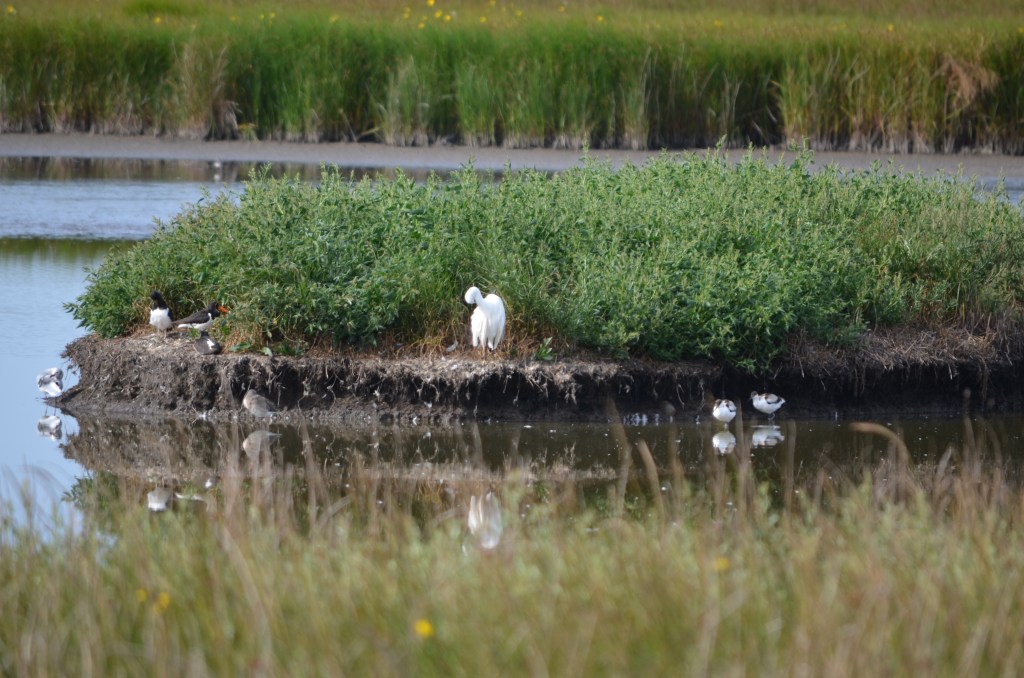
        There were lots of Avocets, many of which had paired, and some of which were schooling their young – although it looked like the chicks were managing the distinctive ‘scooping’ action in the shallows without any instruction. There were a couple of Oystercatchers and, looking closer, we realised that these also had chicks, which they were keeping close by. As I was watching the Oystercatchers, I caught a glimpse of a couple of ducks leading their brood of six ducklings against the current to a quiet spot where there was just a lone Black-headed gull and a foraging Moorhen.

    Avian array

    At first, I thought that the ducks were Mallards but something didn’t quite add up. I looked again and saw that the male had a cinnamon underbelly, unlike the Mallard drake, and that his bill was distinctly wider: thus did I spot my first Northern shoveller (with help from my bird identification book!)

        There were four Shelducks, a Crow and a Magpie amongst a host of Black-headed gulls. So far, so good. However, I then saw what I at first thought were Goldeneyes, a species I had never encountered outside of a book. My reasoning was simple: they had yellow eyes. It was only later that I found out that the UK also hosts other yellow-eyed ducks including Tufted ducks and Scaups. (I discounted the Northern shoveller due to its plumage differing, although this too has yellow eyes). Unfortunately, the only thing I can be sure of is that my original assessment that they were Goldeneyes was wrong: I thought Scaups because I couldn’t see any tufts, but I believe these are rarer than Tufted ducks in our UK waters. It shall remain a mystery.

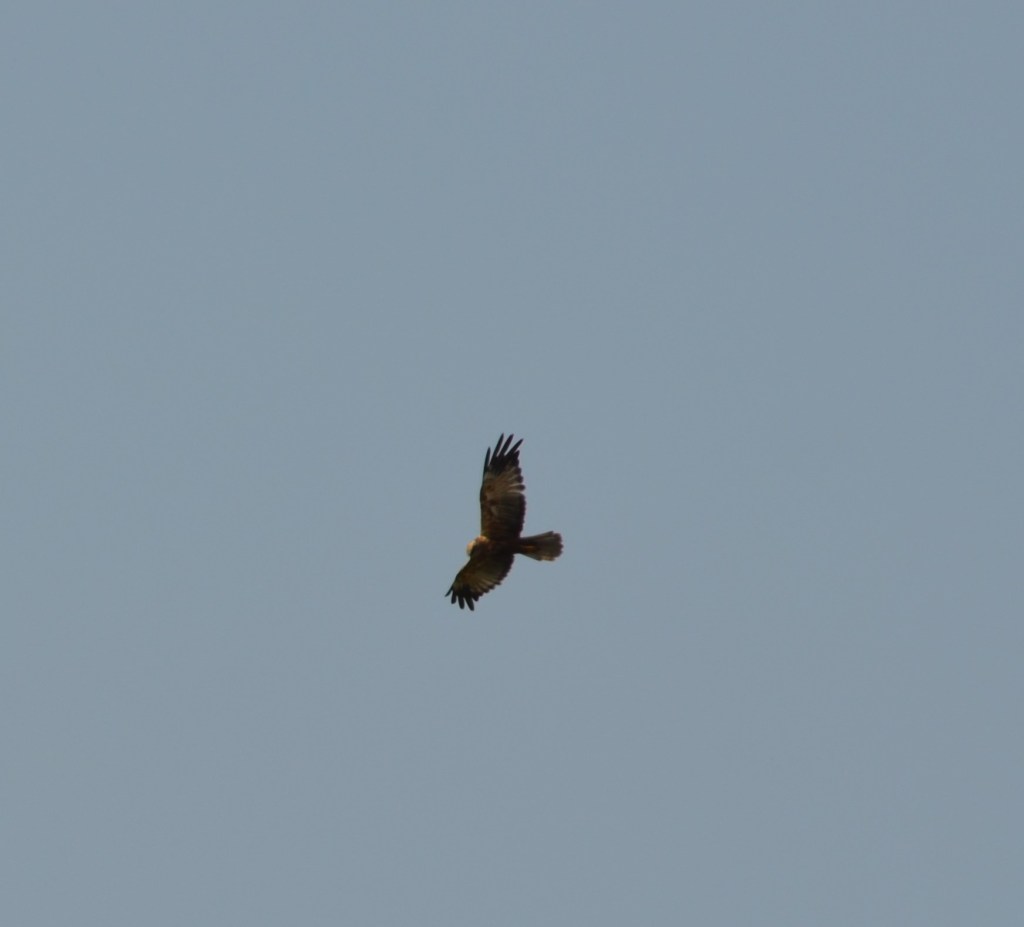
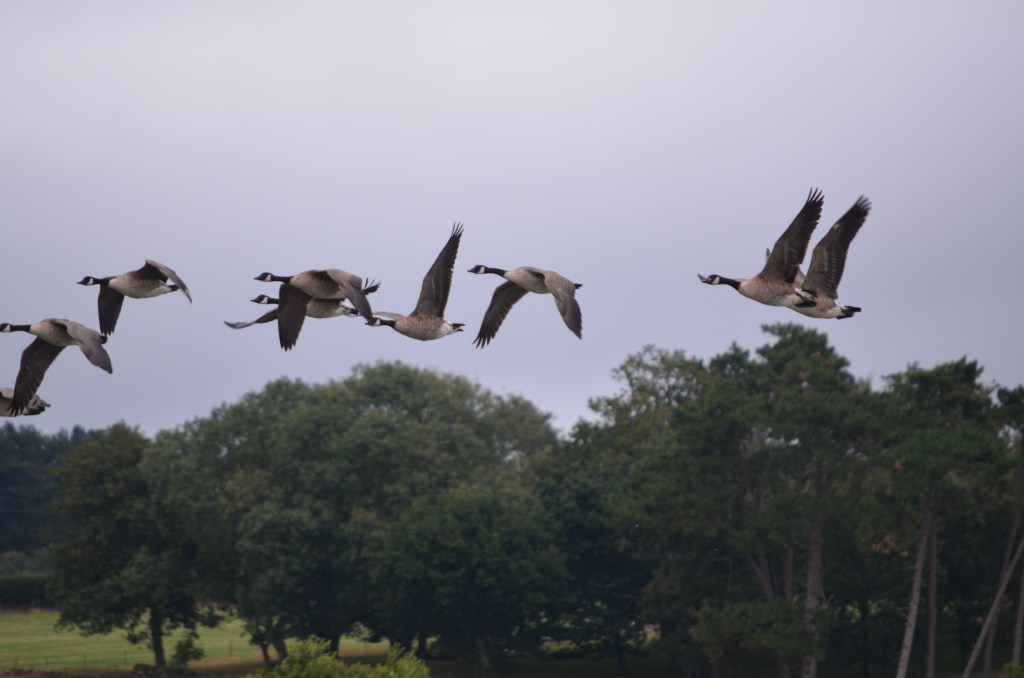
        We exited the visitor centre and travelled around to the hide a little bit further west. On the way we took in marsh marigolds, red campion, buttercups, pyramid orchids, hogweed and teasel. There were a couple of male Chaffinches arguing over some seeds in one of the feeders, and we were lucky enough to see an almost motionless Little egret move from its reedy hideout in one of the ponds. Stu took some photographs of a Canada goose – or, rather, the slender neck and head of a Canada goose as it peered above its section of reeds too. We looked in vain for the Marsh harrier that can often be seen from this hide: perhaps next time.

        We then moved to the farthest hide where we saw a Lapwing duo and about a dozen or so Black-tailed godwits probing the shallow waters with their long orange and black bills. These godwits were all displaying pale orange to brick-red plumage, which I am informed is its ‘breeding plumage’, although there is no evidence of chicks just yet*.

    The important stuff

        We then went to the café for our customary cappuccinos, which we thought prudent to accompany with lemon (Stu) and blueberry (me) muffins, which rounded off a lovely morning!

    *Apparently, very few Black-tailed godwits actually breed in the UK, although no-breeding numbers are increasing rapidly as a result of agricultural changes in Iceland, where most of the UK birds come from (Black-tailed Godwit | BTO)

  • Singing in the Rain

    (Sunday 10th March 2024)

        At Loggerheads Country Park this morning with Stu, in constant rain. As we walked down the left bank of the river towards the wooden bridge, there was a flash of yellow as a bird swooped in front of us: sure enough a grey wagtail had crossed our path. It bobbed its tail for us for a moment or two before departing. We crossed over and began our walk along the muddy Leete path. As we entered the wood just beyond the kennels, we heard a song thrush. Through my binoculars we could see him on top of a conifer singing joyously, impervious to the relentless rain. He sang a musical phrase and repeated it a couple of times, then selected another phrase from his varied repertoire, repeated that a couple of times and so on.  

        We continued along the increasingly soggy path, encountering blackbirds and robins on the way. After another two miles, we decided to turn back – the path was just getting more muddy and watery. Re-approaching the kennels, we were amazed to hear the song thrush was still there perched on top of his conifer and still happily singing!  I have read that song thrushes are happy when it rains as there are more worms wriggling their way to the surface to escape the water, but surely they would be on the ground tucking in? The Mistle Thrush is the thrush that has the reputation for singing from the treetops in bad weather – in fact, it has also been known by the name of Storm Cock due to this habit. But this was a song thrush that we saw and heard. Perhaps it’s something that runs in the family!

  • Unflappable Buzzard

    (Thursday 19th June, 2025)

        In the garden during today’s promised heatwave (the temperature reached 29° in Hawarden). I could hear two Wood pigeons calling to each other and some Jackdaws doing the same. From time to time, I heard what I first thought was a single long ‘coo’, which came across as a long purr of contentment! However, I soon realised that the long purring ‘coo’ was preceded by a shorter sound, and this was probably the sound of a nesting Wood pigeon.

        Interspersed with it usual melodious song, a Blackbird issued a series of clicks – tchk – tchk – tchk … and these were answered by its mate as it passed by over the garden fence. I’m sure that there’s a nest in the hedge, although I’m not quite sure what the clicking noises mean.

        My ponderings were interrupted by several piercing cries from above. I looked up and saw that the racket was coming from three Herring gulls that had become alarmed by the appearance of a Common buzzard. Despite the ‘mobbing’ of the gulls, the buzzard continued unperturbed in its majestic ascent on the thermals. I noted that none of the gulls came too close to the predator though: I’ve watched even single crows chasing buzzards with more boldness!

        Things settled down as the buzzard slowly gyrated further through the azure sky. Two of the Herring gulls seemed to take it in turns to guard a chimney pot on one of the nearby houses, so they may well be nesting and perhaps this explains the earlier commotion. Mind you, they are noisy birds anyway!

  • Along the Leete

    (Sunday 14th April, 2024)

            Stu and I were at Loggerheads this morning. ‘But they get on so well together!’ I hear you say. So, to avoid any misunderstanding, we were both at Loggerheads Country Park in Denbighshire, which is a popular wooded area through which the river Alyn flows. (Actually, when I say flow…well, I will come back to that later).

    It was virtually mud-free on the path now, and: in fact, this was the first time we walked the full length of the Leete for quite some time. It was a refreshing change to not get bogged down!

        We saw blue tits, great tits, robins, blackbirds and what Stu thought was a chaffinch, and what I thought was a stonechat – I was convinced the bird had a black head but it only appeared fleetingly so its identity will remain forever unknown. The forest floor was bedecked with a range of flowering plants: there were creamy-yellow primroses, bluebells, dandelions, daisies, wood violets, celandines, campion, and the odd residual clump of daffodils. We also spotted a single group of wood anemones on the far bank before crossing the bridge to join the Leete path. Colour was everywhere and such a contrast to earlier visits in the year when, apart from the few conifers, everything was a dull and neutral shade.

        Towards the end of the Leete path at the Cilcain end, we saw that many of the trees had been coppiced. Not only does this allow in more light due to the clearing of the canopy, but it also opens up the views down to the valley floor and across to Moel Famau and the Clwydian range. Coppicing is carried out regularly to encourage plant and tree growth and sustainability.

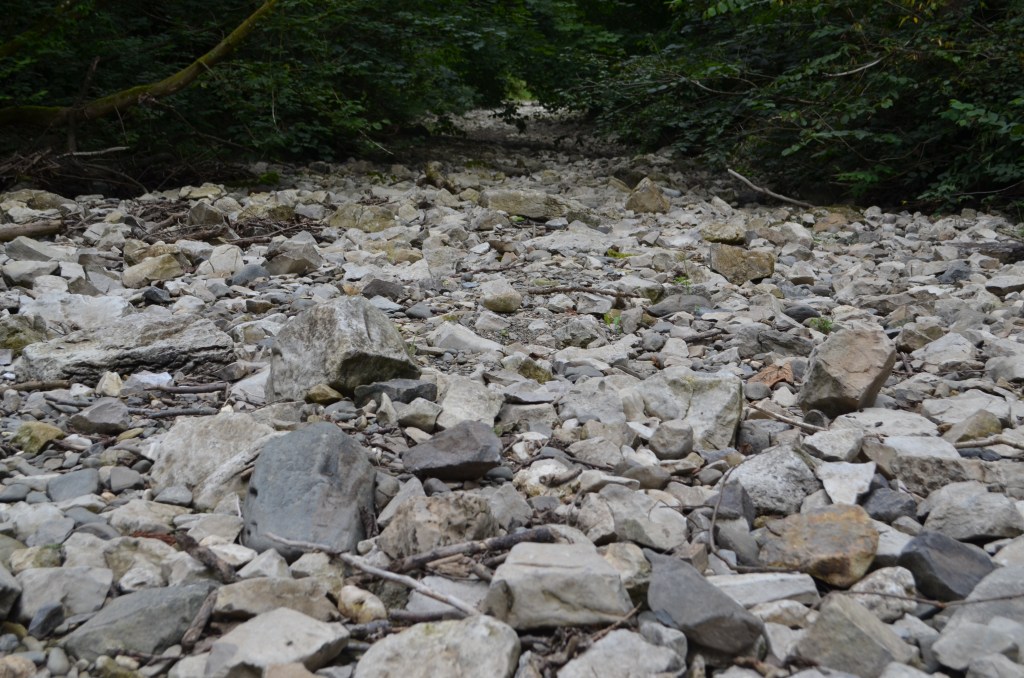
        Today the river Alyn was in full spate. As I intimated at the beginning, the Alyn’s water flow is not always constant and can vary considerably; this being most noticeable during prolonged dry weather spells, when the level drops and the bed runs dry particularly at the far end of the Leete Path. ‘Leat’ (also spelled ‘lete’ and ‘leet’) is defined in the Merriam-Webster dictionary as ‘an artificial water trench leading to or from a mill’, and there is indeed an old mill by the Visitor Centre which was a corn mill and later a sawmill in its working life. River levels drop of course, but the Alyn also flows underground quite extensively at certain points because of natural gaps in the limestone bed which swallows a lot of the water, much of which is also carried into an underground cave system to the north of the park. Often, as you travel the Leete path in a north-westerly direction, the bare stones of the riverbed are the only markers of the river. I must point out though that this is mainly during prolonged dry spells, and when the temperature has risen.