Category: Nature walks

  • The River Vanishes

    (Sunday 27th July, 2025)

        We were at Loggerheads Country Park on what turned out to be quite a dullish day. Apart from a single Common crow, the park was absent of any avian sightings. In fact, there wasn’t any birdsong during the morning, which leads me to suspect that ‘moulting season’ has begun, which is when birds renew their feathers. Even if a bird is only partially shedding feathers, it’s flying ability can still be hampered, leaving it vulnerable to predators, so it won’t want to attract attention by making any noise while waiting for its new feathers to grow. It does seem unusual that every bird would moult at the same time, so perhaps they were all having a lazy day in the nest watching (muted) telly. Anyway, it was quiet.

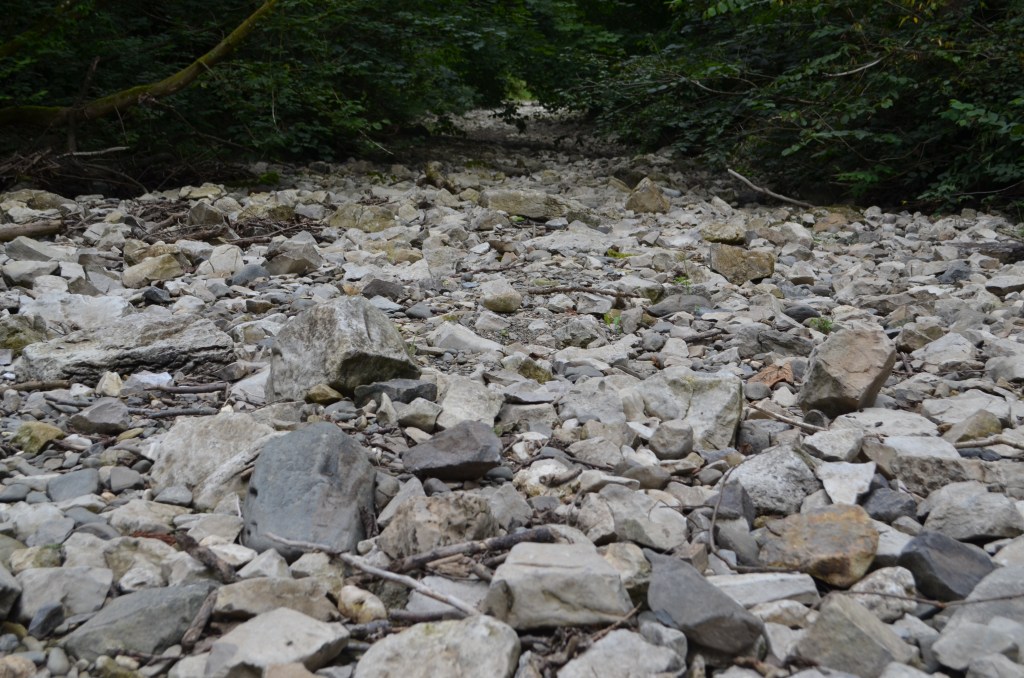
        A contributory factor to the silence of the woods was the River Alyn which seemed to abruptly stop flowing just beyond the wooden bridge. No water, no insects – aquatic or aerial – and so no birds. We have witnessed this before[1] and it is peculiar to this area: the riverbed is limestone and has a lot of ‘swallow holes,’ and underground caves into which the water pours. From as far back as medieval times the area was being mined for lead, although the amount extracted greatly increased during the 1700s: the Leete Path takes its name from the artificial water course – or ‘leat’ (also spelled ‘leet’ or ‘lete’) which originally conducted water from the Alyn to the waterwheels that were used to power the mining machinery. During prolonged dry spells and high temperatures the Alyn appears to, well, disappear. It does resurface, so to speak, further downstream, ultimately discharging into the Dee Estuary near Bagillt. I highly recommend the Afonydd Cymru website, which has some fascinating information on the rivers of Wales, including the River Alyn:  https://afonyddcymru.org

    The important stuff

    After a while, we realised that it wasn’t just the Alyn’s riverbed that was dry, and we proceeded to Caffi Florence where we indulged in our usual cappuccinos and cakes. I had Orange Drizzle cake and Stu had a Chocolate Brownie. Lovely!


    [1] See Along the Leete 14th April, 2024
  • A hot day at Burton Mere

    (Sunday 13th July, 2025)

        I went across to Burton Mere Wetlands today. It was a hot 28°C but slightly cooler than yesterday’s 32°C. Naturally, there were lots of birds at the Wetlands including Canada geese, Greylag geese, Mallards, Moorhens, Shovellers, Shelducks, Black-headed gulls and Avocets. There were also a few Black-tailed godwits and lots of Knots at the Scrape, and both species were in their stunning brick-red summer attire; and from the Border hide I saw what looked like several hundred Lapwings.

        I’m certain I missed many more bird species: I have to admit that my attention was more focussed on the number and variety of butterflies on display. Because the butterfly number was so low in the UK last year, it’s been very comforting to see how much more numerous they are this year. Today at the wetlands there were Small whites, Large whites, Red admirals, Speckled woods, Small tortoiseshells, Commas, and Meadow browns.

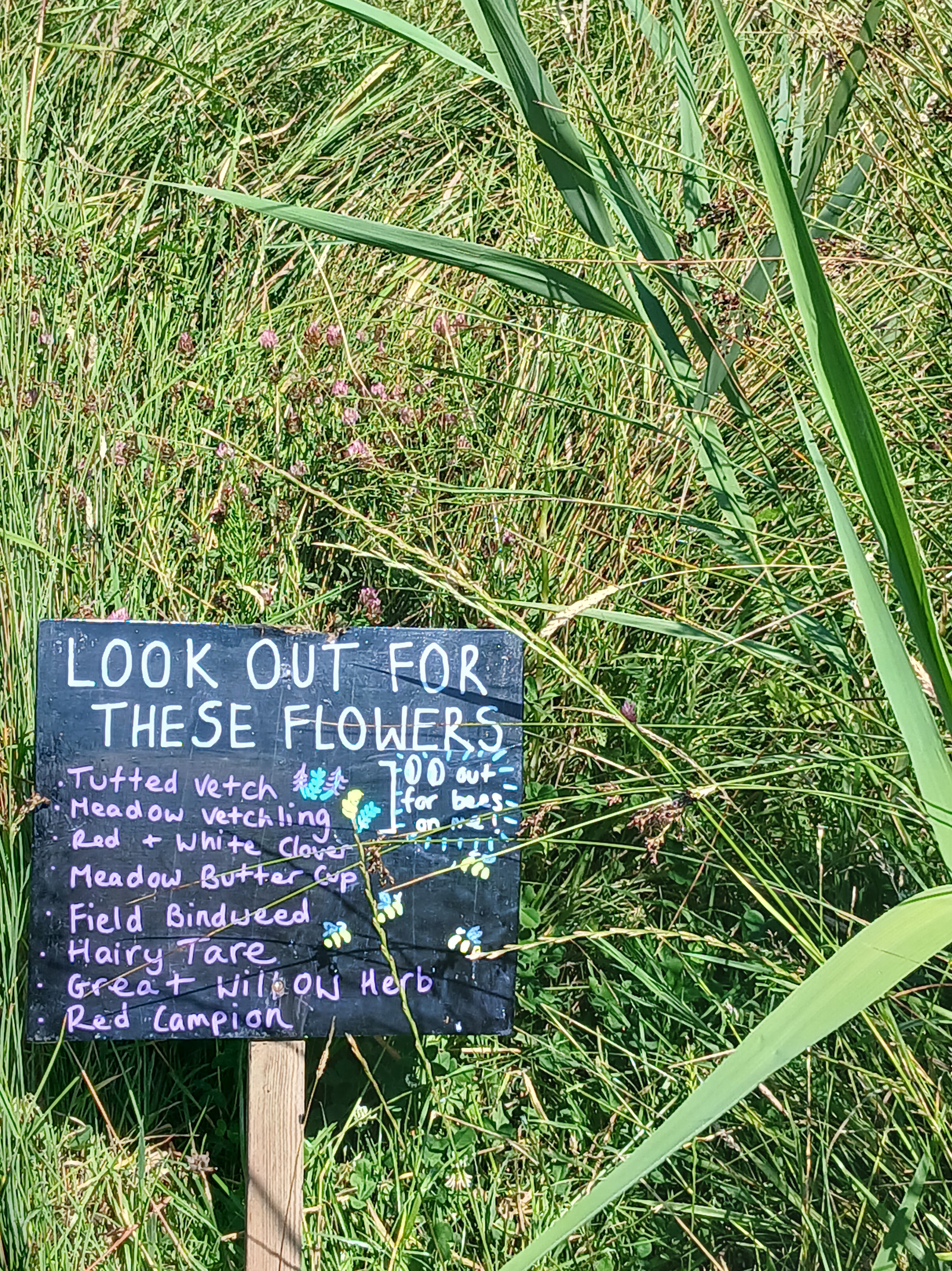
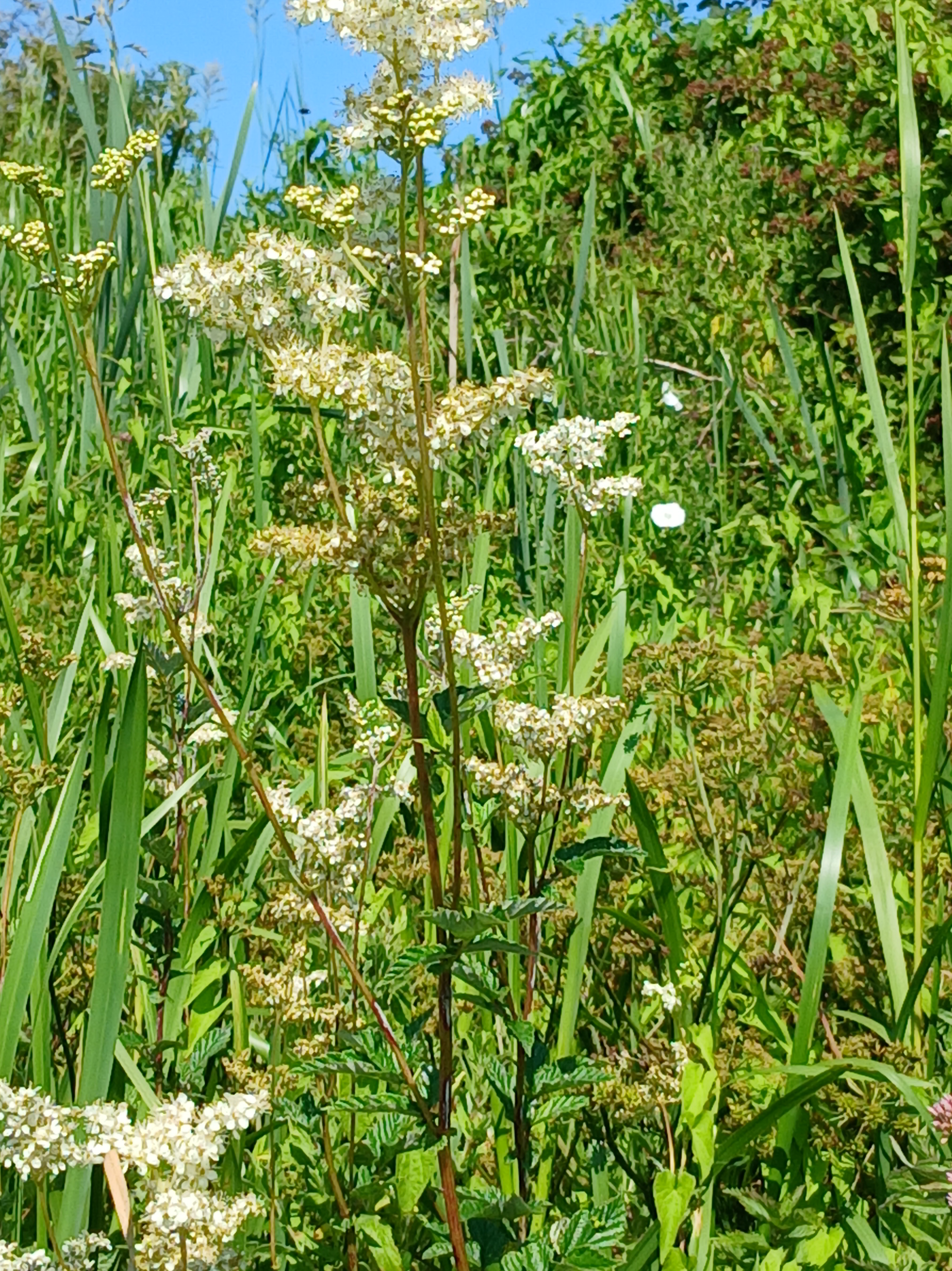
        All of these moths and butterflies – and various bees, hoverflies and other insects – are drawn to the various plants of the marshland. The Meadowsweet is a lovely, creamy colour and smells wonderful (well, it’s there in its name of course); and Tufted vetch is particularly abundant at present. There is clover – both red, and white – and Red campion as well as many, many more wildflowers and plants that play their part in attracting these pollinators. In fact, visitors (adults and children) are encouraged to look and see what’s around them.

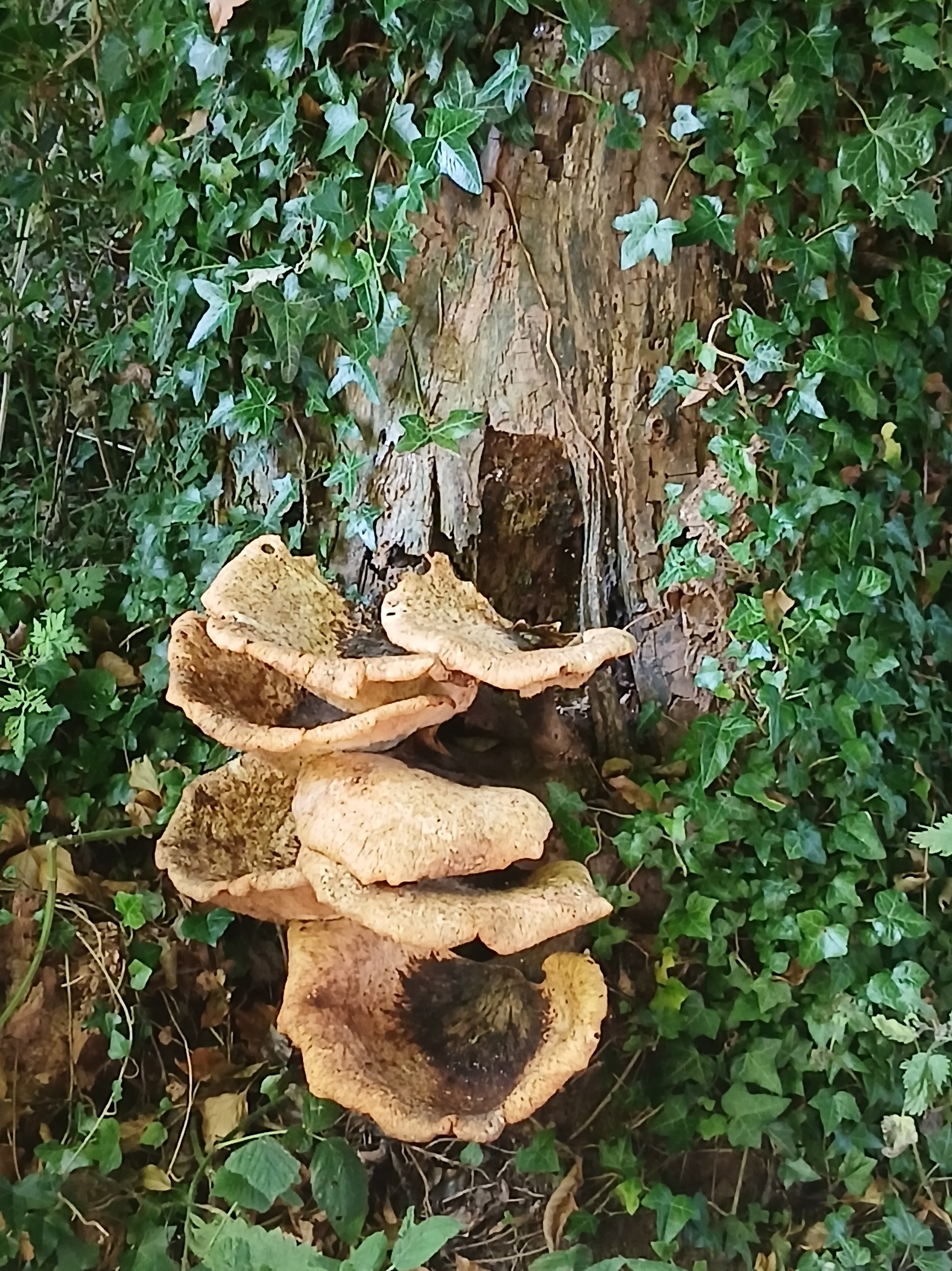
        I noticed several large, light-brown mushrooms at the base of a dead tree just off one of the paths. For all that I’m a fun guy, I know very little about fungi (oh dear…!) so I had to look these up later. The mushrooms are known as ‘Dryad’s saddle’ which is a name that relates to supernatural beings from Ancient Greek mythology. I imagined these dryads (tree-nymphs) resting while taking a break from their usual activities, which are essentially dedicated to protecting the tree or trees in their charge. As you can see, the mushrooms grow one above another almost in ladder form, and I imagined the tree-nymphs had scampered up them to conceal themselves at my approach. It obviously worked because I didn’t see any at all that day!

        The visitor’s centre has a couple of whiteboards on which the current day’s sightings and the previous day’s sightings are listed. This is not just confined to birds, but also butterflies, moths, and plants and wildflowers. I think this is a great idea: inevitably, you miss things, so it’s good to check the boards. Not so much to see what you’ve missed, but more to give you an idea of the variety of flora and fauna that’s around you, just waiting for you to discover on your next visit. I’d seen a couple of Common blue damselflies and one Brown hawker dragonfly as I headed back from the Border hide, but only back at the visitor centre did I learn that the Five-spot burnet moth inhabited the area. And I only learnt this because somebody listed it on the whiteboard. Now I know, of course, you can guarantee that I’ll never see one here!   

    The important stuff

    I went to the café and had a lovely cup of tea and a slice of Sour Cherry and Pistachio cake, which left me fully restored after the morning’s exertions in the sun. Lovely!