Category: Denbighshire

  • Goldcrests at Loggerheads

    (Sunday 28th December, 2025)

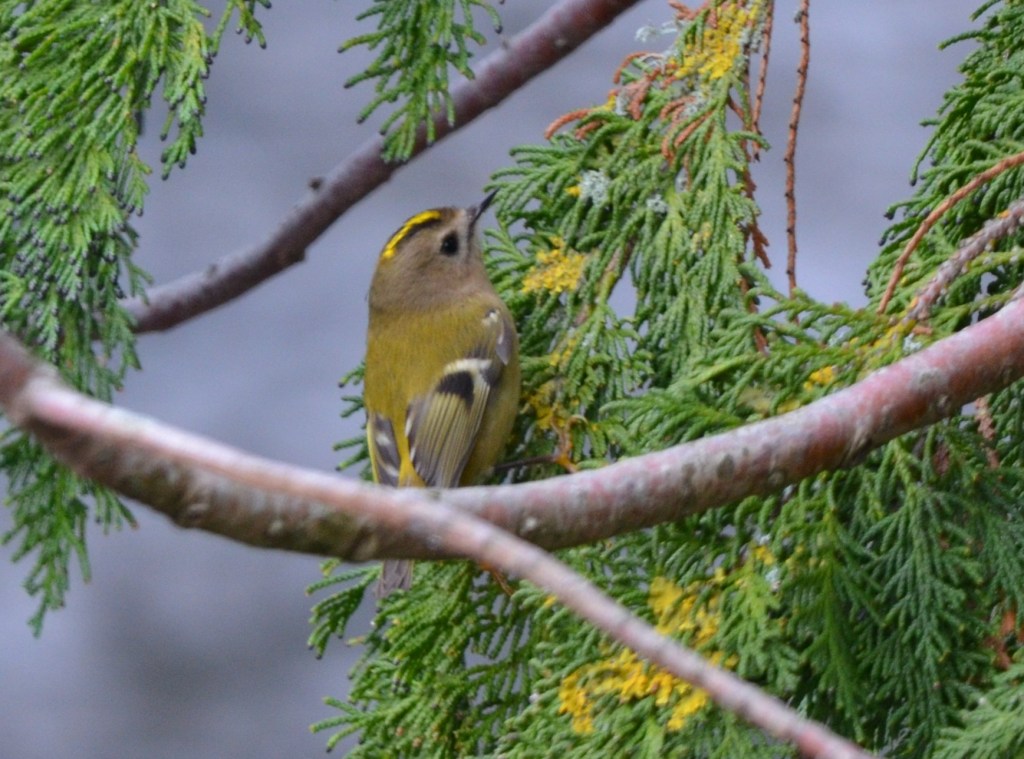
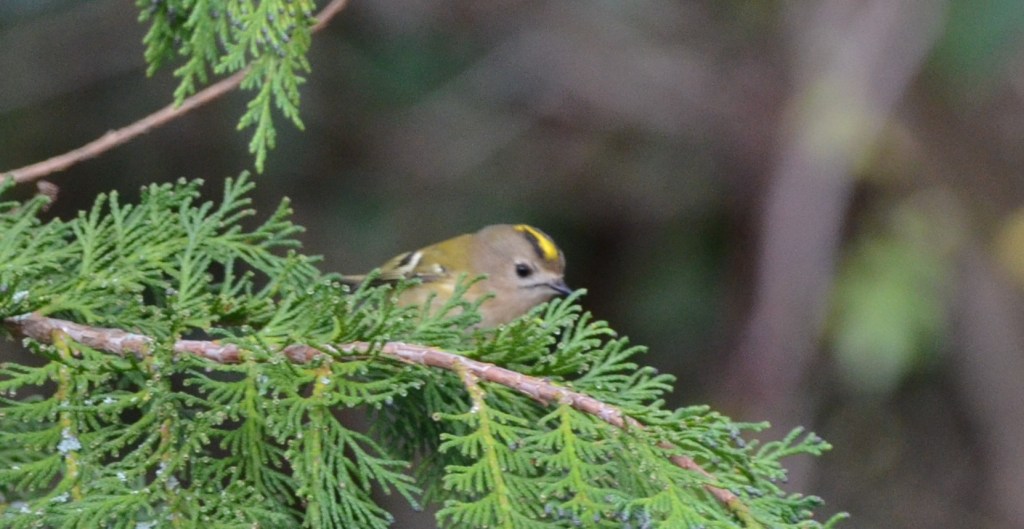
        Sometimes you just get lucky. We were just about to leave Loggerheads Country Park, in Denbighshire, and head home. Before we did so, we thought we’d take a last quick look from the little bridge opposite the We Three pub. Looking upstream, we caught glimpses of yellow as tiny birds darted around the lower foliage of a tall conifer. (Judging by the leaves, I think the tree is a cypress of some sort, but I’m not entirely sure). These birds were not easy to track but, looking through the binoculars, I could see that they were Goldcrests – the smallest bird in the British Isles and, in fact, Europe. These tiny birds are rarely longer than 9.5cm (3.7 in), with a wingspan no greater than 15.5 cm (6.1 in). On average, they weigh just 6g ( less than 0.25 oz) and are often described as weighing the same as a twenty-pence piece.

    Goldcrest in conifer

        Goldcrest

    The Goldcrest has whitish-grey underparts, olive-green upperparts and two contrasting white wing bars, and a distinctive yellow crest on its head, from which it gets its name. The male has a smudge of orange running through the centre of its yellow crest, although this is not always visible: presumably it becomes so when it ‘displays’ during the breeding season. So, the Goldcrest in the photographs could be either male or female. And kudos to Stu – considering how active these birds were as they probed the cones and leaves for food – the photographs turned out really well.

    Goldcrest 2

        Goldcrests are actually quite a common bird in the British Isles, where resident birds are joined by migrant birds from Scandinavia during the winter months, although neither of us had actually seen them ‘live’ before. And despite our climate becoming warmer, Goldcrests are still susceptible to the cold: they can ‘burn off’ a lot of body weight overnight when the temperature drops, even when they huddle together. It had been a cold night – and it didn’t climb above 5°C for the whole of the morning – so probably these Goldcrests were replenishing lost energy.  

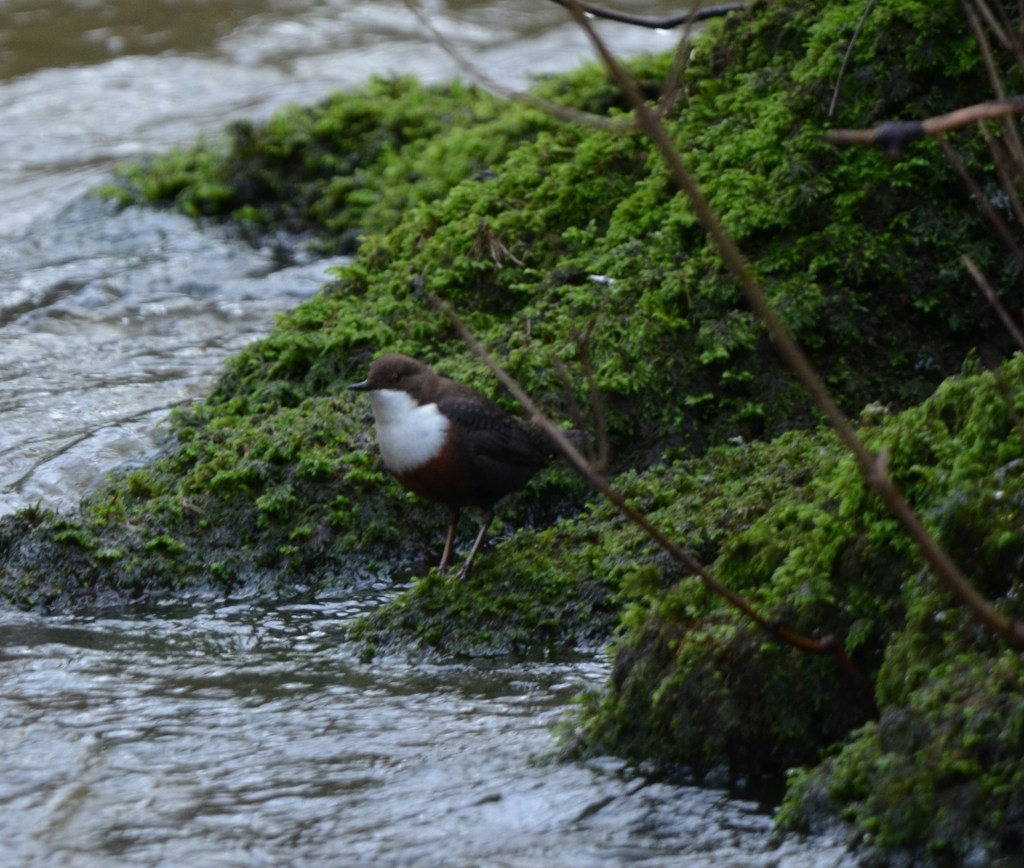
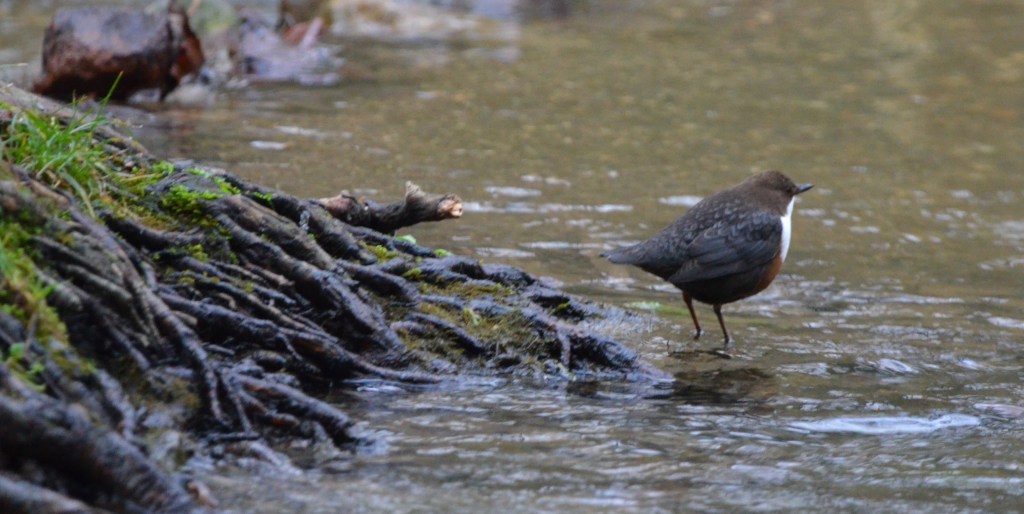
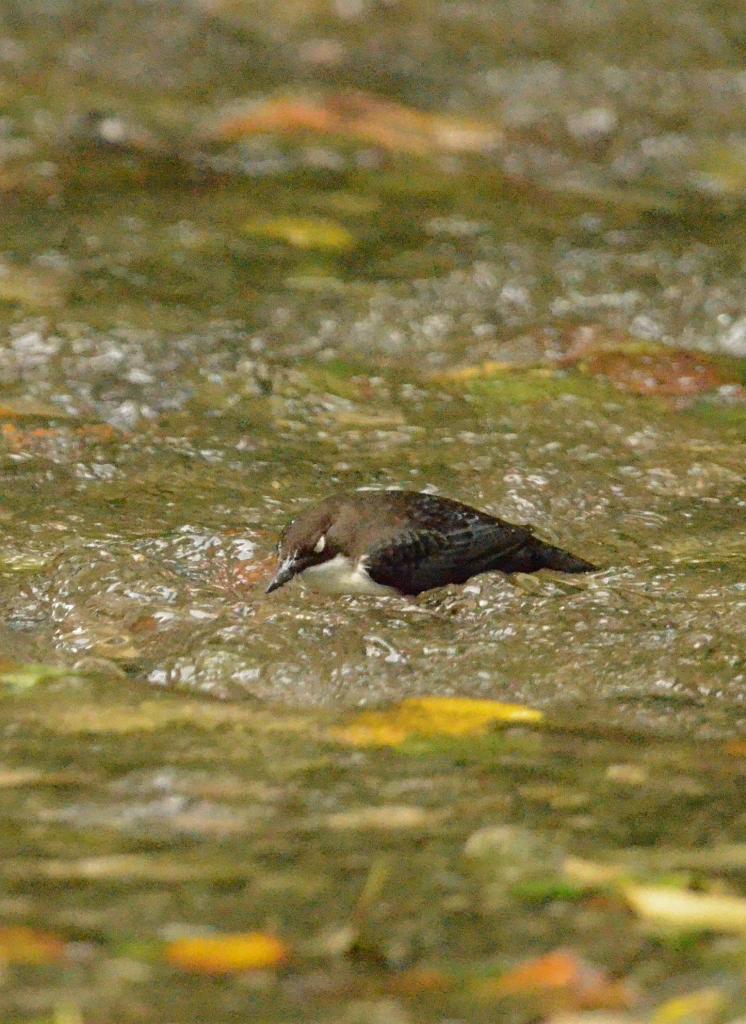
    Dipper about to submerge itself

    Dipper about to submerge itself

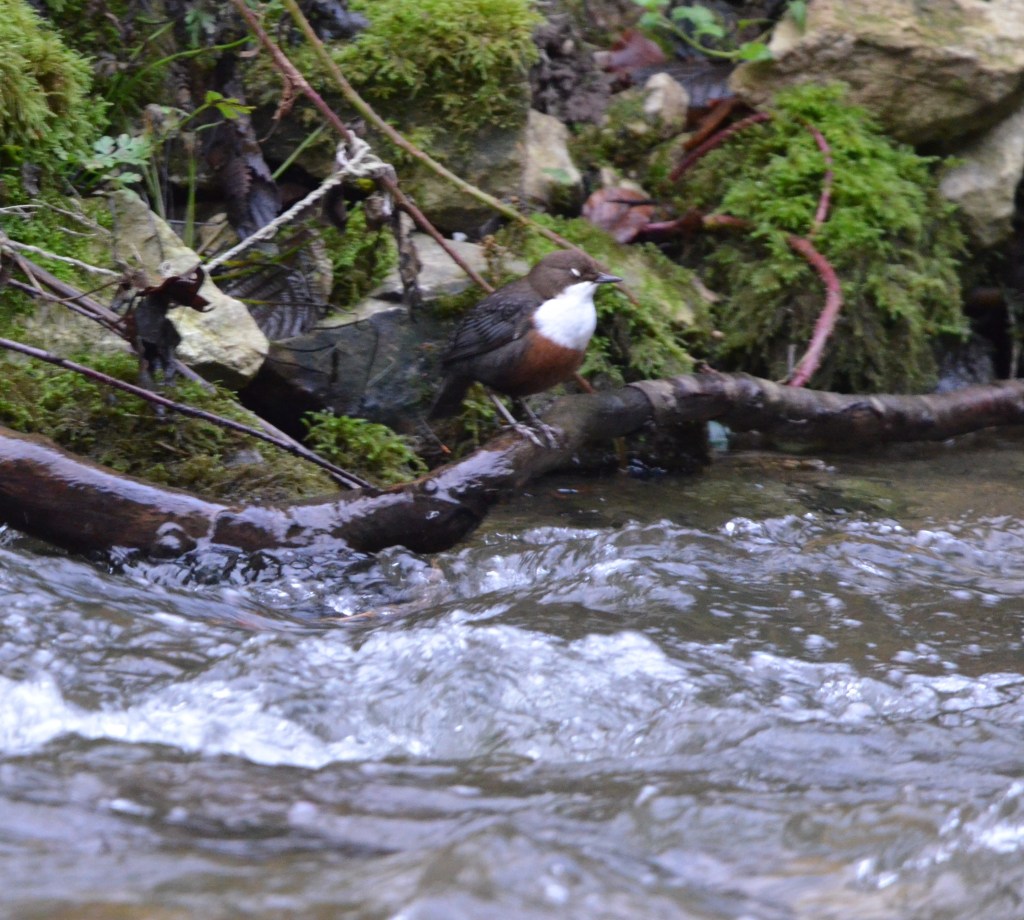
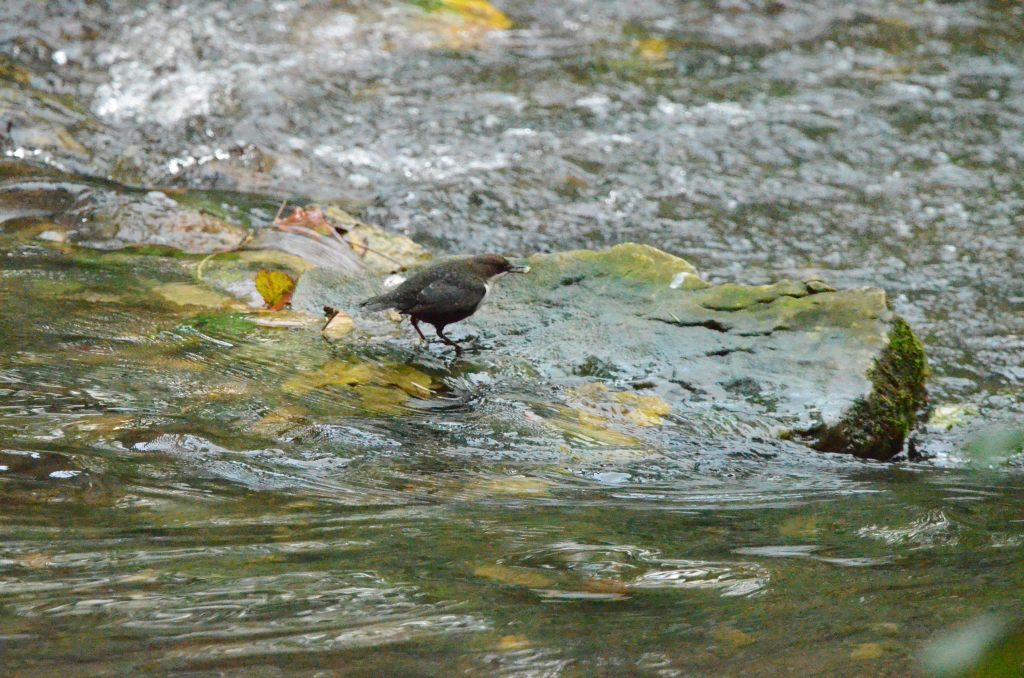
        Earlier in the morning we had seen a White-throated dipper – in fact we traced it to a couple of different spots along the River Alyn. Over time, we’ve noticed that Dippers seem to favour the faster-flowing white water of the river. This one first performed its characteristic bobbing dance, before submerging itself in the river in search of food. Very entertaining!
    Blinking Dipper

    Dipper showing white eyelid feathers as it blinks

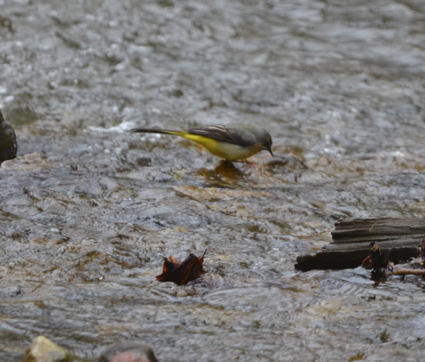
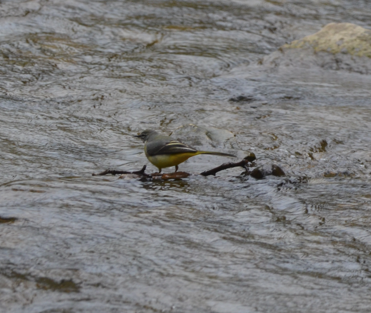
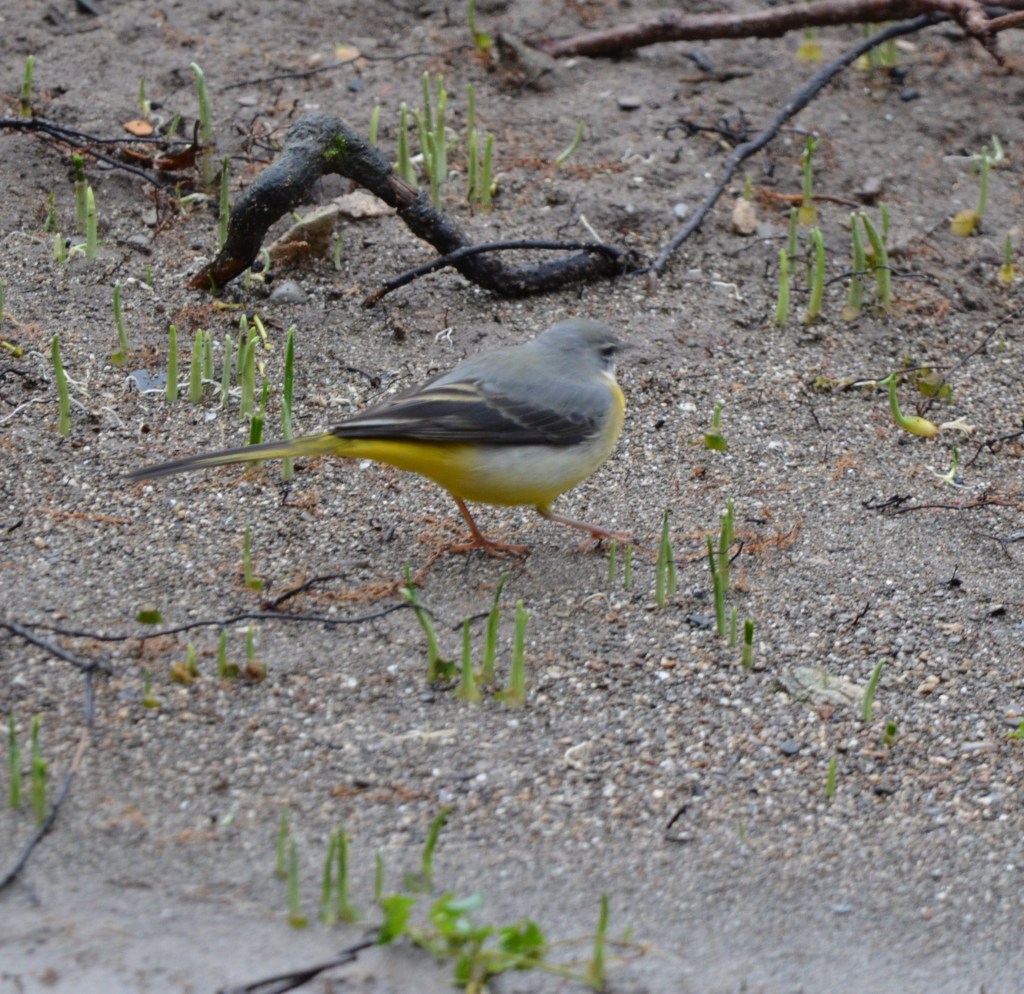
    Grey wagtails also hunt in areas of the river where there is fast-running water, but though both species’ territories overlap, somehow they’re both able to share the river’s resources without too much disputation, as far as we can make out. We often see both species out and about at the same time, as we did today.

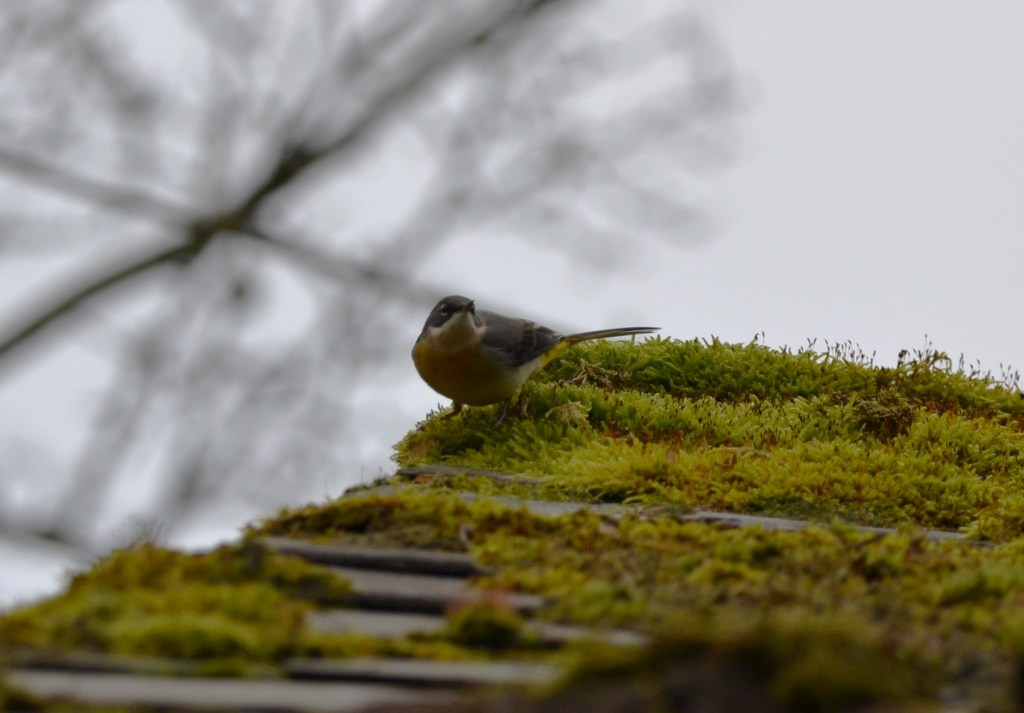
    Grey wagtail on mill roof

    Grey wagtail on the roof of the mill house

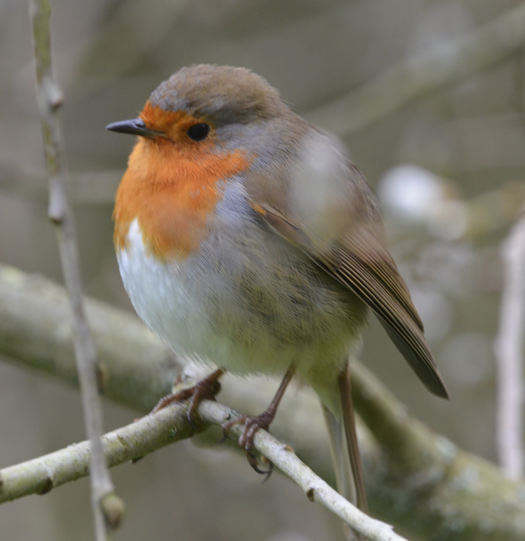
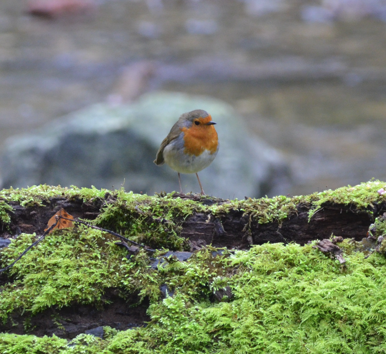
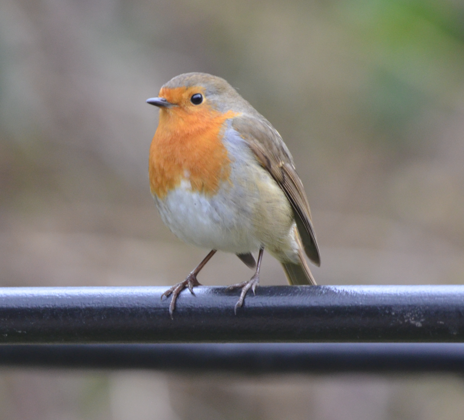
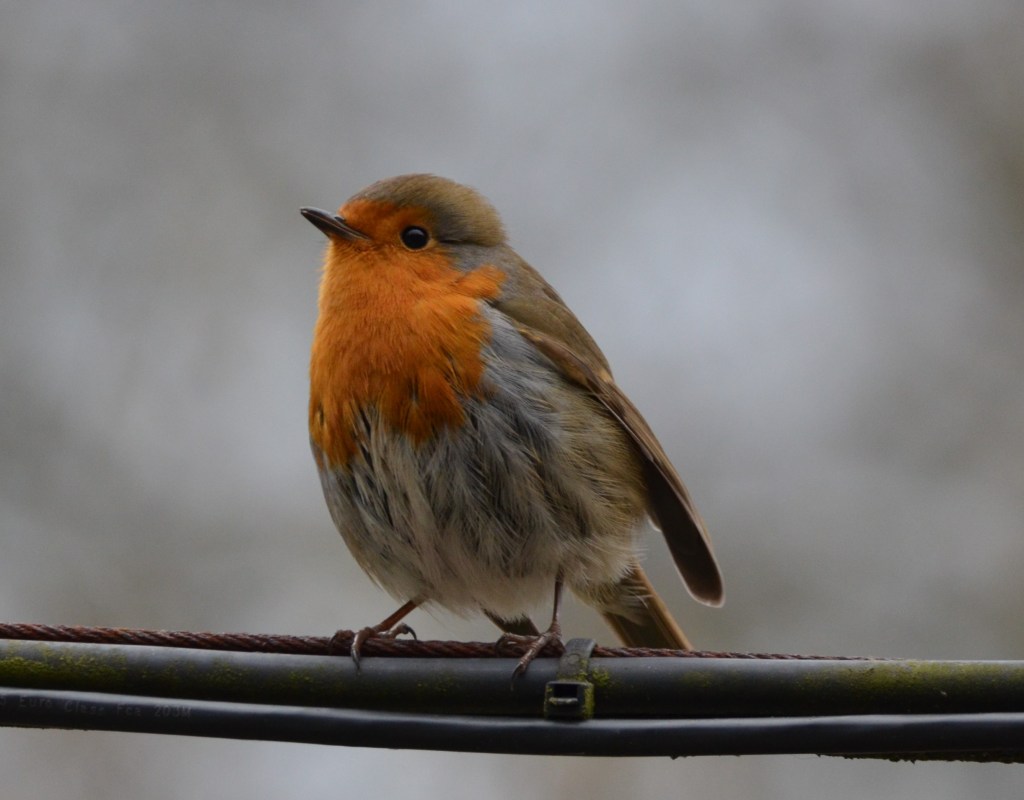
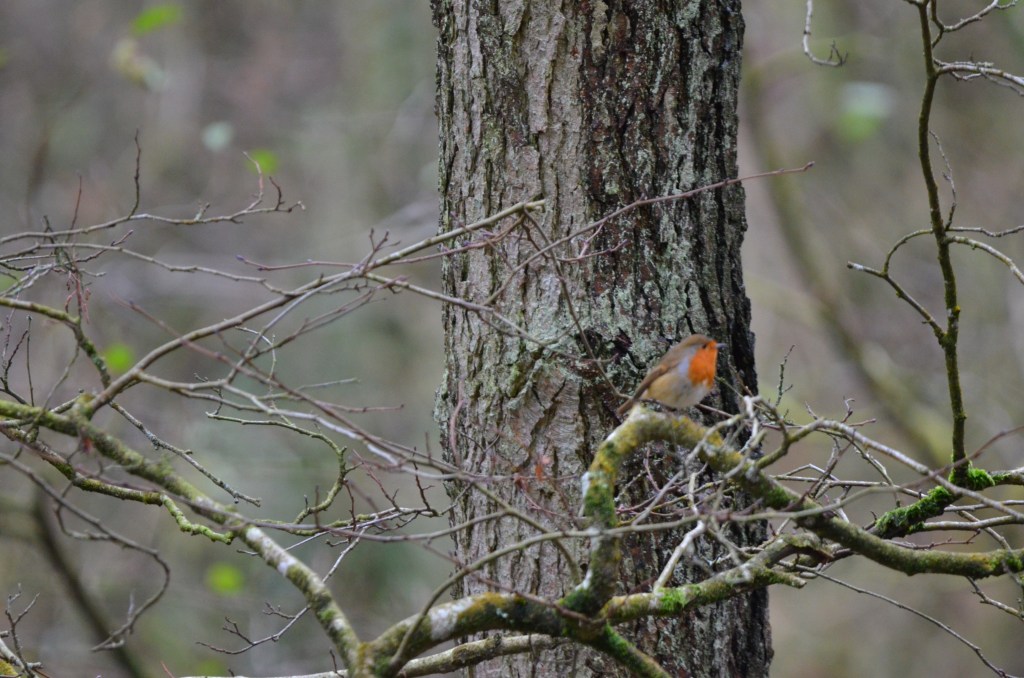
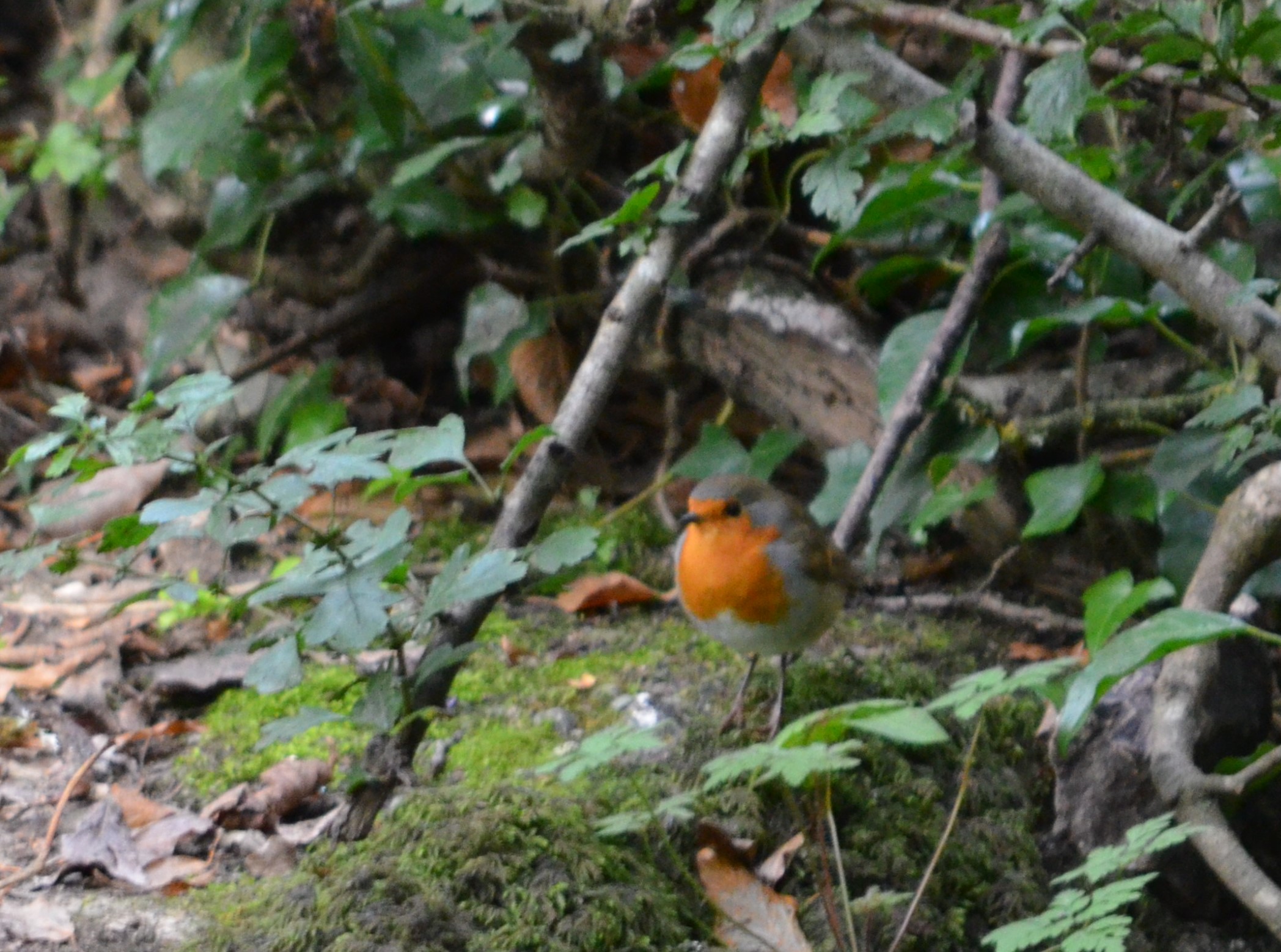
    The Grey wagtail flew off before it could be photographed although it – or perhaps another wagtail, we can’t be sure – appeared a little later on the roof of the old mill which is the one in the picture. While some birds are camera-shy, the same can’t be said of our old friend the Robin: a born star that just loves being photographed!

    Robin posing

    Robin posing for the camera

    The important stuff

    The Mill House café (Tŷ’r Felin) provided us with much needed sustenance after all that hard work. A cappuccino and a Chocolate Biscoff each soon restored our equilibrium!

  • The tail-end of the storm

    (Sunday 16th November, 2025)

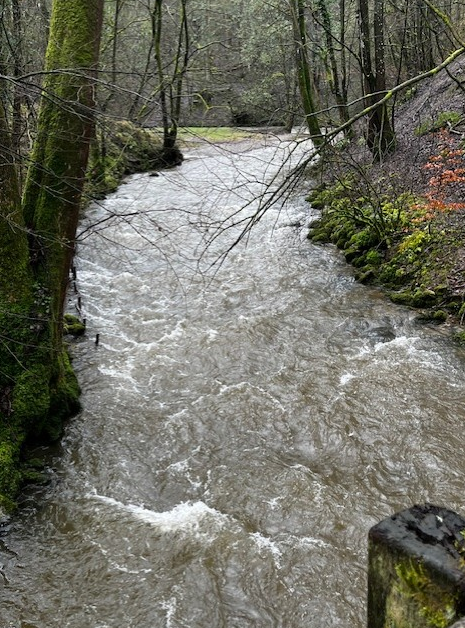
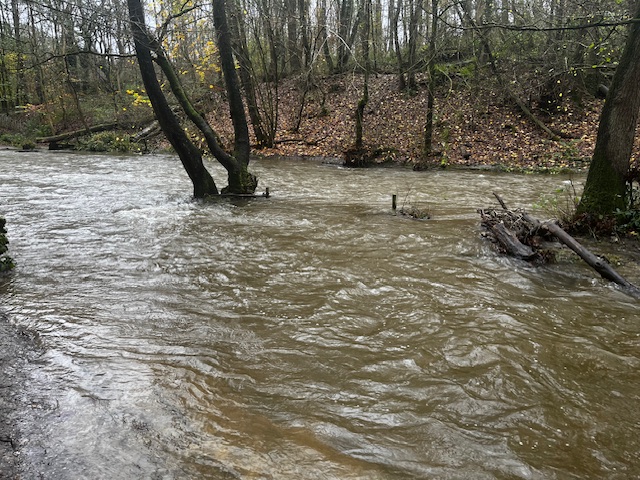
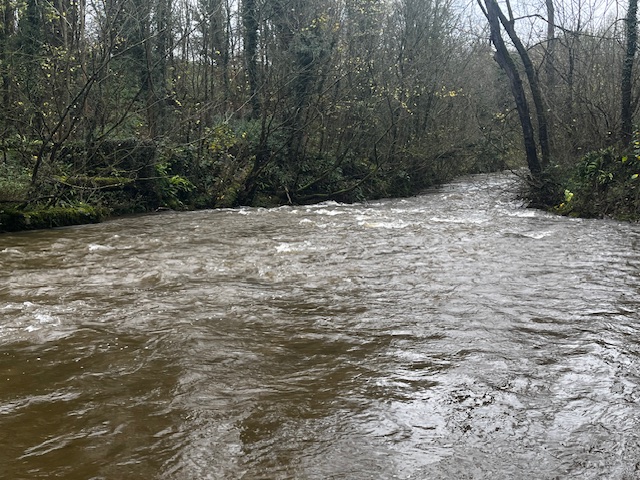
        Over to Loggerheads Country Park in Denbighshire, this morning. The River Alyn was running very high in the aftermath of Storm Claudia – Friday and Saturday had been particularly wet and, though it was a cool 8°C when we arrived, the rain had ceased and the day was dry. The rebuilding of the river wall that was completed in 2024 has clearly been successful: in past years, the old mill, the café and the visitor centre have all been subject to flooding after persistent heavy rain, whereas today there was no such damage.

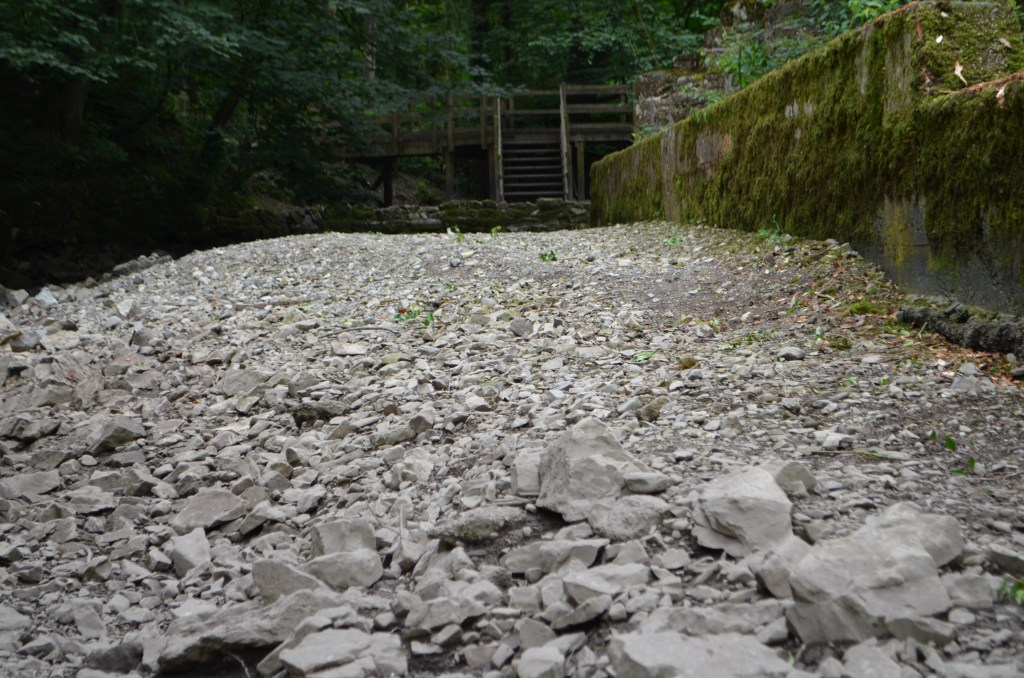
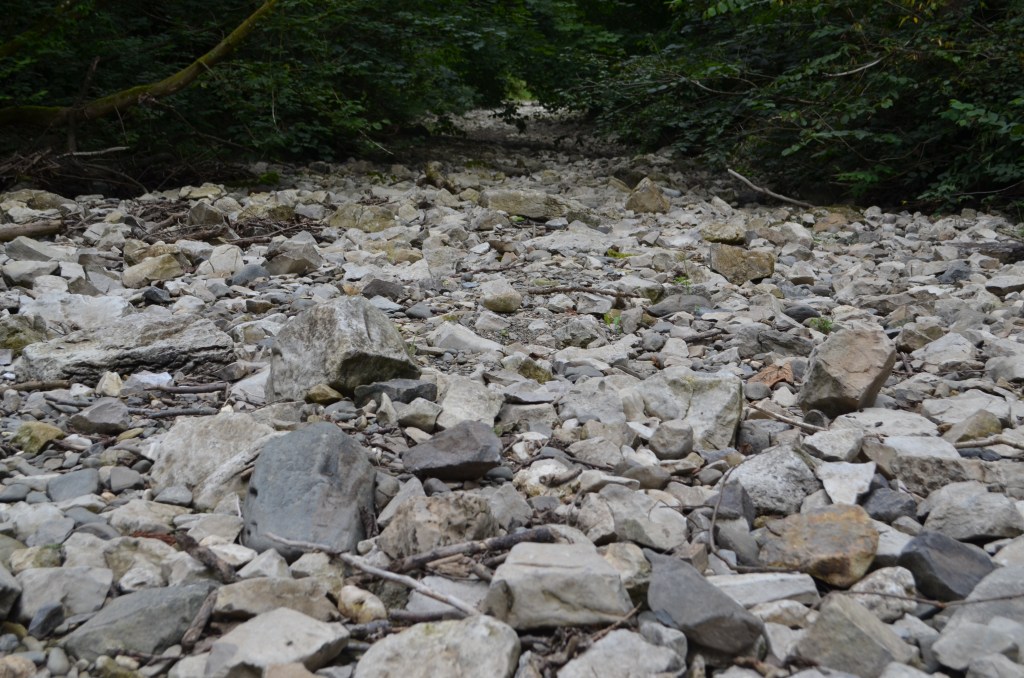
        I thought it was worth including a photograph of the river from earlier this year, just to show the difference that prolonged spells of dry weather and wet weather can produce. As has been mentioned elsewhere on this blog, the Alyn is particularly affected because of the river’s ‘disappearance’ underground (see The River Vanishes, Sunday 27th July, 2025).

    River Alyn dry bed 3

    The bed of the River Alyn back in July this year…

    Alyn full spate 2

       …compared to the aftermath of Storm Claudia on Sunday.

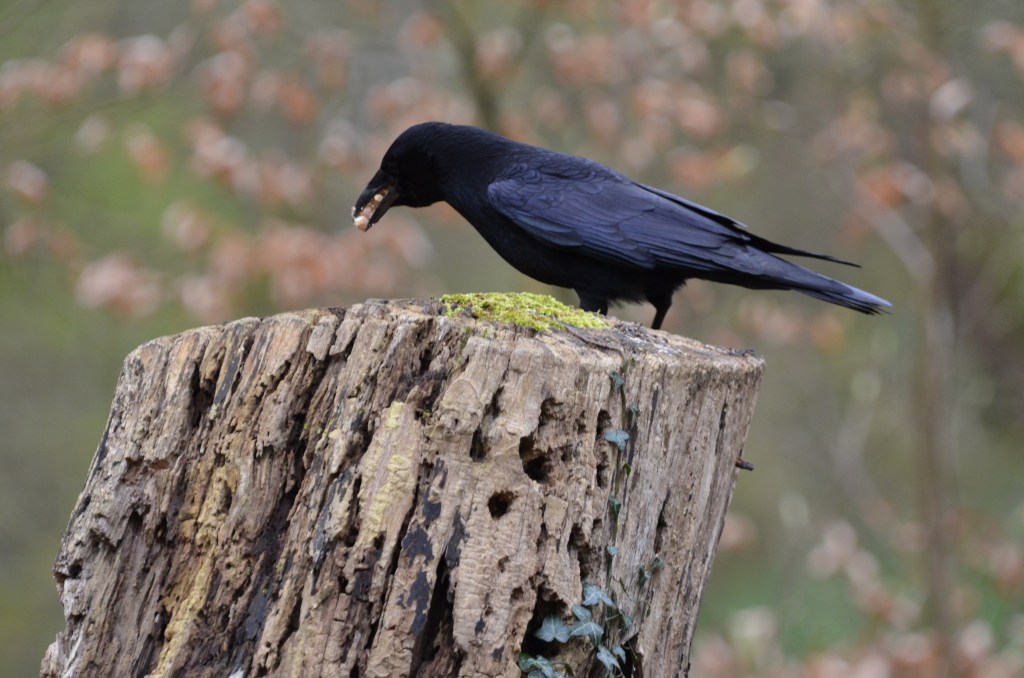
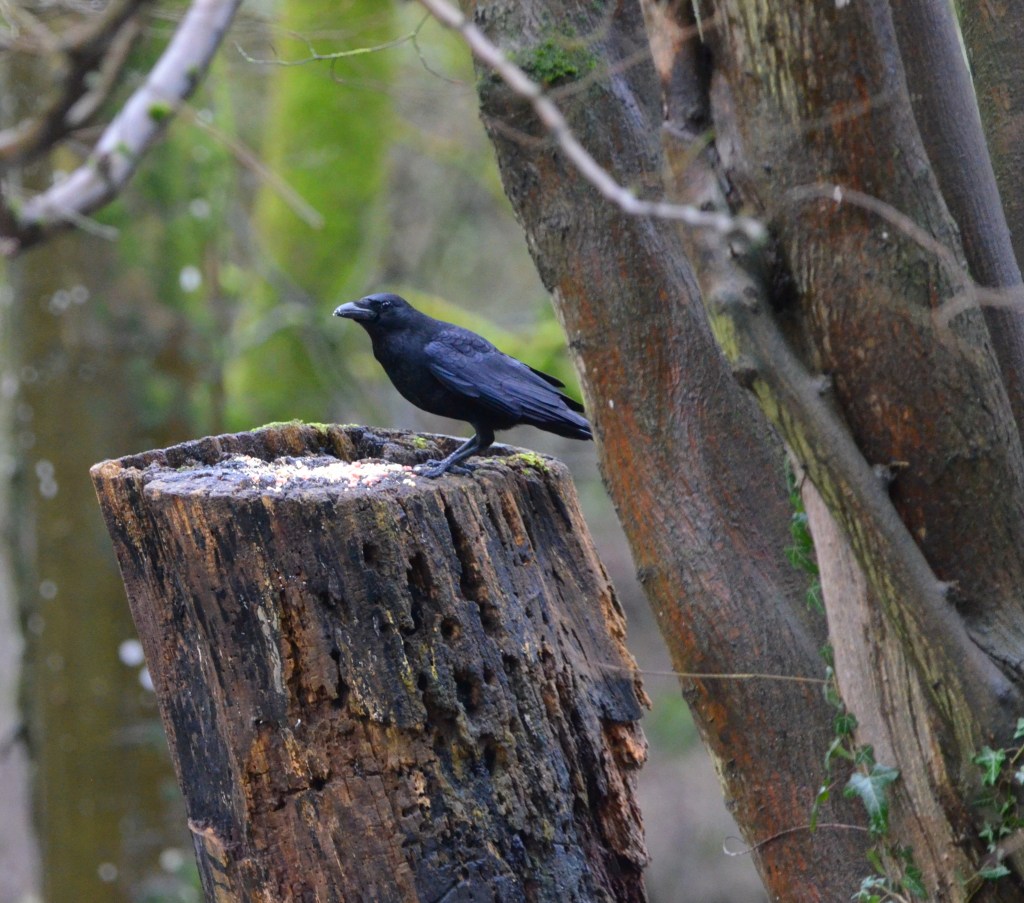
    Our Grey wagtail put in a guest appearance this morning and we’re certain it was the same one that we saw only last month: while we recognised the bird, I wonder did it recognise us? (Oh! It’s those two again!). There were several House sparrows, Great tits, Robins, Common crows, and a lone Grey heron flying high above the trees, its legs extended horizontally behind it.

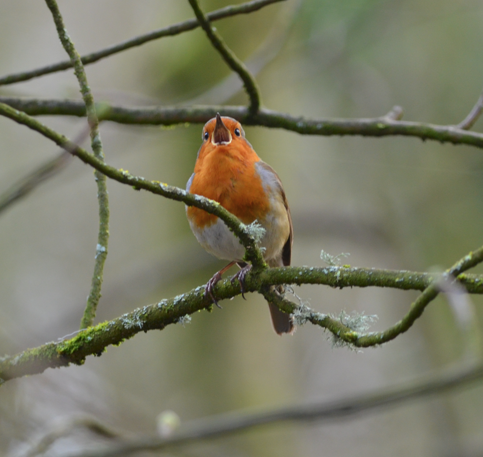
    Robin calendar

        A Robin practicing its ‘winter calendar’ pose

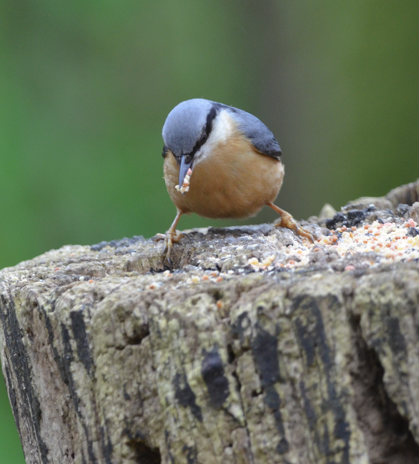
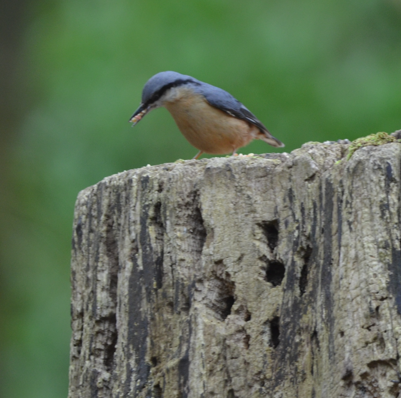
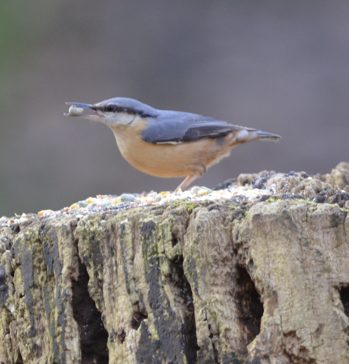
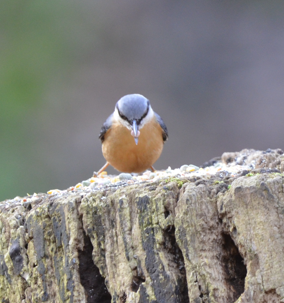
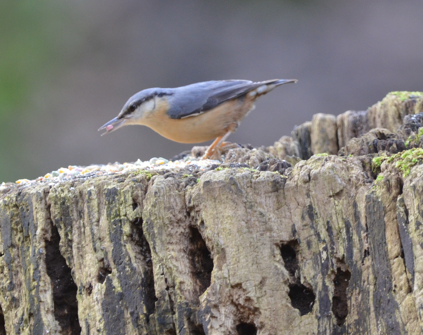
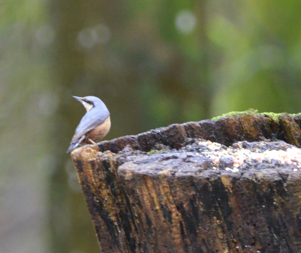
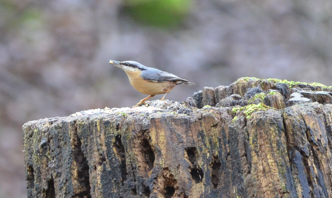
    But it was the sight of a pair of Nuthatches that drew our attention: we were sitting beneath an old oak tree and, for some reason, I looked up. I don’t recollect hearing any noise, or being aware of any movement, so I’m not sure why our attention was suddenly locked onto the oak branches above. Pure luck, I suppose. As I raised my binoculars, the nearest bird walked headfirst down the trunk. The way I’m describing it, you might be imagining a stately descent but, really, the bird performed a sequence of rapid steps before turning around in the opposite direction, and then quickly hopped up the branches of the tree. This was a female Nuthatch, given the paleness of its red/orange breast (I’m discounting its being a juvenile given the lateness of the season, but I may well be wrong). I’m guessing that the other Nuthatch was male, although it was a little higher up the tree and I was concentrating on the nearest one. No photographs, unfortunately, as they are such quick, darting creatures, but we’ll maybe see them again the next time we’re here.

    Velvet shank

    Above: Velvet shank. Below: unknown bracket mushrooms

    Bracket mushroom

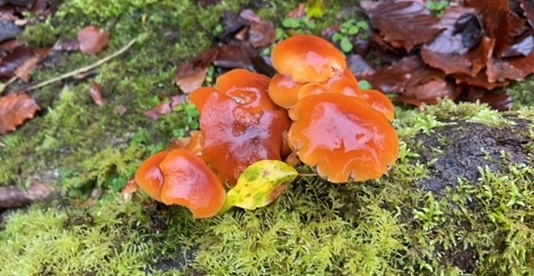
        Late autumn is a good time of year in the British Isles to see various fruiting bodies of fungi although this is one area in which we’re admittedly lacking in knowledge. (Only one?!) But, looking online, I think the buff-coloured spherical fungus is a mushroom called Velvet shank. I’m hesitant to say anything too detailed on the other fungus apart from it appears to be some form of bracket mushroom.

    Coin tree

    No change at the coin tree

    The coin tree, which we generally pass without consideration, is thought to be the modern version of the traditional practice of making offerings to wood deities and spirits. The coins have been hammered into the bark and are almost impossible to extract – allegedly!

    The important stuff

    We sat outside The Mill House café (Tŷ’r Felin) with our customary cappuccinos, each tucking into a slice of Bakewell. Very nice!

  • The River Returns

    (Sunday 5th October, 2025)

        Over to Loggerheads Country Park in Denbighshire this morning. It was 12°C with occasional westerly gusts of wind, although we were pretty much sheltered by the trees either side of the Leete path. In stark contrast to our recent visits when the riverbed ran dry after just a short distance, this time the River Alyn was in full spate and flowing strongly after all the recent rain. We’ve reported elsewhere in the blog seeing Grey wagtails and White-throated Dippers along this stretch of water and, today, we were fortunate enough to witness individuals of both species here, happily sharing the same habitat while exploiting the surge in water.

    Grey wagtail (female)

        Grey wagtail

    First to arrive was a Grey wagtail – female, judging by the absence of the black bib. She may have been collecting for her brood, or maybe just herself (we saw no sign of a male today). She re-appeared further downstream a little while later, flying low to land on a rock mid-stream from where she scanned the water, her long tail steadily moving up and down as she did so.

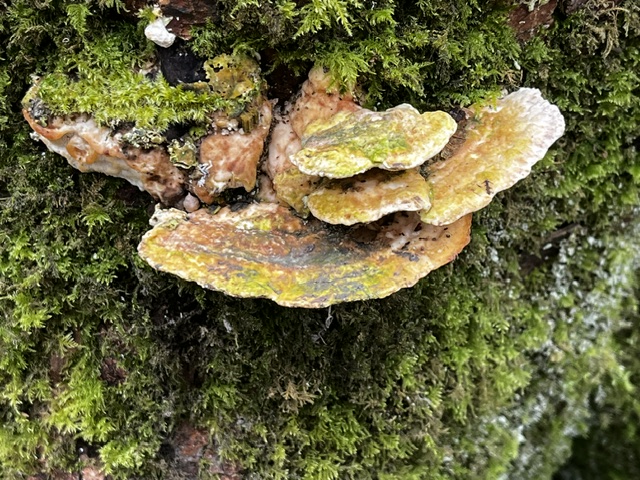
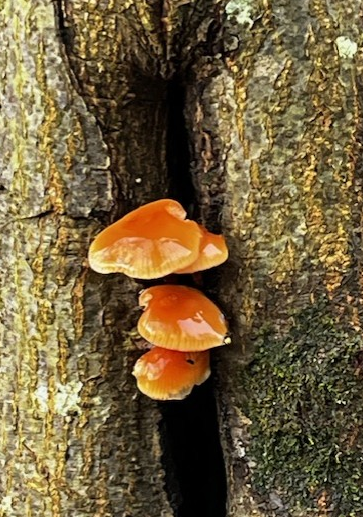
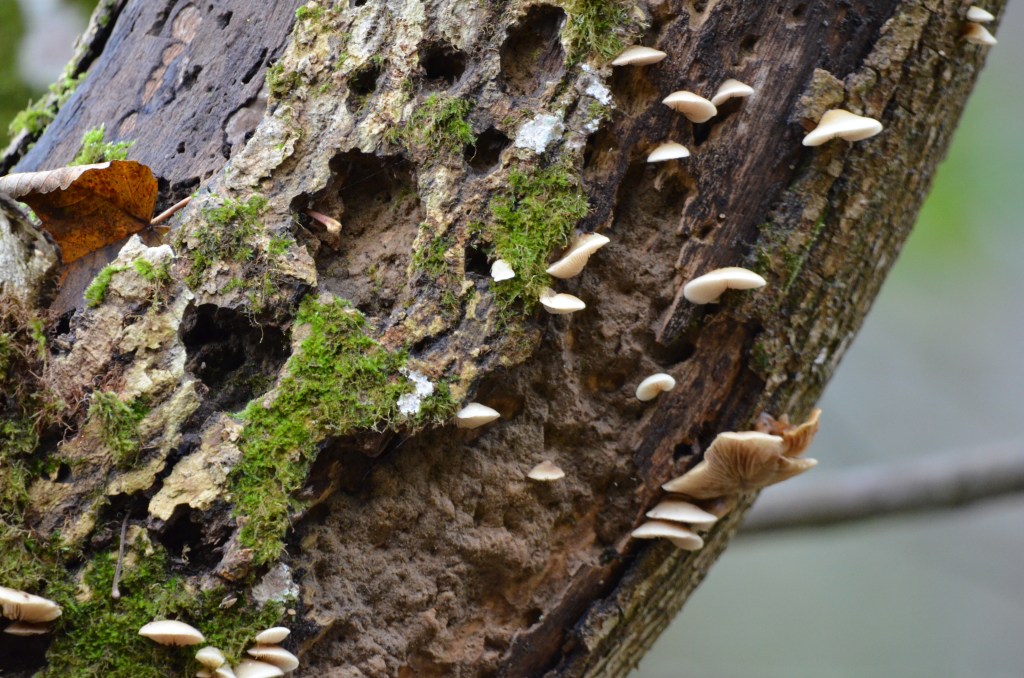
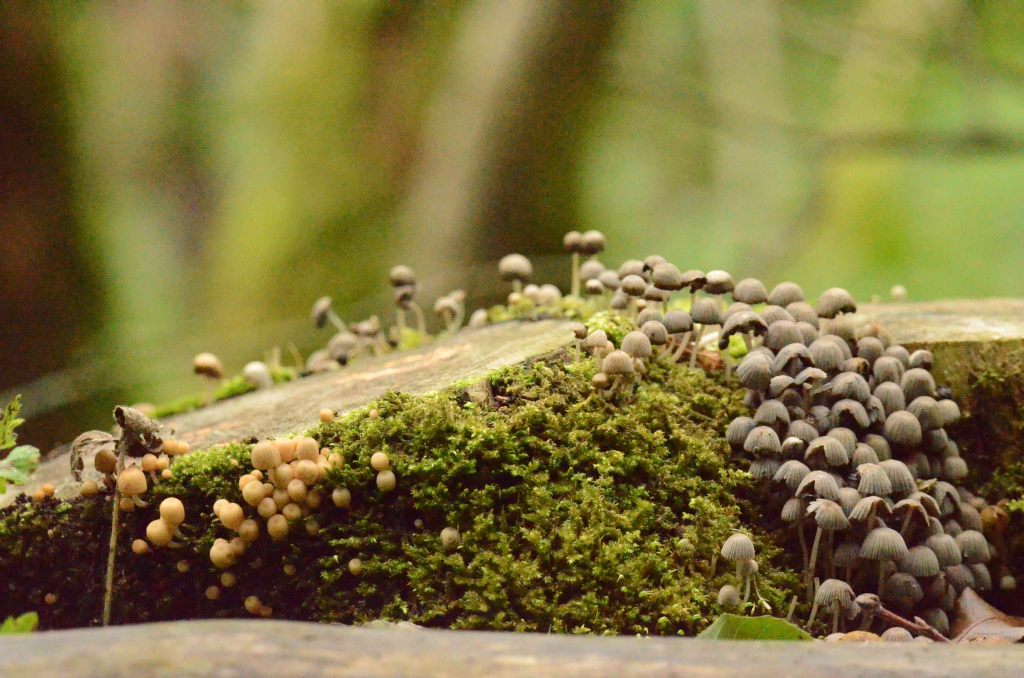
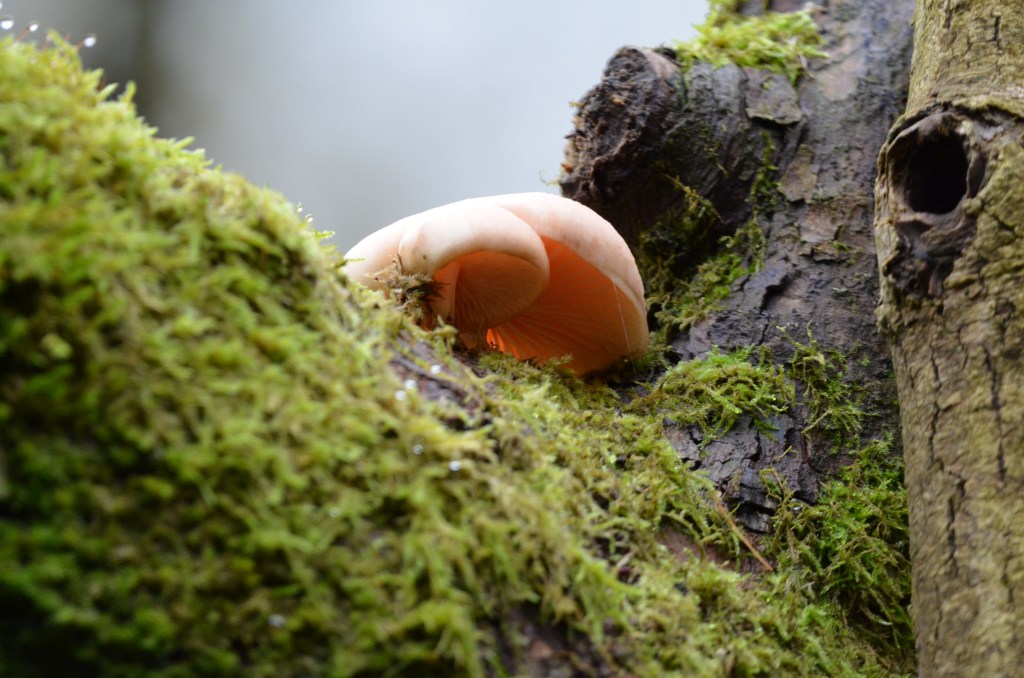
        We moved further through the woods, noticing varieties of fungi as we went. The clusters of fungi decorating the moss-strewn tree trunks appear to be Fairy inkcaps, which are quite common mushrooms throughout Britain. I don’t know what type of mushrooms the bracket fungi are, though: initially I thought Dryad’s saddle, but I’m not so sure now. Until further notice, this shall remain a mystery!

    Fairy inkcaps
    Bracket fungi

      Fairy inkcaps (top) and bracket fungi (bottom) 

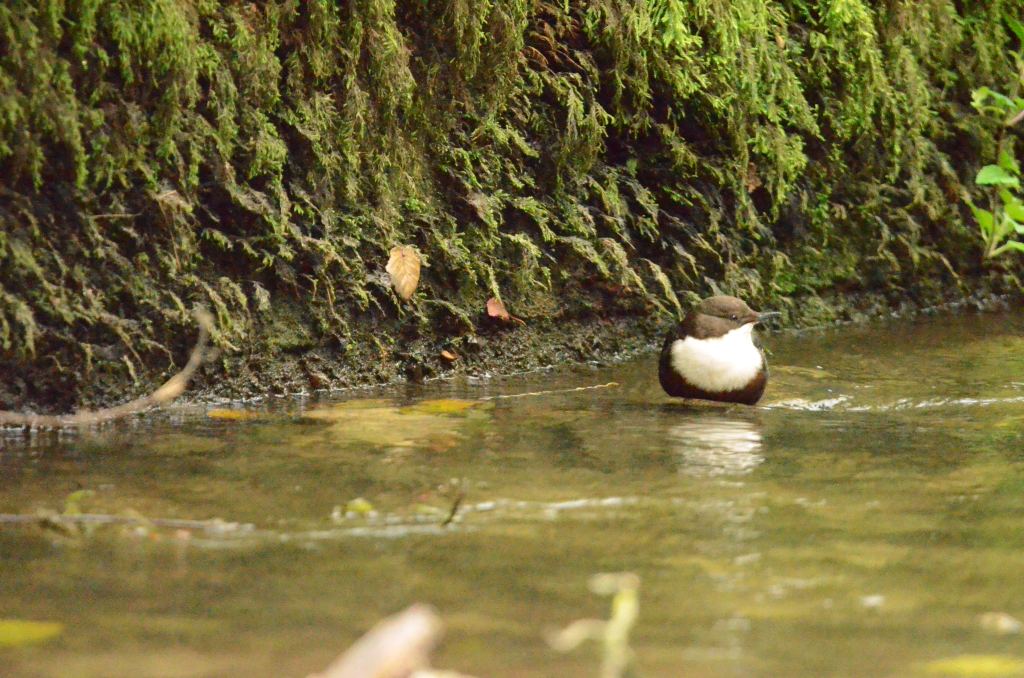
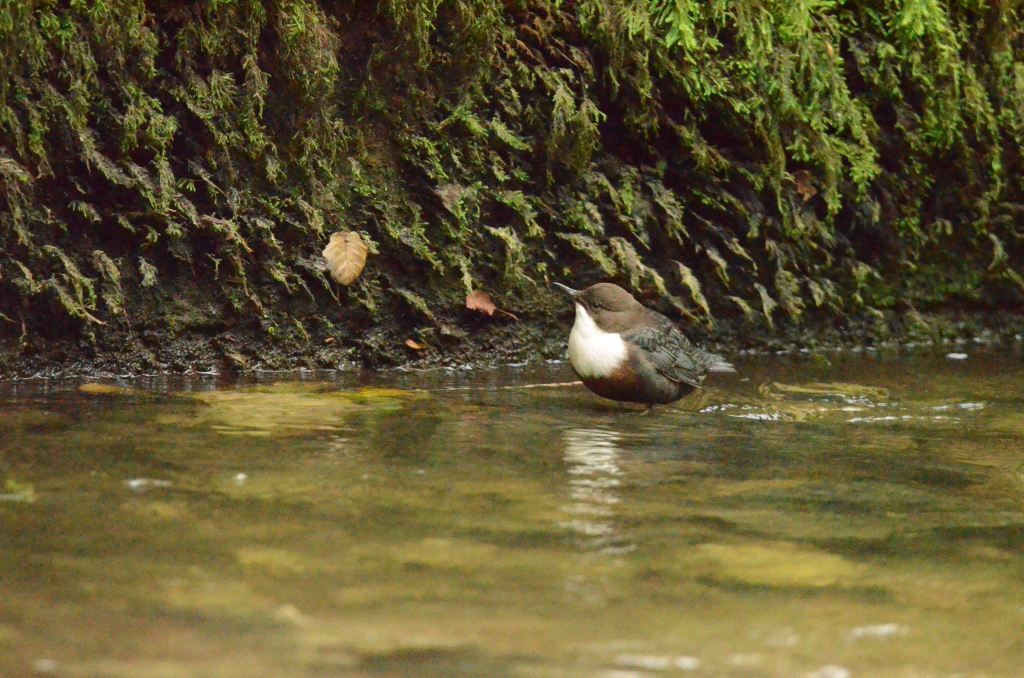
    We pressed on through the woods always with an eye on the river. Our patience and peering paid off as very soon we saw a brown blur approach from the far bank and land in the water, half-submerging itself. Yes, this was a White-throated Dipper.

    Pleasantly plump Dipper
    Dipper facing upstream

    White throated Dipper

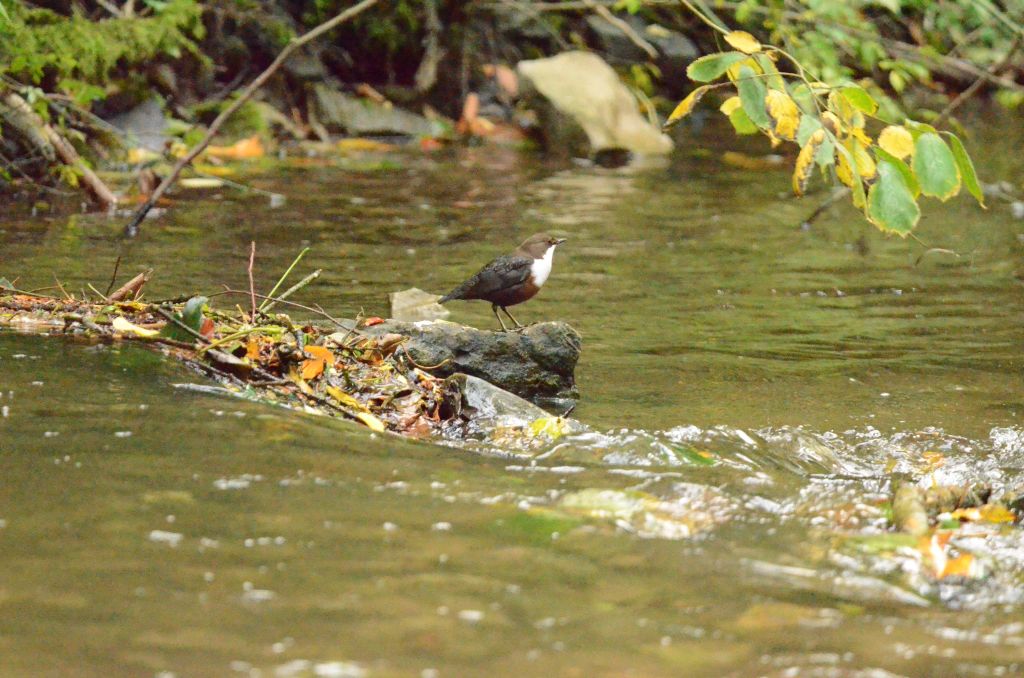
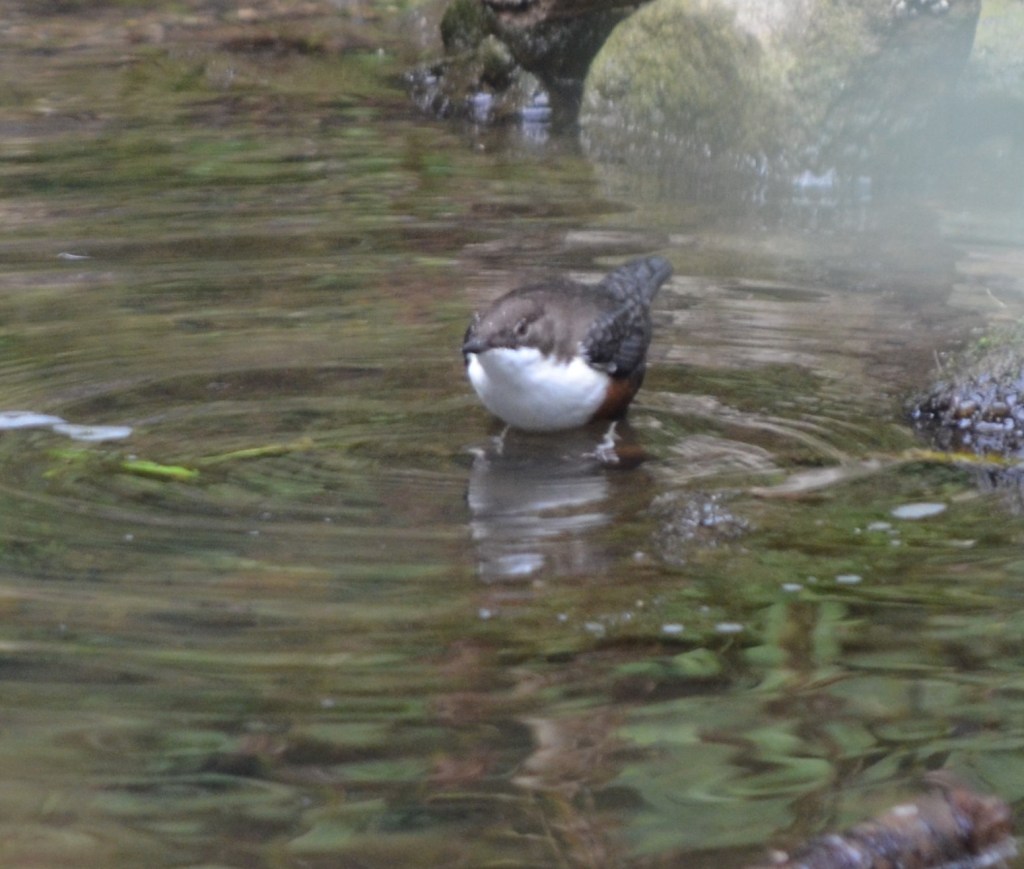
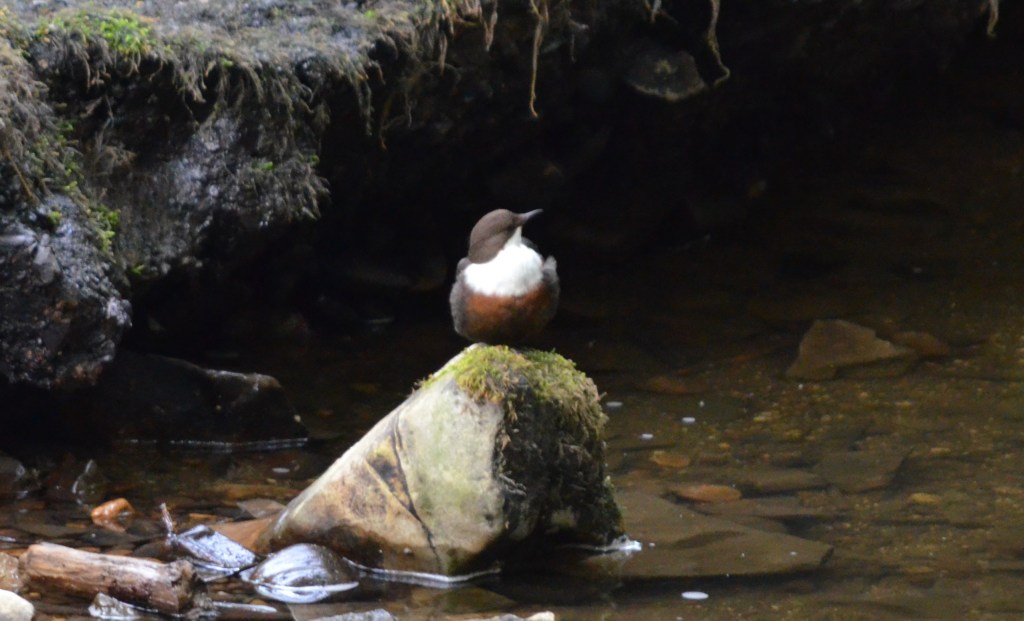
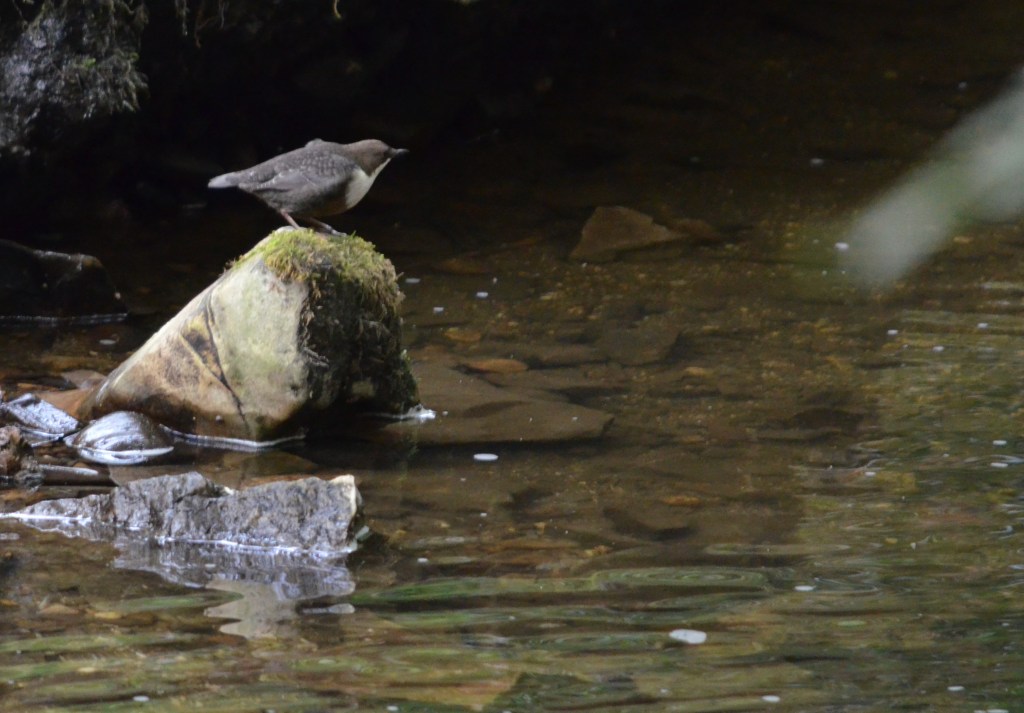
    The bird shifted to a small rock to the side of a naturally formed weir and began its comical, characteristic bobbing. It’s apparently this action that gives the bird its name, as it ‘dips’ up and down: and there was I thinking it earned its name because it enjoyed dipping itself underwater! Trying to identify the sex of a Dipper is very difficult as there is little to distinguish between males and females. On the whole, though, males are larger: looking at this one (and we’re sure that it was the same Dipper that we saw put in a couple of separate appearances), I’d say it was male.   

    Dipper mid-stream

    There are a couple of photographs where Stu caught the Dipper with its eyes closed as it was blinking: you can see the white feathers of the eyelids contrast strikingly with its brown head and face.

    Dipper eyes closed
    Dipper eyes closed 2

    We watched the Dipper plunge into the water in search of food, which it did tirelessly again and again – in fact, you can see in one of the photographs that it has caught something in its beak. Dippers have a taste for the larvae of Caddisfly but will eat aquatic insects and worms, crustaceans and even small fish, although I can’t identify this particular appetiser here.

    Dipper inspecting

       The pleasantly plump Dipper with its beak full

    While their solid appearance could be described as ‘pleasantly plump’, their squatness helps make them strong swimmers – they beat their wings rapidly both in and out of the water. Mesmerising. We were exceptionally lucky to have seen both a Grey wagtail and a Dipper along the same stretch of water on the same day.

    The important stuff

    While building work continues at Loggerheads, this doesn’t mean that travellers like us have to remain hungry and thirsty – oh no! You can get refreshments from The Mill House café (Tŷ’r Felin) next to the mill at the visitor centre, so we had our customary cappuccinos and Bakewell slices as we sat in the lee of the stone wall. Lovely!

  • Rain stops play

    (Sunday 7th September, 2025)

        We were at Loggerheads Country Park this morning and, although it was overcast, it was a reasonably mild 18°C, with a light south-westerly wind which was barely perceptible in the shelter of the woods. As we crossed the little bridge to the Leete path, we glimpsed a Dipper scooting upstream. We’ve seen them before along this stretch, but this was to be our only sighting today.[1]

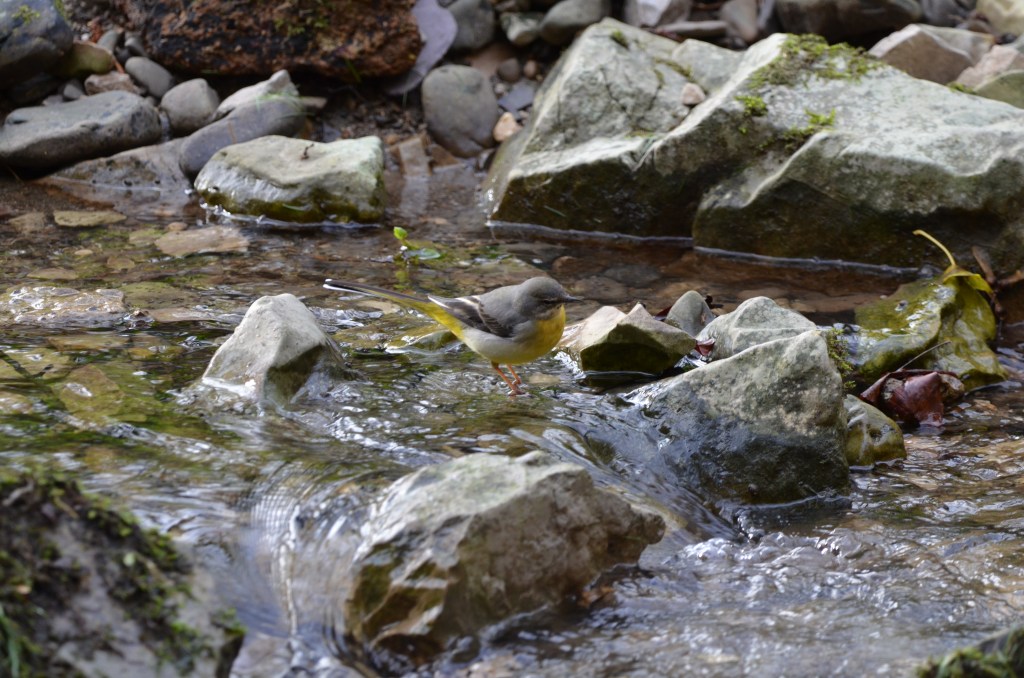
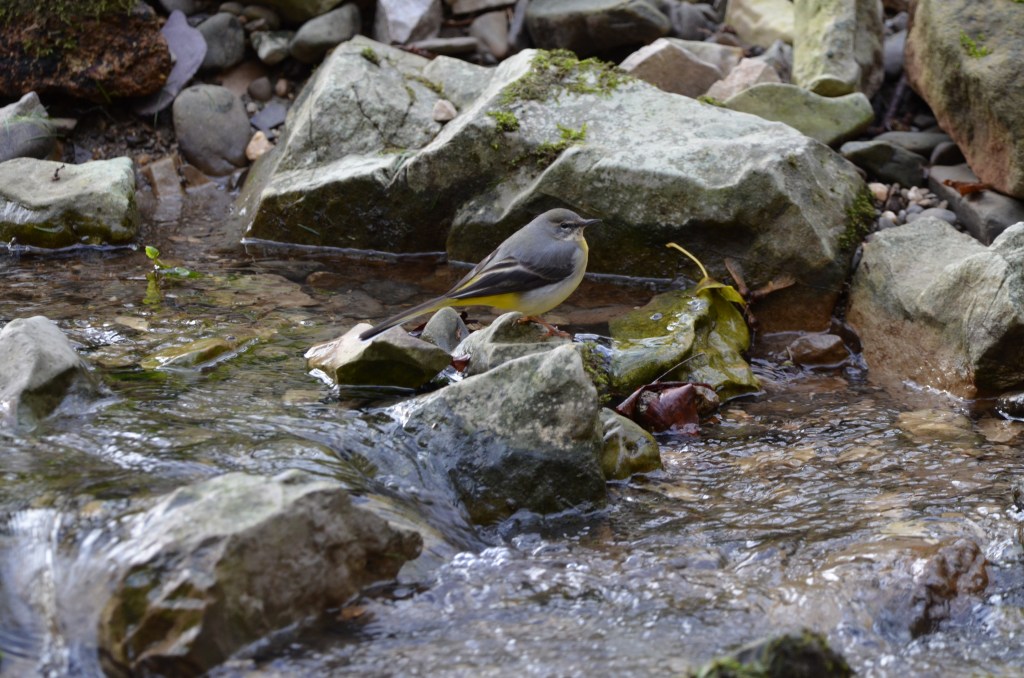
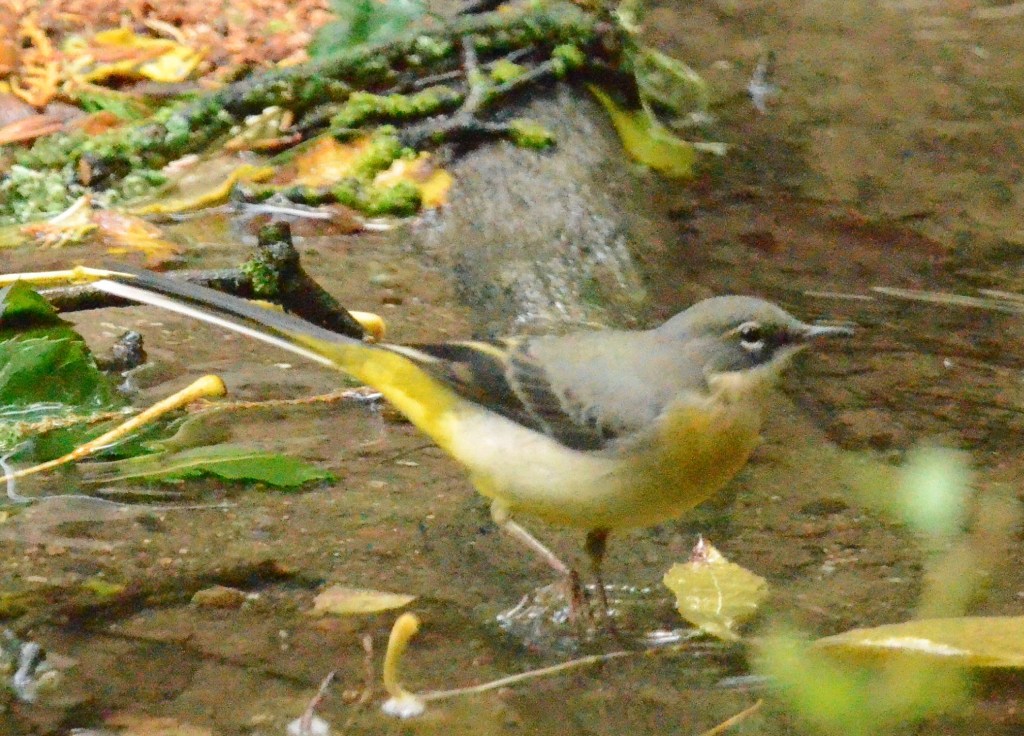
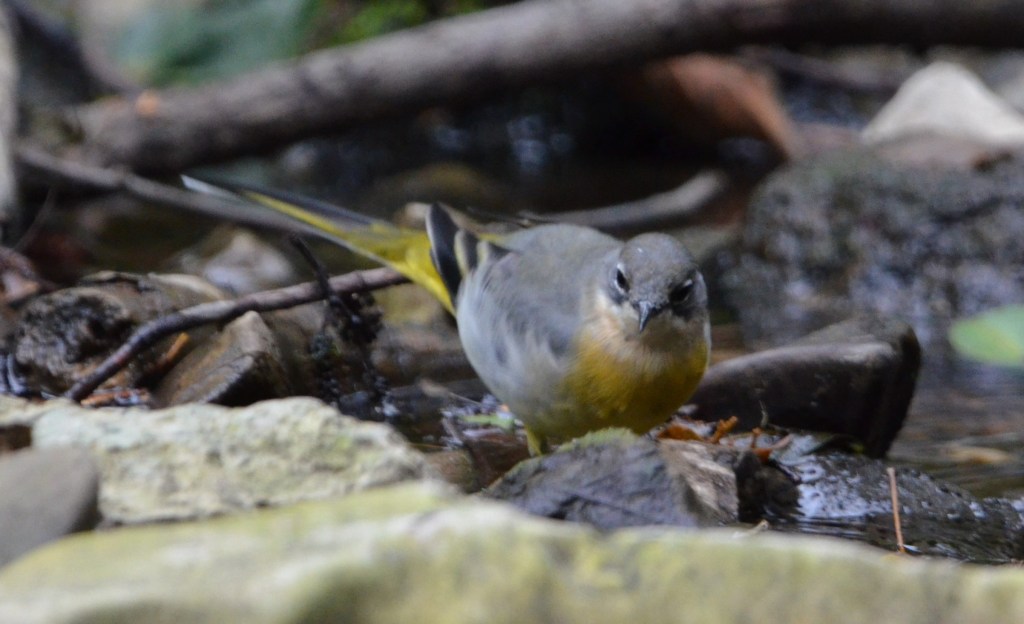
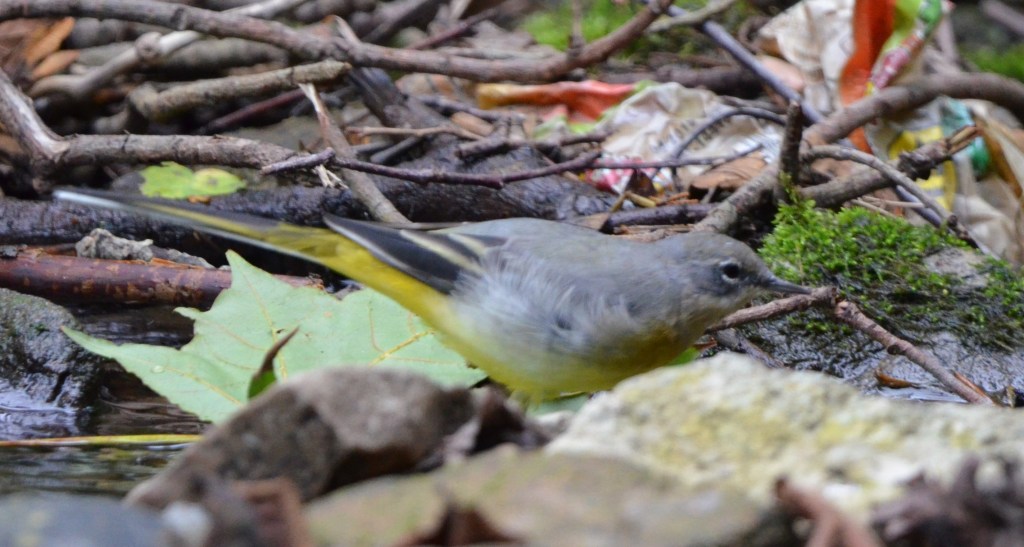
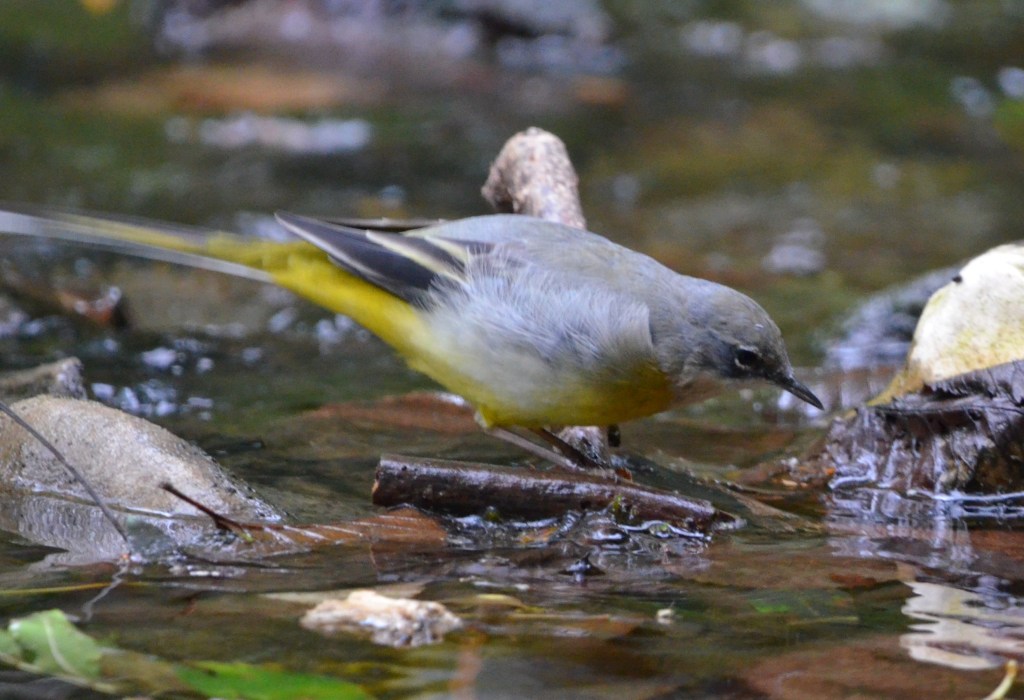
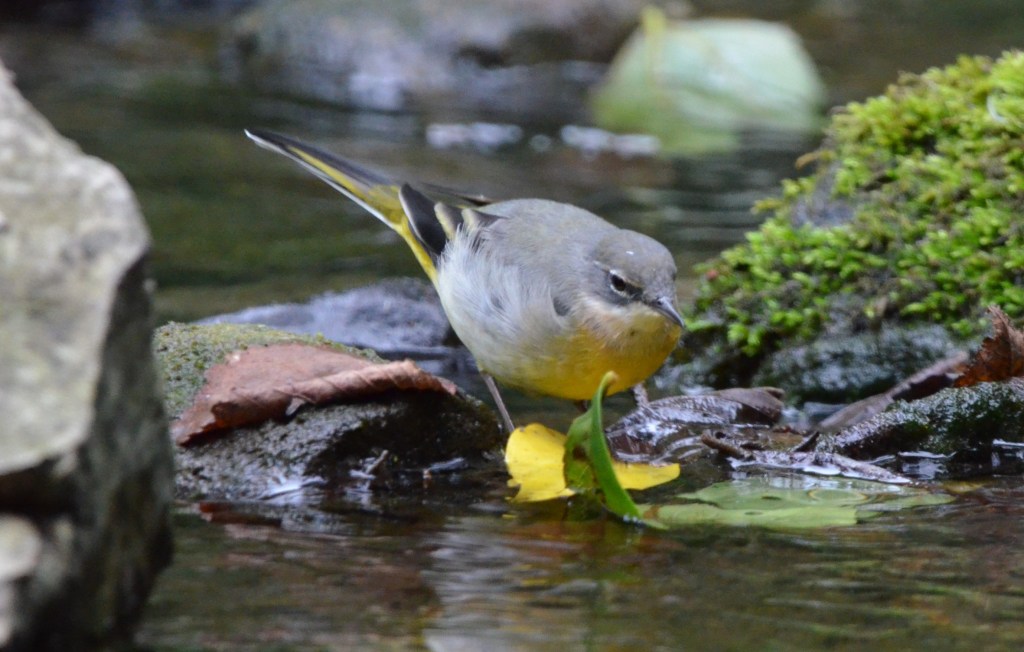
        We followed the Leete a short way, while scanning the riverside, each of us hoping to catch another sighting of the Dipper. I detected a little movement as I trailed my binoculars slowly over the landscape – or riverscape to be more accurate. Looking again, I saw that the movement was the long, see-sawing tail belonging to a Grey wagtail, which was perched on a rock as it scanned the water for food. This one was either a female or a juvenile as it lacked the distinctive black bib that males display during the summer (and I’m classing this as summer, or summer’s end, despite it being meteorological autumn). The grey, white, black, and lemony yellow form a lovely combination as you can see.

    Grey wagtail facing
    Grey wagtail side view

        Seen close-up, the Grey wagtail does strike you as being more colourful than its dullish-sounding name suggests, particularly in its underside feathers, and people often mistake it for the Yellow wagtail: the ‘Grey’ of its name refers to its grey back. The Yellow wagtail has an olive-green back and is much more yellow overall. Habitat is often a giveaway when trying to establish species, and Grey wagtails and Yellow wagtails differ from each other quite markedly in this respect. Grey wagtails are usually to be found near running water, where they can hunt for food, whereas Yellow wagtails prefer open fields and meadows, especially favouring ground that’s been disturbed by livestock, such as cattle or sheep, as this means that the birds can easily graze on the worms and grubs that are revealed as a result.

    Grey wagtail side view 2
    Grey wagtail and leaves

        We have seen Grey wagtails along the River Alyn here many times over the years and we’re fairly confident that they build their nests in the nearby cliffs that overlook the river. We were also lucky enough to see a family of Yellow wagtails quite recently in a cow field, happily scrabbling around the feet of their much larger bovine companions.[2]

    There was a little more water – or slightly less exposed river-bed – than the last time we were here. The river still disappears, but now just that little bit further downstream. However, there is still evidently enough food – aquatic and aerial – to satisfy the Dippers and Grey wagtails that share this short stretch of the Alyn. As the title of today’s post suggests we beat a hasty retreat after only an hour-and-a-half or so. The rain came down heavily and, within seconds, the ground became saturated and we were a little bit soggy ourselves.

    The important stuff

    Sadly, Caffi Florence closed its doors recently, which is such a shame. The staff were wonderful and obviously we have many happy memories. Today, though, we had to go elsewhere for our coffee and cakes and we decided on Daleside Garden Centre in Hawarden (yes, I know, it’s officially ‘Klondyke Strikes’, but we all still refer to it as ‘Daleside’). Anyway, the cappuccinos were accompanied by an Eton Mess slice (Stu) and a Raspberry Meringue (Col). Very nice!


    [1] Morning Dippers, Sunday 24th August, 2025

    [2] Bittersweet Memories, Sunday 3rd August, 2025

  • Morning Dippers

    (Sunday 24th August, 2025)


    Dipper facing

    Over to Loggerheads Country Park this still, warm morning (21°C), where we saw a pair of Dippers. As I’ve stated previously, the River Alyn disappears from the surface a short way downstream from the picnic area, but continues to flow underground.[1] Upstream, however, the water still flows sufficiently enough to attract the White-throated dippers, more commonly referred to as just Dippers. These plump, short-tailed birds are very distinctive: mature Dippers have a black back, dark brown wings and tail, and chestnut head and belly, with a completely contrasting white throat and bib. It’s very difficult to tell the sexes apart, although we suspect that these two were a pair, each patrolling overlapping stretches of the river.

    Dipper 2

    Watching them perform their up-and-down bobbing on rocks surrounded by water was fascinating: frankly, it was comical! One of the Dippers submerged itself in the water, presumably seeking food, although I missed this as I was watching its mate further downstream.

    Dipper 3

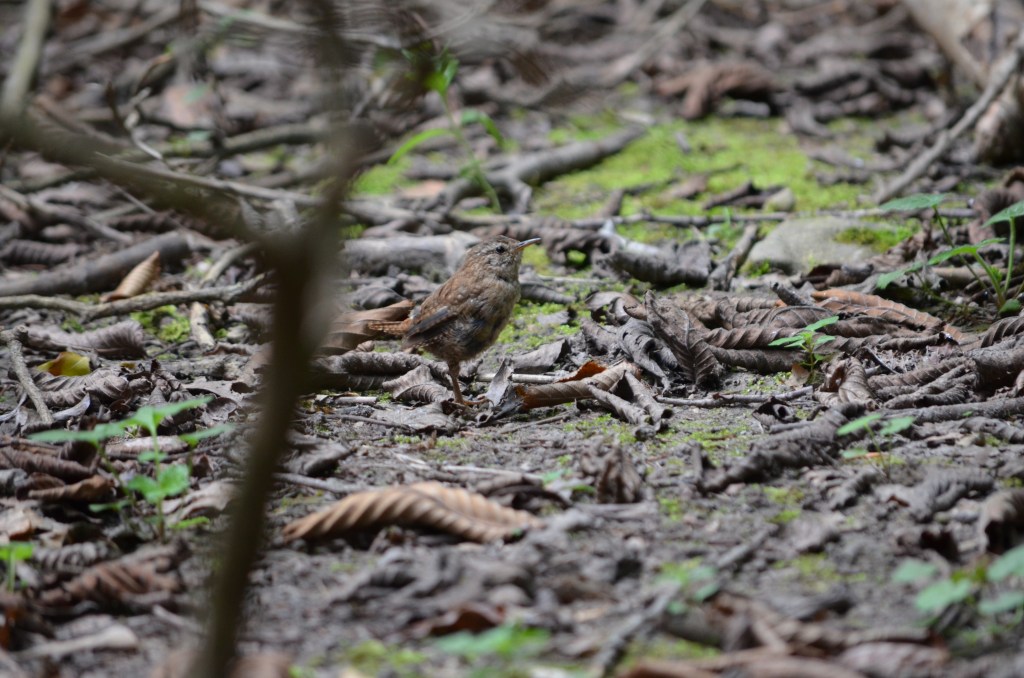
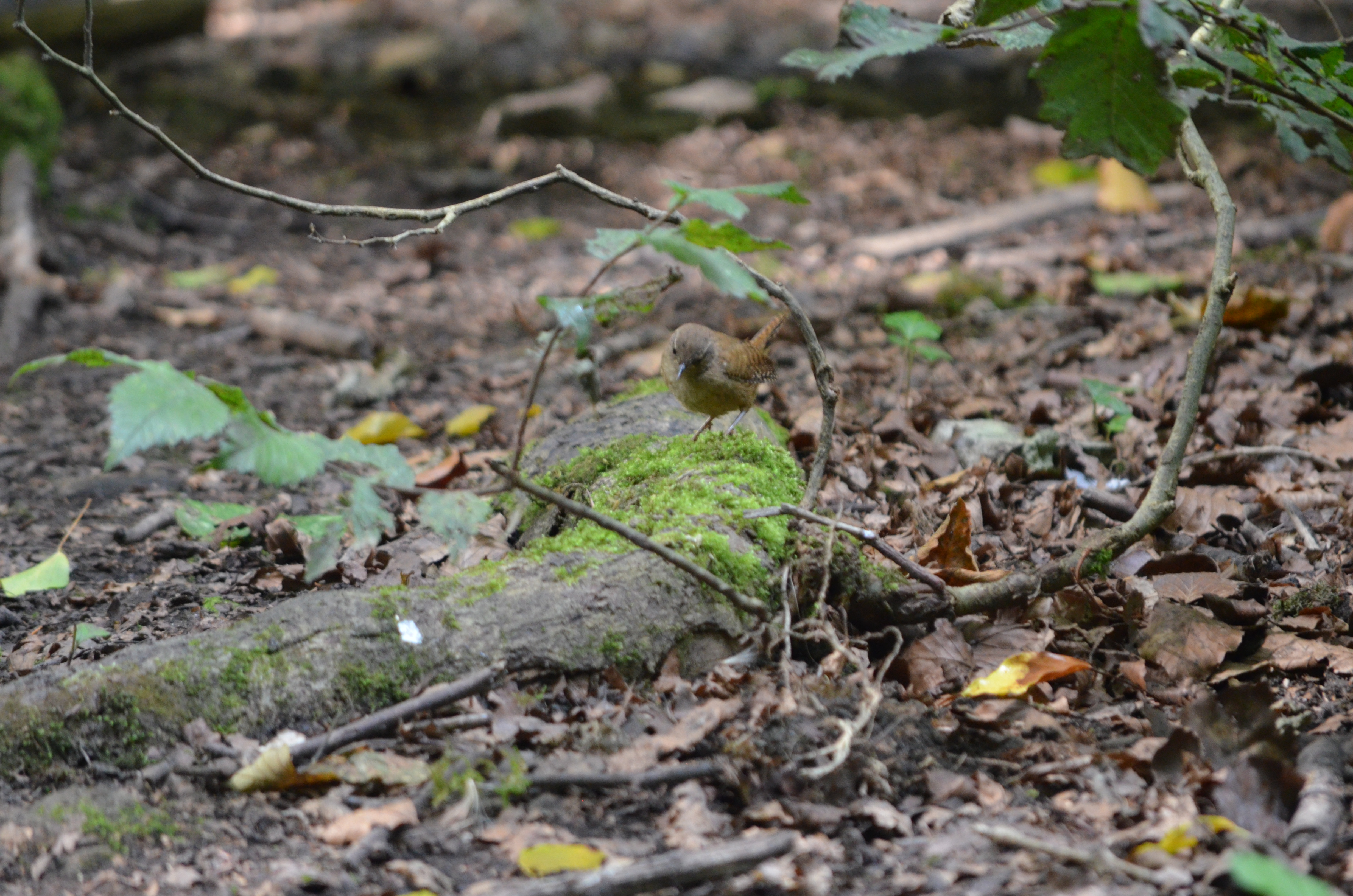
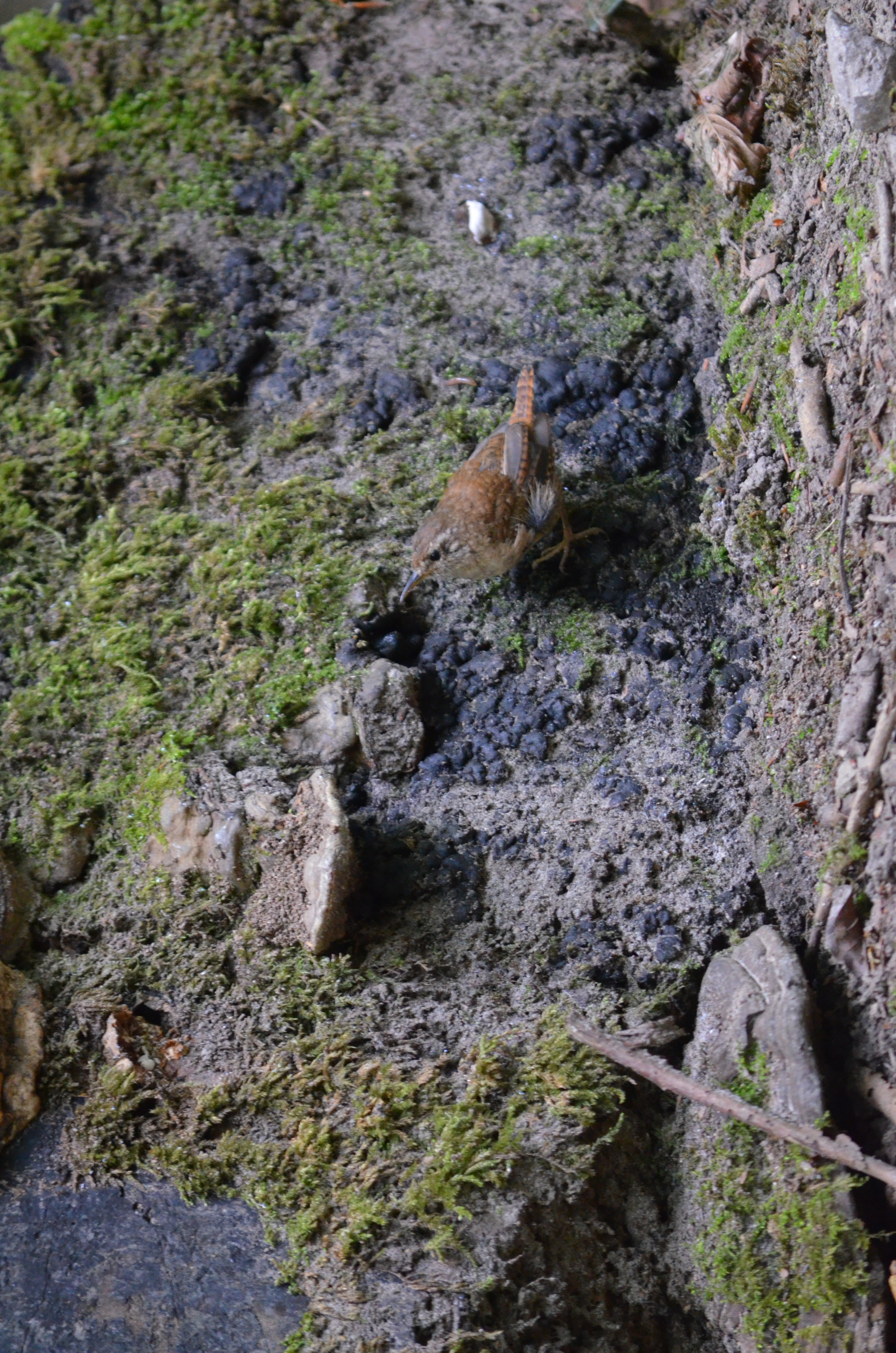
    Wandering further down the Leete path, we saw several piled logs, which were presumably laid down deliberately to attract insects. A Wren seemed to be making the most of the grubs and larvae, skipping quickly along the rotting branches and in the undergrowth.

    Wren 3

    Male and female Wrens look very similar, so we’re not sure which sex this was, but what a lovely bird. The Wren is rotund (not unlike the Dipper) and brown, but with very distinctive markings: note the brown and white barring on the wings and the short tail, which is often held erect. At one point, a Robin appeared nearby, probably guarding its territory from the Wren’s incursion, though I’m pleased to say that there was no squabbling!


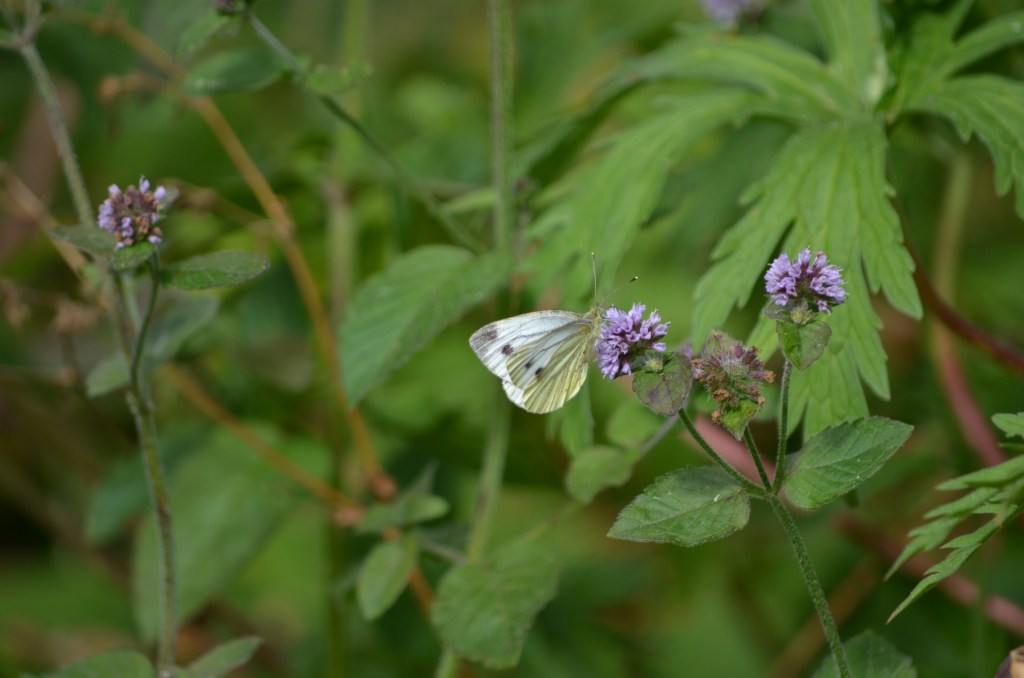
    We sat at the benches which are a little further along the path, where we saw several Small white butterflies collecting nectar from the numerous Great willowherb flowers in the woods. As we returned to the picnic area, through the tree canopy we saw a Common buzzard floating high above the cliffs – we’d heard its high-pitched mewling before we saw it. At the wild garden, a (female) Green-veined white butterfly posed for the camera – the females usually have two spots on their cream-coloured forewings.

    Green-veined white

    The important stuff

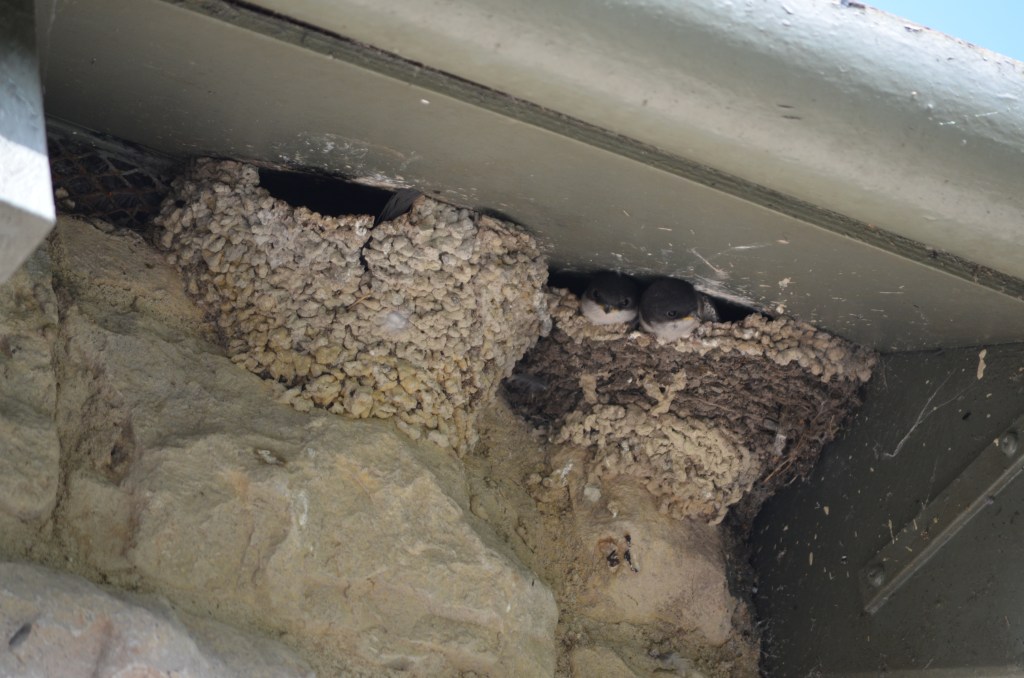
    After the morning’s exhaustions, we were in dire need of nourishment so, luckily for us, the café – Caffi Florence – was handily situated nearby. Customary cappuccinos were accompanied by a Strawberry and Almond slice (Col), and Coffee and Walnut cake (Stu). Suitably fortified, we were heading back to the car when we noticed a pair of House martins darting in and out from under the roof of the end building. We looked up and saw two well-constructed nests, although only one appeared to be in use. Stu pointed his camera lens upwards and got a couple of shots of the chicks that the parent birds were delivering food to.

    House martin chicks 2

    [1] See The River Vanishes, Sunday 27th July

  • The River Vanishes

    (Sunday 27th July, 2025)

        We were at Loggerheads Country Park on what turned out to be quite a dullish day. Apart from a single Common crow, the park was absent of any avian sightings. In fact, there wasn’t any birdsong during the morning, which leads me to suspect that ‘moulting season’ has begun, which is when birds renew their feathers. Even if a bird is only partially shedding feathers, it’s flying ability can still be hampered, leaving it vulnerable to predators, so it won’t want to attract attention by making any noise while waiting for its new feathers to grow. It does seem unusual that every bird would moult at the same time, so perhaps they were all having a lazy day in the nest watching (muted) telly. Anyway, it was quiet.

        A contributory factor to the silence of the woods was the River Alyn which seemed to abruptly stop flowing just beyond the wooden bridge. No water, no insects – aquatic or aerial – and so no birds. We have witnessed this before[1] and it is peculiar to this area: the riverbed is limestone and has a lot of ‘swallow holes,’ and underground caves into which the water pours. From as far back as medieval times the area was being mined for lead, although the amount extracted greatly increased during the 1700s: the Leete Path takes its name from the artificial water course – or ‘leat’ (also spelled ‘leet’ or ‘lete’) which originally conducted water from the Alyn to the waterwheels that were used to power the mining machinery. During prolonged dry spells and high temperatures the Alyn appears to, well, disappear. It does resurface, so to speak, further downstream, ultimately discharging into the Dee Estuary near Bagillt. I highly recommend the Afonydd Cymru website, which has some fascinating information on the rivers of Wales, including the River Alyn:  https://afonyddcymru.org

    The important stuff

    After a while, we realised that it wasn’t just the Alyn’s riverbed that was dry, and we proceeded to Caffi Florence where we indulged in our usual cappuccinos and cakes. I had Orange Drizzle cake and Stu had a Chocolate Brownie. Lovely!


    [1] See Along the Leete 14th April, 2024

  • A hot day at Burton Mere

    (Sunday 13th July, 2025)

        I went across to Burton Mere Wetlands today. It was a hot 28°C but slightly cooler than yesterday’s 32°C. Naturally, there were lots of birds at the Wetlands including Canada geese, Greylag geese, Mallards, Moorhens, Shovellers, Shelducks, Black-headed gulls and Avocets. There were also a few Black-tailed godwits and lots of Knots at the Scrape, and both species were in their stunning brick-red summer attire; and from the Border hide I saw what looked like several hundred Lapwings.

        I’m certain I missed many more bird species: I have to admit that my attention was more focussed on the number and variety of butterflies on display. Because the butterfly number was so low in the UK last year, it’s been very comforting to see how much more numerous they are this year. Today at the wetlands there were Small whites, Large whites, Red admirals, Speckled woods, Small tortoiseshells, Commas, and Meadow browns.

        All of these moths and butterflies – and various bees, hoverflies and other insects – are drawn to the various plants of the marshland. The Meadowsweet is a lovely, creamy colour and smells wonderful (well, it’s there in its name of course); and Tufted vetch is particularly abundant at present. There is clover – both red, and white – and Red campion as well as many, many more wildflowers and plants that play their part in attracting these pollinators. In fact, visitors (adults and children) are encouraged to look and see what’s around them.

        I noticed several large, light-brown mushrooms at the base of a dead tree just off one of the paths. For all that I’m a fun guy, I know very little about fungi (oh dear…!) so I had to look these up later. The mushrooms are known as ‘Dryad’s saddle’ which is a name that relates to supernatural beings from Ancient Greek mythology. I imagined these dryads (tree-nymphs) resting while taking a break from their usual activities, which are essentially dedicated to protecting the tree or trees in their charge. As you can see, the mushrooms grow one above another almost in ladder form, and I imagined the tree-nymphs had scampered up them to conceal themselves at my approach. It obviously worked because I didn’t see any at all that day!

        The visitor’s centre has a couple of whiteboards on which the current day’s sightings and the previous day’s sightings are listed. This is not just confined to birds, but also butterflies, moths, and plants and wildflowers. I think this is a great idea: inevitably, you miss things, so it’s good to check the boards. Not so much to see what you’ve missed, but more to give you an idea of the variety of flora and fauna that’s around you, just waiting for you to discover on your next visit. I’d seen a couple of Common blue damselflies and one Brown hawker dragonfly as I headed back from the Border hide, but only back at the visitor centre did I learn that the Five-spot burnet moth inhabited the area. And I only learnt this because somebody listed it on the whiteboard. Now I know, of course, you can guarantee that I’ll never see one here!   

    The important stuff

    I went to the café and had a lovely cup of tea and a slice of Sour Cherry and Pistachio cake, which left me fully restored after the morning’s exertions in the sun. Lovely!

  • Singing in the Rain

    (Sunday 10th March 2024)

        At Loggerheads Country Park this morning with Stu, in constant rain. As we walked down the left bank of the river towards the wooden bridge, there was a flash of yellow as a bird swooped in front of us: sure enough a grey wagtail had crossed our path. It bobbed its tail for us for a moment or two before departing. We crossed over and began our walk along the muddy Leete path. As we entered the wood just beyond the kennels, we heard a song thrush. Through my binoculars we could see him on top of a conifer singing joyously, impervious to the relentless rain. He sang a musical phrase and repeated it a couple of times, then selected another phrase from his varied repertoire, repeated that a couple of times and so on.  

        We continued along the increasingly soggy path, encountering blackbirds and robins on the way. After another two miles, we decided to turn back – the path was just getting more muddy and watery. Re-approaching the kennels, we were amazed to hear the song thrush was still there perched on top of his conifer and still happily singing!  I have read that song thrushes are happy when it rains as there are more worms wriggling their way to the surface to escape the water, but surely they would be on the ground tucking in? The Mistle Thrush is the thrush that has the reputation for singing from the treetops in bad weather – in fact, it has also been known by the name of Storm Cock due to this habit. But this was a song thrush that we saw and heard. Perhaps it’s something that runs in the family!

  • Along the Leete

    (Sunday 14th April, 2024)

            Stu and I were at Loggerheads this morning. ‘But they get on so well together!’ I hear you say. So, to avoid any misunderstanding, we were both at Loggerheads Country Park in Denbighshire, which is a popular wooded area through which the river Alyn flows. (Actually, when I say flow…well, I will come back to that later).

    It was virtually mud-free on the path now, and: in fact, this was the first time we walked the full length of the Leete for quite some time. It was a refreshing change to not get bogged down!

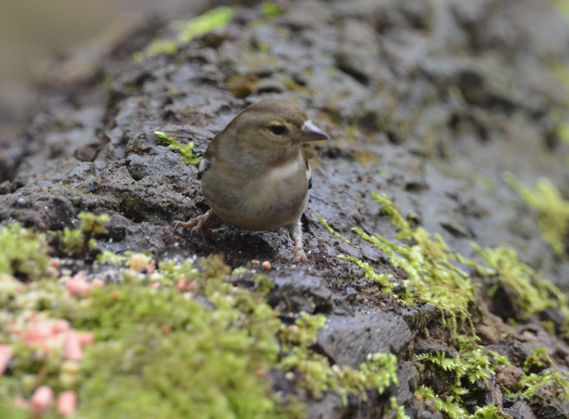
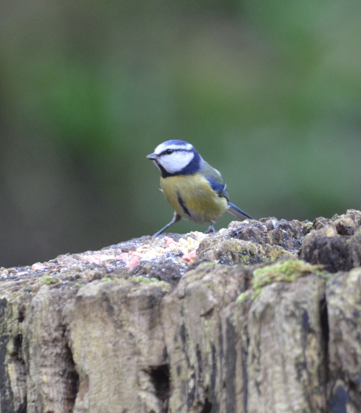
        We saw blue tits, great tits, robins, blackbirds and what Stu thought was a chaffinch, and what I thought was a stonechat – I was convinced the bird had a black head but it only appeared fleetingly so its identity will remain forever unknown. The forest floor was bedecked with a range of flowering plants: there were creamy-yellow primroses, bluebells, dandelions, daisies, wood violets, celandines, campion, and the odd residual clump of daffodils. We also spotted a single group of wood anemones on the far bank before crossing the bridge to join the Leete path. Colour was everywhere and such a contrast to earlier visits in the year when, apart from the few conifers, everything was a dull and neutral shade.

        Towards the end of the Leete path at the Cilcain end, we saw that many of the trees had been coppiced. Not only does this allow in more light due to the clearing of the canopy, but it also opens up the views down to the valley floor and across to Moel Famau and the Clwydian range. Coppicing is carried out regularly to encourage plant and tree growth and sustainability.

        Today the river Alyn was in full spate. As I intimated at the beginning, the Alyn’s water flow is not always constant and can vary considerably; this being most noticeable during prolonged dry weather spells, when the level drops and the bed runs dry particularly at the far end of the Leete Path. ‘Leat’ (also spelled ‘lete’ and ‘leet’) is defined in the Merriam-Webster dictionary as ‘an artificial water trench leading to or from a mill’, and there is indeed an old mill by the Visitor Centre which was a corn mill and later a sawmill in its working life. River levels drop of course, but the Alyn also flows underground quite extensively at certain points because of natural gaps in the limestone bed which swallows a lot of the water, much of which is also carried into an underground cave system to the north of the park. Often, as you travel the Leete path in a north-westerly direction, the bare stones of the riverbed are the only markers of the river. I must point out though that this is mainly during prolonged dry spells, and when the temperature has risen.