Month: September 2026

  • At Mostyn Shore

    (Sunday 20th September, 2026)

    Down to the Dee Estuary at Mostyn in Flintshire this morning. Although it was pleasant in the sun, the 16°C temperature meant it felt quite autumnal, especially when the wind (WNW) sent through odd blasts of cold air.

        We followed the path from the back of Abakhan, scanning the fields and the irrigation ditch on our left but the birds were being sensible and staying out of the wind.
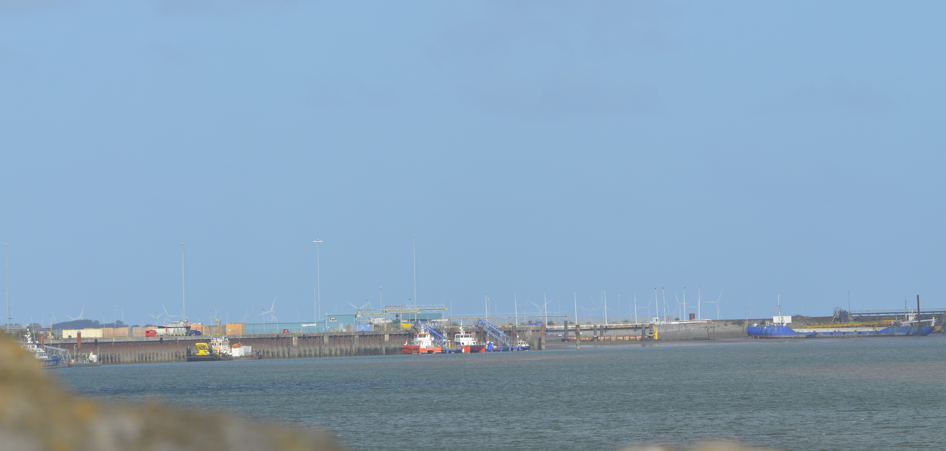
    Mostyn Docks

    Mostyn Docks

        Thankfully, the wind died down once we reached the road that runs alongside the estuary. The sound of Oystercatchers reached us from the middle of the river, where a multitude of them were feeding on a narrow sandspit revealed by the receding tide. At the opposite end of the spit was a large mixed flock of  birds. The estuary here spans about 4 or 5 miles (6-8 km) and, even though we were only looking halfway across it, most of the birds appeared indistinct through binoculars.
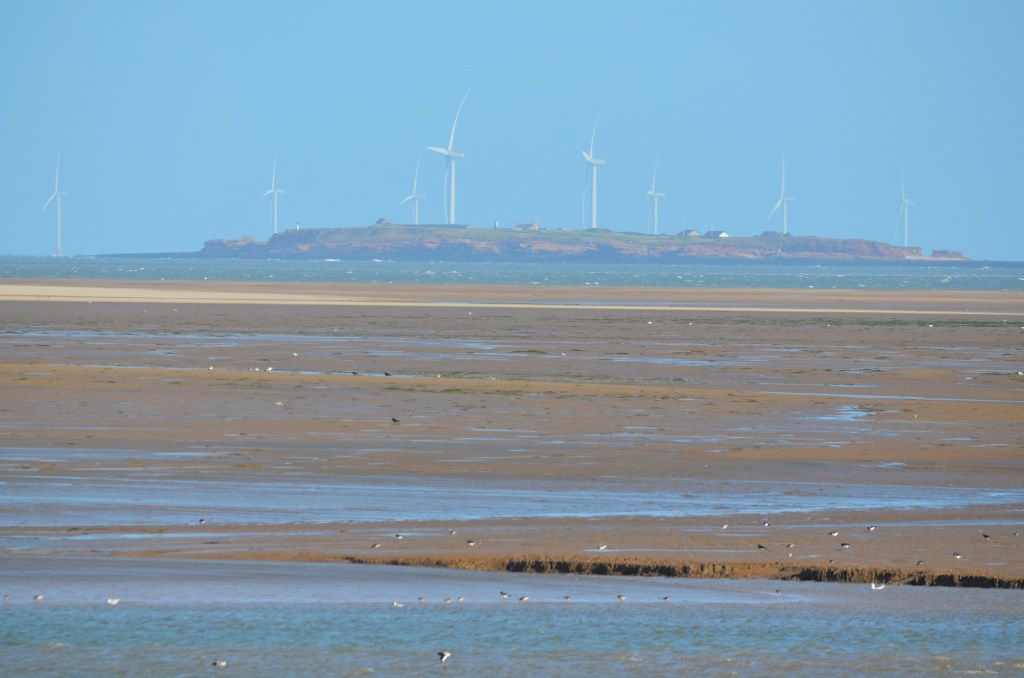
    Hilbre
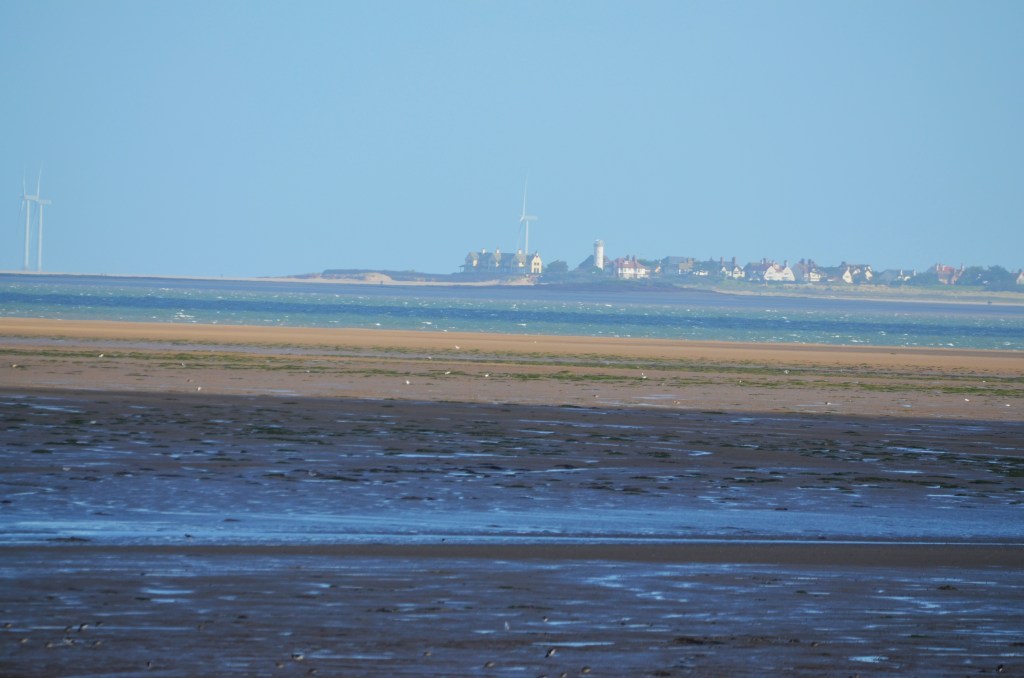
    Hoylake from Mostyn

    Top: Hilbre Island at the mouth of the Dee estuary; bottom: Hoylake viewed from Mostyn – the white ‘lighthouse’ you can see in the middle is actually part of a house

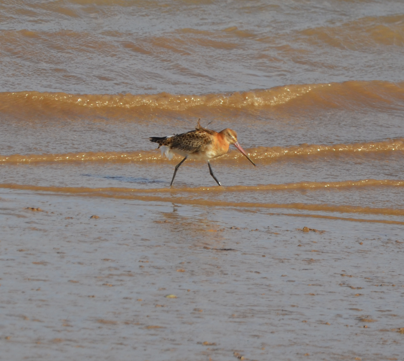
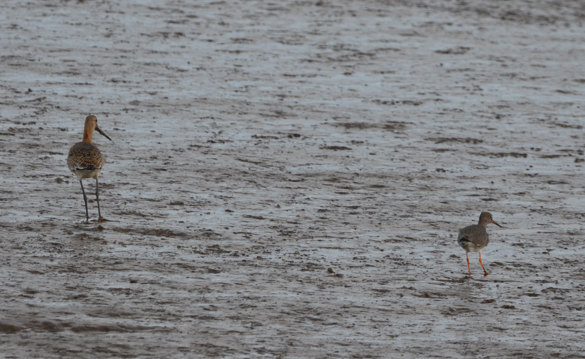
        We waited patiently and eventually several birds flew in and landed on the Mostyn shore near to us and began feeding. A Redshank (Tringa totanus) was feeding along a stretch of shoreline by itself. This part of the beach must have provided rich pickings as it was soon joined by a Black-tailed godwit (Limosa limosa) that began combing the same area. (Black-tailed godwits and Redshanks have different length beaks, which means that they don’t feed at the same depths of water, sand or mud, so they don’t actually compete with each other for food).
    Redshank and Godwit

    Black-tailed godwit (left) and Redshank (right)

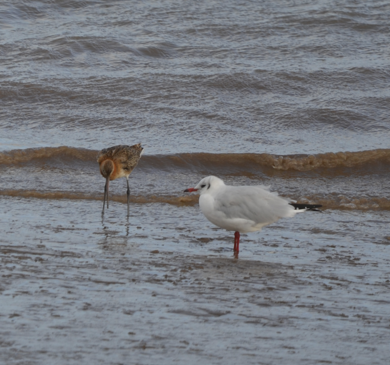
        Likewise, Black-headed gulls (Chroicocephalus ridibundus) will happily feed on the same stretch of sand as Black-tailed godwits. However, Black-headed gulls (like most gulls, I suppose) also have the habit of pinching food if the opportunity presents itself: they will sneak in and try to grab any morsels brought to the surface by the godwits’ probing. You can see in the photograph below that the godwit is alert to the presence of the gull and is making sure it doesn’t get too close!
    BHG and Godwit Mostyn

    Black-tailed godwit and Black-headed gull

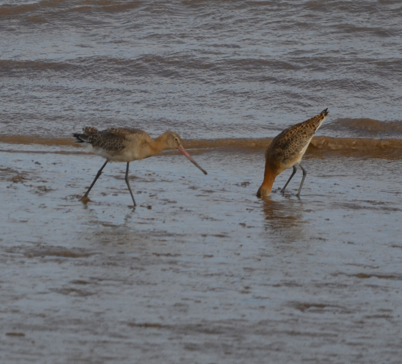
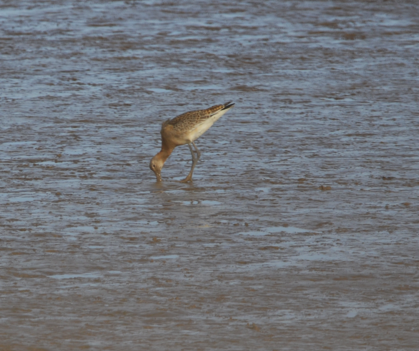
        The godwits were still in their summer plumage, a vibrant brick-red that covers neck and breast, although this will soon be gone. It’s probable that these birds had travelled from Iceland. Many will stay in the United Kingdom for winter while others might just be taking a breather before carrying on to winter elsewhere, in places such as Ireland, France or Portugal. Black-tailed godwit pairs mate for life but often winter in separate countries, only meeting up again at their breeding grounds in Iceland in the spring.
    Godwit pair
    Godwit solo
    Godwit solo red

    The godwits still had their vibrant brick-red summer plumage although – as you can see in the bottom photograph – they are beginning to moult

        We saw a lone Curlew (Numenius arquata) foraging at the water’s edge. These birds have declined in number over recent years and they are now on the UK Red List, signifying those birds most urgently requiring conservation action. The Curlew is a magnificent bird with a very distinctive call and, despite the drop in population, there is still the odd sighting on both the Welsh and English sides of the Dee Estuary.
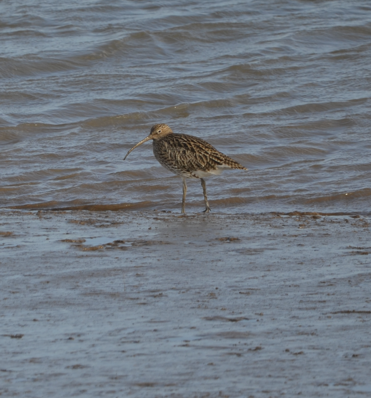
    Curlew at Mostyn

    Curlew

        As we turned to make our way back, a flock of Canadian geese (Branta canadensis) flew over in formation, honking noisily as they made their way towards the Wirral.   
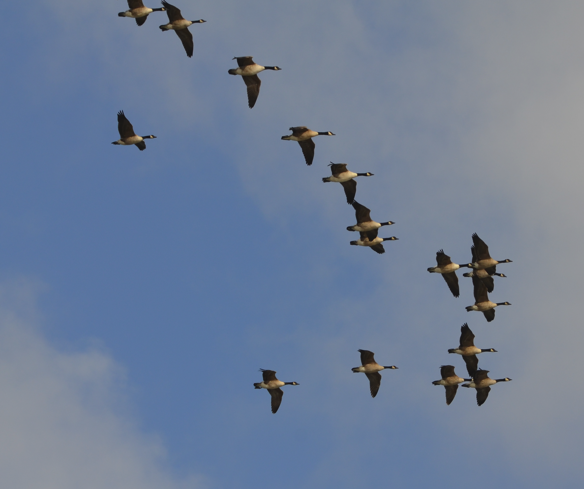
    Geese at Mostyn

    Canadian geese

    The important stuff.

    We called in at the café at Abakhan for our cappuccinos and cakes – Coffee and Walnut (Stu) and Raspberry Bakewell (Col). Most enjoyable!
  • Roodee Mere

    (Sunday 13th September, 2026)

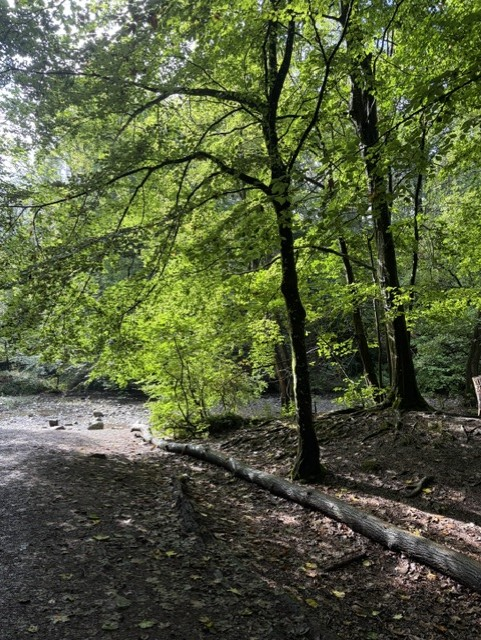
    Over to Royden Park on the Wirral this morning. It was a sunny 20°C with barely any wind as we made our way through the woods to Roodee Mere.

        Despite the recent rain that we’ve all experienced in the last few weeks, it seems that parts of the United Kingdom are still a long way off regaining their pre-heatwave water levels. Surprisingly, Wirral and Cheshire managed to avoid being placed in official drought status unlike many parts of England and North Wales (where, at the time of writing, it is still in place).

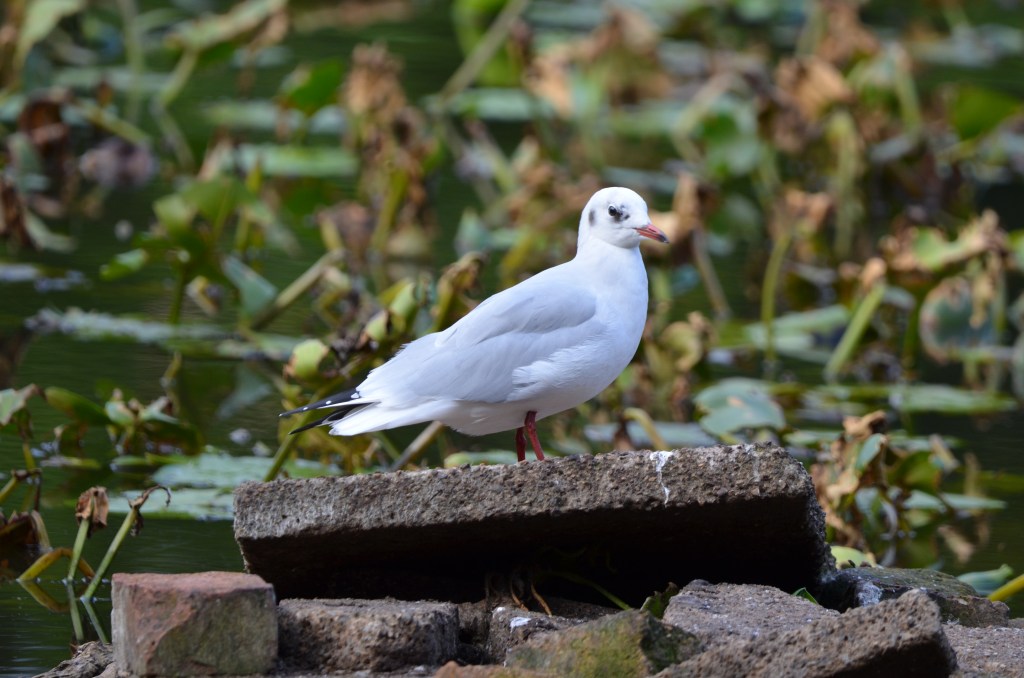
    BHG non breeding

    Black-headed gull perched on rock pile exposed by the low water level at Roodee Mere

        Even so, water levels are clearly very low, as indicated in the photograph. While previously, we’ve seen the Black-headed gull (Chroicocephalus ridibundus) perched on the same rocks in the mere, we’ve never seen the rock pile underneath as it’s usually submerged. (We’re fairly sure, by the way, that this is the same Black-headed gull we’ve seen here on recent occasions, although I suppose we have to be open to the possibility that it might be a different bird). The gull is in its non-breeding plumage, which means that the chocolate-brown hood (not black, despite the bird’s name!) has been replaced with just a smudge at the side of its head, behind the eye. Both male and female Black-headed gulls adopt identical breeding and non-breeding plumages so it’s very difficult to separate the sexes.

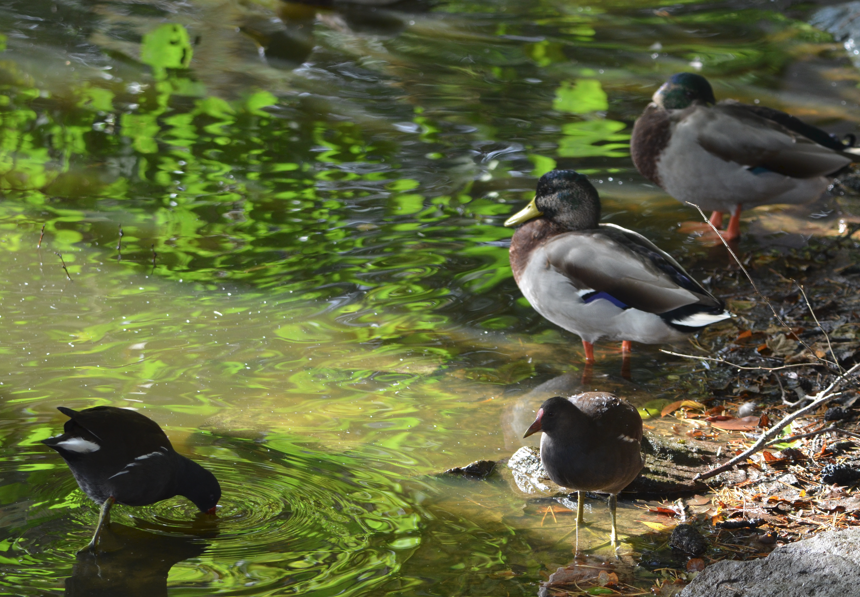
    Mallard water Roy
    More Roy

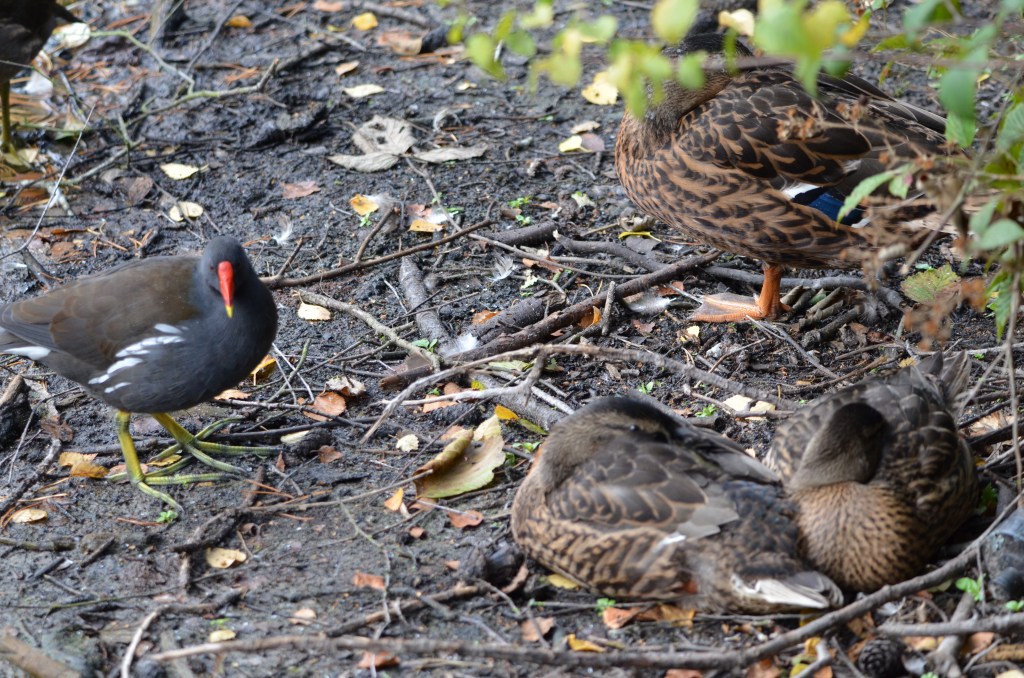
    Moorhens and Mallards enjoying the sun

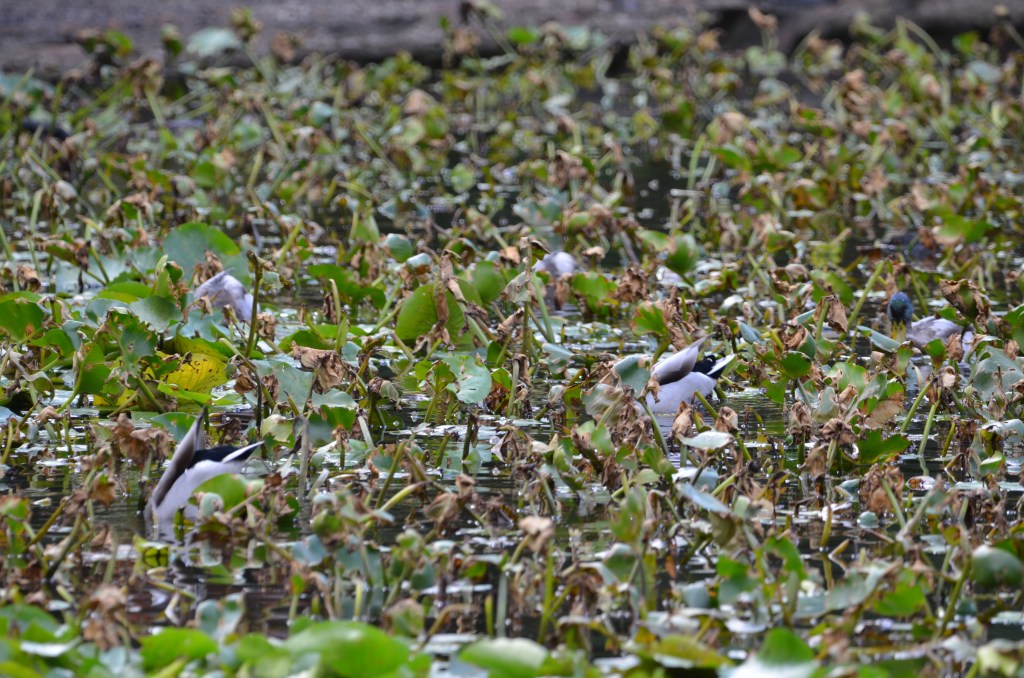
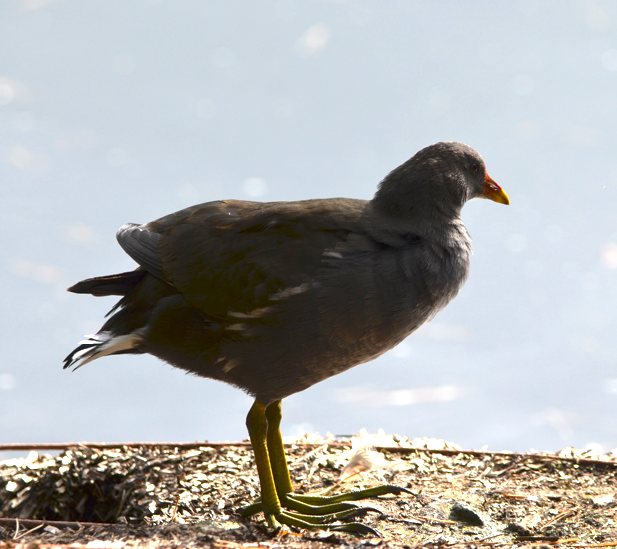
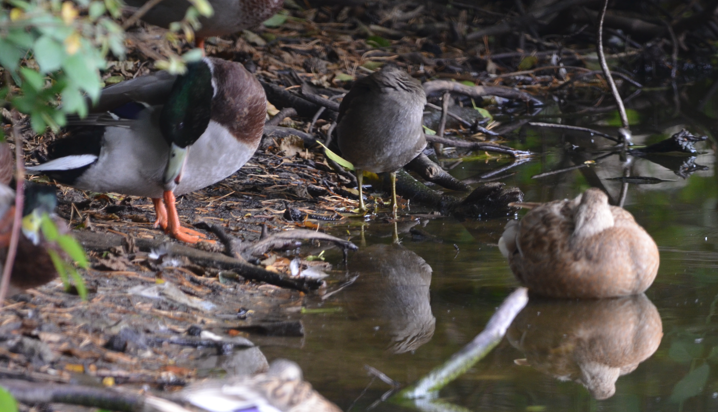
        There were a number of Mallards (Anas Platyrhynchos) and Moorhens (Gallinula Chloropus) on and around the mere. The Mallards had found an area of sunlight on the bank which they could bask in, with their heads tucked in under their feathers, although one or two males were dabbling out on the water amongst the lily pads. The Moorhens were a little more industrious, probing in the undergrowth and at the water’s edge for morsels to feed on.

    Dabbling Mallards
    Young Moorhen

    Top: Mallards showing their best sides as they dabble amongst the lily pads; bottom: juvenile Moorhen

        There was a commotion high up in the sycamore trees behind us as a flock of Long-tailed tits (Aegithalos caudatus) searched for insects and grubs to feed on. Looking through my binoculars, I could see some Blue tits (Cyanistes caeruleus) in the group as well. The two species often combine to feed in mixed flocks once the breeding season is over. The sudden flurry of activity was over very quickly, so no photographs unfortunately.

        Just afterwards, Stu alerted me to a Sparrowhawk (Accipiter Nisus) sitting in a tree quite near to us. As I looked for the branch that he was indicating, my movement was enough to scare away the bird and we watched as it swiftly retreated a little deeper into the woods out of view. Actually, we wondered if it was the presence of this Sparrowhawk that might have caused the mixed flock of Blue tits and Long-tailed tits to abruptly move on earlier as such a large number of birds would inevitably attract the attention of predators.

        We watched the Mallards for a while, enjoying the sun’s rays just like them, before sauntering off to the Courtyard Café for refreshments.

    Lethargic Mallards

    The important stuff

    A slice of Victoria Sponge (Col) and a Caramel Biscoff (Stu) to go with our cappuccinos. Very nice!

  • Water at Big Pool Wood

    (Sunday 6th September, 2026)

    A couple of changes at Big Pool Wood in Gronant, Flintshire, since we were last here only a month ago. First, there were several inches of water at the bottom of the pool – not much, considering all the rainfall we’ve had recently, but an improvement on last time, when the long dry spell had left just patches of mud. Second, sections of reeds had been cut back around the reserve. This work is carried out by the North Wales Wildlife Trust volunteers and is an essential part of maintaining the site.

        It was a nice 22°C when we arrived with a light south-easterly breeze blowing, though this was barely noticeable in the shelter of the woods. There was the odd shower at first, but the sun came out mid-morning and it became quite hot. Being the rock’n’roll rebels that we are, we went round anti-clockwise this time – well, all right, we just fancied a change!

    Immaculate Robin
    Wren big pool

    Top: An immaculate Robin and, bottom: a less than tidy Wren

        From the first hide, we watched a Wren (Troglodytes troglodytes) creeping about a holly tree. It looked a little unkempt, unless it was still moulting. By comparison, the Robin (Erithacus rubecula) was immaculate in its new feathers – clearly dressed to impress!

        Blue tits (Cyanistes caeruleus) and Great tits (Parus major) zipped in from the surrounding trees and help themselves from the feeders.

    Tit face-on
    Great tit big pool

    Top: Blue tits (‘who are you looking at?’); bottom: Great tit

    And we saw a family of Dunnocks (Prunella modularis) exploring the undergrowth. Initially, there was just the one adult bird, which was difficult to see: the Dunnock’s dull, streaky brown back feathers and grey chest and head were ideal camouflage against the backdrop of the reeds. But this bird became bolder later, encouraging the other three family members to come out from cover. This was an unusual sight – I don’t think we’ve ever seen more than one Dunnock at a time. A lovely bird.    

    Dunnock in reeds
    Dunnock on grate

    Top: Dunnock blending in with the reeds and; bottom: becoming a little bolder

        There were creatures other than birds about, including a Grey squirrel (Sciurus carolinensis) which tentatively approached the area of ground underneath the feeders, seeking spilled nuts and seeds. It retreated into the undergrowth as a Robin flew in, the sudden movement startling it. It soon returned though and even managed to pose for a photograph!

    Squirrel at big pool

    Grey squirrel showing its best side for the camera

        Once the squirrel had finally gone, a Brown rat (Rattus norvegicus) showed its face from a small hollow at the base of a nearby tree. The rat stayed there for quite some time sniffing the air, before eventually moving out along the ground. It shot back to its hidey-hole as the Robin suddenly returned. After the Robin had flown away again, the rat came out and moved across the ground once more, hurrying for a short distance to a sort of jetty – I think it was just a long-submerged plank of wood at the base of the pool. We’d both been thinking that the rat was after food dropped from the feeders but were surprised to see it head straight for the water and start drinking. It must have been very thirsty as it drank for several minutes.

    Rat at big pool

    Brown rat tentatively checking its surroundings before venturing out for a drink of water

        It’s an obvious observation, I suppose, but a water source does attract animals of all kinds. We saw several dragonflies flying around a different section of the pool (we were at a different hide now). One dragonfly in particular seemed to be zipping around chasing off other, smaller, dragonflies. Judging by its huge size and its vivid blue colour, this one was an Emperor dragonfly (Anax imperator). The others seemed to be Common darters (Sympetrum striolatum), which are reddish-orange dragonflies with narrow bodies. These were just as fast as the Emperor and it was incredible how they seemed to race around and then just come to a complete halt, mid-air! Some of the Common darters were linking head-to-tail, presumably a prelude to mating.

    Common darter

    Common darter

        On our way back to the car, we heard lots of honking from over the fields. There was a large, mixed flock of Greylag (Anser anser) and Canada geese (Branta canadensis) gathered across a couple of nearby fields.

    Mixed flock of geese

    A mixed flock of Greylag and Canada Geese

    These fields are very close to the Dee Estuary and provide fertile ground on which to forage, hence the presence of so many birds. Small groups of geese flew off as others landed and there were actually many more birds in the fields than the photograph indicates.

    Alder at big pool
    unknown fungi

    Top: Alder leaves uniformly fragmenting; bottom: unknown fungus

    The important stuff

    We called in at the Abakhan café in Mostyn for refreshments. Col had a White Chocolate and Cranberry slice with his cappuccino, while Stu opted for a slice of Lime and Coconut Cake with his. Very nice!

  • A Walk with Friends

    (Sunday 30th August, 2026)

    Over to Loggerheads Country Park in Denbighshire this morning, where we met up with our friends – Sue, Tanya and Claire. It was a pleasant 19°C with a barely noticeable southerly wind and it stayed sunny for most of the morning.

    More Green Alyn

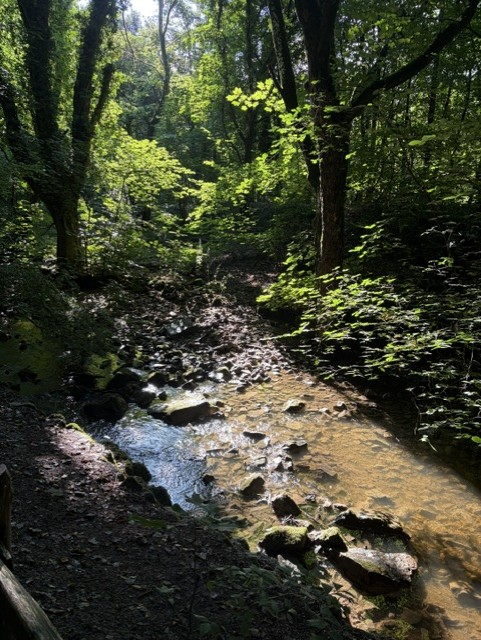
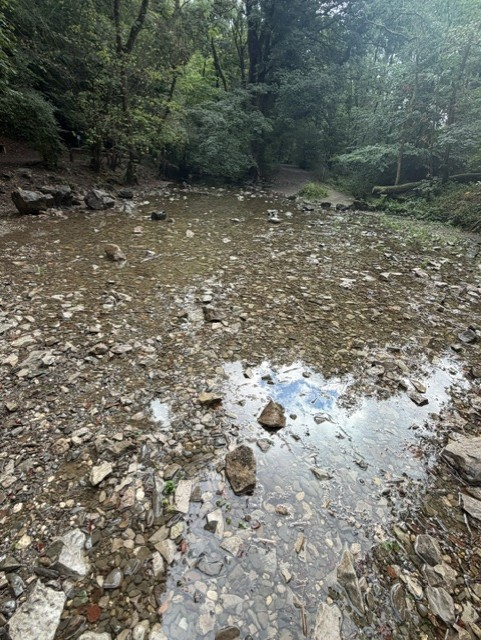
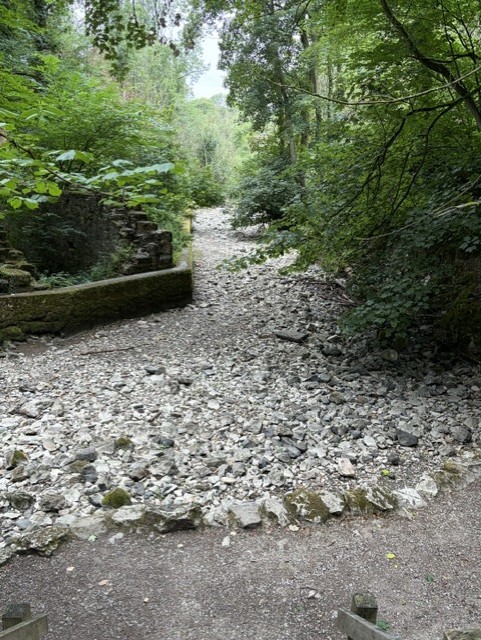
        The last time that Stu and I had been here, in late July, the River Alyn came to an abrupt halt not far beyond the stone bridge that crosses onto the Leete path. As the area has had some rain since then, we were expecting the river to have risen a little, but the water is still quite low, petering out just a little bit further than it did during the drought. The Alyn does flow underground into various swallow holes and caves so this may account for the water levels taking some time to recover.

    Green Alyn
    Puddle Alyn

    While the bed of the River Alyn is still very dry, the trees and undergrowth look more vibrant than they did during the recent drought

        Sue and I were scanning the river for Dippers but had been unsuccessful. Stu pointed out one he’d spotted, which had concealed itself behind some overhanging branches of a sycamore tree on the far bank. We could just make it out behind the bunched leaves, but this particular bird wasn’t in the mood for posing for the camera today!

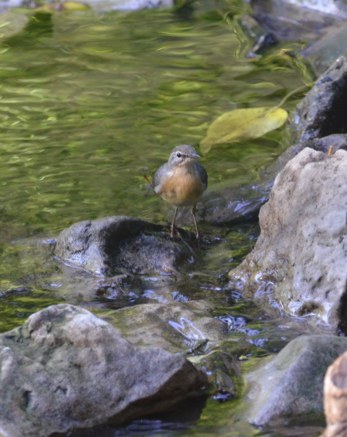
        Further along the Leete path, we spotted three Grey wagtails which appeared out of nowhere to land on the dry riverbed and began scouring it for insects to feed on. They then all zoomed off upstream. We noticed that an adult bird was aggravating another bird – a juvenile by the looks of it. We suspected that the adult was trying to encourage the younger bird to find its own territory. These might have been the same three birds that we’d seen last month – two adults and their fledgling. And while the adult birds will continue to feed their offspring after they’ve fledged there’s a limit to how long that they’re prepared to do this. While we saw quite a few insects flying around – testament to the little bit of rain that’s recently fallen – food resources are still somewhat limited due to the overall low water level.

    Dry Alyn

    The riverbed by the wooden bridge is completely dry

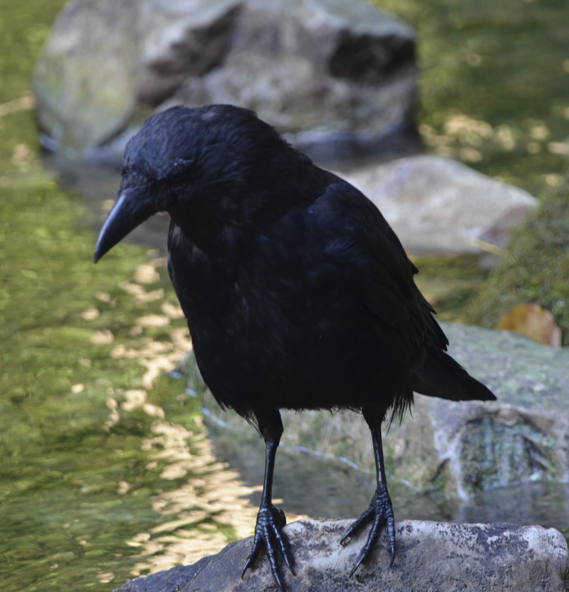
        There were other birds in the woods today including Crows and Robins, and a Goldcrest also made a fleeting appearance.

    Robin facing Alyn
    Crow Alyn

    Top: Robin (Erithacus rubecula) and bottom: Carrion crow (Corvus corone)

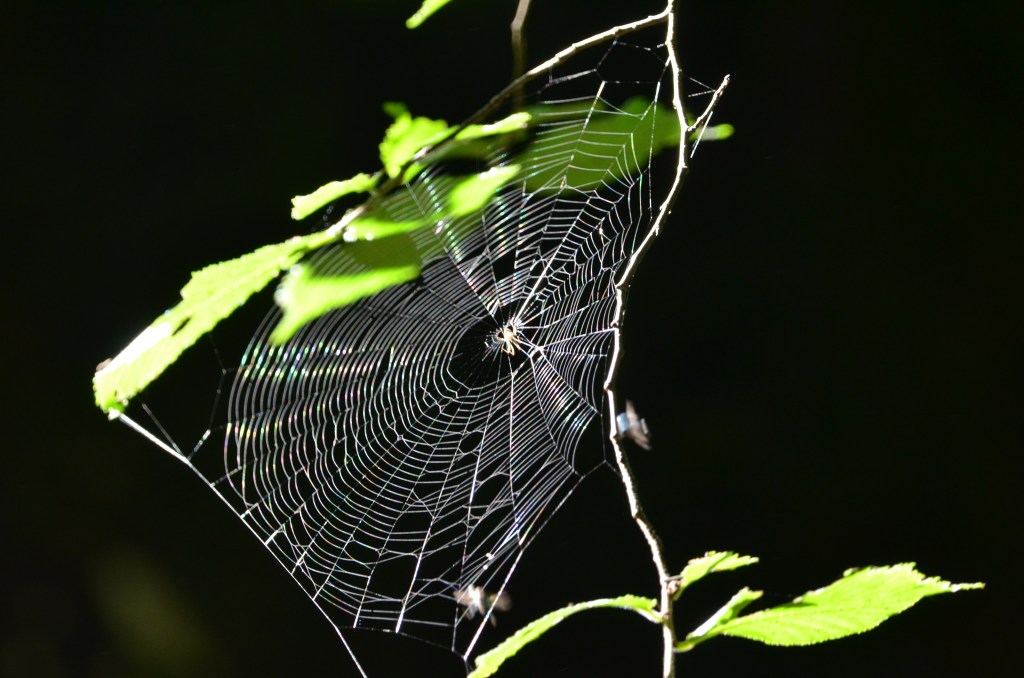
    The light dappling through the tree canopy was something that you’re subconsciously aware of, I suppose, and it was this light that attracted our eyes to the glistening strands of a spider’s web. It was suspended from a hazel tree on the opposite side of the river. In the photograph, you can just make out the spider in the centre!

    Web Alyn

    Spider in its web

        While we were all generally aware of our surroundings, I have to confess that we spent a good deal of our time just talking to one another – hardly surprising since we hadn’t seen each other since earlier in the year. We all lead busy lives, of course, but it’s always good to spend time with your friends and share moments like these whenever you can.

    Robin side Alyn

    The important stuff

    Claire and Tanya had to get off early, so it was just the remaining three of us that went to the café. Stu had a Mars bar rice-krispi cake with his cappuccino, and Col had a Lemon curd blondie with his. Sue stayed away from the cakes and just had a black coffee, donating her bonus biscuit to a very good cause (yes, Col had it!).