Month: August 2026

  • By Flint Castle

    (Sunday 16th August, 2026)

    This morning, we were at the Dee Estuary over by Flint Castle, arriving just after low tide. In Flintshire this week, the mercury reached the mid-thirties so today’s low temperature of just 16°C made a nice change, especially with the barely perceptible wind from the north-west.
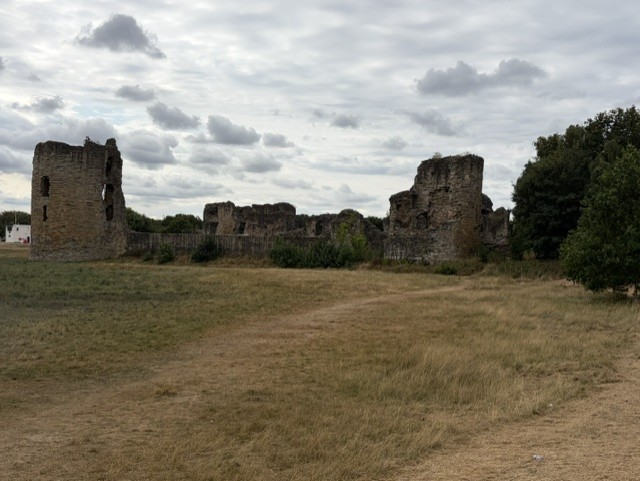
    Flint Castle

    Flint Castle

        My knowledge of Flint Castle is very limited, which is a bit embarrassing considering that I live only a few miles away. However, I do know it’s where King Richard II surrendered to Henry Bolingbroke, who would later become King Henry IV. (Oddly, I first learnt about this when studying William Shakespeare’s Richard II in school, which was er…one or two years ago now!)
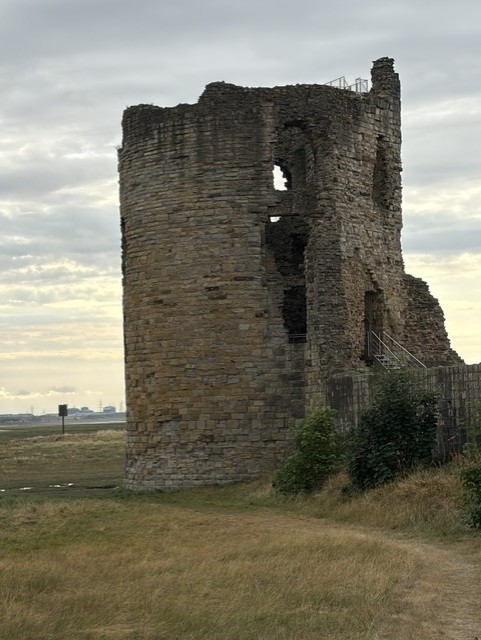
    Tower at Flint Castle

        Visibility was fair but the poor light seemed to project an atmospheric gloominess onto the castle and its surroundings. The castle does offer a wonderfully scenic backdrop to the estuary, though you’ll also find more modern edifices in the vicinity – the Flintshire Bridge which spans the Dee and the four distinctive chimneys of Connah’s Quay Power Station, for example. So, a marked combination of the old and the new!
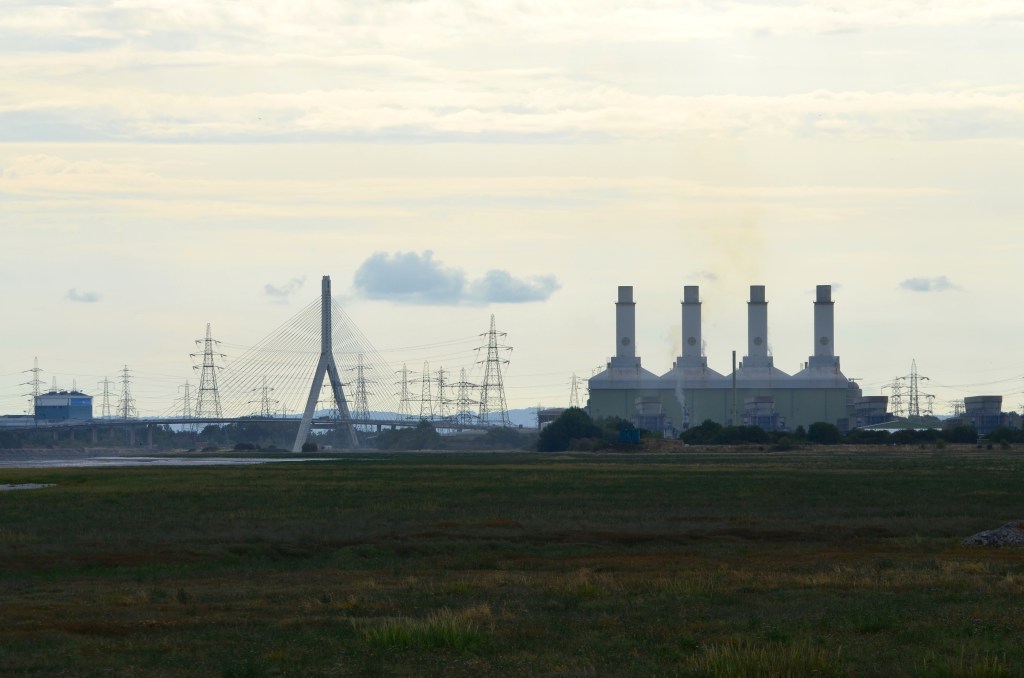
    Flintshire Bridge & PS

    The Flintshire Bridge and the four chimneys of Connah’s Quay Power Station

        There was a flock of Swallows (Hirundo rustica) flying low along a water channel on the marsh. (Though it’s difficult to pinpoint these channels accurately from the ground, you can follow their rising and falling contours along the marsh – possibly you’d have a much clearer view up on the ramparts of the castle, though I’m only guessing).The Swallows were evidently feeding on the wing and every now and then they would land on the ground to re-energise before taking to the air once again. They were quite far away from us – and very fast – so there’s not much detail in the photograph, but it was great to watch them.
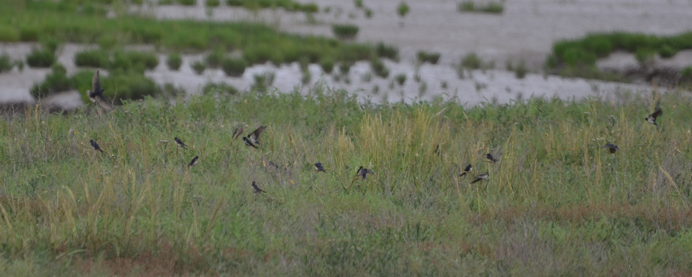
    Swallows at Flint
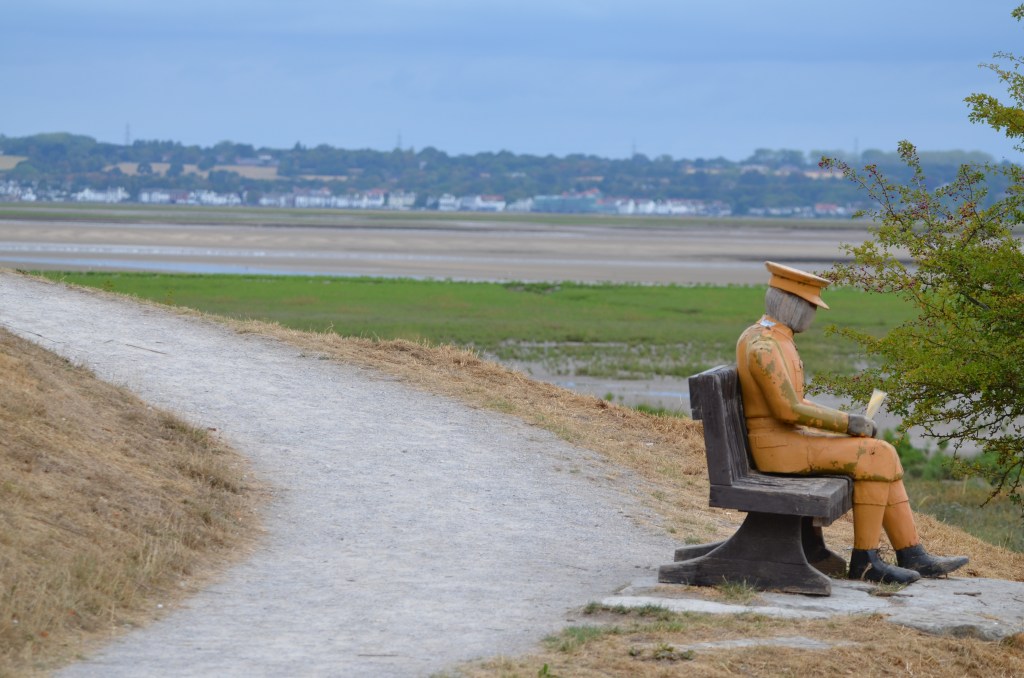
    Statue at Flint

    The low-flying Swallows (top) went unnoticed by this chap (bottom)

        While we were watching this display, a Stonechat (Saxicola rubicola) alighted on a nearby Hawthorn bush. The orange breast, white collar and black head on the bird identified it as male. He stayed there for a moment or two before exploring the marshland a bit further out.
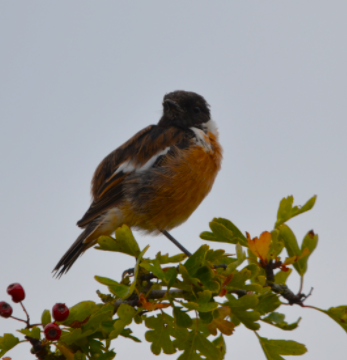
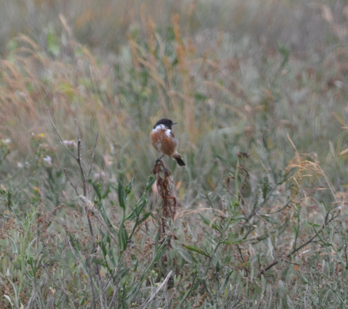
    Stonechat at Flint
    Stonechat at Flint 2

    Stonechat

        Further inland from the estuary, we watched a Pied wagtail (Motacilla alba) as it scoured the short grass for spiders and insects, its tail bobbing up and down characteristically. As its name implies, the Pied wagtail’s markings are black, white and grey and it really is quite a lovely bird. This one was later joined by its mate.
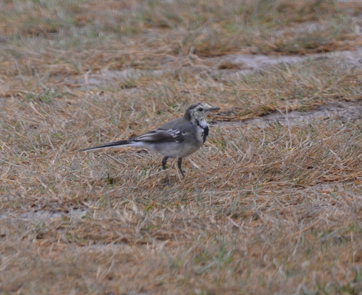
    Pied wagtail at Flint

    Pied wagtail

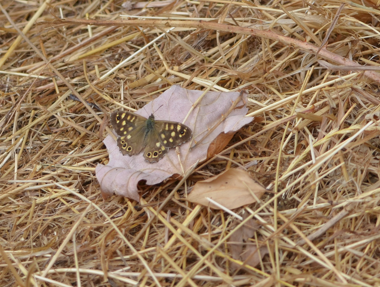
        As we made our way back through the castle grounds, a Speckled wood butterfly (Pararge aegeria) landed on a leaf in front of us and paused to take a breather. It opened its wings to allow us a decent view, although I suppose it was really trying to warm up in the weak sunlight! Speckled woods have lovely cream-coloured spots which contrast with their otherwise dark brown colour. You can see the ‘eyes’ on the wings in the photograph – one on each forewing and three on each hindwing. These butterflies like damp areas and you’ll often see them in woods – they’re particularly noticeable along dappled areas where the sun peeps through, claiming shafts of sunlight as their ‘territory’.
    Speckled wood at Flint

    Speckled wood

    The important stuff

    On the return journey, we called in at the café in Daleside Garden Centre, Hawarden, for a slice of Bakewell (Col) and Coffee and Walnut cake (Stu) with our cappuccinos. Marvellous!
  • Big Pool Wood

    (Sunday 9th August, 2026)

    Over to Big Pool Wood in Gronant, Flintshire this morning. This was our first time here and what a little gem of a place it is! The site is a woodland and reed bed nature reserve that lies adjacent to the Bridlewood Equestrian Centre.

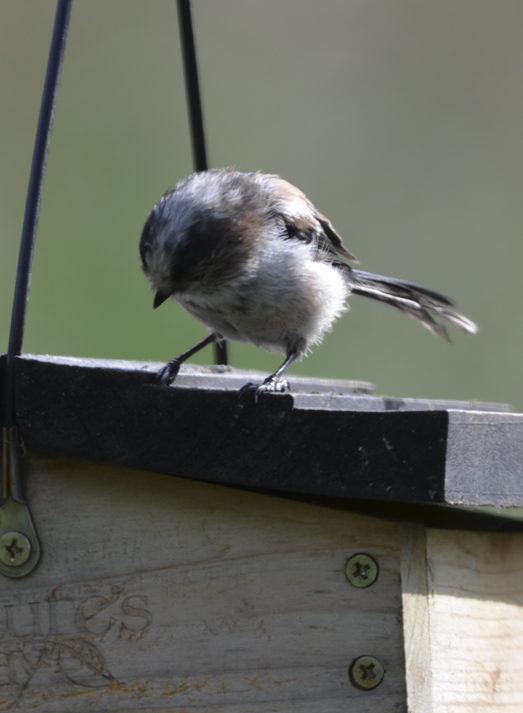
       The reserve is small, comprising just four hectares (roughly 5 football pitches) but this smallness offers an intimacy not often experienced at larger sites and the reserve’s three hides provide close observation at different points of the reed bed. (The hides also have bird identification books inside if you don’t have your own).

    Long-tailed tit Big

    Long-tailed tit

        The whole reserve, which is overseen by the North Wales Wildlife Trust, has been well thought out. The site is well-maintained and has a circular walk with wooden boardwalks interspersed with hard surface paths making it accessible for wheelchair users. The feeders in front of the hides must have been recently stocked when we got there as several birds were greedily feasting!

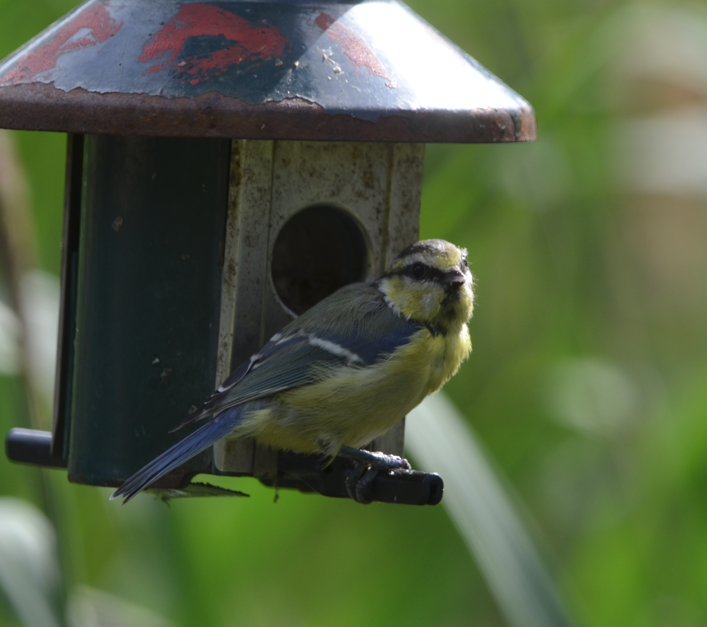
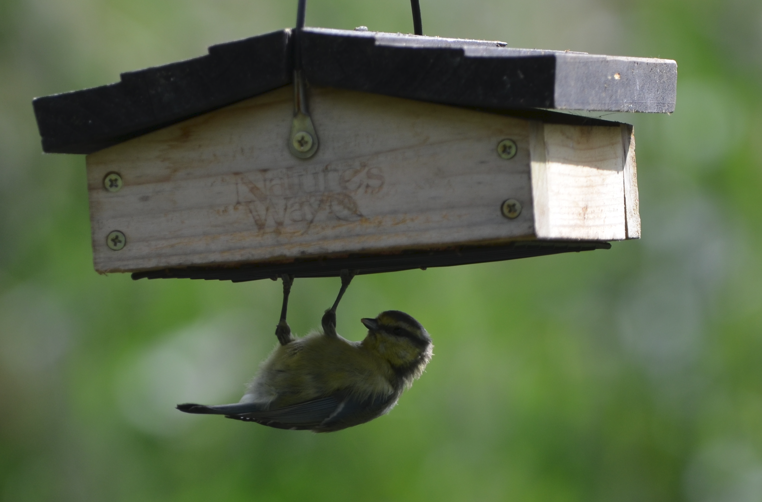
    Blue tit 3 Big Pool
    Blue tit Big Pool
    Blue tit 2 Big Pool

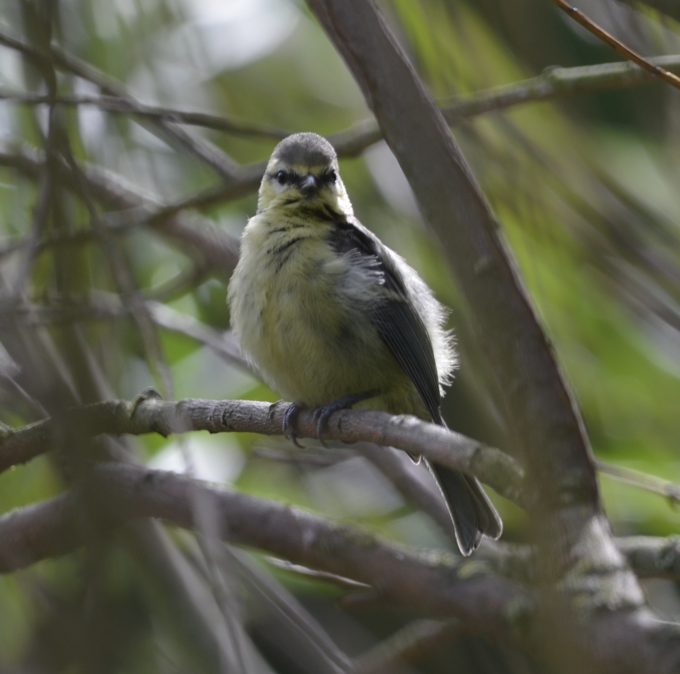
    Above: These Blue-tits are juveniles – note the yellow cheeks rather than the white of the adults and the crowns that are more grey than blue

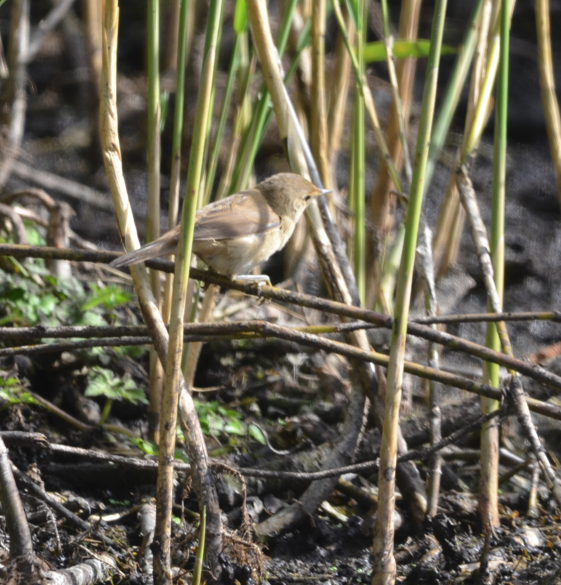
        We saw Blue tits, Long-tailed tits, Great tits, Greenfinches, Chaffinches and several Reed warblers. We also caught a brief glimpse of a Moorhen before it quickly disappeared into the undergrowth. Further around the main pathway, we followed a side path that led into the reed bed. While we paused to look out we saw the tops of the reeds moving, disturbed by whatever bird or animal was stealthily creeping below! It might have been the Moorhen.

    Reed warbler Big Pool

    Reed warbler

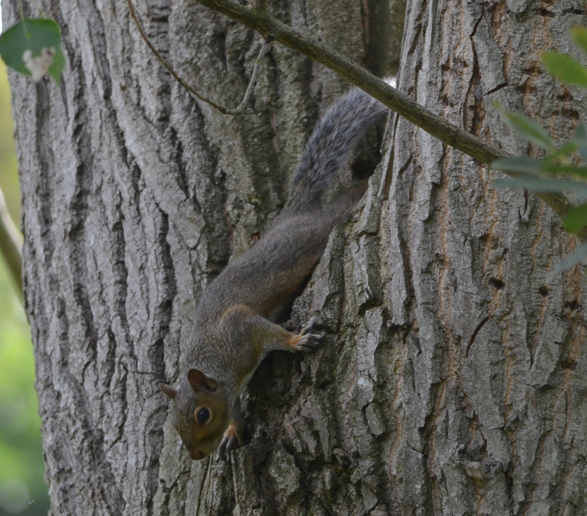
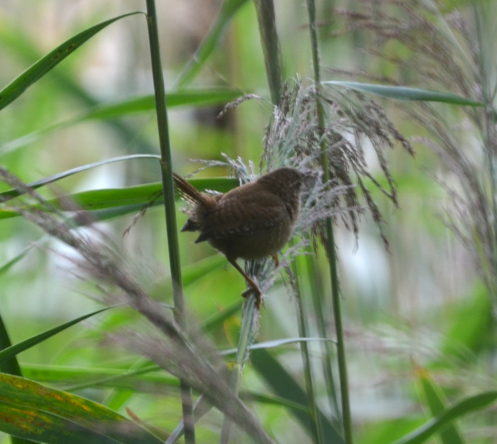
        There was activity on the opposite side to the reed bed too: ringing the outside of the main path is a small woodland where we were entertained by show-off squirrels and where much more timid Wrens made fleeting appearances. We also saw a small, mixed flock of Greenfinches and Chaffinches scooting from one tree to another.

    Squirrel Big Pool Wood
    Wren Big Pool Wood

    Top: Show-off squirrels were quite a common sight; bottom: unlike the much shyer Wren

    Actually, we were grateful for the shelter of the woods as, although the temperature was just 22°C, which should have been quite comfortable, the lack of wind and humidity was noticeable out in the open stretches.

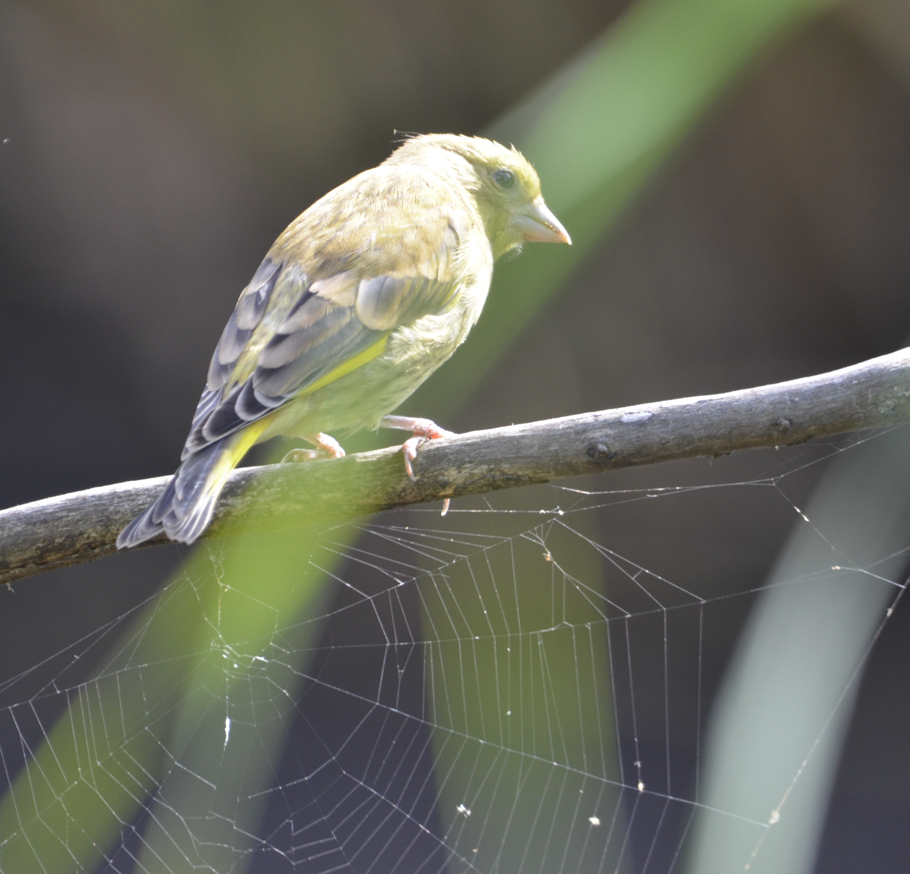
        There were a couple more Greenfinches at the feeders, separate from those in the mixed flock. We’ve seen increasing amounts of these birds in several different areas on both the English and Welsh side of the Dee this year. Greenfinches were particularly afflicted by the trichomoniasis disease and hopefully they’ve come through the worst of it. It’s probably too early to say yet, I suppose, but the signs are encouraging.

    Greenfinch Big Pool Wood

    Greenfinch

        The pool itself was virtually dry with just a little layer of mud at the base of the reeds, although there were lots of alder and willow on the fringes. Both species of tree favour saturated land and actually thrive in water, which is a sign of how wet this area can be. However, it seems that nowhere has escaped the recent prolonged dry spell.

        The nature reserve is in a lovely setting and is quiet and tranquil (we saw only five other people all morning). Well worth a visit.   

    The important stuff

    There’s no café at Big Pool Wood but not to worry: one thing we are both confident of is our refreshment-spot expertise, which we’ve amassed over many years’ experience! So we called in at the café at Abakhan on our way back. We accompanied our cappuccinos with White Chocolate and Cranberry (Col) and Caramel Biscoff (Stu) – at least I can claim mine constitutes one of my ‘five-a-day’ fruits!

  • Parkgate Again

    (Thursday 6th August, 2026)

    Today, I was over in Parkgate on the Wirral Peninsula – for the second time this week. On this occasion I was accompanied by my mother, my brother, Michael, and my niece, Sophie. Regular readers will know that our chief cameraman is Stu but he had to go to work today and help keep the British economy ticking over, so all photographs were taken by Sophie today. Thanks very much Sophie!

    Goats at Parkgate

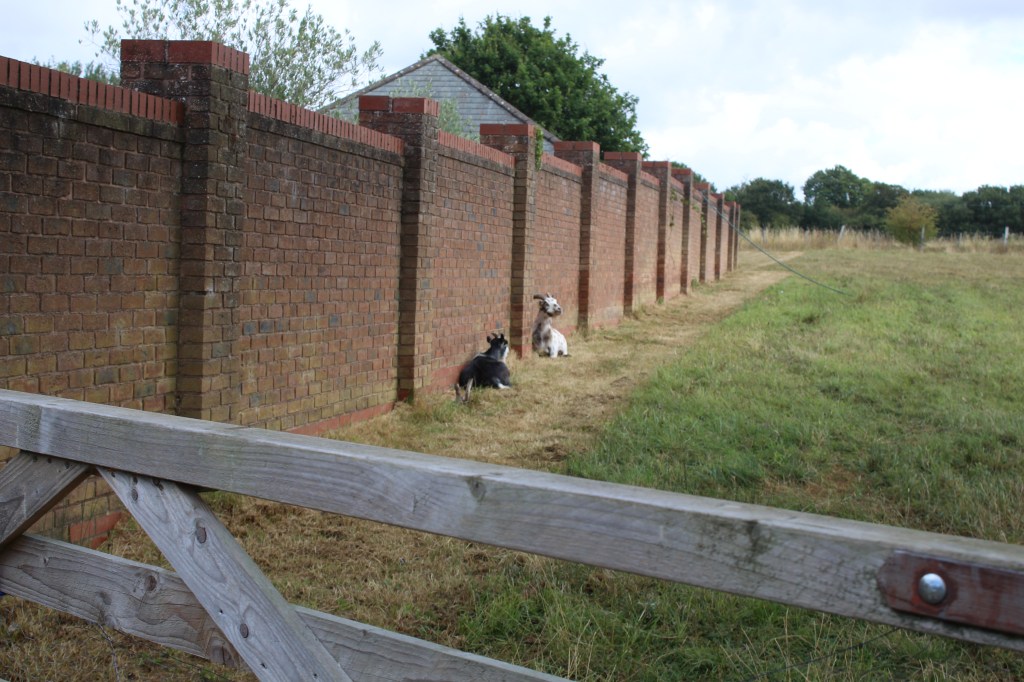
    Goats near the Old Baths carpark

        Parkgate village lies on the English side of the Dee Estuary and is a great place to visit for birdwatching. The expansive salt marsh is 100 square kilometres and all sorts of bird species can be found here: it’s home to waders, wildfowl, herons and egrets, birds of prey, warblers…the list goes on. During today’s visit, for example, we saw several people excitedly watching a group of Spoonbills out on one of the flashes (shallow ponds). There was also a Marsh harrier patrolling low over the marsh and, later, a Kestrel hovered, facing into the wind, eyeing the ground below.  

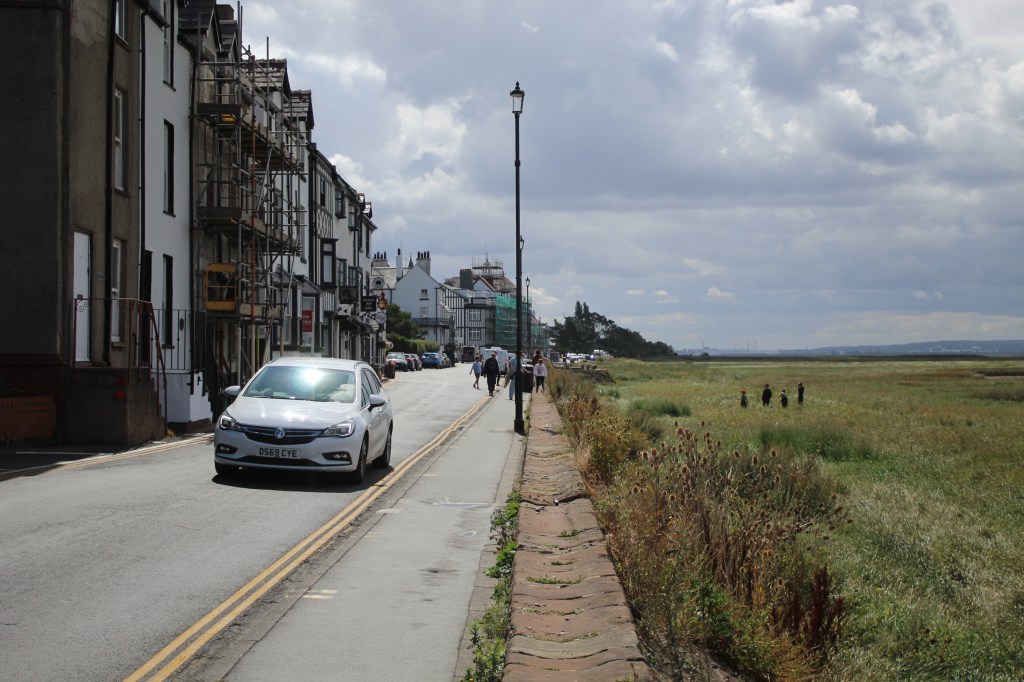
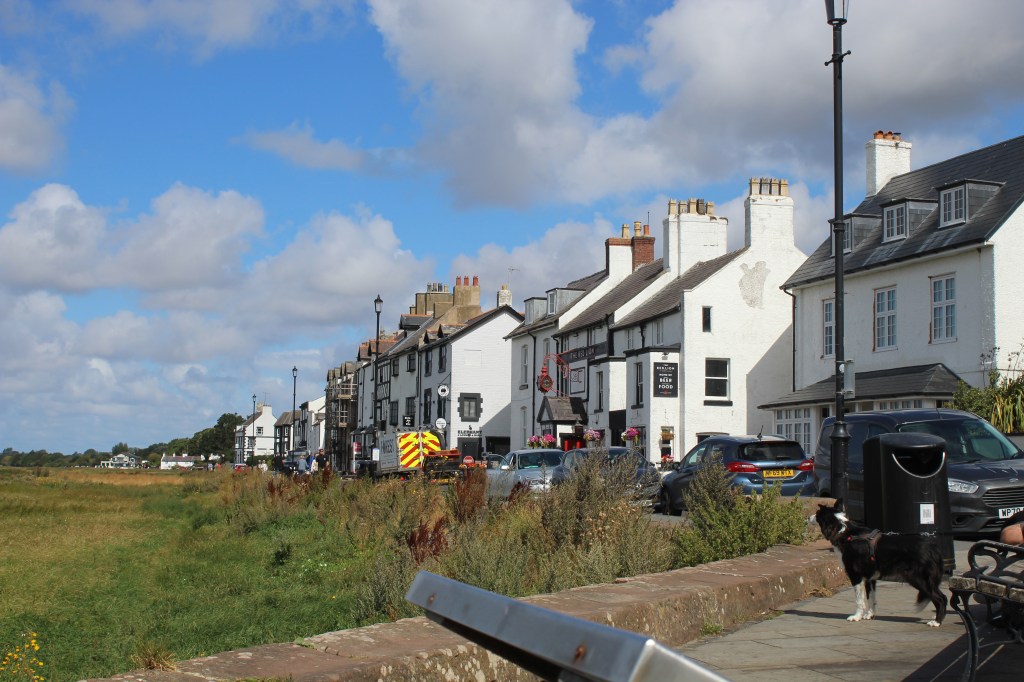
    The Parade

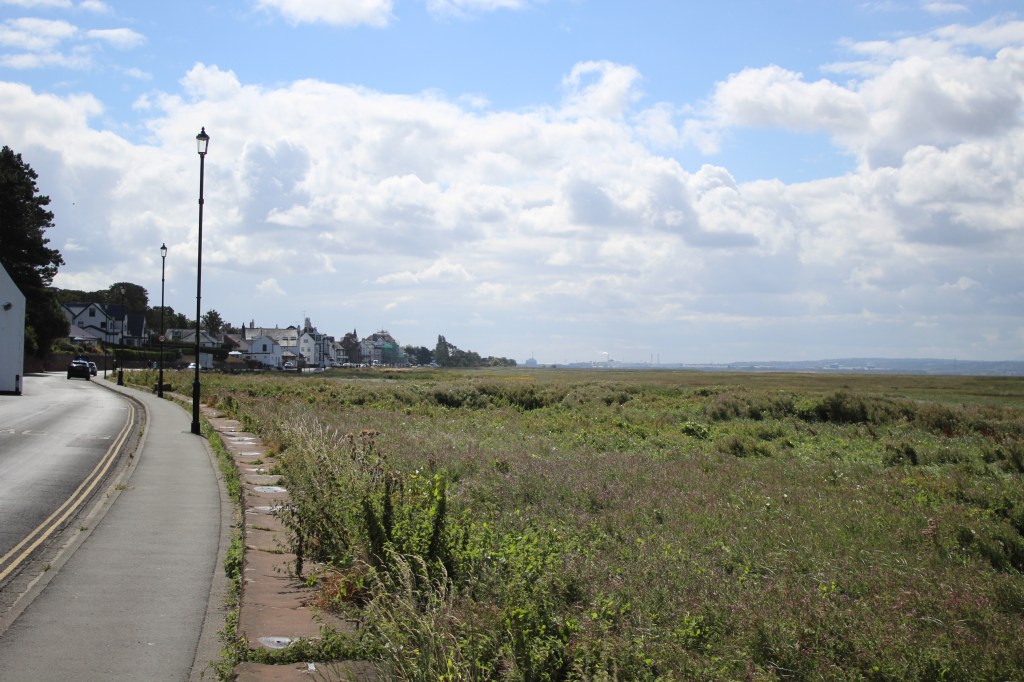
    Looking southwards along The Parade

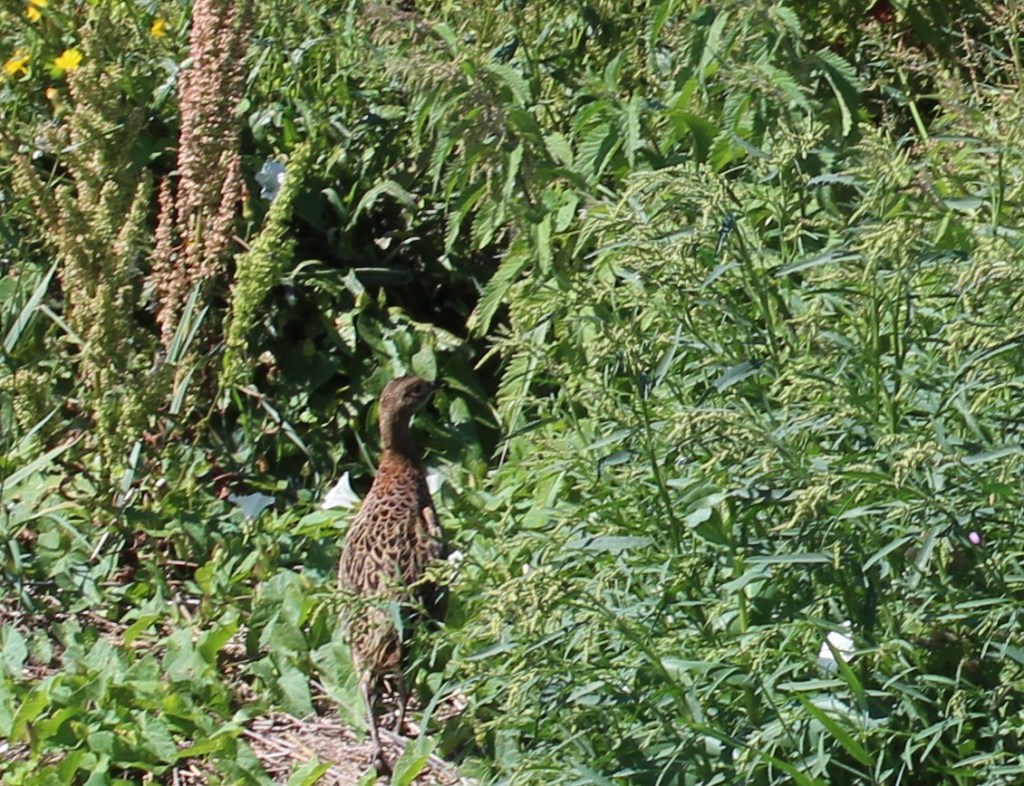
    Pheasant in undergrowth

    Female Pheasant

        However, Parkgate is more than a destination for birders and wildlife-lovers and I was reminded of this as I went through Sophie’s photos later. Often, when we visit places, we can be so intent on a particular purpose that we overlook other aspects that might be just as interesting – both to others as well as to ourselves. So it was refreshing to see Parkgate through a different perspective.

    The Parade 3

        For the benefit of those who are unfamiliar with Parkgate and might be considering a visit, here’s a little bit of information about its history.

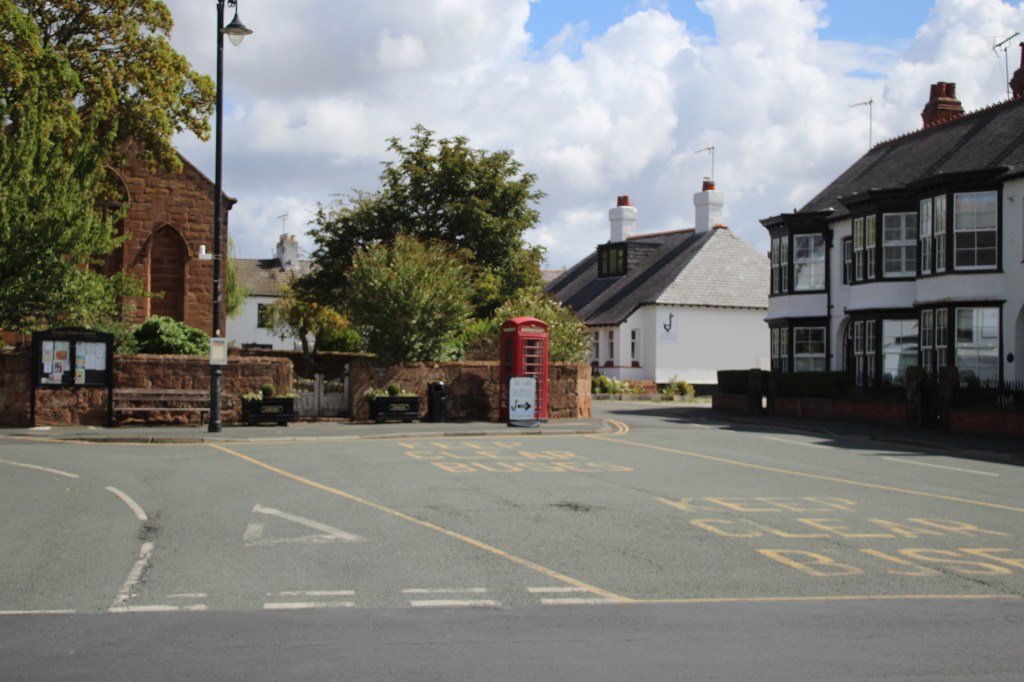
    School Lane, Parkgate

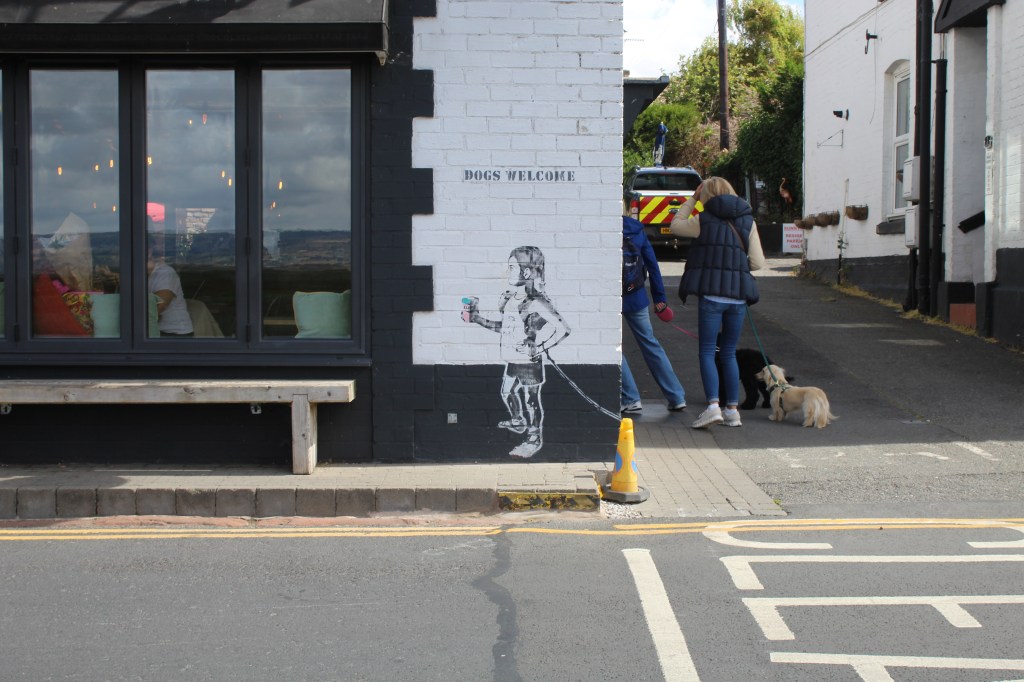
    Above: School Lane (St. Thomas’ Church is on the left); below: Girl with traffic cone on lead

    Park your dog

        Lady Emma Hamilton (originally Amy Lyon) was born in the nearby village of Ness – and raised in Hawarden in Flintshire – and composer George Frideric Handel sailed back from Ireland via Parkgate which, at the time, in 1742, was a busy port. Towards the end of the eighteenth century the accumulating silt on the River Dee meant that Parkgate could no longer function as a port and was supplanted by the port of Liverpool on the River Mersey.  

    From the Donkey Stand

    View from the Donkey Stand

        Parkgate then switched to being a seaside resort and successfully drew people in to take the fashionable salt waters. Open-air baths were built during the 1920s which became very popular and helped Parkgate maintain its status as a resort right up until the late 1930s. Sadly, not a lot remains of the baths now except the odd section of wall at the Old Baths carpark which lies beyond the Boathouse pub.

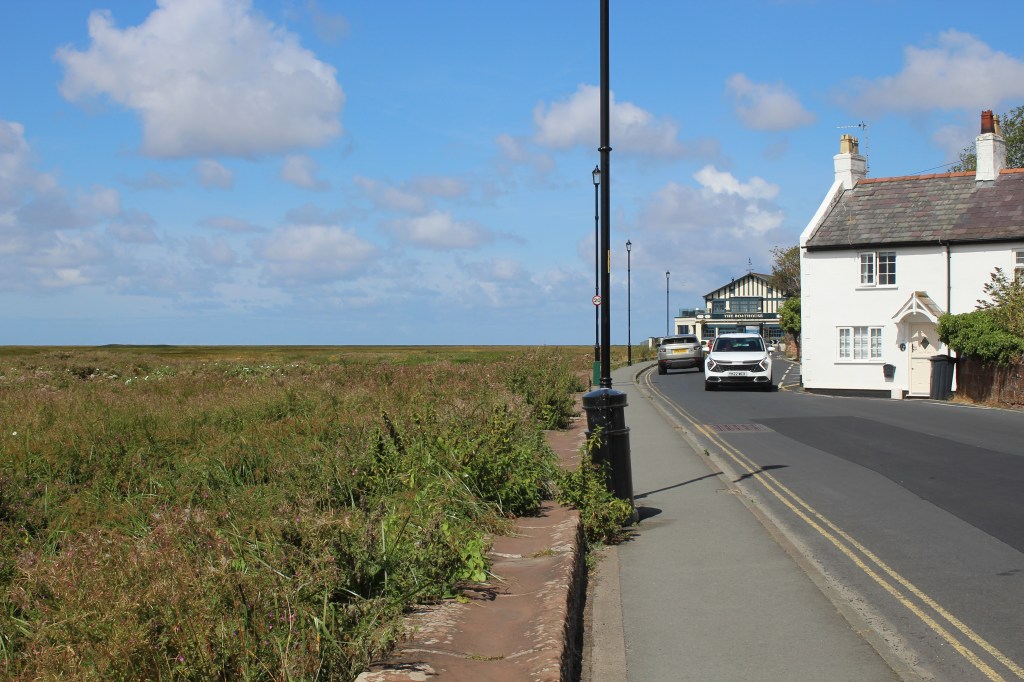
    The Parade 2

    Looking northwards along The Parade

        Parkgate is well worth a visit and you don’t have to be a birder to enjoy it either.

  • Low Tide at Parkgate

    (Sunday 2nd August, 2026)

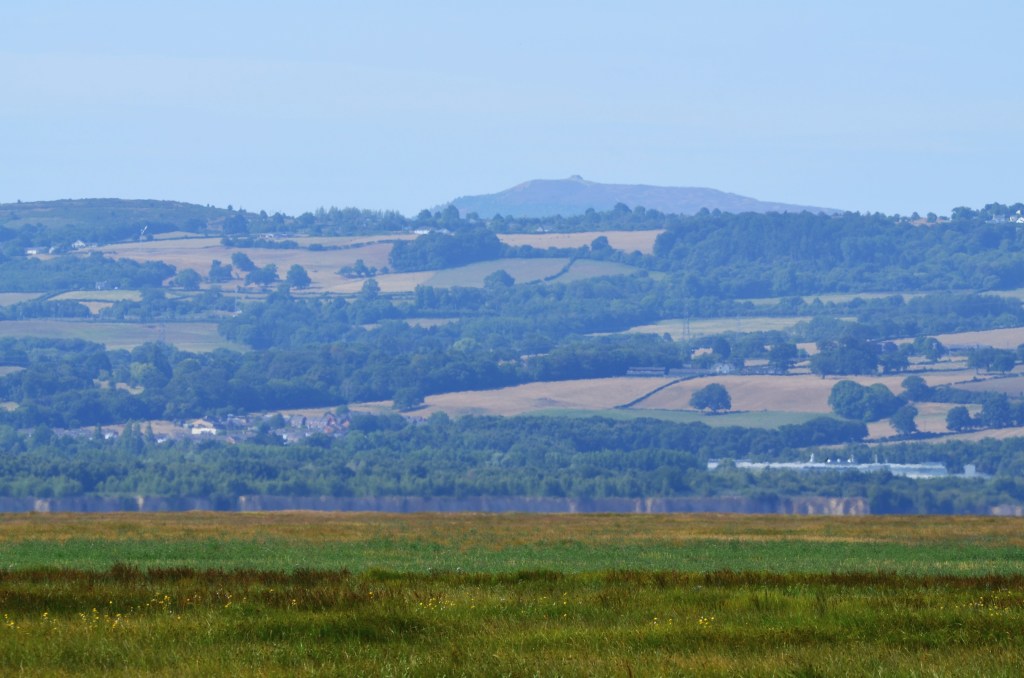
    Over to Parkgate on the Wirral Peninsula this morning where it was a sunny 21°C with just a faint breeze (ESE). Visibility was very good and we had panoramic views of the Dee Estuary: Moel Famau and the other hills on the Clwydian Range stood out sharply to the south of us and, in the opposite direction at the estuary’s mouth, we made out the many wind turbines that stretch across Liverpool Bay.

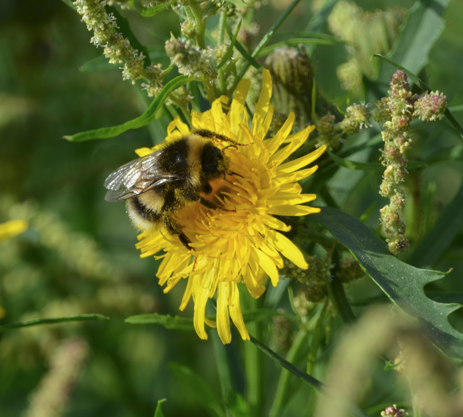
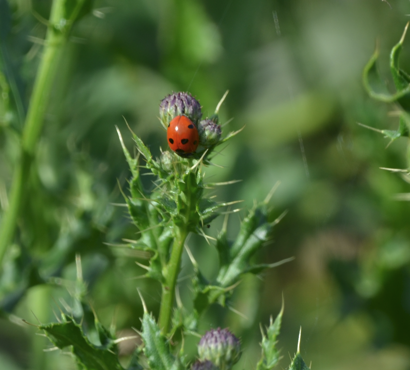
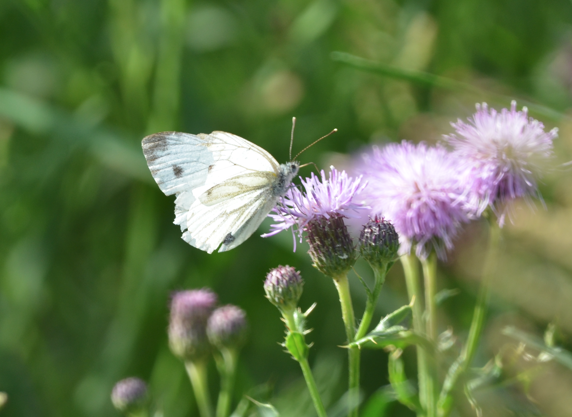
        The trees and bushes near the Old Baths have clearly been stressed by the current drought, their leaves browning and crisping before dropping early. Conversely, Dandelions, bindweed, knapweed and thistles out on the marsh seem to be thriving – all obviously more able to cope. A welcome consequence of this hardiness is the variety of insects that visit them. We spotted ladybirds, White-tailed bumblebees and several white butterflies – mostly Small whites, although we did see one Green-veined butterfly too.

    White-tailed Bumblebee, Parkgate
    Seven spot
    Small white Parkgate

    Top: White-tailed bumblebee; middle: Seven-spot ladybird; bottom: Small white butterfly

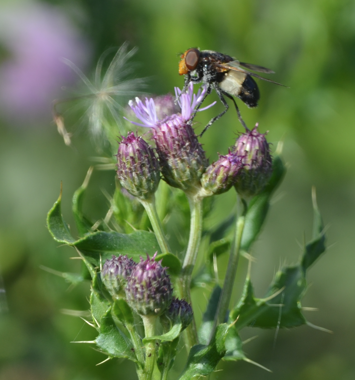
        We were intrigued by several hoverflies which seemed to be especially partial to thistle flowers. These are Pellucid hoverflies (also known as Pellucid flies). They are mostly black except for a distinctive white band around their abdomens and they have very large, reddish-brown eyes, which provide them with a wide field of vision. As with other hoverflies, Pellucid hoverflies have evolved to mimic bees or wasps and this mimicry acts as a visual deterrent to predators such as birds, amphibians or spiders that might ordinarily prey on them but will hesitate if they believe they might get stung!

    Pellucid Hoverfly

    Pellucid Hoverfly

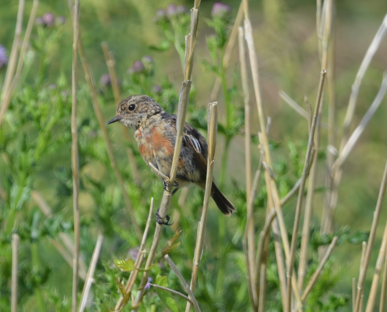
        A pair of small birds scooted low in front of us. They were very quick but Stu managed to take a snap of one of them clinging to a reed, before it swiftly departed again. This looks like it’s a juvenile Stonechat. Even without the more defined red-orange breast of the adult, it’s still a striking-looking bird.

    Juvenile Stonechat

    Juvenile Stonechat

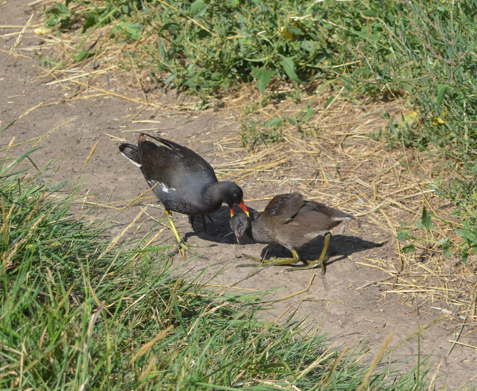
        Down at the Donkey Stand, we looked over the other side of the wall and watched an adult Moorhen as it ferried its chick back through the reeds to shelter.

    Moorhen scolding

    Moorhen encouraging its chick to seek shelter

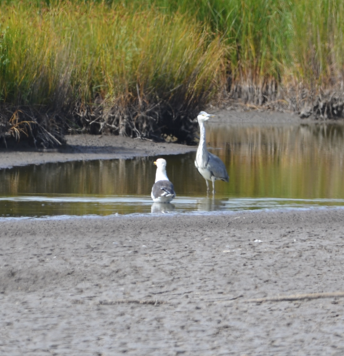
    Further out. the ‘flash’ looked bone-dry apart from one small section of water in the far corner where a Grey heron stood forlornly hoping for the best. We were there just after low tide although I believe the flash (or shallow pond) relies on rainwater as much as water from the river and – like everywhere else – Parkgate hasn’t had much rainfall recently.

    Gull and Heron

    Heron and gull lamenting the absence of water.

    On the nearer side of the flash were several Lapwings and Black-headed gulls, most of which were sprawled on the ground and making the most of the sun. They didn’t stir, even when a Marsh harrier flew low nearby. Talk about lethargic!

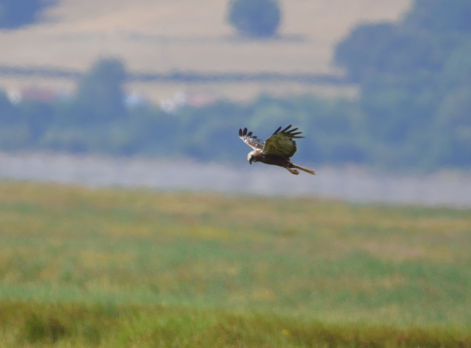
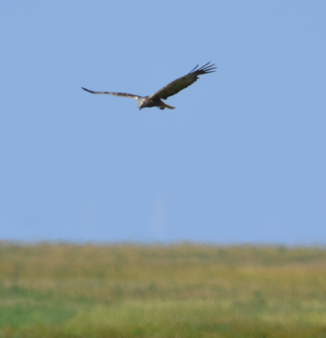
    Male Marsh harrier

    Marsh harrier

        To be fair, the harrier seemed to be concentrating on a long stretch of the marsh that it was patrolling and that was mostly obscured form our view. Flying characteristically low, the bird would every now and then twist and drop down, feet first. This is how the Marsh harrier grabs the small mammals, amphibians and fish that make up much of their diet, although Marsh harriers are opportunistic predators that will also take small waterbirds like Moorhens, too. This Marsh harrier was a male and, though the male is smaller than female – well, less bulky – it’s still a large bird and surprisingly agile. Fascinating to watch.

    Male Marsh harrier 2

        There was a scattering of House martins that seemed to be darting between the marsh and the rooves of the buildings along The Parade, where they presumably have nests: an ideal vantage point. As we turned to go, we glimpsed a pair of Common buzzards further out, leisurely rising as the thermals carried them both skywards.

    Panorama

    Moel Famau from Parkgate

    The important stuff

    We called in at Daleside in Hawarden on the return journey where we each had a Vanilla slice with our customary cappuccinos. Very gooey!