Month: July 2026

  • A Trickle of Water

    (Sunday 26th July)

    Over to Loggerheads Country Park in Denbighshire this morning. A westerly wind blowed the odd gust but, as ever, we were pretty much sheltered down in the woods. The 16°C temperature was much cooler than it had been in the last few days, but there hadn’t been any rainfall for quite some time – in fact, North Wales had officially been declared as being in a drought only days earlier.

        The pond just beyond the old sluice gate was completely dried up and the exposed earth resembled crazy paving. Admittedly, this is just a shallow area of water – a ‘spillover’ if you like – and we quite often see insects such as dragonflies and damselflies roaming over it and, on occasion, a solitary Heron. But not today.

        Halfway across the stone bridge leading into the woods, we paused to look upstream: the River Alyn was still flowing reasonably well, but when we looked downstream, after just twenty or so metres, the river became a mere trickle of water before disappearing altogether. I should point out that the Alyn does naturally disappear underground at Loggerheads into the limestone swallow holes and caves before the river reappears further downstream, a phenomenon that is more noticeable during prolonged spells of dry weather in the summer months. But even taking this into account, this was the lowest we’d ever seen the Alyn at Loggerheads.

        We weren’t expecting to see much in the way of birds or wildlife at all, given the lowness of the river, to be honest. However, we often see White-throated dippers along this stretch of the river and we know they don’t tend to stray far from their habitat, so we crossed our fingers. We were in luck – before long we saw, perched on a rock mid-stream, a Dipper perform the familiar bobbing action that gives the bird its name. We watched for a while as the Dipper submerged itself in the water searching for food before it eventually flew off upstream.
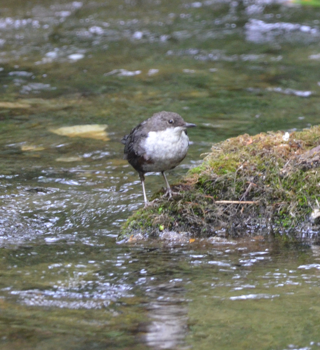
    Dipper dry

    White-throated Dipper

        Moments later, we were surprised to see three Grey wagtails – two adults with a much duller-coloured juvenile. When we were last here at Loggerheads six or seven weeks ago, there was the same family set-up – that is, two adults and one juvenile. Although Grey wagtails will carry on feeding their young and staying close by them after they leave the nest – monitoring their progress, if you like – this is typically for about two weeks. So, the juvenile that we saw back then should already have become independent and have had to find its own territory, which means that the juvenile we saw today is probably from the adults’ second brood.
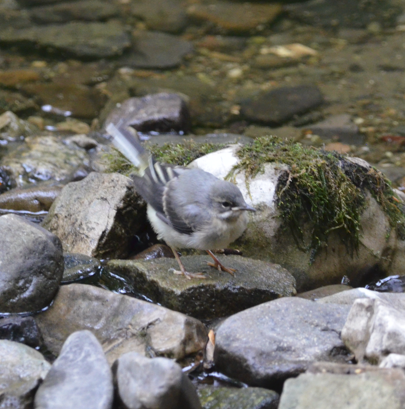
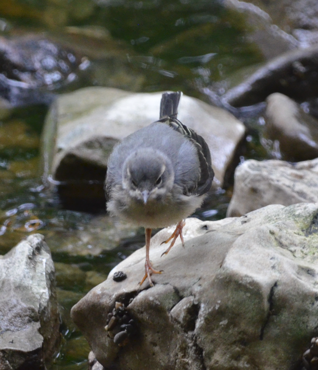
    Grey wagtail dry river
    Grey wagtail dry river 3

    Grey wagtail

        We carried on along the Leete path beyond the wooden ‘bat’ bridge (the bridge has a carving of a bat suspended above the centre of it). Looking down at where the river usually flows, we could see only the dry rock of the riverbed.

        There was a distinct absence of birdsong too, everywhere eerily quiet. This is probably due to many of the birds not wanting to draw the attention of predators as they go through their summer moult: replacing feathers compromises the birds’ ability to fly well, leaving them vulnerable. (Some birds, such as ducks, shed all their flight feathers at once, leaving them completely flightless for the three or four weeks it takes for them to be replaced).  
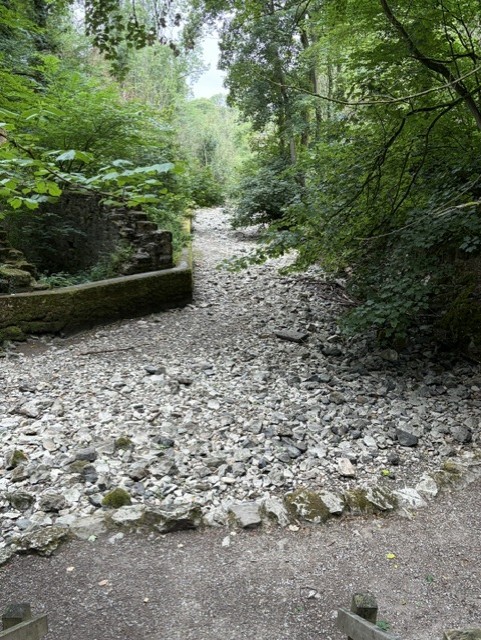
    River Alyn stone dry

    The dried up River Alyn by the ‘bat’ bridge

        Besides the Grey wagtails and the Dipper, there were still one or two birds about today. We saw a couple of scruffy-looking Robins skipping through the undergrowth and we watched several Nuthatches darting from tree to tree. None of them made any noise though!

        The morning had remained largely overcast although under the protection of the trees this didn’t really matter. But now it started to rain. Well, it wasn’t really rain, which would have been very welcome, but more a thin spray of the faintest vapour which disappeared almost immediately.

    The important stuff

    Over to Tŷ’r Felin (The Mill House café) which has moved from the small room right next to the mill and now sits in the much larger area in one of the main buildings at the entrance to the park. We sat outside under the tree sipping our Cappuccinos and savouring the delights of a slice of Bara Brith, with full butter of course (Col), and a slice of Cherry Cake (Stu). Marvellous!
  • Butterfly Highway

    (Monday 6th July – Friday 10th July)

    The UK once again recorded very high temperatures during this latest heatwave although it’s been even warmer in the rest of Europe. With Chief Photographer Stu currently away on holiday, this week’s blog is just a record of the butterflies and one or two other insects that have visited the garden.

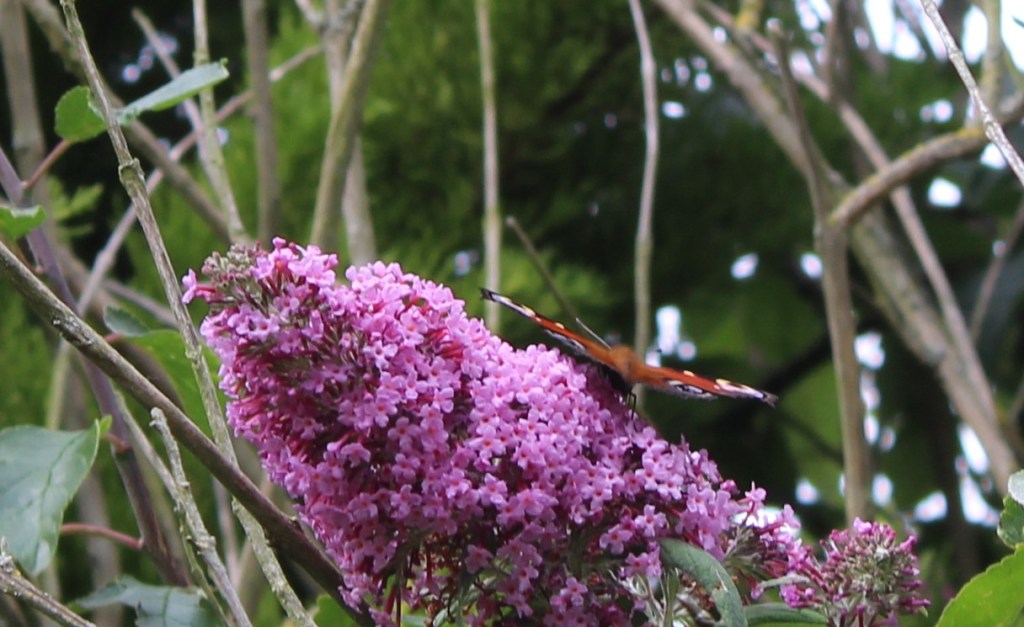
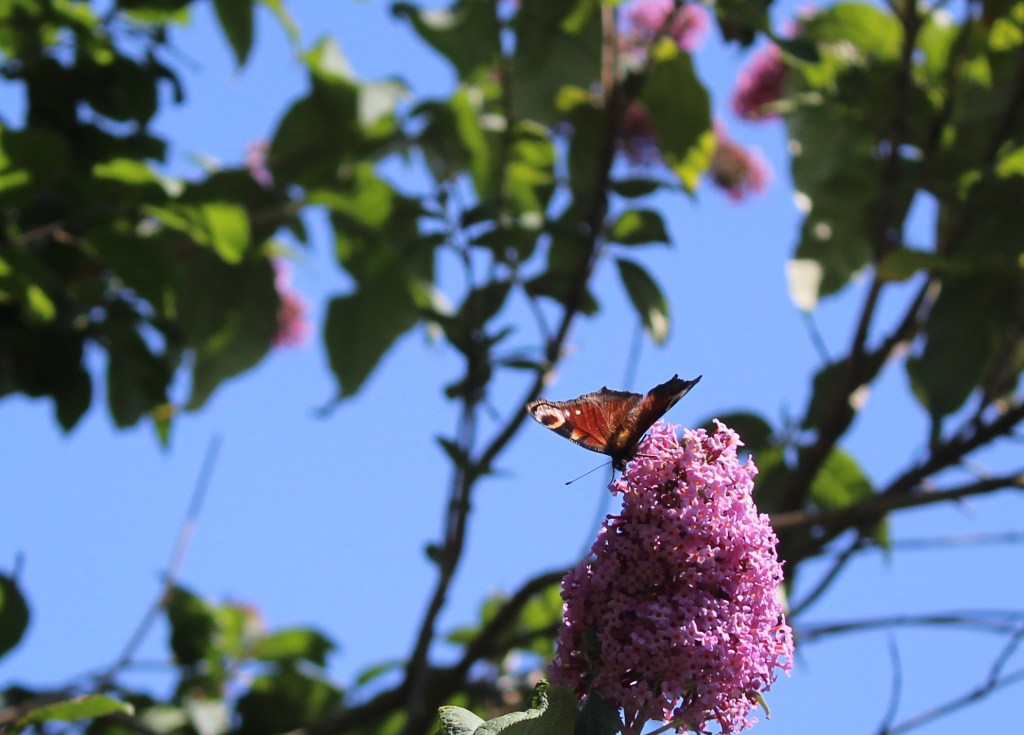
    Peacock g
    Peacock ggg
    Peacock gg

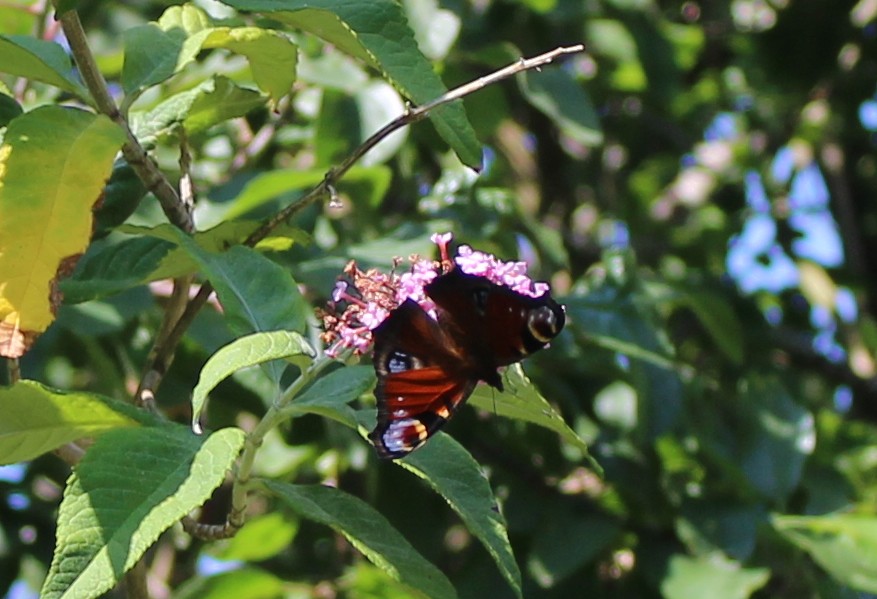
    Above: Peacock butterflies

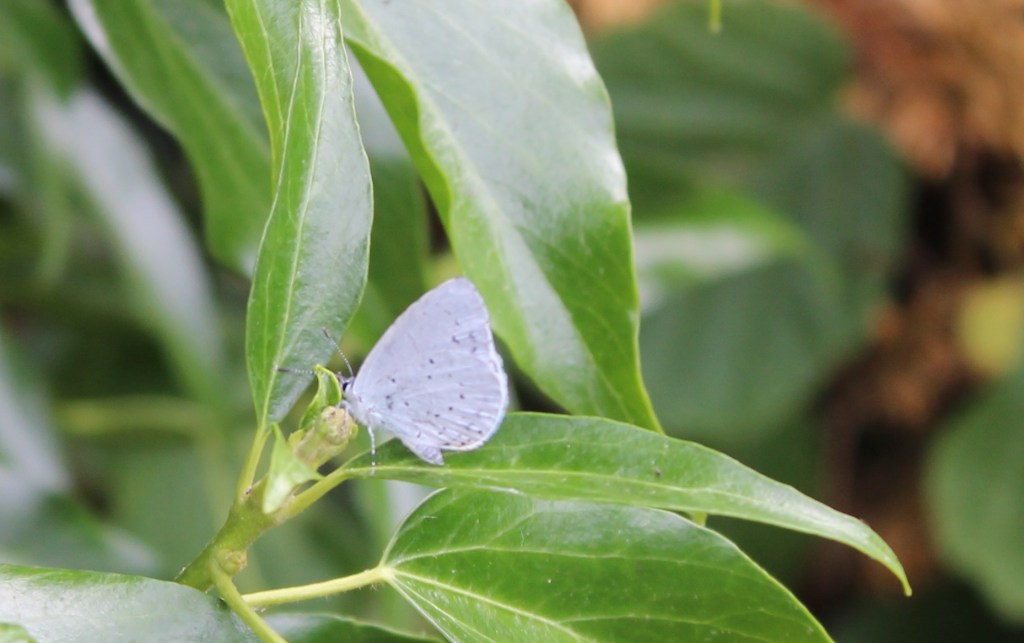
         I’ve spent a lot of time venturing no further than the garden in this hot weather and this has turned out to be a good thing as I managed to photograph quite a variety of butterflies during the course of the week. In fact, there were a further two  species of butterfly that appeared but which I was unable to get a decent photograph of – a Gatekeeper and several Green-veined Whites. But it certainly is encouraging to see such a diverse range.

    Red Admiral gg
    Red Admiral g
    Red underwing

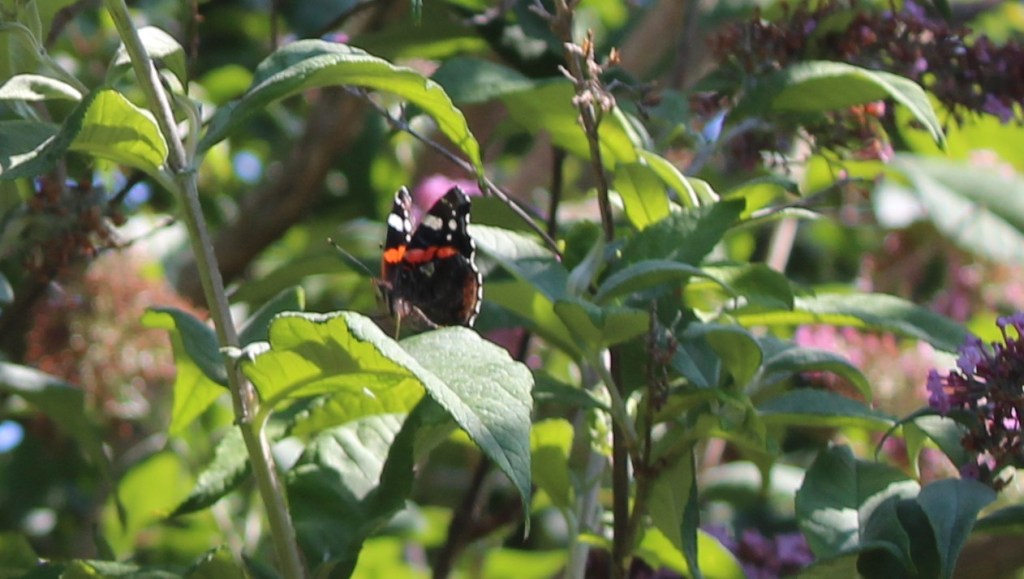
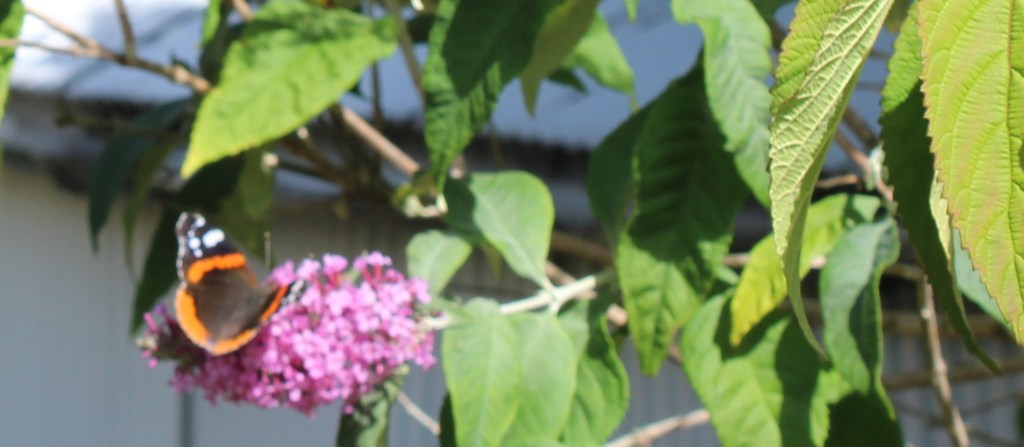
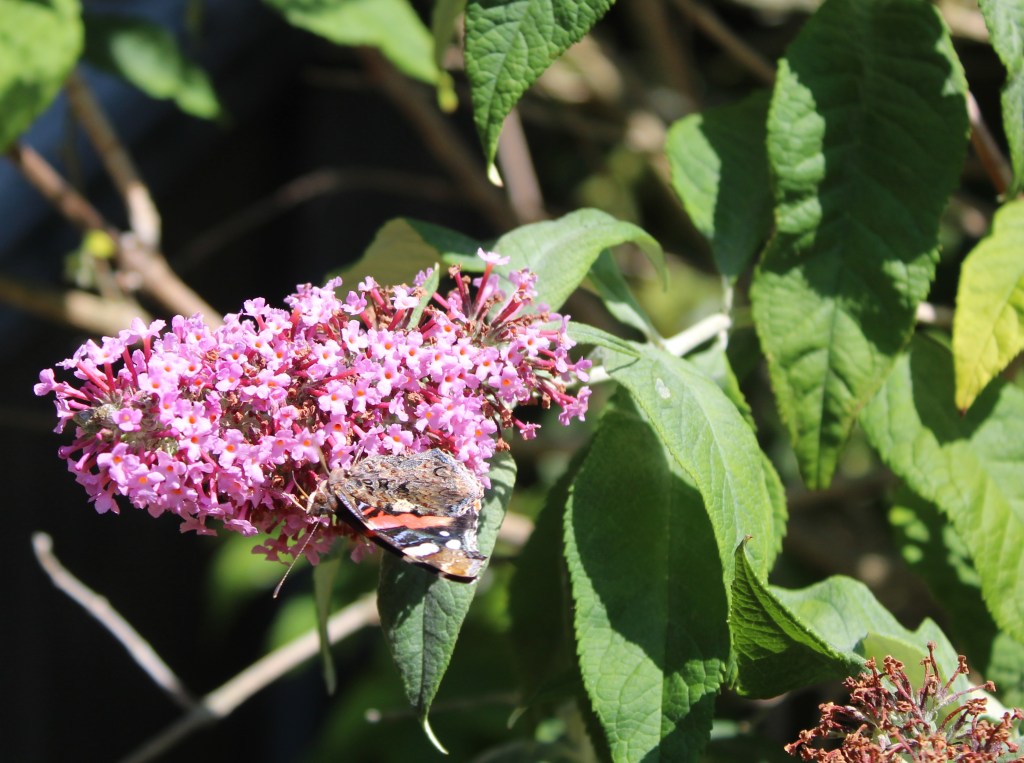
    Top and middle: Red admiral with wings open; bottom: Red admiral showing underwing

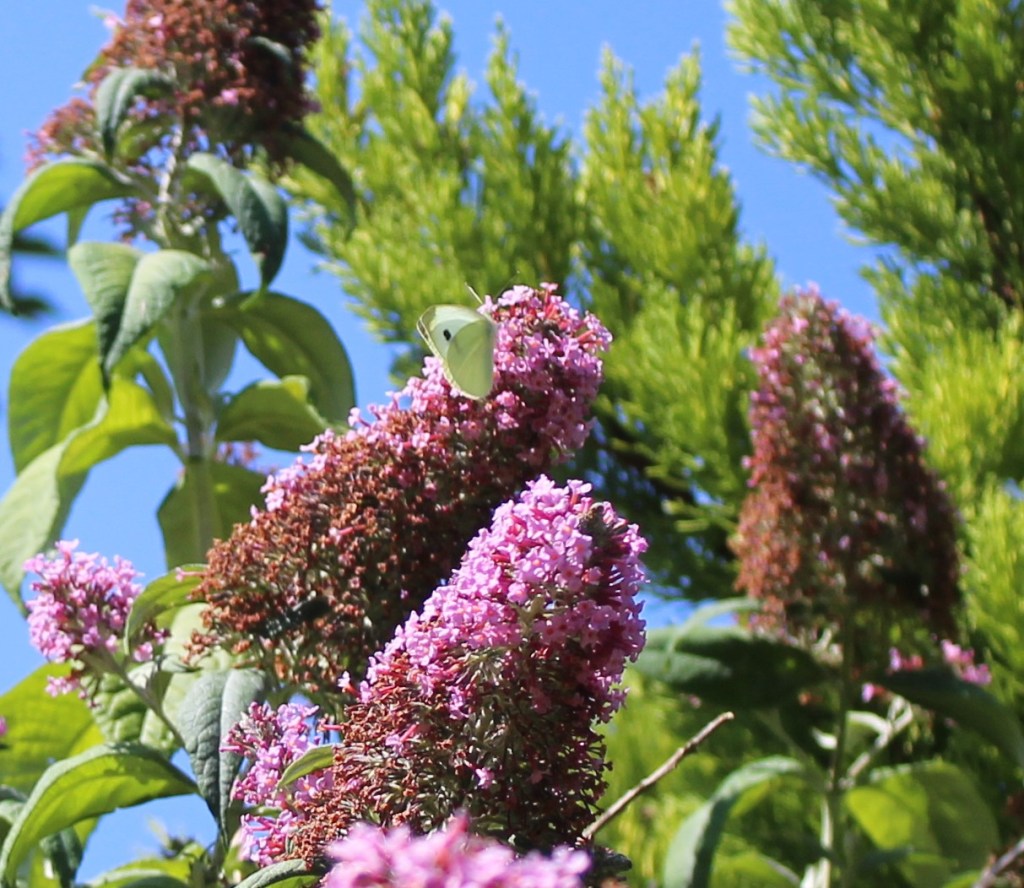
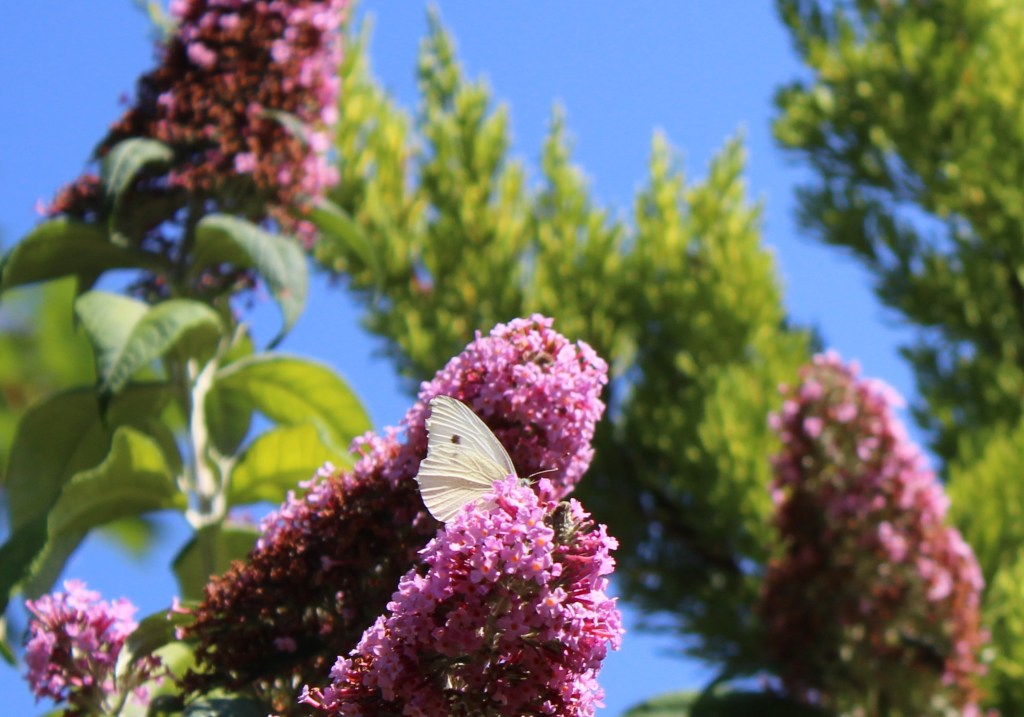
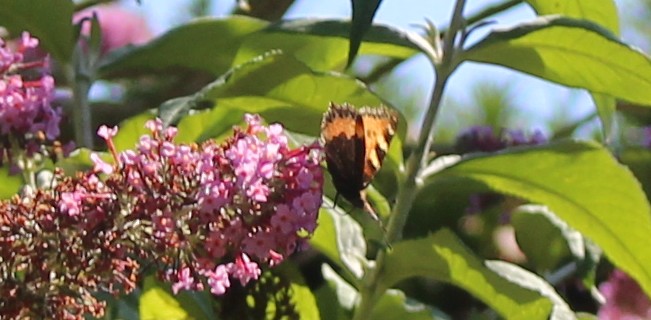
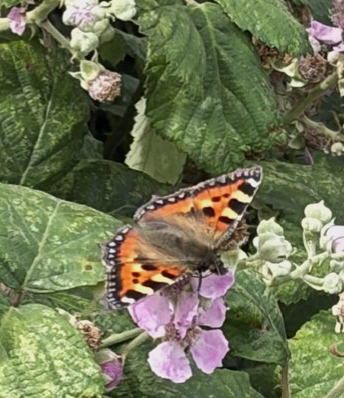
        Undoubtedly the Buddleia bush (also known as the Butterfly bush for good reason) at the bottom of the garden has been helpful in attracting the various butterflies. The Red admirals and Peacocks appear to be the biggest fans of the flowers, although Small tortoiseshells, Small whites and Green-veined whites have also been drawn to the bush, though in lesser numbers. The flowers have a lovely scent which seems more pronounced as the evening draws in so presumably the plant attracts night-time pollinators too.

    Small white g
    Green vein g
    Small tortoise g

    Top: Small white; middle: Large white (underwing); bottom: Small tortoiseshell

        The other benefit of the Buddleia is that the butterflies tend to dawdle on the flowers and spread their wings, so can be motionless for at least a few moments which was ideal for getting the odd photograph!

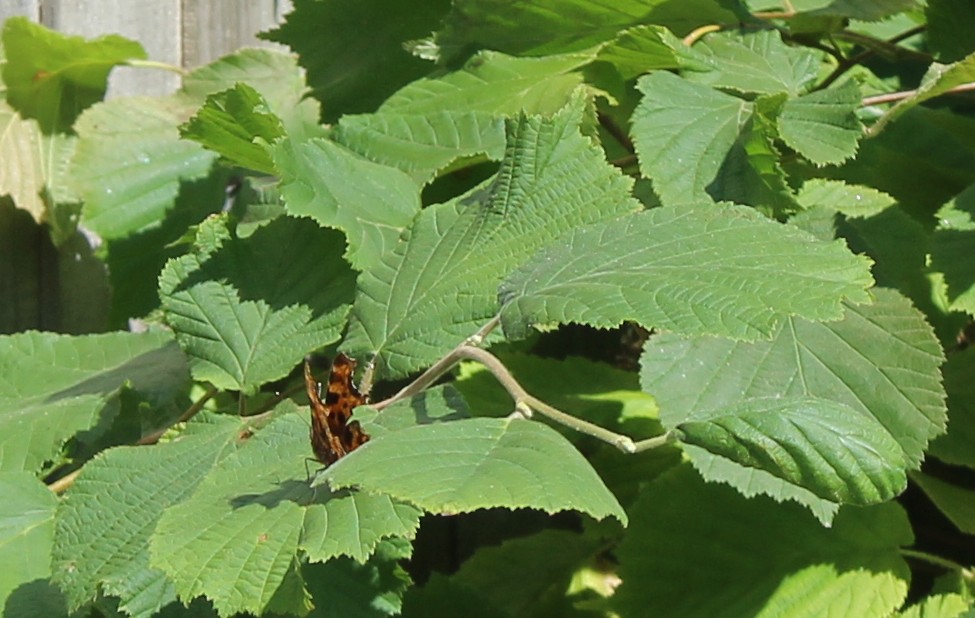
        Not all butterfly species are drawn to Buddleias though: when the Commas (there are two of them) are not whizzing maniacally up and down the garden, they usually prefer to rest on the Hazel leaves – as do the Large whites. But the butterflies that I see more than any others here are the Holly blues, although they rarely stay in one place for very long.

    Comma g
    Holly blue g

    Top: Comma; bottom: Holly blue

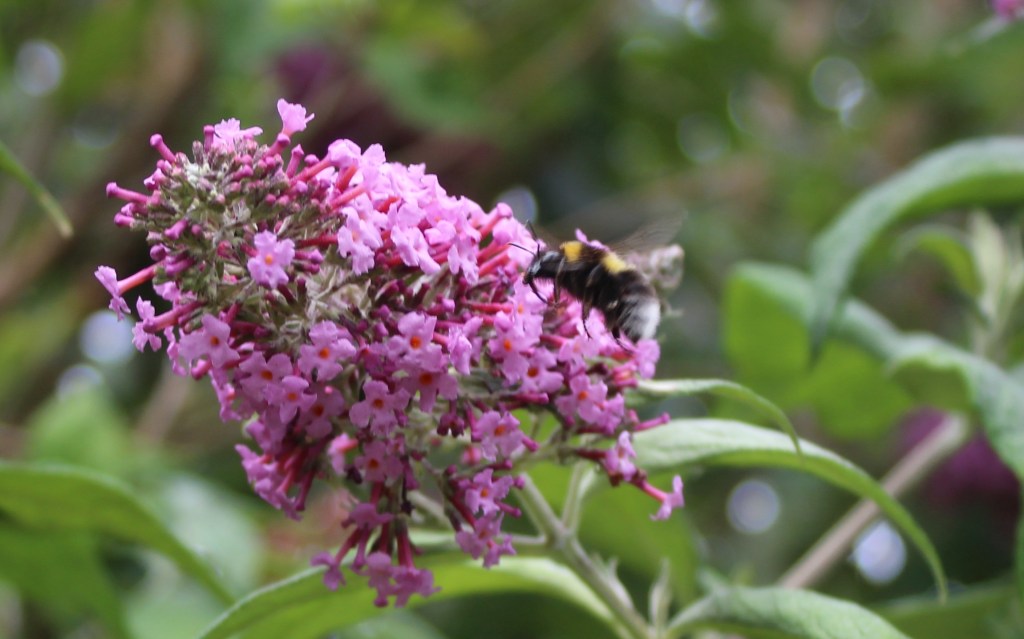
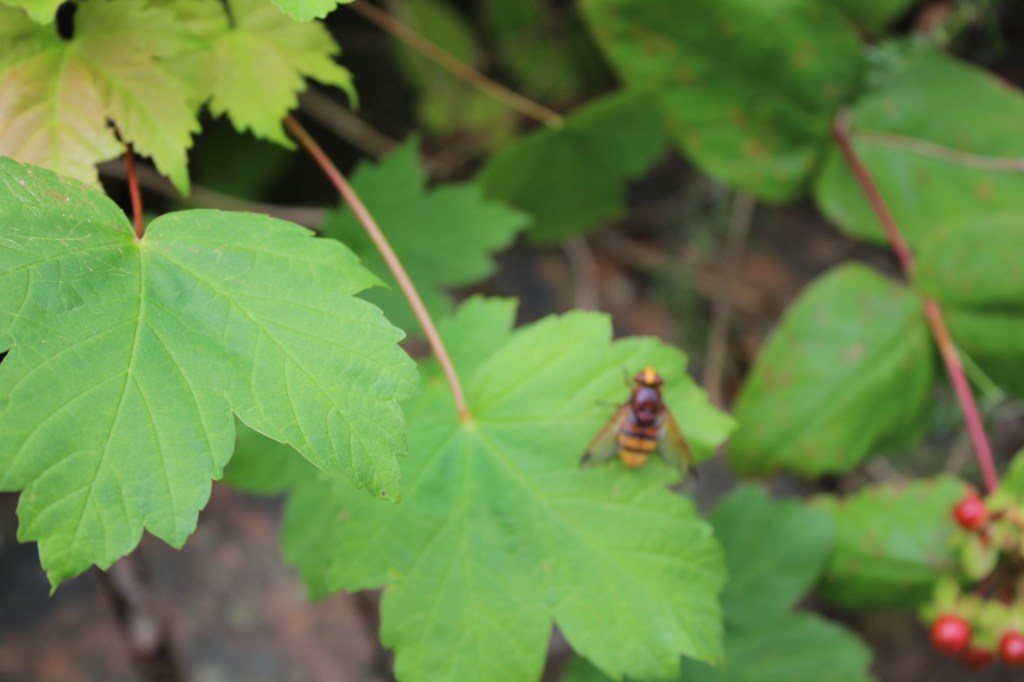
        Besides the butterflies, both Buff-tailed and White-tailed Bumblebees are regular visitors: I’d just been snapping away and still had the camera at hand when I caught sight of an insect that I don’t ever recall seeing before, though I believe they are increasingly common in the UK. This is the Hornet hoverfly, sometimes referred to as the Hornet mimic hoverfly. As its name might suggest, it is similar in size and appearance to the European hornet and imitates its buzzing flight, chiefly to deter predators from approaching it when it visits flowers. Unlike the four-winged European hornet, however, the hoverfly– like all true flies – only has two wings. It also lacks a sting.

    White-tailed Bumblebee
    Mimic hornet
    Mimic hornet a

    Top: White-tailed Bumblebee; middle and bottom: (Mimic) Hornet hoverfly (apologies for the blurred picture)

    The important stuff

    From the garden I went all the way to Café Chez Col where I had a lovely cup of tea, which tasted almost as if I’d made it myself, and an Almond slice made by some bloke who makes “exceedingly good cakes”. Very nice!

  • Egrets and Ditches

    (Sunday 28th June, 2026)

    We were at Mostyn this morning where the 21°C temperature offered a pleasant change from the recent heatwave that we endured in the UK earlier this week. The breeze (WSW) was barely noticeable as we made our way from the path behind Abakhan and headed towards the shore at Mostyn.

        Several Housemartins flew over the cornfield to our left, gathering insects on the wing. Bare only a matter of weeks ago, this field now has an impressive crop of corn flourishing in it.

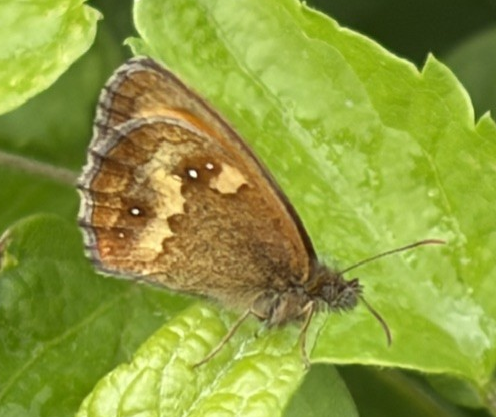
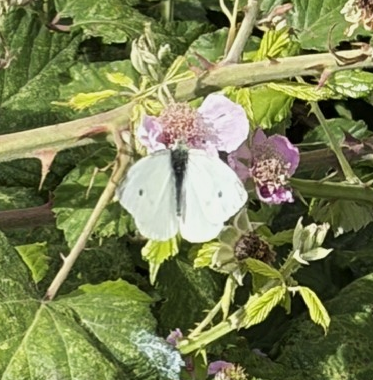
        Encouragingly, we saw an abundance of butterflies during the walk. Primarily, these were Small whites and Green-veined whites, although there were other species making an occasional appearance such as Small tortoiseshells and Gatekeepers. We weren’t sure if the large number was a consequence of the recent hot weather or if this just happens to be a particularly good place for butterflies. Certainly the area does appear to be flourishing at the moment with trees, hedges and undergrowth all looking verdantly leafy, although some rain might be welcome.

    Small tortoiseshell Mostyn
    Gatekeeper Mostyn
    Small white Mostyn

    Top: Small tortoiseshell; middle: Gatekeeper (underwing); bottom: Small white butterfly

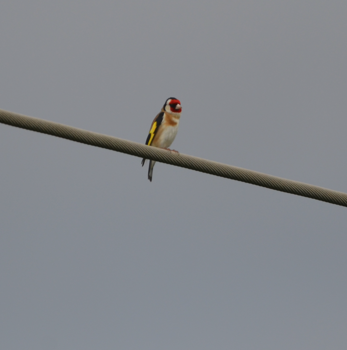
        There were several Goldfinches merrily chirruping away as they stop-started along the treetops. One of them strayed from the rabble and tooted out a tune from its perch on a telephone wire.

    Goldfinch Mostyn

    Goldfinch

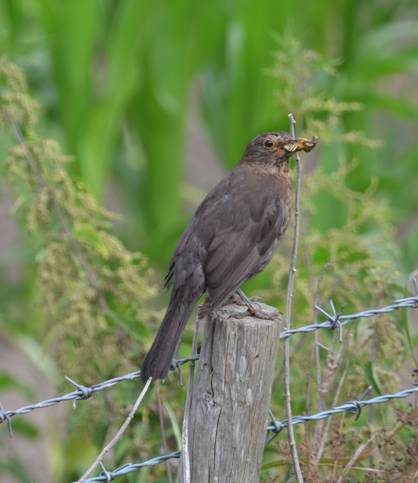
        A male Blackbird was perched on a post with something in its beak, though we couldn’t quite make out what this was (we were a bit confused by the long branch but this is actually behind the bird). The bird’s feathers looked a little bit bedraggled and, as it’s a little bit too early for the annual moult, I think this can be put down to two things. Adult Blackbirds that are rearing young chicks can have a ragged or even bald appearance as they can be susceptible to parasites that might have infested their nests. Also their feathers are probably not being preened as often as they perhaps ought to be either: parent birds can easily neglect to carry out their regular self-care due to the need to find and deliver food for their offspring.

    Blackbird Mostyn

    Male Blackbird looking a bit bedraggled

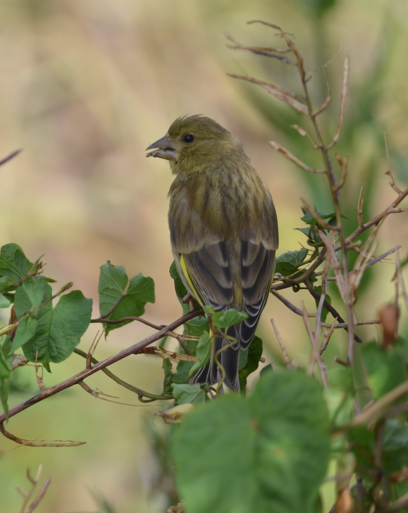
        A little further along from the Blackbird, we saw a Greenfinch contentedly sitting low on a branch, seemingly just letting the world go by. This one is male as you can see from the olive green feathers on his back – the females and juveniles tend to be  much more muted in colour overall.

    Mostyn Greenfinch

    Male Greenfinch

        As we came to the end of the path, we scanned the irrigation ditch which lies parallel to the estuary shore. We were looking for the Kingfisher that we’d seen the last time we were here, a month ago but we didn’t manage to see it this time.

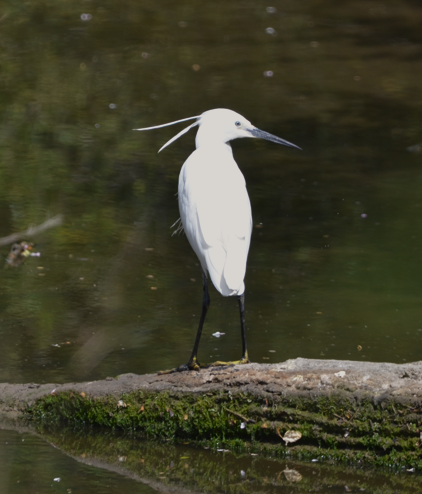
        What we did see, though, were two Little egrets. Each bird was in a different stretch of the water and each of them seemed to be staying within its own particular territory, although I suspect that they were only adapting temporarily while they waited for the tide of the nearby Dee Estuary to recede once again, at which point they would migrate to the mud and sand to feast on what the water uncovered.

    Little egret Mostyn

    Little egret – note the two crest plumes and the chest feathers of the breeding plumage. You can also see the egret’s yellow feet

        Each of the Little egrets had long plumes at the back of their heads and on their chests. These are typically seen during the breeding season but, as both males and females grow breeding plumages, it’s very difficult to tell the sexes apart. The male is slightly larger in size but this is only a useful indicator if the two sexes are standing next to each other. Though we usually get a good look at the black bills and black legs of Little egrets, we don’t ordinarily get a decent view of their feet, as they’re usually submerged in water or otherwise difficult to see. However, this time we could clearly see their yellow feet which make a distinct contrast to their black legs.

    We looked along the shore but, probably because the tide was high and almost reaching the boulder breakers, there were no sea birds to be seen at all today. Apart from one angler who was putting away his fishing gear as we were returning from the shore, we saw nobody else on the entire walk. A lovely spot.

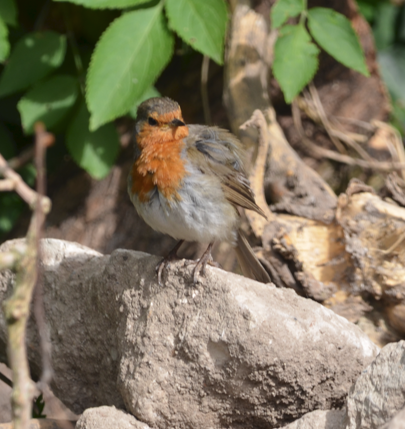
    Robin Mostyn

    An old friend

    The important stuff

    We retraced our footsteps and went to the Café at Abakhan for a cappuccino each, which were accompanied by a Raspberry Bakewell slice (Col) and a Cranberry and white chocolate slice (Stu). Naturally, we were both very pleased to have achieved one of our ‘five a day’ healthy fruit portions!