Month: June 2026

  • Treecreeper at Royden Park

    (Sunday 21st June, 2026)

    Over to Royden Park on the Wirral Peninsula this morning. It was sunny with a very light north-easterly breeze, the temperature a comfortable 21°C, though it climbed higher after midday.

        We followed the path from the car park and cut through the woods to Roodee Mere. Here, there is a nesting platform in the water on which we often see a Grey heron perching while it surveys the mere for food. This time, however, the space was being shared by a Canada goose and a Moorhen. As you can see, each bird has a nest either side of the central box.
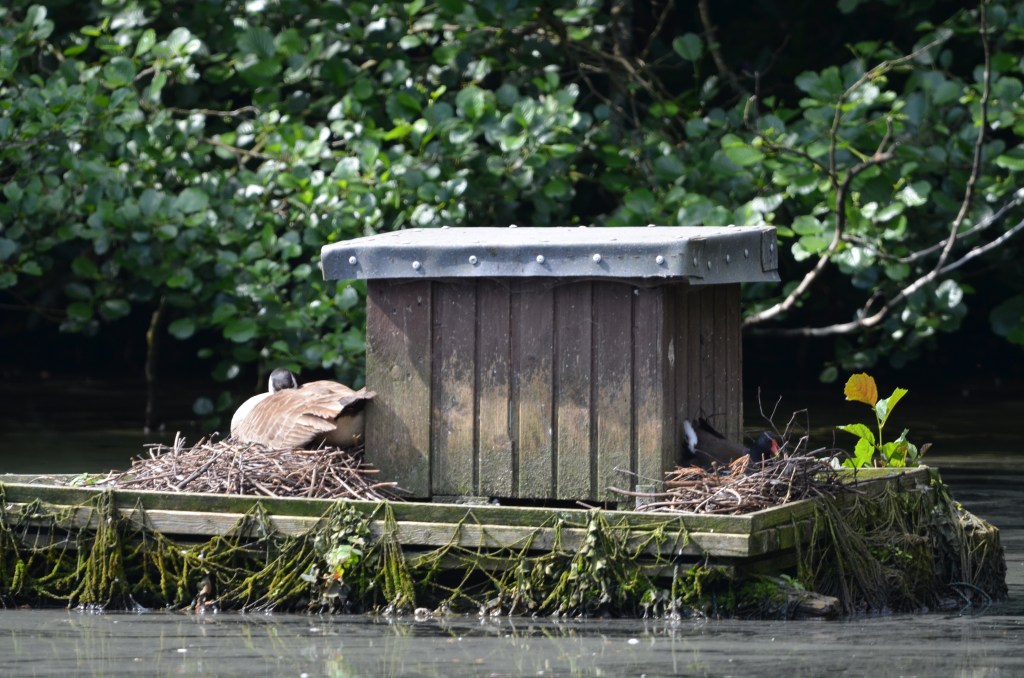
    Sharing nest space
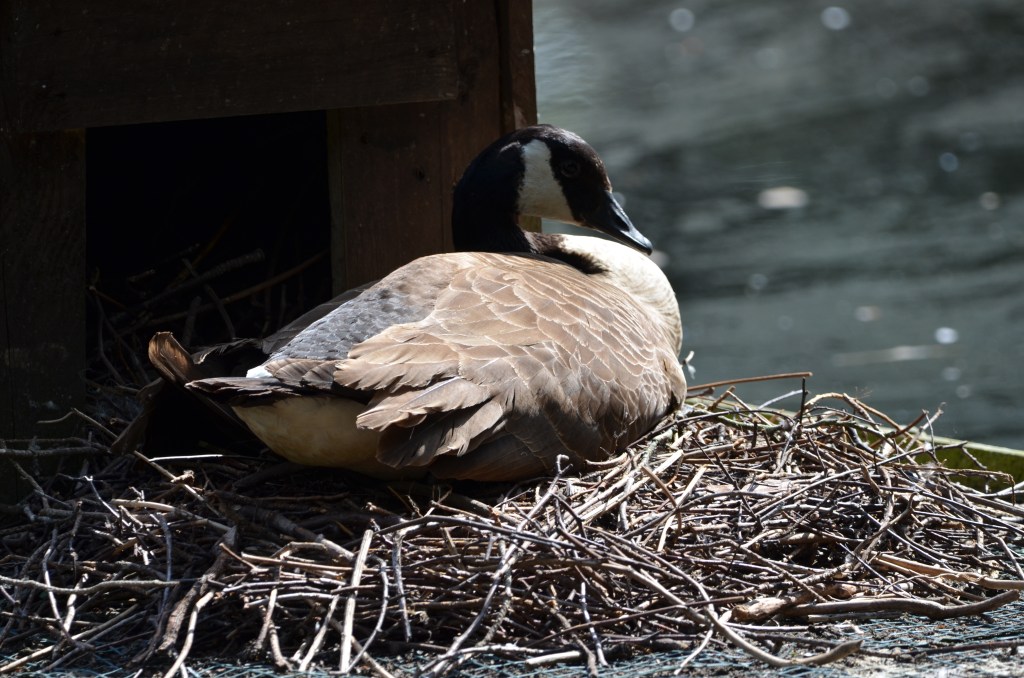
    Canada goose on nest

        Judging by the number of chicks present in and around the water, many of the Moorhens had already produced their first broods. Moorhens might have two or even three broods during the breeding season and chicks from the first brood will often help their parents with feeding the later broods. While this obviously helps the parent birds, it’s also useful practice for when these first-brood chicks go on to have their own offspring the following year.
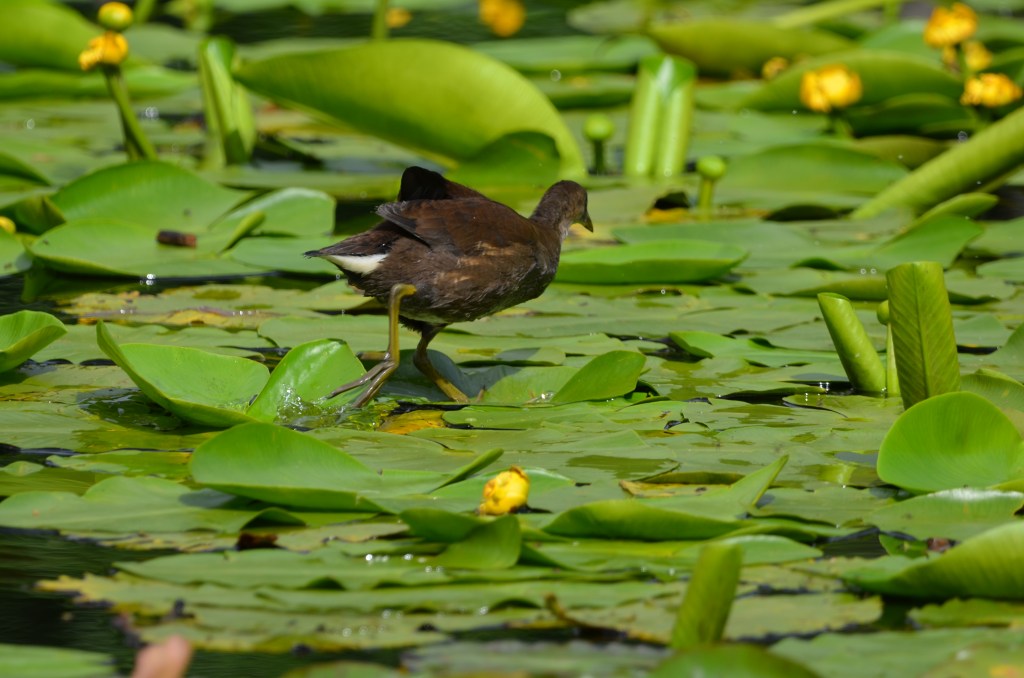
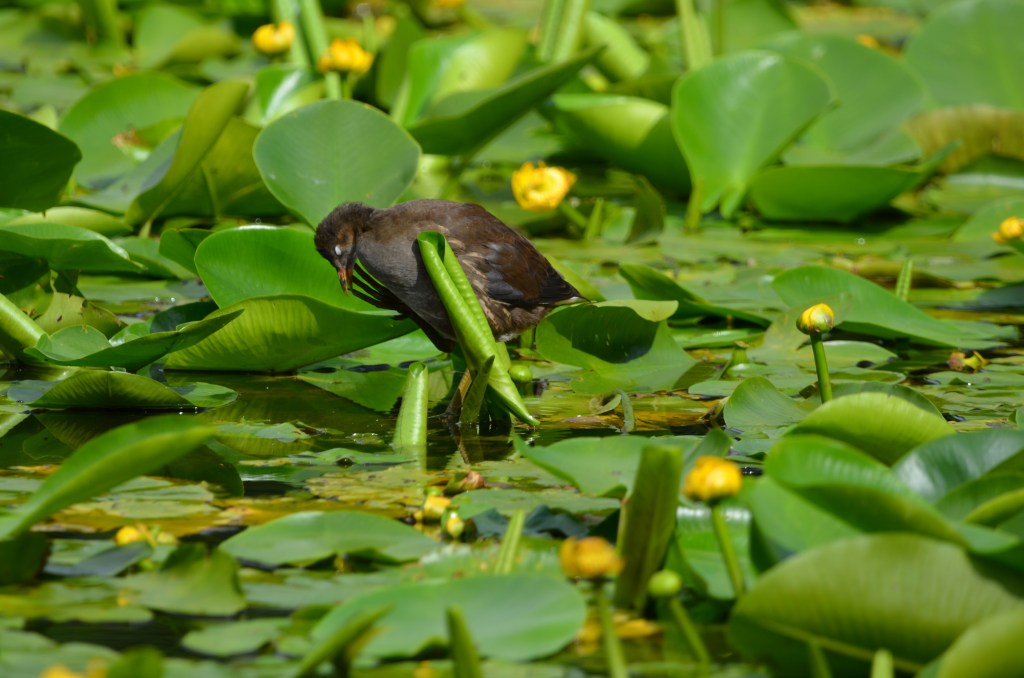
    Skipping on lily
    Welcome to the jungle

    Moorhen juveniles negotiating the lily-pads …

        Water-lilies were plentiful on one section of the mere and several young Moorhens took obvious delight in agilely skipping across the lily pads: they seemed to be doing this purely for the sake of it. The more responsible parents – who were probably too heavy now – simply swam through the pads, although this didn’t appear to be half as much fun!
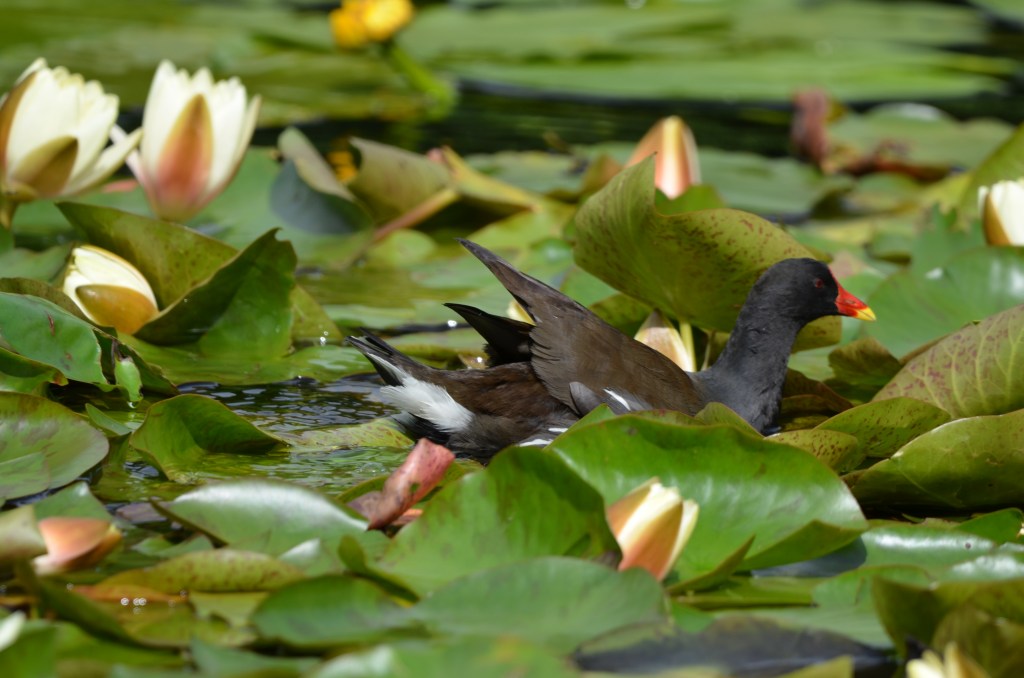
    Moorhen swimming

    …while the heavier adult has to swim

        A Herring gull circled above the mere and dropped down amongst the lily pads: at first, we were a little concerned in case it was after one of the chicks but it seemed to have spotted something under the water. The gull made a couple of attempts to retrieve whatever fish or amphibian it had seen but eventually gave up and flew off.
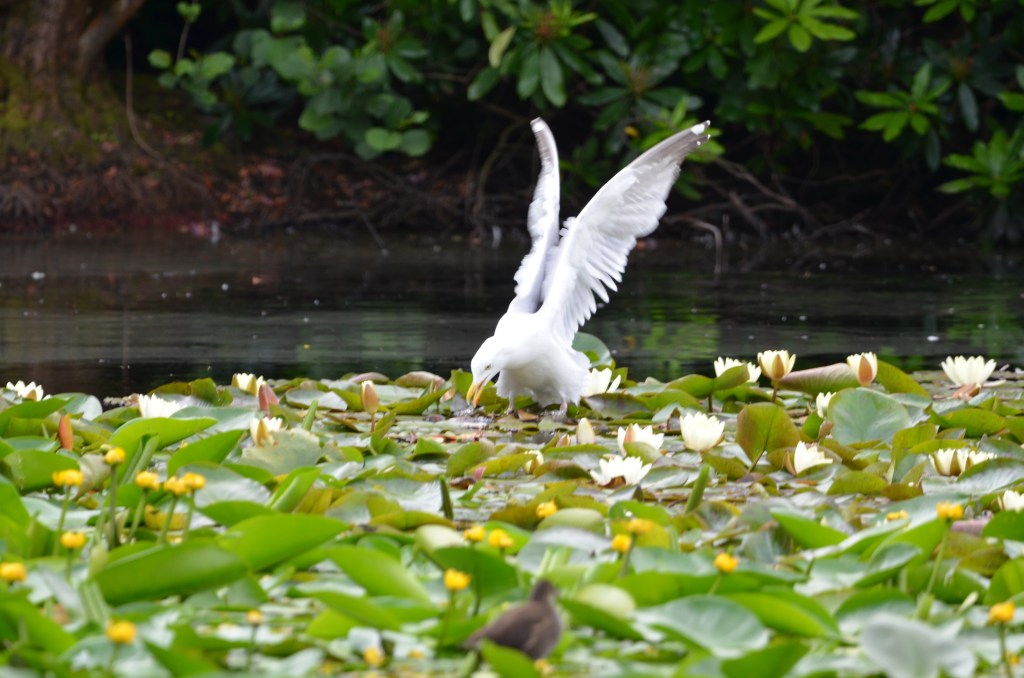
    Herring gull fishing

    It wasn’t clear what drew the Herring gull to the water (above), although this mystery fish appeared soon after (below)
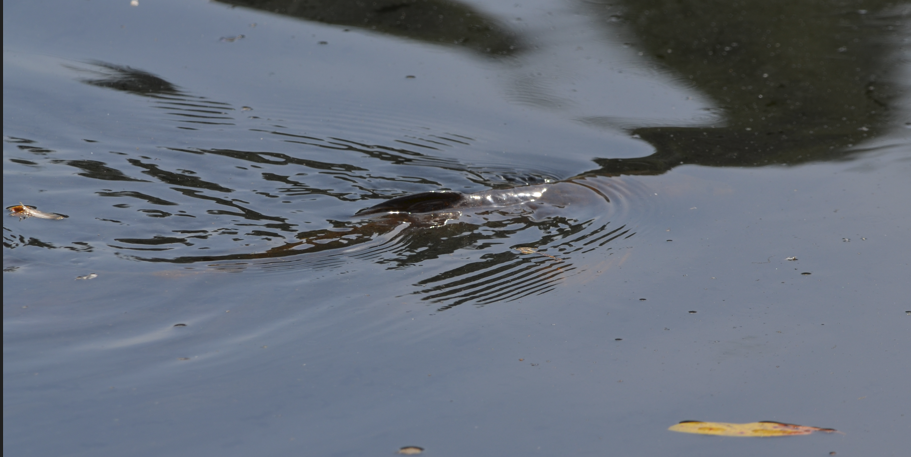
    Mystery fish

    By coincidence, we did see a large fish that was swimming close to the surface – you can’t really tell what fish it is, though it’s size might indicate a carp. It’s possible that this was what had interested the Herring gull but we can’t say for sure. In turn, the fish might have been interested in one of the many dragonflies that were zipping around the mere today.
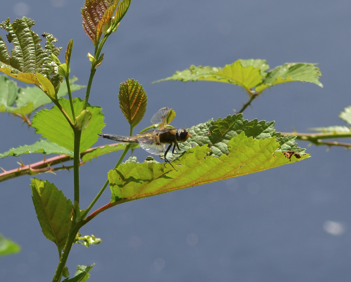
    Dragonfly 4

    A four-spotted chaser dragonfly resting on a hazel leaf

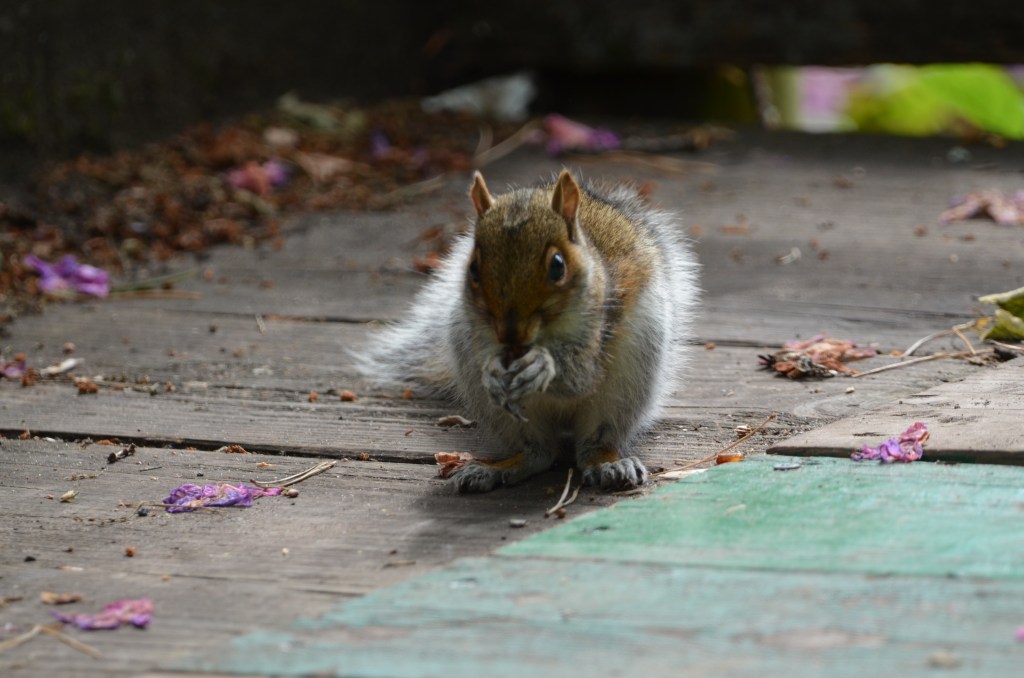
        There were one or two Grey squirrels out and about, demonstrating their acrobatic skills. One in particular entertained us as it descended head-first from a nearby tree before jumping across the path in front of us and disappearing in the undergrowth. Moments later another squirrel appeared on the wooden jetty at the side of the mere, where it nibbled at some bird food that presumably had been left for the Moorhens.  
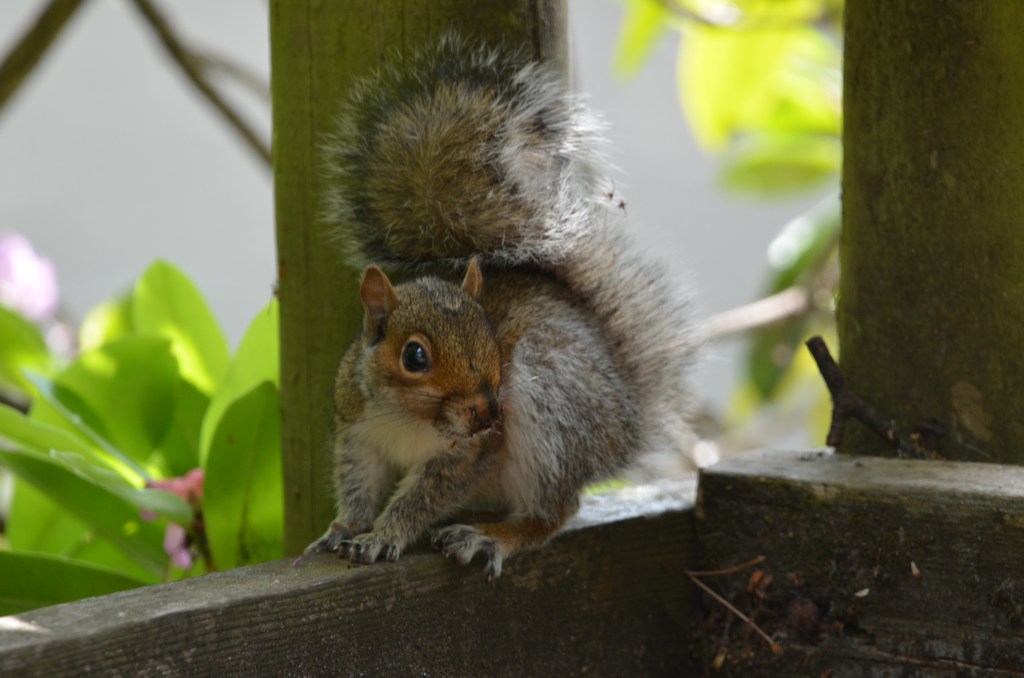
    Squirrel at Royden
    Squirrel at Royden 2

    Shameless squirrel

        While we were stood there watching this scrounging squirrel, a small bird flew across from the surrounding wood and landed low on a tree just in front of us. It was a Treecreeper and we watched as it scaled the tree then fluttered down to the second trunk of the same tree and climbed again before repeating this procedure for a third and final time, after which we lost sight of it.

        Although the Treecreeper is quite common throughout the United Kingdom, we were lucky to have seen it as its mottled brown back and wing feathers act as great camouflage against the bark of trees. It has a white underbelly that is generally hidden from view as it climbs, but we happened to catch a glimpse as it flew in front of us.   
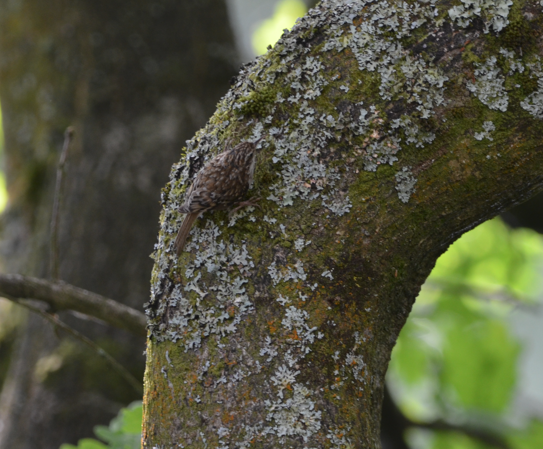
    Treecreeper

    Treecreeper blending in against the lichen and bark

        The tree was a common alder with its distinctive round leaves and it looked like it had been coppiced at some point in the past, which would explain the three trunks radiating from it. As it climbs, the Treecreeper uses its long, curved beak to probe cracks in the bark for insects to feed on. I reckon we were lucky here too in that the Treecreeper didn’t fly off to another tree but simply dropped down, enabling us to keep sight of it.

        Treecreepers use their strong toes to grip the bark and they have very stiff tail feathers which offer extra support when pushed against the tree and this helps to reduce strain on their legs as they climb. Most references describe the Treecreeper as spiralling upwards around the trunk as it climbs and this is what I remember from the two previous occasions that I’ve seen them. However, this particular Treecreeper climbed vertically up the same side of the trunk without looping round until it was quite high up the tree. A fascinating little bird to see,

    The important stuff

    On to the Courtyard Café for cappuccinos and a slice each (or should I say ‘doorstop’ each) of Caramel biscoff cake (Stu) and Carrot cake (Col). Scrumptious!
  • Jay at Loggerheads

    (Sunday, 7th June 2026)

    Over to Loggerheads Country Park in Denbighshire today. The wind (SSW) was quite blowy on occasion but you barely noticed it here as the woods are so sheltered. Although overcast the morning remained dry and the temperature didn’t rise above 15°C.

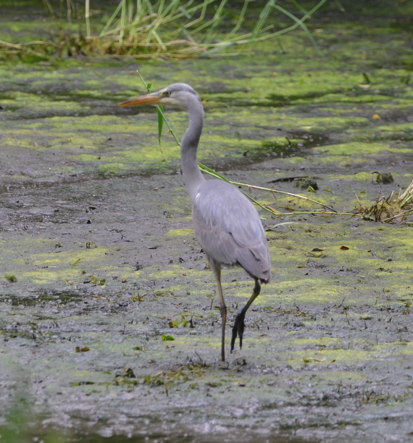
        The ditch between the car park and the buildings had been drained and cleaned up, prior to relining it. While we were examining this work, we noticed a Grey heron standing motionless in the pond just beyond the sluice gate. We carried on down the path for a better view and stood watching as the bird stealthily stalked the pond in search of prey, although it loos like its collecting nest material in the photograph below.

    Grey Heron logpond

    Grey heron with leaves in its beak

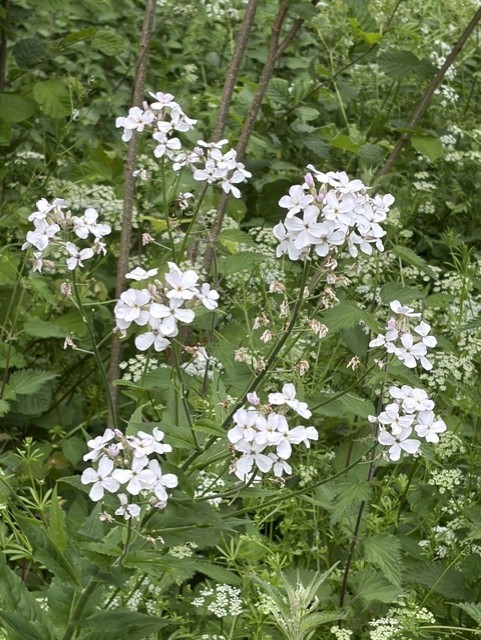
        As we came to the stone bridge that crosses the River Alyn to join the Leete path, we saw a plant with bright, white, four-petalled flowers. This is Dame’s rocket which more commonly flowers as a purple or lilac colour. The white petals on this version seemed to hold their own light and certainly stood out against the predominantly green foliage in the background.

    Dame's rocket

    Dame’s rocket

        Surprisingly, the wild garlic flowers that had carpeted the woods only weeks before had all but gone, with just the occasional earthy whiff reaching us. A reminder of how quickly time marches on, I suppose.

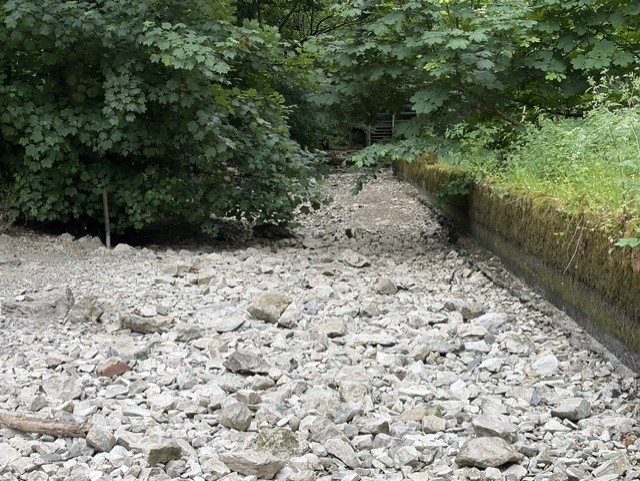
    Bedrock

    The River Alyn’s waters often disappear underground, leaving the bed dry

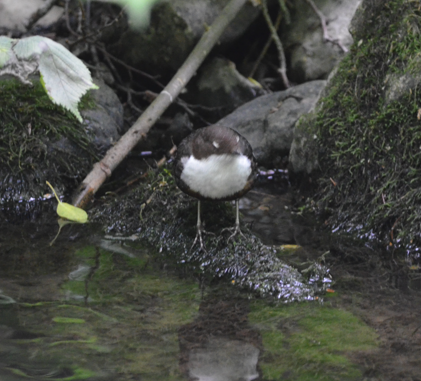
        A short way along the river we were reassured to see the White-throated dipper once again: we hadn’t seen any Dippers since they had (presumably) abandoned their nest further downstream after the Alyn’s water had receded, a not uncommon occurrence here at Loggerheads which we’ve covered elsewhere on the blog.[1] Good to see, although it was just the one Dipper that made a fleeting appearance this morning.

    Dipper blinking again

    White-throated dipper photographed mid-blink

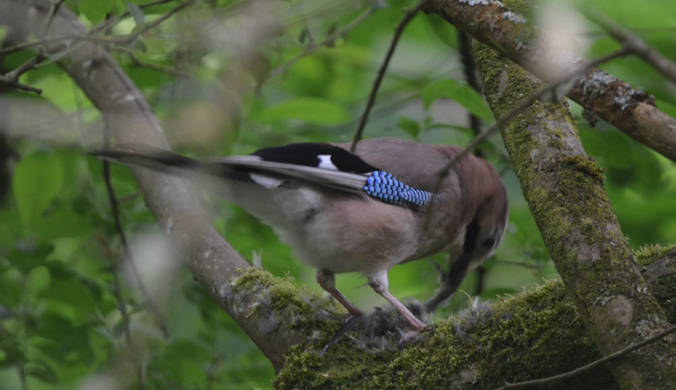
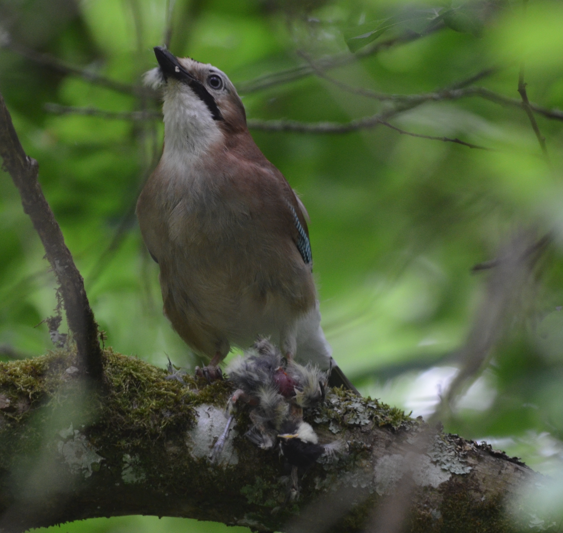
        Nature doesn’t always provide us with pleasantness, it has to be said, and shortly after our Dipper had disappeared upstream, there was a raucous commotion in the trees on the opposite bank. We looked over to see a Eurasian jay with a small bird in its beak, while another small bird had the Jay’s tail in its beak.

    Jay

    Eurasian jay devouring prey

        The two smaller birds were Great tits and, though it was difficult to be absolutely sure, it looked like the Jay had taken an adult Great tit and that this poor bird’s mate was valiantly trying to rescue it. The second bird flew off as the Jay turned on it, tentatively returning a little while later, by which time the Jay had finished off its partner.

    Jay 2

    Jay with remnants of Great tit on branch

        The Jay is probably the most secretive of our corvids in the United Kingdom and you don’t often see them, though you do occasionally here their cacophonous screeching, which is hard to miss really. The Jay’s diet is varied and it will eat fruits, berries, acorns, and insects, but will also eat small rodents, young birds, and eggs. Occasionally – as in this case – it will also take adult birds. With its pinkish plumage, black and white flashes on its wings, and the distinctive sky-blue and black patch on its upper wing, the Jay is arguably our most colourful corvid but seeing our first Jay in two or three years behaving in this brutal way was obviously not the best way to witness it’s reappearance. However, it is what birds – and other animals – do, and we should treat such behaviour as dispassionately as we can.

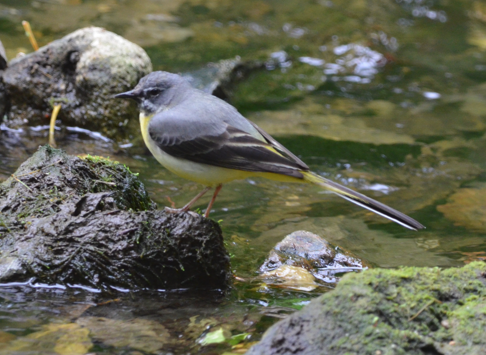
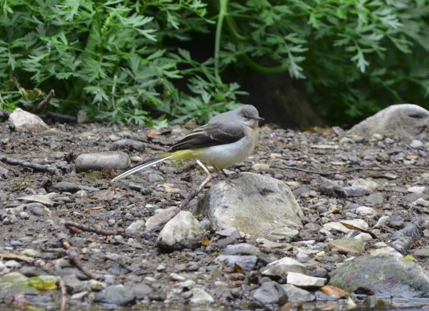
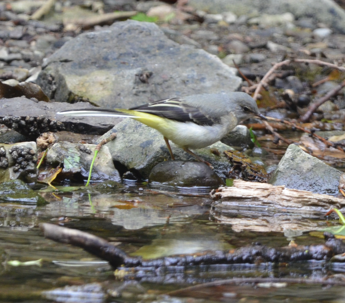
        We saw two adult Grey wagtails and one fledgling all flying low along the course of the river to forage around the stones on which they alighted. It looked like the juvenile was still being fed by one or both of the adults for the most part. Much paler than its parents underneath, with barely any yellow, this youngster did seem to be learning about habitat and food sources from its parents. These are skills it will need when it becomes fully fledged, which cannot be that far off now.

    Grey wagtail male
    Wagtail juvenile
    Grey wag 2

    The adult Grey wagtail (top picture) is much more yellow underneath than the juvenile (middle and bottom pictures)

         We caught sight of a Chaffinch as it flew from our side of the river to the trees over on the far bank. As we followed this colourful male’s progress, we almost missed the female with her more muted colouring, which enabled her to blend in with the branch on which she was perched.

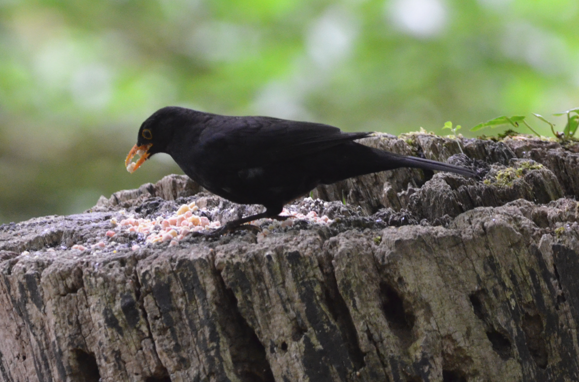
    Blackbird male

    Male Blackbird

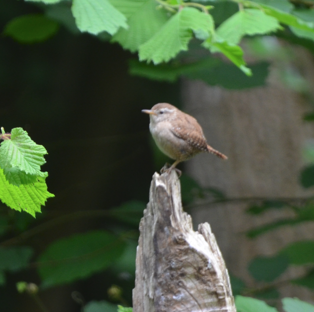
        Whenever we’re here at Loggerheads Country Park, we seem to hear but rarely see Wrens. Today, we could hear one singing from the trees behind us and being answered – or competing with – one whose call was coming from across the river. As we were a little further downstream now, where the waters have receded, Stu was able to walk across the riverbed and get a photograph of this lovely little bird.

    Wren on tree stump

    The Wren delivered a fine solo performance for us

    The important stuff

    Over to The Mill House café (Tŷ’r Felin) for our well-earned refreshments. Cappuccinos, unsurprisingly, with a Lemon muffin with gooey lemon curd in the middle for Col, and a Chocolate mini-egg pie (or something) for Stu. Very nice and very healthy!


    [1] See Along the Leete 14th April, 2024; and The River Vanishes 27th July, 2025