Month: May 2026

  • A Morning at Mostyn

    (Sunday 24th May, 2026)

    We were down at Mostyn this morning, looking over towards the Wirral Peninsula from the Flintshire side of the Dee Estuary. Bright and sunny, the temperature was still pleasantly comfortable at 23°C and the wind (SSW) barely noticeable. Although the temperature climbed during the afternoon, it was still much lower than those expected over the next few days. [Note: the UK May Bank Holiday heat record was broken at Kew Gardens in London the following day, where the temperature reached 34.8°C. It was exceptionally warm throughout most of the UK and locally temperature of 32.2°C was recorded at Hawarden Airport, just twenty miles away. Such temperatures would have been a bit too much for us pair of old duffers, we reckon].
    pathmost

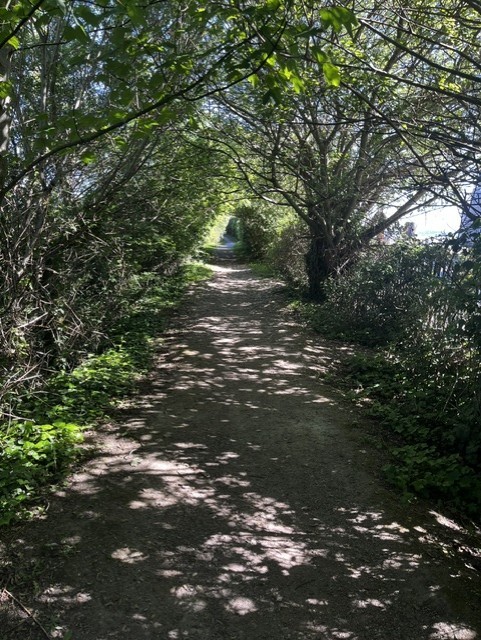
        We parked up near Abakhan Stores and followed the narrow path towards the rear of the buildings. Several Goldfinches darting from tree to tree either side of the us as we progressed: the collective noun for Goldfinches is a charm, the word deriving from the Old English word c’irm which describes the chattering sound they make. Apparently, the birds are not particularly charming in the modern sense, but we love them all the same![1]
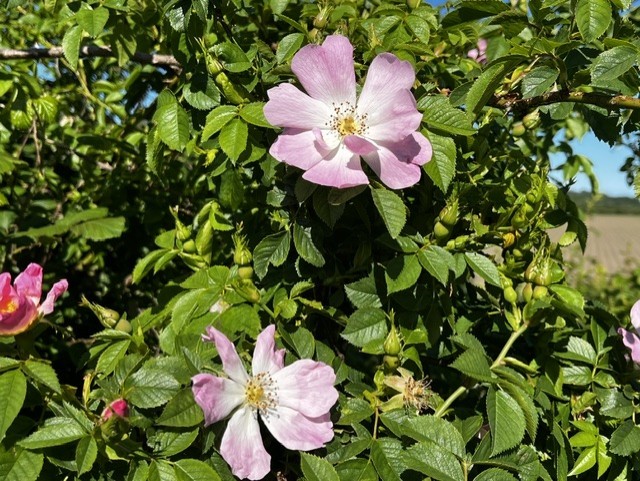
    Dogrose2

    Dog roses

        Either side of this path are fields with irrigation ditches running along the bottom. And where there’s water, of course, there are insects, which in turn attract the birds. Above the field to our left, two House martins displayed their aerial acrobatics as they fed on the wing, one moment carving wide graceful arcs through the sky, the next moment adeptly feinting left and right at seemingly impossible angles to catch their prey unawares. Wonderful to watch!
    Lancaster

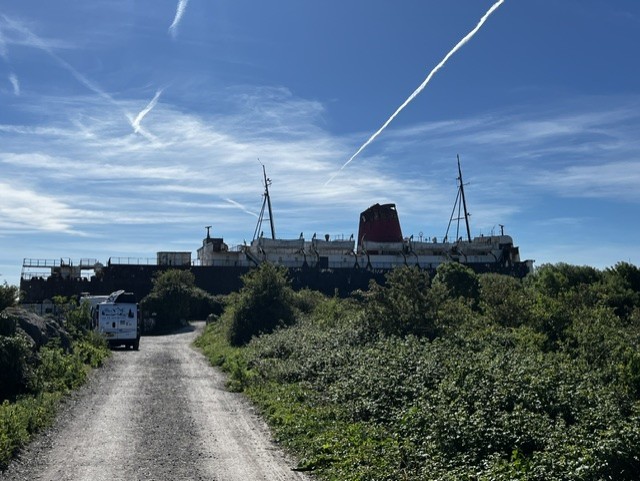
    TSS Duke of Lancaster

        At the bottom of the path lies the TSS Duke of Lancaster which is fenced off and has lain beached down here since 1979. The ship was originally built in the mid-1950s for British Railways which, at the time, operated ferry services as well as trains. The TSS Duke of Lancaster primarily served passengers travelling between Heysham, in Lancashire, and Belfast. You can find more detailed information about the ship’s history on Wikipedia.[2]
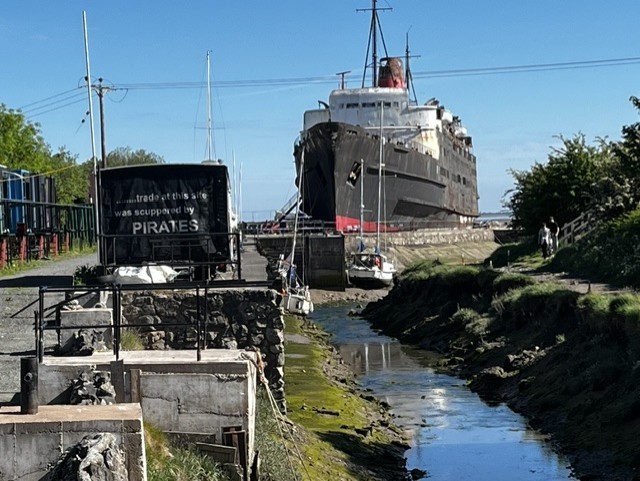
    Lancaster2

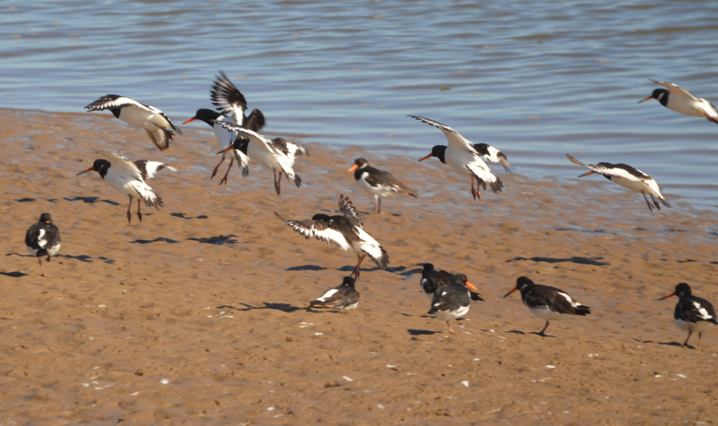
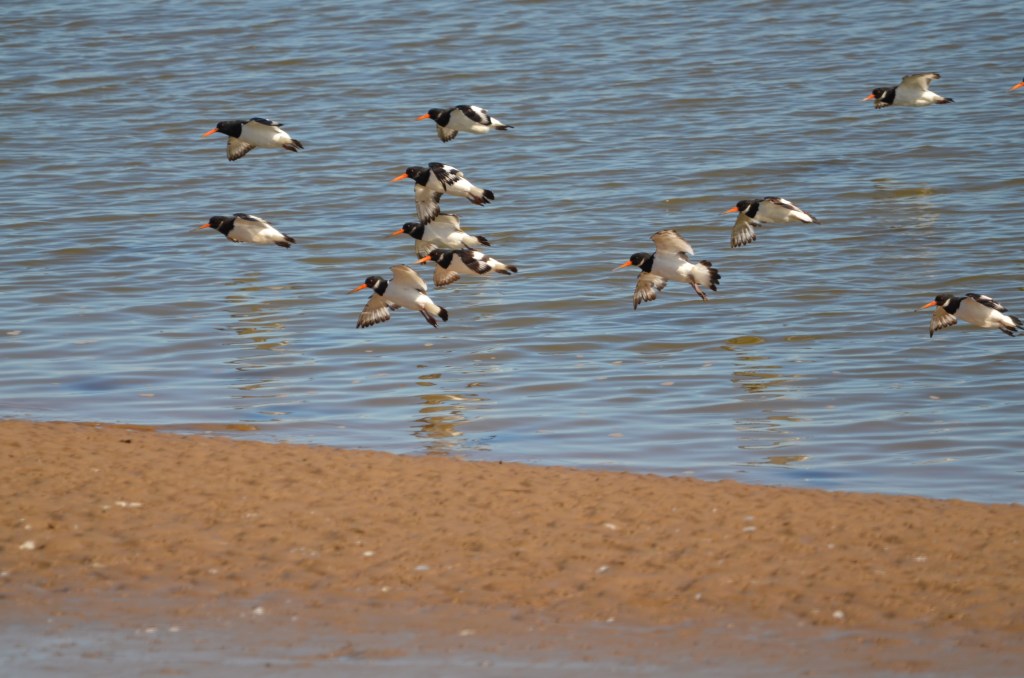
        Looking out over the Dee Estuary, we saw a large flock of Oystercatchers making the most of low tide and using their distinctive orange beaks to forage in the mudflats nearby.
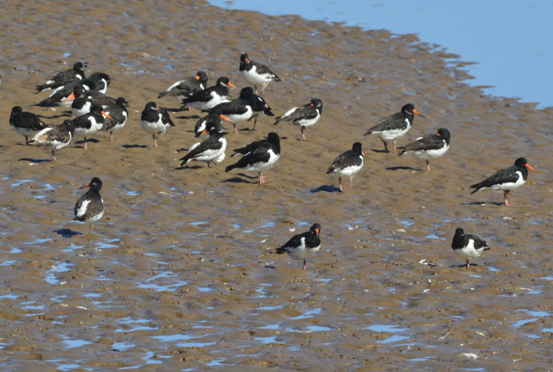
    Oyster2
    Oystercatchers
    Oysteragain

    Oystercatchers

    Occasionally, a group of them would take to the air at some unseen signal and fly out to a sandspit further out into the wide expanse of the estuary, returning in similar fashion later. (At its mouth, the Welsh and the English sides of the Dee Estuary are about five miles apart).
    Hilbre

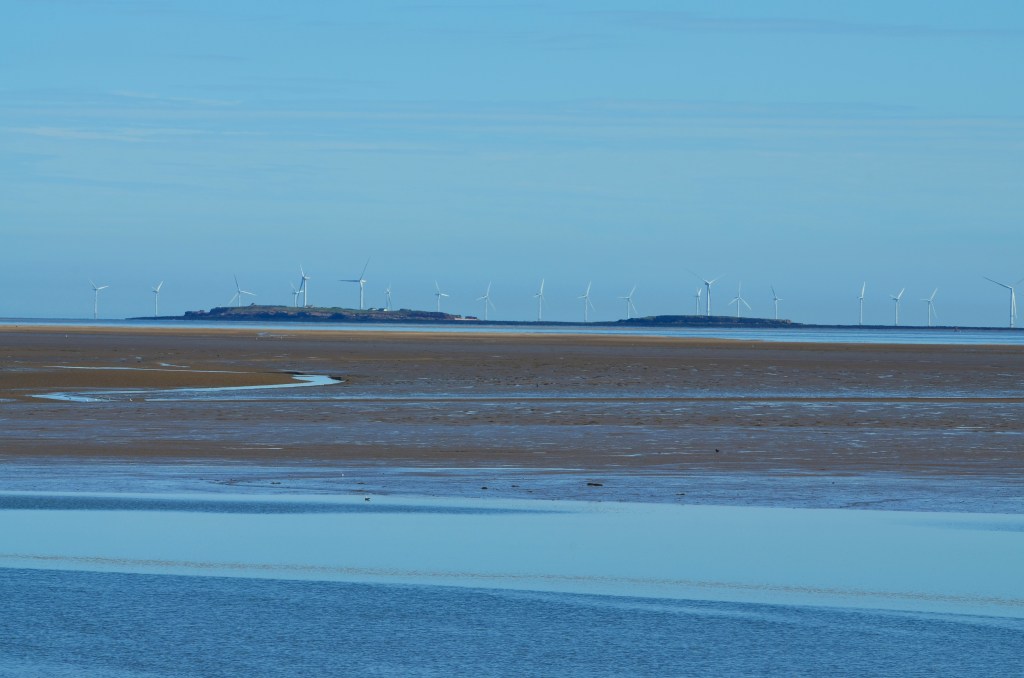
    Looking towards Hilbre Island near the Wirral side of the Dee Estuary

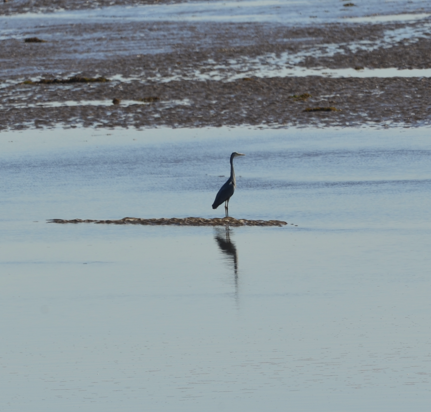
    A Grey heron flew in and began hunting for food in the shallows. It stood motionless for minutes on end before spearing its unfortunate prey with a lightning strike of its beak.
    Reflective heron

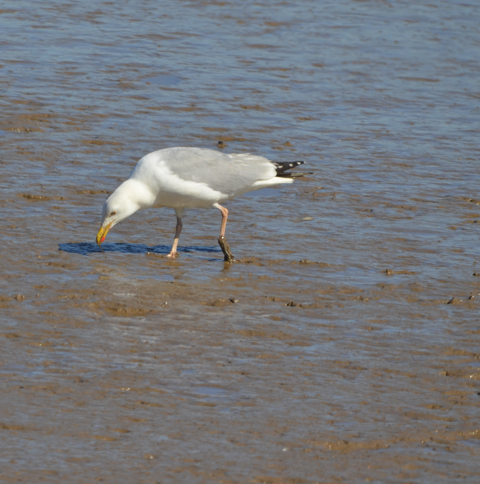
    Above: A reflective Grey heron; and, below: a Herring gull
    Herring gull

        As we set off back along the path on our return journey, Stu pointed towards the irrigation ditch and said: “Kingfisher!” I turned round and, but I only saw the distinctive electric-blue and turquoise of its back as it flew away from us along the ditch. We stayed for a while, scanning the area with our binoculars and, eventually, managed to locate it quite some distance away in a tree overhanging the water. We were just able to pick out the turquoise / blue of its feathers from the surrounding tree foliage before it moved off again. No photographs but great to see and we now have a reasonable idea of its territory.

        We were accompanied by our Goldfinch friends on the way back along the path and we clocked a rabbit at the edge of the field on the opposite side to the ditch, where there is a small thicket bordering the field. Whether it sensed danger or not, the rabbit decided to retreat back undercover.
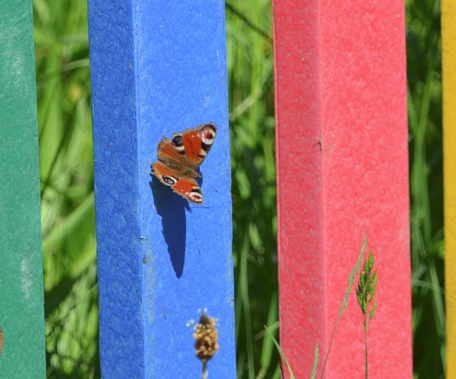
    Peacock butterfly

    Peacock butterfly taking the sun

    The important stuff

        Well, after all this excitement, we were in dire need of refreshment. So we sauntered off to the cool and spacious Café at Abakhan where we partook of a cappuccino each and a Caramel Slice (Col) and Coffee and Walnut cake (Stu).
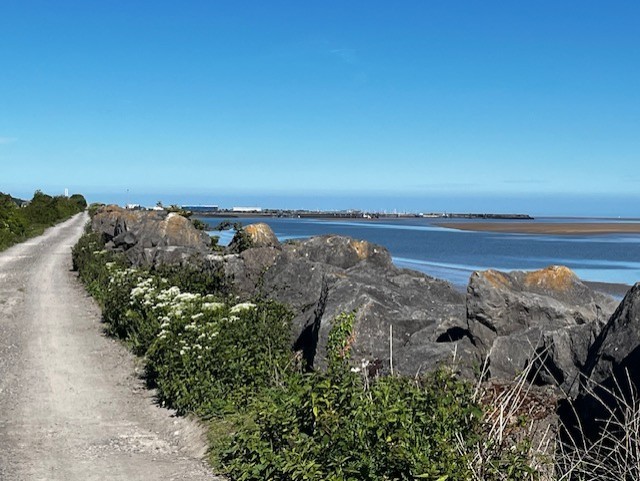
    Dee-estuary

    [1] From Living with Birds https://www.livingwithbirds.com/tweetapedia/21-facts-on-goldfinch
    [2] https://en.wikipedia.org/wiki/TSS_Duke_of_Lancaster

  • Wagtails along the Alyn

    Sunday 17th May

    Back to Loggerheads Country Park in Denbighshire this morning. The temperature was 12°C and there was a very gentle wind (WSW), although the odd cold gust blew through the woods. Overcast when we first arrived, the sun shone through from mid-morning onwards.

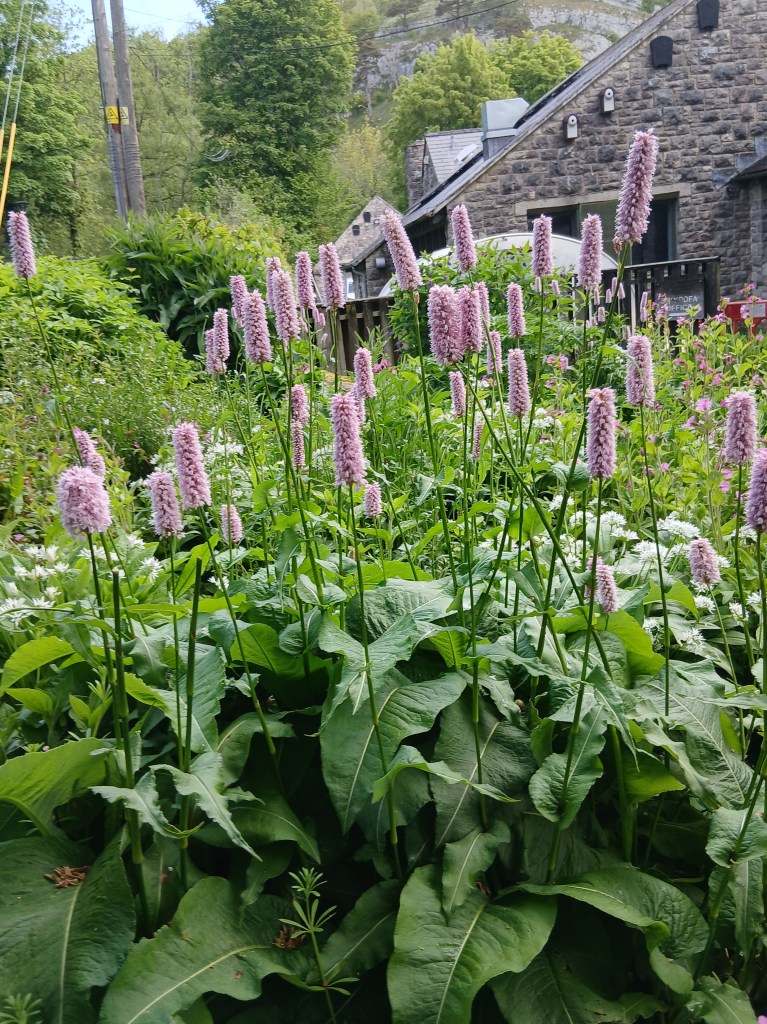
        We were greeted by lots of lovely pale, pink flowers on long stems with large leaves at their base – the common bistort certainly catches the eye.

    Bistorts at Loggerheads

    Common bistort

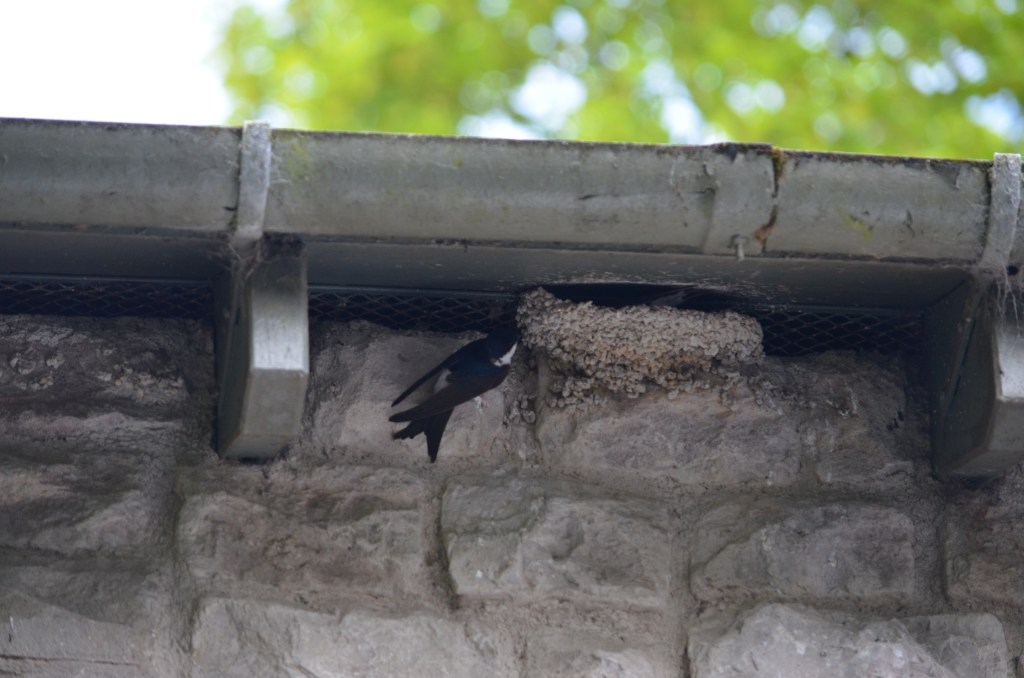
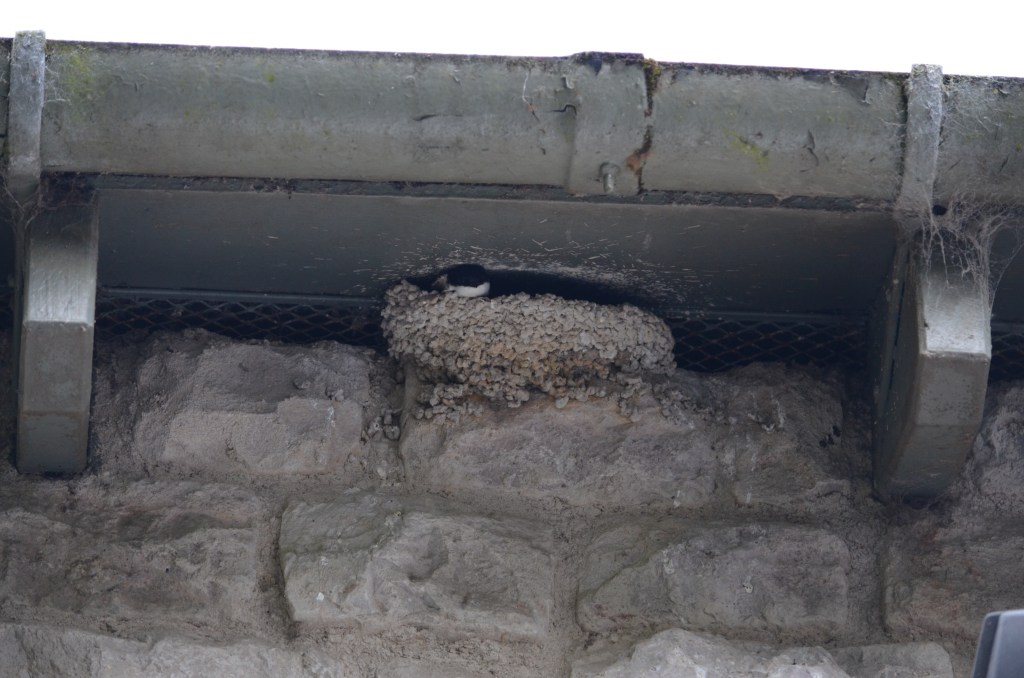
        A pair of House martins have constructed a nest up in the eaves of the gift shop once again and we watched as both parents shared feeding duties, each darting in with insects caught on the wing. We saw two chicks that briefly revealed themselves, although there may be more.     

    House martin entering nest

    House martin entering nest and (below)about to emerge in search of more insects for its chicks

    House martin leaving nest

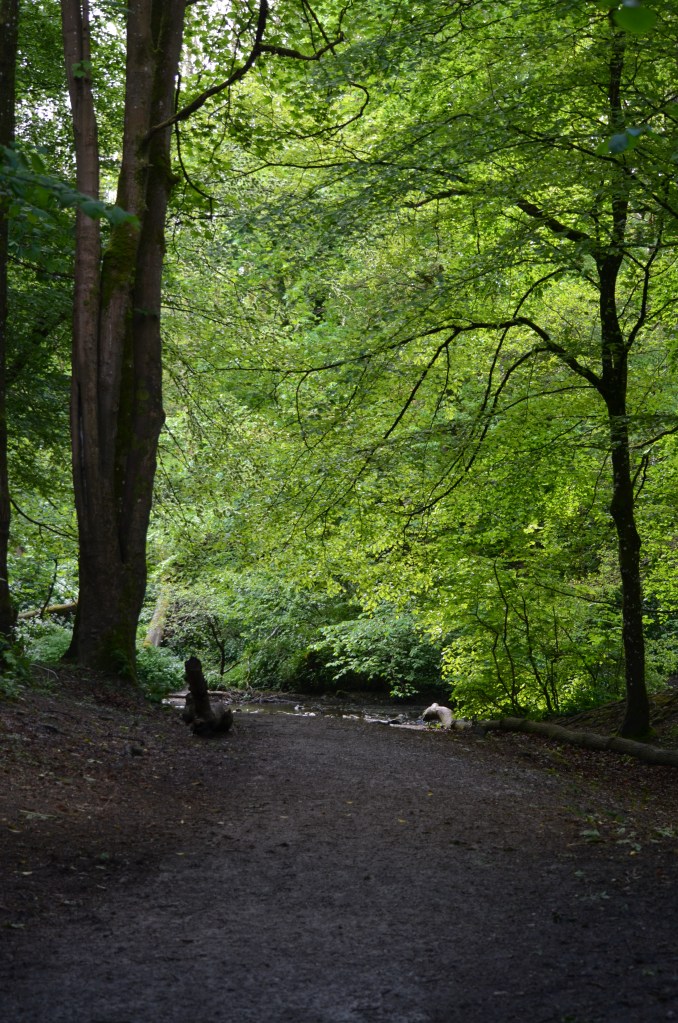
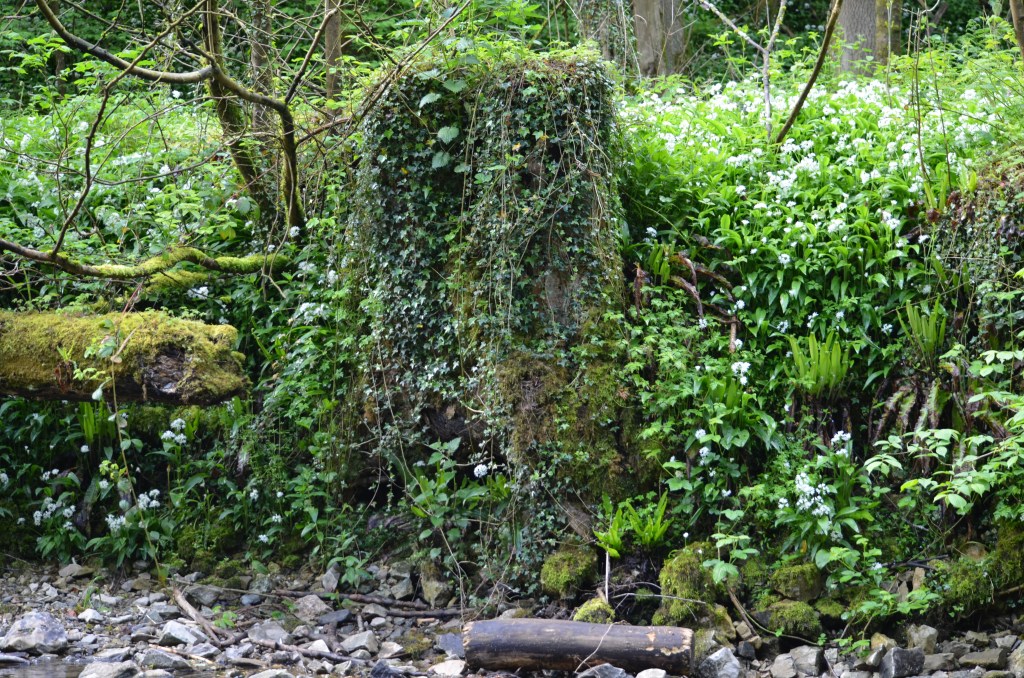
        The woods are thriving now, with lush green grasses and leaves sprouting everywhere and with the chorusing of birds and the liquid sound of running water. Apart from the bistorts, there are occasional little bursts of buttercups, herb robert, red campion, dog violets, and Welsh poppies too. Our nostrils detected the pungent aroma of wild garlic which was being gently wafted by the light wind. Pure vitality fills the senses.

    Leete path

        To the sound of two Song thrushes singing across the woods to each other – they may have been throwing out challenges or merely chatting loudly – we carried on along the Leete path.

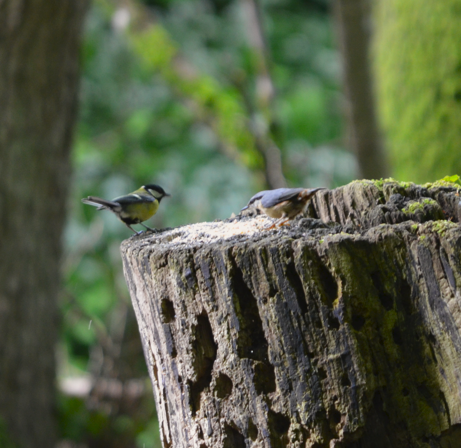
        Nuthatches and Great tits fed from the impromptu ‘feeding table’ at the water’s edge – these two species seem to tolerate one another probably because they’re roughly the same size. However, we did see a Nuthatch shooing away a Blue tit which is smaller in size. The bully!

    Great tit and Nuthatch

    Great tit and Nuthatch tolerating one another

       Disappointingly, the Dippers seem to have abandoned their nest to move elsewhere and we were unable to locate them this time.

    Abandoned Dipper nest

    The recently abandoned Dipper nest, beneath which the river has clearly receded

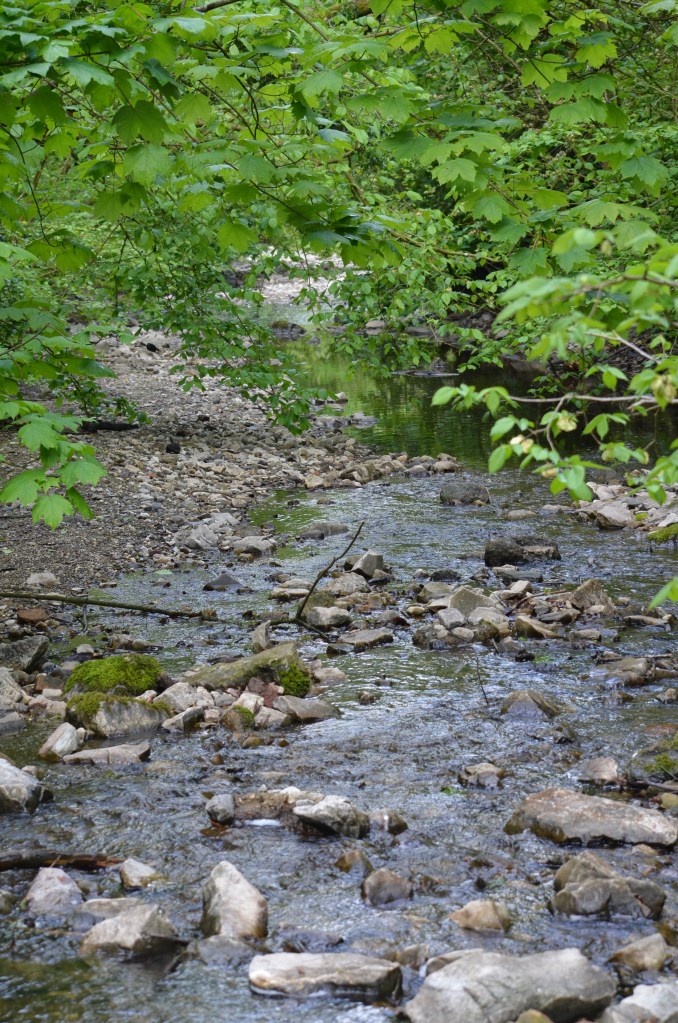
    We had noticed today that the Alyn was a little lower than it was a fortnight ago, resulting in the waterflow vanishing from below their nest. As Dipper chicks dive straight into the water directly beneath once they’re ready to fledge, this seems to be the obvious reason for the nest being abandoned. However, as Dippers are early nesters, it’s quite possible that any young might have already fledged, in which case the nest would be abandoned naturally. Hard to say.

    River Alyn low water

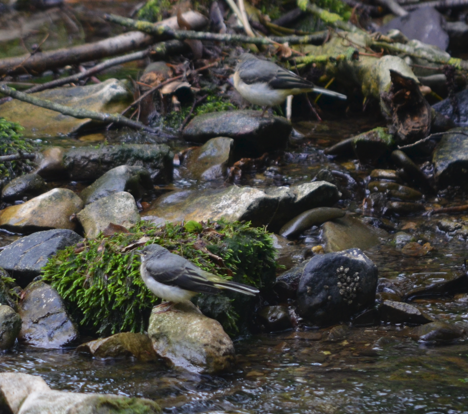
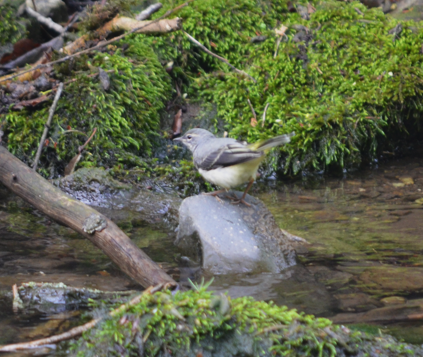
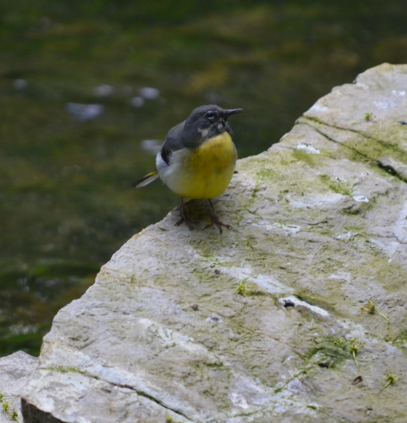
        Still, we were encouraged to see that the Grey wagtails have bred successfully and we saw the proud father, with the distinctive black bib of its breeding plumage, shadowing two fledglings as they all flew up and down the River Alyn. (The mother came out later, too!). After they leave the nest, Grey wagtail fledglings are still dependant on their parents for food for a further week or two.

    Two Grey wagtails

    The two fledglings have very little yellow on them

    grey wagtail solo

        I’m not sure that the male was feeding his offspring today, though. Rather, he appeared to be simply accompanying them up and down the river, gathering together on rocks mid-stream before flying off again. Perhaps he was familiarising the two fledglings to their surroundings although, quite soon, these two youngsters will have to leave their parents’ territory and find places of their own. Their parents might then go on to produce one or two more broods.

    Grey wagtail male?

    …unlike their mother!

        It’s reassuring that the water is clean enough for the Grey wagtails to find food in and to have produced at least this one brood, anyway. We’ll keep a look-out for any future Grey wagtail fledglings and also remain vigilant in our search to locate any Dippers once again. But that’s for another time!

    The important stuff

    As is customary, we finished off our outing at The Mill House café (Tŷ’r Felin), where we each had a very welcome cappuccino accompanied by a slice of Millionaire’s shortbread (Stu) and a Mars bar krispi (Col). Lovely!

  • Above the Dee Valley

    (Sunday 10th May, 2026)

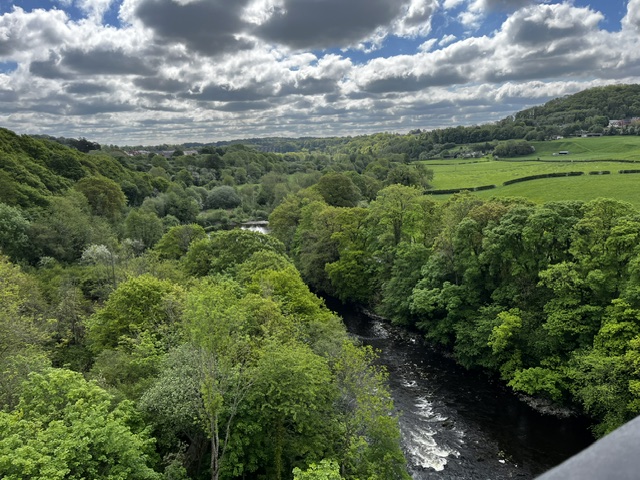
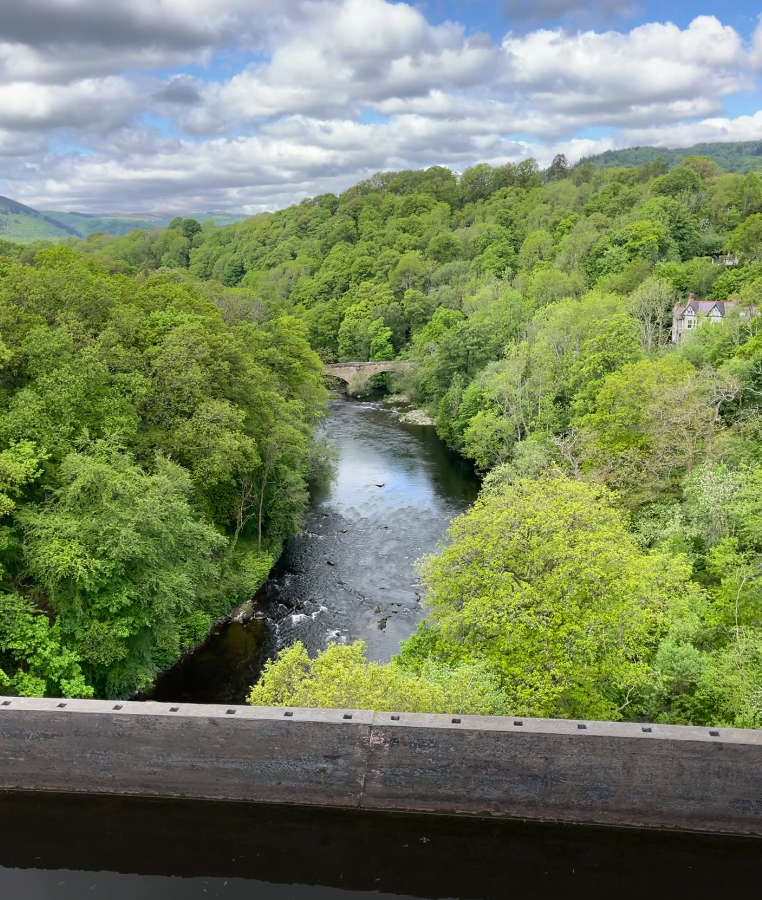
    39 metres (127 feet in old money) above the Dee Valley to be more accurate. Yes, we went over to Pontcysyllte Aqueduct in Wrexham County Borough this morning. Although the sun popped out occasionally to remind us of its existence, the temperature struggled to get any higher than 12°C which seemed colder at height. Still, it was a reasonably bright day and we had some magnificent views from our vantage point in the sky!

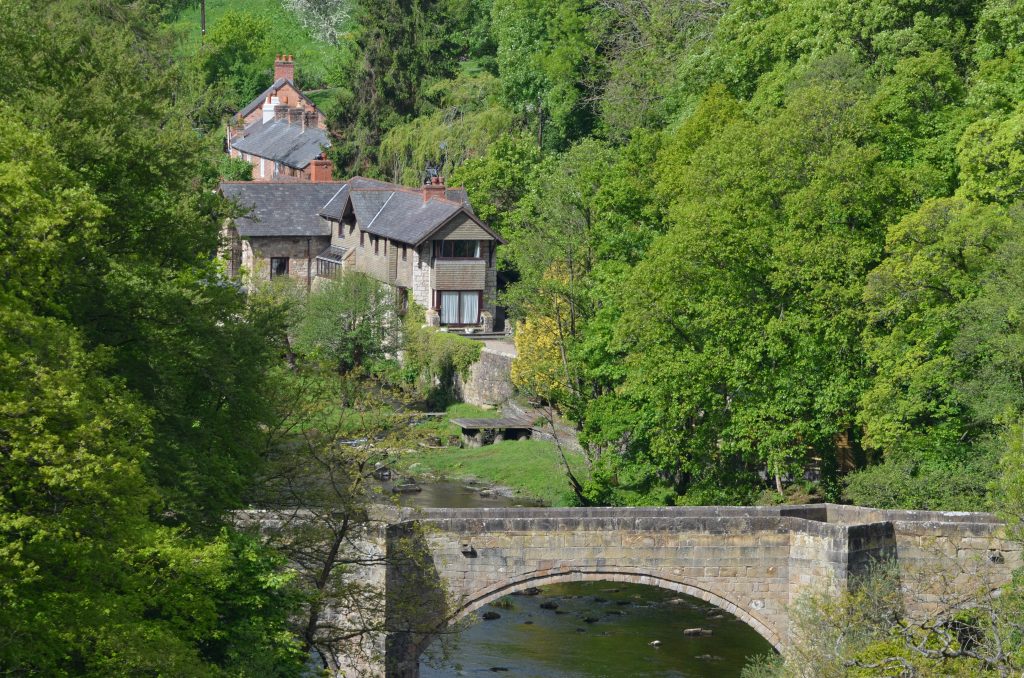
    road bridge

    Looking down at Cystylltau Bridge, which was constructed during the 17th century.

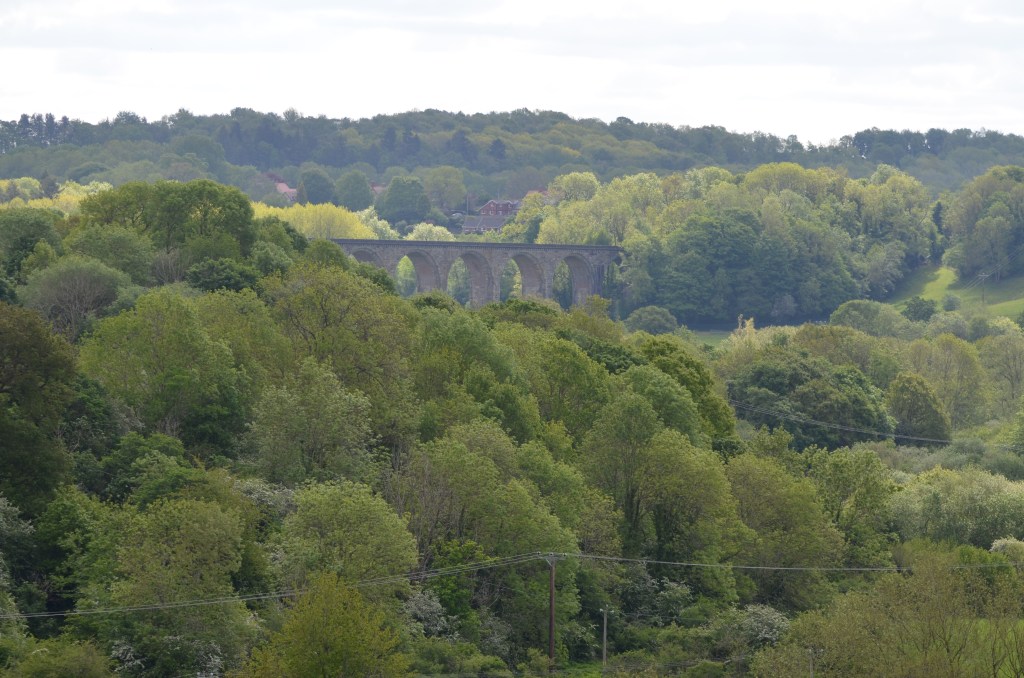
    Berwyn Railway Viaduct

    Looking west towards Berwyn Railway Viaduct

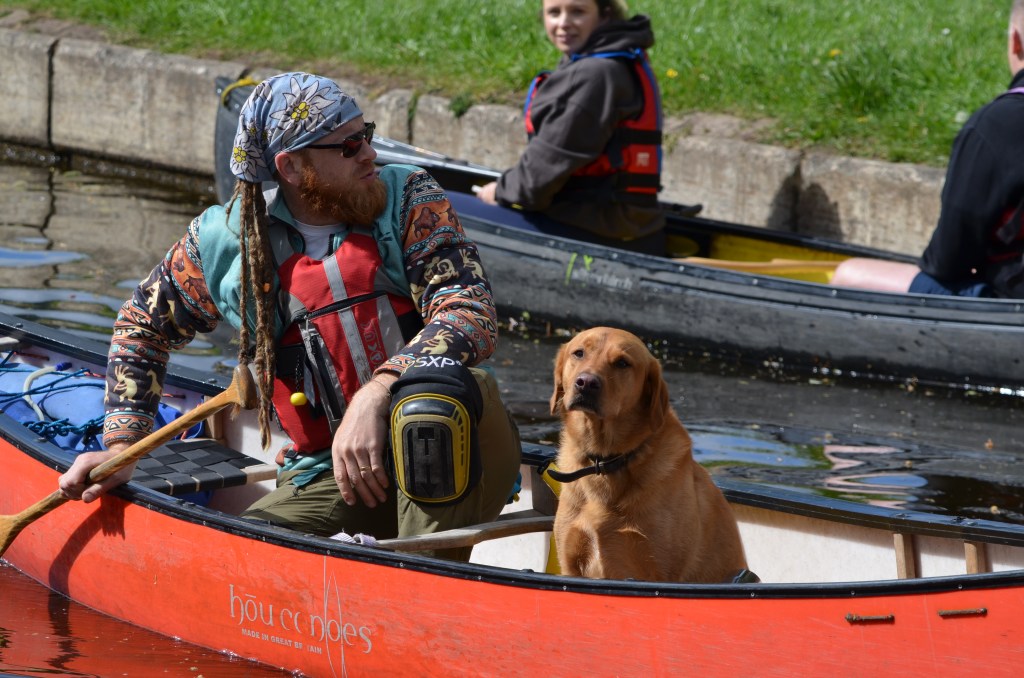
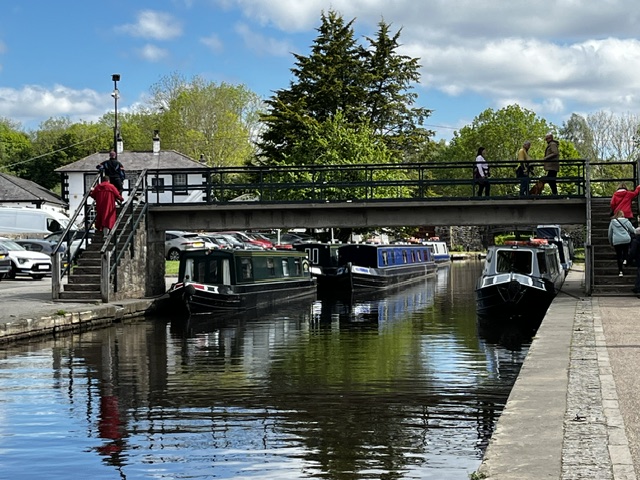
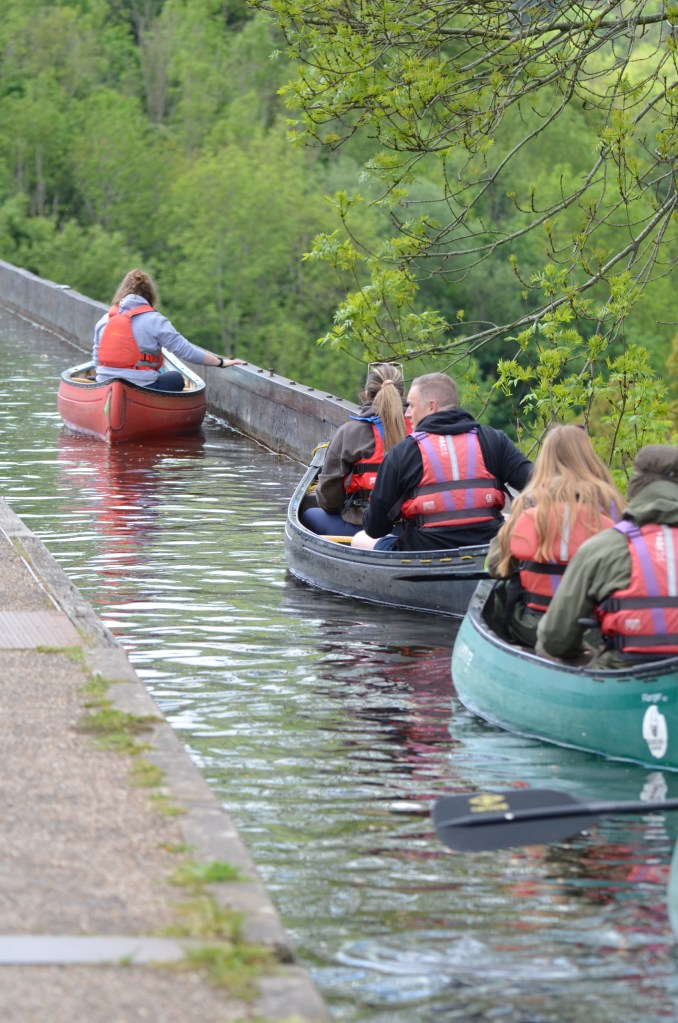
        The aqueduct carries the Llangollen Canal across the valley and, as you’d expect, this particular stretch of water is popular with narrowboats although, today, we saw two teams of canoeists crossing over as well. There is a towpath on one side of the aqueduct, providing great views over the River Dee as it courses through the valley below, and this was busy with people crossing from both sides.

    Dog being chauffered

        This dog is clearly used to being chauffered across the aqueduct.

    It certainly makes a difference looking down on the green tree canopy below, rather than leaning back and looking up. As you can see from the photographs, the foliage is absolutely flourishing everywhere.

    Dee Valley 2

        The cast-iron trough that carries the water has to be cleaned and maintained of course. This happens every five years: each end is closed and a plug opened to drain the water into the River Dee below. It’s basically the same as emptying your bath at home, although this is a slightly bigger bath!

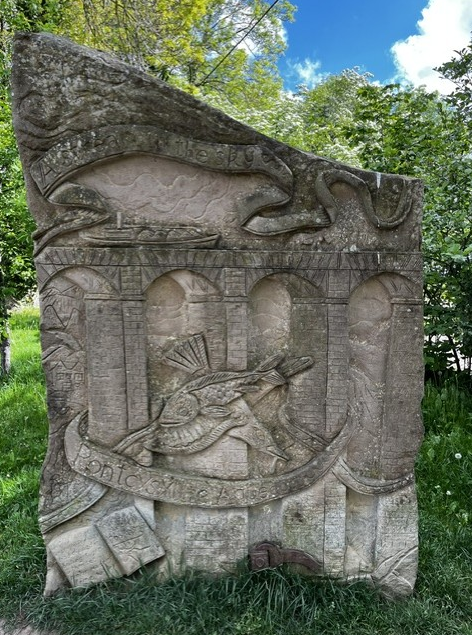
    Sculpture

    The words on this sculpture by Anthony Lysycia are from Sir Walter Scott who had described the aqueduct as ‘the stream in the sky’. Scott had also wondered how fishes could swim above flying birds, hence the central depiction.  

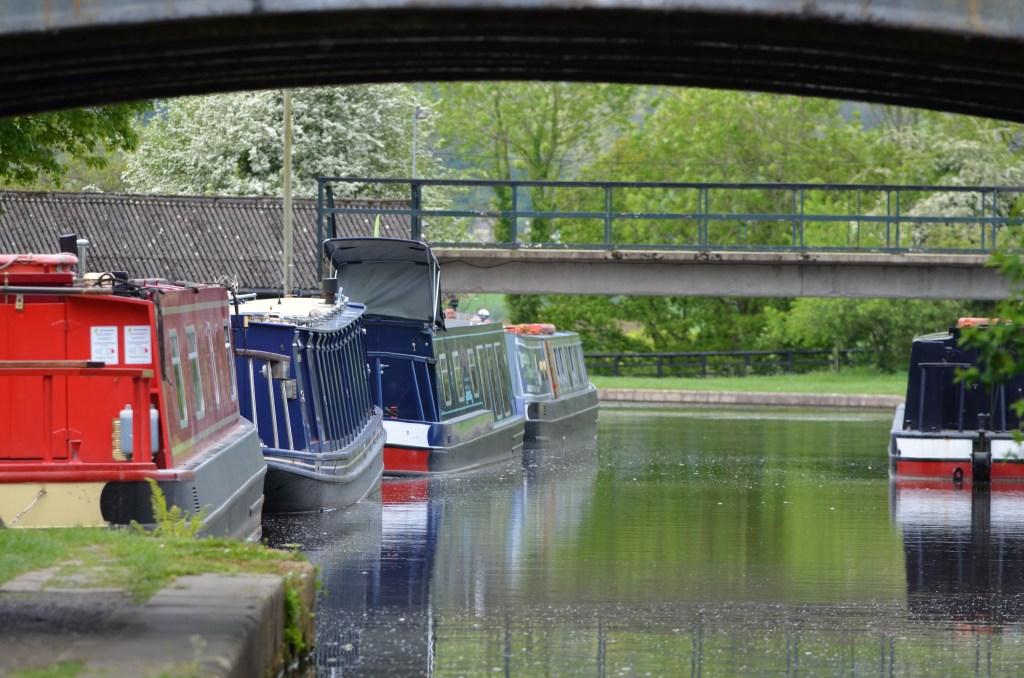
    Narrowboats moored

        Thomas Telford and William Jessop get the credit for building the aqueduct, although they did get a little bit of assistance from the more than 500 men that were also involved in the work over a period of ten long years. There’s a little museum at one end of the aqueduct where you can learn all about its history. Quite fascinating.

    Boats reflected

        While there are railings on the towpath side, there aren’t over the far side: I’ve been over in a narrowboat only the once and remember looking out of the window and not seeing anything other than sky on that one side! It really was a thrilling experience (a bit hairy, to be honest). The aqueduct is well worth a visit, whatever form of transport you opt for.

    Dee Valley

    Although holes were drilled to take railings, they were never actually added to the far side of the canal’s cast-iron trough.

    Gripping the edge

    While this looks like you’d get a close view of the valley below, it might not be to everyone’s taste!

  • The Lush Woods

    (Sunday 3rd May, 2026)

    Over to Loggerheads Country Park in Denbighshire this morning. despite the low temperature (9°C), it was dry and the air was full of birdsong. In fact, even as we left the car park we heard a Chiffchaff singing from a nearby tree: we caught a brief glimpse of the bird before it climbed out of view.

        As we approached the stone bridge that leads onto the Leete path, a stoat sprinted across our route. It was gone in the blink of an eye and, for a brief moment, I was the only one who seemed to have seen it. However, another walker confirmed he’d seen it too which was reassuring!

    garlic Loggerheads

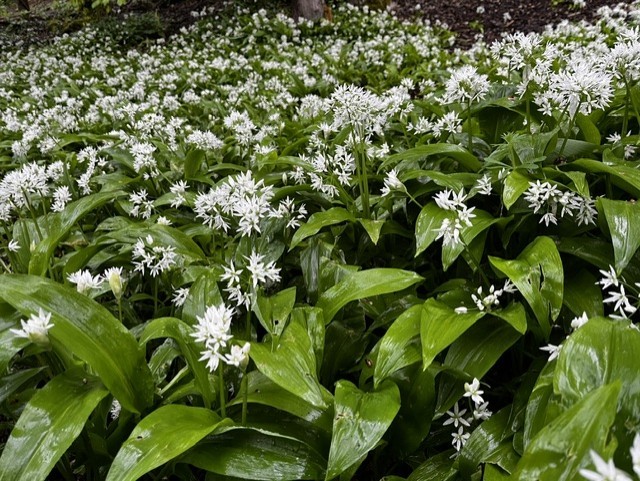
    Wild garlic in full flower

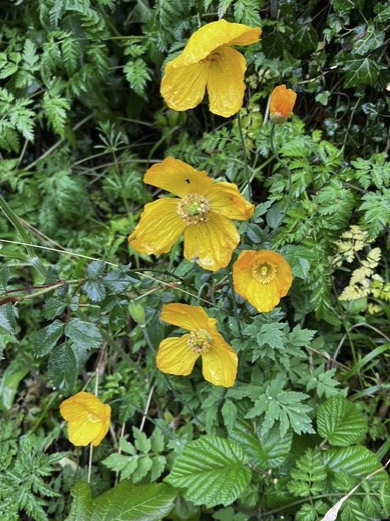
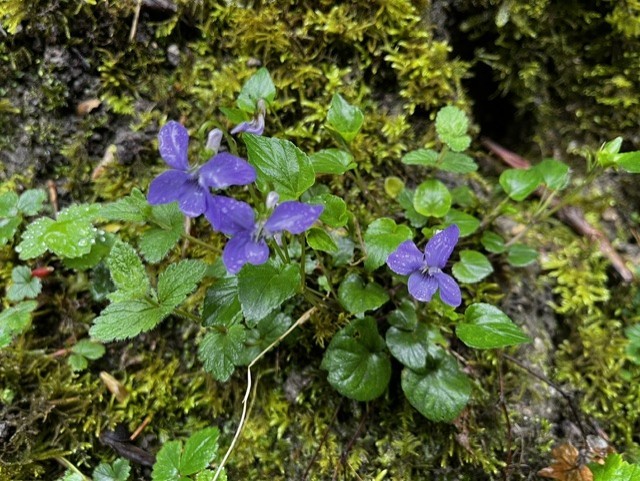
        We were last here at the end of March when most of the trees were still leafless and there were very few flowers growing, but what a difference we saw today. Welsh poppies, primroses and dog violets offered splashes of colour on each side of the path. The white flowers of the wild garlic were carpeting the undergrowth from the edges of both banks of the river now, and the mild aroma was just lovely.

    Welsh poppies Loggerheads
    dog violets Loggerheads

    Welsh poppies and dog violets

        The ash, hazel, and sycamore trees that line the path are all in leaf now, as are other trees such as beeches and birches that lie deeper in the woods. Together with the ferns and mosses (and evergreens!), everywhere you look there are vibrant shades of green. It was such a visual contrast to our last visit.  

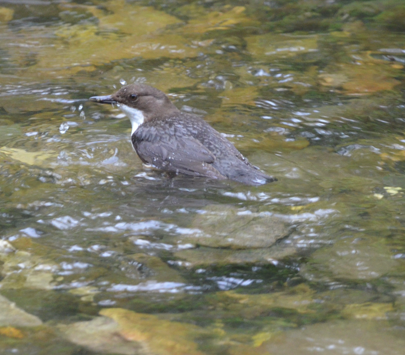
    Dipper on another rock

    White-throated Dipper

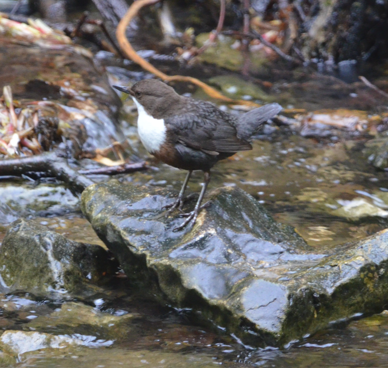
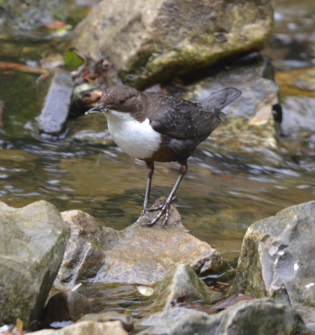
        We were very pleased to see that the White-throated dipper was back at Loggerheads – we hadn’t seen any Dippers here since early February, although they might simply have been exploring another part of the river. This particular Dipper watched the waters from a rock, bobbing up and down in characteristic fashion. Every so often it walked into the river, submerging itself to collect aquatic invertebrates or whatever else it might find edible. It then took its food across to what we’re certain is its nest: the Dipper kept going to the same place and coming back with its beak empty. We suspect that the female might have already laid her eggs inside the nest, so we’ll keep watch and may have more to report at a future date.

    Dipper on rock
    Dipper in Alyn

    Top: Dipper, mid-bob and, bottom: Going for a dip. (If you look closely at each picture, you can see it has caught some food in its beak).

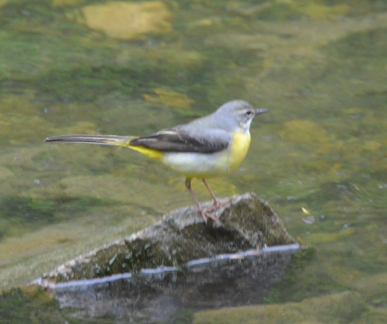
        A constant patroller of this stretch of the River Alyn is the Grey wagtail. We usually see just the one bird, but today we saw two of them keeping each other company. We’ve mentioned before on this blog that Dippers and Grey wagtails share very similar habitats and, while we quite often see both species at the same time, I don’t think we’ve ever seen them so close to each other before. At one point, one of the Grey wagtails was feeding only a metre or so away from the Dipper, which was also feeding. Each bird nonchalantly continued to concentrate on its own little section of water as if this was all perfectly normal.

    Grey wagtail 3rd May

    Grey wagtail

        The freshwater invertebrates and flies that Dippers and Grey wagtails both feed on does depend on there being good water quality. Considering all the negative reports on the state of UK rivers, the fact that both of these bird species are present on this stretch of the Alyn – and are breeding here – is a good sign of the river’s condition. Let’s hope it stays that way.

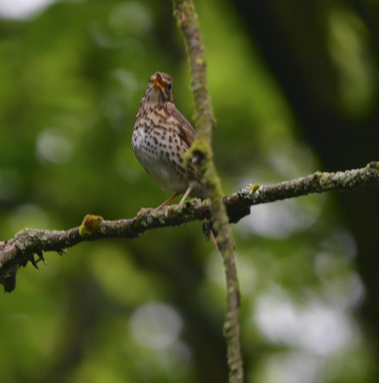
        All along the Leete path we seemed to have been followed by the same Song thrush today, although I suppose there may actually be more than one thrush at Loggerheads – who knows? Anyway, just as we regained the path and began to wend our way towards the café, ‘the’ (or maybe ‘a’) Song thrush landed on a branch overhanging our path and gave us a terrific solo rendition of its repertoire. Brilliant!

    Song thrush Loggerheads

    Song thrush

    The important stuff

    To The Mill House café (Tŷ’r Felin) for some of life’s little essentials: the usual cappuccinos with a Lemon curd blondie for Col and a Biscoff brownie for Stu. Very enjoyable!