Month: March 2026

  • At The Wetlands

    (Sunday 22nd March, 2026)

    Over to the RSPB Burton Mere Wetlands on the Wirral side of the Dee Estuary this morning. Although a little overcast, it was dry with a very light westerly breeze, and the temperature was a decent enough 11°C. We arrived about 09:15 and already the car park was quite full.

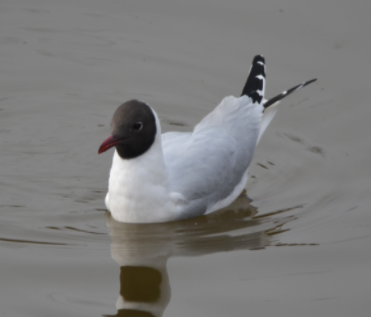
        From the visitor centre we saw Avocets, Lapwings, Mallards, Coots and Moorhens feeding and generally gathering together, though some remained in their respective groups. There was a pair of Mediterranean gulls amongst the many Black-headed gulls that had settled on the islet. And a few Northern shovellers glided through the shallow waterways too.
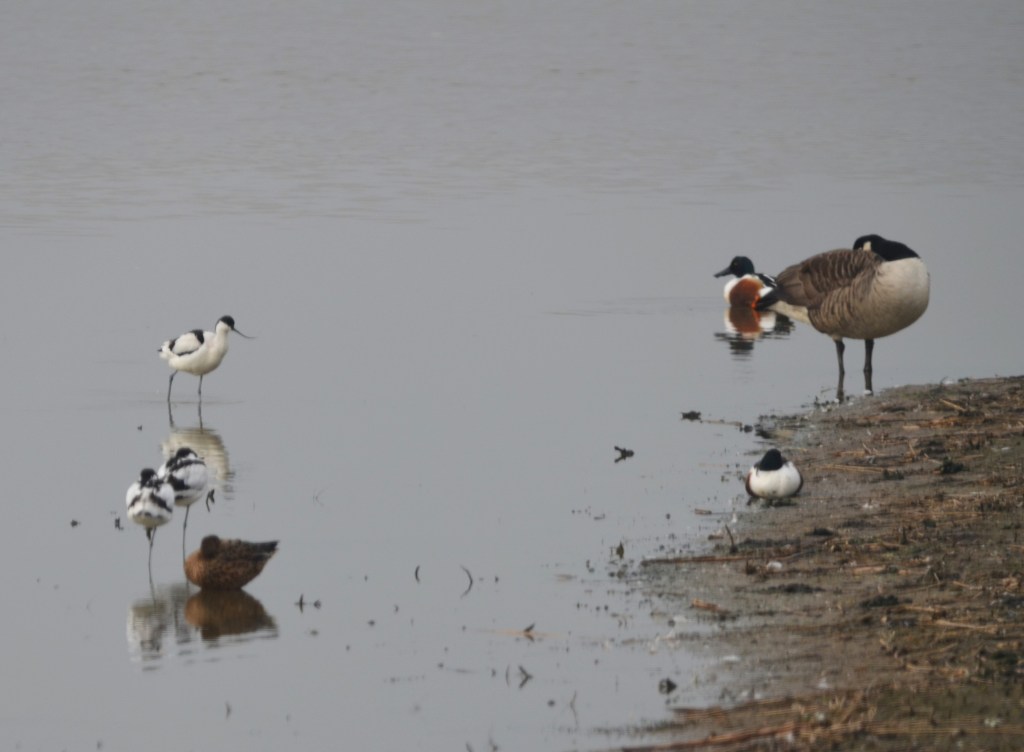
    Avocets, and Northern shovellers
    Black-headed gull at BM
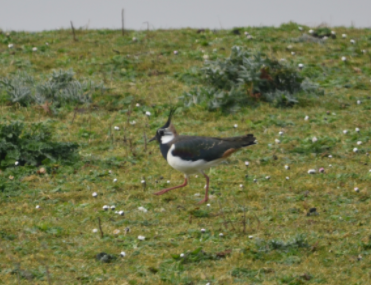
    Lapwing at BM

    Top: Avocets, Northern shovellers and Canada goose. Middle: Black-headed gull. Bottom: Lapwing.

        We watched as first one Marsh harrier came in from the marsh, then saw two of them flying together. We watched them both sky dancing, which is the term used to describe their aerial courtship ritual and often involves the male passing food to the female in mid-flight, although I’m not sure that this happened between the two birds we were watching today. Unsurprisingly, the birds in and around the scrape were being vigilant every time the harriers appeared.
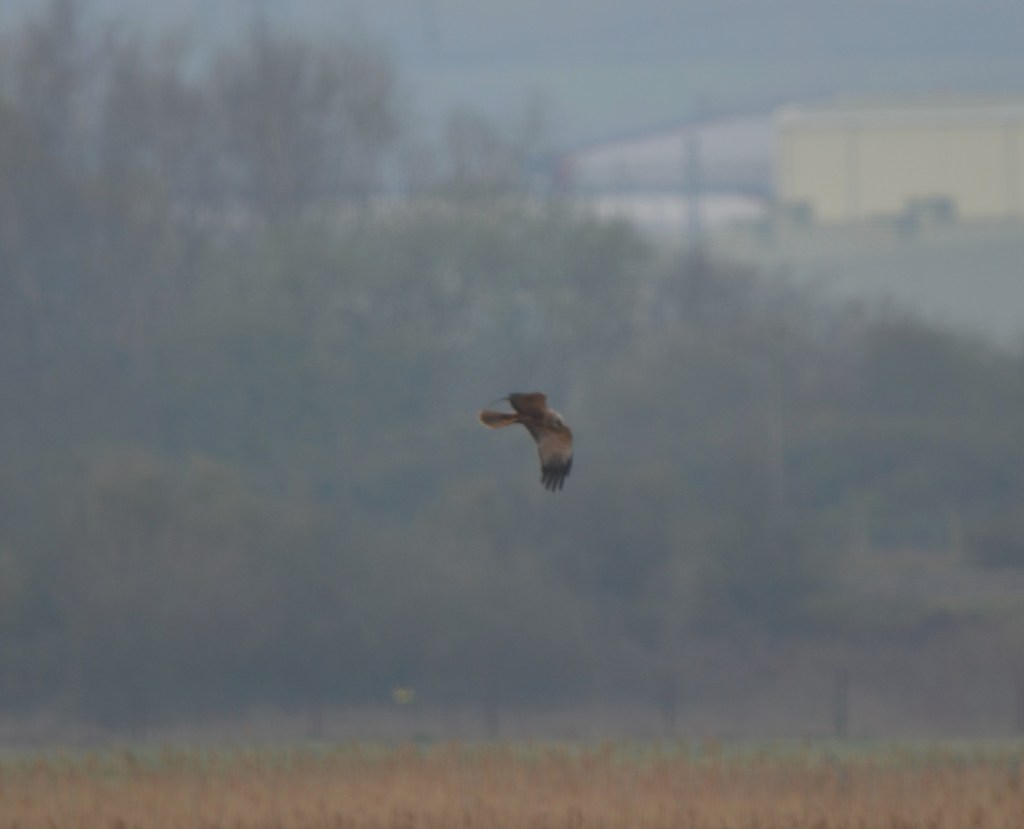
    Marsh harrier BM

    Above: Marsh harrier (male). Below: A flock of Shelducks and the harrier share the sky.
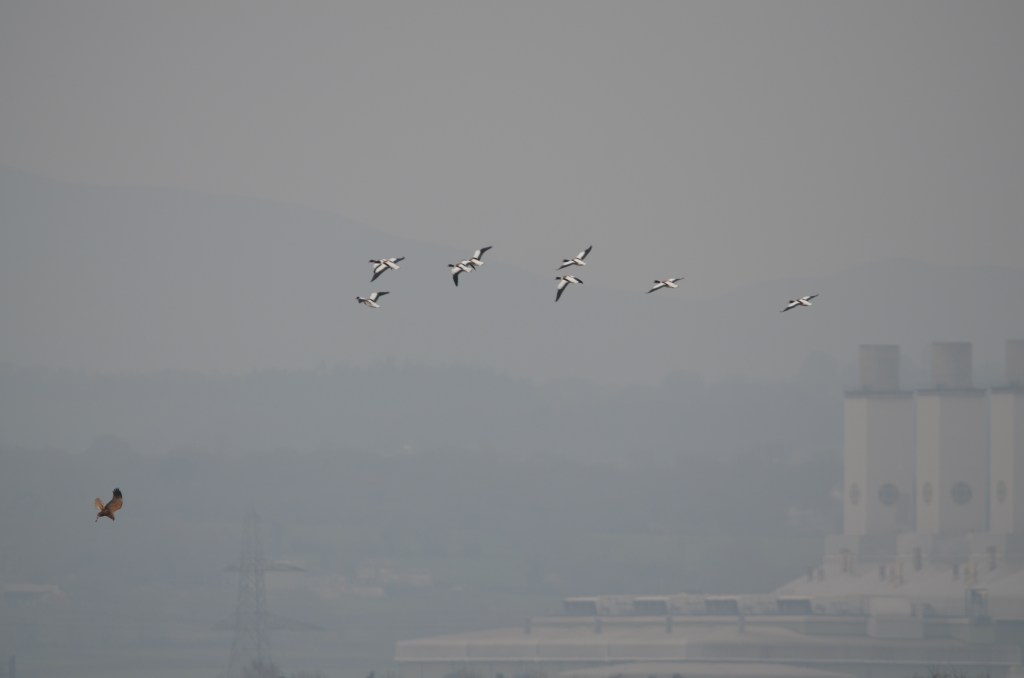
    Marsh harrier & Shelducks in flight

    We wandered down to the picnic area beyond the Bunker Hide. Last year we saw Yellow wagtails on the fields inland from the estuary. None this time, although we saw a few Greylag geese and Canada geese here and there. They had presumably sought a more peaceful sanctuary away from the noise and traffic of the main scrapes!
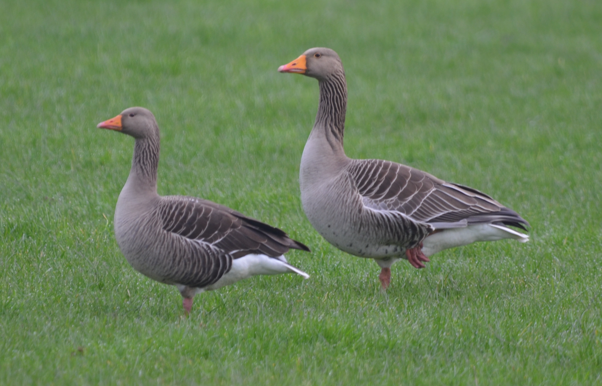
    Greylag geese BM

        Greylag geese happy to get away from it all

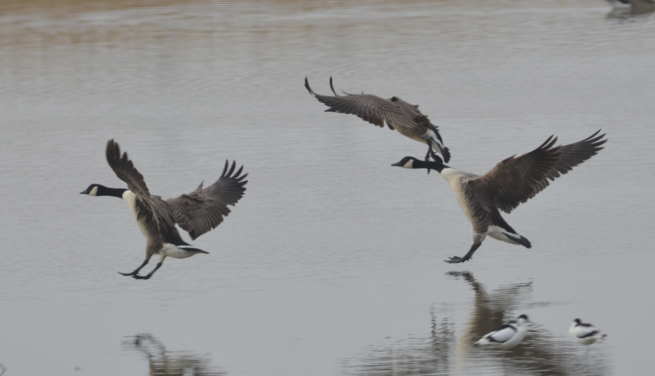
    Mind you, some of the geese clearly preferred the water. We watched these Greylags and Canada geese as they flew across the marsh and came into land.
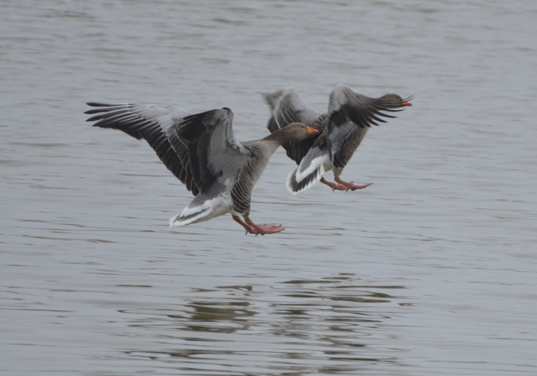
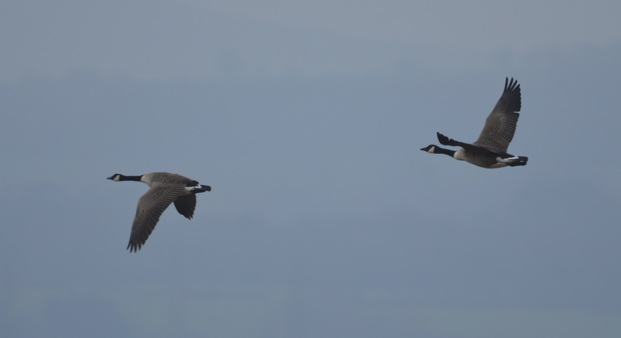
    Greylags landing BM
    Canada geese in flight BM
    Geese landing BM

    We’d heard the loud shrieking of a Pheasant earlier when we were near the picnic area. I’m not sure if this was the same bird on the other side of the visitor centre, but I’m glad we saw it close up: you tend to forget how colourful these birds are – well, the males at least. Actually, I think this is something we tend to do with a lot of the more common birds and wildlife in general. In our determination to see and record animals seldom if ever before seen, I think we sometimes overlook those that we see regularly. (I live near a couple of Pheasant farms and see the birds often, so I can be almost oblivious to the sight of them, although I don’t think you could ever be oblivious to their call!)
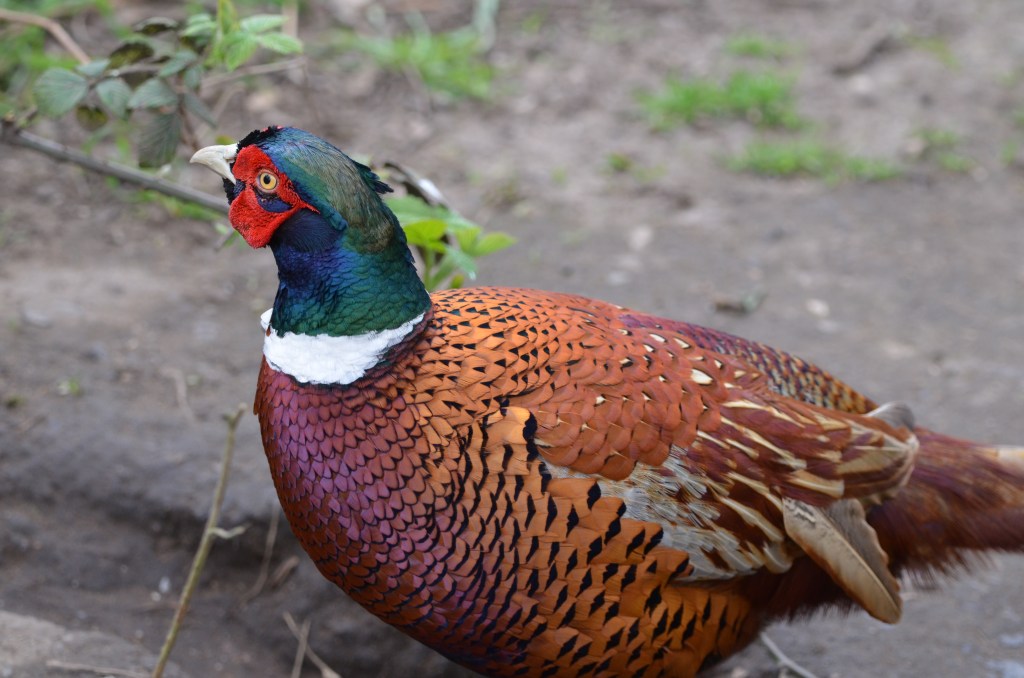
    Pheasant at BM

    Pheasant

        A Grey heron flew over in that ungainly way they have while we were focussing on the birds that were busying themselves near the feeder, mostly Great tits and Blue tits. We also spotted a Wren on a nearby branch before it flitted away and we’re pretty sure we saw a Reed warbler as well. Unfortunately, we were unable to get a photograph.
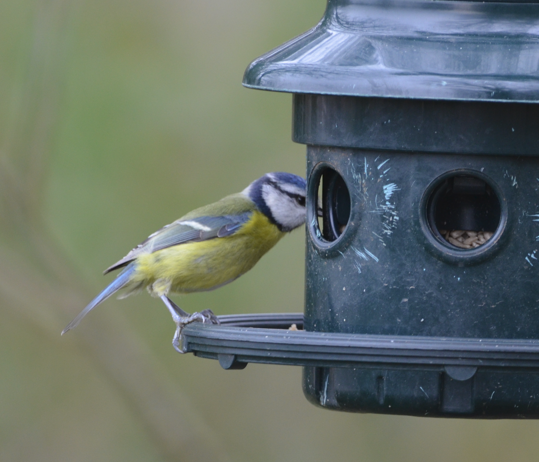
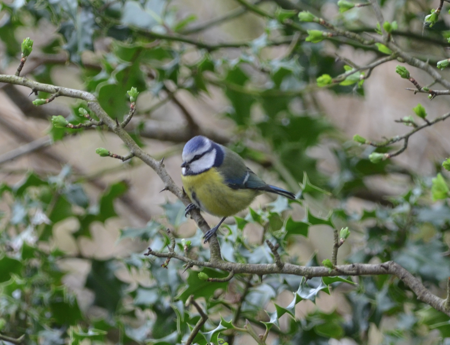
    Blue tit investigating
    Blue tit BM

    Blue tit chomping away while another waits its turn.
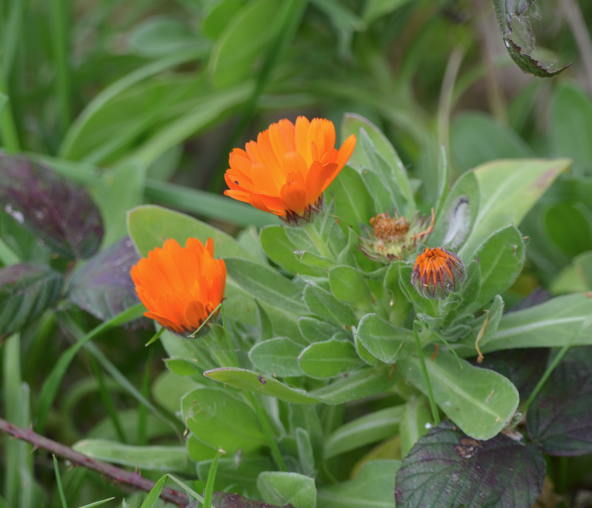
    Marsh marigolds BM

    Marsh marigolds

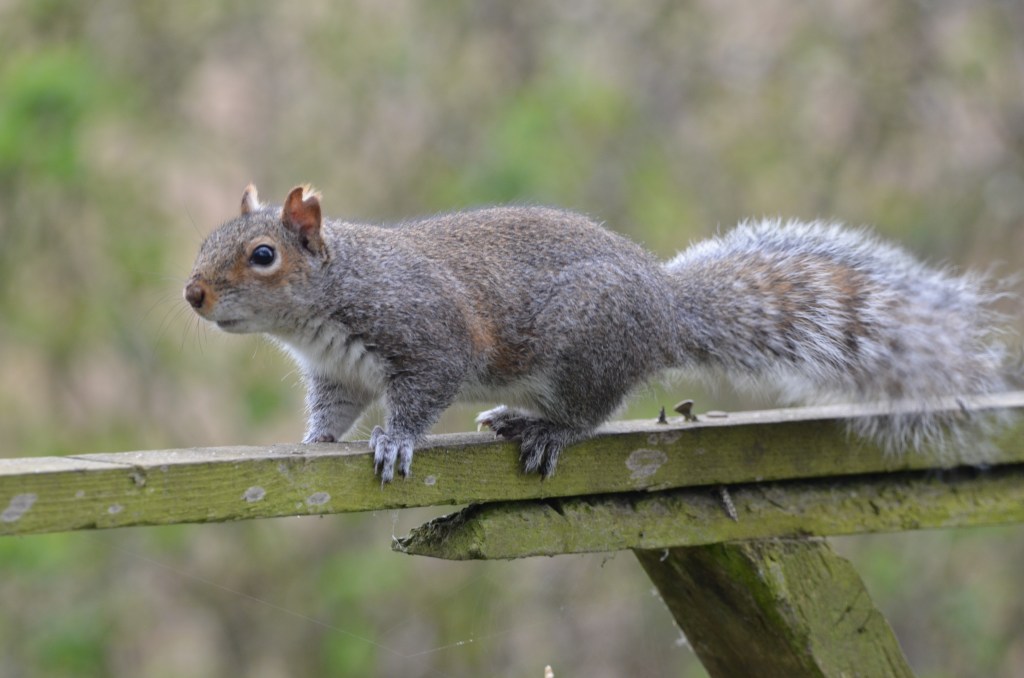
        However, I’m pleased to say that Stu managed to get a photograph of a Grey squirrel. What’s remarkable about that, I hear you ask! Well, regular readers of these pages will know that squirrels don’t usually hang around long enough for him to capture on film. But the Burton squirrels evidently hadn’t heard of the international embargo against this blog’s photographer and two of them were happy to display their acrobatic skills for us. Very entertaining they were too! And we’re both very grateful that at least one of them was happy to have its photo taken!
    Grey squirrel at BM

    A Grey squirrel which, unusually, didn’t disappear as soon as Stu got his camera out!

        I mentioned earlier that the car park was very busy even shortly after nine in the morning. Obviously Burton Mere Wetlands is a popular place to visit but people may have also been enticed by the chance of seeing the otters which have been seen here recently. I’m not sure at which part of the reserve you’re likely to see them, although the staff at the visitor centre should be able to help. We didn’t see any otters but still enjoyed our visit immensely.
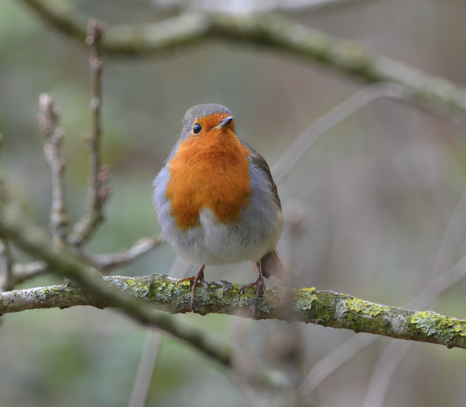
    Robin at BM
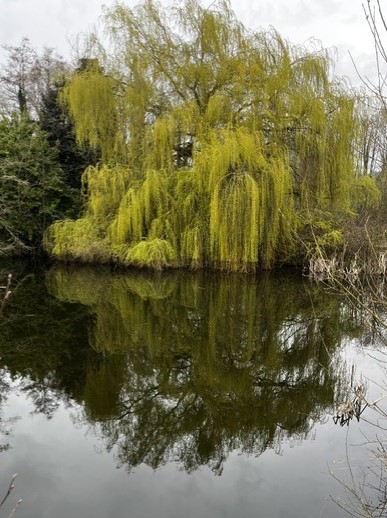
    Weeping BM

    The important stuff

    We had our usual cappuccinos with a slice of Carrot cake (Stu) and a Toasted teacake (Col). Very nice!
  • Rain and Wind Stop Play

    (Sunday 15th March, 2026)

    Over to Parkgate on the Wirral Peninsula this morning. It was dry and reasonably bright to begin with and it reached 10°C while we were there. We started off at the Old Baths but there was a fierce wind (SSW) blowing from across the Dee, directly at us, which meant that it was difficult for us to focus our binoculars and cameras without them shaking.

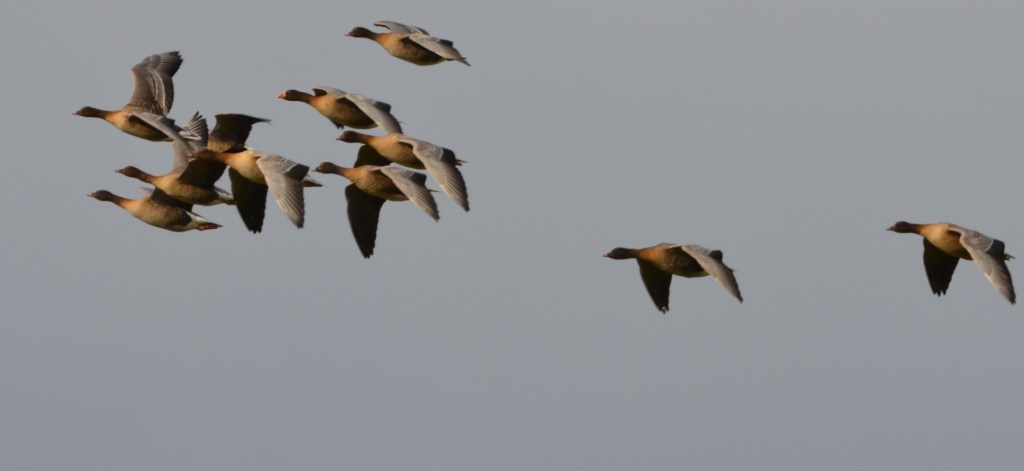
        We counted four Avocets in the channel and two Little egrets nearby, and there were several small flocks of geese circling the marsh, but for the most part the birdlife was staying low and out of the wind!

    Pink-footed geese at Parkgate

    Pink-footed geese

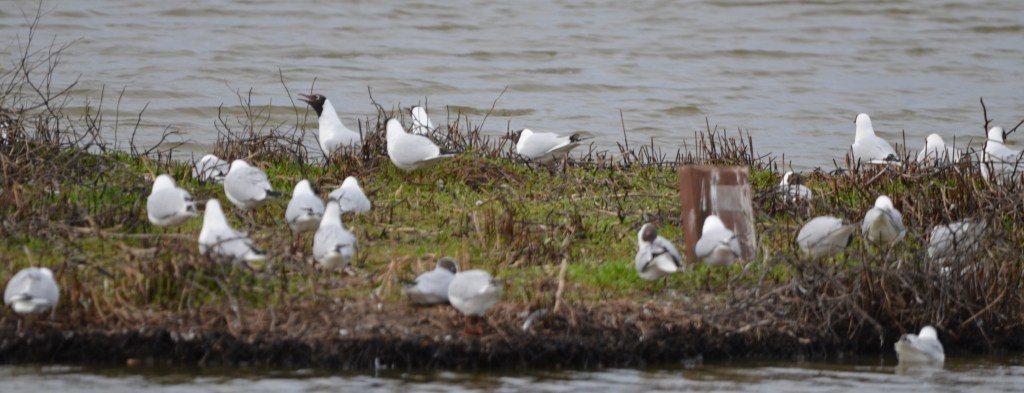
        We transferred to the Donkey Stand at the opposite end of The Parade where, somehow, the wind seemed to have eased. There were several Black-headed gulls on the little island in the middle of the Flash, all of which were making plenty of noise. We just thought it was the gulls making their normal racket until we saw two Marsh harriers flying low over the marsh, which is when we realised that they’d actually been sounding the alarm. The harriers quickly swept past and arced back towards a clump of reeds in the distance.

    Black-headed gulls at Parkgate

    Black-headed gulls

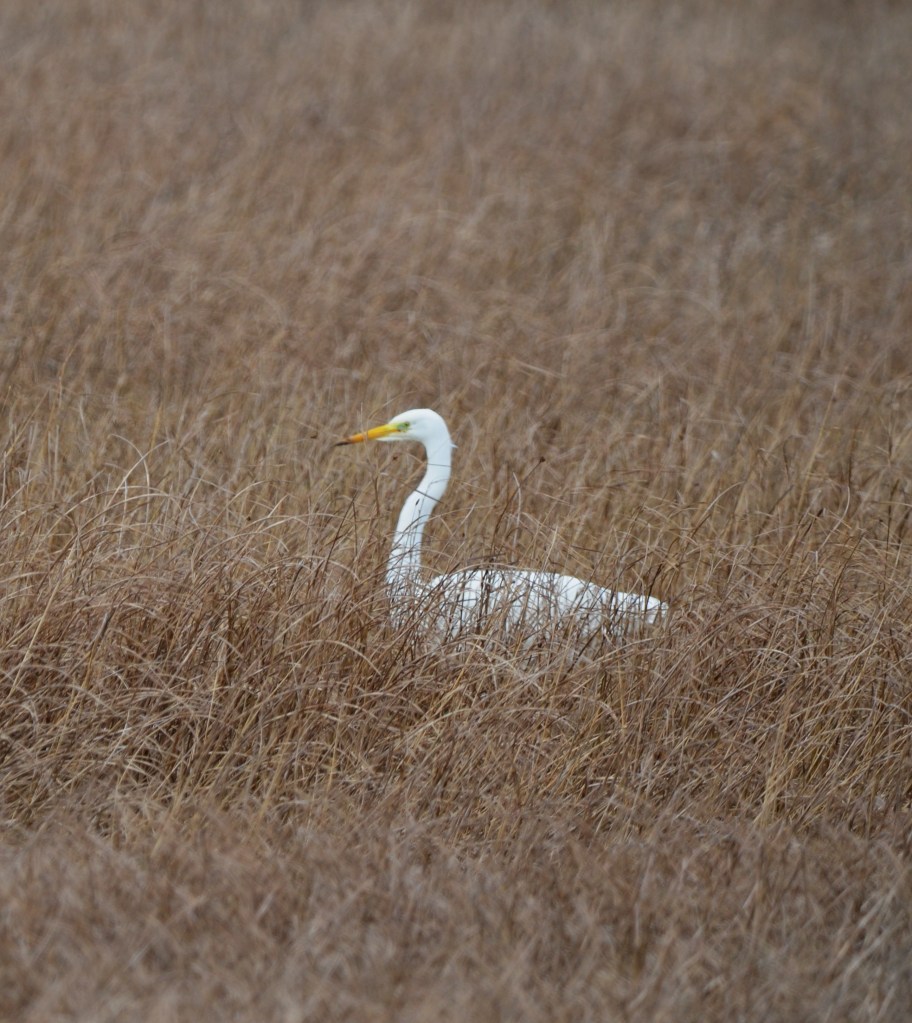
        Where earlier we’d seen two Little egrets, here there were two Great white egrets stalking separate sections of the marsh. The latter are much larger birds and have yellow beaks throughout most of the year but, during the breeding season, their beaks become black. You can see that the beak of the Great white egret in the photograph below is just beginning to change to black at the tip.

    Great white egret at Parkgate

    Great white egret. Note the yellow beak just beginning to turn black.

        Although the wind had lessened, we could clearly see that it was raining over on the Welsh side of the Dee. Inevitably, the rain reached us before too long and we brought forward an early end to our visit. Never mind – there’s always next time!

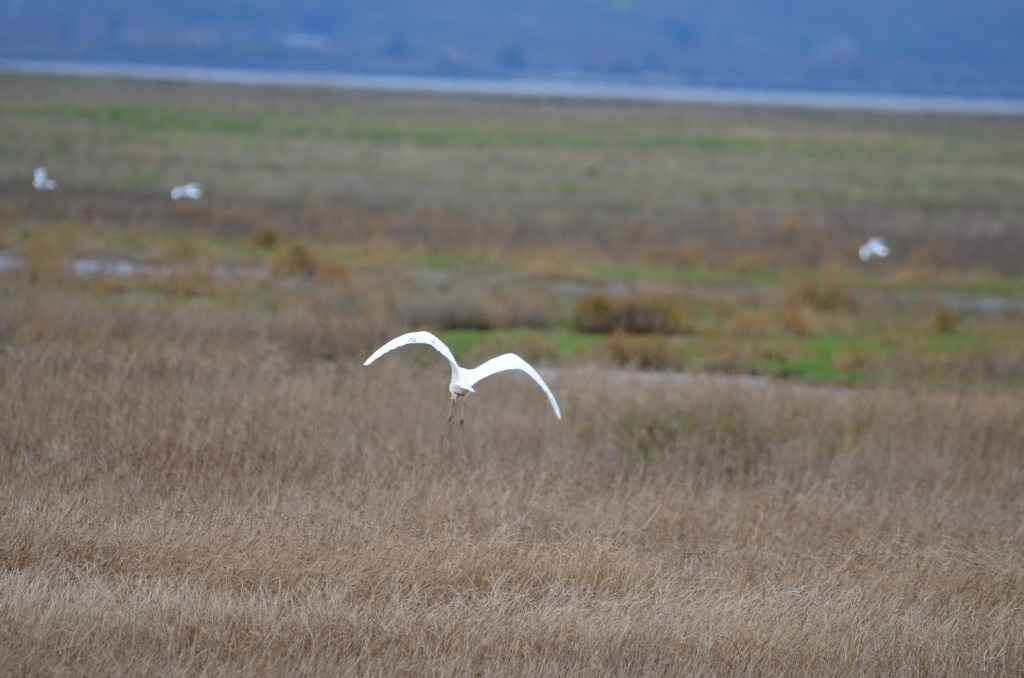
    Great white egret flying into the wind

    Great white egret flying into the wind

    The important stuff

    Today was Mothering Sunday and any chance of finding a café with a spare table was clearly going to be difficult, so we repaired to Chez Col where we both enjoyed a chocolate mini-roll and an orange Kit-Kat each, washed down with a – dare I say it, as I made it – lovely cup of tea!

  • A Misty Morning at Loggerheads

    (Sunday 8th March)

    Midweek I saw my first butterfly of the year in the garden – a yellow (male) Brimstone. At last! I thought, the spring’s here. But another false alarm it seems. While this morning wasn’t quite a pea-souper, it was very misty when we set off to Loggerheads Country Park in Denbighshire, and we had resigned ourselves to not seeing much. But, of course, nature rarely disappoints.

        The undergrowth was still quite bare except for the odd clump of primroses and daffodils, although this will change soon, I’m sure. The River Alyn was flowing strongly, but less rapidly than last week, a sign of the recent reduction in rainfall locally. Funny how you notice these things!

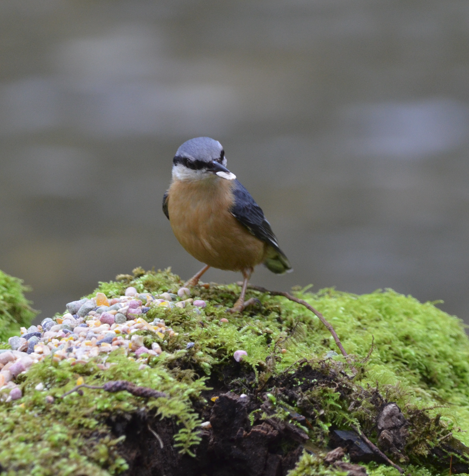
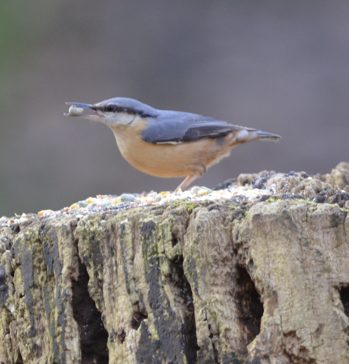
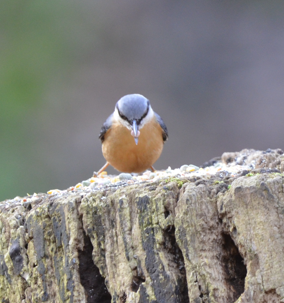
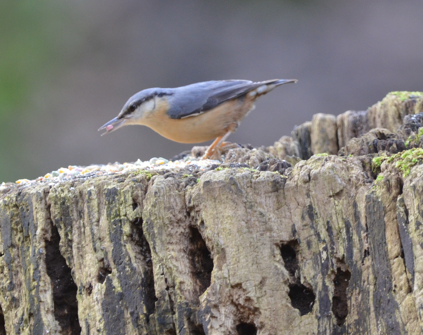
    Nuthatch facing with food

    Nuthatch scanning its surroundings even as it feeds

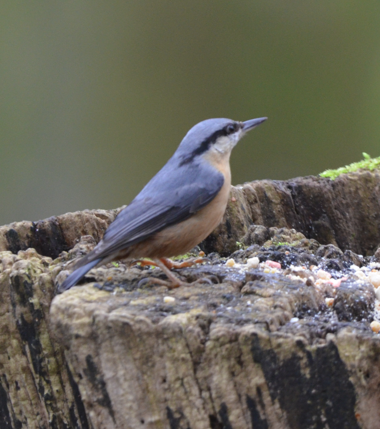
        Once again, there were Nuthatches feeding at the tree stump, looking like little aerial masked bandits. It was interesting to note that they approached the tree stump in stages, first flying from the tops of the trees along the riverbank to one of the trees closer to the stump. From here they scanned the area below to make sure it was clear, then they nipped down and grabbed some food in their beaks before darting smartly back. It looked like they were shoving one or two morsels into the bark of the trees, but Nuthatches are notoriously difficult to watch closely as they are so quick in their movements.  

    Nuthatch classic

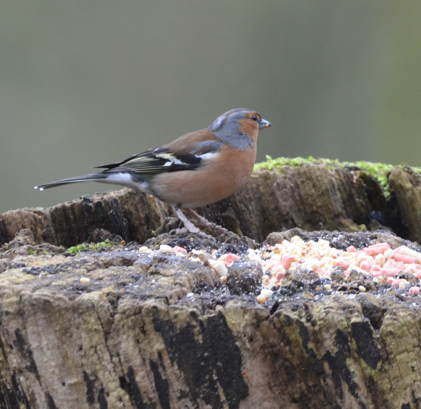
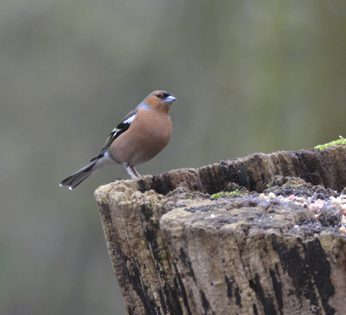
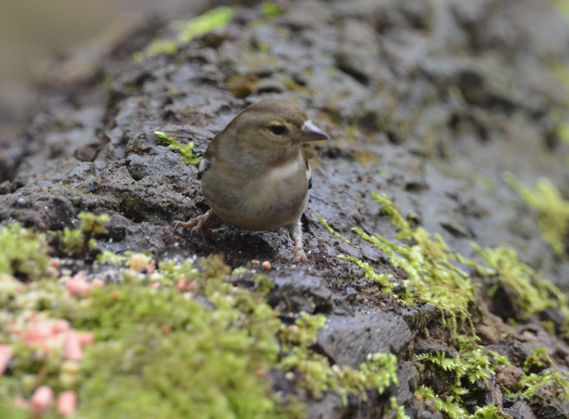
        A Chaffinch appeared as soon as the Nuthatches were out of the way. With its lovely, striking vermilion chest and distinctive white wing bars and pale grey cap, this male Chaffinch certainly caught the eye. There was a female too, though she was not quite as colourful as the male – more brown than red, and with a patch of olive-green on her back – and she arrived and fed separately.

    Chaffinch at Loggerheads

    Chaffinch

        The Chaffinch is sometimes known as the Bachelor finch: Fringilla Coelebs is its Latin name, Fringilla meaning finch or small bird, and coelebs deriving from caelebs meaning single, unmarried, or bachelor. This name was given by the Swedish biologist Carl Linnaeus who observed that it was only the females who migrated south from Sweden for the winter, while the males stayed behind near to their breeding grounds, often grouping together with other males. It’s possible that the females were actually distancing themselves from the males due to food competition – outside of the breeding season, the males are less likely to share food resources, apparently.

    Chaffinch on the edge

        The more familiar English name Chaffinch is probably derived from the bird’s habit of rummaging through threshed chaff looking for grains of seed.

    Female Chaffinch

    Female Chaffinch

        In the United Kingdom, the birds tend to lay their eggs between late April and mid-June and, generally, Chaffinches will produce only the one brood each year. The lateness of these clutches being laid is thought to be a deliberate strategy as the much thicker foliage and vegetation that appear now helps to hide the nests and protect the chicks from predators.

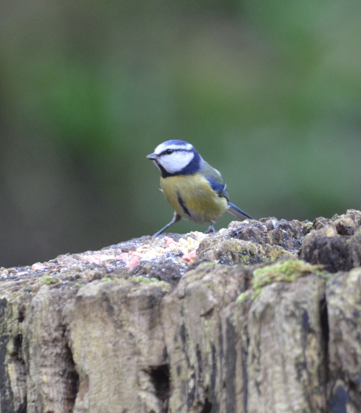
    Blue tit at Loggerheads

    Blue tit

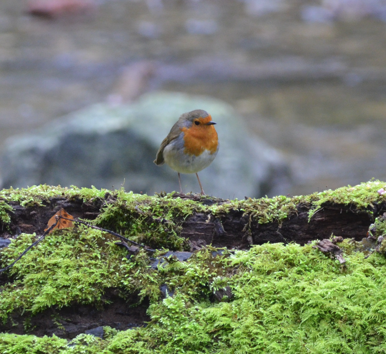
        After the Chaffinches made their brief, separate appearances a small group of Blue tits descended from nearby branches and stole in to help themselves. We were then stalked by a Robin or two (we couldn’t quite work out the numbers) all the way back to the café.

    Robin stalking

    This Robin stalked us along the Leete path!

    Robin stalking nearer

    This one just came to say hello!

    The important stuff

    A cappuccino each at The Mill House café (Tŷ’r Felin) and a slice of gooey Millionaire’s shortbread. Very nice!   At the very moment we were ready to leave, the Grey wagtail flew overhead and landed on the roof of the gift shop, only to disappear over the far side. Obviously it was not in the mood for a selfie today!

  • St. David’s Day in the Park

    (Sunday 1st March, 2026)

    Loggerheads Country Park in Denbighshire to be exact. The River Alyn was flowing strongly, there was a southerly breeze, which was barely perceptible in the woods, and the morning was sunny and dry with the temperature climbing to 12°C. After the long, wet winter, are we finally entering spring? Well, it’s the United Kingdom we’re talking about so I won’t make any rash claims just yet!

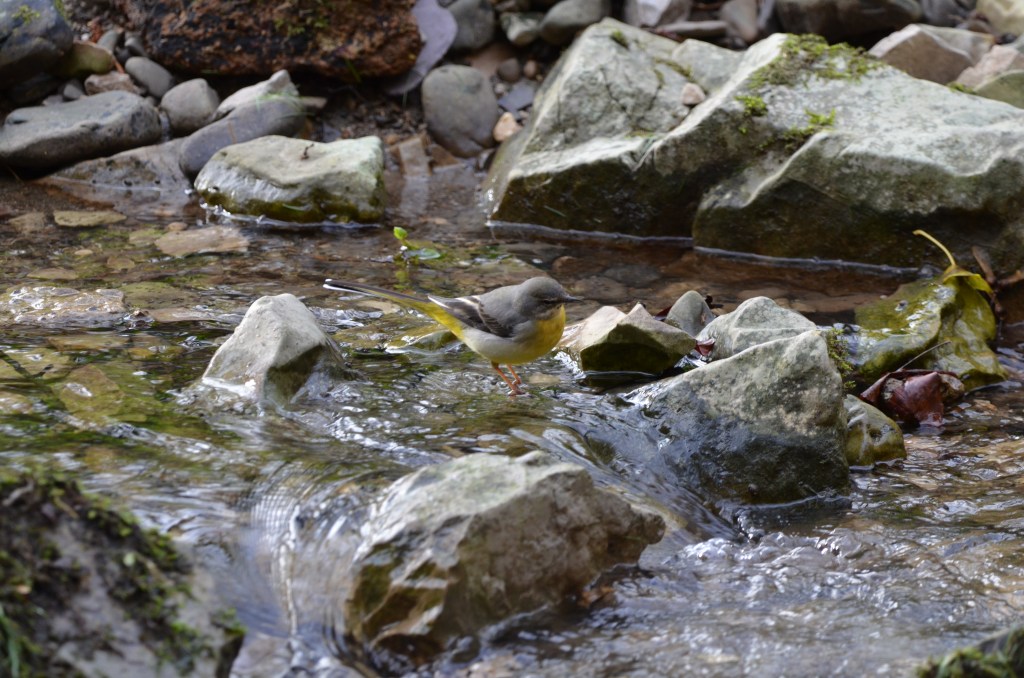
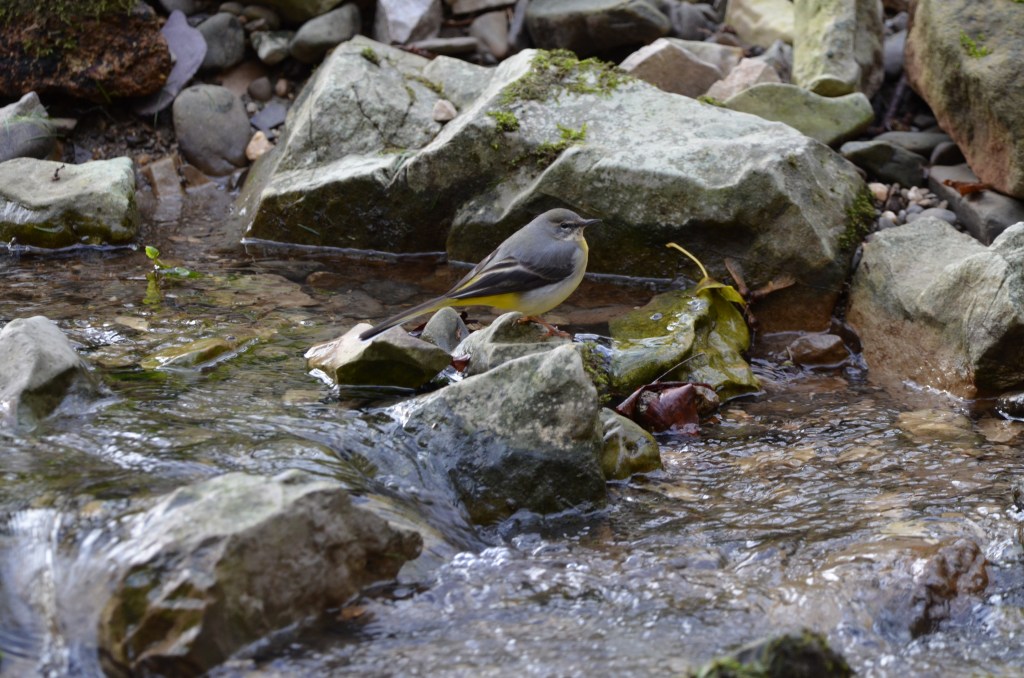
    Grey wagtail second time

    Grey wagtail

        Just a short distance down the Leete path we saw our old friend the Grey wagtail. We’re unable to determine if this bird is male or female as it’s generally difficult to separate the sexes. One tell-tale sign is that males develop a black bib during the breeding season, and are a deeper yellow than the females, so we’ll keep a look-out and report any developments in the next month or so. This Grey wagtail was mooching about on the far side of the river when we first spotted it: later it immersed its feet in the shallows of the water, feeding on any insects and small crustaceans that it could find.

    Grey wagtail Saint David's Day

        Further along the path a couple of Nuthatches were feeding. Not birds that like to hang around for too long, Nuthatches: they darted in from high in the trees nearby, grabbed some food and then quickly departed. Despite this skittishness, Stu managed to take some very good photographs of these lovely little birds.

    Nuthatch scoffing again
    Nuthatch face-on
    Nuthatch scoffing

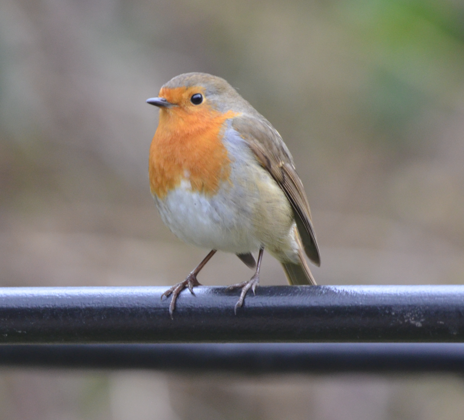
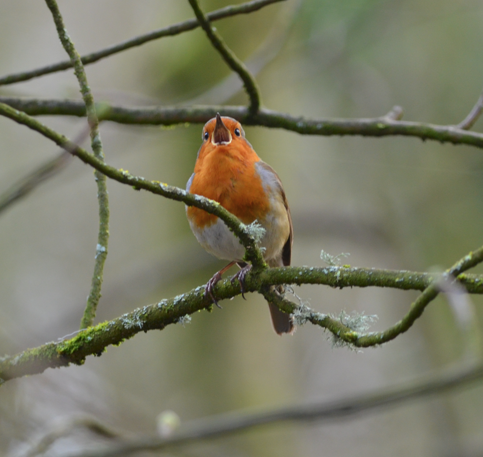
        The Robin, on the other hand, wasn’t at all shy about being seen! This one tracked us as we walked through the woods and then, as we paused on the wooden bridge to look up and downstream, it landed on the branches of a nearby tree and began to sing. I thought it was auditioning for ‘Song of the Morning’ or something. It was a pleasant tune of course – but LOUD! Below is a great picture of the Robin belting out it’s song.

    Robin auditioning

    Robin auditioning for us – LOUDLY!

        Later, as we retraced our path and passed the spot where we’d earlier watched the Nuthatches, we saw a couple of other birds feeding. Drawing closer, we saw that one had a distinctive black stripe down its yellow breast, marking it out as a Great tit. The second bird was a Coal tit.

    Great tit at Loggerheads

    Great tit

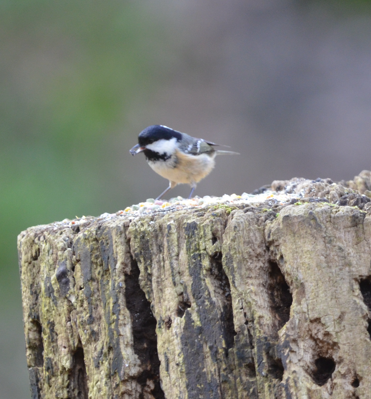
        The Coal tit is widespread throughout the United Kingdom but is much smaller than the Great tit and a lot more timid, tending to only appear fleetingly. Certainly, we rarely catch sight of them on our excursions. It has pale straw-coloured underparts, white cheeks and a black cap and black bib, and has a predominantly grey back.

        The Coal tit is similar to both the less common Marsh tit and the even rarer Willow tit and is sometimes mistaken for one or other of these birds. Apart from the rarity factor, the Coal tit can be differentiated from either of these two in other ways: first, it has white wing bars which neither the Marsh tit nor the Willow tit possess; and second, it has a distinctive patch of white stretching from its crown down to the back of its neck. This is not always visible of course, particularly if you’re looking at the bird head-on but you can just make it out in the picture here.

    Coal tit at Loggerheads

    Coal tit: the white patch from its crown to the back of its neck is just visible in the photograph

        The Coal tit prefers coniferous woodland and relies on seeds from conifer cones, particularly during the winter. However, the bird also enjoys the nuts of deciduous trees such as beech, so – like other tits – it is adaptable in its choice of habitat. Luckily, Loggerheads is a mixed woodland area of broadleaf and coniferous trees, so the Coal tit gets the best of both worlds!

    The important stuff

    We had our customary cappuccinos at The Mill House café (Tŷ’r Felin). Stu chose a Bara brith flapjack to accompany his coffee, while Col had a Jammie dodger blondie with his. A lovely way to celebrate Wales’s national day!