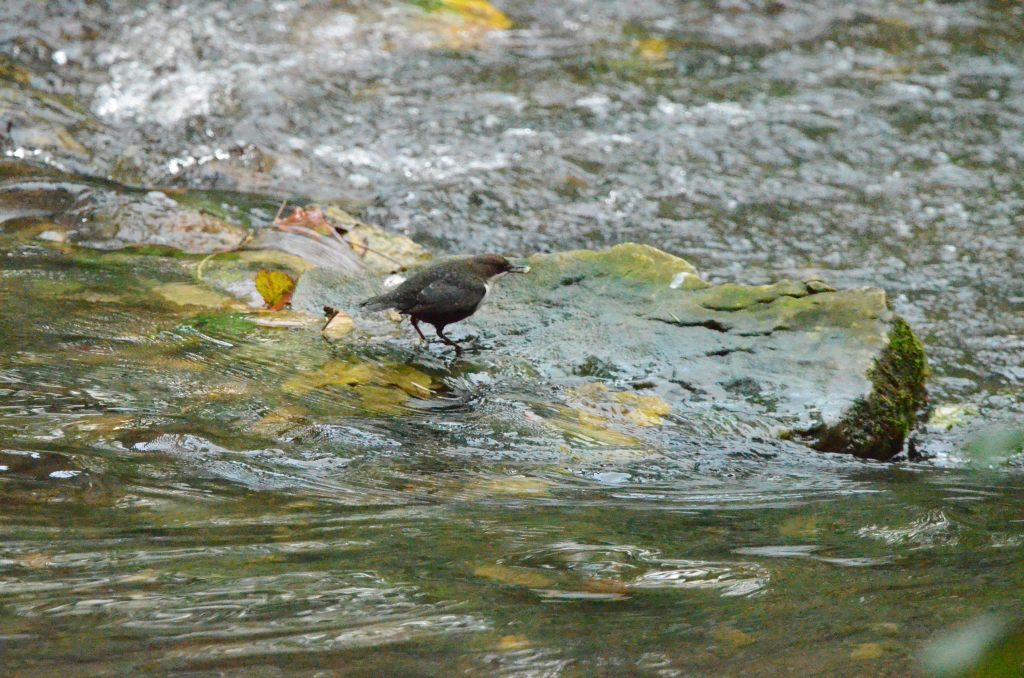
Month: October 2025

  • Along the Chirk Towpath

    (Sunday 12th October, 2025)

        Over to Chirk this morning in Wrexham County Borough. We parked up at Canal View in Chirk Bank, which meant we actually started our walk in England (the village of Chirk Bank is in Shropshire), and crossed over to Wales just a short while later. We walked west along the towpath towards the Aqueduct and Viaduct, passing the community gardens and allotments as we went. Although it was a little misty, it was very tranquil and the bushes and trees that line the canal were showing off their autumn colours. And, as you might expect, there was also plenty of colour in the narrowboats that we encountered along the way.
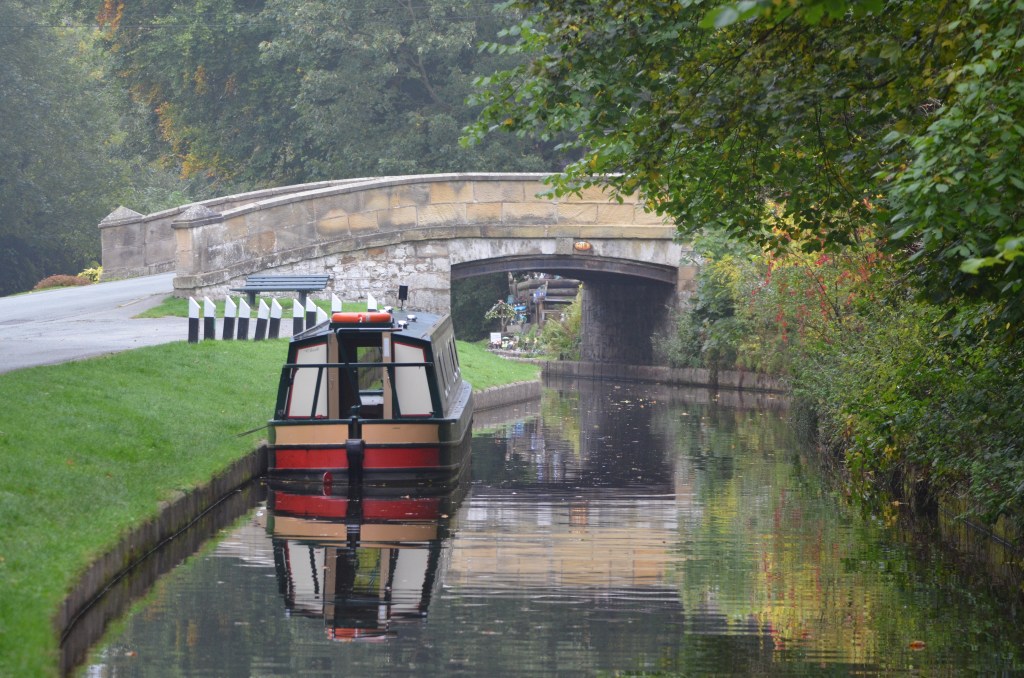
    Moored houseboat at Chirk

        The Chirk Aqueduct overlooks the spectacular Ceiriog Valley. Looking down from our high vantage point, we could see why the rushing water below has given the River Ceiriog its reputation as the fastest flowing river in Wales. Just east of Chirk, the Ceiriog empties out into the River Dee.
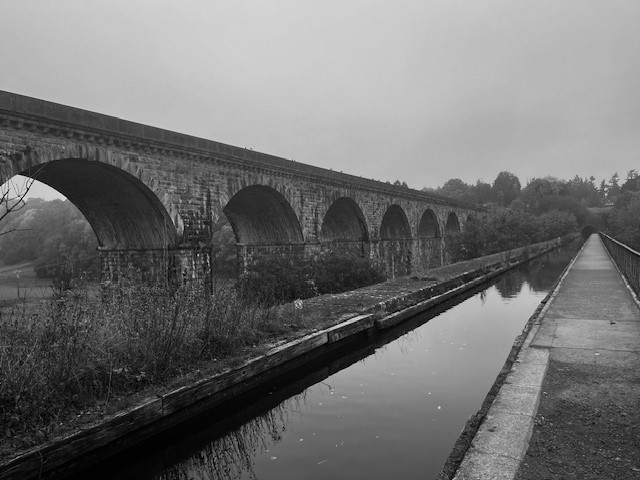
    Chirk Aqueduct and Viaduct

       Chirk Aqueduct and Viaduct 

    The Aqueduct was built between 1796 and 1801 and rises 21 metres (70 feet) above the valley floor. The Chirk Viaduct runs parallel to the Aqueduct, although it’s a little higher at 30 metres (98 feet), and this was built between 1846 and 1848, nearly fifty years later. It’s always fascinating to see the building work involved with these wonderful pieces of architecture. During today’s visit, we noticed that the extra height of the Viaduct is clearly favoured by scores of Jackdaws: in fact, they regularly broke away in smaller groups to investigate the inside walls of the arches, presumably looking for small insects. What was particularly intriguing was the Jackdaws’ upright stance as they gripped the bricks and masonry with their claws: I’d never before seen Jackdaws demonstrate such ability.
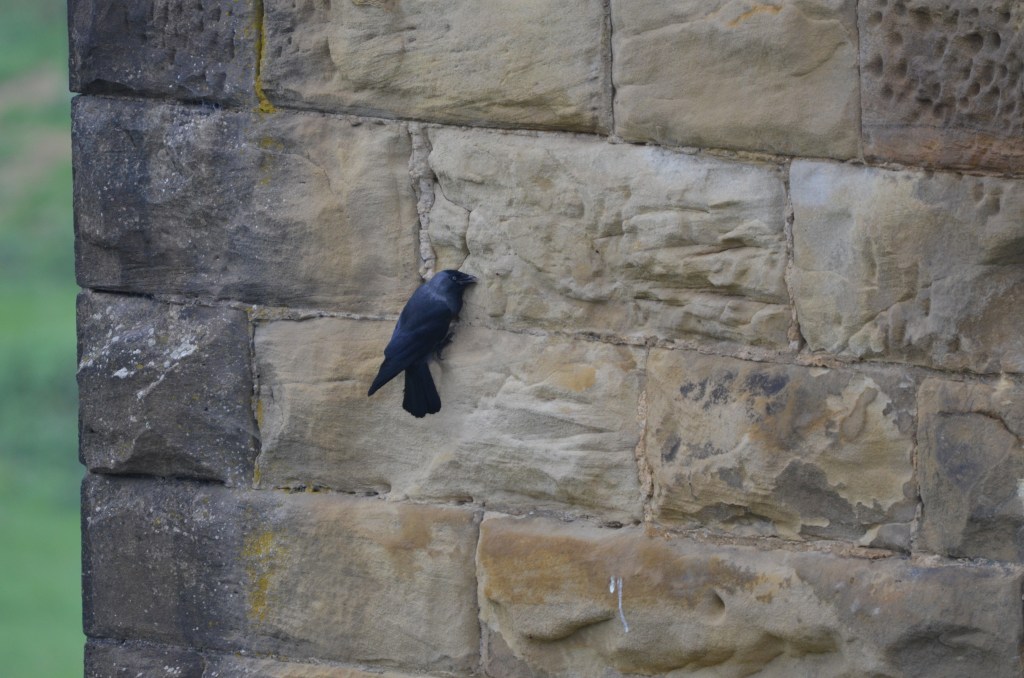
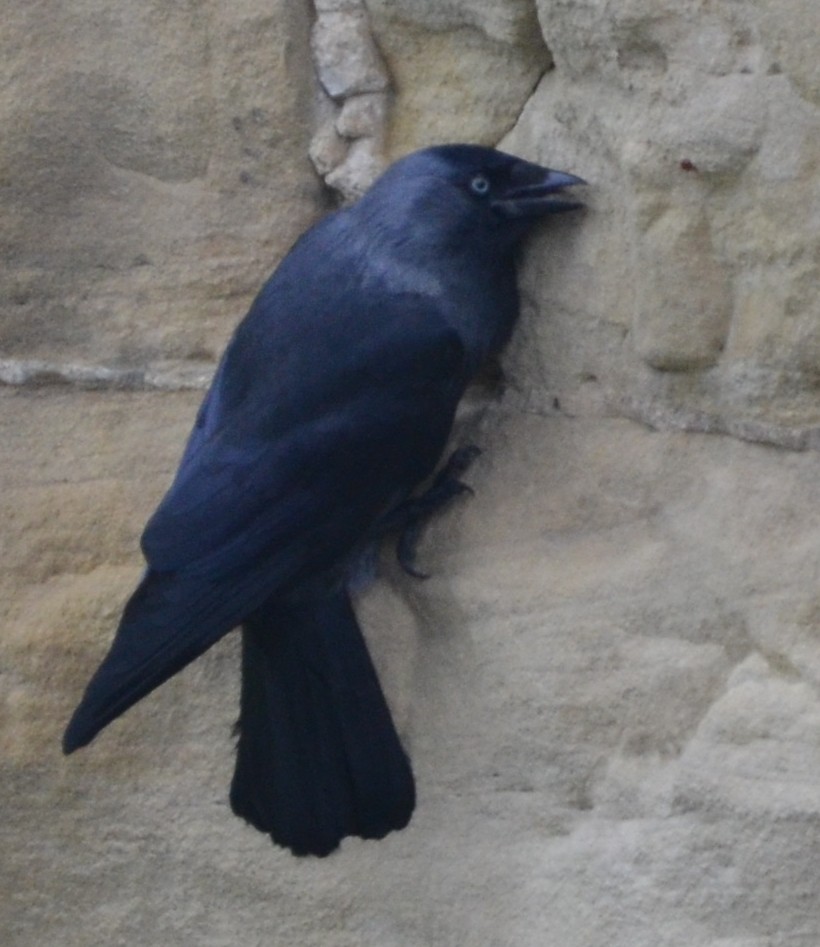
    Jackdaw grubbing
    Jackdaw grubbing enlarged

        Jackdaw gripping tightly while grubbing

    We paused just before the Chirk Tunnel and decided against entering. Not that we’re scaredy-cats, of course! No, the tunnel is quite a stretch without a torch (421 metres apparently, or 1,381 feet) and it looked pitch black inside. We could see two beams of light penetrating the darkness as we peered down the tunnel, and these lights eventually revealed themselves as belonging to a narrowboat as it slowly emerged near us. The tunnel is only wide enough for one narrowboat at a time, hence the one waiting in the foreground of the photograph. The towpath carries on through the length of the tunnel and we saw walkers as well as cyclists following it or, more accurately, we saw their torches!

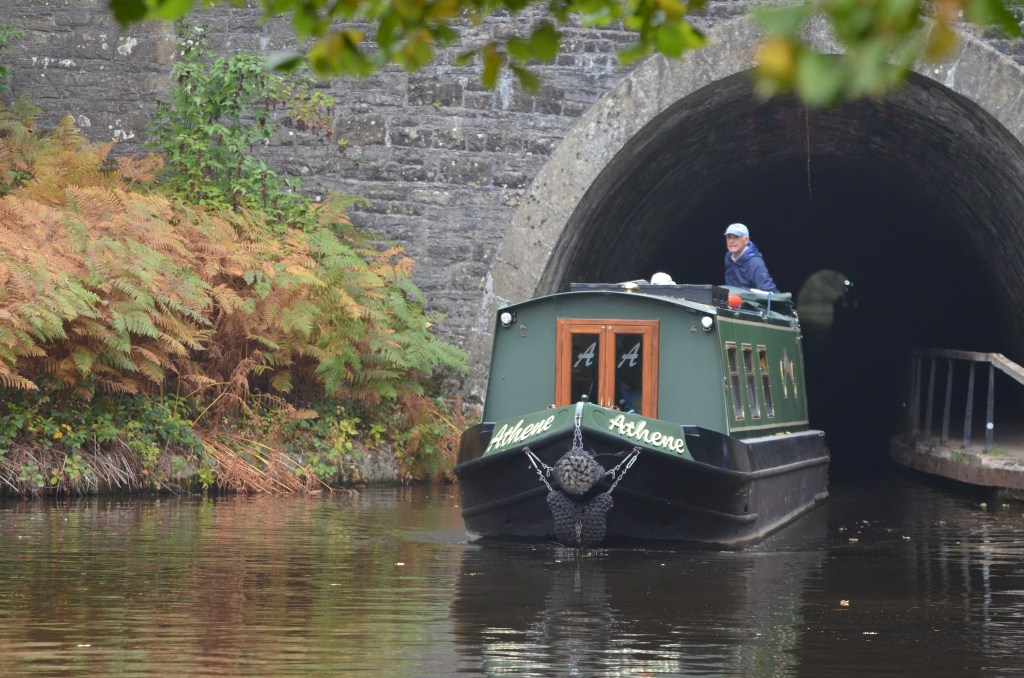
    Spooky tunnel
    Emerging from the tunnel

        The narrowboat gradually emerged from the darkness

    There is a distinct current in the canal which flows generally southwards. It wasn’t so much because of the narrowboats that we noticed it, but the Mallards and Moorhens. Well, the one pair of Moorhens we saw were characteristically shy and quickly disappeared behind the vegetation overhanging the far bank of the canal. The Mallards, though, were having to put some effort into paddling northwards across the Aqueduct and thus against the flow, although they seemed to have adapted to it. (It was like water off a duck’s back as far as they were concerned).

        We re-traced our route, carrying on past the car, and then crossed the road to re-join the towpath on the other side. We passed the Chirk Bank Post Office Collection Box on the corner and noticed some very interesting gardens on the opposite bank of the canal, and some very quirky ones too! We kept going along the path, just savouring the tranquillity, until we reached a point where the canal begins to sweep gently south. Here, we decided to turn back and go in search of refreshments.
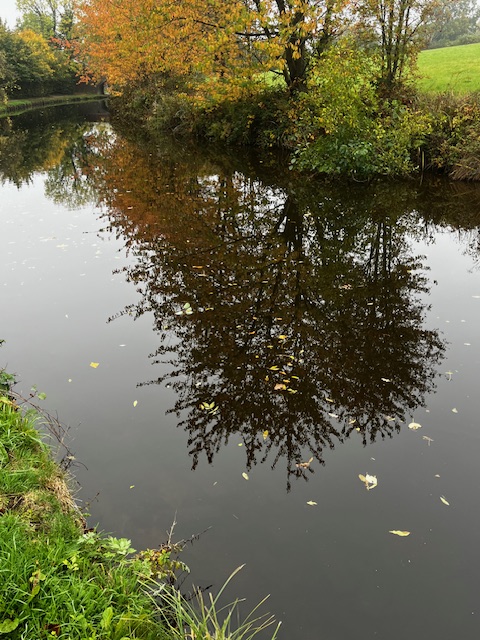
    Autumn colours at Chirk

    The important stuff

    Just a short trip to Caffi Wylfa in Castle Road, where we had our usual cappuccinos with Bakewell (Stu) and Date and Walnut cake (Col). Very appetising!
  • The River Returns

    (Sunday 5th October, 2025)

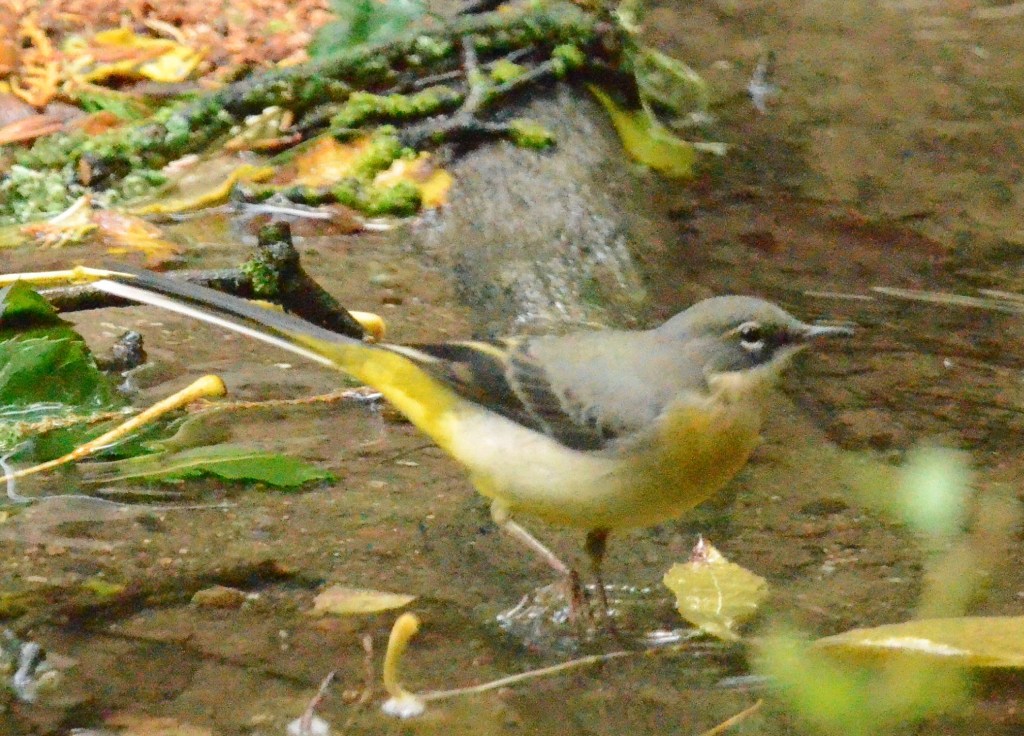
        Over to Loggerheads Country Park in Denbighshire this morning. It was 12°C with occasional westerly gusts of wind, although we were pretty much sheltered by the trees either side of the Leete path. In stark contrast to our recent visits when the riverbed ran dry after just a short distance, this time the River Alyn was in full spate and flowing strongly after all the recent rain. We’ve reported elsewhere in the blog seeing Grey wagtails and White-throated Dippers along this stretch of water and, today, we were fortunate enough to witness individuals of both species here, happily sharing the same habitat while exploiting the surge in water.

    Grey wagtail (female)

        Grey wagtail

    First to arrive was a Grey wagtail – female, judging by the absence of the black bib. She may have been collecting for her brood, or maybe just herself (we saw no sign of a male today). She re-appeared further downstream a little while later, flying low to land on a rock mid-stream from where she scanned the water, her long tail steadily moving up and down as she did so.

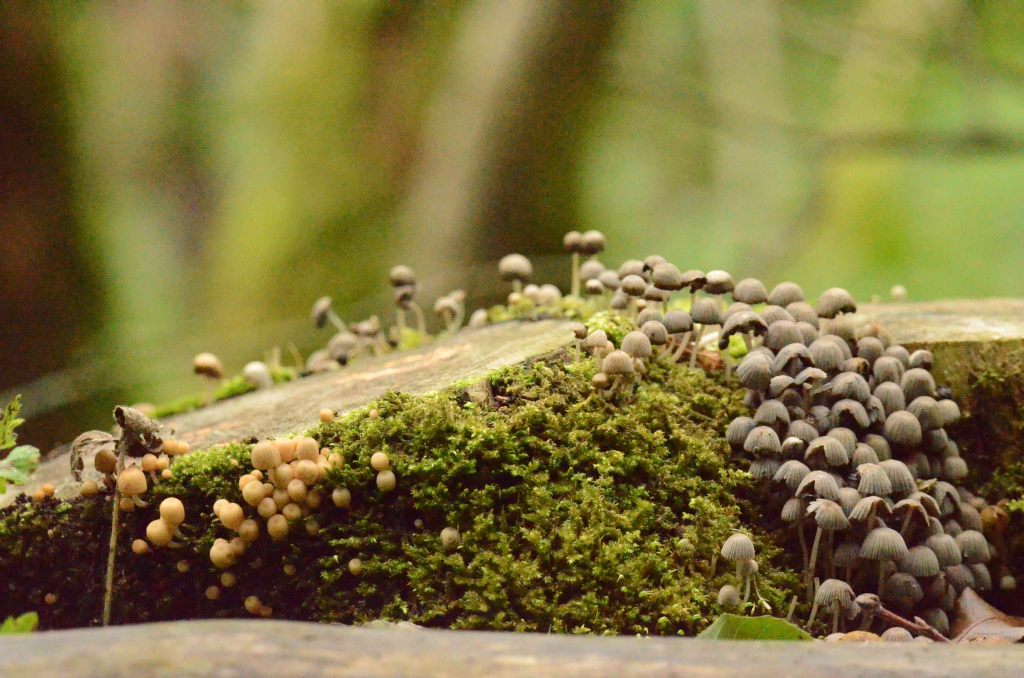
        We moved further through the woods, noticing varieties of fungi as we went. The clusters of fungi decorating the moss-strewn tree trunks appear to be Fairy inkcaps, which are quite common mushrooms throughout Britain. I don’t know what type of mushrooms the bracket fungi are, though: initially I thought Dryad’s saddle, but I’m not so sure now. Until further notice, this shall remain a mystery!

    Fairy inkcaps
    Bracket fungi

      Fairy inkcaps (top) and bracket fungi (bottom) 

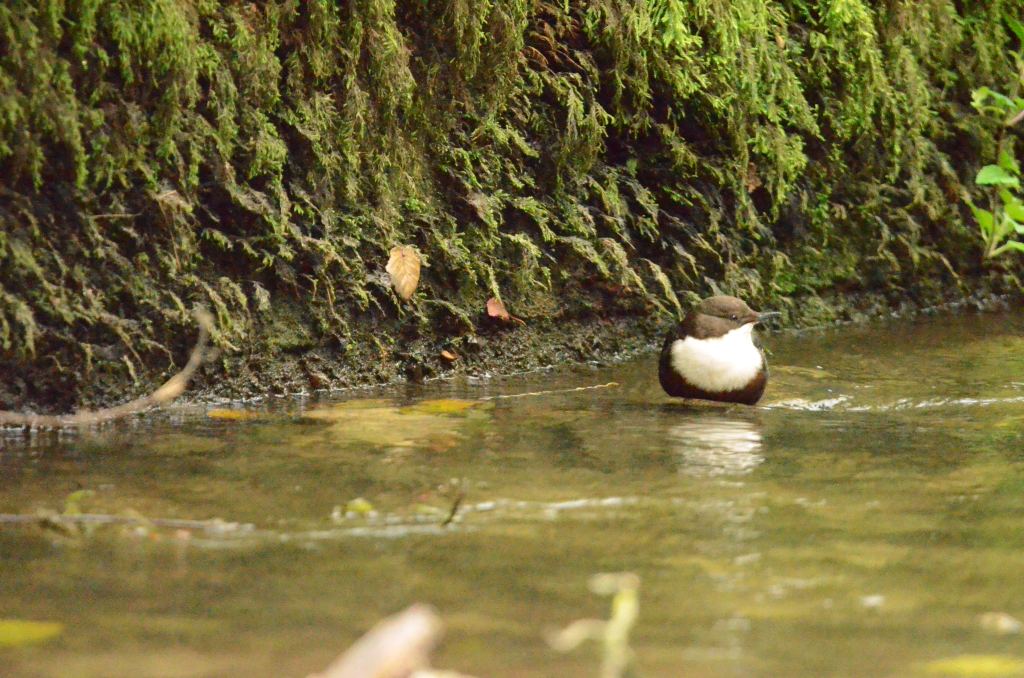
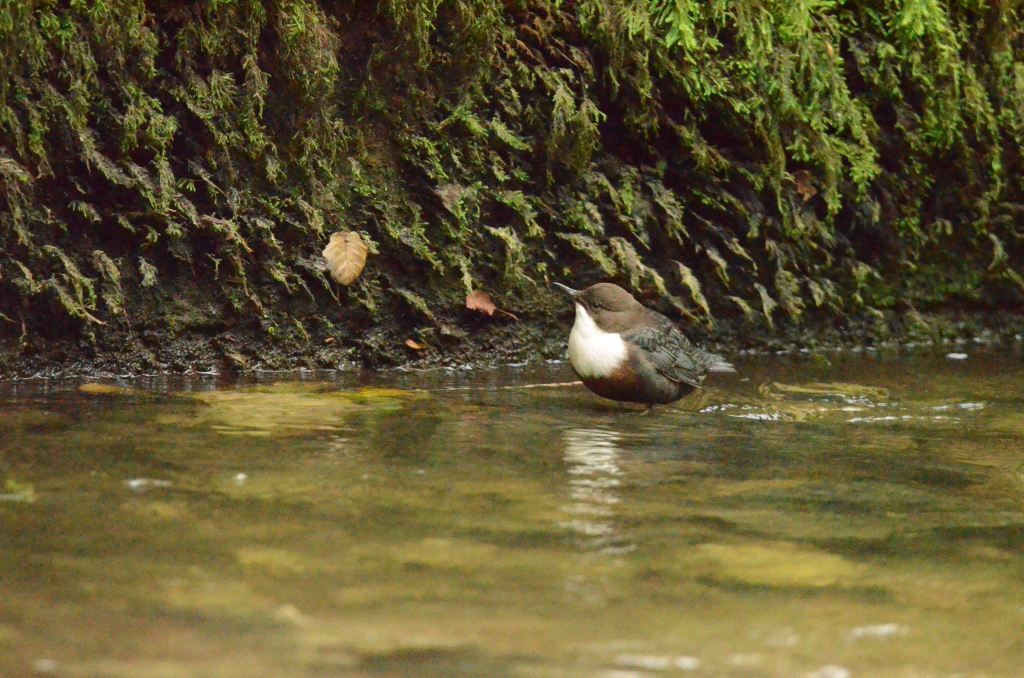
    We pressed on through the woods always with an eye on the river. Our patience and peering paid off as very soon we saw a brown blur approach from the far bank and land in the water, half-submerging itself. Yes, this was a White-throated Dipper.

    Pleasantly plump Dipper
    Dipper facing upstream

    White throated Dipper

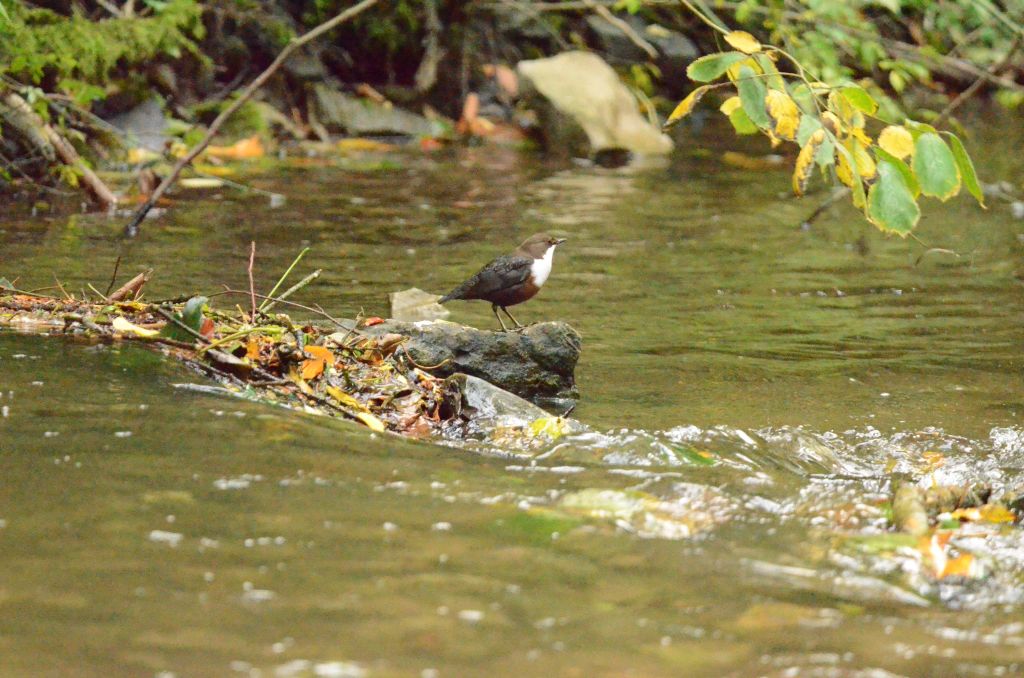
    The bird shifted to a small rock to the side of a naturally formed weir and began its comical, characteristic bobbing. It’s apparently this action that gives the bird its name, as it ‘dips’ up and down: and there was I thinking it earned its name because it enjoyed dipping itself underwater! Trying to identify the sex of a Dipper is very difficult as there is little to distinguish between males and females. On the whole, though, males are larger: looking at this one (and we’re sure that it was the same Dipper that we saw put in a couple of separate appearances), I’d say it was male.   

    Dipper mid-stream

    There are a couple of photographs where Stu caught the Dipper with its eyes closed as it was blinking: you can see the white feathers of the eyelids contrast strikingly with its brown head and face.

    Dipper eyes closed
    Dipper eyes closed 2

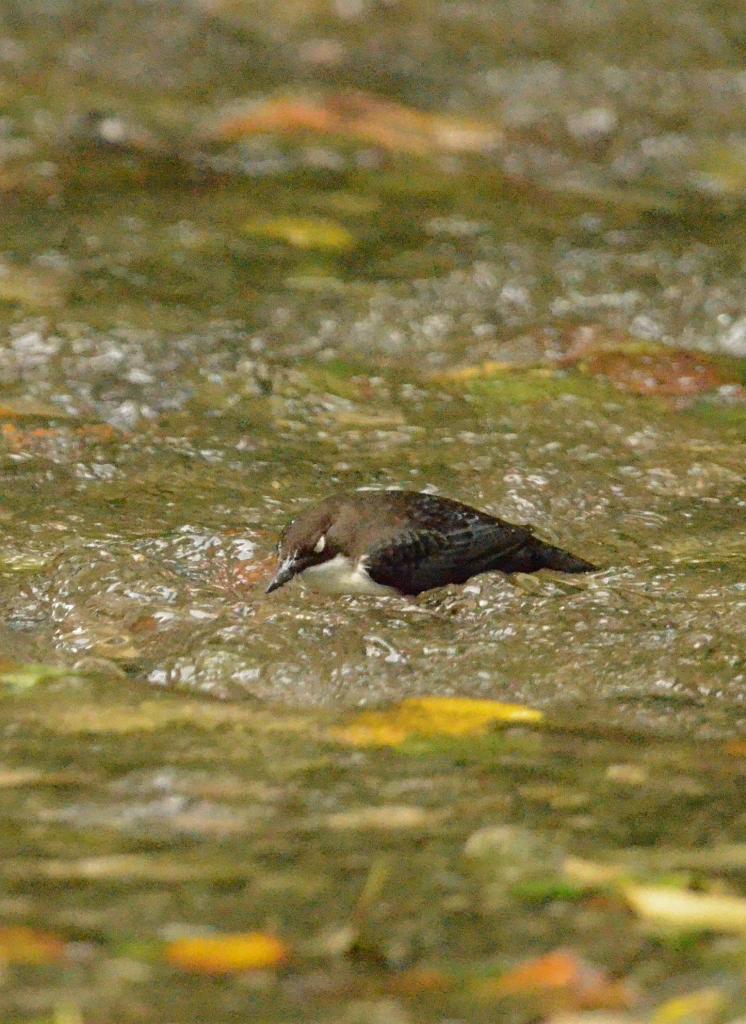
    We watched the Dipper plunge into the water in search of food, which it did tirelessly again and again – in fact, you can see in one of the photographs that it has caught something in its beak. Dippers have a taste for the larvae of Caddisfly but will eat aquatic insects and worms, crustaceans and even small fish, although I can’t identify this particular appetiser here.

    Dipper inspecting

       The pleasantly plump Dipper with its beak full

    While their solid appearance could be described as ‘pleasantly plump’, their squatness helps make them strong swimmers – they beat their wings rapidly both in and out of the water. Mesmerising. We were exceptionally lucky to have seen both a Grey wagtail and a Dipper along the same stretch of water on the same day.

    The important stuff

    While building work continues at Loggerheads, this doesn’t mean that travellers like us have to remain hungry and thirsty – oh no! You can get refreshments from The Mill House café (Tŷ’r Felin) next to the mill at the visitor centre, so we had our customary cappuccinos and Bakewell slices as we sat in the lee of the stone wall. Lovely!

  • On Silent Wings

    (Thursday 2nd October, 2025)

        I was in the back yard this evening just getting a breath or two of fresh air after work and, without consciously realising, I had fallen into my usual habit of scanning the treetops and rooves of nearby houses. There was neither sight nor sound of any birds – even the familiar chacking of my numerous Jackdaw neighbours was absent. I didn’t think anything of this really: it was approaching dusk and I assumed all of our avian friends had settled in for the night.

        However, as I was looking around me, something caught my attention higher up in the sky. I saw a dozen or so birds flying quite high. They were together, but in a loose flock if you know what I mean, and they were flying silently. These birds had me puzzled to tell the truth: I hesitantly identified them as gulls, but they disappeared from view before I could be sure. I leaned back, trying to see if there were any more birds, and after a few moments I spotted another group. Again, these were quite high up and I didn’t have my binoculars, but judging by their outlines, these were definitely gulls, although I don’t know which type of gull.

        Over the next fifteen minutes or so, several more of these eerily silent gulls flew by, all seemingly heading north-west towards the Wirral side of the Dee estuary. I would never have seen them, even known that they were there, because of their uncharacteristic silence – well, gulls are often the most raucous of birds we encounter!

        I looked online later to see if this was usual behaviour for gulls flying across the evening sky and, as you might expect, there was no definitive answer, although others have evidently witnessed gulls passing in similarly quiet circumstances. One or two people suggested that the gulls were heading out to sea in the knowledge that fishing boats were in the vicinity (presumably with their hauls). This may or may not be true, but this evening’s high tide was around 20:00 hours (although the high tide time varies depending on exactly which part of Wirral the gulls were heading). Nevertheless, the gulls flew past me about an hour or so beforehand, so it’s possible that the intention was to be onshore as the tide began to retreat, exposing the crustaceans and molluscs that they favour. I can’t help thinking that this theory is a bit limited though, given that most gull species will eat anything!

    No photographs for this post I’m afraid – just an observation. (The gulls were too far away for my humble camera-phone anyway). 1

    1. I witnessed this phenomenon again on the following evening although the gulls were flying lower this time. It was windier than the previous night due to Storm Amy (although Scotland bore the brunt of the winds) and I thought possibly the storm might have had a bearing on the gulls’ behaviour. However, I’m inclined to think that it’s more the timing of the tides. I’m writing this three days later (Monday 6th October) and I haven’t seen any similar activity in the last three evenings. Anyway, something to look out for – well, if you’re me at least!
      ↩︎